

10 Best Overhead Stretch Alternatives for Limited Mobility
If you can’t perform the Overhead Stretch, choose movements that load the waist and abs through lateral flexion or anti-extension. Use standing side bends, side planks, Russian twists, dead bugs, or oblique crunches. Cue: brace your core, pull your ribs toward your pelvis, and move from the obliques rather than the arms.
Original Exercise: Overhead Stretch
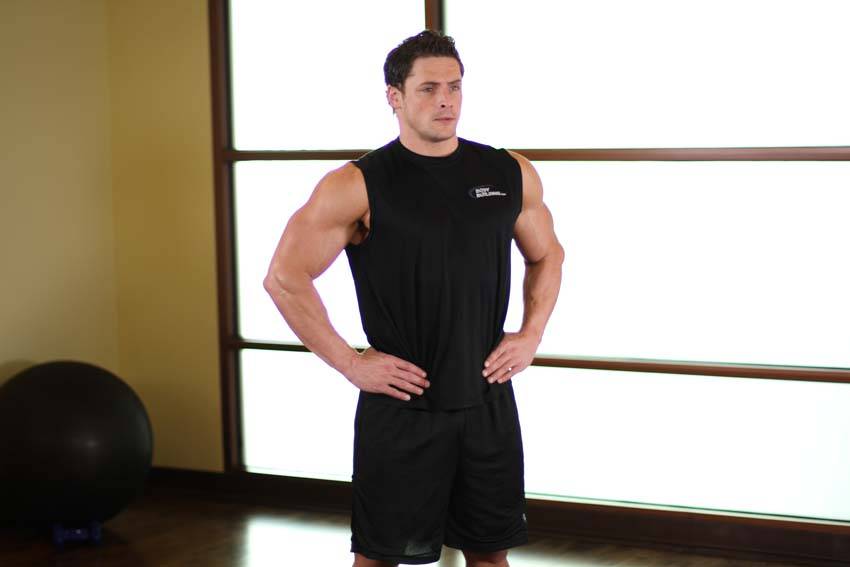
How to Perform Overhead Stretch
- Standing straight up, lace your fingers together and open your palms to the ceiling. Keep your shoulders down as you extend your arms up.
- To create a full torso stretch, pull your tailbone down and stabilize your torso as you do this. Stretch the muscles on both the front and the back of the torso.
Pro Tips
- Category: Stretching
- Force: Static
- Movement type: Compound
Best Overhead Stretch Alternatives
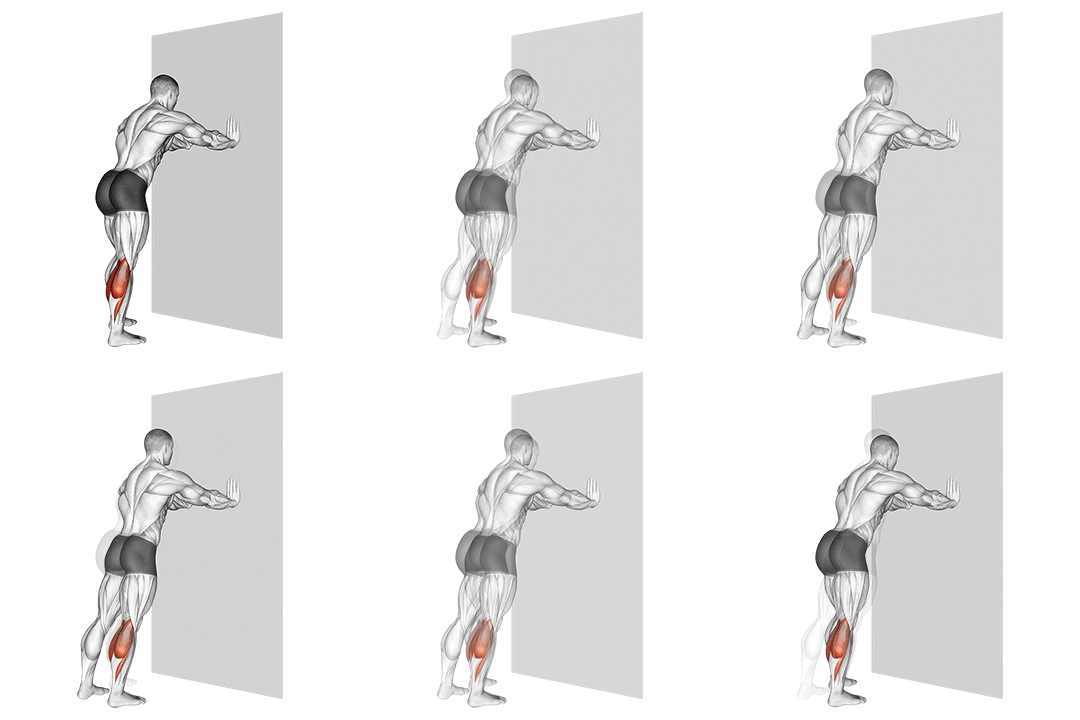
1. Calf Stretch With Hands Against Wall
84.2% MatchHow to perform this exercise
- Stand facing a wall with your feet hip-width apart.
- Place your hands against the wall at shoulder height.
- Step your right foot back, keeping your heel on the ground and your leg straight.
- Bend your left knee and lean forward, keeping your back leg straight and your heel on the ground.
- Hold the stretch for 20-30 seconds.
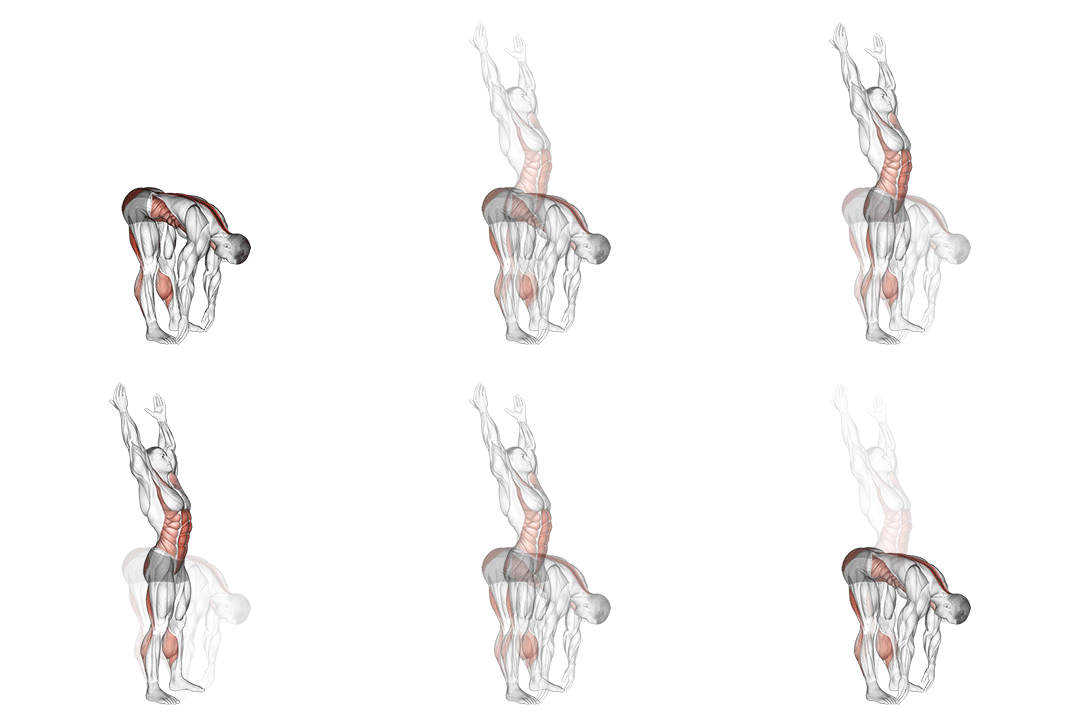
2. Basic Toe Touch (male)
84.2% MatchHow to perform this exercise
- Stand with your feet shoulder-width apart and your arms by your sides.
- Bend forward at the waist, keeping your back straight and your knees slightly bent.
- Reach down towards your toes with your hands, keeping your legs as straight as possible.
- Pause for a moment at the bottom, then slowly return to the starting position.
- Repeat for the desired number of repetitions.
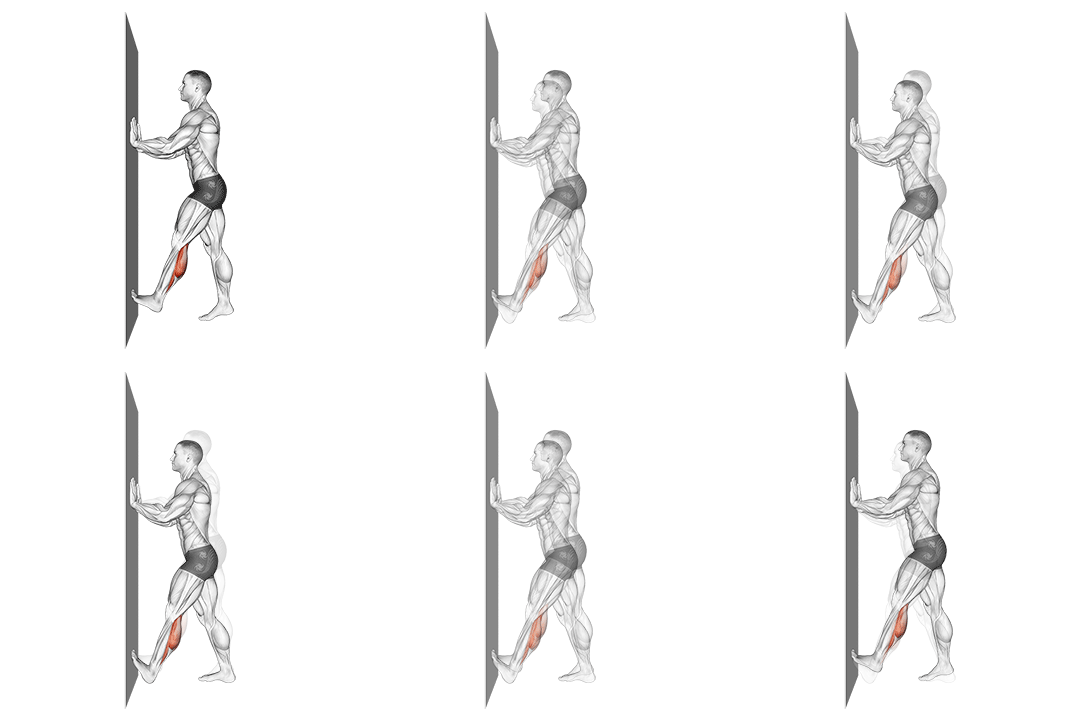
3. Calf Push Stretch With Hands Against Wall
81% MatchHow to perform this exercise
- Stand facing a wall with your feet hip-width apart.
- Place your hands against the wall at shoulder height.
- Step back with one foot, keeping your heel on the ground and your leg straight.
- Bend your front knee slightly and lean forward, feeling a stretch in your calf.
- Hold the stretch for 20-30 seconds.
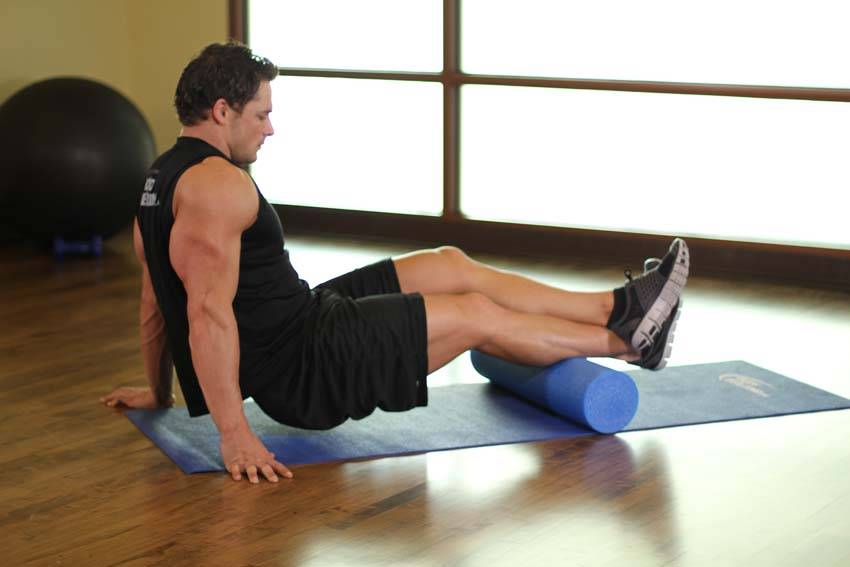
4. Calves-SMR
77% MatchHow to perform this exercise
- Begin seated on the floor. Place a foam roller underneath your lower leg. Your other leg can either be crossed over the opposite or be placed on the floor, supporting some of your weight. This will be your starting position.
- Place your hands to your side or just behind you, and press down to raise your hips off of the floor, placing much of your weight against your calf muscle. Roll from below the knee to above the ankle, pausing at points of tension for 10-30 seconds. Repeat for the other leg.
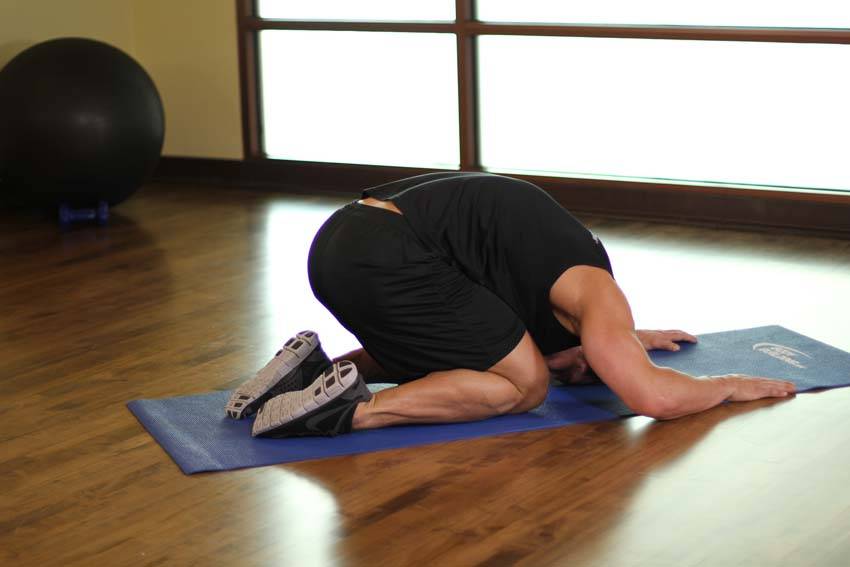
5. Child's Pose
76.2% MatchHow to perform this exercise
- Get on your hands and knees, walk your hands in front of you.
- Lower your buttocks down to sit on your heels. Let your arms drag along the floor as you sit back to stretch your entire spine.
- Once you settle onto your heels, bring your hands next to your feet and relax. "breathe" into your back. Rest your forehead on the floor. Avoid this position if you have knee problems.
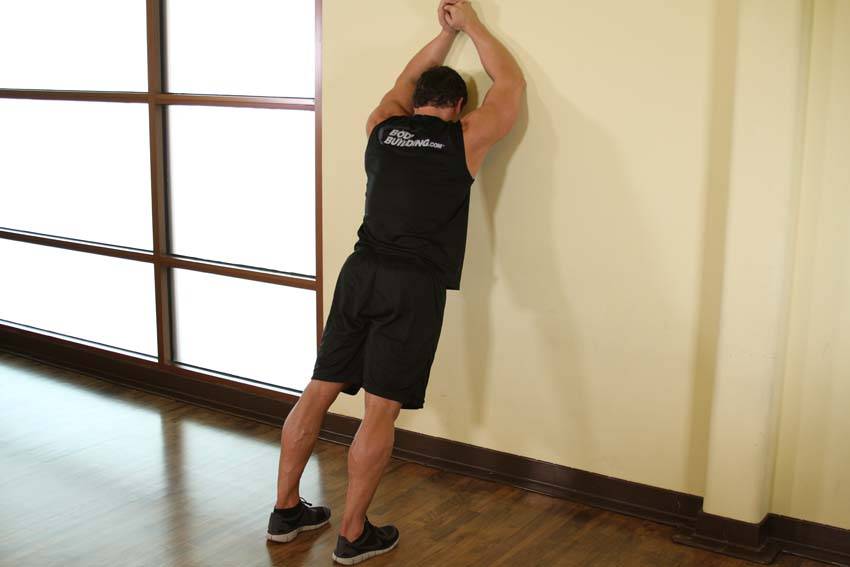
6. Calf Stretch Elbows Against Wall
75.2% MatchHow to perform this exercise
- Stand facing a wall from a couple feet away.
- Lean against the wall, placing your weight on your forearms.
- Attempt to keep your heels on the ground. Hold for 10-20 seconds. You may move further or closer the wall, making it more or less difficult, respectively.
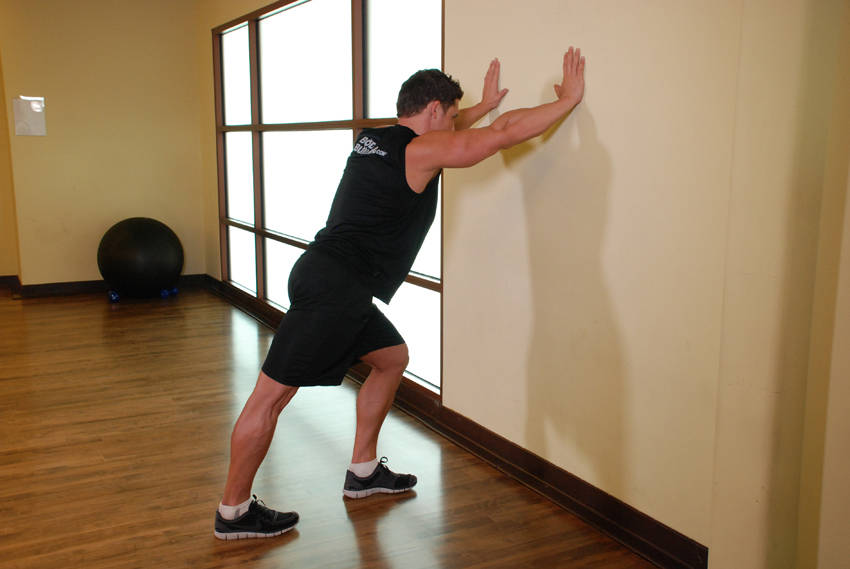
7. Calf Stretch Hands Against Wall
75.2% MatchHow to perform this exercise
- Stand facing a wall from several feet away. Stagger your stance, placing one foot forward.
- Lean forward and rest your hands on the wall, keeping your heel, hip and head in a straight line.
- Attempt to keep your heel on the ground. Hold for 10-20 seconds and then switch sides.
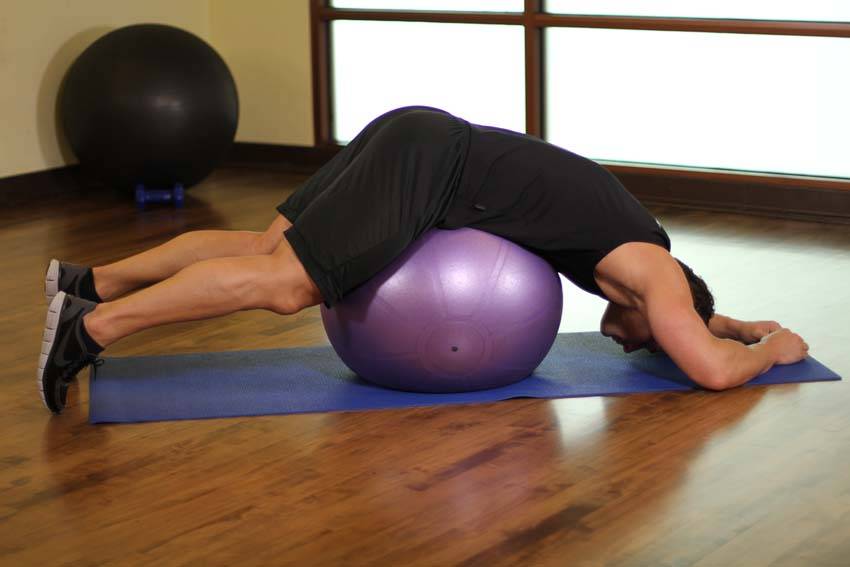
8. Downward Facing Balance
72.8% MatchHow to perform this exercise
- Lie facedown on top of an exercise ball.
- While resting on your stomach on the ball, walk your hands forward along the floor and lift your legs, extending your elbows and knees.
9. Chin To Chest Stretch
71.2% MatchHow to perform this exercise
- Get into a seated position on the floor.
- Place both hands at the rear of your head, fingers interlocked, thumbs pointing down and elbows pointing straight ahead. Slowly pull your head down to your chest. Hold for 20-30 seconds.
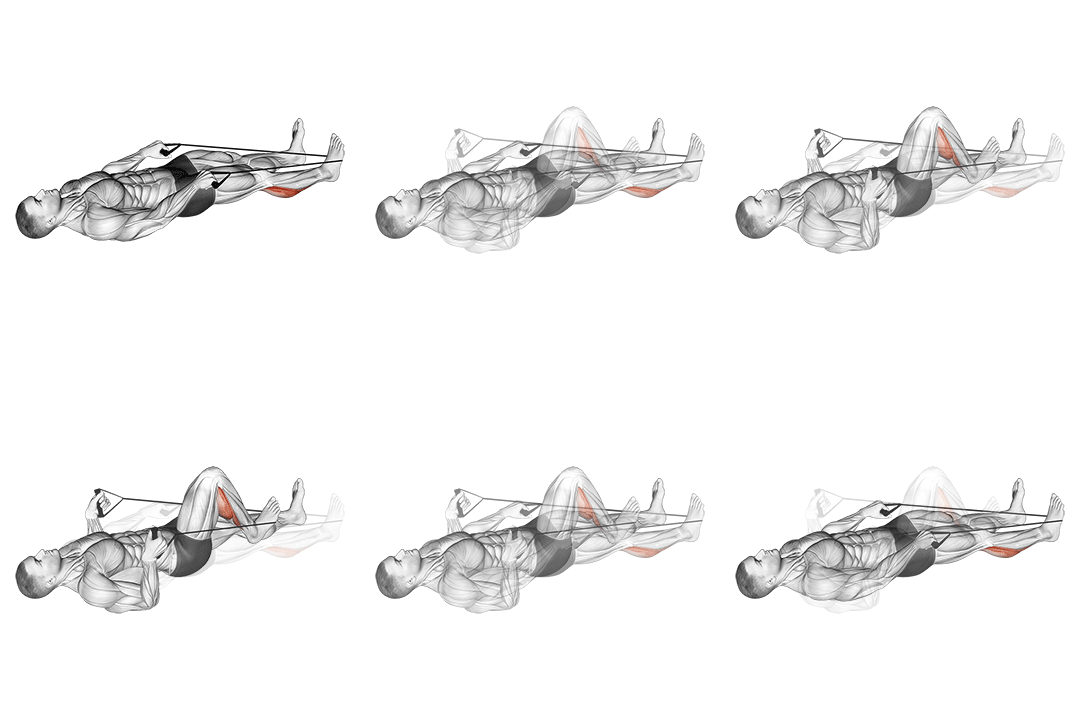
10. Calf Stretch With Rope
71% MatchHow to perform this exercise
- Stand facing a wall or sturdy object with your feet hip-width apart.
- Hold the ends of the rope in each hand and place the middle of the rope around the ball of your right foot.
- Step back with your left foot, keeping your heel on the ground and your leg straight.
- Lean forward, keeping your back straight, and gently pull on the rope to stretch your calf.
- Hold the stretch for 20-30 seconds, then release.
Why You Might Need a Overhead Stretch Alternative
You may substitute the Overhead Stretch for shoulder restriction, limited thoracic mobility, or low-back pain that makes overhead reach uncomfortable. Alternatives let you train oblique and rectus abdominis activation with safer mechanics and clearer loading patterns. For example, the side plank produces sustained lateral core tension and reduces lumbar shear, while standing side bends isolate lateral flexors with controlled range. Cue for standing side bend: soft bend in the knees, hinge slightly at hips, exhale and slide your elbow toward the hip to feel the obliques contract. Adjust range and tempo to avoid excessive lumbar bending and maintain transverse abdominis bracing.
How to Choose the Right Substitute
Match the substitute to the primary demand: lateral flexion, rotation, or anti-extension. If you need a pure lateral-load option, pick standing side bends or oblique crunches; for stability and anti-bend work, use side planks or dead bugs. Consider spinal loading—avoid end-range lumbar lateral flexion if you have disc or facet issues—and select exercises that emphasize oblique activation without compensatory thoracic or hip motion. Test activation by lightly touching the obliques during the movement; cue yourself to pull ribs down and initiate movement from the waist. Progress by increasing hold time, adding slow eccentrics, or layering rotational reps once form is perfect.
Frequently Asked Questions
What muscles does Overhead Stretch work?
The Overhead Stretch primarily targets the obliques and lateral fibers of the rectus abdominis while engaging the lats and serratus anterior when the arms are overhead. Biomechanically it promotes lateral flexion and lengthening of the waist muscles; cue yourself to feel oblique tension as you pull the ribs toward the pelvis.
What is the best bodyweight alternative to Overhead Stretch?
The side plank is the best bodyweight alternative for core strength and oblique activation because it forces isometric tension through the lateral chain without compressive spinal flexion. Set up stacked feet, drive hips up, and press the elbow under the shoulder while feeling the obliques brace to hold a neutral spine.
Can I build muscle without doing Overhead Stretch?
Yes; you can build the obliques and waist musculature with progressive alternatives like weighted side bends, loaded Russian twists, or progressive side plank variations. Focus on increasing time under tension, adding load gradually, and cueing oblique contraction (pull ribs toward pelvis) to drive hypertrophy and strength gains.
More Exercise Alternatives
Find Alternatives for Any Exercise
Use our free tool to discover the best substitute exercises based on your available equipment and goals.
Try the Exercise Substitution Finder →