

10 Best Pelvic Tilt Alternatives for Lower-Back Pain
If you can't perform a pelvic tilt, use similarly targeted core moves such as dead bug, glute bridge, supine march, reverse crunch, or bird dog. These preserve pelvic control and transverse abdominis activation—cue drawing your navel to your spine and exhaling to tilt—so you still train lumbar stability and the anterior core.
Original Exercise: Pelvic Tilt
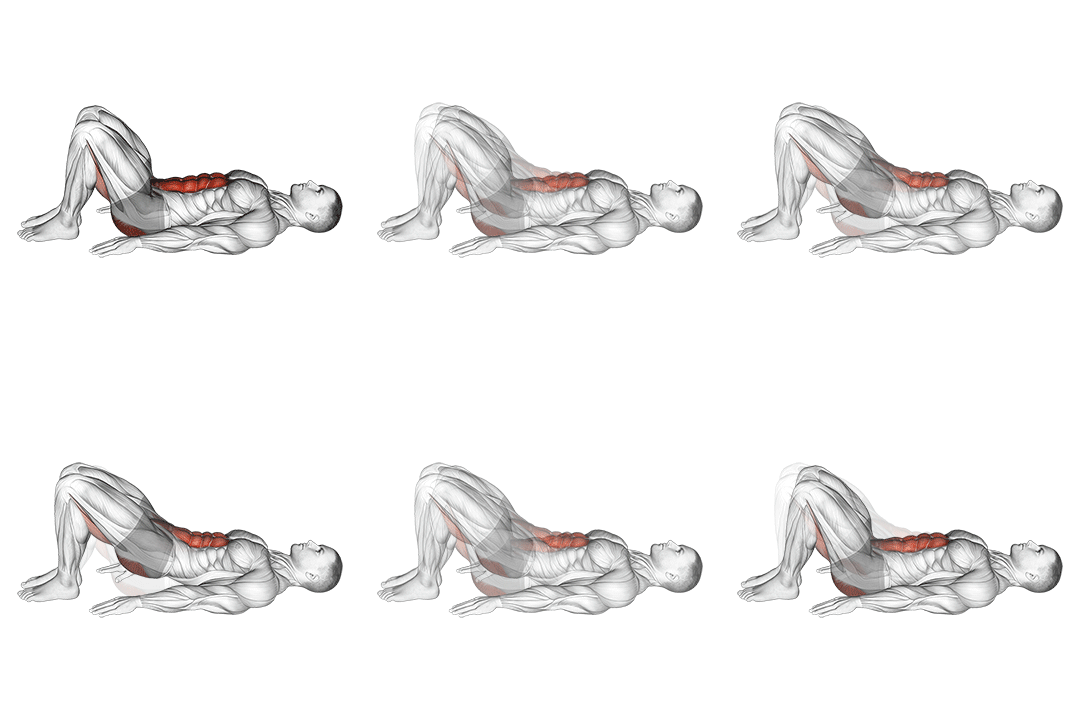
How to Perform Pelvic Tilt
- Lie flat on your back with your knees bent and feet flat on the ground.
- Place your hands by your sides.
- Engage your abs and tilt your pelvis upward, pressing your lower back into the ground.
- Hold this position for a few seconds, focusing on contracting your abs.
- Release the tilt and return to the starting position.
- Repeat for the desired number of repetitions.
Best Pelvic Tilt Alternatives
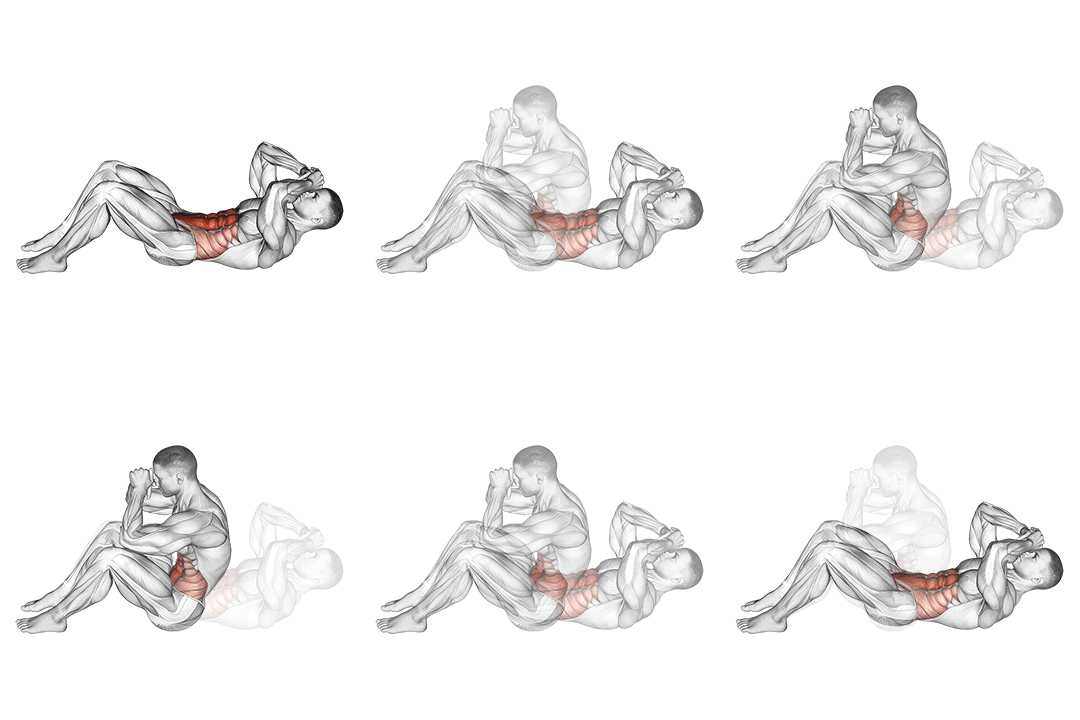
1. 3/4 Sit-up
89.7% MatchHow to perform this exercise
- Lie flat on your back with your knees bent and feet flat on the ground.
- Place your hands behind your head with your elbows pointing outwards.
- Engaging your abs, slowly lift your upper body off the ground, curling forward until your torso is at a 45-degree angle.
- Pause for a moment at the top, then slowly lower your upper body back down to the starting position.
- Repeat for the desired number of repetitions.
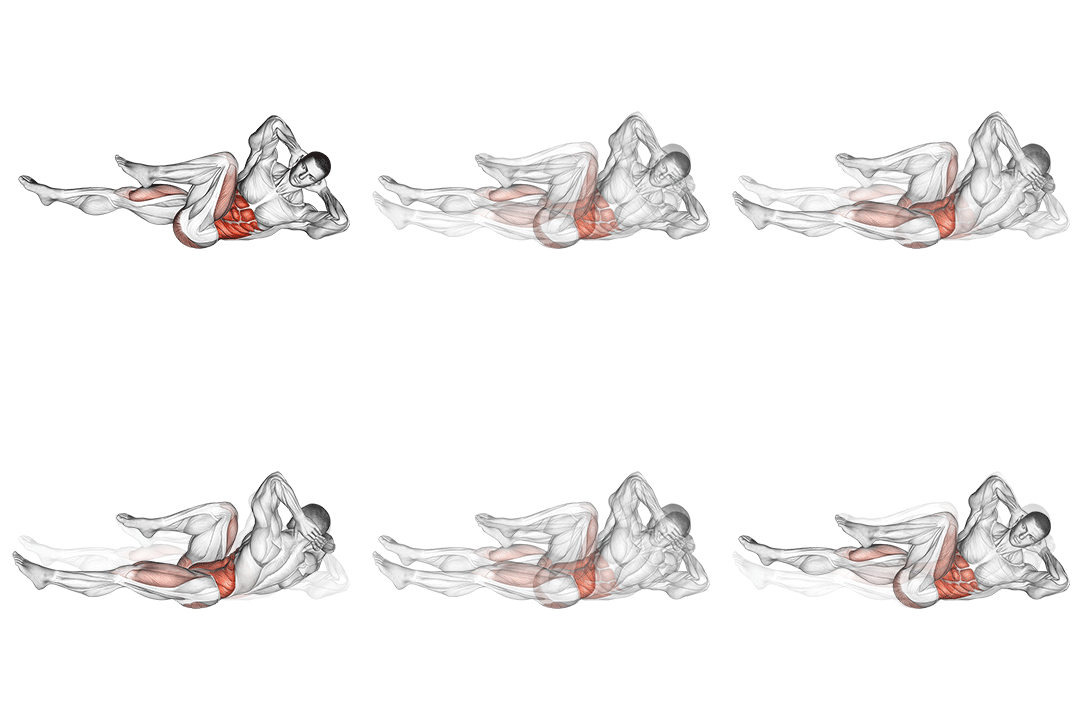
2. Elbow-to-knee
87.7% MatchHow to perform this exercise
- Start by lying flat on your back with your knees bent and feet flat on the ground.
- Place your hands behind your head with your elbows pointing outwards.
- Engage your abs and lift your upper body off the ground, bringing your right elbow towards your left knee.
- At the same time, bring your left knee towards your right elbow, creating a twisting motion.
- Pause for a moment at the top, then slowly lower your upper body and extend your legs back to the starting position.
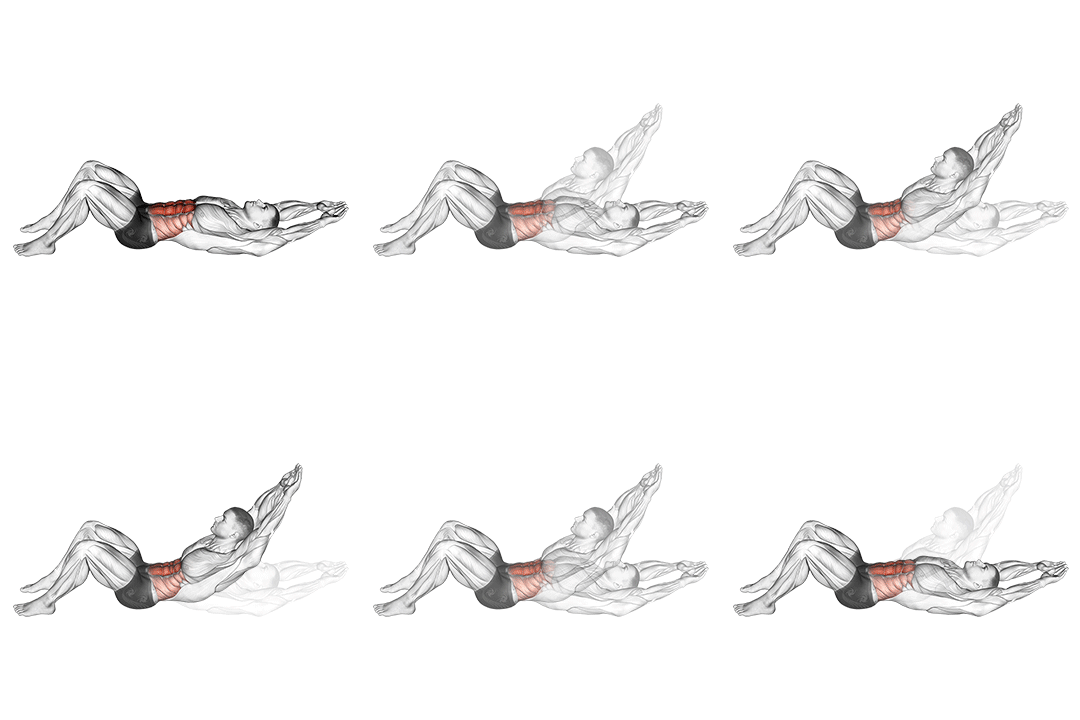
3. Crunch (hands Overhead)
85.2% MatchHow to perform this exercise
- Lie flat on your back with your knees bent and feet flat on the ground.
- Extend your arms straight above your head.
- Engaging your abs, lift your upper body off the ground, curling forward towards your knees.
- Pause for a moment at the top, then slowly lower your upper body back down to the starting position.
- Repeat for the desired number of repetitions.
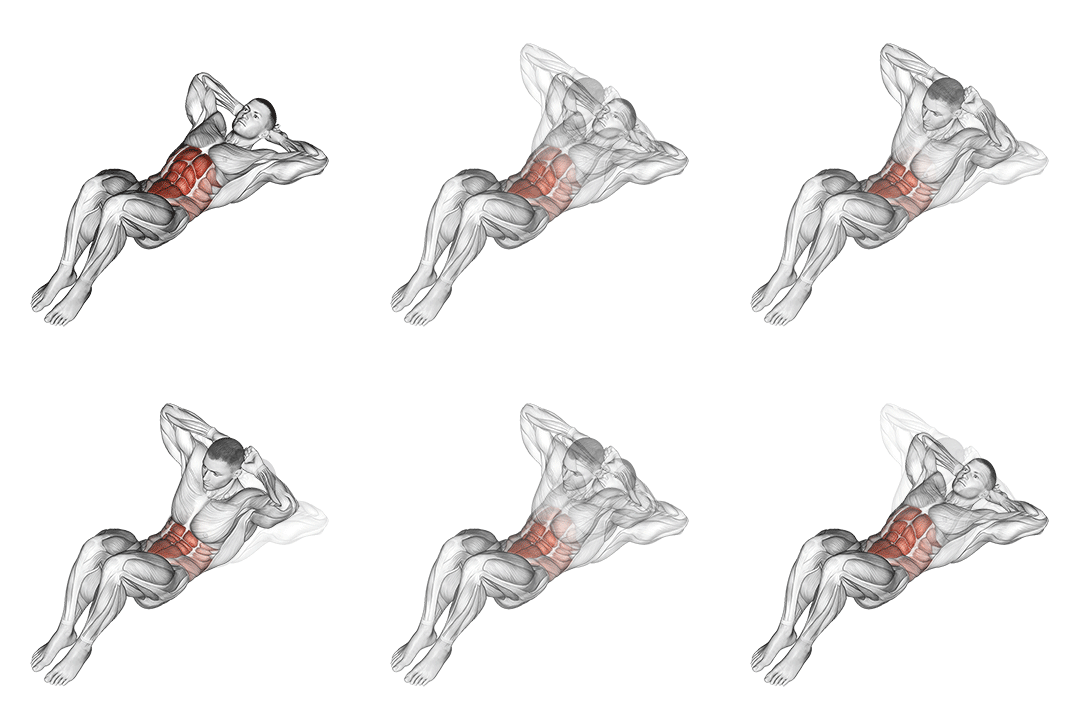
4. Crunch Floor
85.2% MatchHow to perform this exercise
- Lie flat on your back with your knees bent and feet flat on the ground.
- Place your hands behind your head with your elbows pointing outwards.
- Engage your abs and lift your shoulders off the ground, curling forward towards your knees.
- Pause for a moment at the top, then slowly lower your shoulders back down to the starting position.
- Repeat for the desired number of repetitions.
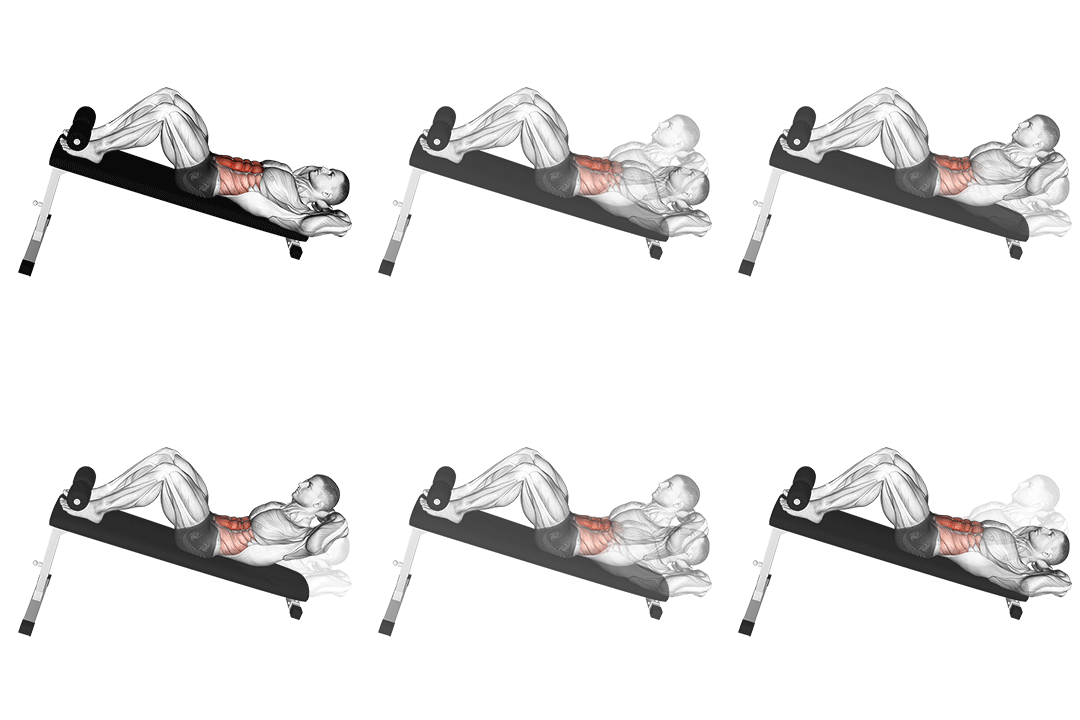
5. Decline Crunch
83.9% MatchHow to perform this exercise
- Lie on a decline bench with your feet secured and your knees bent at a 90-degree angle.
- Place your hands behind your head or across your chest.
- Engage your abs and lift your upper body towards your knees, curling your torso.
- Pause for a moment at the top, then slowly lower your upper body back down to the starting position.
- Repeat for the desired number of repetitions.
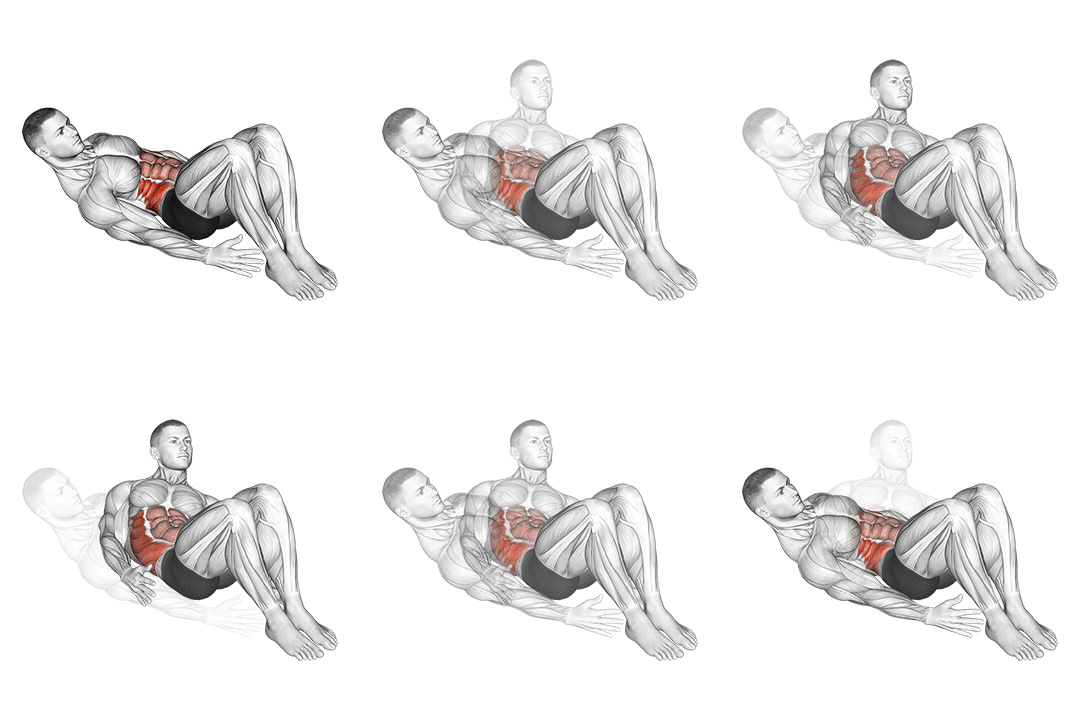
6. Alternate Heel Touchers
82.7% MatchHow to perform this exercise
- Lie flat on your back with your knees bent and feet flat on the ground.
- Extend your arms straight out to the sides, parallel to the ground.
- Engaging your abs, lift your shoulders off the ground and reach your right hand towards your right heel.
- Return to the starting position and repeat on the left side, reaching your left hand towards your left heel.
- Continue alternating sides for the desired number of repetitions.
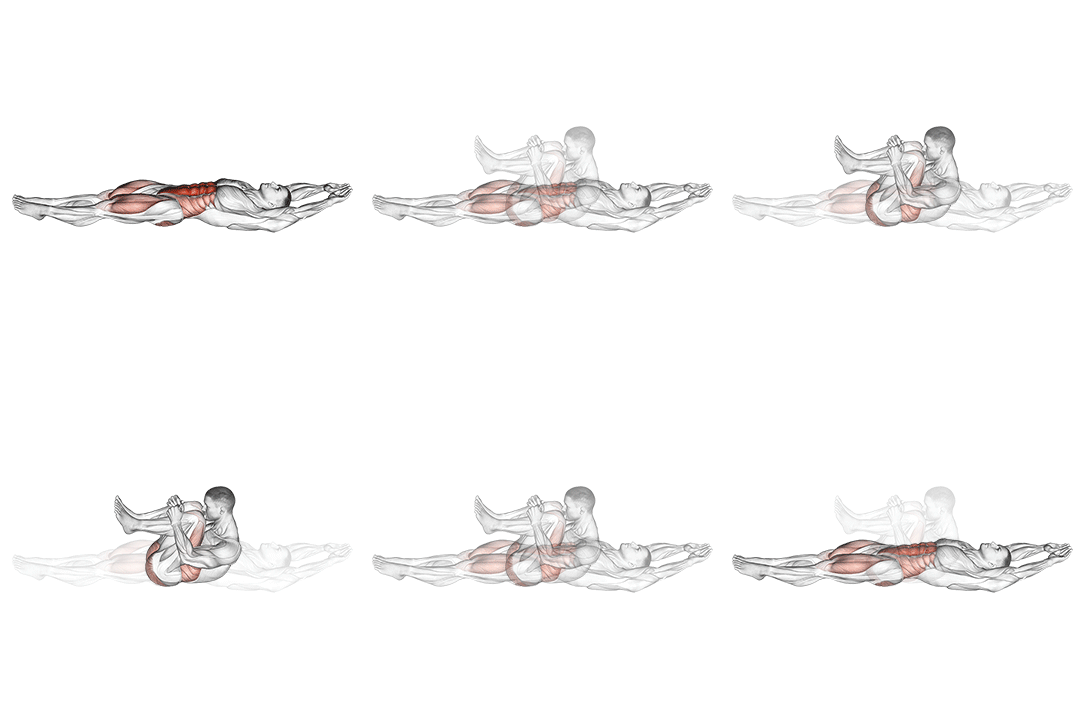
7. Cocoons
82.6% MatchHow to perform this exercise
- Lie flat on your back with your knees bent and feet flat on the ground.
- Place your hands behind your head with your elbows pointing outwards.
- Engaging your abs, slowly lift your upper body off the ground, curling forward until your torso is at a 45-degree angle.
- Pause for a moment at the top, then slowly lower your upper body back down to the starting position.
- Repeat for the desired number of repetitions.
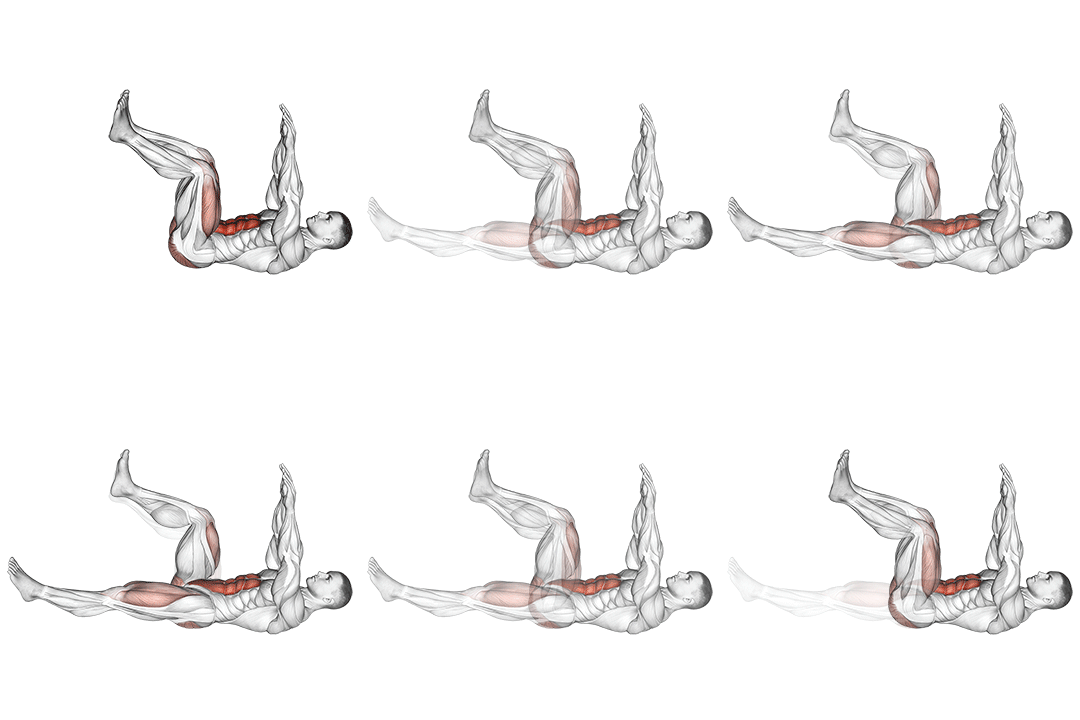
8. Dead Bug
81.7% MatchHow to perform this exercise
- Lie flat on your back with your arms extended towards the ceiling.
- Bend your knees and lift your legs off the ground, creating a 90-degree angle at your hips and knees.
- Engage your core and lower back to press your lower back into the ground.
- Slowly lower your right arm and left leg towards the ground, keeping them straight and hovering just above the floor.
- Pause for a moment, then return to the starting position.
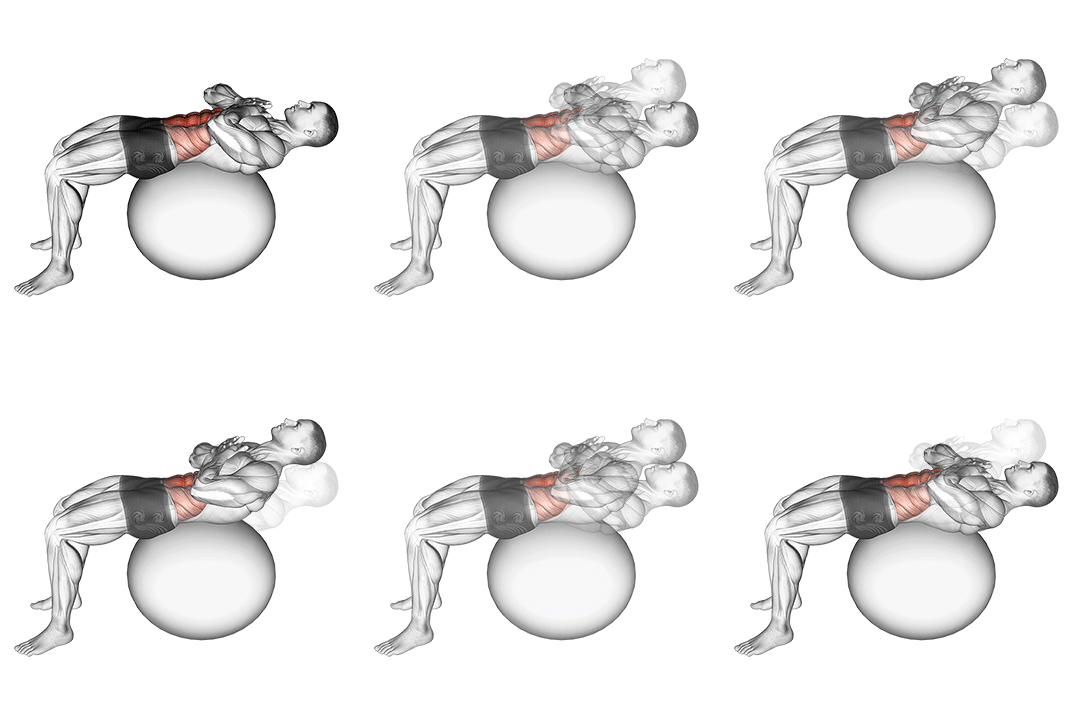
9. Crunch (on Stability Ball)
81.6% MatchHow to perform this exercise
- Sit on the stability ball with your feet flat on the ground and your knees bent at a 90-degree angle.
- Lie back on the ball until your lower back is supported and your upper body is parallel to the floor.
- Place your hands behind your head or across your chest.
- Engage your abs and lift your upper body towards your knees, curling your torso forward.
- Pause for a moment at the top of the movement, then slowly lower your upper body back down to the starting position.
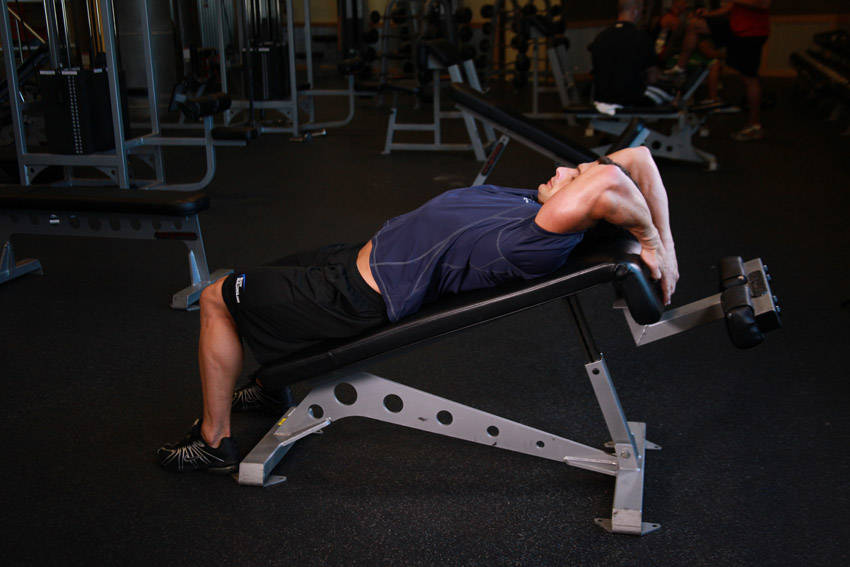
10. Decline Reverse Crunch
81% MatchHow to perform this exercise
- Lie on your back on a decline bench and hold on to the top of the bench with both hands. Don't let your body slip down from this position.
- Hold your legs parallel to the floor using your abs to hold them there while keeping your knees and feet together. Tip: Your legs should be fully extended with a slight bend on the knee. This will be your starting position.
- While exhaling, move your legs towards the torso as you roll your pelvis backwards and you raise your hips off the bench. At the end of this movement your knees will be touching your chest.
- Hold the contraction for a second and move your legs back to the starting position while inhaling.
- Repeat for the recommended amount of repetitions.
Why You Might Need a Pelvic Tilt Alternative
You may substitute pelvic tilts for several reasons: acute low-back pain, hip mobility limits, postoperative restrictions, or preference for a more functional pattern. Alternatives let you maintain transverse abdominis and rectus abdominis activation without repeated lumbar flexion; for example, a dead bug emphasizes anti-extension control while a glute bridge recruits hip extensors to reduce lumbar shear. Use cues like pressing the lower back gently into the floor or tucking the tailbone to bias posterior pelvic rotation. Selecting a substitute also lets you scale load, range of motion, and breathing to protect the sacroiliac joint while still improving pelvic control.
How to Choose the Right Substitute
Match the substitute to your problem: prioritize anti-extension drills like dead bug if you need lumbar stability, or choose glute bridges if hip extension weakness increases anterior pelvic tilt. Consider pain provocation, available equipment, and the primary muscle you want to target—deep core (transverse abdominis) versus superficial rectus abdominis or glutes. Check biomechanics: if hip flexor tightness drives anterior tilt, avoid repeated hip flexion and cue 'brace and exhale while tucking the tailbone' to keep lumbar neutral. Progress with increased time under tension, slower eccentrics, or added resistance once you can maintain pelvic control without compensatory lumbar movement.
Frequently Asked Questions
What muscles does Pelvic Tilt work?
Pelvic tilt primarily targets the rectus abdominis and transverse abdominis by producing posterior rotation of the pelvis and flattening the lumbar spine. It also reduces hip flexor tension and teaches the posterior chain to stabilize the pelvis through low-load motor control.
What is the best bodyweight alternative to Pelvic Tilt?
Dead bug is the best bodyweight alternative for most people because it trains anti-extension core control with minimal lumbar compression. Cue extending the opposite arm and leg while drawing the navel to the spine and keeping the lower back pressed to the floor to maintain transverse abdominis activation.
Can I build muscle without doing Pelvic Tilt?
Yes. You can develop core muscle size and strength using alternatives like reverse crunches, weighted planks, and glute bridges that load the rectus abdominis and obliques. Ensure progressive overload, controlled eccentric phases, and consistent tension while maintaining pelvic control to drive hypertrophy.
More Exercise Alternatives
Find Alternatives for Any Exercise
Use our free tool to discover the best substitute exercises based on your available equipment and goals.
Try the Exercise Substitution Finder →