

10 Best Push-ups With Feet On An Exercise Ball Alternatives
If you can’t or don’t want to do push-ups with your feet on a stability ball, use alternatives that preserve chest loading and instability demands. Try decline push-ups, suspension push-ups, or a weighted bench press. Cue: brace your core, keep a straight plank line, and drive through the palms to emphasize pectoral recruitment.
Original Exercise: Push-ups With Feet On An Exercise Ball
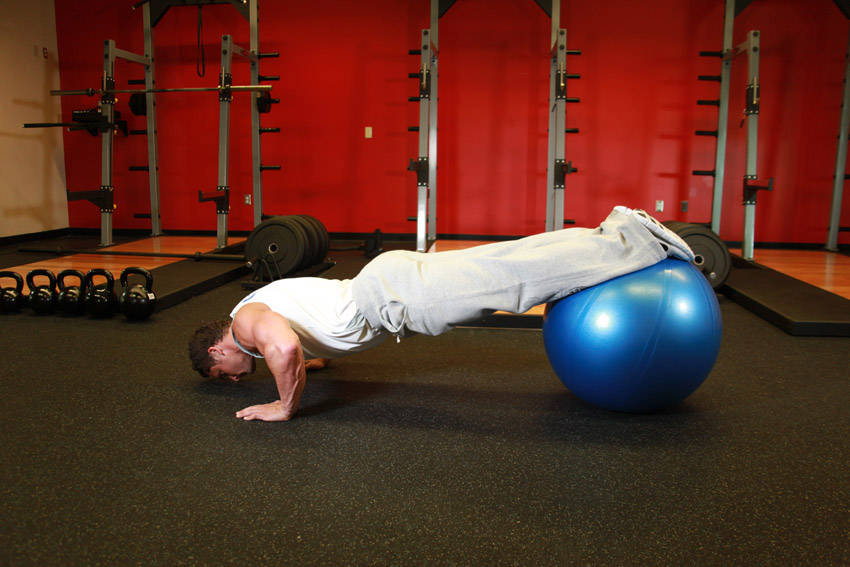
How to Perform Push-ups With Feet On An Exercise Ball
- Lie on the floor face down and place your hands about 36 inches apart from each other holding your torso up at arms length.
- Place your toes on top of an exercise ball. This will allow your body to be elevated.
- Lower yourself until your chest almost touches the floor as you inhale.
- Using your pectoral muscles, press your upper body back up to the starting position and squeeze your chest. Breathe out as you perform this step.
- After a second pause at the contracted position, repeat the movement for the prescribed amount of repetitions.
Pro Tips
- Category: Strength
- Force: Push
- Movement type: Compound
Best Push-ups With Feet On An Exercise Ball Alternatives
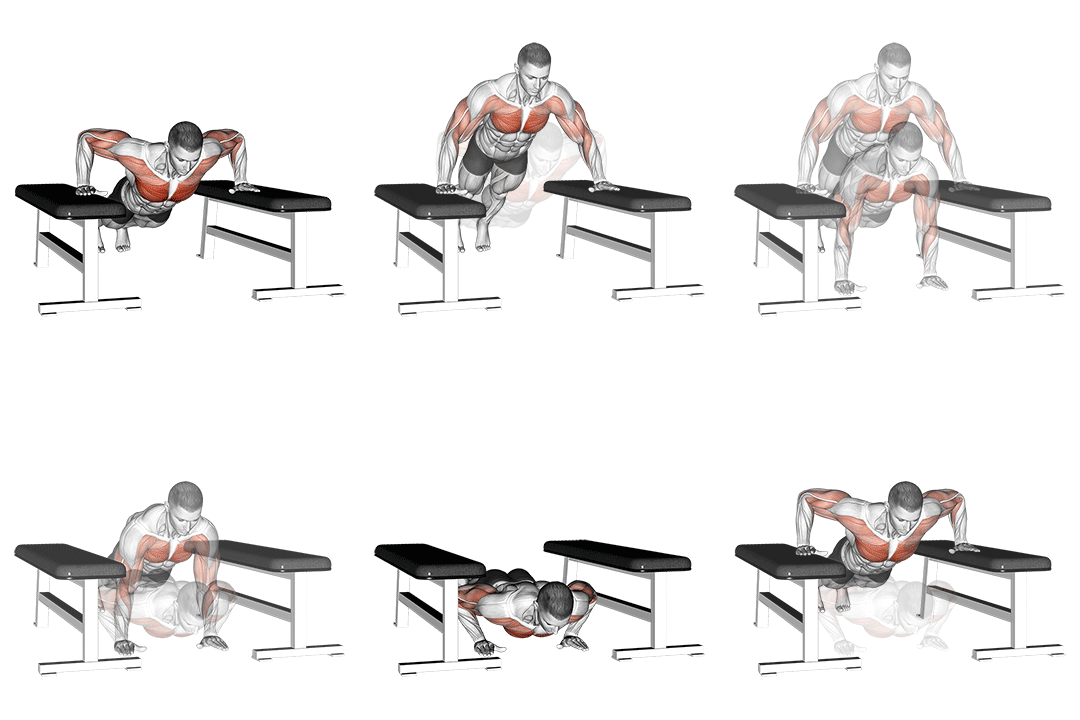
1. Drop Push Up
98.4% MatchHow to perform this exercise
- Start in a high plank position with your hands slightly wider than shoulder-width apart.
- Lower your chest towards the ground, keeping your elbows close to your body.
- Once your chest is just above the ground, quickly drop your knees to the ground.
- Push yourself back up to the starting position by extending your arms.
- Repeat for the desired number of repetitions.
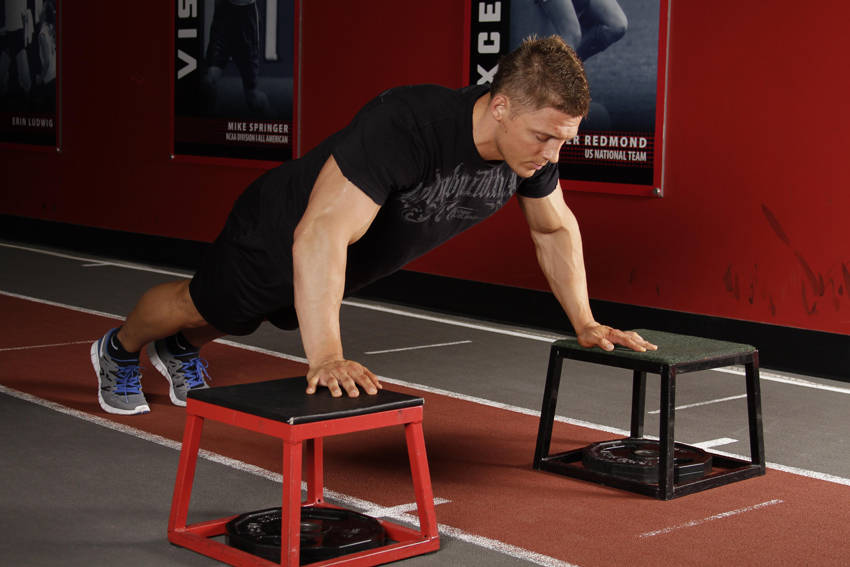
2. Drop Push
96.8% MatchHow to perform this exercise
- Position low boxes or other platforms 2-3 feet apart.
- Move to a pushup position between them, supporting yourself by placing your hands on the boxes.
- With good posture, drop from the platforms by pressing up and moving your hands to shoulder width, cushioning your landing by absorbing the impact through the arm.
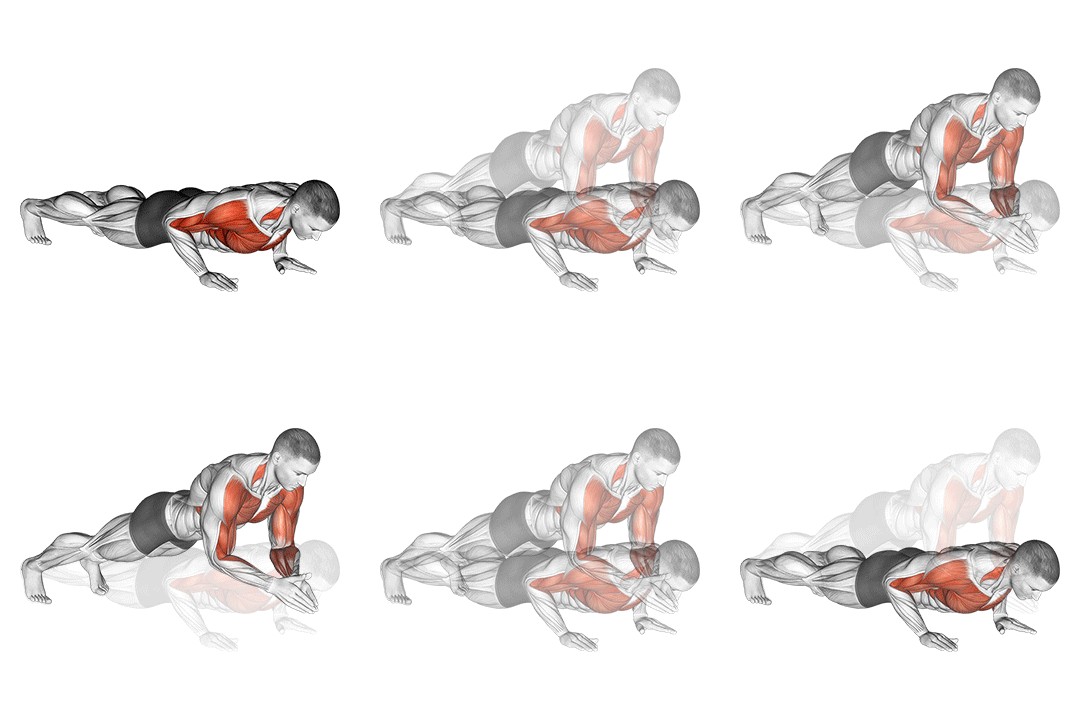
3. Clap Push Up
95.2% MatchHow to perform this exercise
- Start in a high plank position with your hands slightly wider than shoulder-width apart.
- Lower your body towards the ground by bending your elbows, keeping your core engaged.
- Push through your palms explosively to propel your body off the ground.
- While in mid-air, clap your hands together before landing back in the starting position.
- Repeat for the desired number of repetitions.
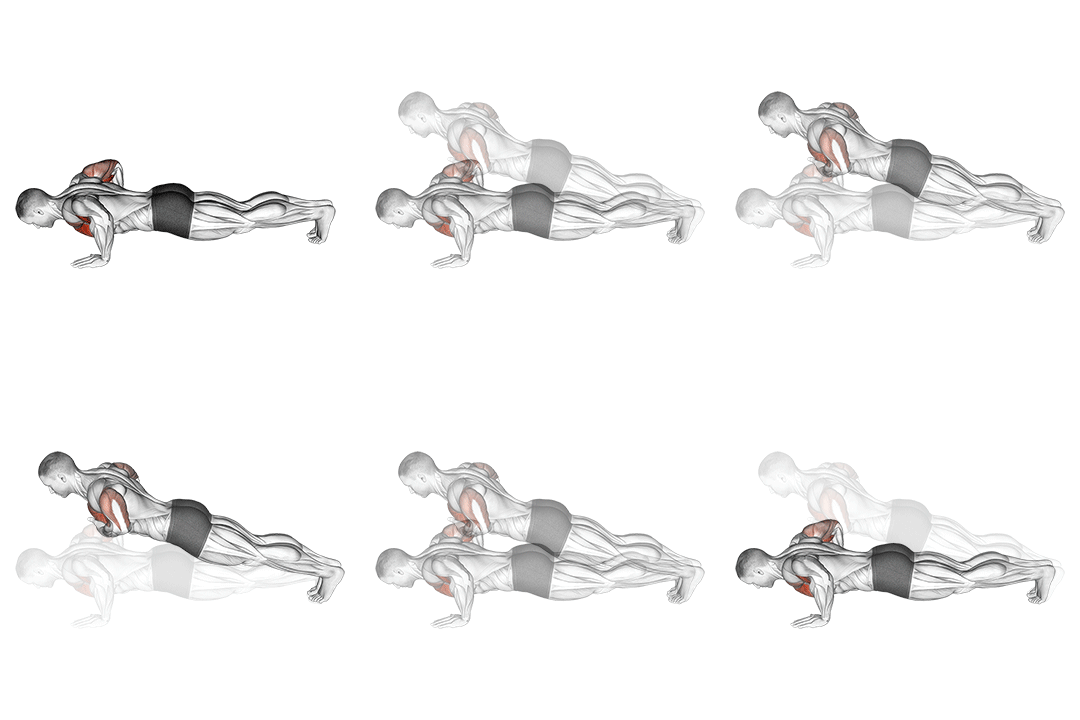
4. Chest Tap Push-up (male)
94.7% MatchHow to perform this exercise
- Start in a high plank position with your hands slightly wider than shoulder-width apart and your body in a straight line.
- Lower your body towards the ground by bending your elbows, keeping them close to your sides.
- As you lower yourself, tap your chest with your right hand.
- Push yourself back up to the starting position.
- Repeat the movement, this time tapping your chest with your left hand.
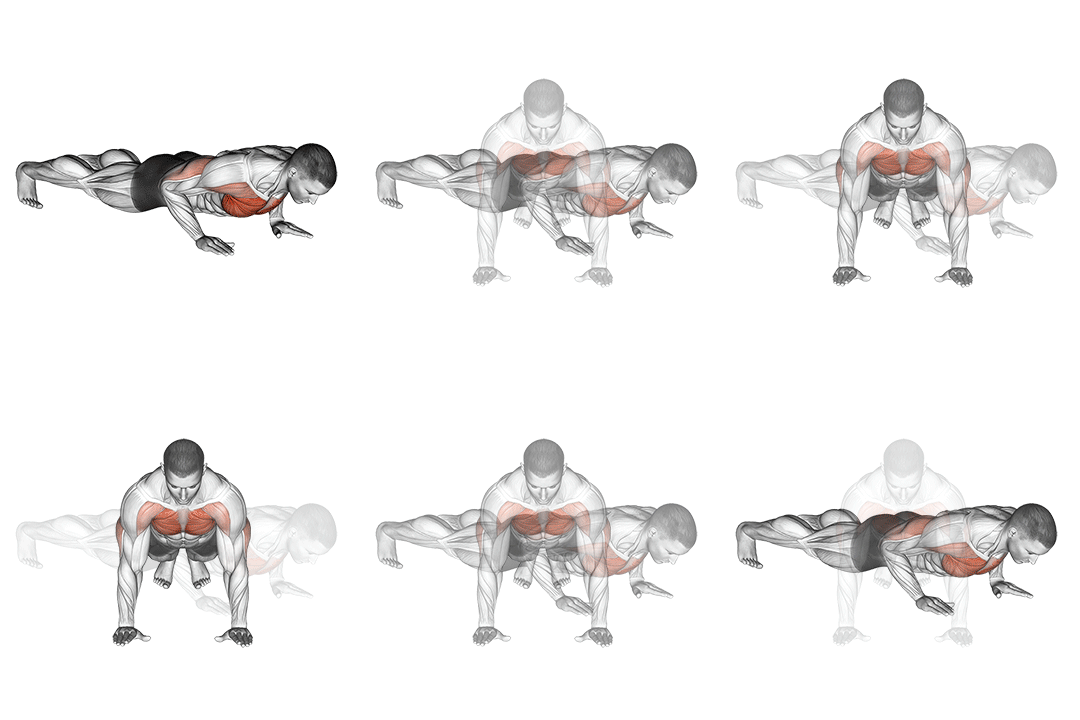
5. Clock Push-up
92.9% MatchHow to perform this exercise
- Start in a high plank position with your hands directly under your shoulders and your body in a straight line.
- Lower your body towards the ground by bending your elbows, keeping them close to your sides.
- As you lower, rotate your body to the left, extending your left arm straight out to the side.
- Push back up to the starting position, while rotating your body to the center.
- Repeat the push-up, this time rotating your body to the right and extending your right arm out to the side.
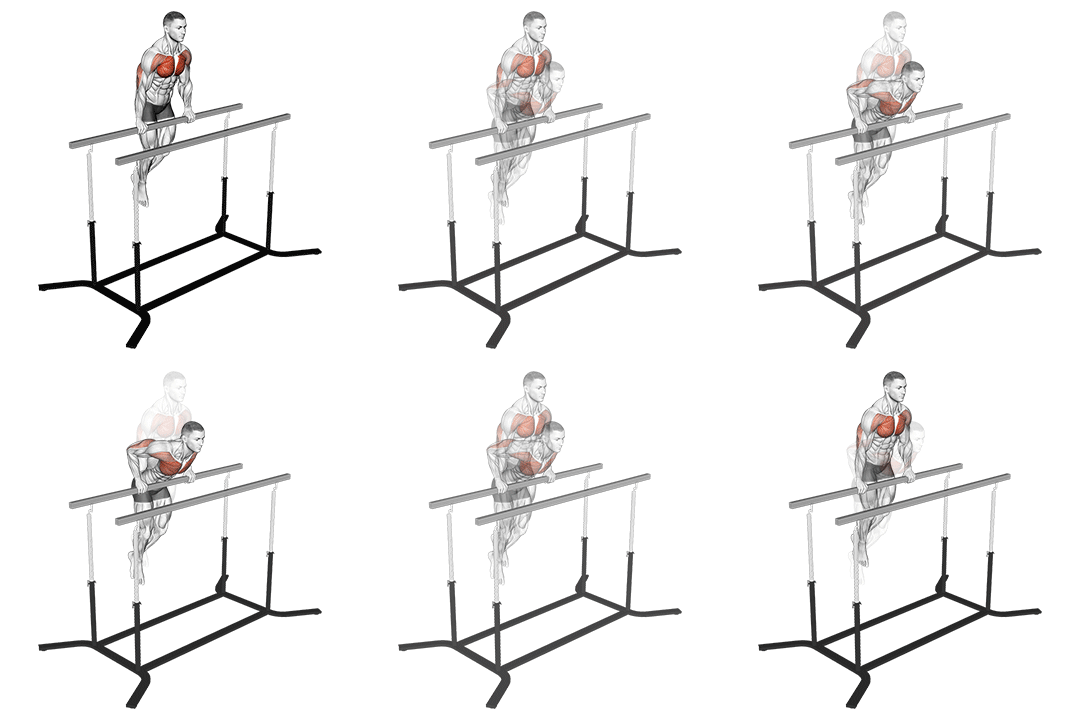
6. Chest Dip On Straight Bar
89.9% MatchHow to perform this exercise
- Grab the parallel bars with your palms facing down and your arms fully extended.
- Bend your knees and cross your ankles.
- Lower your body by bending your arms until your shoulders are below your elbows.
- Push yourself back up to the starting position by straightening your arms.
- Repeat for the desired number of repetitions.
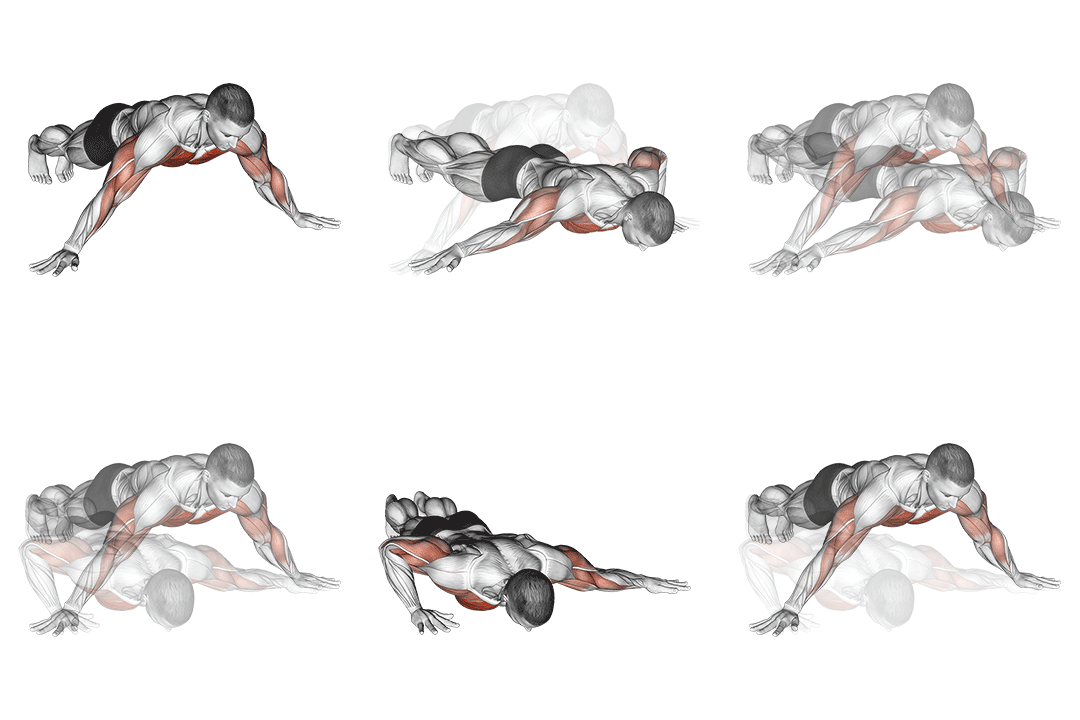
7. Archer Push Up
87.7% MatchHow to perform this exercise
- Start in a push-up position with your hands slightly wider than shoulder-width apart.
- Extend one arm straight out to the side, parallel to the ground.
- Lower your body by bending your elbows, keeping your back straight and core engaged.
- Push back up to the starting position.
- Repeat on the other side, extending the opposite arm out to the side.
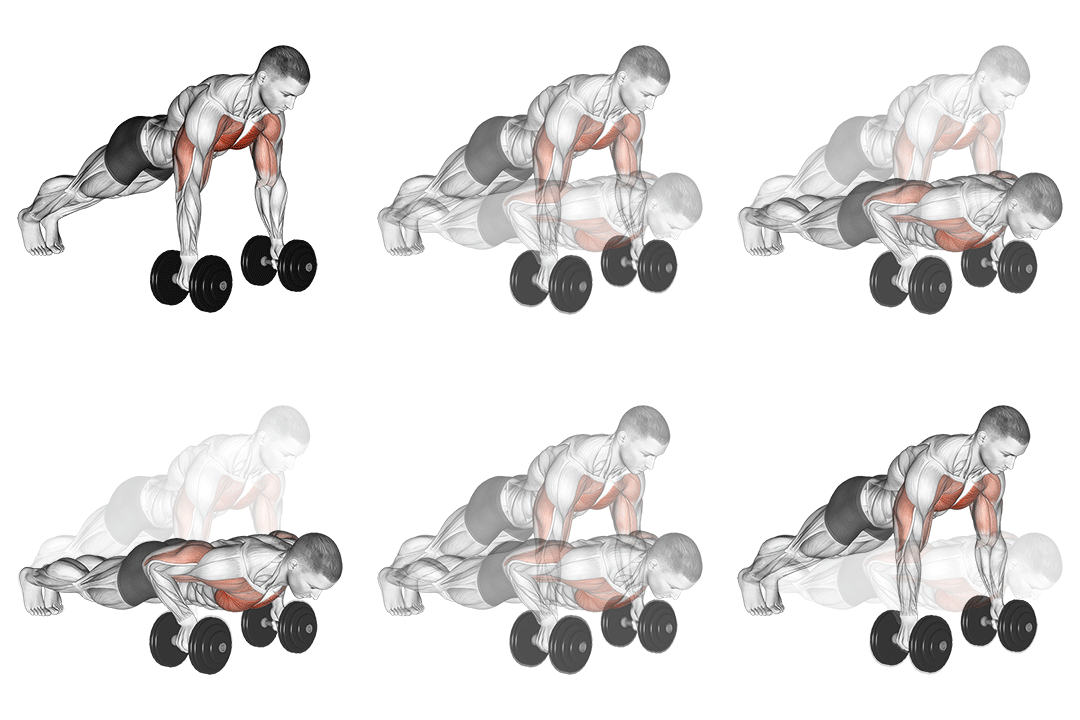
8. Deep Push Up
83.3% MatchHow to perform this exercise
- Start in a high plank position with your hands slightly wider than shoulder-width apart and your body in a straight line.
- Lower your chest towards the ground by bending your elbows, keeping them close to your body.
- Push through your palms to extend your arms and return to the starting position.
- Repeat for the desired number of repetitions.
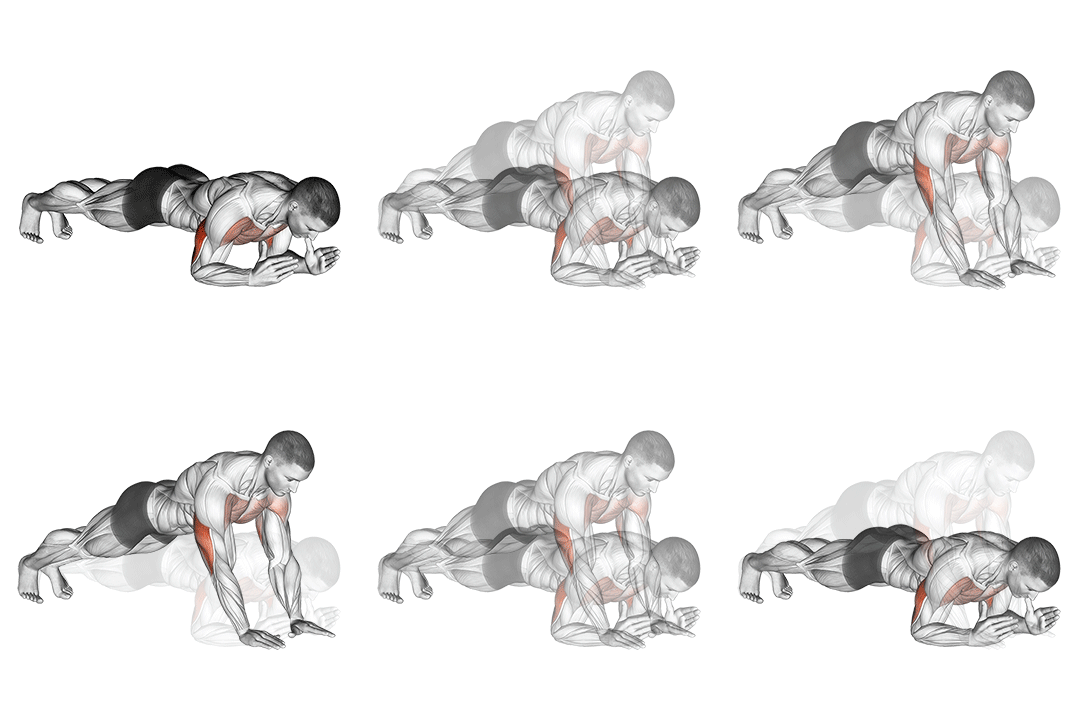
9. Decline Push-up
82.3% MatchHow to perform this exercise
- Place your hands on the ground slightly wider than shoulder-width apart, with your feet elevated on a stable surface.
- Keep your body in a straight line from head to toe, engaging your core muscles.
- Lower your chest towards the ground by bending your elbows, keeping them close to your body.
- Push through your palms to extend your arms and return to the starting position.
- Repeat for the desired number of repetitions.
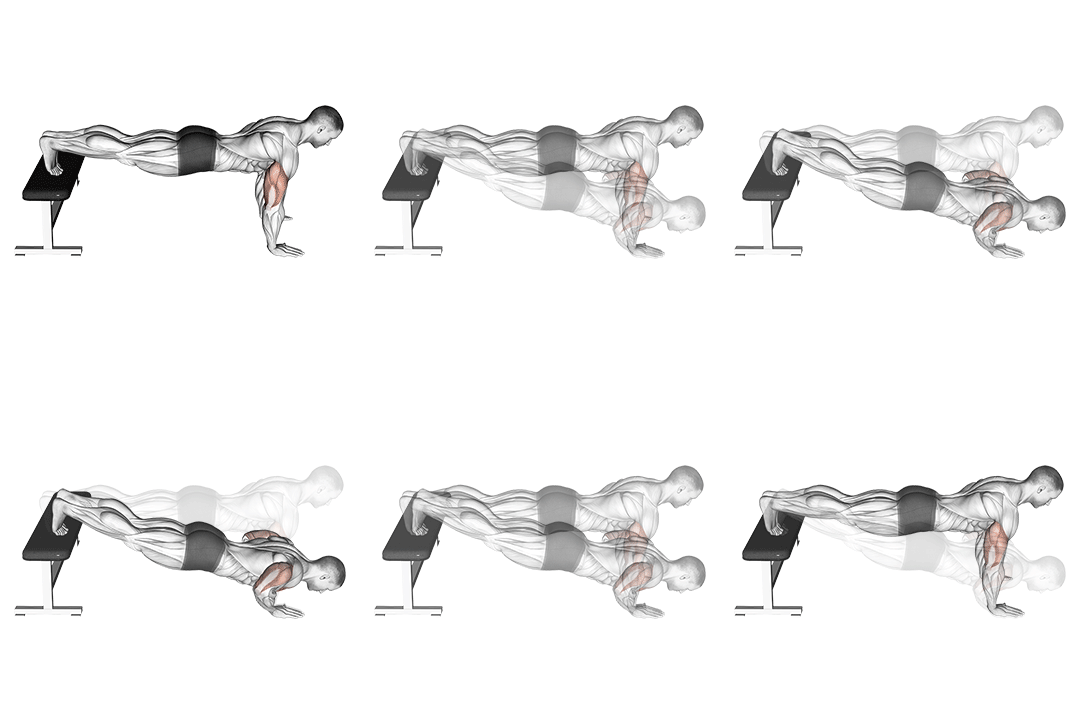
10. Body-up
81% MatchHow to perform this exercise
- Start by placing your hands on a raised surface, such as a bench or parallel bars, with your palms facing down and fingers pointing forward.
- Extend your legs out in front of you, keeping your heels on the ground and your body straight.
- Lower your body by bending your elbows, keeping them close to your sides, until your upper arms are parallel to the ground.
- Pause for a moment, then push through your palms to straighten your arms and lift your body back up to the starting position.
- Repeat for the desired number of repetitions.
Why You Might Need a Push-ups With Feet On An Exercise Ball Alternative
You might substitute feet-on-ball push-ups for several reasons: lack of a stable ball, ankle or shoulder pain from unstable footing, or a need for different loading patterns. Unstable push-ups raise core and serratus anterior demand; if you need lower instability but equal chest load, pick a decline push-up or bench press. If your wrists or shoulders tolerate instability poorly, use a neutral-grip dumbbell press to change joint angles and reduce shear. Cue for all: keep elbows at about 45 degrees to the torso to maximize pectoral recruitment and limit anterior shoulder strain.
How to Choose the Right Substitute
Match the substitute to the limiting factor: if stability is the issue, choose bench-supported decline push-ups or a dumbbell bench press to keep torso alignment. If you want the instability stimulus, use a TRX/suspension push-up and maintain a rigid plank to force transverse core activation. For load progression, pick barbell bench press or weighted push-ups and increase resistance gradually. Assess shoulder mobility—if limited, use a neutral-grip dumbbell press and cue scapular retraction and depression to protect the GH joint and maintain chest tension.
Frequently Asked Questions
What muscles does Push-ups With Feet On An Exercise Ball work?
The exercise primarily targets the pectoralis major while also stressing the anterior deltoid, triceps, serratus anterior, and core stabilizers. Because of the unstable surface, you get extra activation of the rectus abdominis and obliques to maintain a straight plank; cue: brace your core and retract the scapula at the top.
What is the best bodyweight alternative to Push-ups With Feet On An Exercise Ball?
Decline push-ups (feet elevated on a bench) are the best bodyweight alternative for similar upper-chest emphasis and load distribution. Keep a straight line from head to heels, tuck your ribs slightly, and lower with elbows at 45 degrees to maximize pectoral stretch and force production.
Can I build muscle without doing Push-ups With Feet On An Exercise Ball?
Yes — you can build chest muscle with other progressive overload methods like barbell or dumbbell bench presses, weighted push-ups, and slow eccentrics. Focus on full range of motion, controlled tempo, and progressive load increases while cueing a full pec contraction at lockout to maximize hypertrophy.
More Exercise Alternatives
Find Alternatives for Any Exercise
Use our free tool to discover the best substitute exercises based on your available equipment and goals.
Try the Exercise Substitution Finder →