

10 Best Quads Alternatives for Home Workouts
If you can’t perform the Quads exercise, use movements that replicate knee extension and leg drive: Bulgarian split squats, step-ups, narrow-stance squats, walking lunges, and sissy squats. Cue: keep knees tracking over toes and drive through the midfoot to emphasize vastus lateralis and medialis activation and preserve quad-dominant mechanics.
Original Exercise: Quads
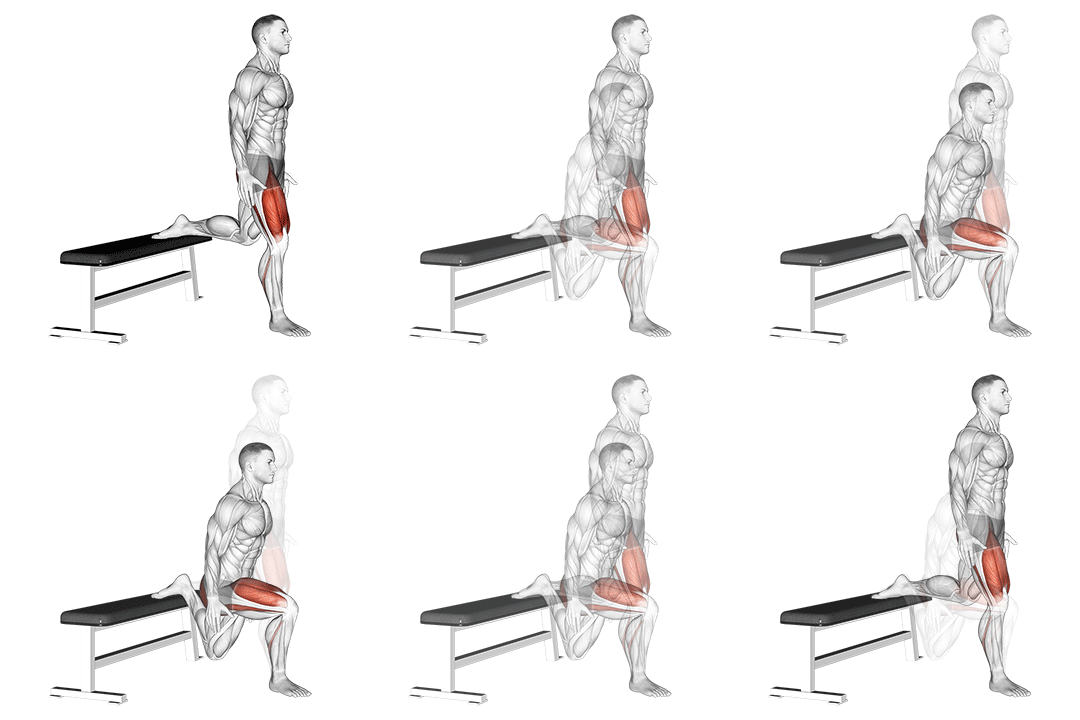
How to Perform Quads
- Stand with your feet shoulder-width apart.
- Lower your body by bending your knees and pushing your hips back as if sitting on a chair.
- Keep your chest up and your back straight.
- Lower yourself until your thighs are parallel to the ground.
- Push through your heels to return to the starting position.
- Repeat for the desired number of repetitions.
Best Quads Alternatives
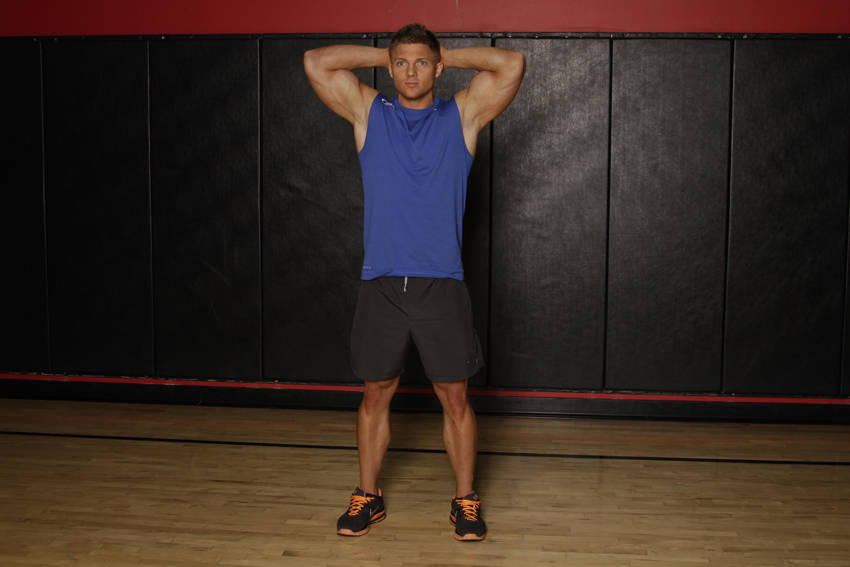
1. Bodyweight Squat
94.2% MatchHow to perform this exercise
- Stand with your feet shoulder width apart. You can place your hands behind your head. This will be your starting position.
- Begin the movement by flexing your knees and hips, sitting back with your hips.
- Continue down to full depth if you are able,and quickly reverse the motion until you return to the starting position. As you squat, keep your head and chest up and push your knees out.
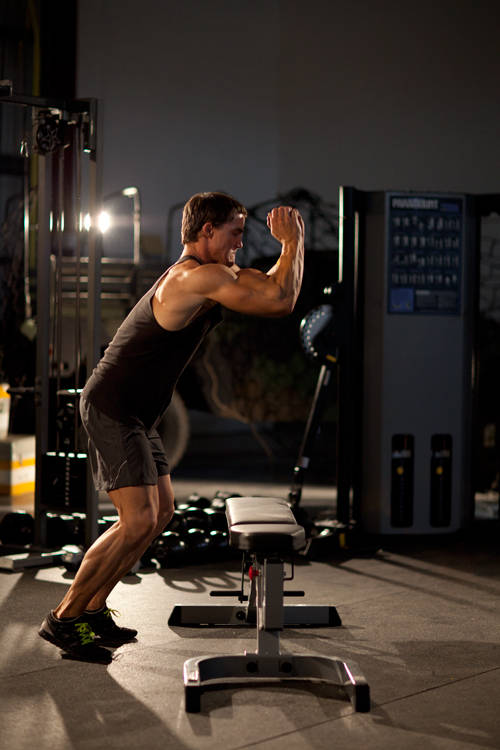
2. Bench Jump
92.6% MatchHow to perform this exercise
- Begin with a box or bench 1-2 feet in front of you. Stand with your feet shoulder width apart. This will be your starting position.
- Perform a short squat in preparation for the jump; swing your arms behind you.
- Rebound out of this position, extending through the hips, knees, and ankles to jump as high as possible. Swing your arms forward and up.
- Jump over the bench, landing with the knees bent, absorbing the impact through the legs.
- Turn around and face the opposite direction, then jump back over the bench.
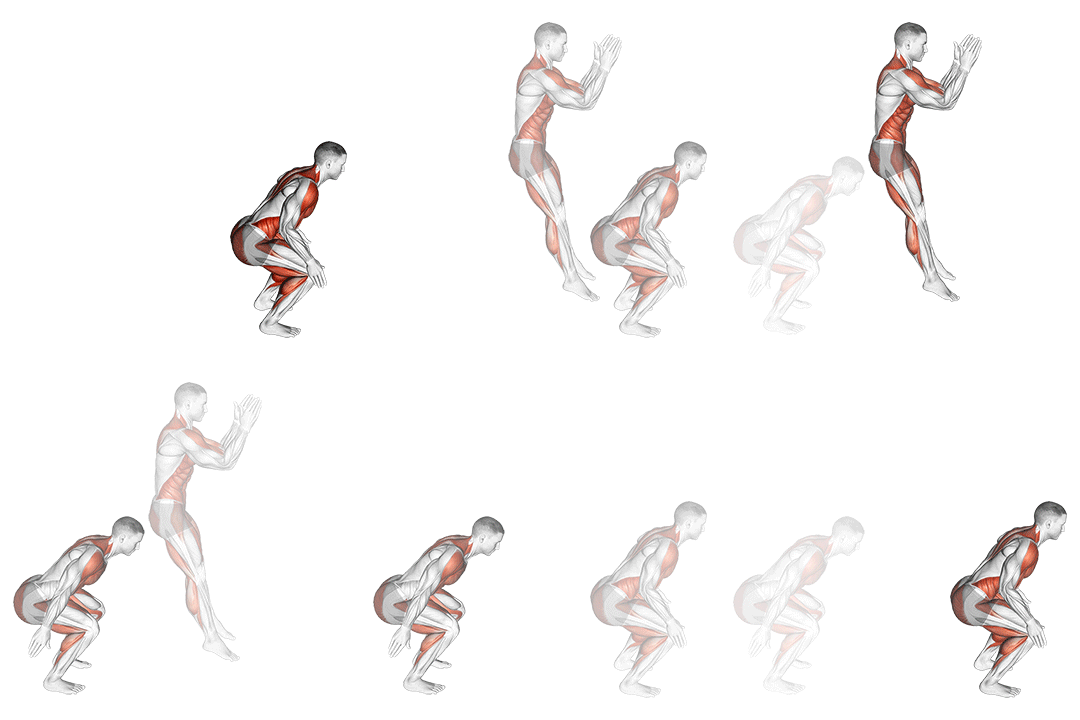
3. Backward Jump
91.8% MatchHow to perform this exercise
- Stand with your feet shoulder-width apart.
- Bend your knees slightly and jump backwards, pushing off with both feet.
- Land softly on the balls of your feet, bending your knees to absorb the impact.
- Repeat for the desired number of repetitions.
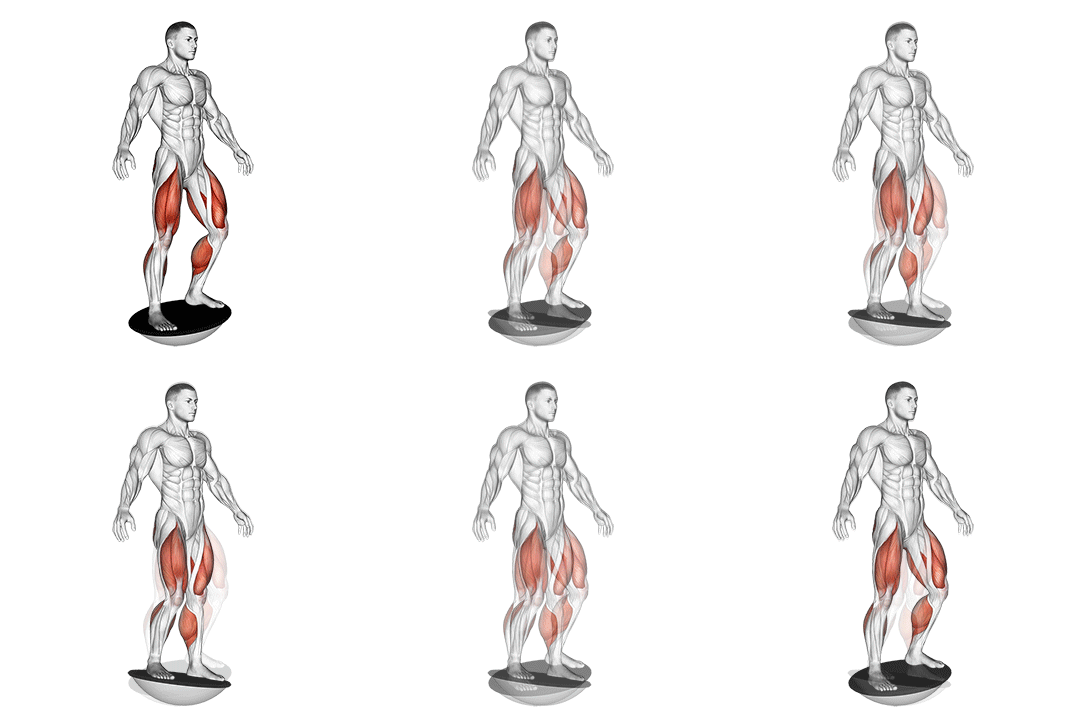
4. Balance Board
85.4% MatchHow to perform this exercise
- Place the balance board on a flat surface.
- Step onto the balance board with one foot, ensuring it is centered.
- Slowly shift your weight onto the foot on the balance board, keeping your core engaged.
- Maintain your balance and stability as you hold the position for a desired amount of time.
- Repeat the exercise with the other foot.
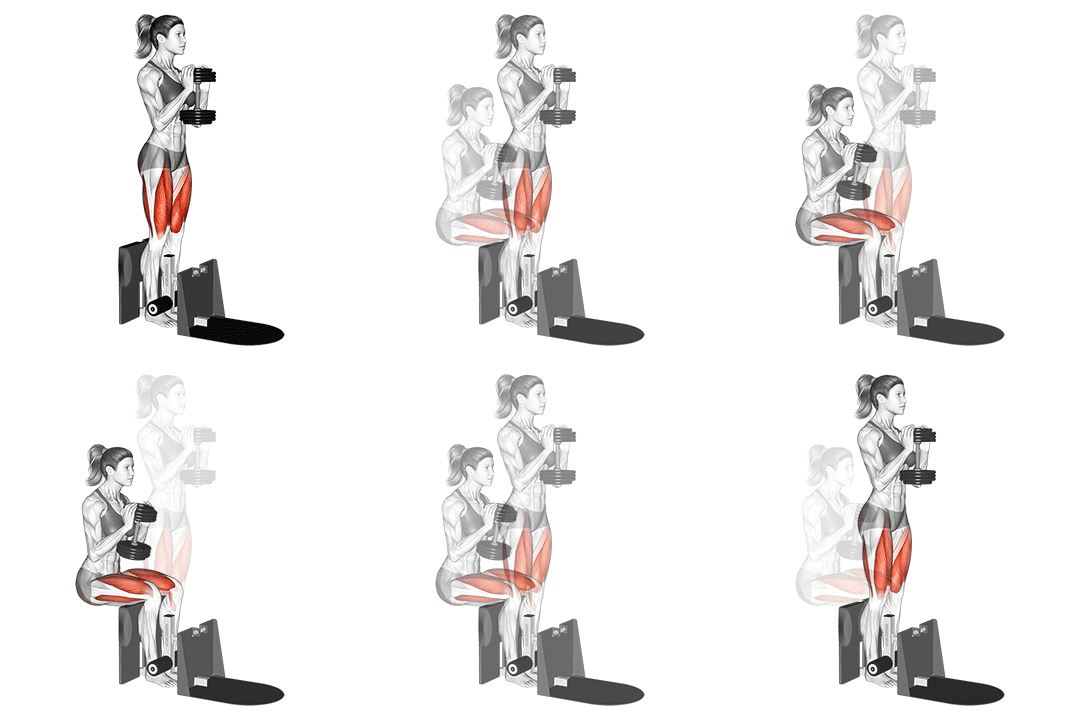
5. Dumbbell Supported Squat
83.7% MatchHow to perform this exercise
- Stand with your feet shoulder-width apart, holding a dumbbell in each hand at your sides.
- Keeping your chest up and core engaged, slowly lower your body down by bending your knees and pushing your hips back.
- Continue lowering until your thighs are parallel to the ground, or as low as you can comfortably go.
- Pause for a moment at the bottom, then push through your heels to return to the starting position.
- Repeat for the desired number of repetitions.
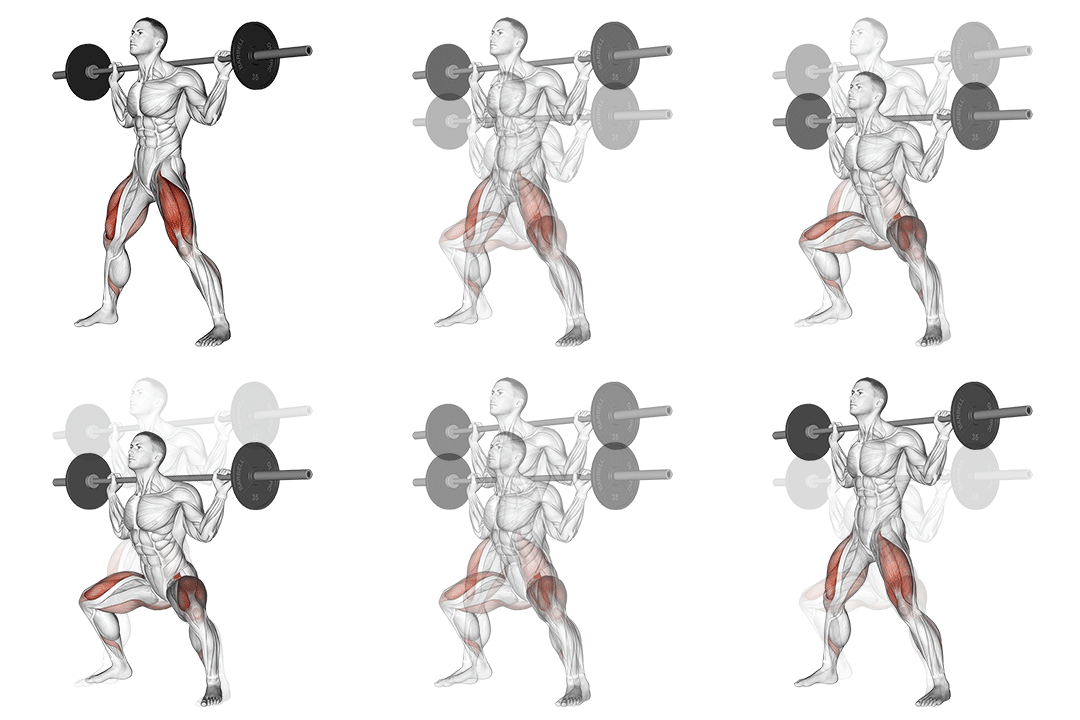
6. Barbell Wide Squat
82.8% MatchHow to perform this exercise
- Stand with your feet wider than shoulder-width apart, toes pointing slightly outward.
- Hold the barbell across your upper back, resting it on your traps or rear delts.
- Engage your core and keep your chest up as you lower your body down into a squat, pushing your hips back and bending your knees.
- Lower until your thighs are parallel to the ground, or as low as you can comfortably go.
- Pause for a moment at the bottom, then push through your heels to return to the starting position.
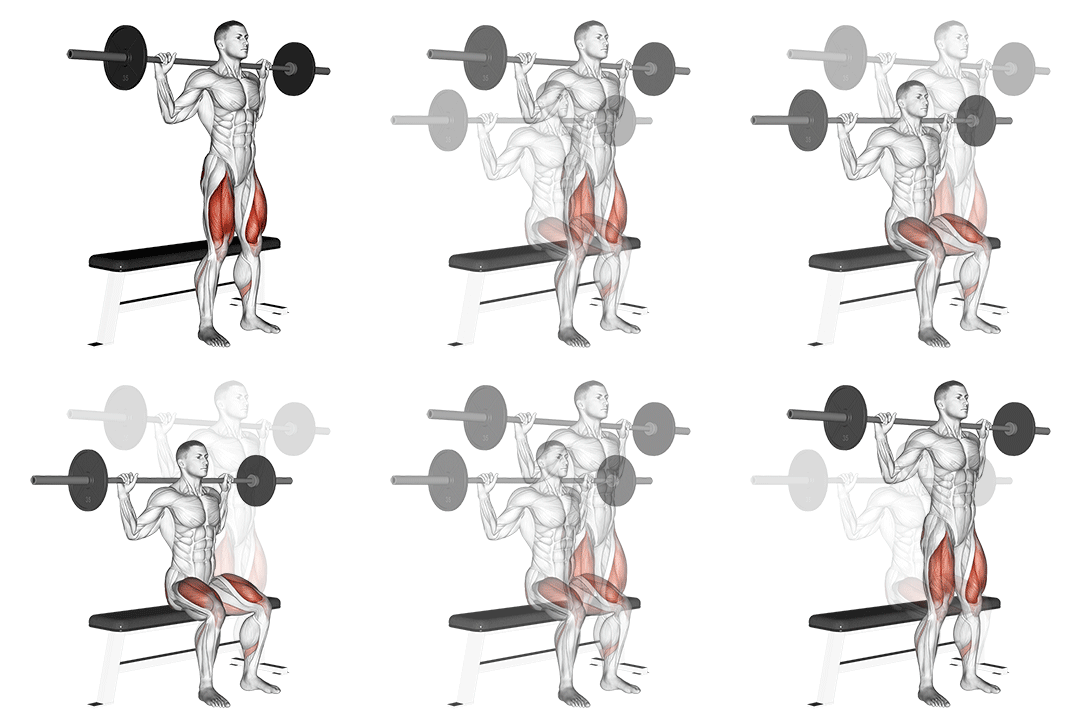
7. Barbell Bench Squat
82.8% MatchHow to perform this exercise
- Set up a barbell on a squat rack at chest height.
- Stand facing away from the rack, with your feet shoulder-width apart.
- Bend your knees and lower your body down into a squat position, keeping your back straight and chest up.
- Grasp the barbell with an overhand grip, slightly wider than shoulder-width apart.
- Lift the barbell off the rack and step back, ensuring your feet are still shoulder-width apart.
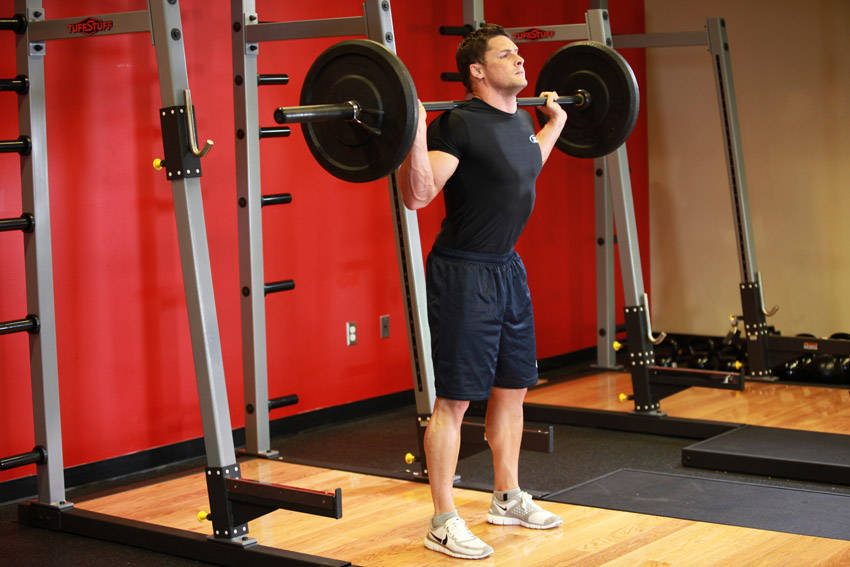
8. Barbell Squat
79.1% MatchHow to perform this exercise
- This exercise is best performed inside a squat rack for safety purposes. To begin, first set the bar on a rack to just below shoulder level. Once the correct height is chosen and the bar is loaded, step under the bar and place the back of your shoulders (slightly below the neck) across it.
- Hold on to the bar using both arms at each side and lift it off the rack by first pushing with your legs and at the same time straightening your torso.
- Step away from the rack and position your legs using a shoulder width medium stance with the toes slightly pointed out. Keep your head up at all times and also maintain a straight back. This will be your starting position. (Note: For the purposes of this discussion we will use the medium stance described above which targets overall development; however you can choose any of the three stances discussed in the foot stances section).
- Begin to slowly lower the bar by bending the knees and hips as you maintain a straight posture with the head up. Continue down until the angle between the upper leg and the calves becomes slightly less than 90-degrees. Inhale as you perform this portion of the movement. Tip: If you performed the exercise correctly, the front of the knees should make an imaginary straight line with the toes that is perpendicular to the front. If your knees are past that imaginary line (if they are past your toes) then you are placing undue stress on the knee and the exercise has been performed incorrectly.
- Begin to raise the bar as you exhale by pushing the floor with the heel of your foot as you straighten the legs again and go back to the starting position.
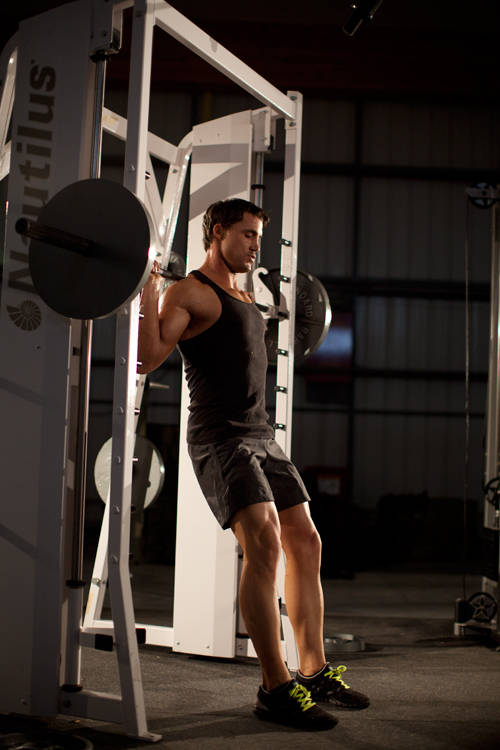
9. Chair Squat
78.3% MatchHow to perform this exercise
- To begin, first set the bar to a position that best matches your height. Once the bar is loaded, step under it and position it across the back of your shoulders.
- Take the bar with your hands facing forward, unlock it and lift it off the rack by extending your legs.
- Move your feet forward about 18 inches in front of the bar. Position your legs using a shoulder width stance with the toes slightly pointed out. Look forward at all times and maintain a neutral or slightly arched spine. This will be your starting position.
- Slowly lower the bar by bending the knees as you maintain a straight posture with the head up. Continue down until the angle between the upper and lower leg breaks 90 degrees.
- Begin to raise the bar as you exhale by pushing the floor with the heels of your feet, extending the knees and returning to the starting position.
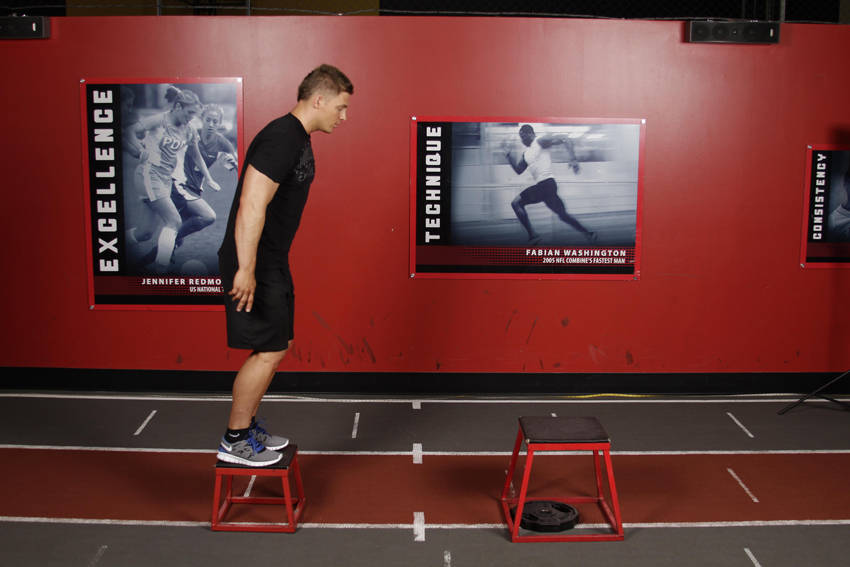
10. Depth Jump Leap
77% MatchHow to perform this exercise
- For this drill you will need two boxes or benches, one 12 to 16 inches high and the other 22 to 26 inches high.
- Stand on one of the two boxes with arms at the sides; feet should be together and slightly off the edge as in the depth jump. Place the other box approximately two or three feet in front of and facing the performer.
- Begin by dropping off the initial box, landing and simultaneously taking off with both feet.
- Rebound by driving upward and outward as intensely as possible, using the arms and full extension of the body to jump onto the higher box. Again, allow the legs to absorb the impact.
Why You Might Need a Quads Alternative
You might substitute Quads because of knee pain, limited equipment, mobility limits, or to vary stimulus. Alternatives let you reduce anterior knee shear or shift load by changing leverage—shorter levers lower knee torque while an upright torso biases quad activation over hip extensors. For rehab choose reduced range or split stance patterns; for strength pick unilateral options to fix asymmetries. Cue for rehabilitation: limit depth, maintain knees over toes, and stop before sharp joint pain to keep quad contraction without excessive compression.
How to Choose the Right Substitute
Choose based on movement pattern, load capacity, range of motion, and symptom response. Prioritize knee-dominant options when your goal is quad hypertrophy—select exercises that allow full knee extension under tension (e.g., step-ups or split squats) and maintain an upright torso to bias the quads. If you have joint pain, shorten lever arm or reduce range to decrease knee torque. For strength or unilateral balance pick Bulgarian split squats; for high volume hypertrophy use slow eccentrics and controlled pauses to maximize quad time-under-tension.
Frequently Asked Questions
What muscles does Quads work?
Quads primarily target the quadriceps group: rectus femoris, vastus lateralis, vastus medialis, and vastus intermedius, whose main action is knee extension. The rectus femoris also assists hip flexion; cue full knee extension and feel the contraction along the front of the thigh to confirm quad activation.
What is the best bodyweight alternative to Quads?
The Bulgarian split squat is the best bodyweight alternative because it maintains a steep knee angle and high quad loading while allowing unilateral progression. Cue: keep the front foot planted, torso upright, and drive through the front midfoot to maximize knee extension and quad recruitment.
Can I build muscle without doing Quads?
Yes. You can build quad muscle with other knee-dominant movements—step-ups, narrow-stance squats, walking lunges, and sissy squats—so long as you apply progressive overload. Use controlled eccentrics (3-second descent), full knee extension, and increase volume to drive hypertrophy while monitoring joint comfort.
More Exercise Alternatives
Find Alternatives for Any Exercise
Use our free tool to discover the best substitute exercises based on your available equipment and goals.
Try the Exercise Substitution Finder →