

10 Best Return Push From Stance Alternatives for Shoulder Strength
If you need a substitute for Return Push From Stance, use exercises that reproduce the shoulder push mechanics and deltoid load. Effective swaps include medicine-ball chest passes, seated dumbbell presses, landmine single-arm presses, and pike push-ups. Cue a controlled eccentric and full scapular protraction on each rep to maintain deltoid activation and joint stability.
Original Exercise: Return Push From Stance
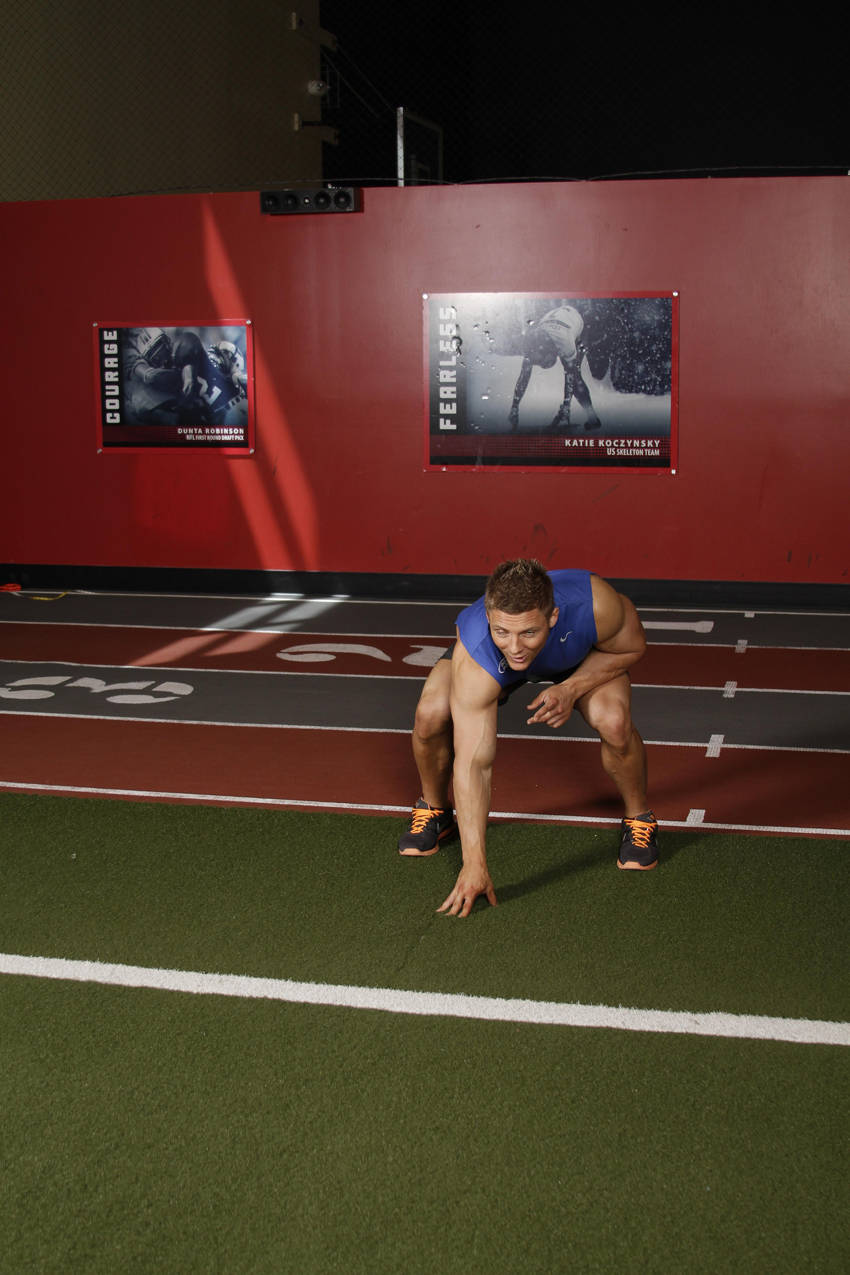
How to Perform Return Push From Stance
- You will need a partner for this drill.
- Begin in an athletic 2 or 3 point stance.
- At the signal, move into a position to receive the pass from your partner.
- Catch the medicine ball with both hands and immediately throw it back to your partner.
- You can modify this drill by running different routes.
Pro Tips
- Category: Plyometrics
- Force: Push
- Movement type: Compound
Best Return Push From Stance Alternatives
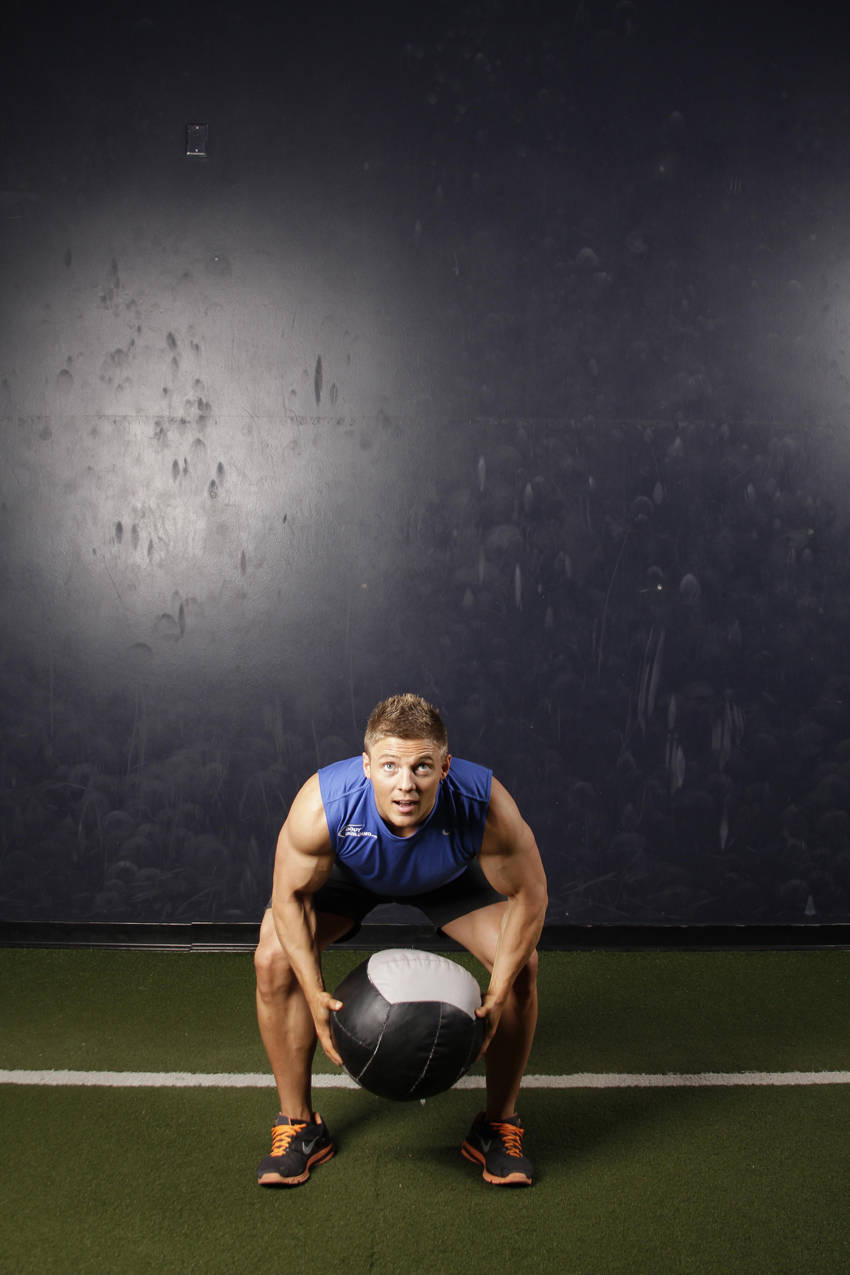
1. Backward Medicine Ball Throw
95.4% MatchHow to perform this exercise
- This exercise is best done with a partner. If you lack a partner, the ball can be thrown and retrieved or thrown against a wall.
- Begin standing a few meters in front of your partner, both facing the same direction. Begin holding the ball between your legs.
- Squat down and then forcefully reverse direction, coming to full extension and you toss the ball over your head to your partner.
- Your partner can then roll the ball back to you. Repeat for the desired number of repetitions.
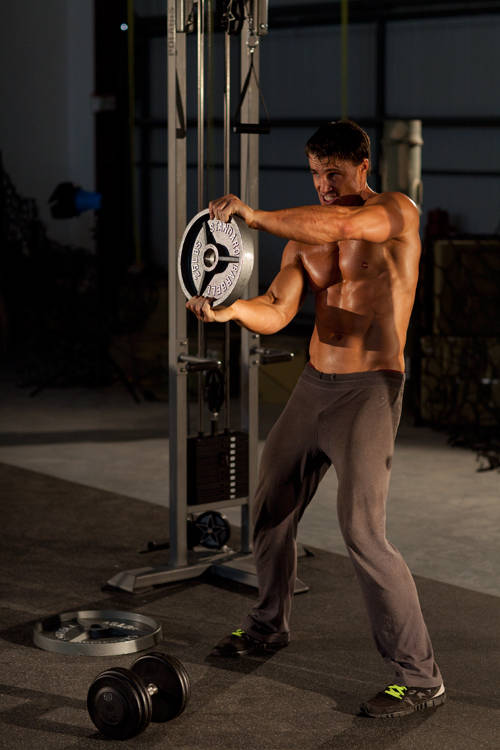
2. Car Drivers
86.9% MatchHow to perform this exercise
- While standing upright, hold a barbell plate in both hands at the 3 and 9 o'clock positions. Your palms should be facing each other and your arms should be extended straight out in front of you. This will be your starting position.
- Initiate the movement by rotating the plate as far to one side as possible. Use the same type of movement you would use to turn a steering wheel to one side.
- Reverse the motion, turning it all the way to the opposite side.
- Repeat for the recommended amount of repetitions.
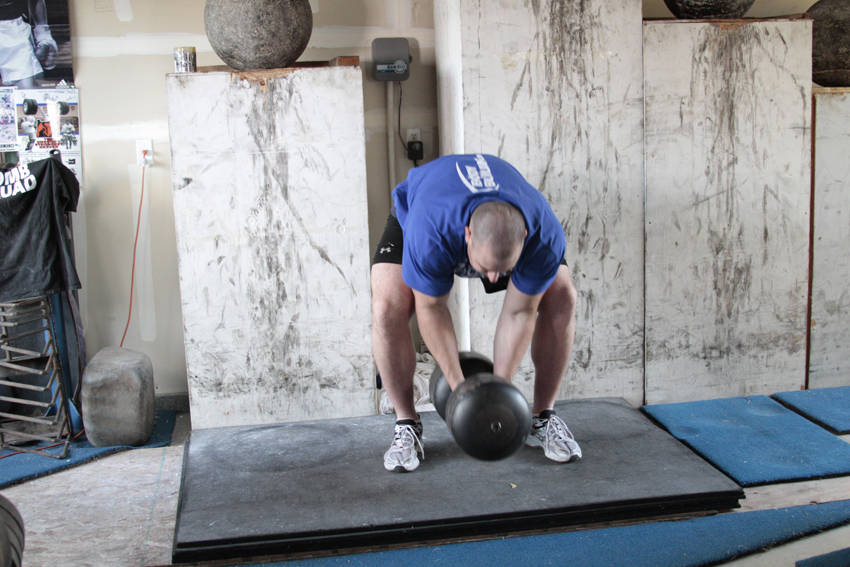
3. Circus Bell
86.9% MatchHow to perform this exercise
- The circus bell is an oversized dumbbell with a thick handle. Begin with the dumbbell between your feet, and grip the handle with both hands.
- Clean the dumbbell by extending through your hips and knees to deliver the implement to the desired shoulder, letting go with the extra hand.
- Ensure that you get one of the dumbbell heads behind the shoulder to keep from being thrown off balance. To raise it overhead, dip by flexing the knees, and the drive upwards as you extend the dumbbell overhead, leaning slightly away from it as you do so.
- Carefully guide the bell back to the floor, keeping it under control as much as possible. It is best to perform this event on a thick rubber mat to prevent damage to the floor.
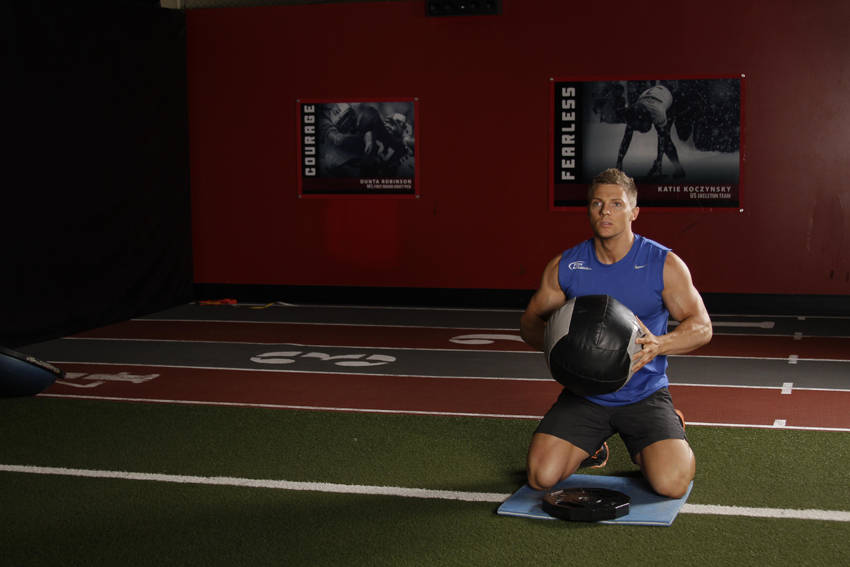
4. Chest Push (single Response)
83.9% MatchHow to perform this exercise
- Begin in a kneeling position holding the medicine ball with both hands tightly into the chest.
- Execute the pass by exploding forward and outward with the hips while pushing the ball as far as possible.
- Follow through by falling forward, catching yourself with your hands.
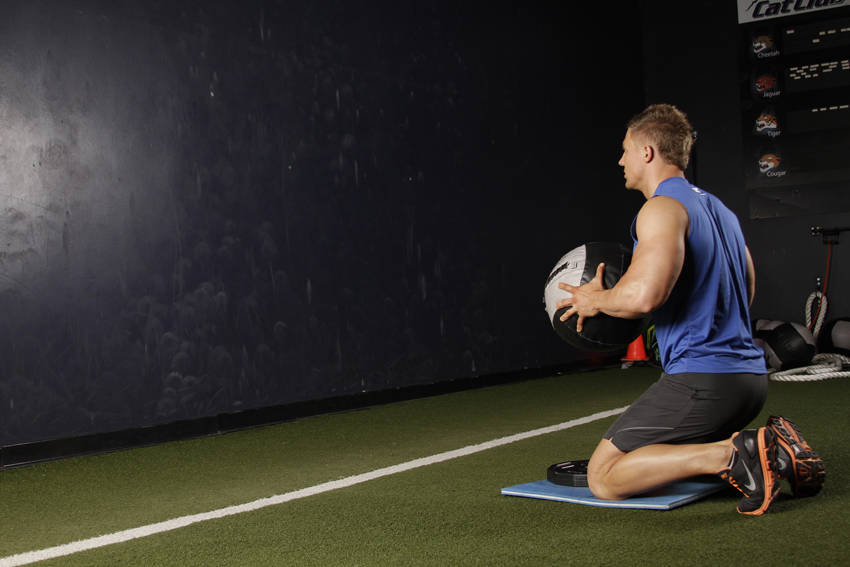
5. Chest Push (multiple Response)
83.3% MatchHow to perform this exercise
- Begin in a kneeling position facing a wall or utilize a partner. Hold the ball with both hands tight into the chest.
- Execute the pass by exploding forward and outward with the hips while pushing the ball as hard as possible.
- Follow through by falling forward, catching yourself with your hands.
- Immediately return to an upright position. Repeat for the desired number of repetitions.
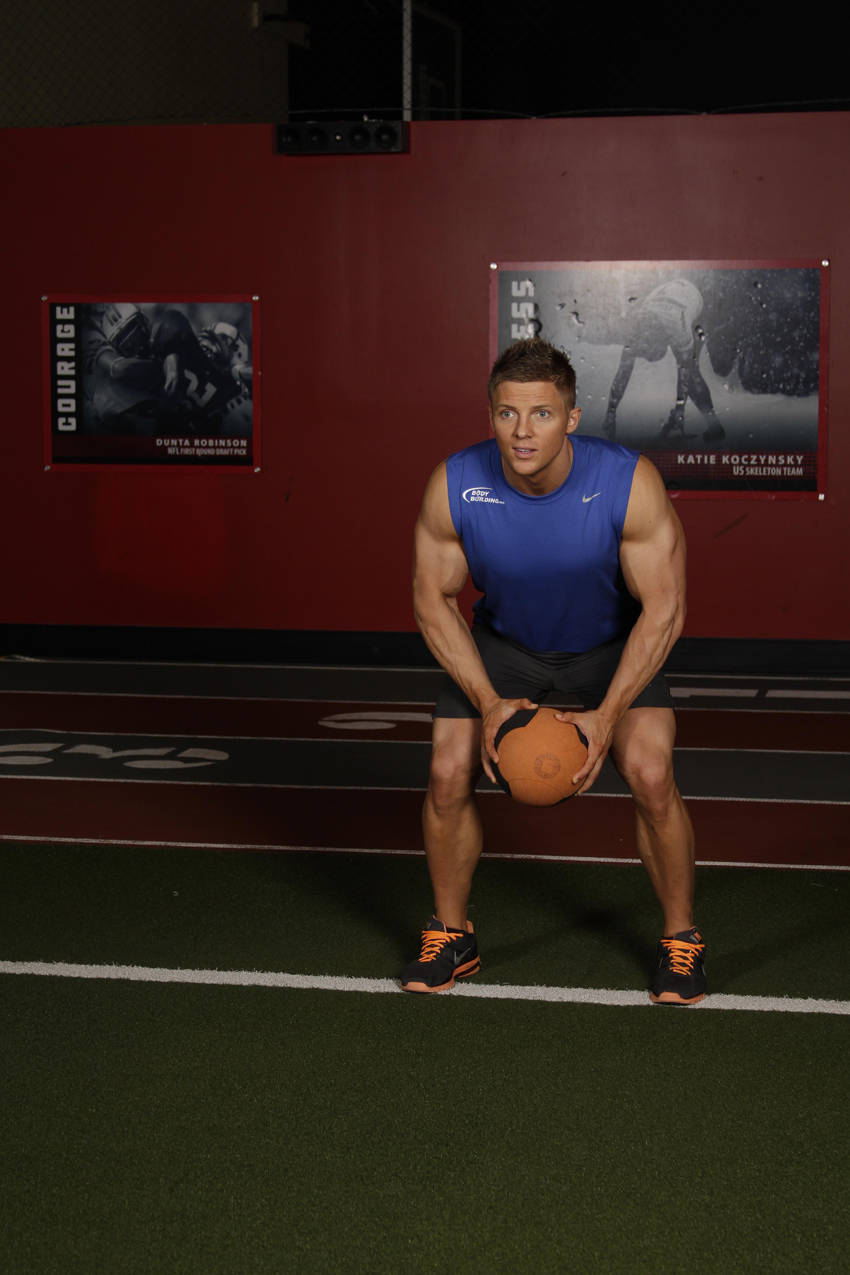
6. Chest Push With Run Release
81.9% MatchHow to perform this exercise
- Begin in an athletic stance with the knees bent, hips back, and back flat. Hold the medicine ball near your legs. This will be your starting position.
- While taking your first step draw the medicine ball into your chest.
- As you take the second step, explosively push the ball forward, immediately sprinting for 10 yards after the release. If you are really fast, you can catch your own pass!
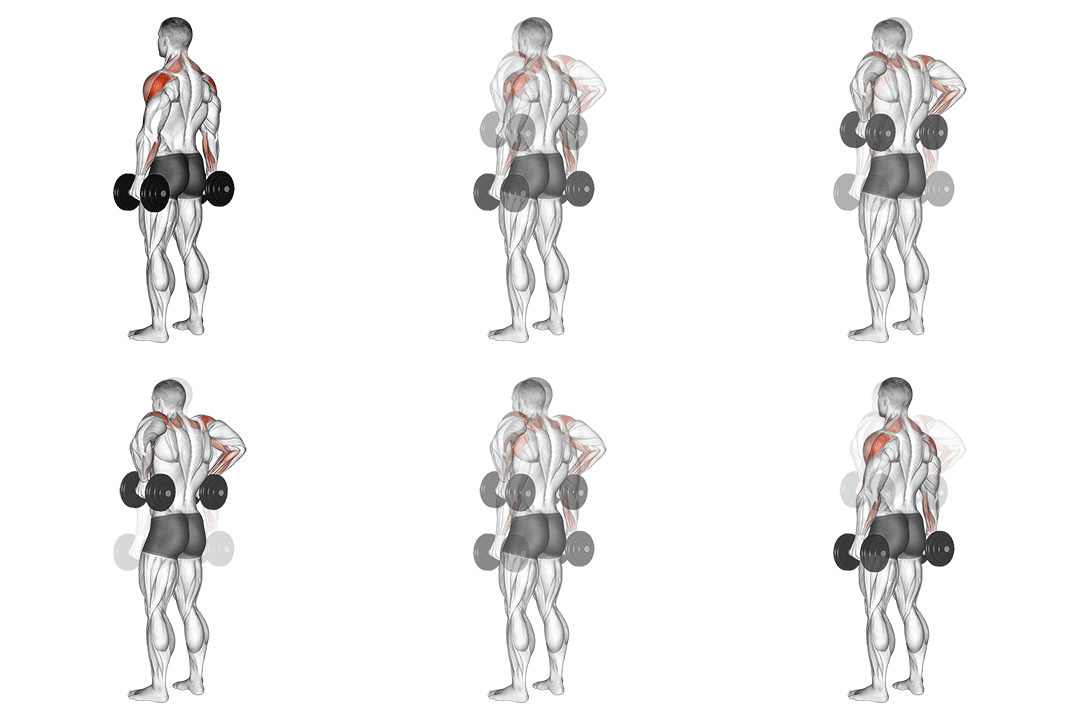
7. Dumbbell Rear Delt Raise
79.7% MatchHow to perform this exercise
- Stand with your feet shoulder-width apart and hold a dumbbell in each hand, palms facing your body.
- Bend your knees slightly and hinge forward at the hips, keeping your back straight.
- Raise your arms out to the sides, keeping a slight bend in your elbows, until they are parallel to the floor.
- Pause for a moment at the top, then slowly lower your arms back down to the starting position.
- Repeat for the desired number of repetitions.
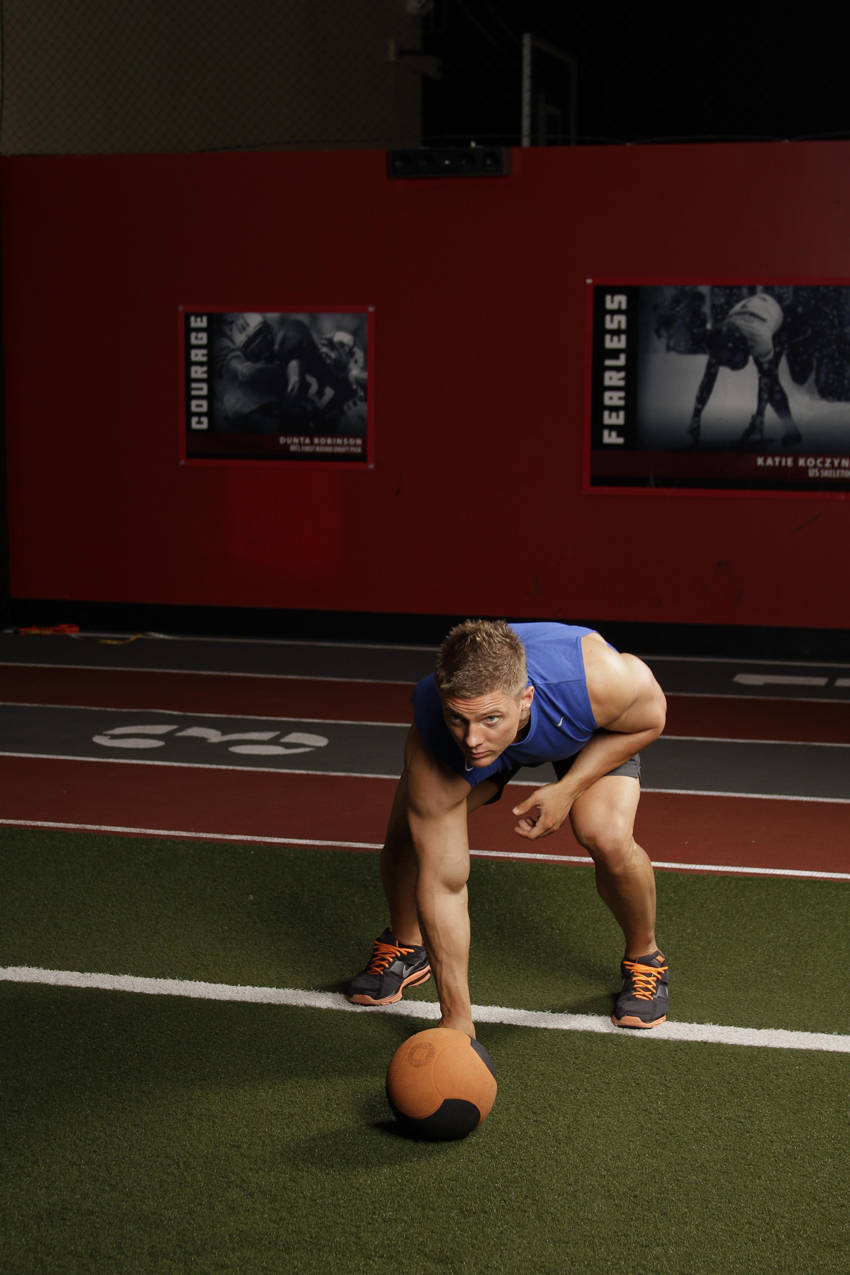
8. Chest Push From 3 Point Stance
75.9% MatchHow to perform this exercise
- Begin in a three point stance, squatted down with your back flat and one hand on the ground. Place the medicine ball directly in front of you.
- To begin, take your first step as you pull the ball to your chest, positioning both hands to prepare for the throw.
- As you execute the second step, explosively release the ball forward as hard as possible.
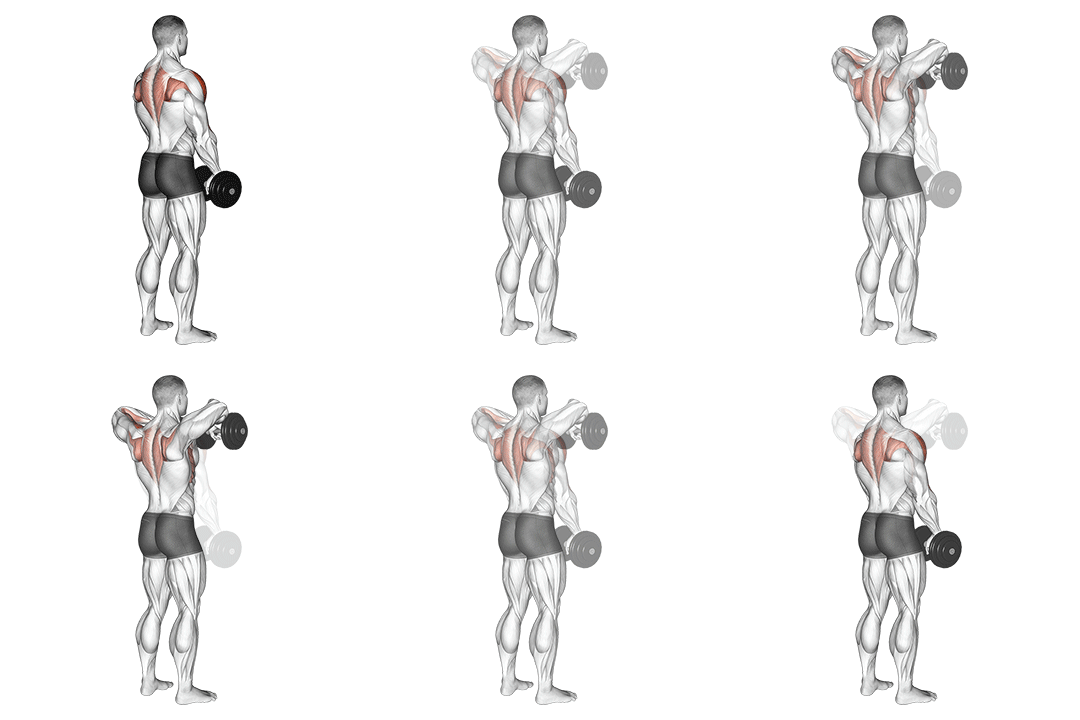
9. Dumbbell Upright Row (back Pov)
75.4% MatchHow to perform this exercise
- Stand with your feet shoulder-width apart, holding a dumbbell in each hand with an overhand grip.
- Let the dumbbells hang in front of your thighs, with your arms fully extended and your palms facing your body.
- Keeping your back straight and your core engaged, exhale and lift the dumbbells straight up towards your chin, leading with your elbows.
- Continue lifting until the dumbbells are at shoulder height, with your elbows pointing out to the sides.
- Pause for a moment at the top, then inhale and slowly lower the dumbbells back down to the starting position.
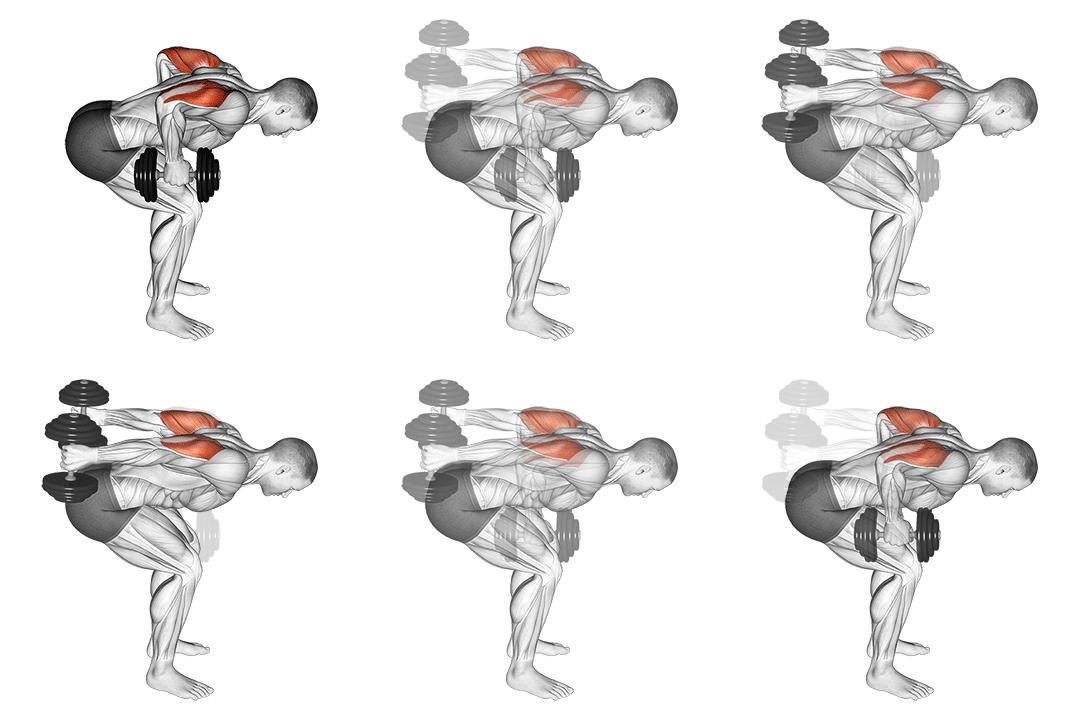
10. Dumbbell Standing Bent Over Two Arm Triceps Extension
74.7% MatchHow to perform this exercise
- Stand with your feet shoulder-width apart and hold a dumbbell in each hand.
- Bend forward at the waist, keeping your back straight and your knees slightly bent.
- Extend your arms straight back, keeping your elbows close to your body.
- Slowly lower the dumbbells back down to the starting position.
- Repeat for the desired number of repetitions.
Why You Might Need a Return Push From Stance Alternative
You may swap Return Push From Stance for several reasons: limited equipment (no medicine ball), acute shoulder pain or rotator cuff irritation, or programming needs like unilateral stimulus or higher volume. Substitutes let you keep the deltoids under tension while altering stability demands and range of motion. Choose movements that preserve the original push vector — horizontal or vertical — and that limit painful abduction or external rotation if you have cuff issues. For technique, keep the scapula mobile but controlled, avoid shoulder hiking, and drive through the palm to emphasize anterior/medial deltoid activation while protecting the glenohumeral joint.
How to Choose the Right Substitute
Match the substitute to the movement plane, load capacity, and stability you need. For vertical push emphasis pick seated or standing dumbbell presses; for horizontal power choose medicine-ball chest passes or push-up variants. Consider unilateral landmine presses to reduce shear and improve scapular control if you have cuff soreness. Prioritize progressive overload, maintain a 2–3 second eccentric, and cue neutral spine and braced core to transfer force safely. If your goal is hypertrophy, use higher tempo-controlled reps; for power, use medicine-ball throws with an explosive concentric while keeping scapular protraction.
Frequently Asked Questions
What muscles does Return Push From Stance work?
Return Push From Stance primarily targets the anterior and medial deltoids while recruiting the triceps and serratus anterior for scapular control. Your core and lower body stabilize the stance, and the movement combines horizontal and vertical push mechanics, so cue scapular protraction on the concentric to maximize deltoid drive.
What is the best bodyweight alternative to Return Push From Stance?
A pike push-up is the top bodyweight alternative because it emphasizes vertical shoulder loading and anterior/medial deltoid activation. Set hips high to create a 45° torso angle, tuck slightly, and drive the head toward the floor while keeping elbows slightly tucked to protect the cuff and land the load through the delts.
Can I build muscle without doing Return Push From Stance?
Yes — you can hypertrophy the delts with many other presses, raises, and throwing variations that preserve mechanical tension and progressive overload. Use controlled eccentrics (2–3 seconds), full range of motion, and exercises like dumbbell presses, landmine presses, and medicine-ball throws while cueing consistent scapular control to target the deltoids effectively.
More Exercise Alternatives
Find Alternatives for Any Exercise
Use our free tool to discover the best substitute exercises based on your available equipment and goals.
Try the Exercise Substitution Finder →