

10 Best Reverse Hyperextension Alternatives for Home & Gym
If you can’t use a reverse hyperextension machine, choose movements that load hip extension and lengthen the hamstrings. Effective options include Romanian deadlifts, single-leg RDLs, Nordic curls, glute-ham raises, and hip thrusts. Cue: hinge at the hips with a neutral spine and squeeze the glutes at full extension to feel the hamstrings work.
Original Exercise: Reverse Hyperextension
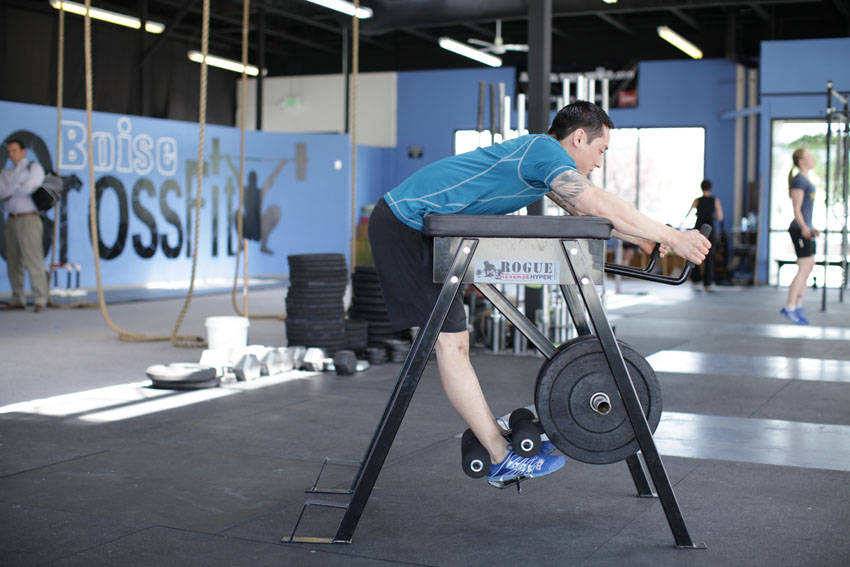
How to Perform Reverse Hyperextension
- Place your feet between the pads after loading an appropriate weight. Lay on the top pad, allowing your hips to hang off the back, while grasping the handles to hold your position.
- To begin the movement, flex the hips, pulling the legs forward.
- Reverse the motion by extending the hips, kicking the leg back. It is very important not to over-extend the hip on this movement, stopping short of your full range of motion.
- Return by again flexing the hip, pulling the carriage forward as far as you can.
- Repeat for the desired number of repetitions.
Pro Tips
- Category: Strength
- Force: Pull
Best Reverse Hyperextension Alternatives
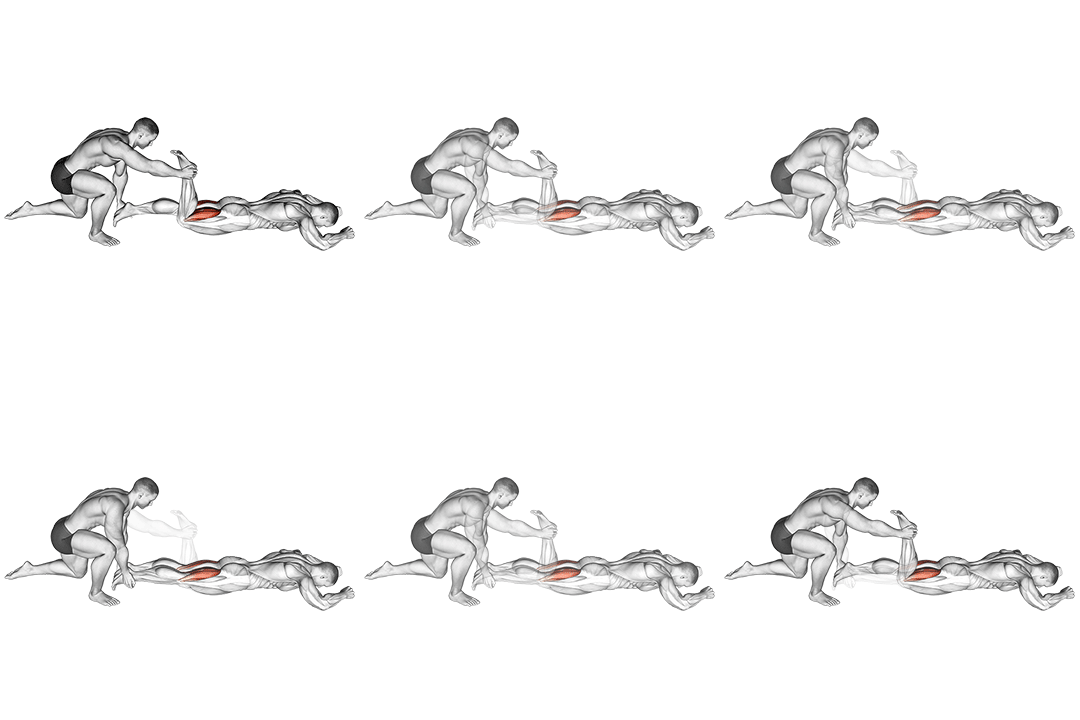
1. Assisted Prone Hamstring
90.4% MatchHow to perform this exercise
- Lie face down on a mat or bench with your legs fully extended.
- Have a partner or use a resistance band to secure your ankles.
- Engage your hamstrings and lift your legs towards your glutes, keeping your knees straight.
- Pause for a moment at the top, then slowly lower your legs back down to the starting position.
- Repeat for the desired number of repetitions.
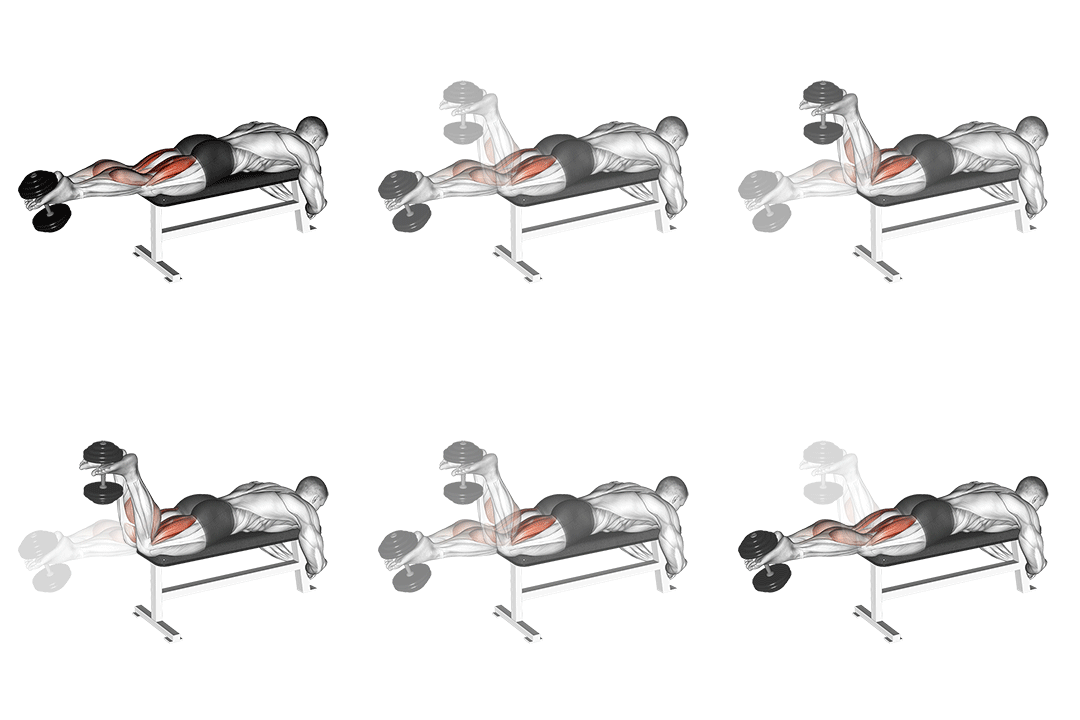
2. Dumbbell Lying Femoral
79.7% MatchHow to perform this exercise
- Lie flat on your back with your legs extended and a dumbbell resting on your lower abdomen.
- Bend your knees and bring the dumbbell towards your glutes, keeping your feet flat on the ground.
- Pause for a moment at the top, then slowly lower the dumbbell back to the starting position.
- Repeat for the desired number of repetitions.
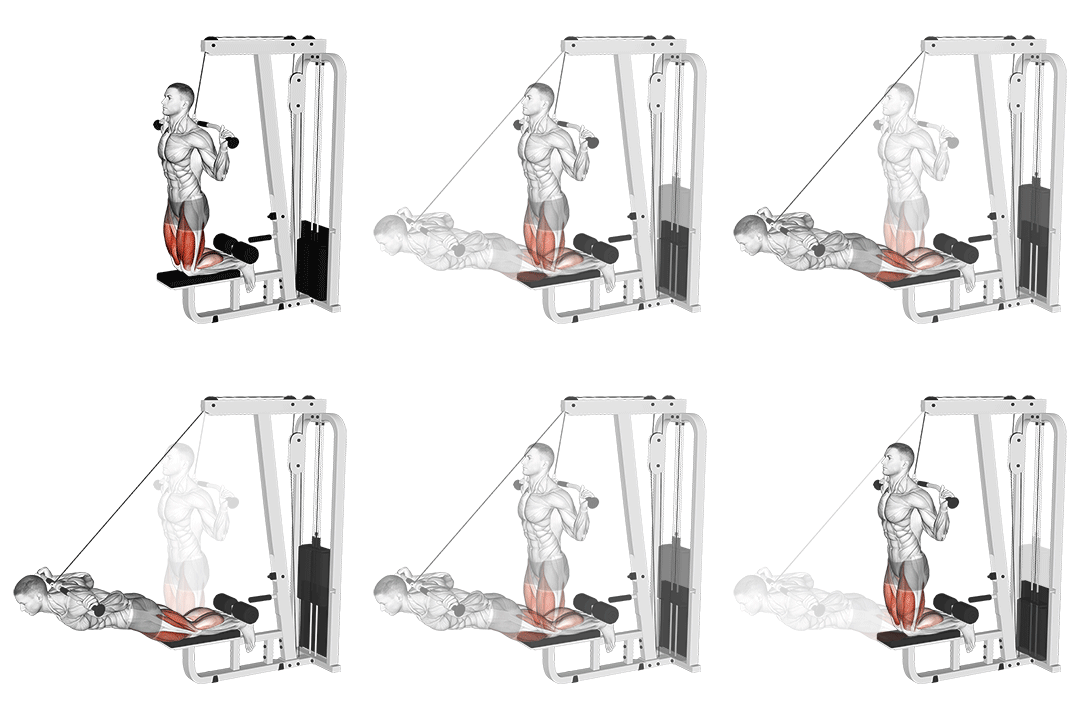
3. Cable Assisted Inverse Leg Curl
79.7% MatchHow to perform this exercise
- Adjust the cable machine so that the ankle attachment is at the lowest setting.
- Lie face down on the bench with your legs straight and the ankle attachment secured to your ankles.
- Hold onto the handles of the bench for stability.
- Keeping your upper body stationary, exhale and curl your legs up towards your glutes by flexing your knees.
- Pause for a moment at the top of the movement, squeezing your hamstrings.
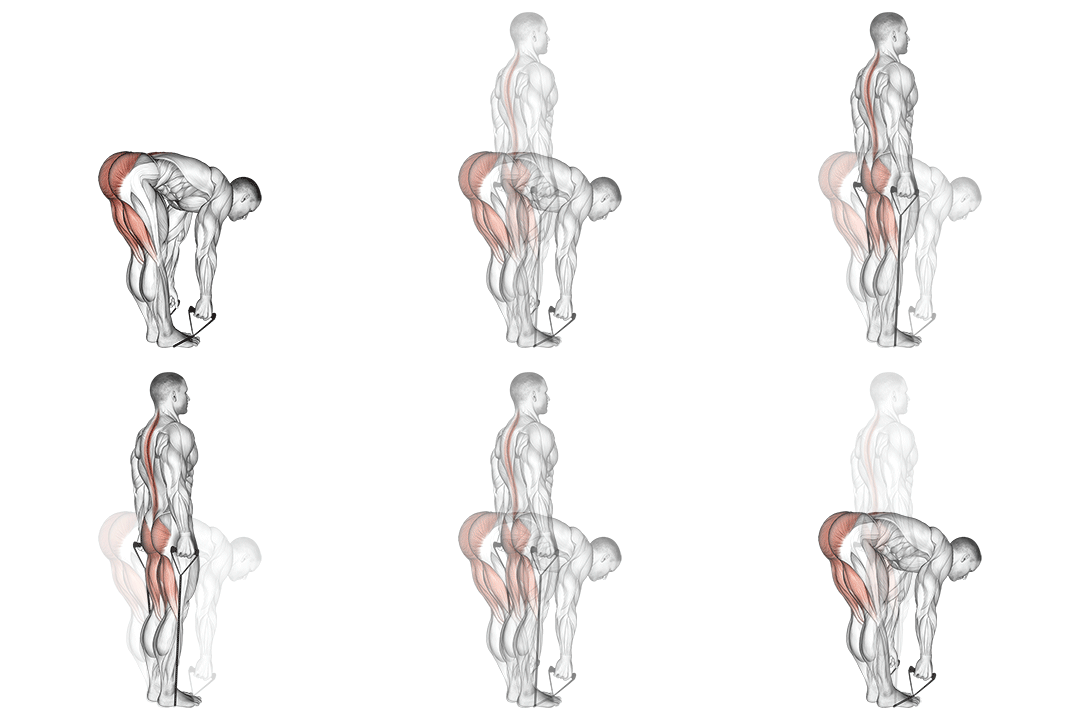
4. Band Straight Leg Deadlift
69.4% MatchHow to perform this exercise
- Stand with your feet shoulder-width apart and place the band around your feet.
- Hold the band with both hands, palms facing your body, and keep your arms straight.
- Engage your core and maintain a slight bend in your knees.
- Slowly hinge forward at your hips, keeping your back straight and chest lifted.
- Lower the band towards the ground while keeping your legs straight.
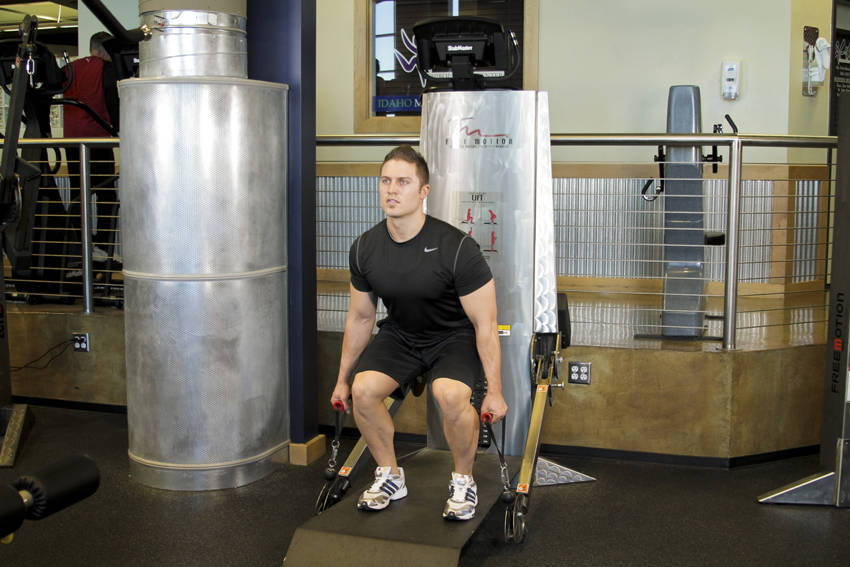
5. Cable Deadlifts
68.8% MatchHow to perform this exercise
- Move the cables to the bottom of the towers and select an appropriate weight. Stand directly in between the uprights.
- To begin, squat down be flexing your hips and knees until you can reach the handles.
- After grasping them, begin your ascent. Driving through your heels extend your hips and knees keeping your hands hanging at your side. Keep your head and chest up throughout the movement.
- After reaching a full standing position, Return to the starting position and repeat.
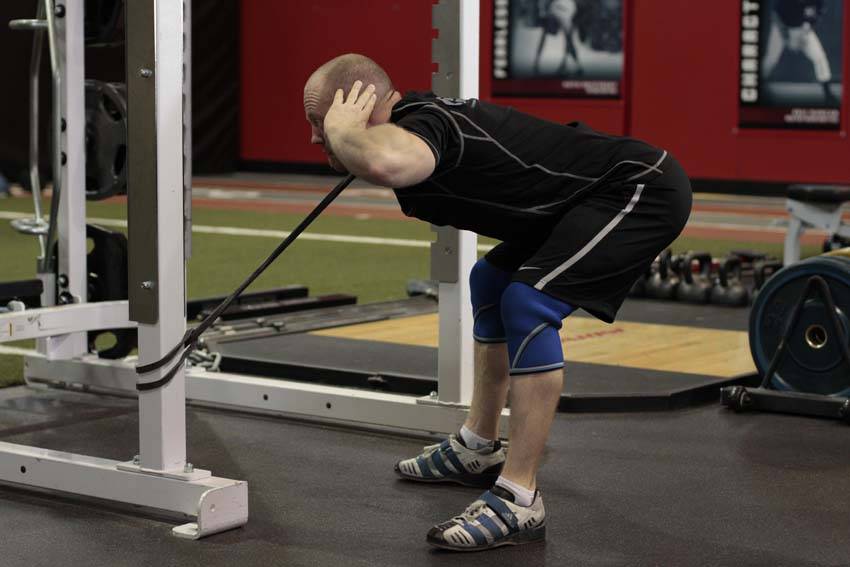
6. Band Good Morning (Pull Through)
68% MatchHow to perform this exercise
- Loop the band around a post. Standing a little ways away, loop the opposite end around the neck. Your hands can help hold the band in position.
- Begin by bending at the hips, getting your butt back as far as possible. Keep your back flat and bend forward to about 90 degrees. Your knees should be only slightly bent.
- Return to the starting position be driving through with the hips to come back to a standing position.
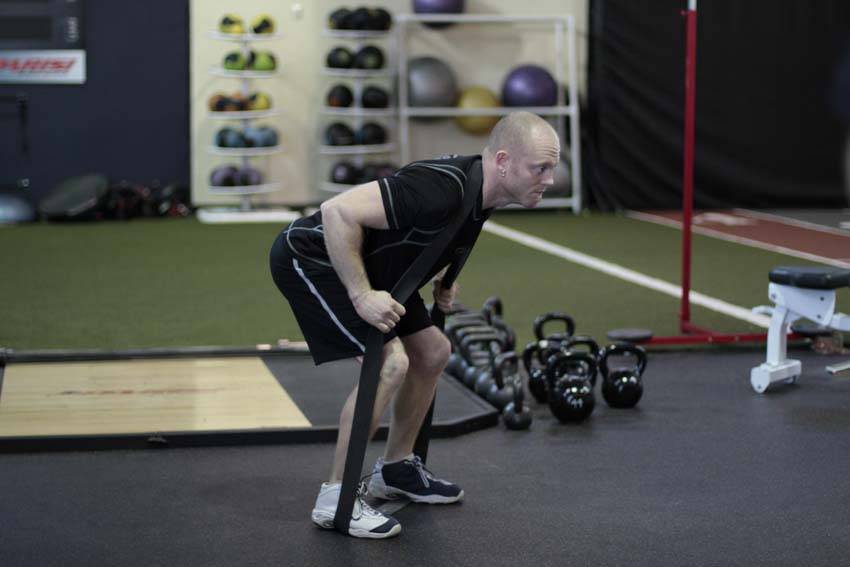
7. Band Good Morning
65.3% MatchHow to perform this exercise
- Using a 41 inch band, stand on one end, spreading your feet a small amount. Bend at the hips to loop the end of the band behind your neck. This will be your starting position.
- Keeping your legs straight, extend through the hips to come to a near vertical position.
- Ensure that you do not round your back as you go down back to the starting position.
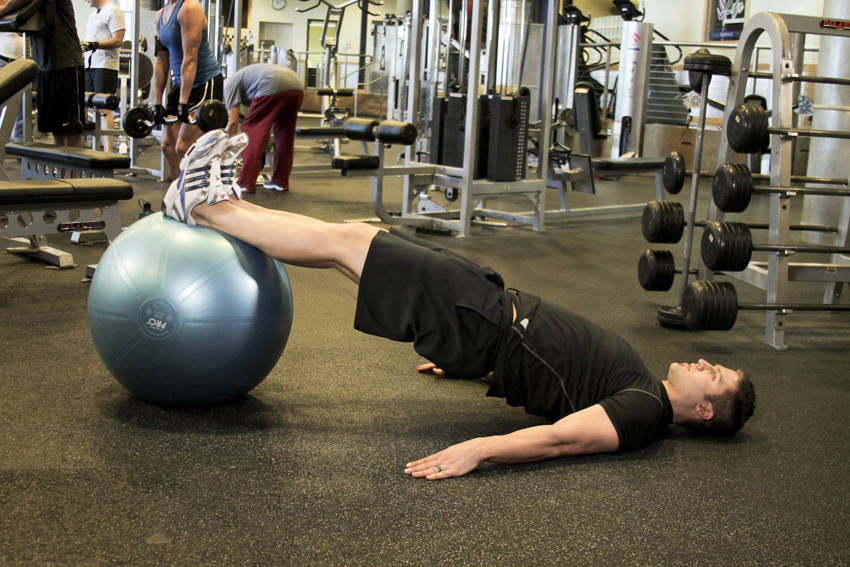
8. Ball Leg Curl
65.1% MatchHow to perform this exercise
- Begin on the floor laying on your back with your feet on top of the ball.
- Position the ball so that when your legs are extended your ankles are on top of the ball. This will be your starting position.
- Raise your hips off of the ground, keeping your weight on the shoulder blades and your feet.
- Flex the knees, pulling the ball as close to you as you can, contracting the hamstrings.
- After a brief pause, return to the starting position.
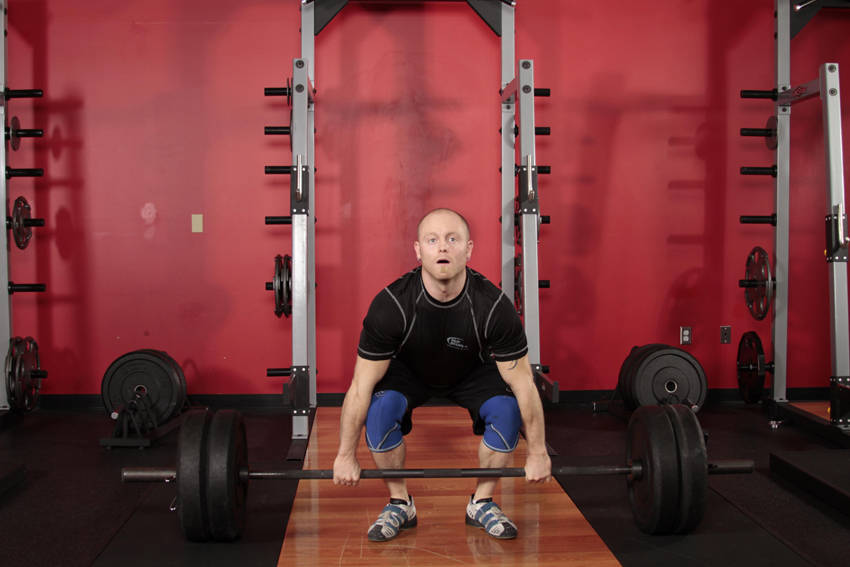
9. Clean Deadlift
63.4% MatchHow to perform this exercise
- Begin standing with a barbell close to your shins. Your feet should be directly under your hips with your feet turned out slightly. Grip the bar with a double overhand grip or hook grip, about shoulder width apart. Squat down to the bar. Your spine should be in full extension, with a back angle that places your shoulders in front of the bar and your back as vertical as possible.
- Begin by driving through the floor through the front of your heels. As the bar travels upward, maintain a constant back angle. Flare your knees out to the side to help keep them out of the bar's path.
- After the bar crosses the knees, complete the lift by driving the hips into the bar until your hips and knees are extended.
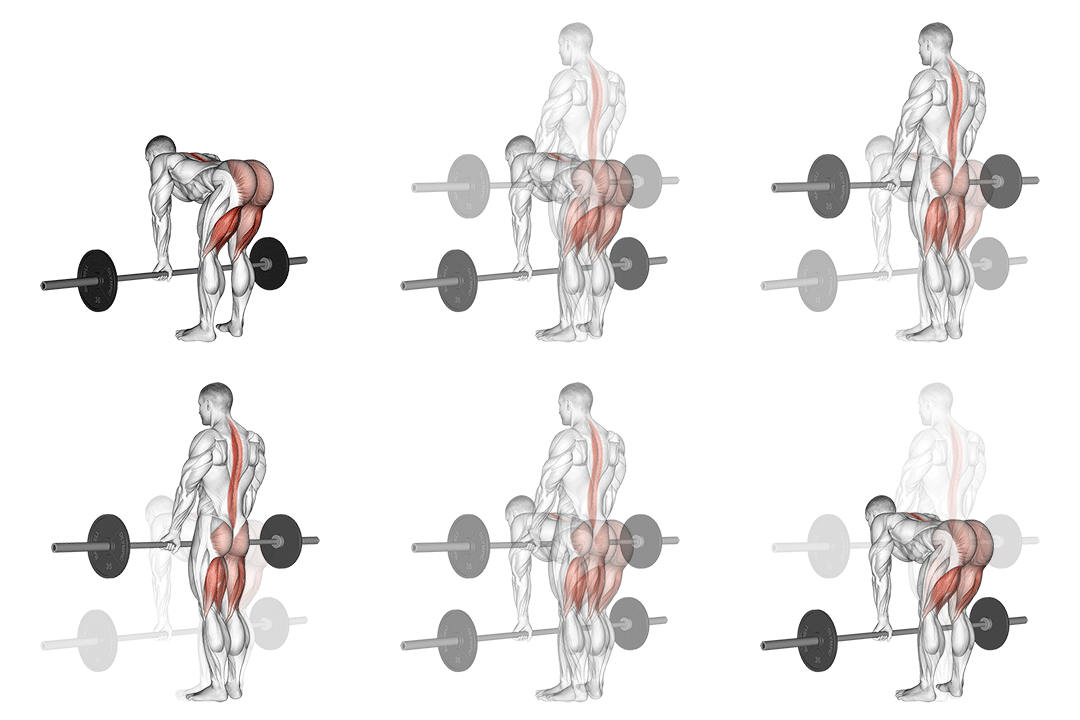
10. Barbell Straight Leg Deadlift
63.1% MatchHow to perform this exercise
- Stand with your feet shoulder-width apart and your toes pointing forward.
- Hold the barbell with an overhand grip, hands slightly wider than shoulder-width apart.
- Bend at your hips and lower the barbell towards the ground, keeping your back straight and your knees slightly bent.
- Lower the barbell until you feel a stretch in your hamstrings.
- Engage your hamstrings and glutes to lift the barbell back up to the starting position.
Why You Might Need a Reverse Hyperextension Alternative
You might substitute reverse hypers due to lack of equipment, lower‑back pain, or specific training goals like eccentric hamstring strength. Machines isolate hip extension and spinal decompression; free‑weight and bodyweight options shift load patterns and demand more stabilization. For example, RDLs produce high hamstring activation through a long eccentric range—cue a soft knee and push hips back—while Nordic curls emphasize controlled eccentric lengthening. Choose alternatives when you need portability, progressive overload with barbells, or a rehab‑friendly option that reduces lumbar shear while still loading the posterior chain.
How to Choose the Right Substitute
Decide based on equipment, stability, and the hamstring action you want to target (hip extension vs knee flexion). If you have a barbell, Romanian deadlifts give heavy hip‑dominant loading—hinge at the hips and keep a neutral spine. For single‑leg balance and unilateral strength, pick single‑leg RDLs and drive through the heel. If you need high eccentric stress, use Nordic hamstring curls and lower slowly. For low‑back sensitivity, prefer hip thrusts that load hips while limiting spinal shear; cue a tall chest and tuck the ribcage at lockout to maximize glute and hamstring activation.
Frequently Asked Questions
What muscles does Reverse Hyperextension work?
Reverse hyperextensions primarily load the hamstrings and glutes through hip extension, with secondary activation of the spinal erectors for pelvic stabilization. The movement creates long‑muscle tension on the hamstrings because the hip extends while the knee may remain extended.
What is the best bodyweight alternative to Reverse Hyperextension?
The Nordic hamstring curl is the top bodyweight alternative for eccentric hamstring strength—anchor your ankles, keep the hips extended, and lower slowly to maximize lengthening tension. If you lack an anchor, single‑leg Romanian deadlifts off a step emphasize hip hinge and balance with no equipment.
Can I build muscle without doing Reverse Hyperextension?
Yes. You can achieve equal or greater hypertrophy with exercises like Romanian deadlifts, hip thrusts, and Nordic curls by applying progressive overload and tempo control. Cue long eccentrics and full hip extension on each rep to ensure maximal hamstring and glute activation.
More Exercise Alternatives
Find Alternatives for Any Exercise
Use our free tool to discover the best substitute exercises based on your available equipment and goals.
Try the Exercise Substitution Finder →