

10 Best Rocking Frog Stretch Alternatives for Glute Mobility
If you can’t perform the Rocking Frog Stretch, use 90/90 hip switches, pigeon pose, supine figure‑four, single‑leg glute bridges, or clamshells. Each replicates hip external rotation or glute loading. Cue: keep a neutral pelvis and hinge from the hips to maintain the same glute activation and joint alignment.
Original Exercise: Rocking Frog Stretch
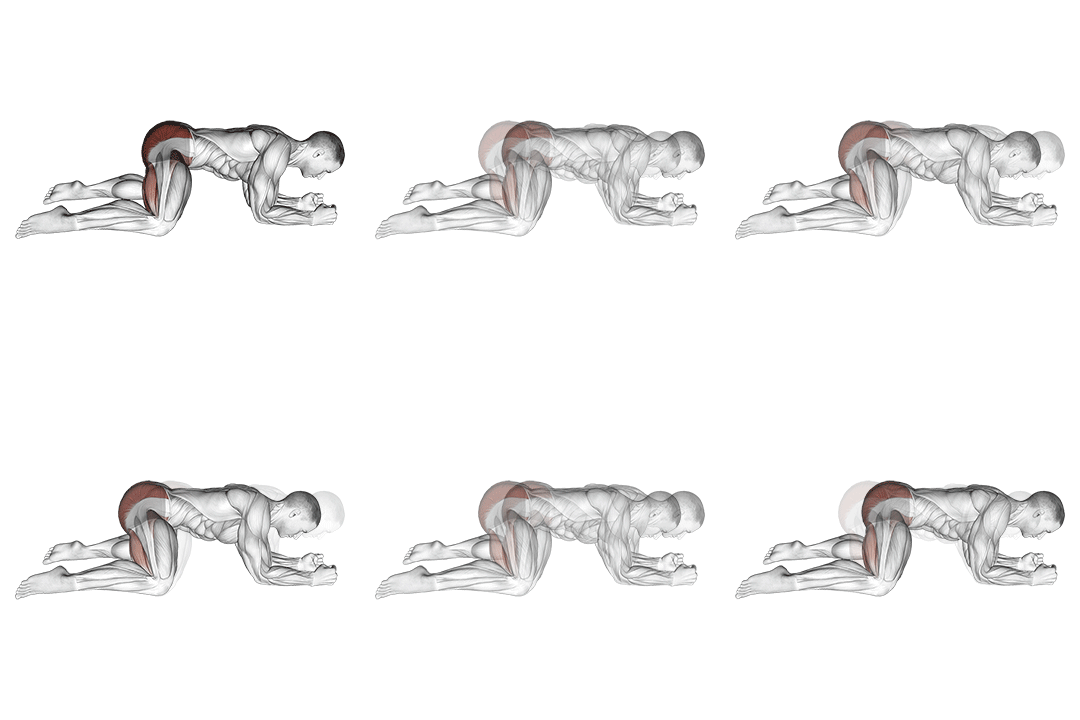
How to Perform Rocking Frog Stretch
- Start by kneeling on the ground with your knees hip-width apart.
- Place your hands on the ground in front of you for support.
- Slowly lean forward, shifting your weight onto your hands and extending your legs behind you.
- Keep your back straight and engage your glutes as you push your hips back and up towards the ceiling.
- Hold this position for a few seconds, feeling a stretch in your glutes.
- Slowly return to the starting position by bending your knees and lowering your hips back down.
- Repeat for the desired number of repetitions.
Best Rocking Frog Stretch Alternatives
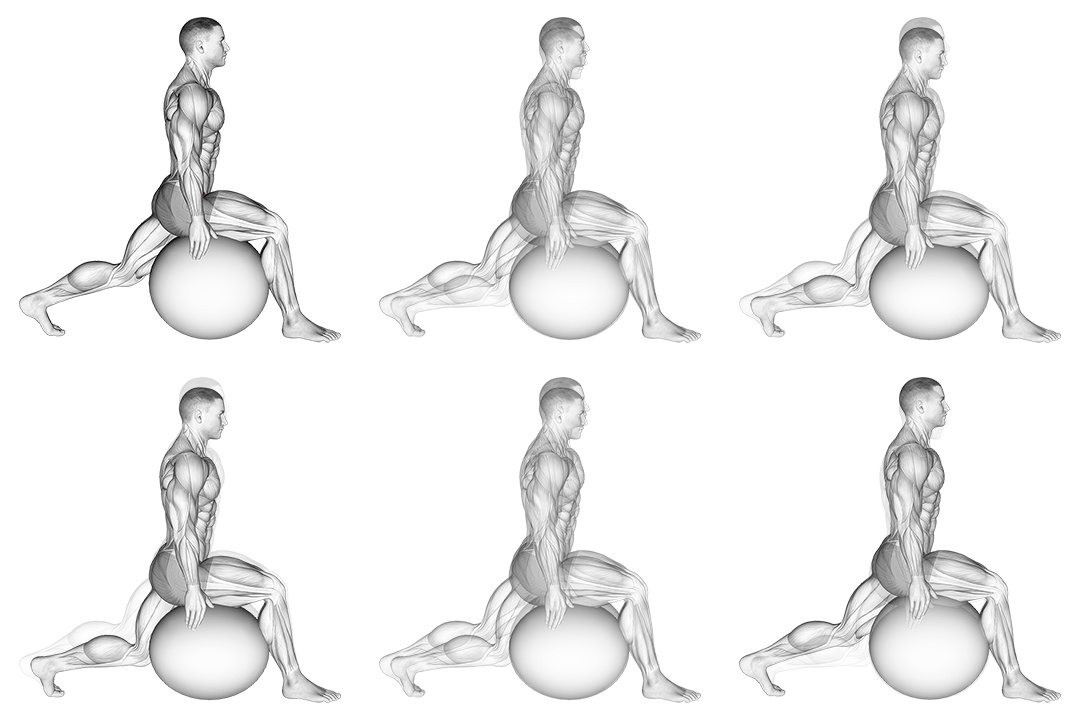
1. Exercise Ball Hip Flexor Stretch
77.7% MatchHow to perform this exercise
- Place the stability ball on the ground and kneel in front of it.
- Place your right foot on top of the stability ball, with your knee bent at a 90-degree angle.
- Extend your left leg behind you, keeping it straight.
- Lean forward, pushing your hips towards the stability ball, until you feel a stretch in your right hip flexor.
- Hold the stretch for 20-30 seconds, then switch sides and repeat.
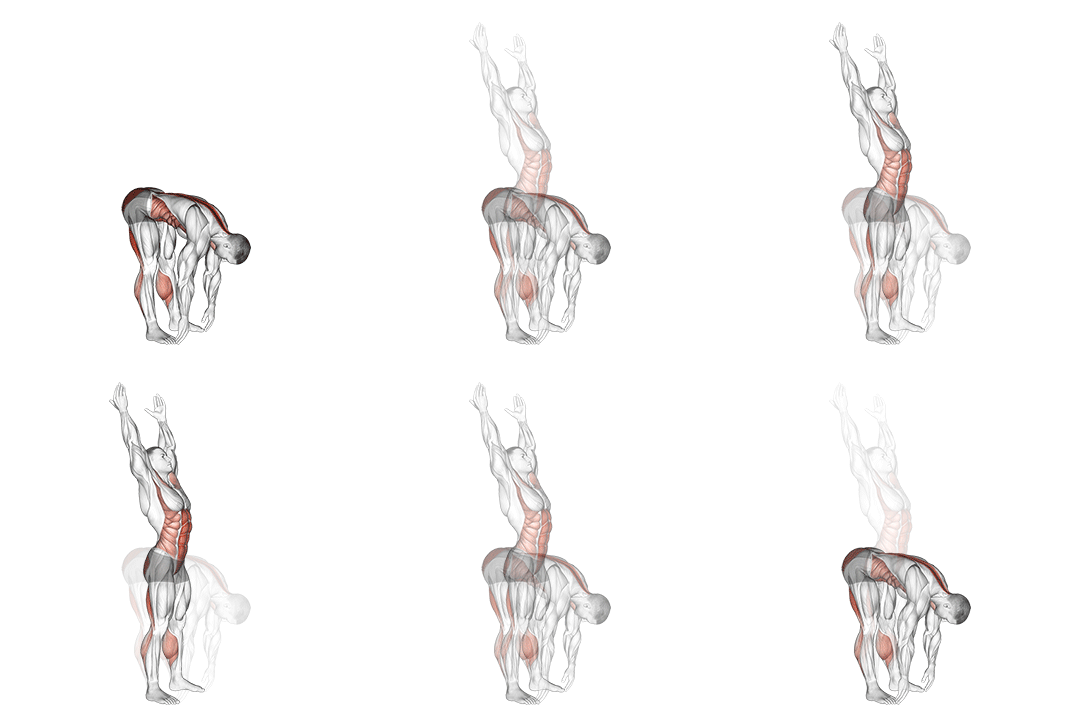
2. Basic Toe Touch (male)
72.2% MatchHow to perform this exercise
- Stand with your feet shoulder-width apart and your arms by your sides.
- Bend forward at the waist, keeping your back straight and your knees slightly bent.
- Reach down towards your toes with your hands, keeping your legs as straight as possible.
- Pause for a moment at the bottom, then slowly return to the starting position.
- Repeat for the desired number of repetitions.
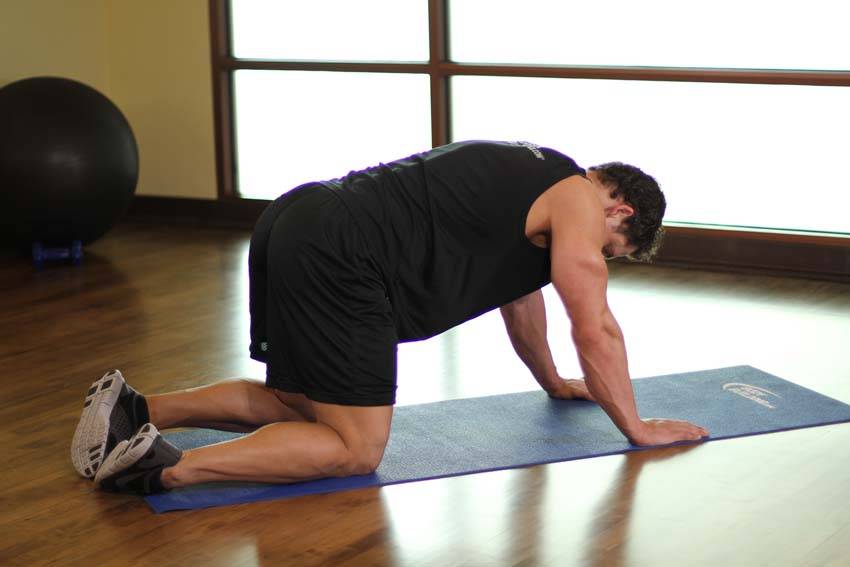
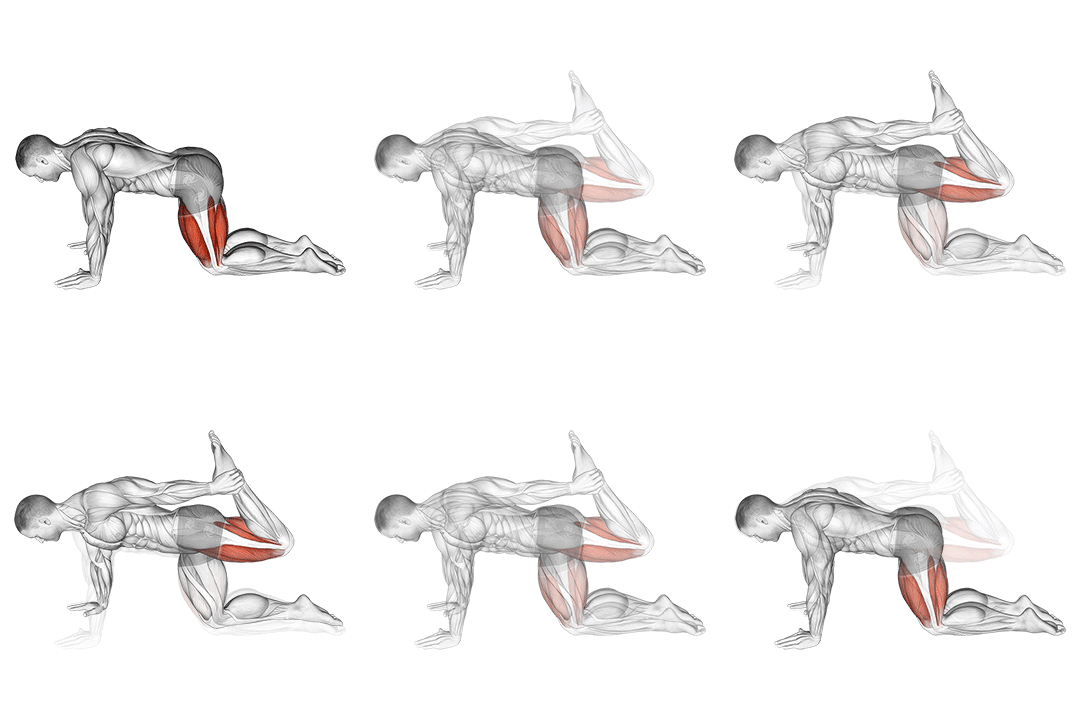
3. All Fours Quad Stretch
71% MatchHow to perform this exercise
- Start off on your hands and knees, then lift your leg off the floor and hold the foot with your hand.
- Use your hand to hold the foot or ankle, keeping the knee fully flexed, stretching the quadriceps and hip flexors.
- Focus on extending your hips, thrusting them towards the floor. Hold for 10-20 seconds and then switch sides.
4. All Fours Squad Stretch
71% MatchHow to perform this exercise
- Start on all fours with your hands directly under your shoulders and your knees directly under your hips.
- Extend one leg straight back, keeping your knee bent and your foot flexed.
- Slowly lower your hips towards the ground, feeling a stretch in your quads.
- Hold this position for 20-30 seconds.
- Switch legs and repeat the stretch on the other side.
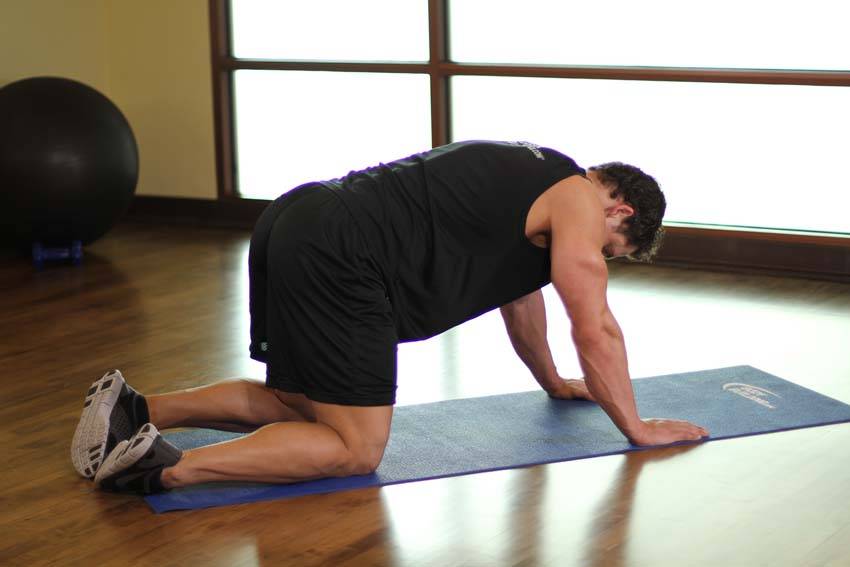
5. Cat Stretch
70.2% MatchHow to perform this exercise
- Position yourself on the floor on your hands and knees.
- Pull your belly in and round your spine, lower back, shoulders, and neck, letting your head drop.
- Hold for 15 seconds.
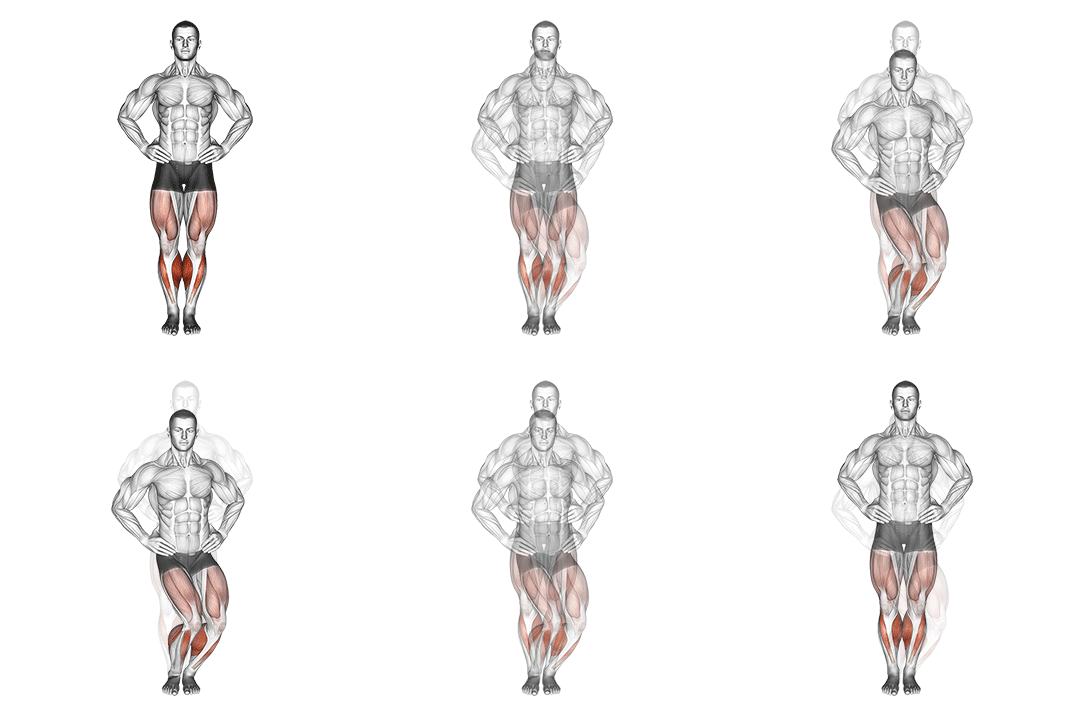
6. Circles Knee Stretch
67.2% MatchHow to perform this exercise
- Stand with your feet shoulder-width apart and your hands on your hips.
- Bend your knees slightly and lift your heels off the ground, balancing on the balls of your feet.
- Keeping your knees bent, rotate your knees in a circular motion, first clockwise and then counterclockwise.
- Perform the movement for the desired number of repetitions.
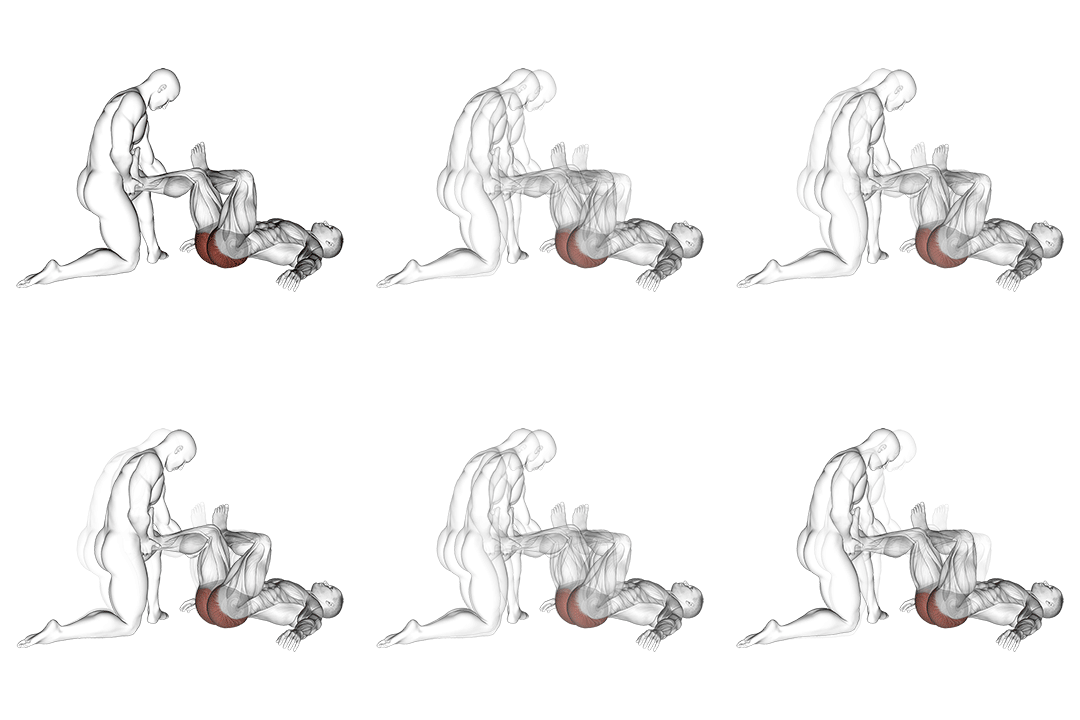
7. Assisted Lying Gluteus And Piriformis Stretch
66% MatchHow to perform this exercise
- Lie on your back with your legs extended.
- Bend your right knee and place your right ankle on your left thigh, just above the knee.
- Grasp your left thigh with both hands and gently pull it towards your chest.
- Hold the stretch for 20-30 seconds.
- Release the stretch and repeat on the other side.
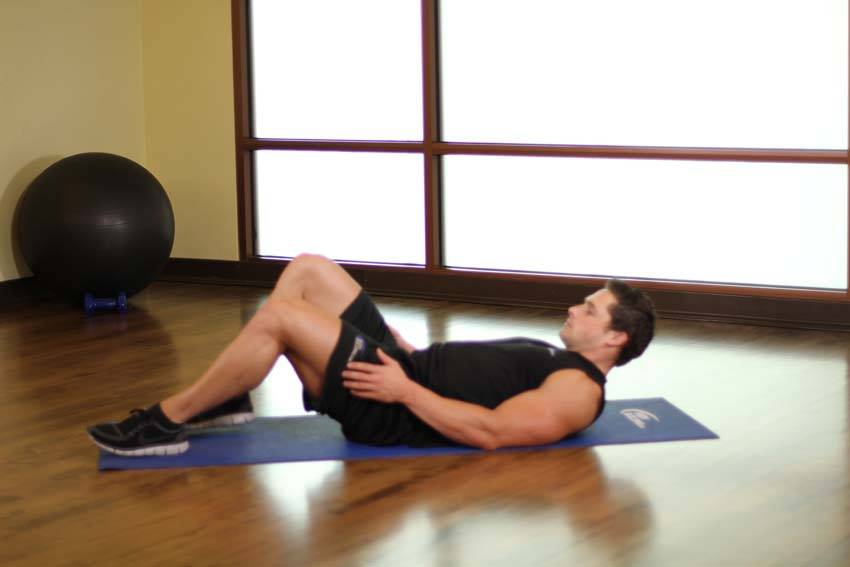
8. Ankle On The Knee
66% MatchHow to perform this exercise
- From a lying position, bend your knees and keep your feet on the floor.
- Place your ankle of one foot on your opposite knee.
- Grasp the thigh or knee of the bottom leg and pull both of your legs into the chest. Relax your neck and shoulders. Hold for 10-20 seconds and then switch sides.
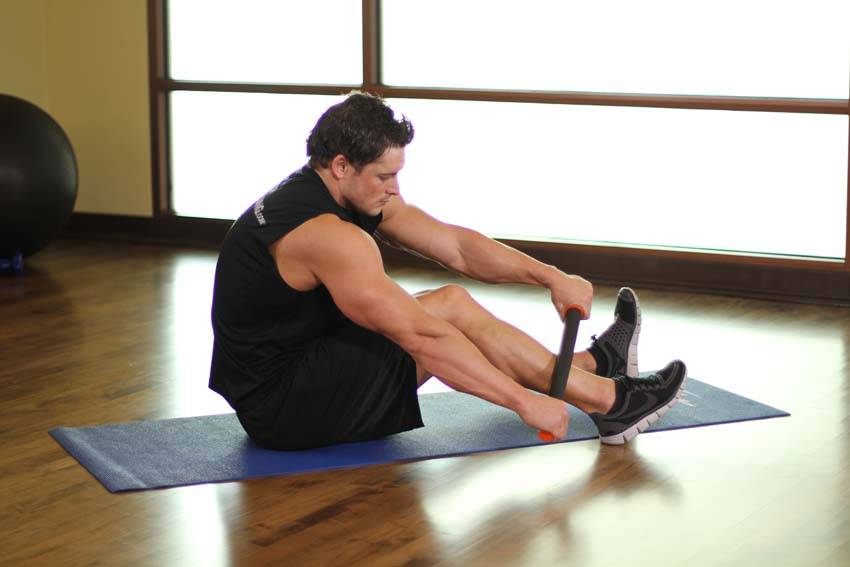
9. Anterior Tibialis-SMR
65% MatchHow to perform this exercise
- Begin seated on the ground with your legs bent and your feet on the floor.
- Using a Muscle Roller or a rolling pin, apply pressure to the muscles on the outside of your shins. Work from just below the knee to above the ankle, pausing at points of tension for 10-30 seconds. Repeat on the other leg.
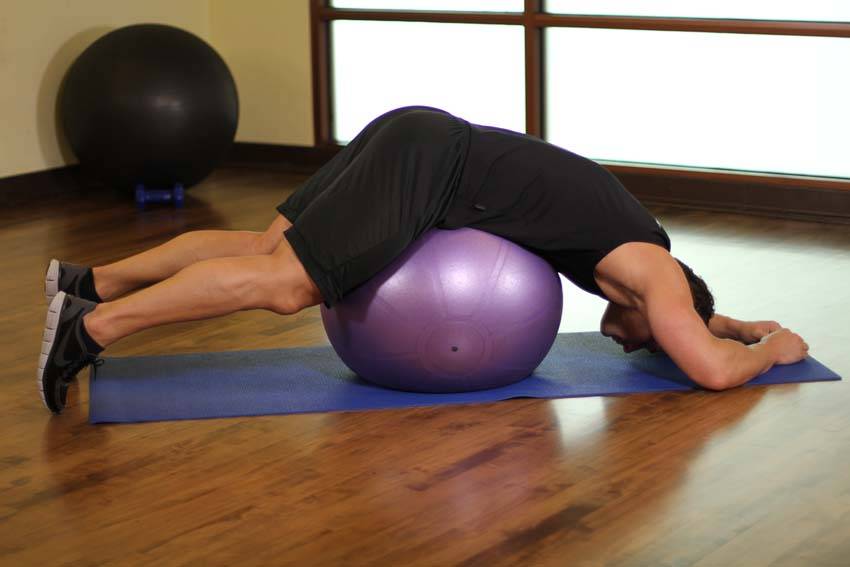
10. Downward Facing Balance
64.8% MatchHow to perform this exercise
- Lie facedown on top of an exercise ball.
- While resting on your stomach on the ball, walk your hands forward along the floor and lift your legs, extending your elbows and knees.
Why You Might Need a Rocking Frog Stretch Alternative
You may need substitutes because the Rocking Frog can aggravate knee, groin, or low‑back pain, or you might lack the hip range of motion. Alternatives let you isolate glute fibers or progress strength without stressing vulnerable joints. For example, pigeon pose unloads the knees while stressing glute medius and deep external rotators; single‑leg glute bridges load hip extension and glute max while keeping the pelvis stable. Use cues like "keep the pelvis neutral" and "drive through the heel" to preserve posterior chain recruitment and avoid compensatory lumbar extension. Choose a variation that preserves hip external rotation and maintains controlled glute activation.
How to Choose the Right Substitute
Select a substitute by matching the original movement pattern and your goal: mobility, pain relief, or strength. If you need mobility, prioritize 90/90 switches or pigeon pose that challenge end‑range external rotation and posterior hip glide. For activation or hypertrophy, pick single‑leg glute bridges to load hip extension and glute max. If knee or groin pain limits you, use supine figure‑four or seated clamshells to isolate glute medius without compressing the joint. Test each option with a cue: "keep pelvis level and squeeze the glute at peak contraction"; choose the exercise that produces clear glute activation without compensatory lumbar or adductor recruitment.
Frequently Asked Questions
What muscles does Rocking Frog Stretch work?
The Rocking Frog primarily mobilizes and stretches the gluteus medius and maximus, and the deep external rotators of the hip. It also loads the adductors and challenges hip joint end‑range mechanics, promoting posterior chain activation when you hinge forward.
What is the best bodyweight alternative to Rocking Frog Stretch?
For a bodyweight alternative that targets the same glute activation and hip external rotation, use the single‑leg glute bridge. Cue: drive through the heel, keep the pelvis level, and squeeze the glute at the top to emphasize hip extension and glute max recruitment.
Can I build muscle without doing Rocking Frog Stretch?
Yes. You build glute muscle with progressive loading and exercises that drive hip extension and external rotation, such as single‑leg bridges, lunges, and loaded hip thrusts. Focus on progressive overload and clean technique to maximize muscle activation without relying on any single stretch.
More Exercise Alternatives
Find Alternatives for Any Exercise
Use our free tool to discover the best substitute exercises based on your available equipment and goals.
Try the Exercise Substitution Finder →