

10 Best Rowing, Stationary Alternatives for Quads-Focused Cardio
If you can’t use a stationary rowing machine, use other quad-dominant cardio tools: high-resistance stationary bike, assault (air) bike, stair climber/stepmill, sled pushes, or incline treadmill sprints. Focus on strong knee extension—drive through the heels and keep shins vertical—to mimic the rowing drive phase and maintain quad activation.
Original Exercise: Rowing, Stationary
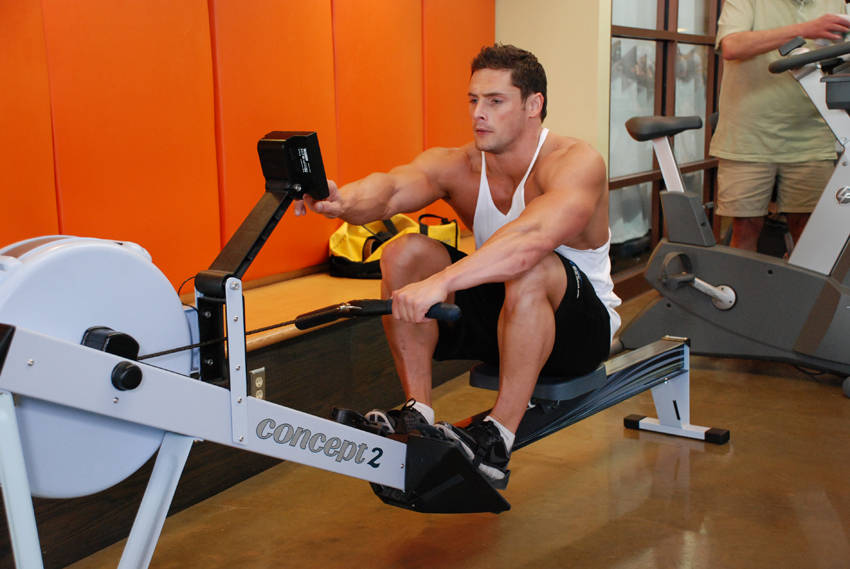
How to Perform Rowing, Stationary
- To begin, seat yourself on the rower. Make sure that your heels are resting comfortably against the base of the foot pedals and that the straps are secured. Select the program that you wish to use, if applicable. Sit up straight and bend forward at the hips.
- There are three phases of movement when using a rower. The first phase is when you come forward on the rower. Your knees are bent and against your chest. Your upper body is leaning slightly forward while still maintaining good posture. Next, push against the foot pedals and extend your legs while bringing your hands to your upper abdominal area, squeezing your shoulders back as you do so. To avoid straining your back, use primarily your leg and hip muscles.
- The recovery phase simply involves straightening your arms, bending the knees, and bringing your body forward again as you transition back into the first phase.
Pro Tips
- Category: Cardio
Best Rowing, Stationary Alternatives

1. Bicycling
78% MatchHow to perform this exercise
- To begin, seat yourself on the bike and adjust the seat to your height.
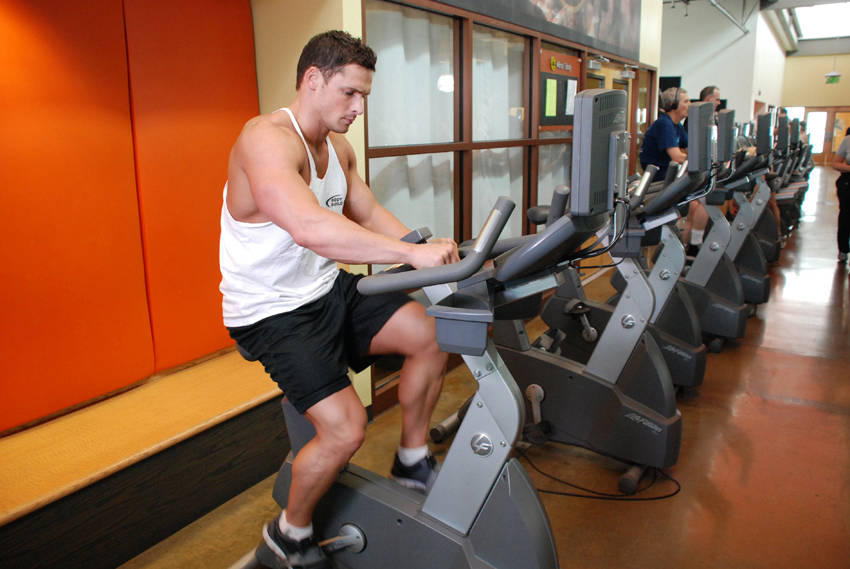
2. Bicycling, Stationary
78% MatchHow to perform this exercise
- To begin, seat yourself on the bike and adjust the seat to your height.
- Select the desired option from the menu. You may have to start pedaling to turn it on. You can use the manual setting, or you can select a program to use. Typically, you can enter your age and weight to estimate the amount of calories burned during exercise. The level of resistance can be changed throughout the workout. The handles can be used to monitor your heart rate to help you stay at an appropriate intensity.
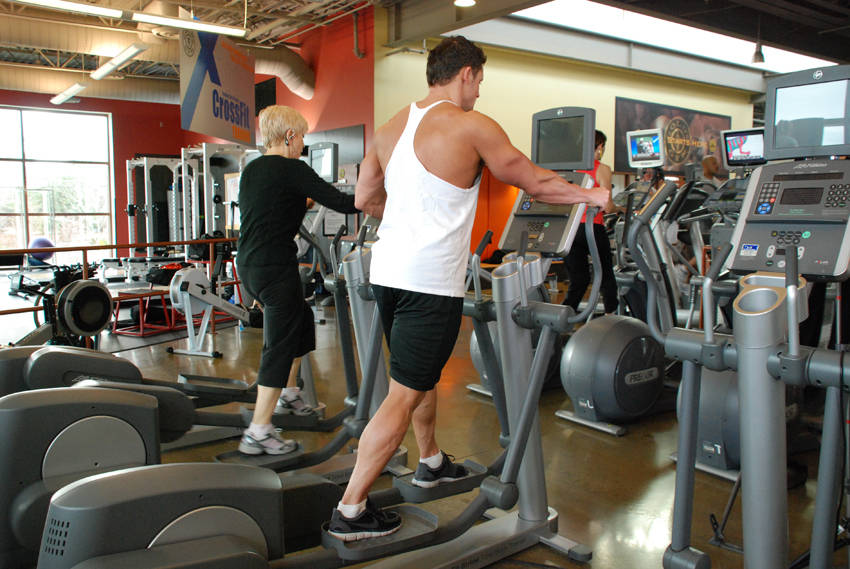
3. Elliptical Trainer
76.4% MatchHow to perform this exercise
- To begin, step onto the elliptical and select the desired option from the menu. Most ellipticals have a manual setting, or you can select a program to run. Typically, you can enter your age and weight to estimate the amount of calories burned during exercise. Elevation can be adjusted to change the intensity of the workout.
- The handles can be used to monitor your heart rate to help you stay at an appropriate intensity.
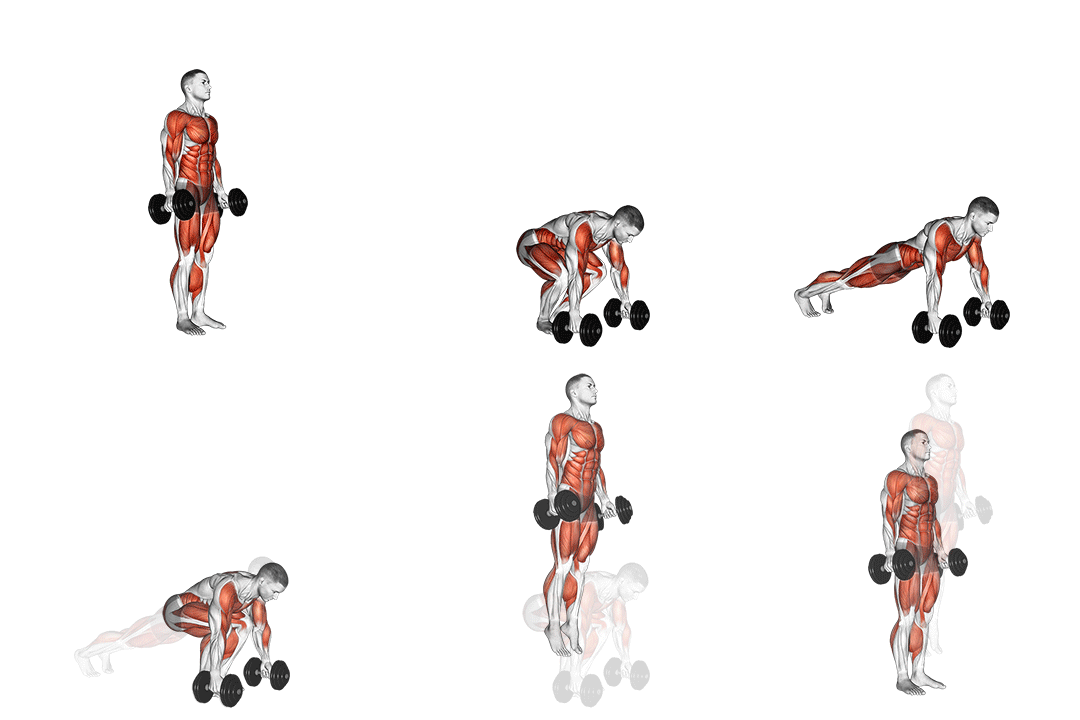
4. Dumbbell Burpee
60.9% MatchHow to perform this exercise
- Start in a standing position with your feet shoulder-width apart and a dumbbell in each hand.
- Lower your body into a squat position, placing the dumbbells on the ground in front of you.
- Kick your feet back into a push-up position, keeping your body in a straight line.
- Perform a push-up, bending your elbows and lowering your chest towards the ground.
- Jump your feet back towards your hands, landing in a squat position.
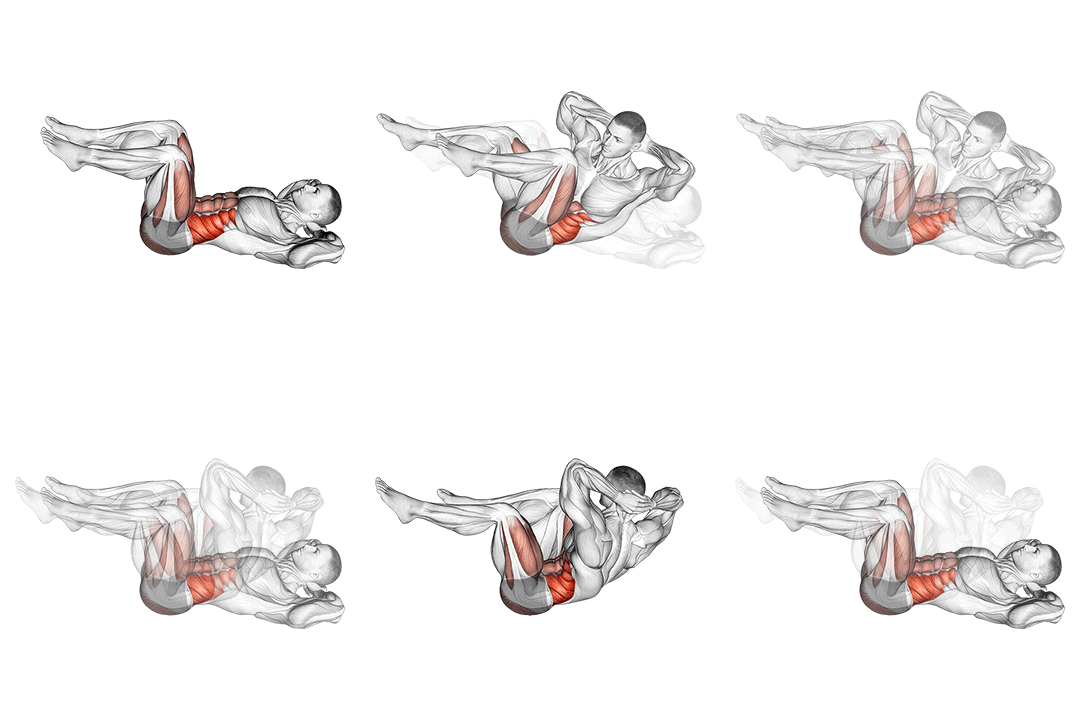
5. Air Bike
58.2% MatchHow to perform this exercise
- Lie flat on your back with your hands placed behind your head.
- Lift your legs off the ground and bend your knees at a 90-degree angle.
- Bring your right elbow towards your left knee while simultaneously straightening your right leg.
- Return to the starting position and repeat the movement on the opposite side, bringing your left elbow towards your right knee while straightening your left leg.
- Continue alternating sides in a pedaling motion for the desired number of repetitions.
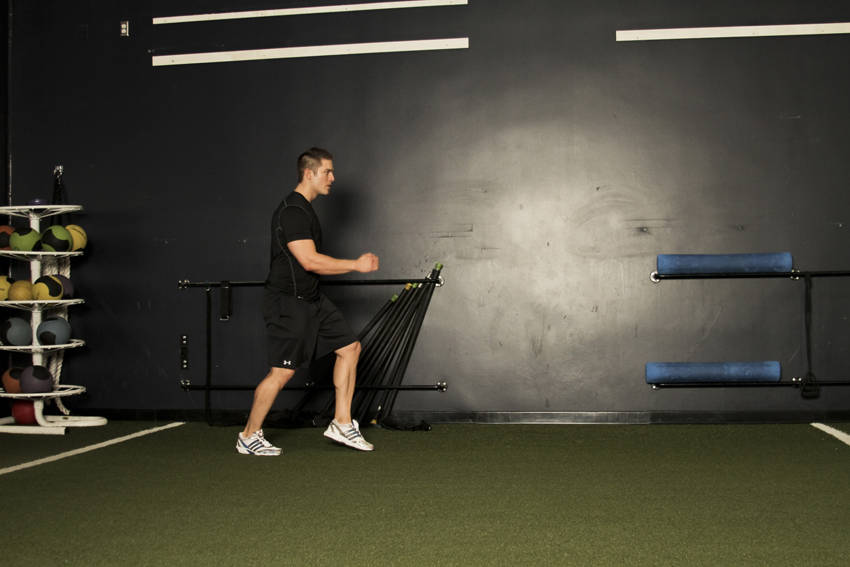
6. Fast Skipping
55.4% MatchHow to perform this exercise
- Start in a relaxed position with one leg slightly forward. This will be your starting position.
- Skip by executing a step-hop pattern of right-right-step to left-left-step, and so on, alternating back and forth.
- Perform fast skips by maintaining close contact with the ground and reduce air time, moving as quickly as possible.
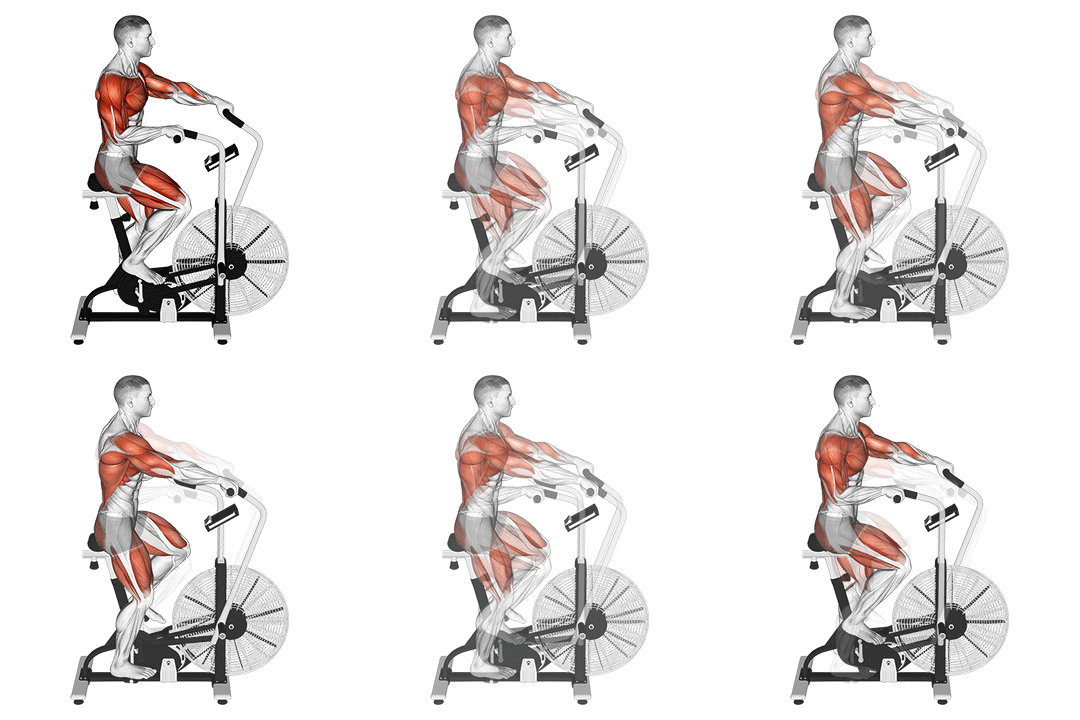
7. Cycle Cross Trainer
53.7% MatchHow to perform this exercise
- Adjust the seat height and position yourself on the cycle cross trainer.
- Place your feet on the pedals and grip the handlebars.
- Start pedaling in a smooth and controlled motion.
- Maintain a steady pace and increase the resistance if desired.
- Continue pedaling for the desired duration of your cardio workout.
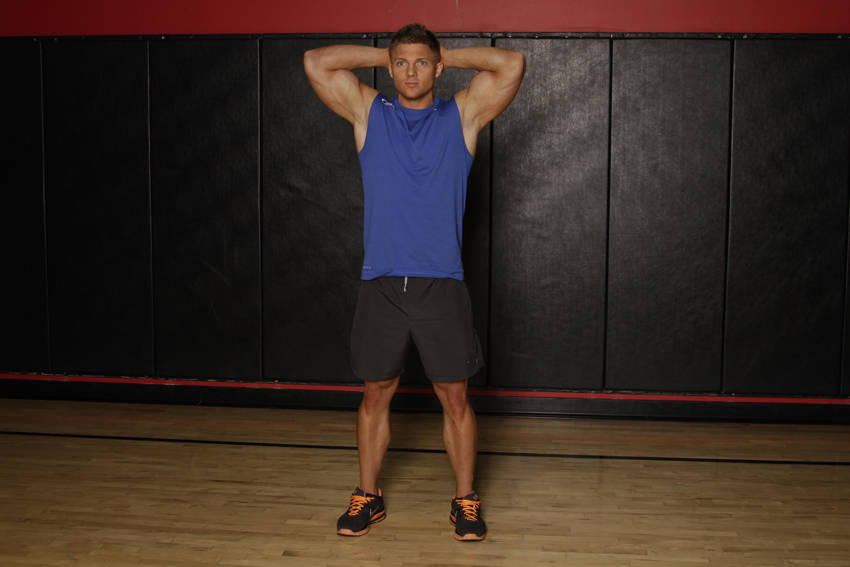
8. Bodyweight Squat
50.7% MatchHow to perform this exercise
- Stand with your feet shoulder width apart. You can place your hands behind your head. This will be your starting position.
- Begin the movement by flexing your knees and hips, sitting back with your hips.
- Continue down to full depth if you are able,and quickly reverse the motion until you return to the starting position. As you squat, keep your head and chest up and push your knees out.
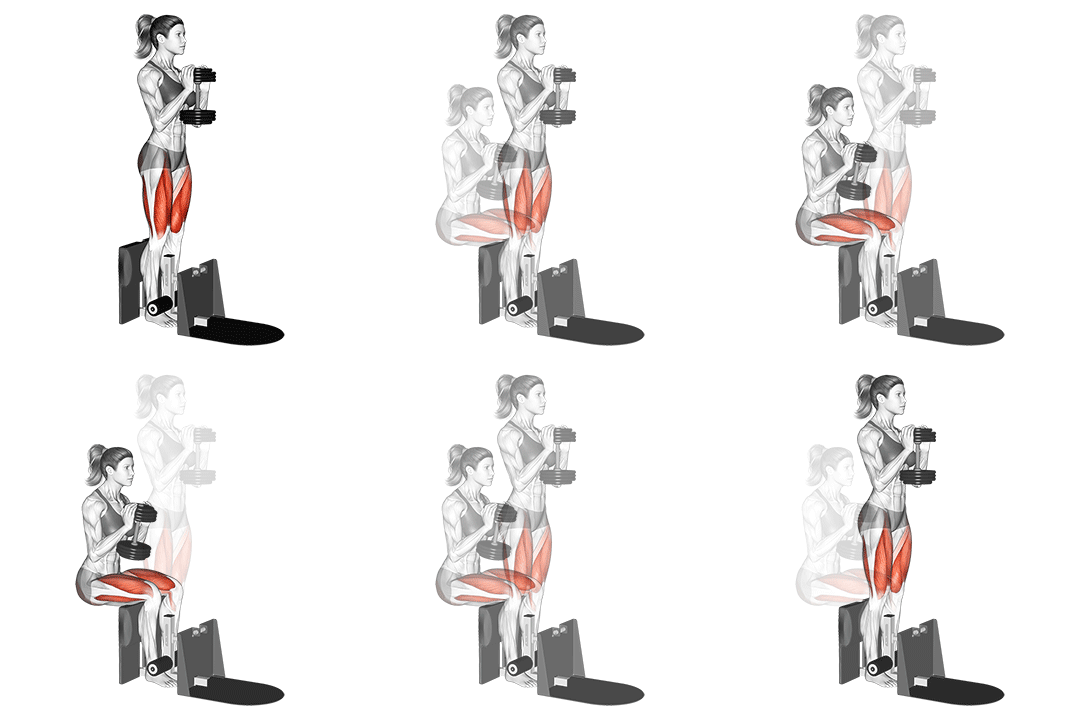
9. Dumbbell Supported Squat
48.6% MatchHow to perform this exercise
- Stand with your feet shoulder-width apart, holding a dumbbell in each hand at your sides.
- Keeping your chest up and core engaged, slowly lower your body down by bending your knees and pushing your hips back.
- Continue lowering until your thighs are parallel to the ground, or as low as you can comfortably go.
- Pause for a moment at the bottom, then push through your heels to return to the starting position.
- Repeat for the desired number of repetitions.
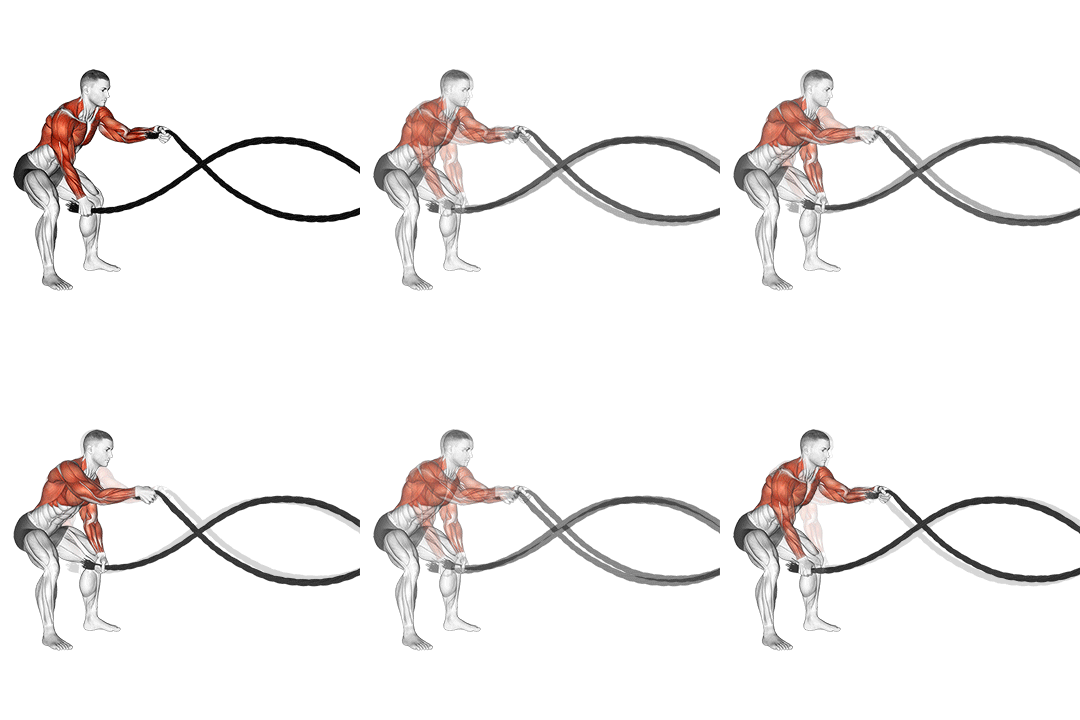
10. Battling Ropes
48.1% MatchHow to perform this exercise
- Stand with your feet shoulder-width apart and knees slightly bent.
- Hold one end of the rope in each hand, with your palms facing each other.
- Raise your arms to shoulder height, keeping your elbows slightly bent.
- Begin making alternating waves with the ropes by rapidly raising and lowering each arm.
- Continue for the desired duration or number of repetitions.
Why You Might Need a Rowing, Stationary Alternative
You might substitute rowing when you lack a machine, have lower-back or shoulder pain, or need a different training stimulus. Stationary rowing is a compound drive that begins with knee extension, then hip extension and a final upper‑body pull; that sequence stresses the quads plus posterior chain and upper back. If back extension or trunk compression aggravates pain, choose options that isolate knee extension (stationary bike or stair climber) or spread load across the legs without heavy trunk rotation (sled pushes). Also swap machines to change metabolic demand: air bikes and steep treadmill intervals increase anaerobic power, while stepmills deliver sustained quad hypertrophy under load. Cue: preserve a neutral spine and prioritize knee drive when selecting substitutes.
How to Choose the Right Substitute
Decide based on equipment, joint tolerance, and the movement pattern you want to preserve. If you want quad-dominant knee extension like the rowing drive, pick a bike or stepmill and set cadence and resistance to emphasize forceful leg extension—push through the midfoot and heels. If you need low back offloading, choose a recumbent bike or sled pushes that limit trunk shear. For metabolic conditioning, use an air bike or incline treadmill intervals with short rest. Prioritize progressive overload: increase resistance, incline, or interval density rather than only adding time. Cue: maintain a neutral pelvis, avoid excessive hip hinge if you want to bias the quads.
Frequently Asked Questions
What muscles does Rowing, Stationary work?
Rowing drives primarily through the quadriceps during the leg drive (knee extension), with significant assistance from the glutes and hamstrings for hip extension. The upper back, lats, and biceps handle the final pull while the core stabilizes the trunk; cue a full leg drive before the arm pull.
What is the best bodyweight alternative to Rowing, Stationary?
For a bodyweight option that targets quads and provides cardio, use continuous jump squats or walking lunges. Perform each rep with a controlled 90-degree knee bend and drive up through the heels; keep chest tall to preserve hip-knee mechanics and maximize quad activation.
Can I build muscle without doing Rowing, Stationary?
Yes. Build quad muscle by using progressive overload with alternatives: heavy stationary bike intervals, weighted sled pushes, stepmill sets, or traditional squats and leg presses. Focus on loaded knee extension, full range of motion, and gradually increasing resistance or volume.
More Exercise Alternatives
Find Alternatives for Any Exercise
Use our free tool to discover the best substitute exercises based on your available equipment and goals.
Try the Exercise Substitution Finder →