

10 Best Seated Front Deltoid Alternatives for Home Training
If you need an alternative to the Seated Front Deltoid, choose movements that preserve shoulder flexion and anterior deltoid loading. Good options include band front raises, plate raises, or elevated pike push-ups. Cue: lead with the elbow and stop at 90 degrees of shoulder flexion to maximize anterior deltoid activation and limit scapular shrug.
Original Exercise: Seated Front Deltoid
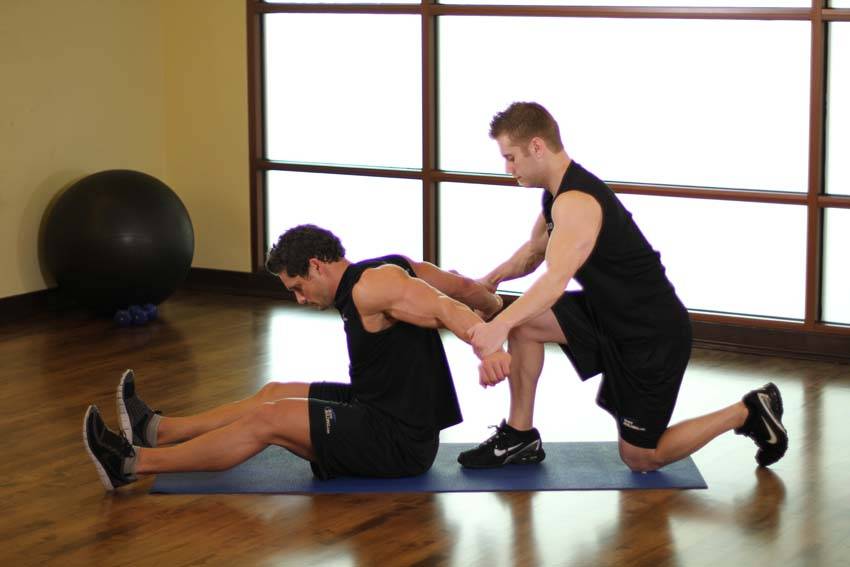
How to Perform Seated Front Deltoid
- Sit upright on the floor with your legs bent, your partner standing behind you. Stick your arms straight out to your sides, with your palms facing the ground. Attempt to move them as far behind you as possible, as your assistant holds your wrists. This will be your starting position.
- Keeping your elbows straight, attempt to move your arms to the front, with your partner gently restraining you to prevent any actual movement for 10-20 seconds.
- Now, relax your muscles and allow your partner to gently increase the stretch on the shoulders and chest. Hold for 10 to 20 seconds.
Pro Tips
- Category: Stretching
- Force: Static
Best Seated Front Deltoid Alternatives
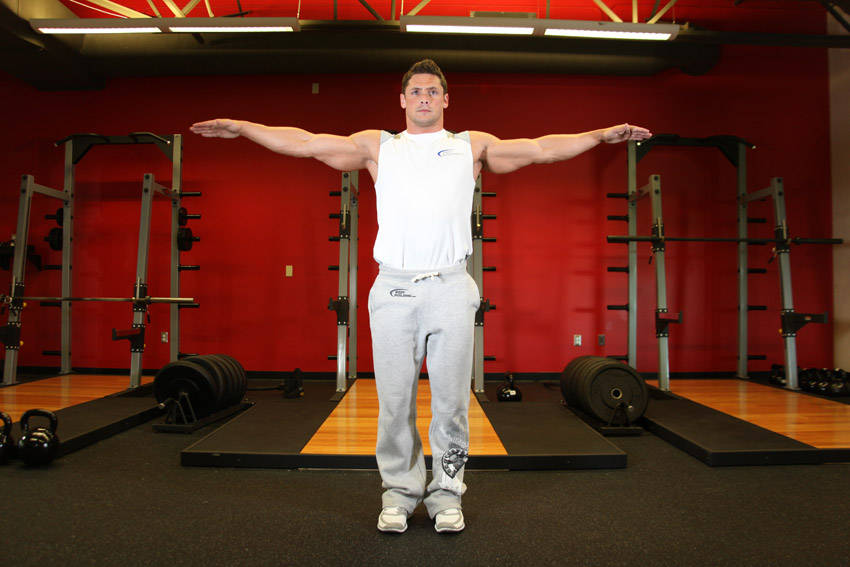
1. Arm Circles
86.1% MatchHow to perform this exercise
- Stand up and extend your arms straight out by the sides. The arms should be parallel to the floor and perpendicular (90-degree angle) to your torso. This will be your starting position.
- Slowly start to make circles of about 1 foot in diameter with each outstretched arm. Breathe normally as you perform the movement.
- Continue the circular motion of the outstretched arms for about ten seconds. Then reverse the movement, going the opposite direction.
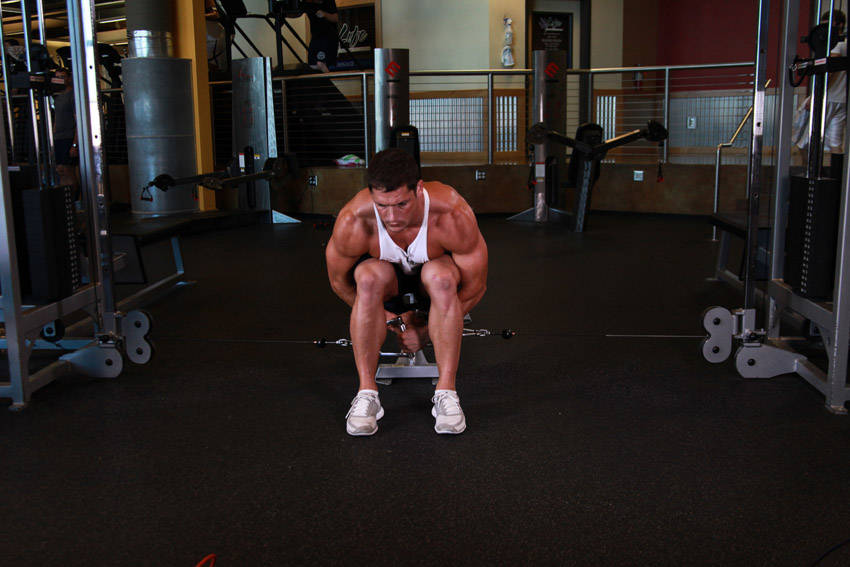
2. Cable Seated Lateral Raise
86% MatchHow to perform this exercise
- Stand in the middle of two low pulleys that are opposite to each other and place a flat bench right behind you (in perpendicular fashion to you; the narrow edge of the bench should be the one behind you). Select the weight to be used on each pulley.
- Now sit at the edge of the flat bench behind you with your feet placed in front of your knees.
- Bend forward while keeping your back flat and rest your torso on the thighs.
- Have someone give you the single handles attached to the pulleys. Grasp the left pulley with the right hand and the right pulley with the left after you select your weight. The pulleys should run under your knees and your arms will be extended with palms facing each other and a slight bend at the elbows. This will be the starting position.
- While keeping the arms stationary, raise the upper arms to the sides until they are parallel to the floor and at shoulder height. Exhale during the execution of this movement and hold the contraction for a second.
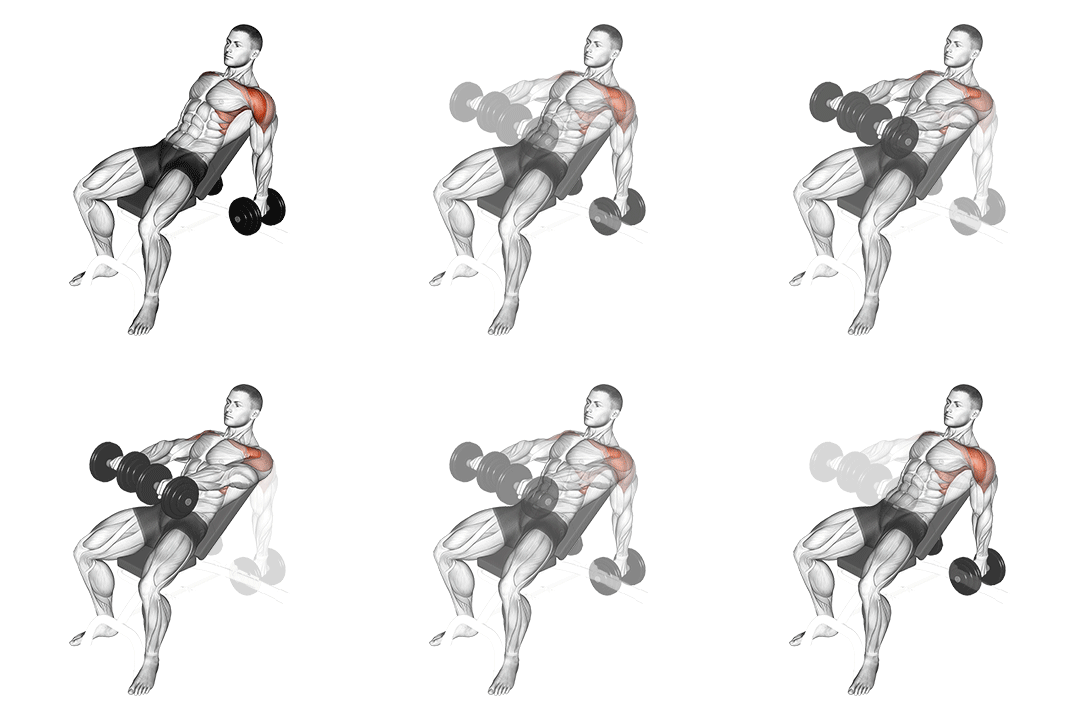
3. Dumbbell Incline Raise
81.4% MatchHow to perform this exercise
- Sit on an incline bench with a dumbbell in each hand, resting on your thighs.
- Lean back on the bench and raise the dumbbells to shoulder height, palms facing forward.
- Keeping your back against the bench, exhale and raise the dumbbells above your head, fully extending your arms.
- Pause for a moment at the top, then inhale and slowly lower the dumbbells back to shoulder height.
- Repeat for the desired number of repetitions.
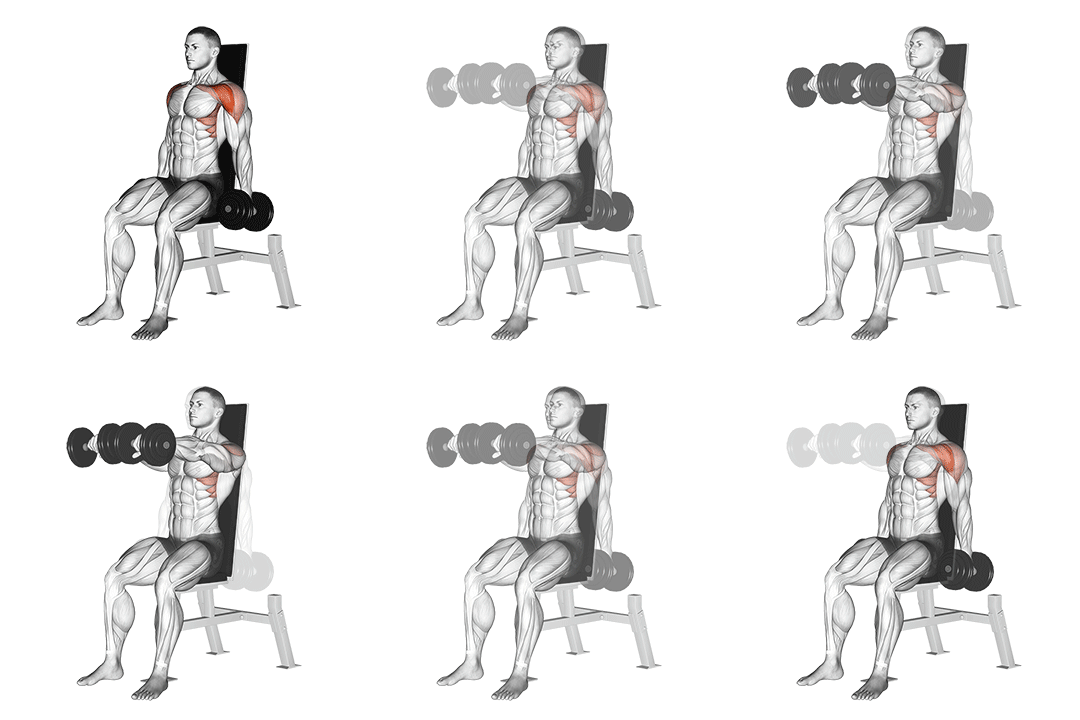
4. Dumbbell Seated Front Raise
80% MatchHow to perform this exercise
- Sit on a bench with your feet flat on the ground and a dumbbell in each hand, resting on your thighs.
- Keep your back straight and core engaged.
- Raise the dumbbells in front of you, with your palms facing down, until they are at shoulder level.
- Pause for a moment at the top, then slowly lower the dumbbells back down to the starting position.
- Repeat for the desired number of repetitions.
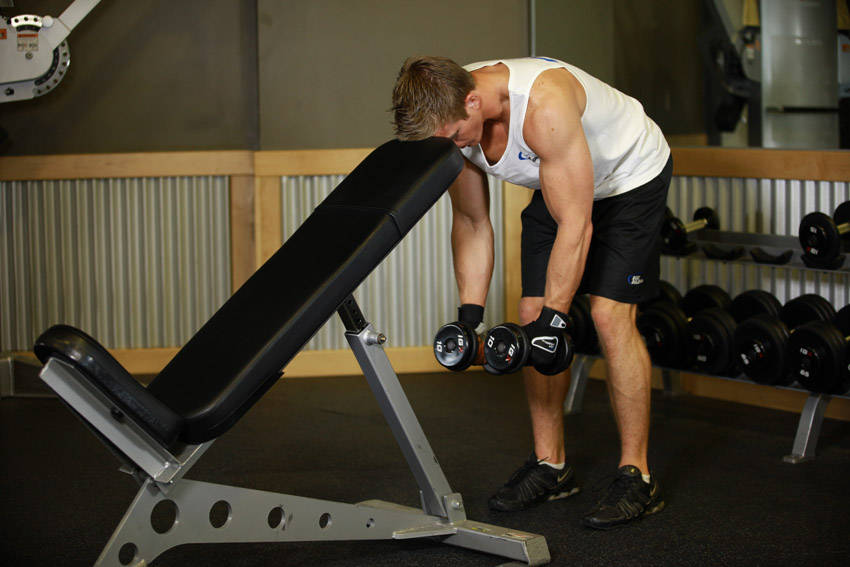
5. Bent Over Dumbbell Rear Delt Raise With Head On Bench
77.4% MatchHow to perform this exercise
- Stand up straight while holding a dumbbell in each hand and with an incline bench in front of you.
- While keeping your back straight and maintaining the natural arch of your back, lean forward until your forehead touches the bench in front of you. Let the arms hang in front of you perpendicular to the ground. The palms of your hands should be facing each other and your torso should be parallel to the floor. This will be your starting position.
- Keeping your torso forward and stationary, and the arms straight with a slight bend at the elbows, lift the dumbbells straight to the side until both arms are parallel to the floor. Exhale as you lift the weights. Caution: avoid swinging the torso or bringing the arms back as opposed to the side.
- After a one second contraction at the top, slowly lower the dumbbells back to the starting position.
- Repeat the recommended amount of repetitions.
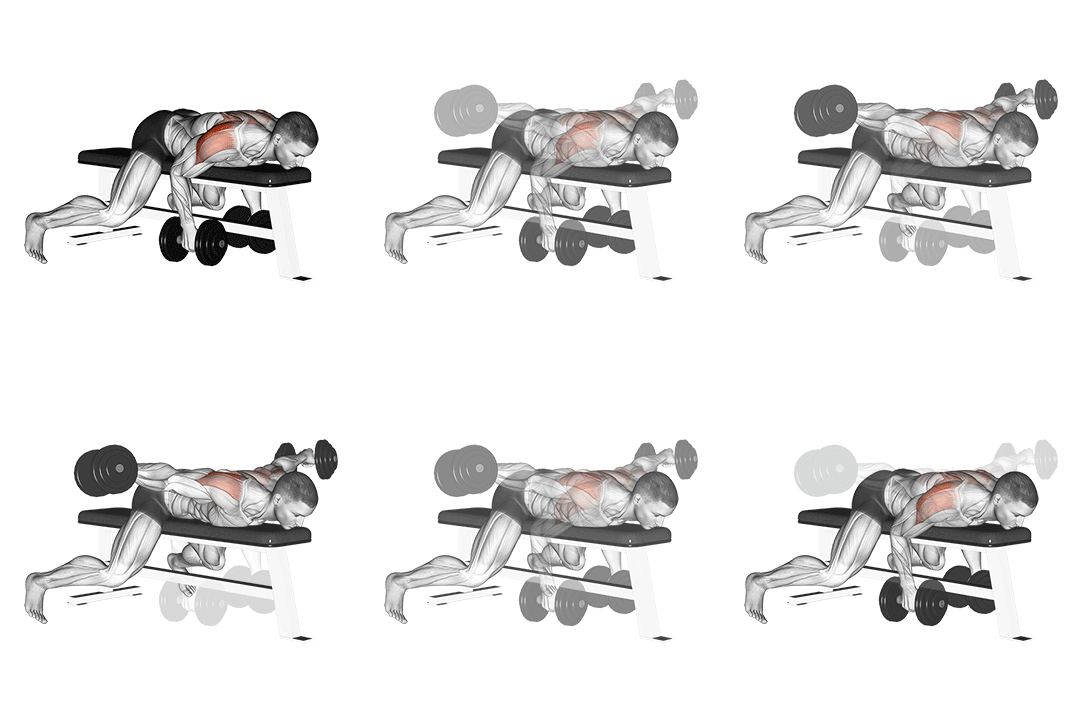
6. Dumbbell Lying Rear Lateral Raise
77.4% MatchHow to perform this exercise
- Lie face down on a flat bench with a dumbbell in each hand, palms facing each other.
- Extend your arms straight down towards the floor, keeping a slight bend in your elbows.
- Engaging your shoulder muscles, lift your arms out to the sides until they are parallel to the floor.
- Pause for a moment at the top, then slowly lower your arms back down to the starting position.
- Repeat for the desired number of repetitions.
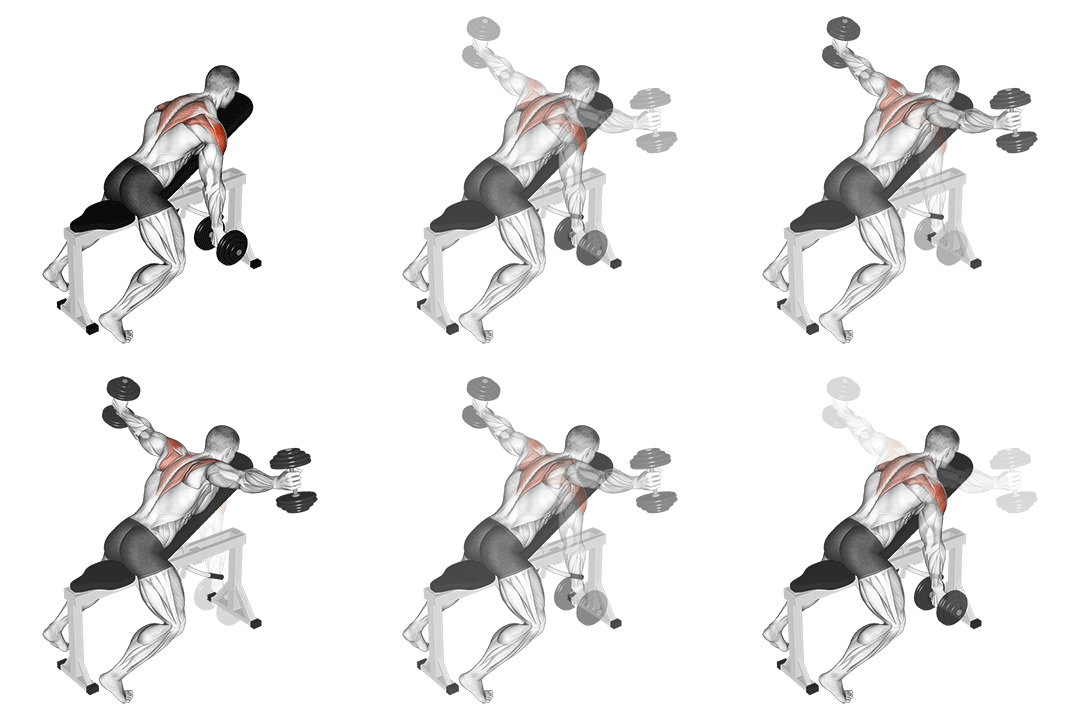
7. Dumbbell Incline T-raise
77.4% MatchHow to perform this exercise
- Set an incline bench to a 45-degree angle and sit on it with a dumbbell in each hand, palms facing inwards.
- Lean forward and let your arms hang straight down, perpendicular to the floor.
- Keeping your arms straight, raise them out to the sides until they are parallel to the floor, forming a 'T' shape with your body.
- Pause for a moment at the top, then slowly lower your arms back down to the starting position.
- Repeat for the desired number of repetitions.
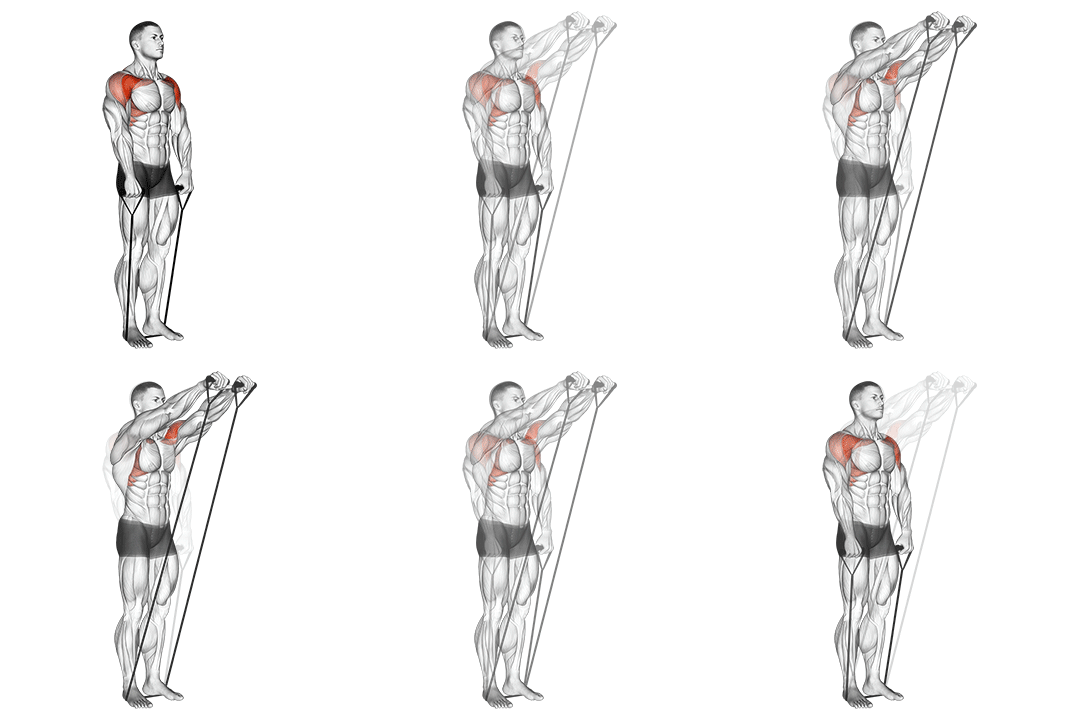
8. Band Front Raise
76.4% MatchHow to perform this exercise
- Stand with your feet shoulder-width apart and hold the band in front of your thighs with your palms facing down.
- Keep your arms straight and slowly raise them forward until they are parallel to the ground.
- Pause for a moment at the top, then slowly lower your arms back down to the starting position.
- Repeat for the desired number of repetitions.
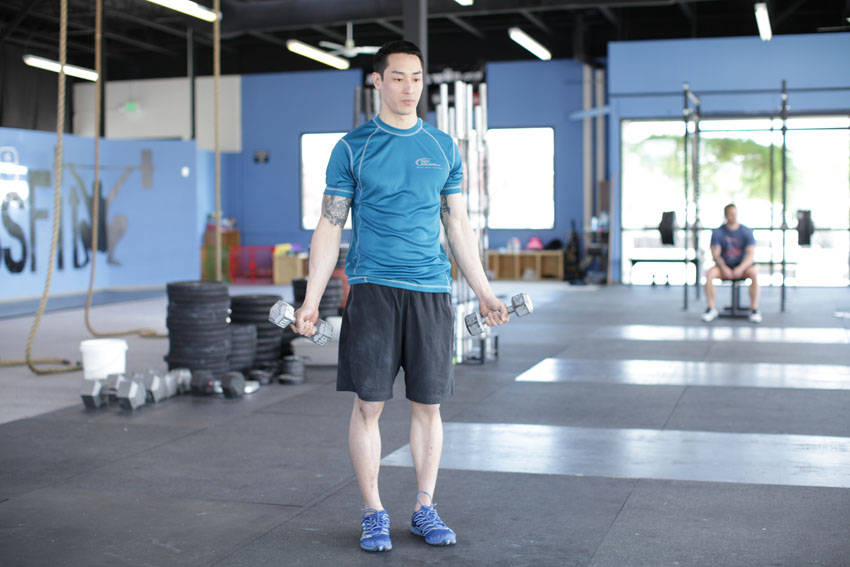
9. Dumbbell Scaption
75.1% MatchHow to perform this exercise
- This corrective exercise strengthens the muscles that stabilize your shoulder blade. Hold a light weight in each hand, hanging at your sides. Your thumbs should pointing up.
- Begin the movement raising your arms out in front of you, about 30 degrees off center. Your arms should be fully extended as you perform the movement.
- Continue until your arms are parallel to the ground, and then return to the starting position.
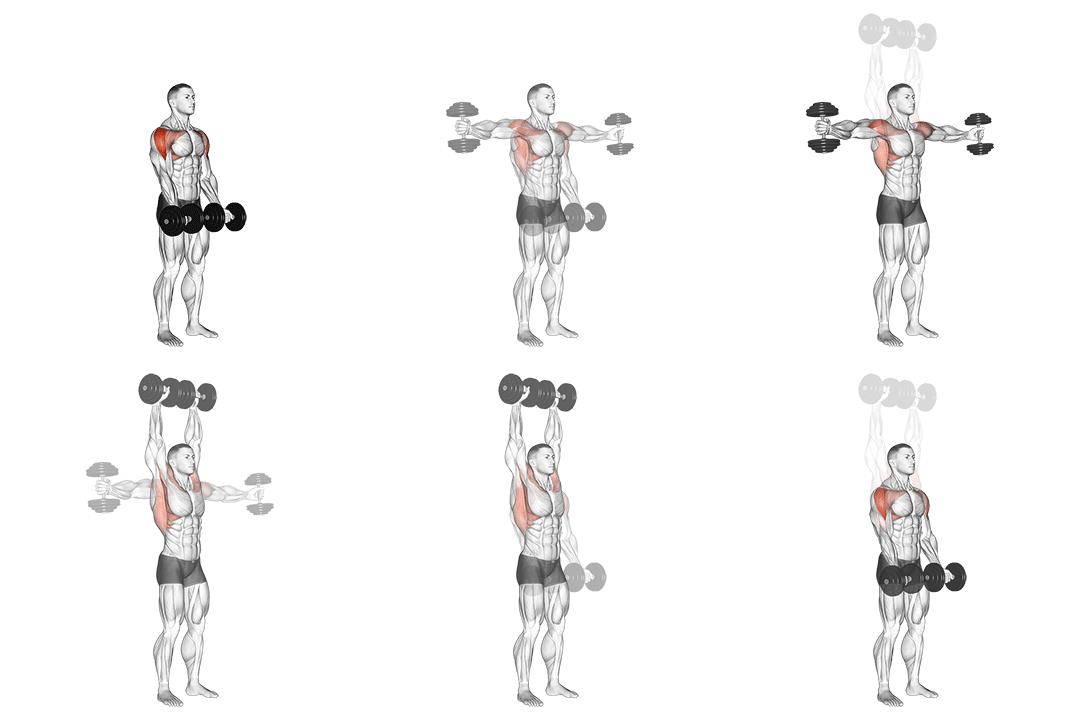
10. Dumbbell Standing Around World
74.6% MatchHow to perform this exercise
- Stand with your feet shoulder-width apart and hold a dumbbell in each hand.
- Extend your arms straight out to the sides at shoulder height, palms facing down.
- Keeping your arms straight, slowly rotate your arms in a circular motion, bringing the dumbbells in front of your body and then overhead.
- Continue the circular motion, bringing the dumbbells back down to the starting position.
- Repeat for the desired number of repetitions.
Why You Might Need a Seated Front Deltoid Alternative
You might substitute the Seated Front Deltoid due to equipment limits, shoulder pain, or the need for more progressive overload. Body-weight or band options avoid heavy axial loading and let you control tension through the range of motion. For example, a band front raise maintains continuous tension through shoulder flexion while reducing compressive forces; cue a slight elbow bend and controlled eccentric to keep the anterior deltoid engaged. Alternatives also let you address movement pattern deficits—use unstable surfaces or tempo changes to increase neuromuscular demand without adding weight.
How to Choose the Right Substitute
Pick a substitute based on the movement pattern, load progression, and joint tolerance. Prioritize exercises that replicate shoulder flexion and anterior deltoid activation (front raise pattern) and allow measurable overload—bands, weighted plates, or progressive bodyweight variations work well. Check biomechanics: avoid excessive scapular elevation or trunk compensation; cue scapular retraction and a neutral spine. If you have shoulder impingement, choose movements with a more vertical humeral path and reduce range or use light bands to emphasize control over load.
Frequently Asked Questions
What muscles does Seated Front Deltoid work?
The Seated Front Deltoid primarily targets the anterior (front) deltoid via shoulder flexion. It also recruits the clavicular head of the pectoralis major and uses the rotator cuff and upper traps for glenohumeral stability; cue: avoid shrugging to keep load on the deltoid.
What is the best bodyweight alternative to Seated Front Deltoid?
The elevated pike push-up or strict pike press is the top bodyweight option because it places the torso vertical and loads the anterior delts. Cue: hips high, lower the head between the hands to ~90 degrees of shoulder flexion and push explosively while keeping the elbows slightly forward.
Can I build muscle without doing Seated Front Deltoid?
Yes. You can hypertrophy the anterior deltoid using progressive bodyweight progressions (pike to handstand push-ups), resistance bands, or weighted front raises. Focus on progressive overload, controlled eccentrics, and consistent increases in volume or tension; cue: maintain strict shoulder flexion and avoid using momentum.
More Exercise Alternatives
Find Alternatives for Any Exercise
Use our free tool to discover the best substitute exercises based on your available equipment and goals.
Try the Exercise Substitution Finder →