

10 Best Seated Glute Alternatives for Home and Gym
If you can’t do the Seated Glute, use movements that replicate hip extension and glute activation. Effective swaps include glute bridges, hip thrusts, single-leg Romanian deadlifts, standing banded kickbacks, and clamshells. Cue each by driving through the heel, squeezing the glute at peak contraction, and keeping a neutral spine to maximize gluteus maximus and medius recruitment.
Original Exercise: Seated Glute
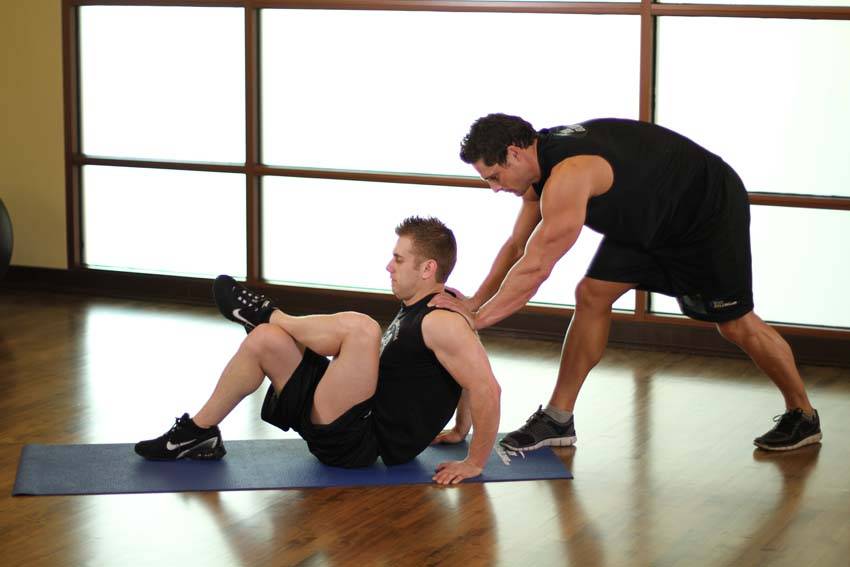
How to Perform Seated Glute
- In a seated position with your knees bent, cross one ankle over the opposite knee. Your partner will stand behind you. Now, lean forward as your partner braces your shoulders with their hands. This will be your starting position.
- Attempt to push your torso back for 10-20 seconds, as your partner prevents any actual movement of your torso.
- Now relax your muscles as your partner increases the stretch by gently pushing your torso forward for 10-20 seconds.
Pro Tips
- Category: Stretching
- Force: Static
Best Seated Glute Alternatives
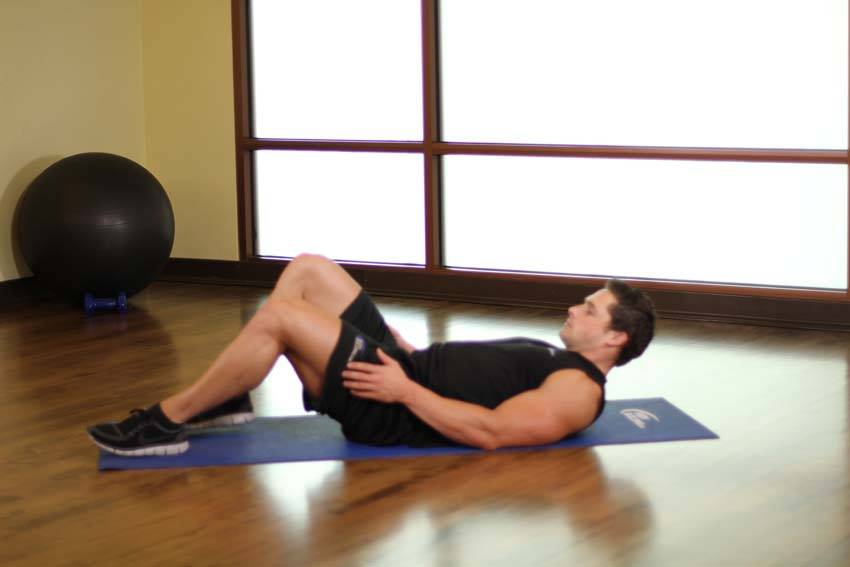
1. Ankle On The Knee
92.2% MatchHow to perform this exercise
- From a lying position, bend your knees and keep your feet on the floor.
- Place your ankle of one foot on your opposite knee.
- Grasp the thigh or knee of the bottom leg and pull both of your legs into the chest. Relax your neck and shoulders. Hold for 10-20 seconds and then switch sides.
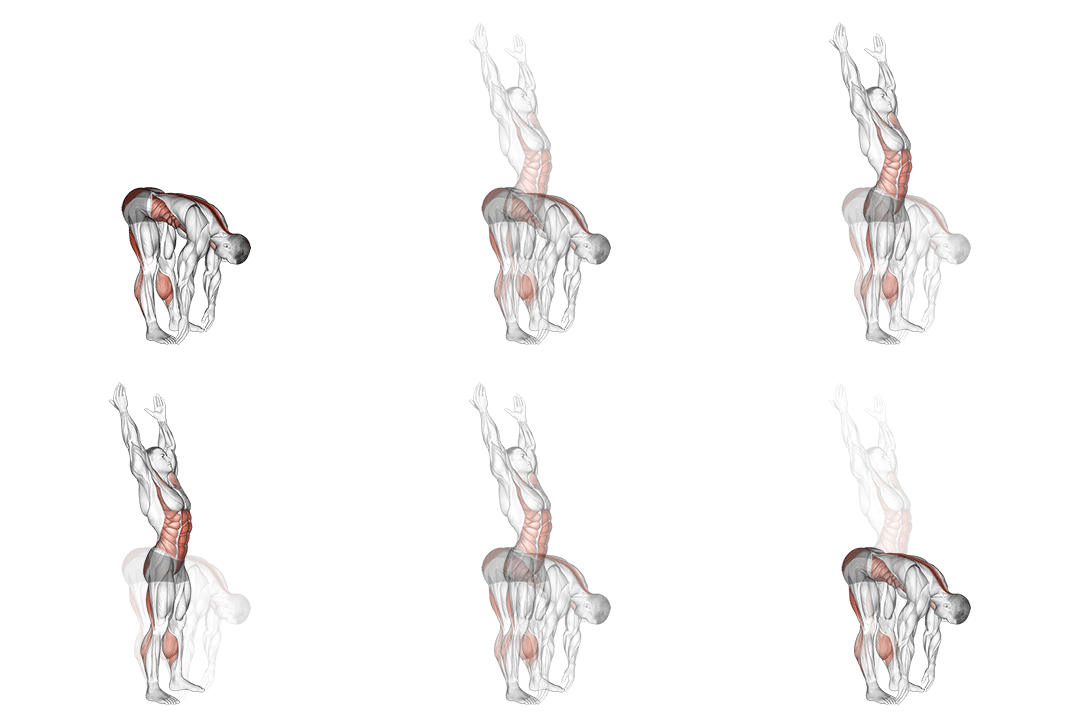
2. Basic Toe Touch (male)
83% MatchHow to perform this exercise
- Stand with your feet shoulder-width apart and your arms by your sides.
- Bend forward at the waist, keeping your back straight and your knees slightly bent.
- Reach down towards your toes with your hands, keeping your legs as straight as possible.
- Pause for a moment at the bottom, then slowly return to the starting position.
- Repeat for the desired number of repetitions.
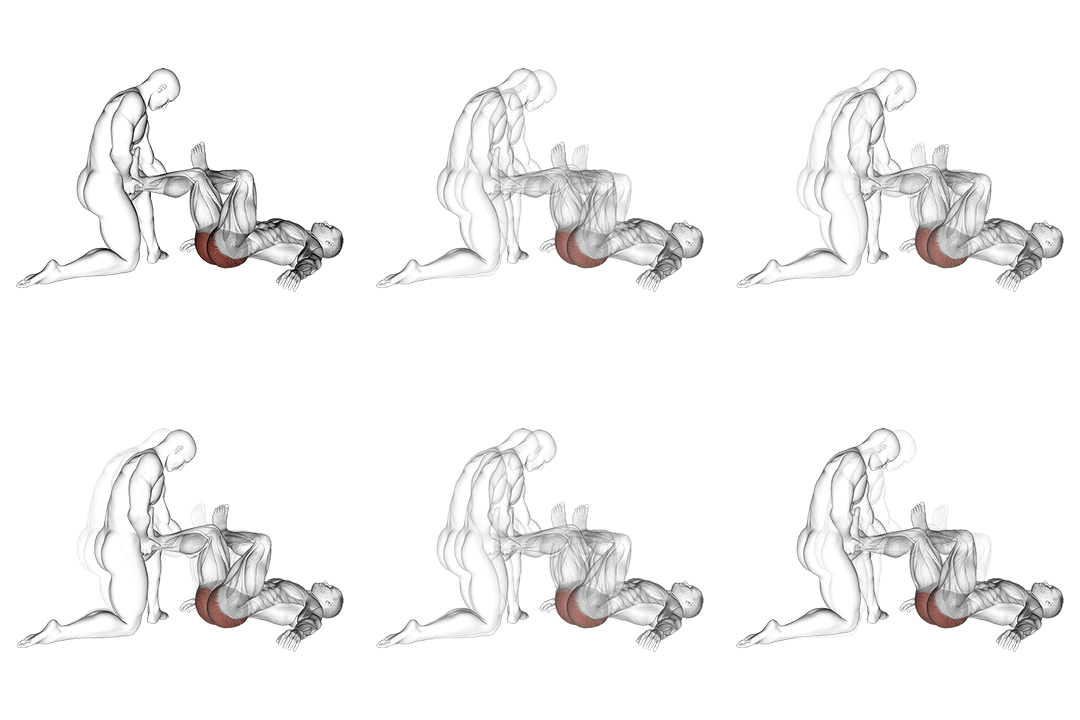
3. Assisted Lying Gluteus And Piriformis Stretch
80.2% MatchHow to perform this exercise
- Lie on your back with your legs extended.
- Bend your right knee and place your right ankle on your left thigh, just above the knee.
- Grasp your left thigh with both hands and gently pull it towards your chest.
- Hold the stretch for 20-30 seconds.
- Release the stretch and repeat on the other side.
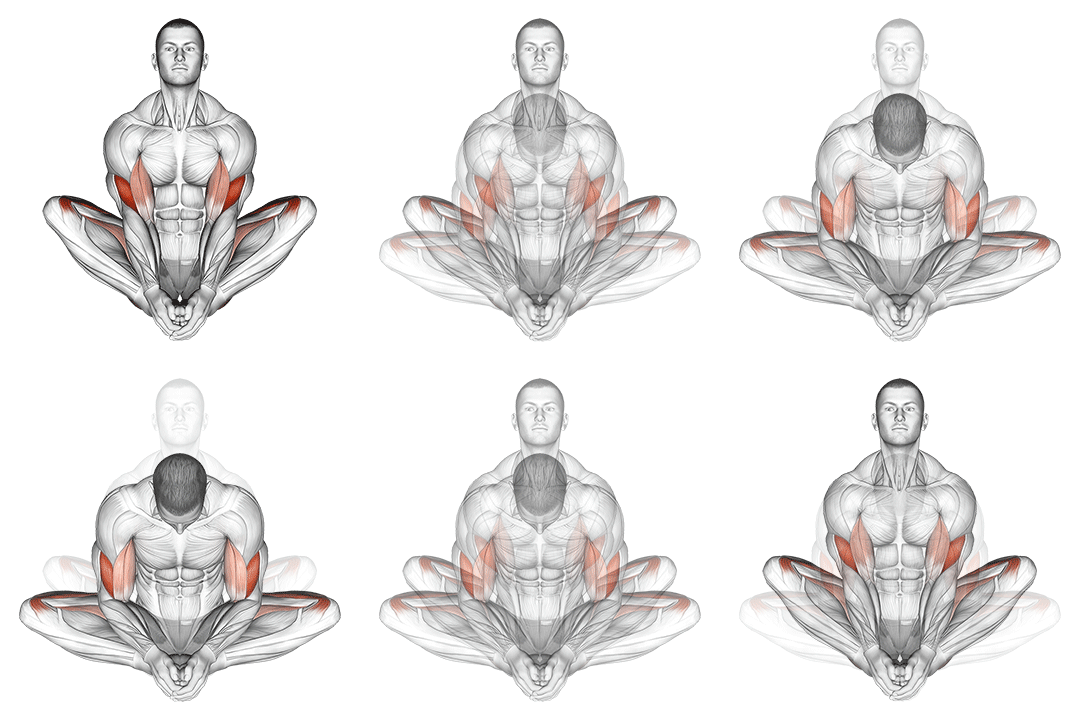
4. Butterfly Yoga Pose
78.7% MatchHow to perform this exercise
- Sit on the floor with your legs extended in front of you.
- Bend your knees and bring the soles of your feet together, allowing your knees to fall out to the sides.
- Hold onto your ankles or feet with your hands.
- Sit up tall and lengthen your spine.
- Gently press your knees down towards the floor, feeling a stretch in your inner thighs.
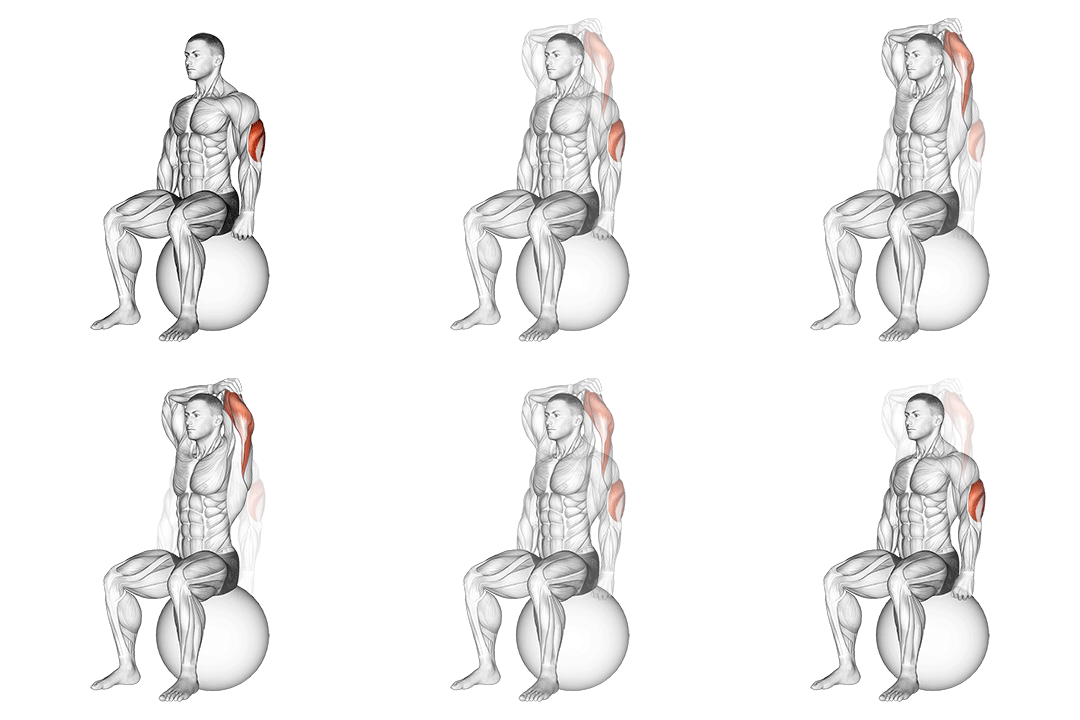
5. Exercise Ball Seated Triceps Stretch
78.4% MatchHow to perform this exercise
- Sit on a stability ball with your feet flat on the ground and your back straight.
- Hold a dumbbell in one hand and extend your arm straight up above your head.
- Bend your elbow and lower the dumbbell behind your head, keeping your upper arm close to your ear.
- Hold the stretch for a few seconds, then return to the starting position.
- Repeat with the other arm.
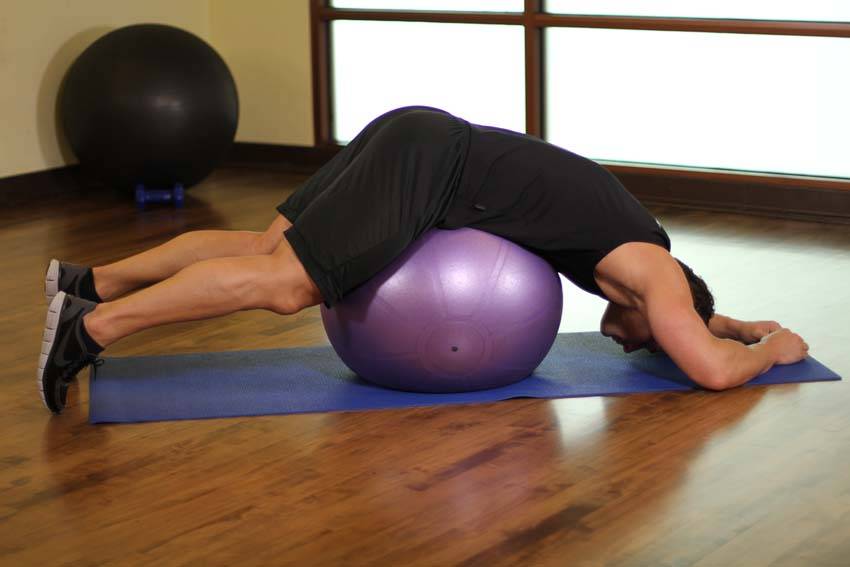
6. Downward Facing Balance
78% MatchHow to perform this exercise
- Lie facedown on top of an exercise ball.
- While resting on your stomach on the ball, walk your hands forward along the floor and lift your legs, extending your elbows and knees.
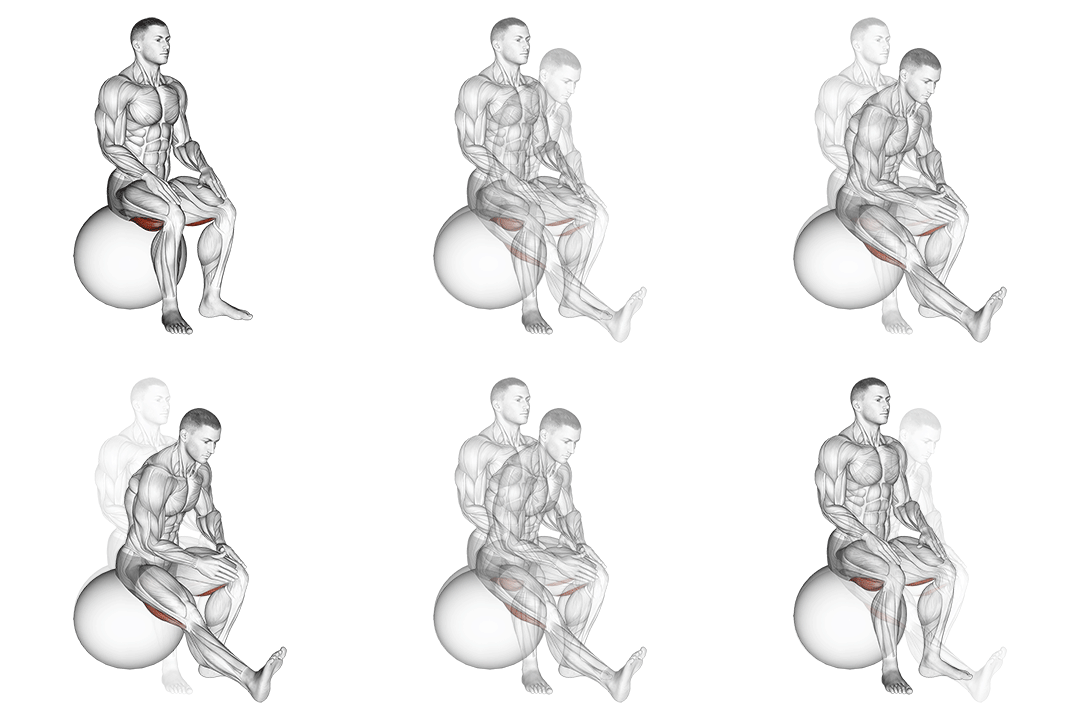
7. Exercise Ball Seated Hamstring Stretch
77.9% MatchHow to perform this exercise
- Sit on the stability ball with your feet flat on the ground and your knees bent at a 90-degree angle.
- Slowly roll the ball forward, walking your feet out until your upper back is resting on the ball and your legs are extended straight in front of you.
- Place your hands on your hips for support.
- Engage your core and slowly lower your upper body towards the ground, keeping your back straight and your chest lifted.
- Stop when you feel a stretch in your hamstrings, and hold the position for 20-30 seconds.
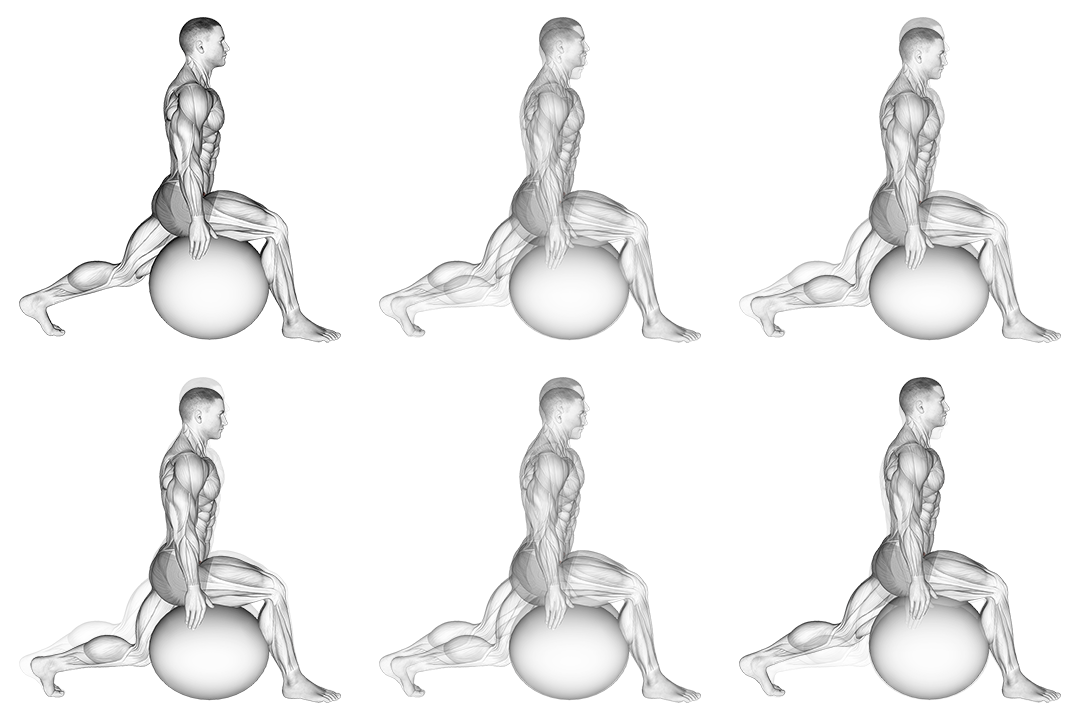
8. Exercise Ball Hip Flexor Stretch
77.9% MatchHow to perform this exercise
- Place the stability ball on the ground and kneel in front of it.
- Place your right foot on top of the stability ball, with your knee bent at a 90-degree angle.
- Extend your left leg behind you, keeping it straight.
- Lean forward, pushing your hips towards the stability ball, until you feel a stretch in your right hip flexor.
- Hold the stretch for 20-30 seconds, then switch sides and repeat.
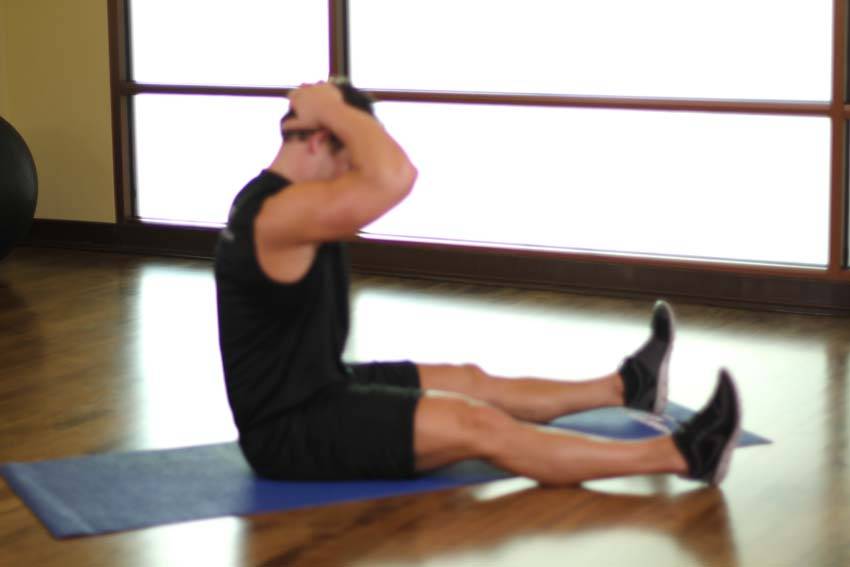
9. Chin To Chest Stretch
76% MatchHow to perform this exercise
- Get into a seated position on the floor.
- Place both hands at the rear of your head, fingers interlocked, thumbs pointing down and elbows pointing straight ahead. Slowly pull your head down to your chest. Hold for 20-30 seconds.
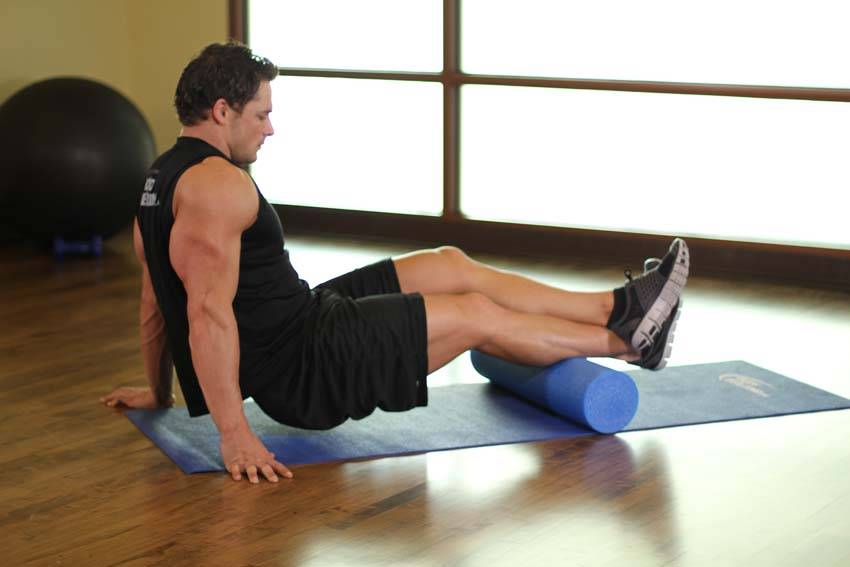
10. Calves-SMR
75.2% MatchHow to perform this exercise
- Begin seated on the floor. Place a foam roller underneath your lower leg. Your other leg can either be crossed over the opposite or be placed on the floor, supporting some of your weight. This will be your starting position.
- Place your hands to your side or just behind you, and press down to raise your hips off of the floor, placing much of your weight against your calf muscle. Roll from below the knee to above the ankle, pausing at points of tension for 10-30 seconds. Repeat for the other leg.
Why You Might Need a Seated Glute Alternative
You may need substitutes because of limited equipment, pain with seated positions, mobility restrictions, or training variety. Seated Glute emphasizes isolated glute contraction; alternatives let you scale load, change leverage, or shift emphasis to glute medius or hamstrings. For example, hip thrusts increase hip-extension torque and gluteus maximus stretch—cue a tight core and drive the hips up through the heels. Clamshells and band walks shift activation to the gluteus medius and reduce spinal loading when you keep the pelvis stable and avoid lumbar rotation.
How to Choose the Right Substitute
Pick a substitute based on the movement pattern you need: choose hip-extension dominant moves (glute bridge, hip thrust) to load the gluteus maximus, and choose abduction/external rotation drills (clamshells, band walks) to target the gluteus medius. Consider joint limits and progression—single-leg RDLs increase unilateral demand and core stability; cue a soft knee and hinge from the hips while keeping the spine neutral. If you lack equipment, use tempo and pause at peak contraction to increase time under tension and glute activation.
Frequently Asked Questions
What muscles does Seated Glute work?
Seated Glute mainly targets the gluteus maximus with supportive activation from the gluteus medius and hamstrings. It isolates hip extension and external rotation—cue an intentional squeeze at the top to maximize gluteus maximus recruitment while keeping the pelvis stable.
What is the best bodyweight alternative to Seated Glute?
The glute bridge is the best bodyweight substitute: lie on your back, drive through the heels, lift hips until the torso is aligned, and squeeze the glutes for two seconds. That cue emphasizes hip extension and posterior chain activation similar to the Seated Glute.
Can I build muscle without doing Seated Glute?
Yes. You can build glute muscle with progressive overload applied through other patterns—hip thrusts, single-leg RDLs, weighted bridges, and targeted band work. Focus on full hip extension, increased time under tension, and progressively greater load or volume to drive hypertrophy.
More Exercise Alternatives
Find Alternatives for Any Exercise
Use our free tool to discover the best substitute exercises based on your available equipment and goals.
Try the Exercise Substitution Finder →