

10 Best Seated Lower Back Stretch Alternatives for Mobility
If you can’t perform the Seated Lower Back Stretch, use targeted lat-focused options like Child’s Pose with Side Reach, Kneeling Overhead Lat Stretch, or Quadruped Rockbacks with Lat Reach. Each alternative emphasizes scapular depression and thoracolumbar lengthening to unload the lats and reduce low-back tension during the stretch.
Original Exercise: Seated Lower Back Stretch
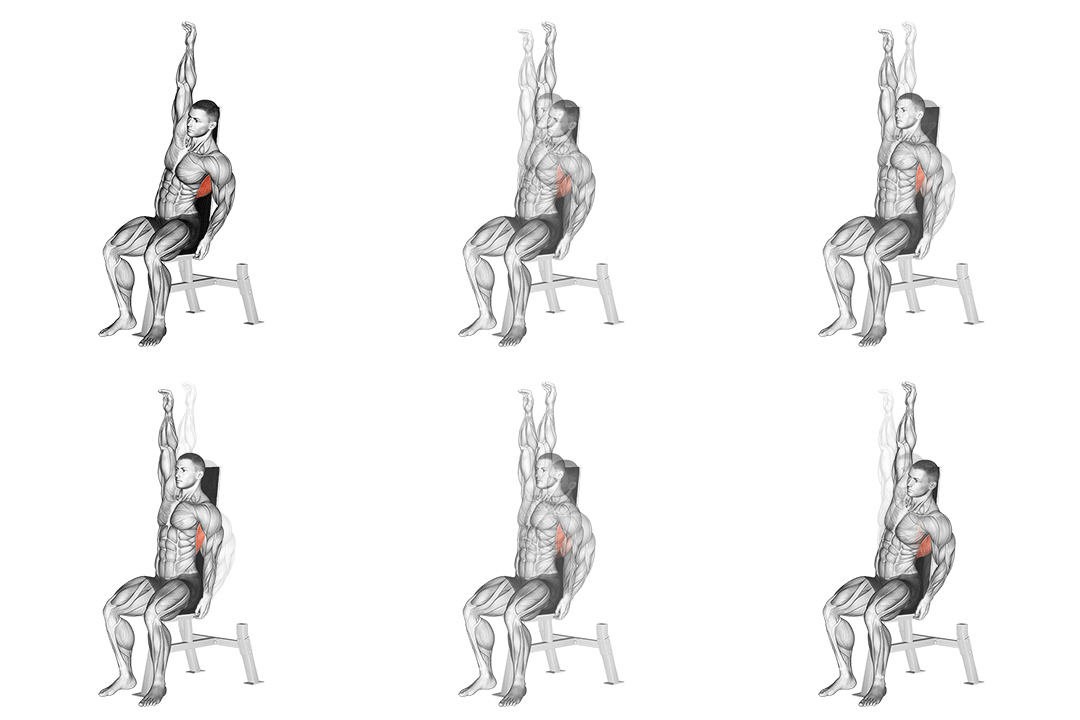
How to Perform Seated Lower Back Stretch
- Sit on the edge of a chair with your feet flat on the ground.
- Place your hands on your thighs or on the sides of the chair for support.
- Slowly lean forward from your hips, keeping your back straight.
- Feel the stretch in your lower back and hold for 20-30 seconds.
- Slowly return to the starting position and repeat for the desired number of repetitions.
Best Seated Lower Back Stretch Alternatives
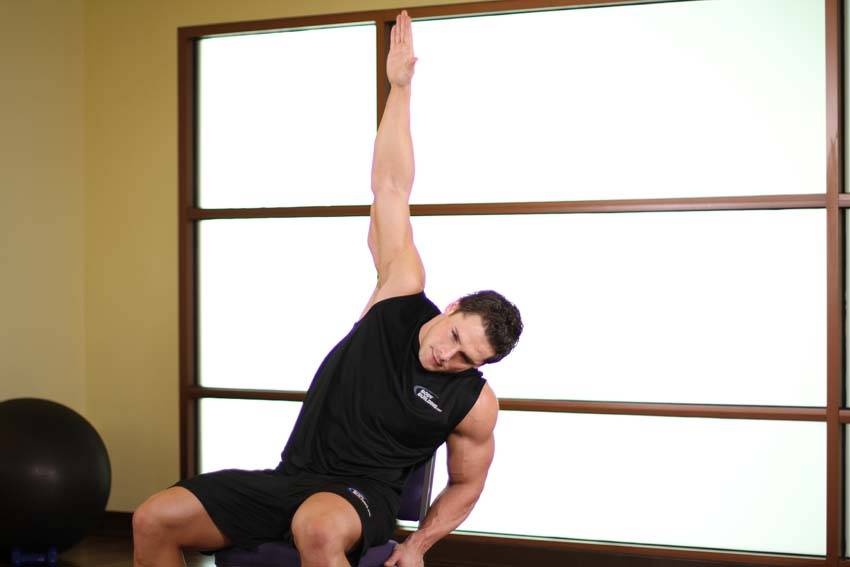
1. Chair Lower Back Stretch
99.9% MatchHow to perform this exercise
- Sit upright on a chair.
- Bend to one side with your arm over your head. You can hold onto the chair with your free hand.
- Hold for 10 seconds, and repeat for your other side.
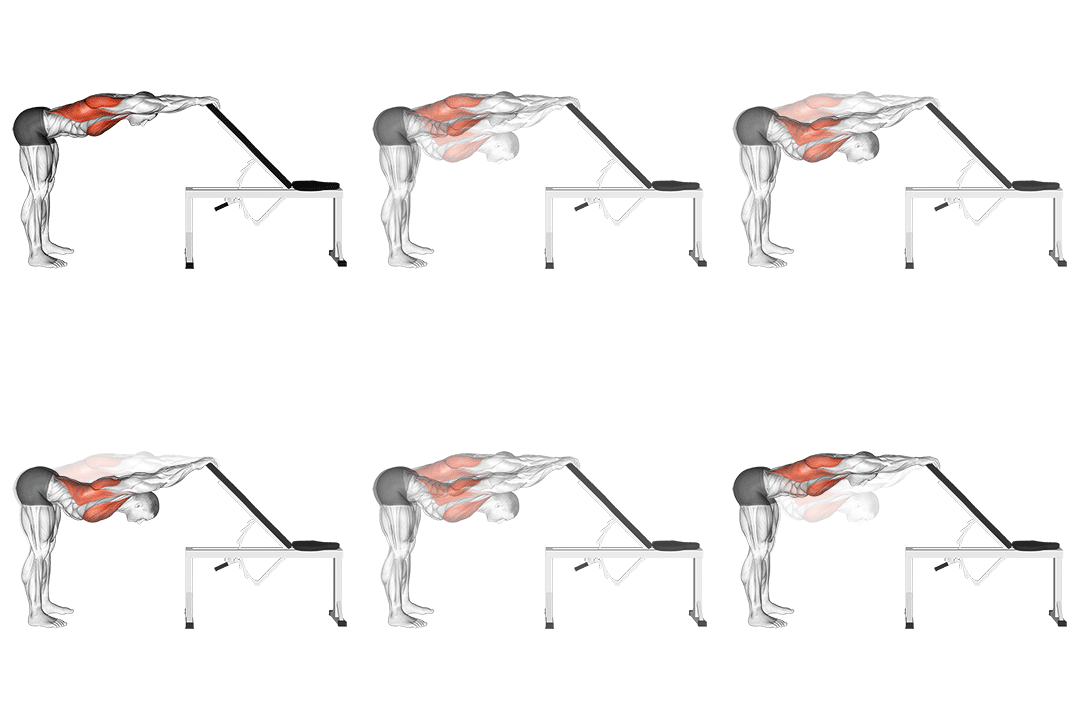
2. Back Pec Stretch
87.2% MatchHow to perform this exercise
- Stand tall with your feet shoulder-width apart.
- Extend your arms straight out in front of you, parallel to the ground.
- Cross your arms in front of your body, with your right arm over your left arm.
- Interlock your fingers and rotate your palms away from your body.
- Slowly raise your arms up and away from your body, feeling a stretch in your back and chest.
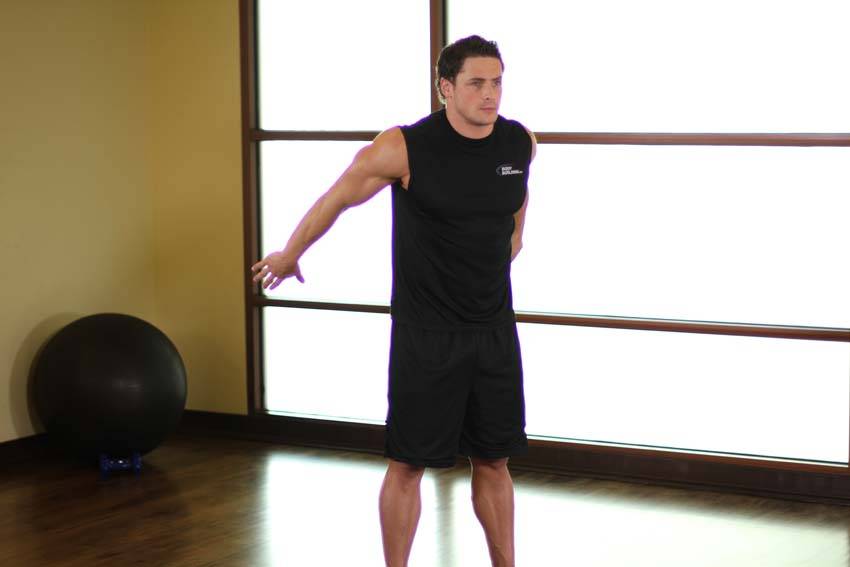
3. Dynamic Back Stretch
81.2% MatchHow to perform this exercise
- Stand with your feet shoulder width apart. This will be your starting position.
- Keeping your arms straight, swing them straight up in front of you 5-10 times, increasing the range of motion each time until your arms are above your head.
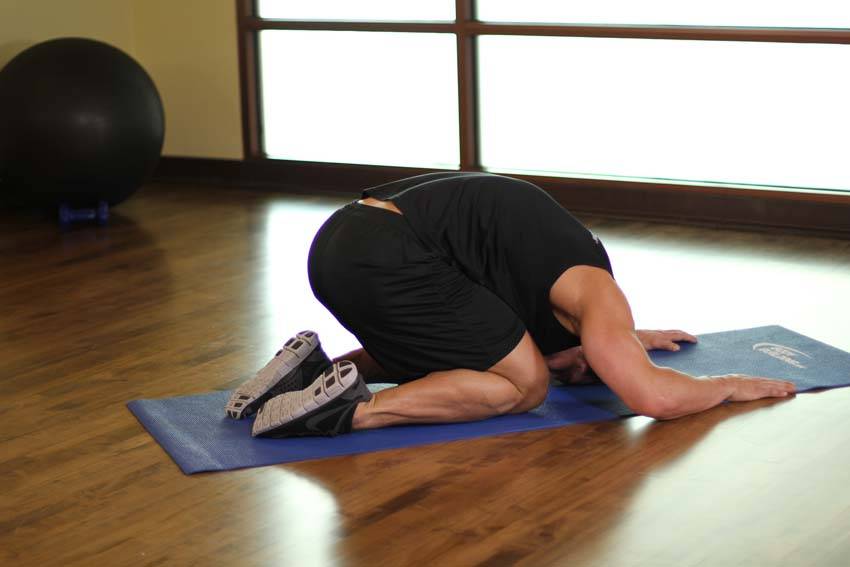
4. Child's Pose
76.2% MatchHow to perform this exercise
- Get on your hands and knees, walk your hands in front of you.
- Lower your buttocks down to sit on your heels. Let your arms drag along the floor as you sit back to stretch your entire spine.
- Once you settle onto your heels, bring your hands next to your feet and relax. "breathe" into your back. Rest your forehead on the floor. Avoid this position if you have knee problems.
5. Chin To Chest Stretch
74.2% MatchHow to perform this exercise
- Get into a seated position on the floor.
- Place both hands at the rear of your head, fingers interlocked, thumbs pointing down and elbows pointing straight ahead. Slowly pull your head down to your chest. Hold for 20-30 seconds.
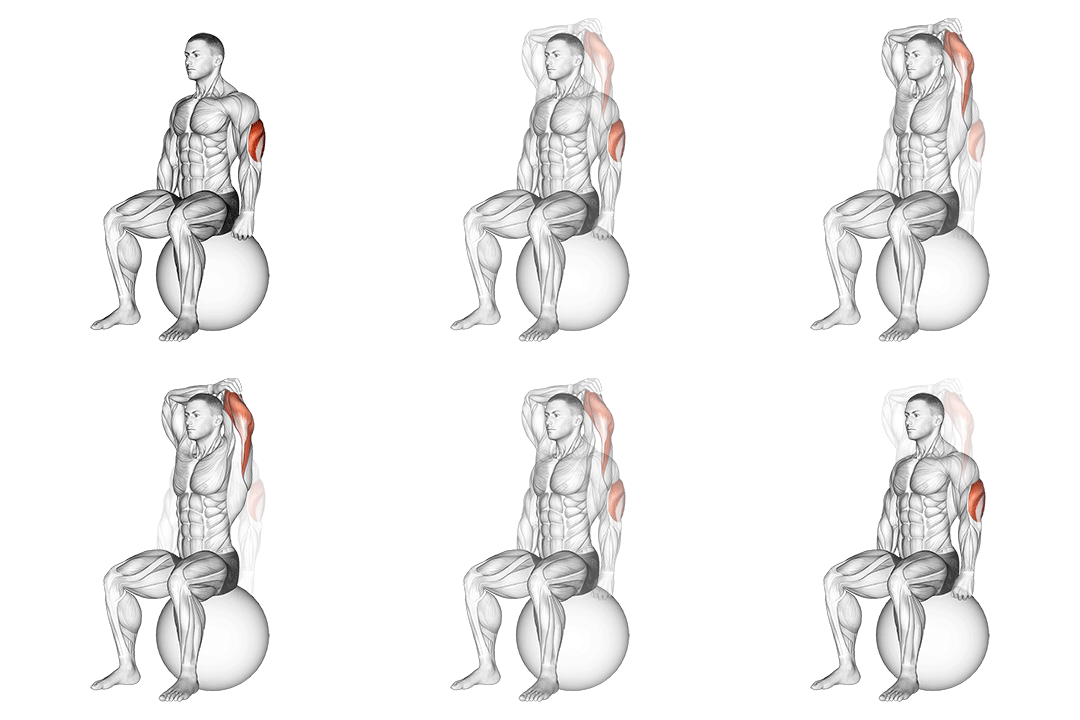
6. Exercise Ball Seated Triceps Stretch
70.2% MatchHow to perform this exercise
- Sit on a stability ball with your feet flat on the ground and your back straight.
- Hold a dumbbell in one hand and extend your arm straight up above your head.
- Bend your elbow and lower the dumbbell behind your head, keeping your upper arm close to your ear.
- Hold the stretch for a few seconds, then return to the starting position.
- Repeat with the other arm.
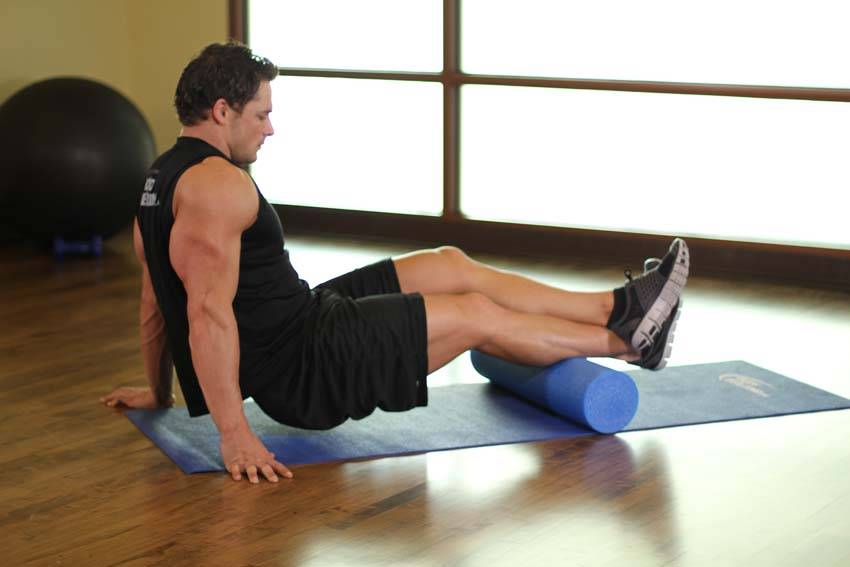
7. Calves-SMR
70% MatchHow to perform this exercise
- Begin seated on the floor. Place a foam roller underneath your lower leg. Your other leg can either be crossed over the opposite or be placed on the floor, supporting some of your weight. This will be your starting position.
- Place your hands to your side or just behind you, and press down to raise your hips off of the floor, placing much of your weight against your calf muscle. Roll from below the knee to above the ankle, pausing at points of tension for 10-30 seconds. Repeat for the other leg.
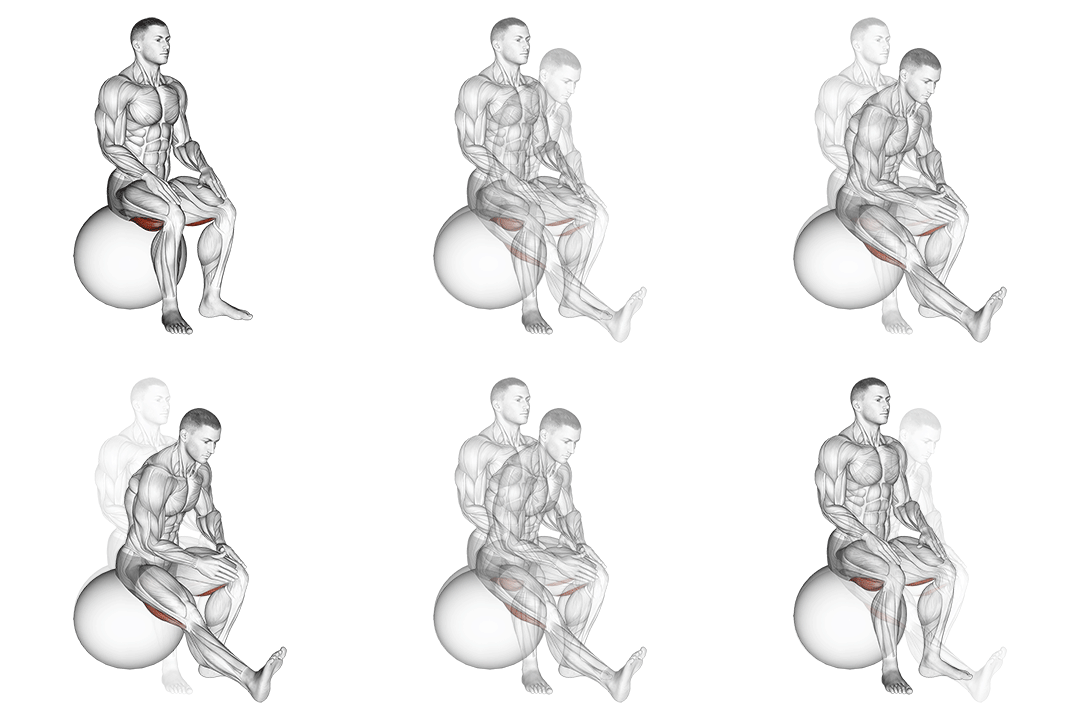
8. Exercise Ball Seated Hamstring Stretch
69.7% MatchHow to perform this exercise
- Sit on the stability ball with your feet flat on the ground and your knees bent at a 90-degree angle.
- Slowly roll the ball forward, walking your feet out until your upper back is resting on the ball and your legs are extended straight in front of you.
- Place your hands on your hips for support.
- Engage your core and slowly lower your upper body towards the ground, keeping your back straight and your chest lifted.
- Stop when you feel a stretch in your hamstrings, and hold the position for 20-30 seconds.
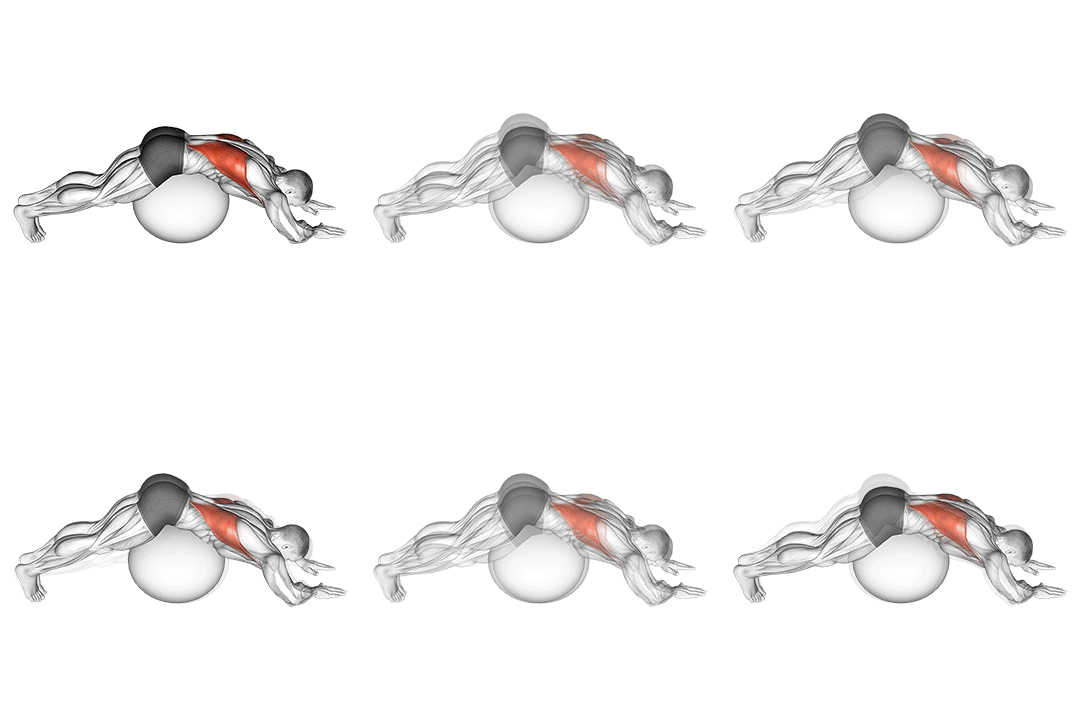
9. Exercise Ball Lower Back Stretch (pyramid)
67.6% MatchHow to perform this exercise
- Sit on the stability ball with your feet flat on the ground and your knees bent at a 90-degree angle.
- Slowly walk your feet forward, rolling the ball down your back until your lower back is resting on the ball.
- Place your hands behind your head or cross them over your chest.
- Engage your core and slowly lower your upper body towards the ground, allowing your lower back to stretch over the ball.
- Hold the stretch for a few seconds, then slowly return to the starting position.
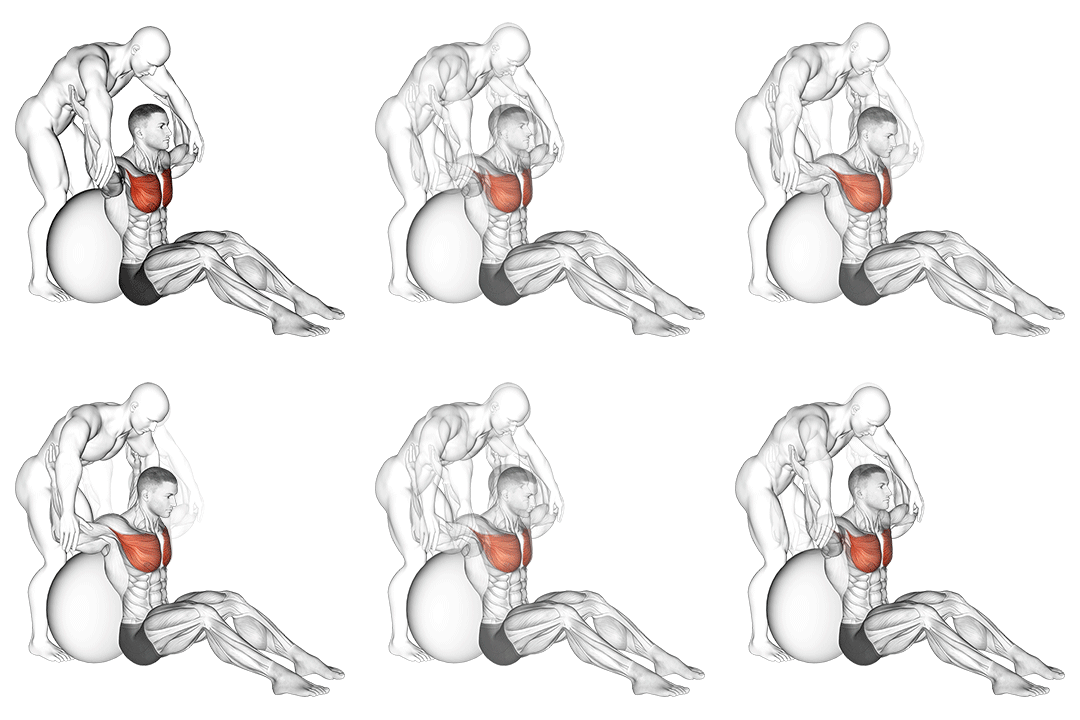
10. Assisted Seated Pectoralis Major Stretch With Stability Ball
67.3% MatchHow to perform this exercise
- Sit on a stability ball with your feet flat on the ground and your back straight.
- Hold a stability ball with both hands and extend your arms straight out in front of you.
- Slowly lower the stability ball towards your chest, feeling a stretch in your pectoral muscles.
- Hold the stretch for a few seconds, then slowly return to the starting position.
- Repeat for the desired number of repetitions.
Why You Might Need a Seated Lower Back Stretch Alternative
You may substitute the Seated Lower Back Stretch for several practical reasons: acute low-back pain, limited hip mobility, shoulder impingement, or lack of a safe seated surface. A well-chosen alternative still lengthens the latissimus dorsi while reducing lumbar shear. For example, Child’s Pose with Side Reach keeps the pelvis back and ribs down to bias the lats without spinal flexion; cue fingertip slide along the mat and feel the lateral trunk lengthen. If you need a gentler option, use standing wall lat stretches to control scapular depression and avoid overloading the lumbar spine.
How to Choose the Right Substitute
Select a substitute based on pain, range of motion, and training goal. If you have lumbar pain, pick a position that keeps the pelvis posterior and reduces spinal flexion—cue ‘sit the hips back, tuck the tailbone slightly.’ For mobility goals, choose a technique that gives a full shoulder flexion and scapular depression to lengthen the lats, such as Kneeling Overhead Lat Stretch: reach overhead, pull the elbow back, and press the ribcage toward the opposite hip. Progress by increasing hold time or adding active scapular retraction to train motor control and posterior chain engagement.
Frequently Asked Questions
What muscles does Seated Lower Back Stretch work?
The stretch primarily lengthens the latissimus dorsi and the thoracolumbar fascia while producing gentle lumbar flexion. It also reduces tension in the posterior shoulder girdle when you reach forward and depress the scapulae.
What is the best bodyweight alternative to Seated Lower Back Stretch?
Child's Pose with Side Reach is the best bodyweight alternative: sit the hips back to the heels, reach one arm along the mat toward the opposite corner, and keep the ribs down to isolate the lat. This variation maintains pelvic posterior tilt and maximizes lateral trunk lengthening without loading the spine.
Can I build muscle without doing Seated Lower Back Stretch?
Yes. Building lat muscle requires progressive loading and concentric activation, not this isolation stretch. Use pulling movements like pull-ups or bodyweight inverted rows, cueing elbow drive down and back to maximally recruit the lats while using the stretch variations for mobility and recovery.
More Exercise Alternatives
Find Alternatives for Any Exercise
Use our free tool to discover the best substitute exercises based on your available equipment and goals.
Try the Exercise Substitution Finder →