

10 Best Side-lying Floor Stretch Alternatives for Home Workouts
If you can't perform the Side-lying Floor Stretch, use exercises that lengthen the latissimus dorsi and open the thorax. Try child's-pose lat variations, standing wall lat stretches, or kneeling single-arm lat slides. For each, reach the working arm overhead and hinge at the ribs to bias the lats and promote scapular glide.
Original Exercise: Side-lying Floor Stretch
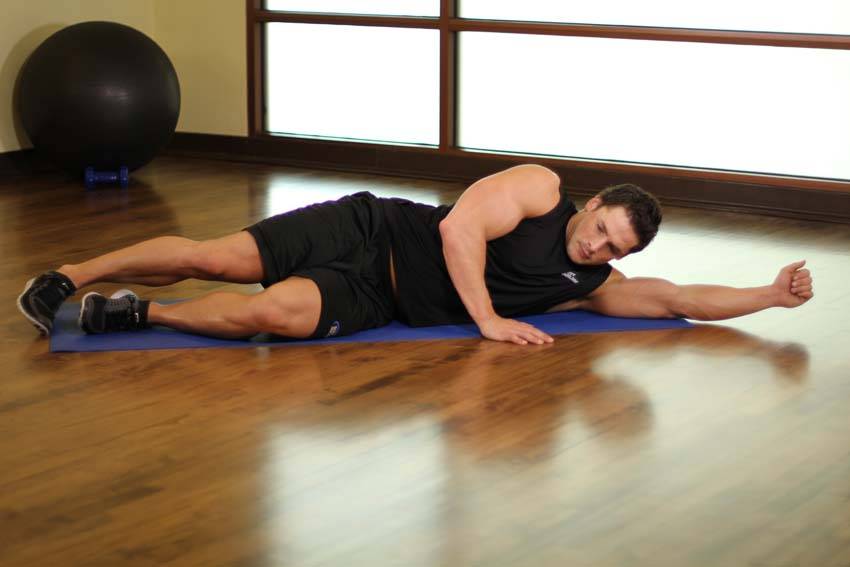
How to Perform Side-lying Floor Stretch
- First lie on your left side, bending your left knee in front of you to stabilize your torso (use your abdominal muscles as well to hold you upright).
- Straighten your right leg and rest the right foot on the floor behind your left. Straighten your right arm over your head and gently pull on your right wrist to stretch the entire right side of the body. Switch sides.
Pro Tips
- Category: Stretching
- Force: Static
Best Side-lying Floor Stretch Alternatives
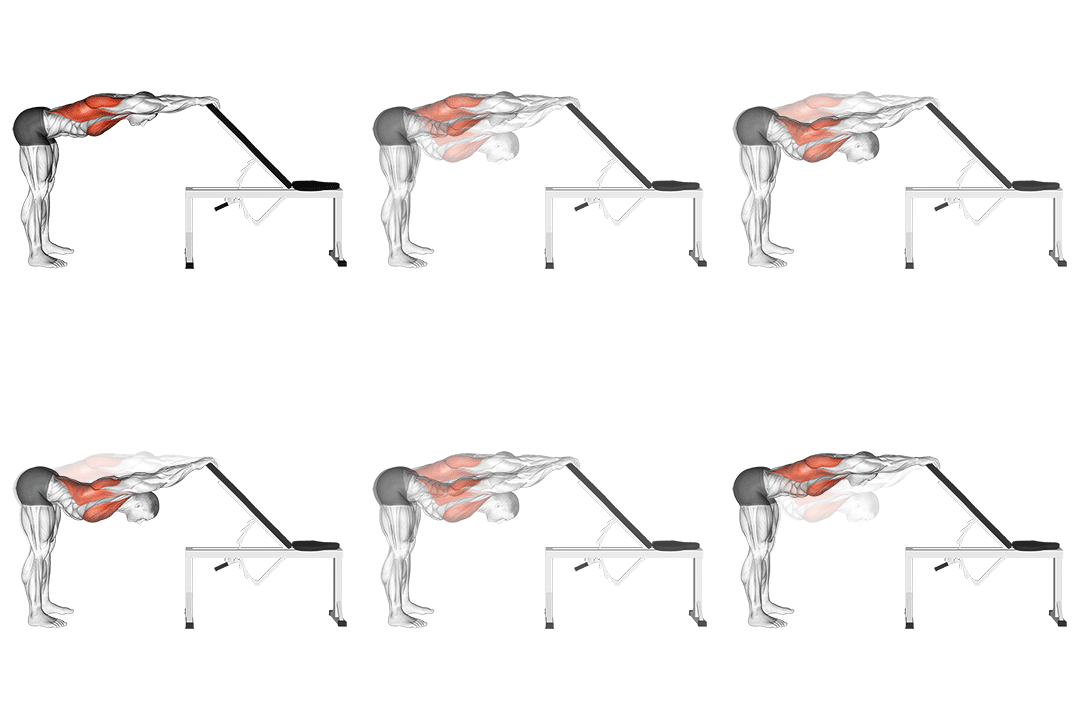
1. Back Pec Stretch
85% MatchHow to perform this exercise
- Stand tall with your feet shoulder-width apart.
- Extend your arms straight out in front of you, parallel to the ground.
- Cross your arms in front of your body, with your right arm over your left arm.
- Interlock your fingers and rotate your palms away from your body.
- Slowly raise your arms up and away from your body, feeling a stretch in your back and chest.
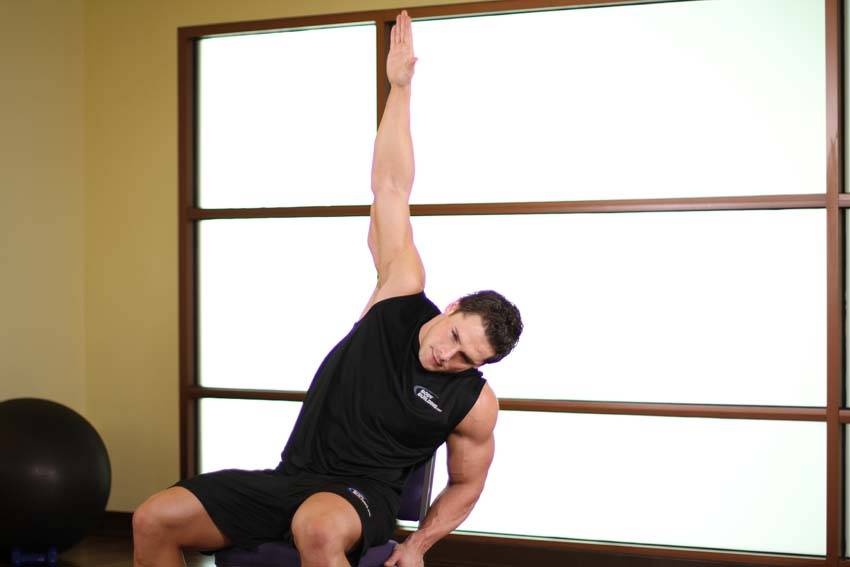
2. Chair Lower Back Stretch
80.2% MatchHow to perform this exercise
- Sit upright on a chair.
- Bend to one side with your arm over your head. You can hold onto the chair with your free hand.
- Hold for 10 seconds, and repeat for your other side.
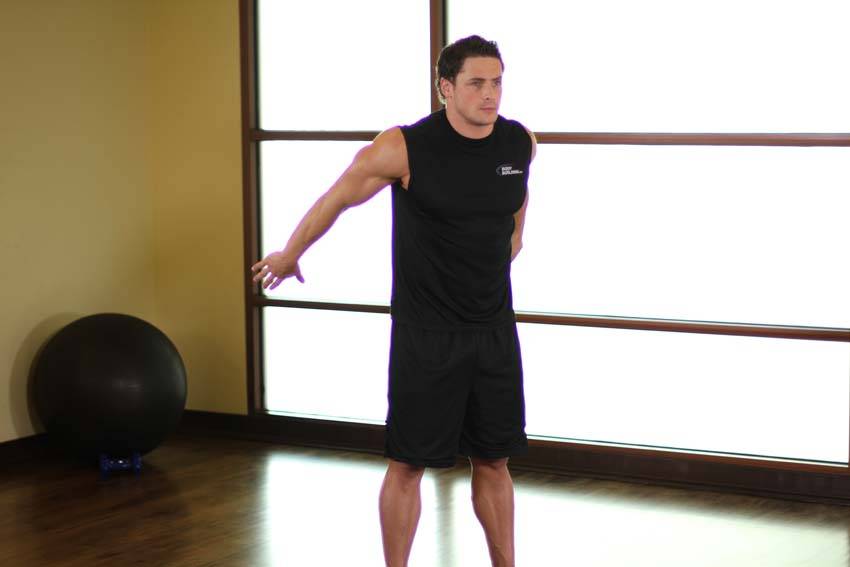
3. Dynamic Back Stretch
71% MatchHow to perform this exercise
- Stand with your feet shoulder width apart. This will be your starting position.
- Keeping your arms straight, swing them straight up in front of you 5-10 times, increasing the range of motion each time until your arms are above your head.
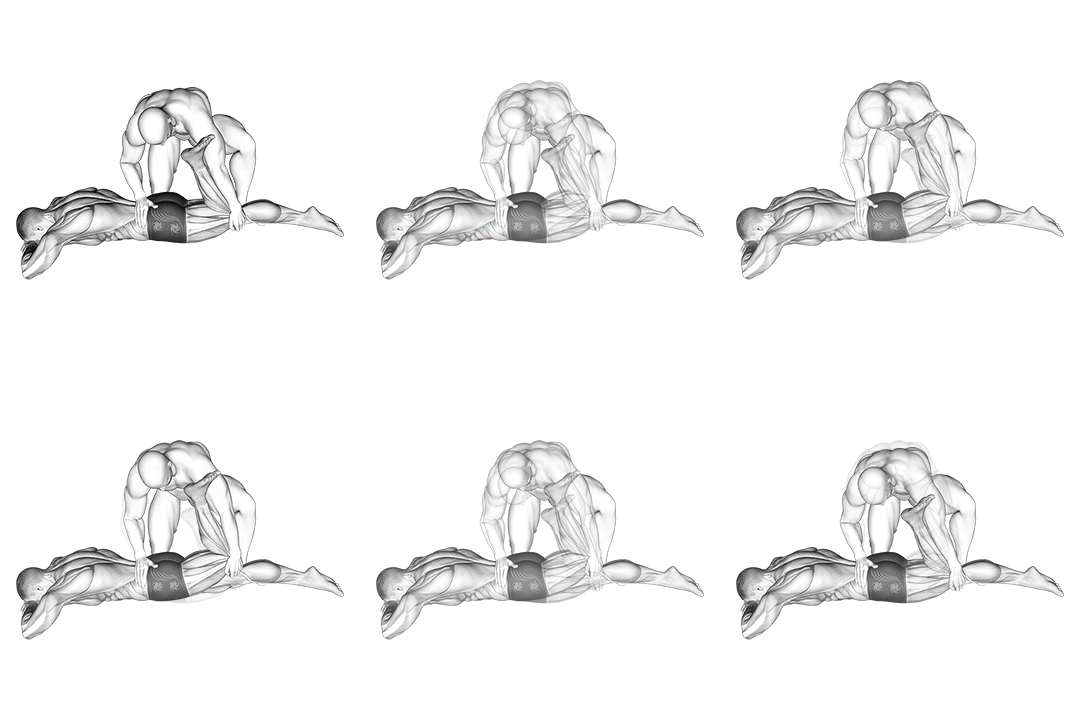
4. Assisted Prone Rectus Femoris Stretch
70.2% MatchHow to perform this exercise
- Lie face down on the ground with your legs straight.
- Bend your right knee and reach back with your right hand to grab your right foot or ankle.
- Gently pull your right foot or ankle towards your glutes, feeling a stretch in the front of your right thigh.
- Hold the stretch for 20-30 seconds.
- Release and repeat on the other side.
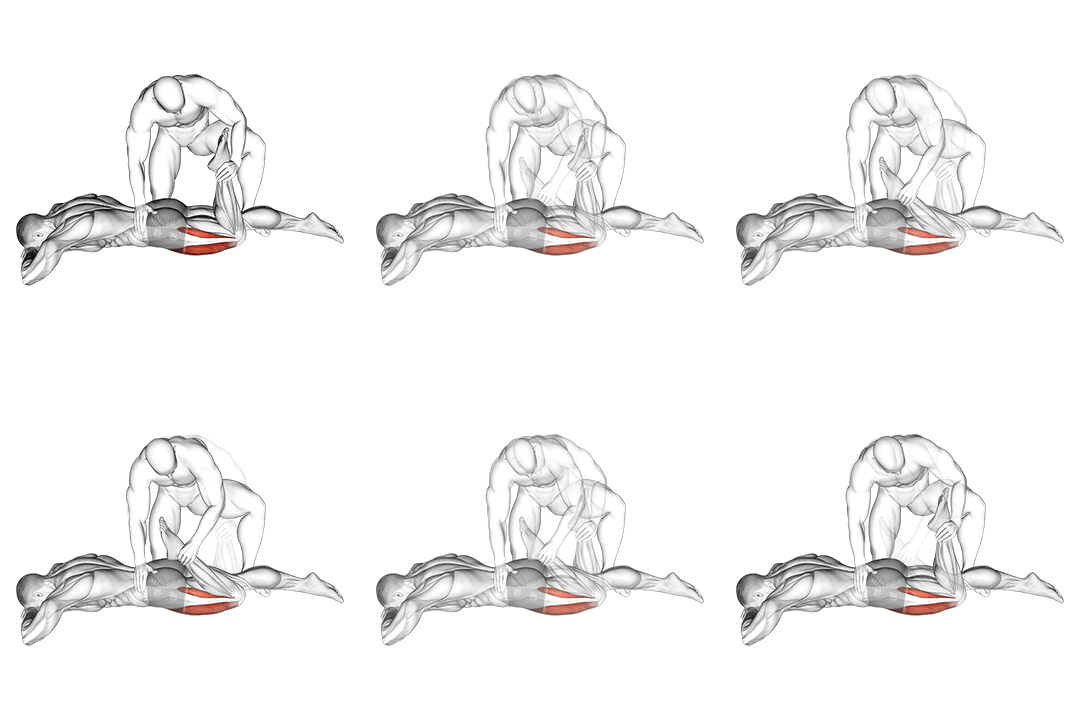
5. Assisted Prone Lying Quads Stretch
70.2% MatchHow to perform this exercise
- Lie face down on the ground with your legs extended.
- Bend your left knee and reach back with your left hand to grab your left foot or ankle.
- Gently pull your left foot towards your glutes, feeling a stretch in your left quad.
- Hold the stretch for 20-30 seconds, then release.
- Repeat with your right leg.
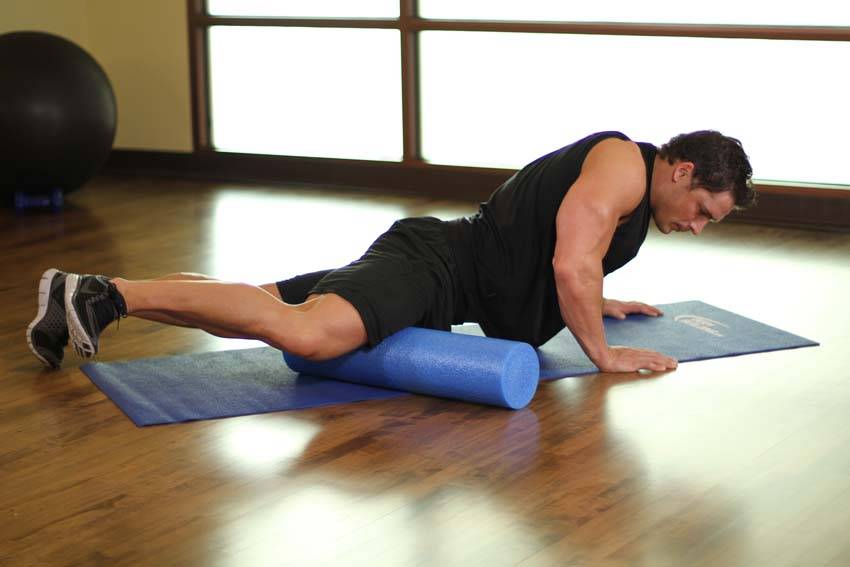
6. Adductor
69.2% MatchHow to perform this exercise
- Lie face down with one leg on a foam roll.
- Rotate the leg so that the foam roll contacts against your inner thigh. Shift as much weight onto the foam roll as can be tolerated.
- While trying to relax the muscles if the inner thigh, roll over the foam between your hip and knee, holding points of tension for 10-30 seconds. Repeat with the other leg.
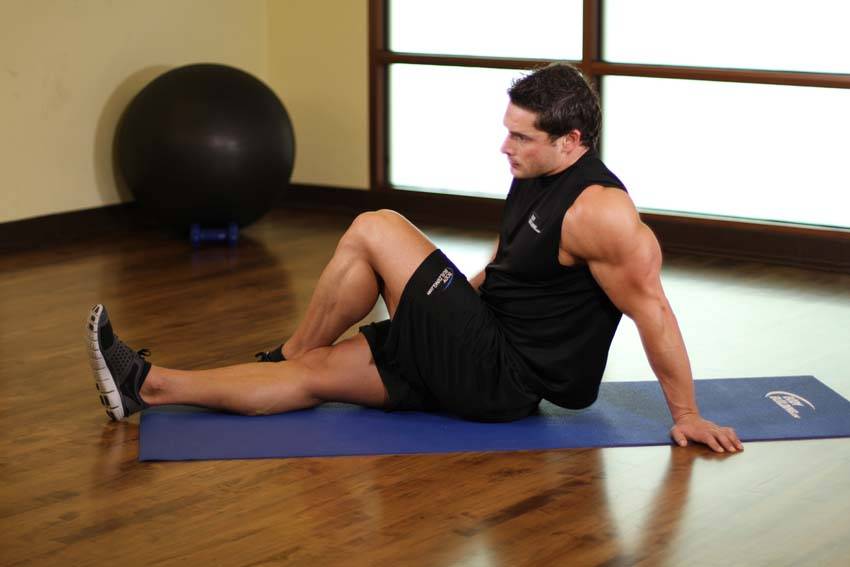
7. Dancer's Stretch
66.2% MatchHow to perform this exercise
- Sit up on the floor.
- Cross your right leg over your left, keeping the knee bent. Your left leg is straight and down on the floor.
- Place your left arm on your right leg and your right hand on the floor.
- Rotate your upper body to the right, and hold for 10-20 seconds. Switch sides.
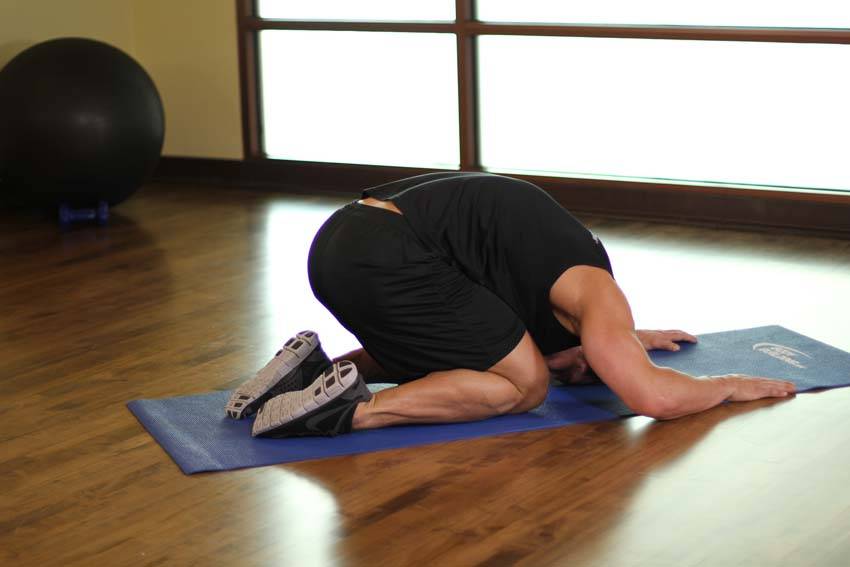
8. Child's Pose
66% MatchHow to perform this exercise
- Get on your hands and knees, walk your hands in front of you.
- Lower your buttocks down to sit on your heels. Let your arms drag along the floor as you sit back to stretch your entire spine.
- Once you settle onto your heels, bring your hands next to your feet and relax. "breathe" into your back. Rest your forehead on the floor. Avoid this position if you have knee problems.
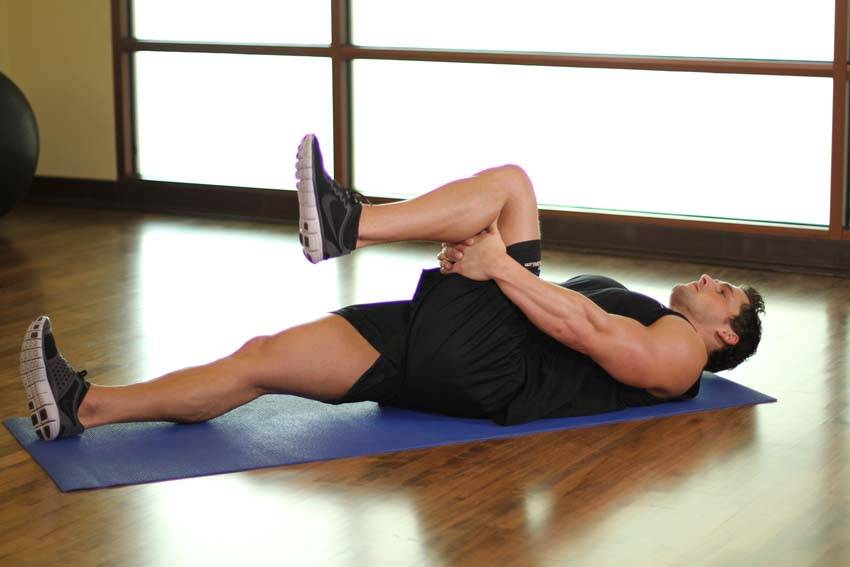
9. 90/90 Hamstring
65.7% MatchHow to perform this exercise
- Lie on your back, with one leg extended straight out.
- With the other leg, bend the hip and knee to 90 degrees. You may brace your leg with your hands if necessary. This will be your starting position.
- Extend your leg straight into the air, pausing briefly at the top. Return the leg to the starting position.
- Repeat for 10-20 repetitions, and then switch to the other leg.
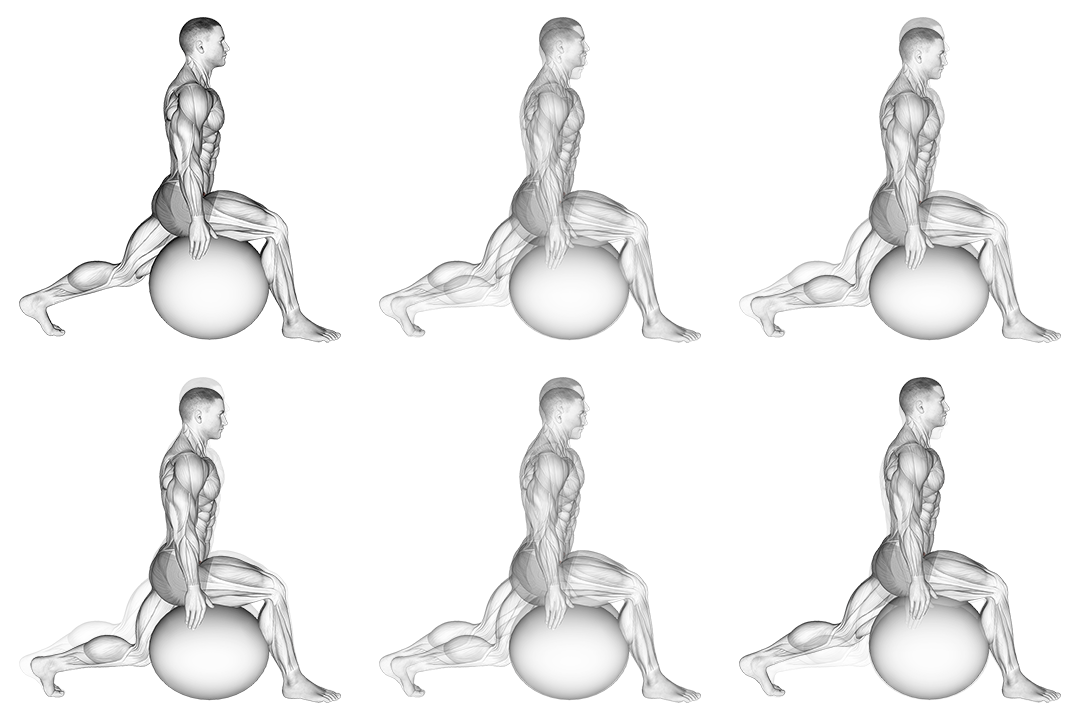
10. Exercise Ball Hip Flexor Stretch
64.9% MatchHow to perform this exercise
- Place the stability ball on the ground and kneel in front of it.
- Place your right foot on top of the stability ball, with your knee bent at a 90-degree angle.
- Extend your left leg behind you, keeping it straight.
- Lean forward, pushing your hips towards the stability ball, until you feel a stretch in your right hip flexor.
- Hold the stretch for 20-30 seconds, then switch sides and repeat.
Why You Might Need a Side-lying Floor Stretch Alternative
You might substitute the Side-lying Floor Stretch for pain, limited hip or shoulder mobility, lack of a floor surface, or rehab rules that restrict lying positions. Alternatives let you achieve the same lat lengthening and scapular mobility while reducing compression through the ribcage. Choose movements that put the humerus into flexion or slight horizontal adduction to load the lat gently — for example, reach overhead and pull the shoulder blade down and back to emphasize lat insertion along the humerus. Alternatives also let you manipulate load and range-of-motion to match tissue tolerance and recovery stage.
How to Choose the Right Substitute
Select a substitute based on your goal (mobility, pain-relief, or active lengthening), available equipment, and current range-of-motion. For passive stretching pick a floor or child's-pose variant where you reach the arm overhead and let the torso rotate away; for active lengthening pick a standing band pulldown with slow eccentric control, keeping the scapula depressed and retracted. Prioritize positions that let you feel tension at the lat insertion without sharp joint pain and pick progressions that increase reach or add light resistance as scapular control improves.
Frequently Asked Questions
What muscles does Side-lying Floor Stretch work?
The Side-lying Floor Stretch primarily lengthens the latissimus dorsi and affects the thoracolumbar fascia and lower scapular stabilizers. Cue a long reach overhead and a slight thoracic rotation to load the lat fibers and encourage scapular posterior tilt and depression.
What is the best bodyweight alternative to Side-lying Floor Stretch?
A child's-pose lat reach is the top bodyweight substitute: sit back on your heels, reach one arm overhead, and slide the hand laterally while hinging at the ribs. Maintain scapular depression and feel the tension along the side of your torso to bias the lats without added load.
Can I build muscle without doing Side-lying Floor Stretch?
Yes. Building lat muscle requires progressive loading and eccentric control more than a passive stretch. Use bodyweight rows, assisted pull-ups, or slow band pulldowns with a controlled eccentric to stimulate lat hypertrophy while using lat stretches to improve range-of-motion and technique.
More Exercise Alternatives
Find Alternatives for Any Exercise
Use our free tool to discover the best substitute exercises based on your available equipment and goals.
Try the Exercise Substitution Finder →