

10 Best Single Dumbbell Raise Alternatives for Home or Gym
If you can’t perform a single dumbbell raise, use cable lateral raises, seated dumbbell lateral raises, banded lateral raises, standing front raises, or bent‑over reverse flies to target the delts. Cue: keep a 10–20° elbow bend, lift in the scapular plane to shoulder height, and avoid shrugging to maximize middle deltoid activation.
Original Exercise: Single Dumbbell Raise
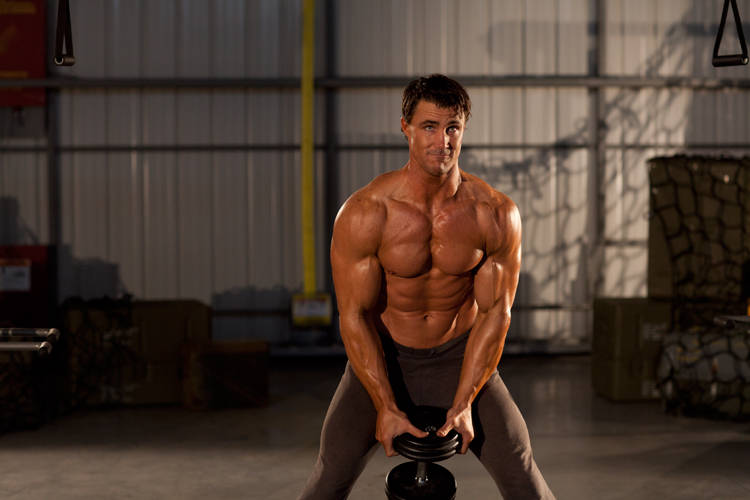
How to Perform Single Dumbbell Raise
- With a wide stance, hold a dumbell with both hands, grasping the head of the dumbbell instead of the handle. Your arms should be extended and hanging at the waist. This will be your starting position.
- Raise the weight until it is above shoulder level, keeping your arms extended. Your torso and hips should remain stationary throughout the movement.
- Return to the starting position and repeat for the recommended amount of repetitions.
Pro Tips
- Category: Strength
- Movement type: Isolation
Best Single Dumbbell Raise Alternatives
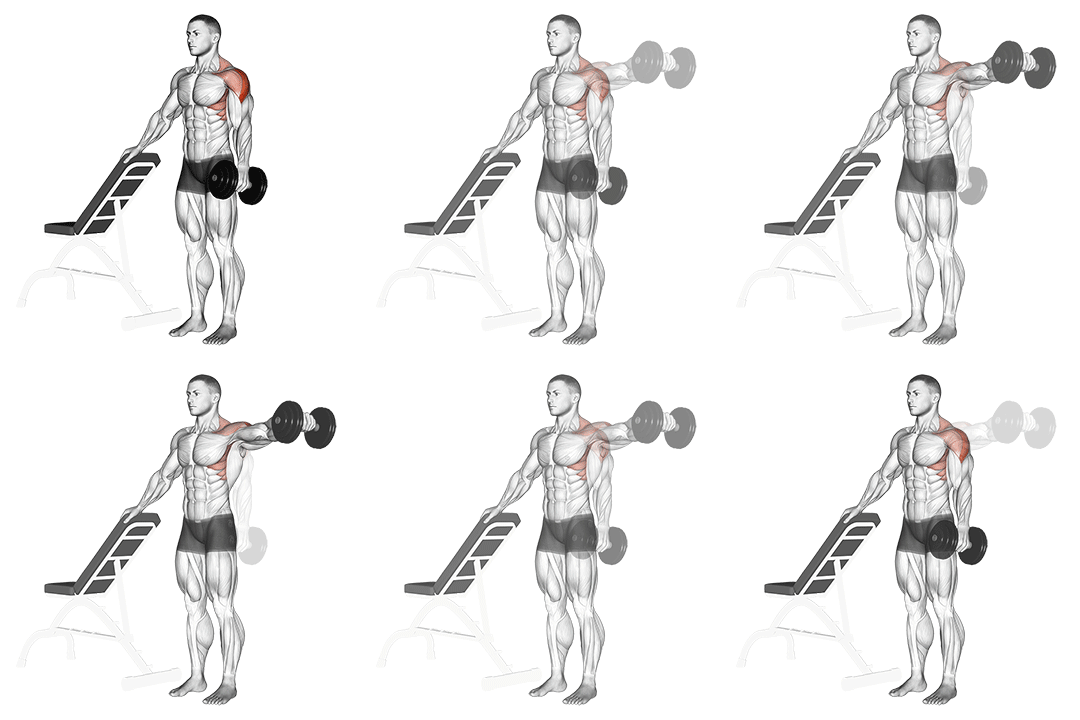
1. Dumbbell One Arm Lateral Raise With Support
99.9% MatchHow to perform this exercise
- Stand with your feet shoulder-width apart and hold a dumbbell in one hand, with your palm facing your body.
- Place your other hand on a stable surface, such as a bench or wall, for support.
- Keep your back straight and engage your core.
- Raise the dumbbell out to the side, keeping your arm straight and your palm facing down.
- Continue lifting until your arm is parallel to the ground.
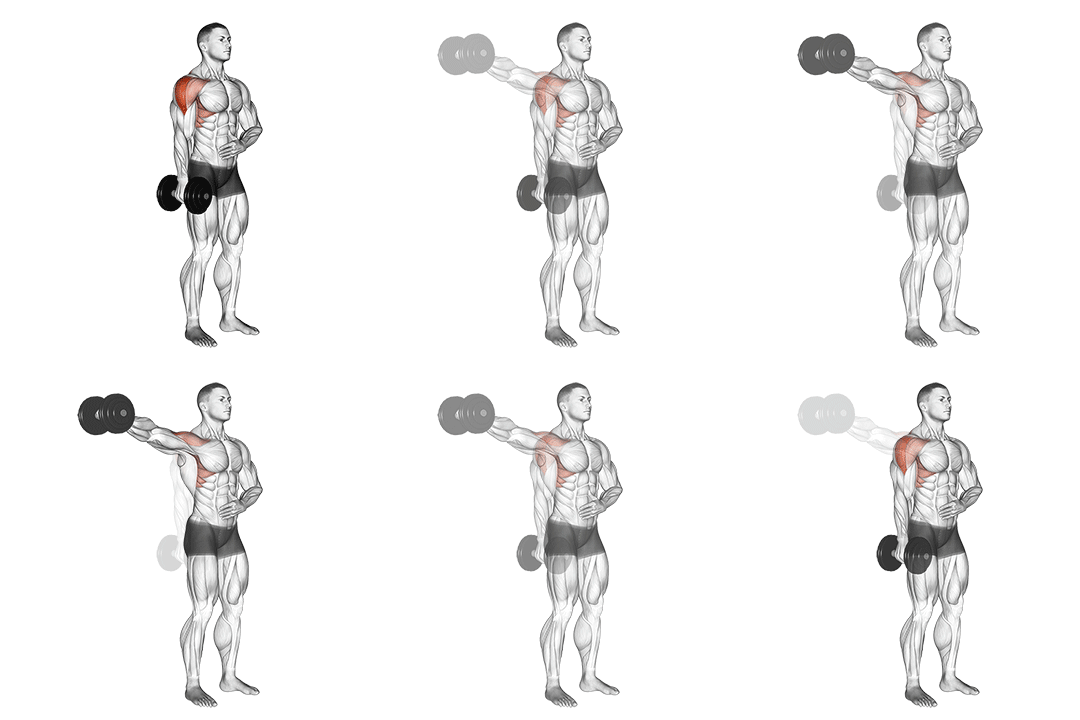
2. Dumbbell One Arm Lateral Raise
98.7% MatchHow to perform this exercise
- Stand with your feet shoulder-width apart, holding a dumbbell in one hand with your palm facing your body.
- Keep your back straight and your core engaged throughout the exercise.
- Raise the dumbbell to the side, keeping your arm straight and your palm facing down.
- Continue lifting until your arm is parallel to the ground.
- Pause for a moment at the top, then slowly lower the dumbbell back to the starting position.
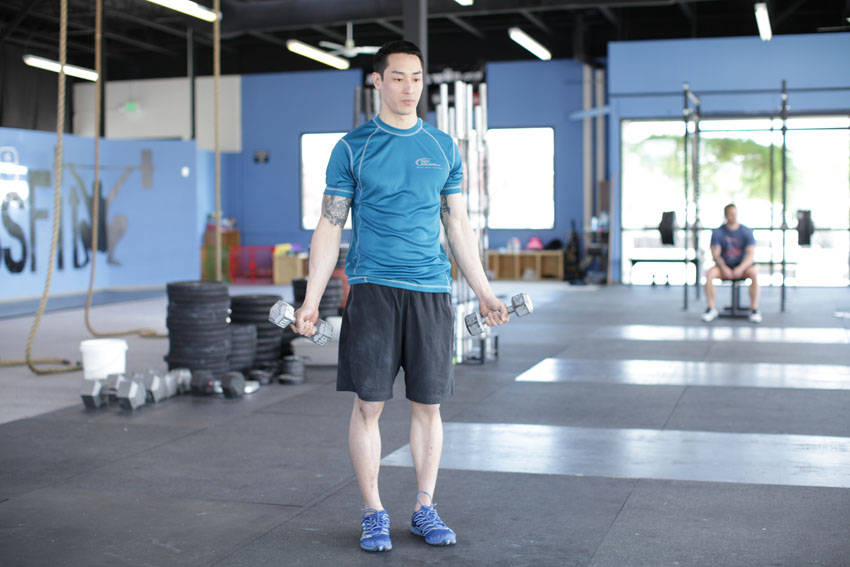
3. Dumbbell Scaption
92.4% MatchHow to perform this exercise
- This corrective exercise strengthens the muscles that stabilize your shoulder blade. Hold a light weight in each hand, hanging at your sides. Your thumbs should pointing up.
- Begin the movement raising your arms out in front of you, about 30 degrees off center. Your arms should be fully extended as you perform the movement.
- Continue until your arms are parallel to the ground, and then return to the starting position.
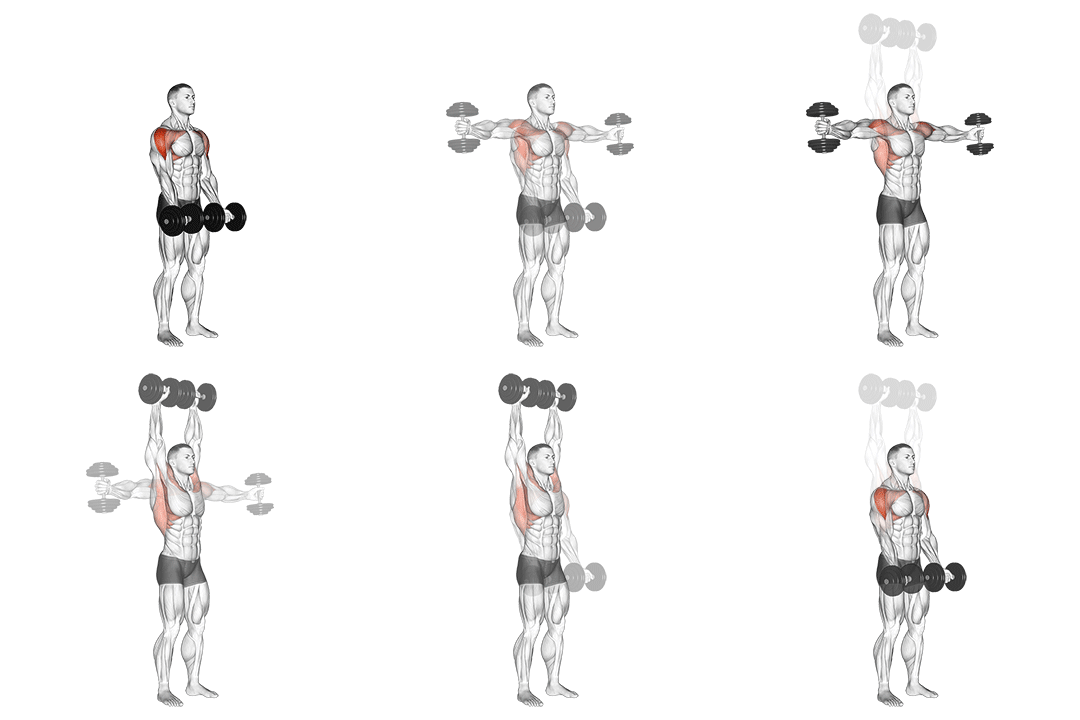
4. Dumbbell Standing Around World
91.9% MatchHow to perform this exercise
- Stand with your feet shoulder-width apart and hold a dumbbell in each hand.
- Extend your arms straight out to the sides at shoulder height, palms facing down.
- Keeping your arms straight, slowly rotate your arms in a circular motion, bringing the dumbbells in front of your body and then overhead.
- Continue the circular motion, bringing the dumbbells back down to the starting position.
- Repeat for the desired number of repetitions.
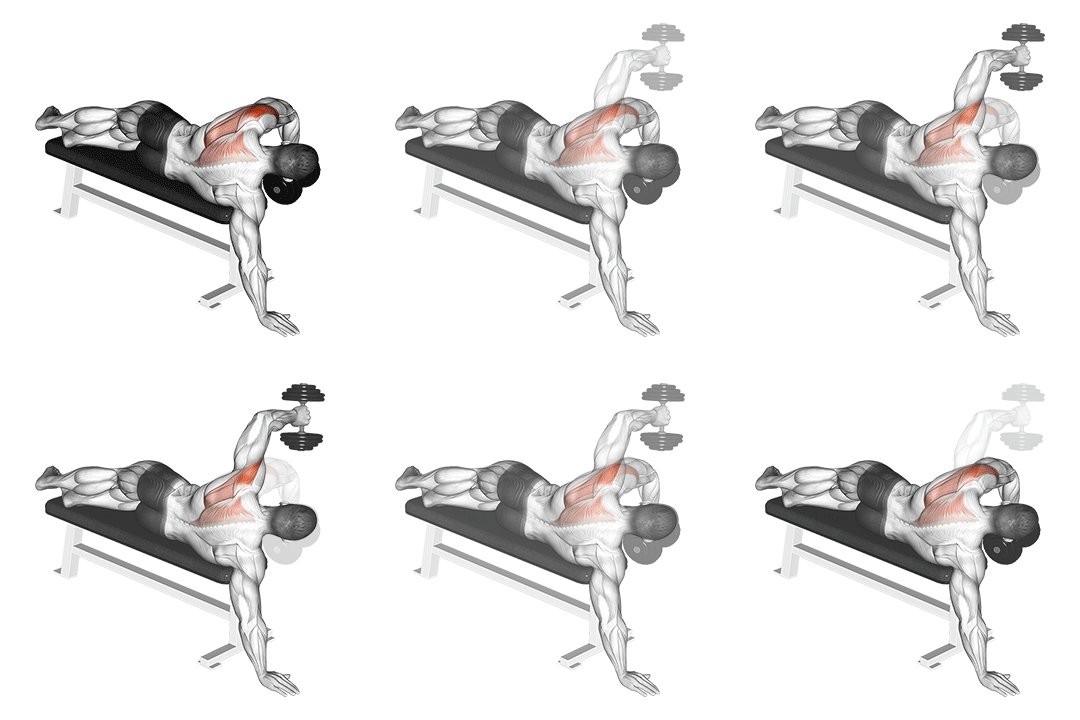
5. Dumbbell Lying One Arm Deltoid Rear
89.1% MatchHow to perform this exercise
- Lie face down on a flat bench with a dumbbell in one hand, palm facing inwards.
- Extend your arm straight down towards the floor, keeping it close to your body.
- Raise your arm up and back, squeezing your shoulder blade towards your spine.
- Pause for a moment at the top, then slowly lower your arm back down to the starting position.
- Repeat for the desired number of repetitions, then switch arms.
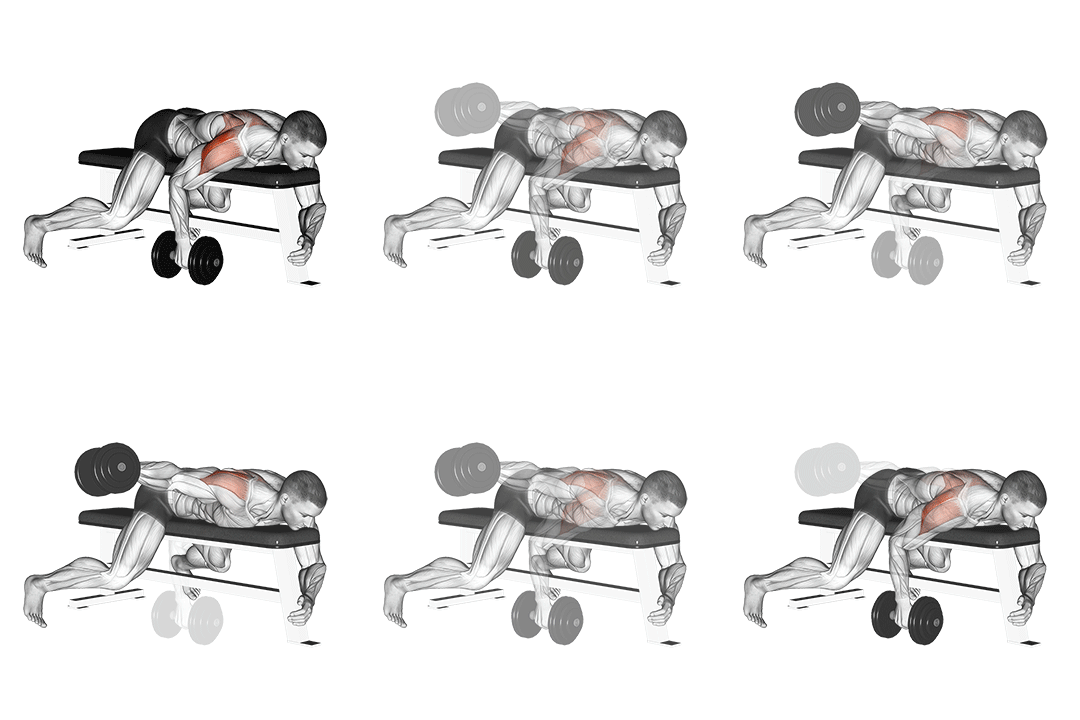
6. Dumbbell Lying One Arm Rear Lateral Raise
89.1% MatchHow to perform this exercise
- Lie face down on a flat bench with a dumbbell in one hand, hanging towards the floor.
- Keep your arm straight and lift the dumbbell out to the side, away from your body.
- Pause for a moment at the top, then slowly lower the dumbbell back down to the starting position.
- Repeat for the desired number of repetitions, then switch to the other arm.

7. Bent Over Low-Pulley Side Lateral
87.9% MatchHow to perform this exercise
- Select a weight and hold the handle of the low pulley with your right hand.
- Bend at the waist until your torso is nearly parallel to the floor. Your legs should be slightly bent with your left hand placed on your lower left thigh. Your right arm should be hanging from your shoulder in front of you and with a slight bend at the elbow. This will be your starting position.
- Raise your right arm, elbow slightly bent, to the side until the arm is parallel to the floor and in line with your right ear. Breathe out as you perform this step.
- Slowly lower the weight back to the starting position as you breathe in.
- Repeat for the recommended amount of repetitions and repeat the movement with the other arm.
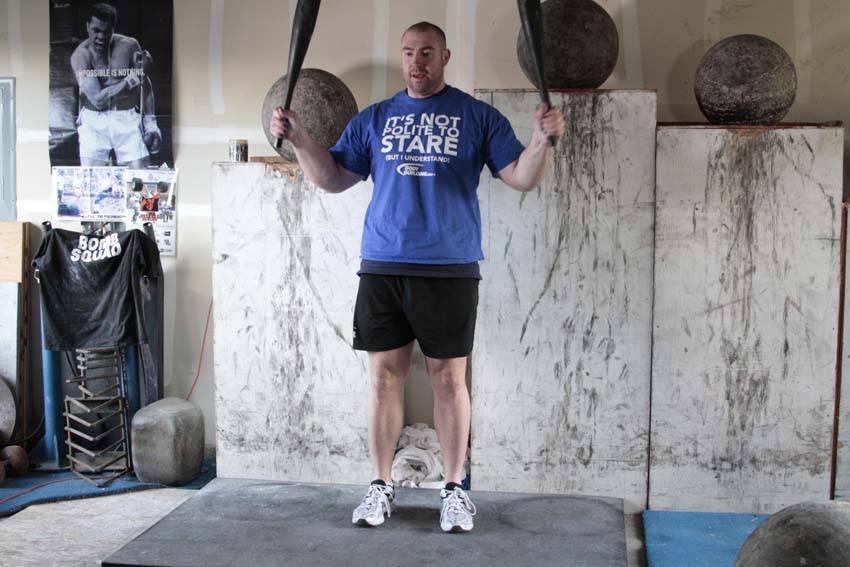
8. Crucifix
86.9% MatchHow to perform this exercise
- In the crucifix, you statically hold weights out to the side for time. While the event can be practiced using dumbbells, it is best to practice with one of the various implements used, such as axes and hammers, as it feels different.
- Begin standing, and raise your arms out to the side holding the implements. Your arms should be parallel to the ground. In competition, judges or sensors are used to let you know when you break parallel. Hold for as long as you can. Typically, the weights should be heavy enough that you fail in 30-60 seconds.
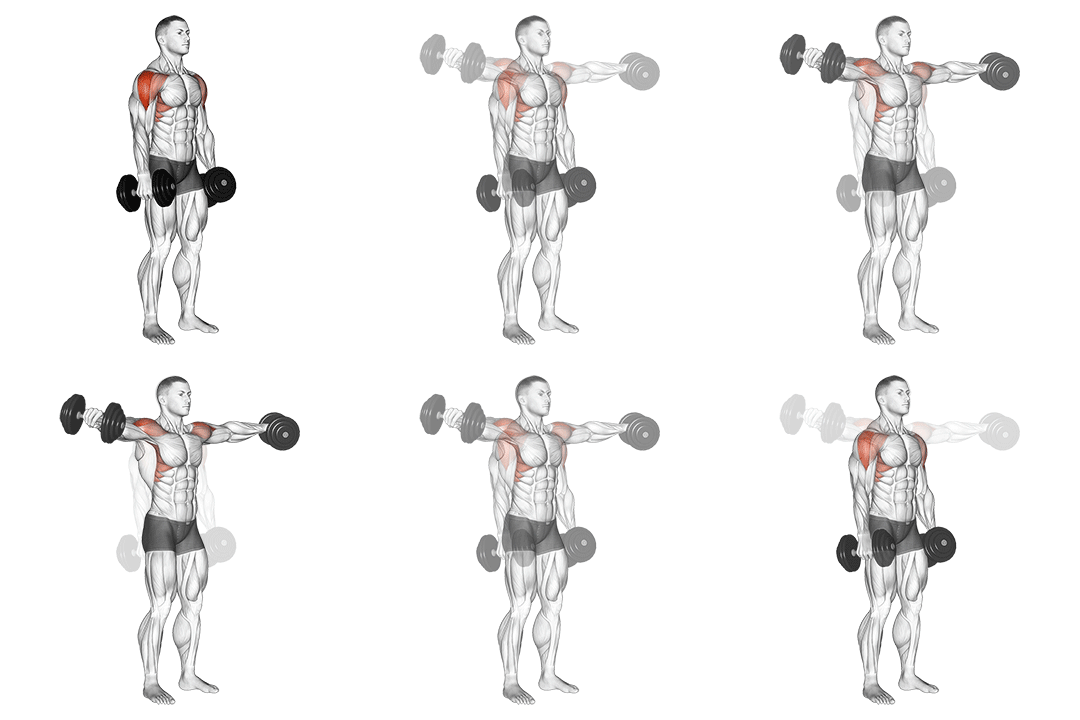
9. Dumbbell Lateral Raise
86.7% MatchHow to perform this exercise
- Stand with your feet shoulder-width apart and hold a dumbbell in each hand, palms facing your body.
- Keep your back straight and engage your core.
- Raise your arms out to the sides until they are parallel to the floor, keeping a slight bend in your elbows.
- Pause for a moment at the top, then slowly lower your arms back down to the starting position.
- Repeat for the desired number of repetitions.
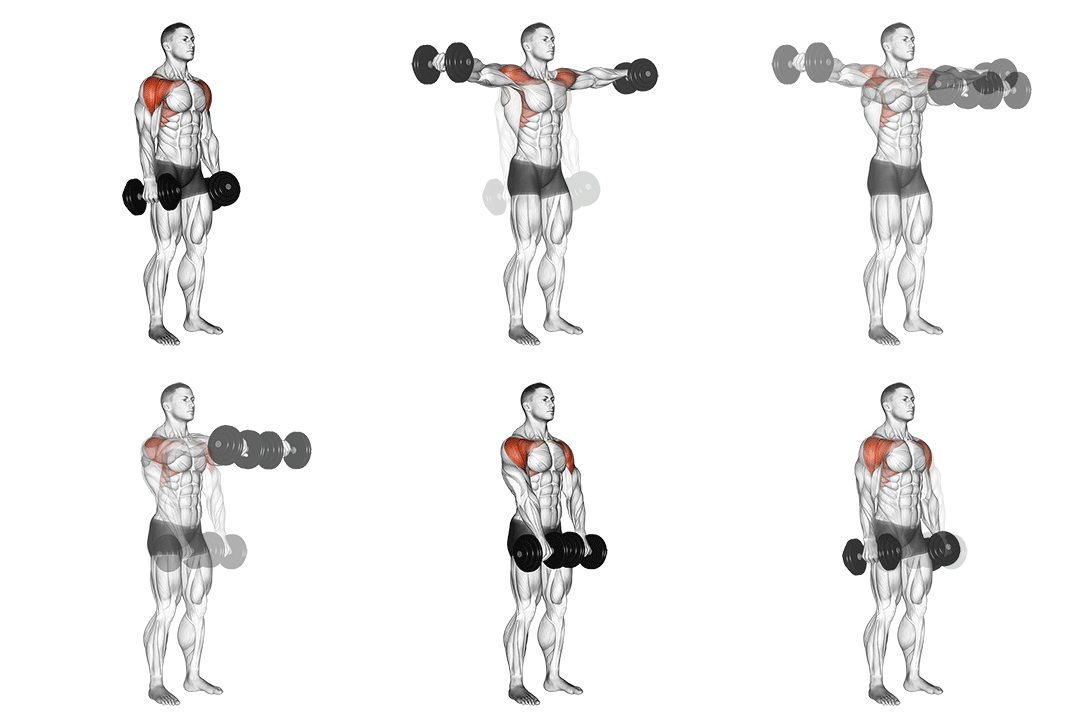
10. Dumbbell Lateral To Front Raise
86.1% MatchHow to perform this exercise
- Stand with your feet shoulder-width apart, holding a dumbbell in each hand with your palms facing your body.
- Keep your back straight and engage your core.
- Raise your arms out to the sides until they are parallel to the ground, keeping a slight bend in your elbows.
- Pause for a moment at the top, then slowly lower your arms back down to the starting position.
- Next, raise your arms in front of you until they are parallel to the ground, again keeping a slight bend in your elbows.
Why You Might Need a Single Dumbbell Raise Alternative
You may substitute the single dumbbell raise for several reasons: shoulder pain or impingement, no access to appropriate dumbbells, or a need to change stimulus. Alternatives let you manage joint torque by changing the plane, resistance curve, or stabilization demands. For example, cables provide constant tension that keeps the middle deltoid loaded through the full range, while bands reduce peak load at the top. If you feel trap dominance, cue yourself to lead the movement with the elbow and stop at shoulder level to limit upper trapezius activation and protect the rotator cuff.
How to Choose the Right Substitute
Select a substitute based on target delt head, equipment, and joint tolerance. Pick cable or banded lateral raises to maintain constant middle deltoid tension; choose seated variations to reduce momentum and increase isolation. If anterior delts need work, use front raises with a neutral wrist and slow eccentric control. Prioritize exercises that allow you to lead with the elbow, maintain scapular retraction, and avoid overhead shrugging to keep the load on the deltoids rather than the traps or spine.
Frequently Asked Questions
What muscles does Single Dumbbell Raise work?
The single dumbbell raise primarily targets the middle deltoid, with secondary activation of the anterior deltoid and upper trapezius. The rotator cuff stabilizers fire isometrically to hold the humeral head in the glenoid during the lift.
What is the best bodyweight alternative to Single Dumbbell Raise?
A bodyweight-friendly option is the side-lying T to Y progression on the floor: lie on your side and lift the top arm in the scapular plane while squeezing the shoulder blade. Cue: lead with the elbow and keep the thumb slightly up to bias middle deltoid activation without loading the glenohumeral joint.
Can I build muscle without doing Single Dumbbell Raise?
Yes. You can build shoulder muscle with other isolation and compound movements that load the delts—cable lateral raises, seated dumbbell raises, overhead presses, and bent-over reverse flies all work. Focus on progressive overload, strict technique (lead with the elbow, stop at shoulder height), and sufficient volume to stimulate hypertrophy.
More Exercise Alternatives
Find Alternatives for Any Exercise
Use our free tool to discover the best substitute exercises based on your available equipment and goals.
Try the Exercise Substitution Finder →