

10 Best Single-leg Stride Jump Alternatives for Injuries or No Equipment
If you can’t perform the single-leg stride jump, use exercises that still load the quadriceps and train single-leg extension and landing control. Effective options include Bulgarian split squats, weighted step-ups, single-leg box jumps, reverse lunges, and sissy squats. Emphasize a controlled eccentric, strong knee drive, and full quad contraction.
Original Exercise: Single-leg Stride Jump
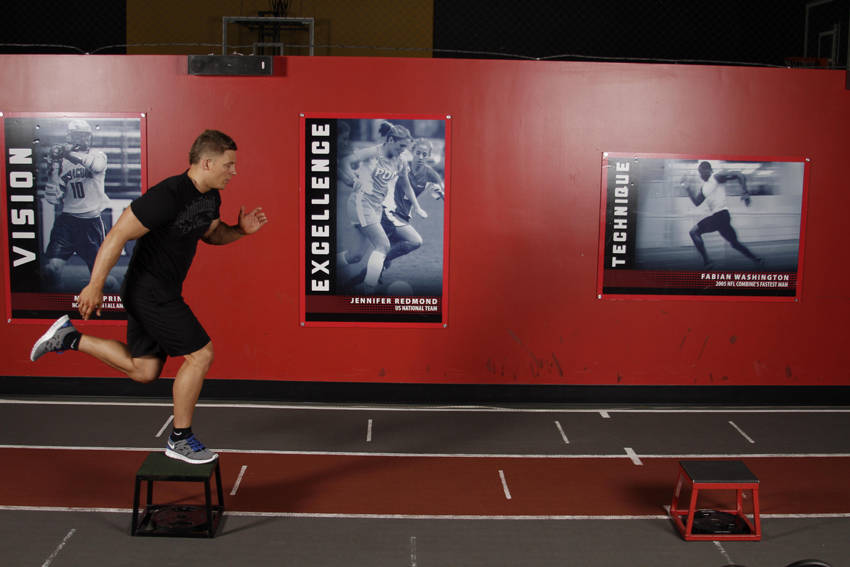
How to Perform Single-leg Stride Jump
- Stand to the side of a box with your inside foot on top of it, close to the edge.
- Begin by swinging the arms upward as you push through the top leg, jumping upward as high as possible. Attempt to drive the opposite knee upward.
- Land in the same position that you started, using your inside leg to decelerate the impact.
Pro Tips
- Category: Plyometrics
- Force: Push
- Movement type: Compound
Best Single-leg Stride Jump Alternatives
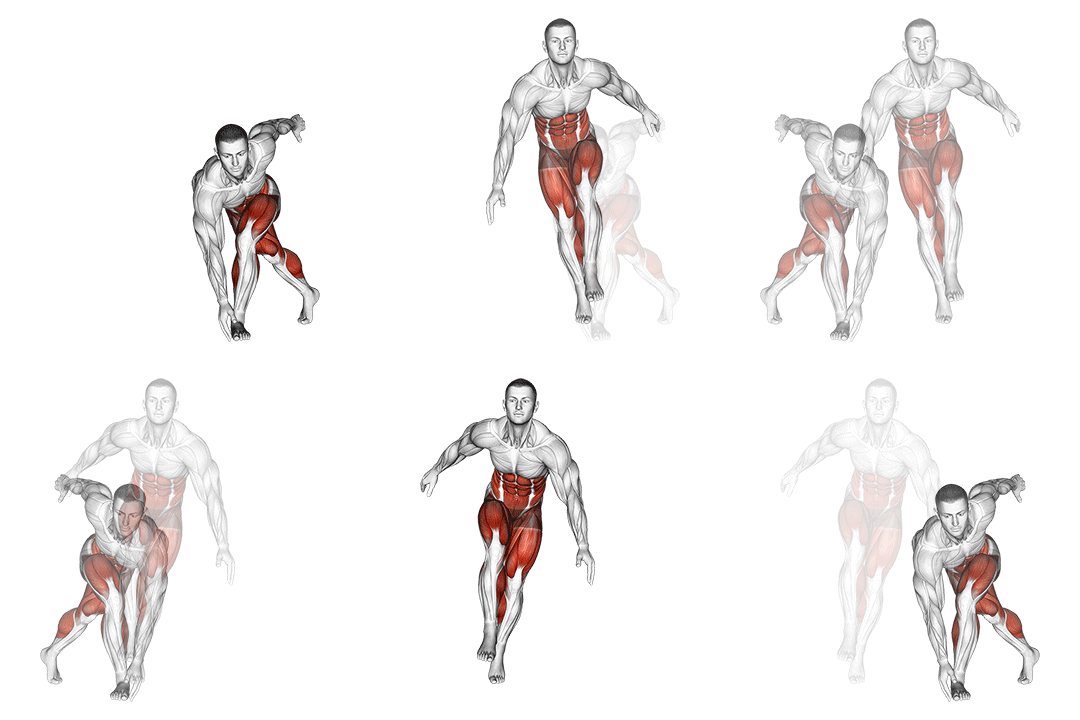
1. Back And Forth Step
68.1% MatchHow to perform this exercise
- Stand with your feet shoulder-width apart.
- Step forward with your right foot, bending your knee and lowering your body into a lunge position.
- Push off with your right foot and step back to the starting position.
- Repeat the movement with your left foot, alternating legs with each step.
- Continue stepping back and forth, maintaining a steady pace.
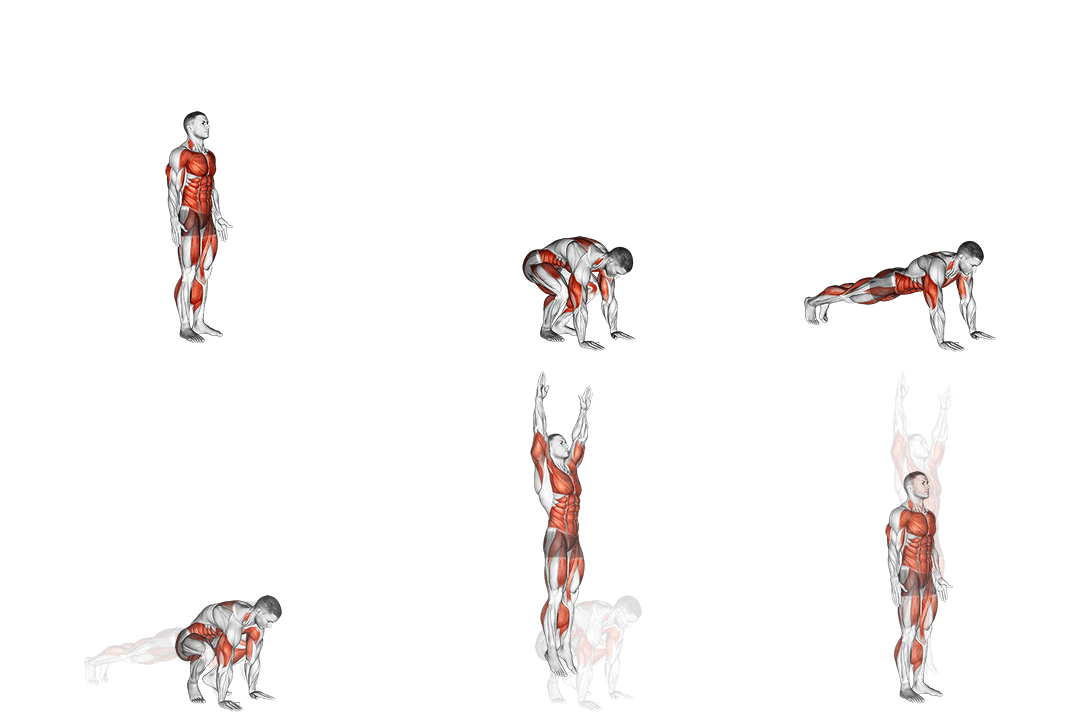
2. Burpee
66.3% MatchHow to perform this exercise
- Start in a standing position with your feet shoulder-width apart.
- Lower your body into a squat position by bending your knees and placing your hands on the floor in front of you.
- Kick your feet back into a push-up position.
- Perform a push-up, keeping your body in a straight line.
- Jump your feet back into the squat position.
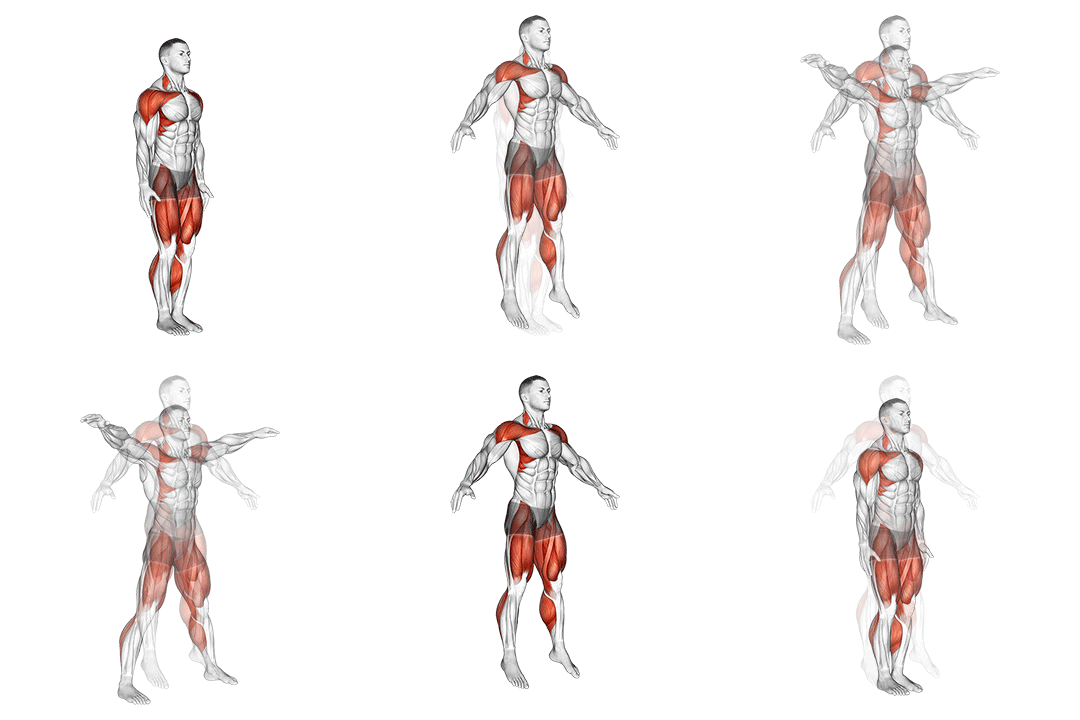
3. Astride Jumps (male)
65.2% MatchHow to perform this exercise
- Stand with your feet shoulder-width apart.
- Bend your knees and lower your body into a squat position.
- Jump explosively upwards, extending your legs and arms.
- While in the air, spread your legs apart and bring your arms out to the sides.
- Land softly with your feet shoulder-width apart, bending your knees to absorb the impact.
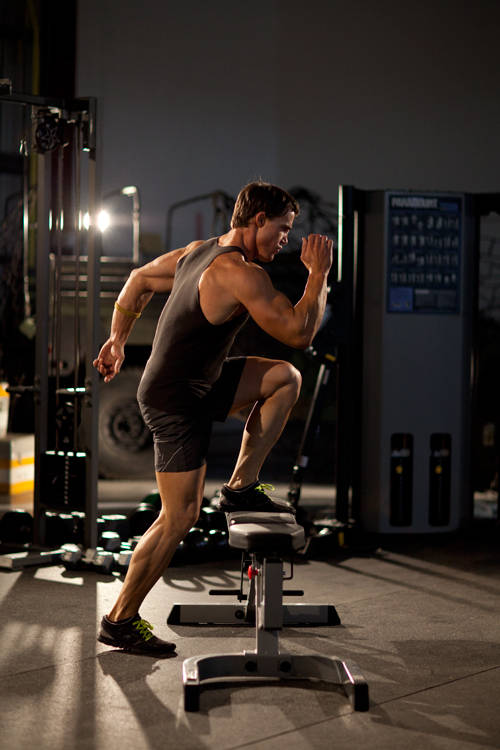
4. Bench Sprint
61.3% MatchHow to perform this exercise
- Stand on the ground with one foot resting on a bench or box with your heel close to the edge.
- Push off with your foot on top of the bench, extending through the hip and knee.
- Land with the opposite foot on top of the box, returning your other foot back to the start position.
- Continue alternating from one foot to another to complete the set.
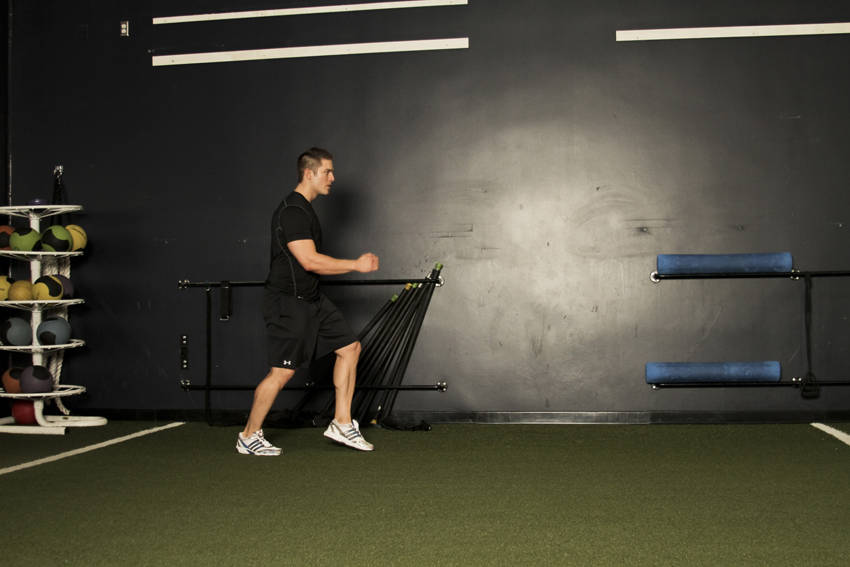
5. Fast Skipping
58.1% MatchHow to perform this exercise
- Start in a relaxed position with one leg slightly forward. This will be your starting position.
- Skip by executing a step-hop pattern of right-right-step to left-left-step, and so on, alternating back and forth.
- Perform fast skips by maintaining close contact with the ground and reduce air time, moving as quickly as possible.
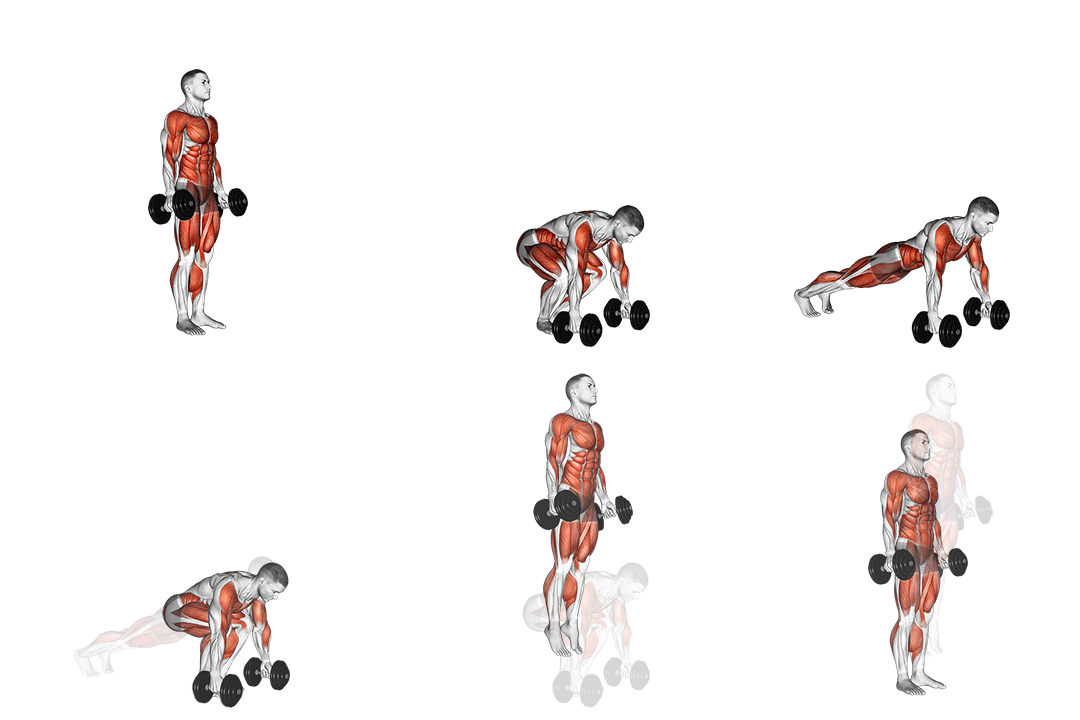
6. Dumbbell Burpee
57.7% MatchHow to perform this exercise
- Start in a standing position with your feet shoulder-width apart and a dumbbell in each hand.
- Lower your body into a squat position, placing the dumbbells on the ground in front of you.
- Kick your feet back into a push-up position, keeping your body in a straight line.
- Perform a push-up, bending your elbows and lowering your chest towards the ground.
- Jump your feet back towards your hands, landing in a squat position.
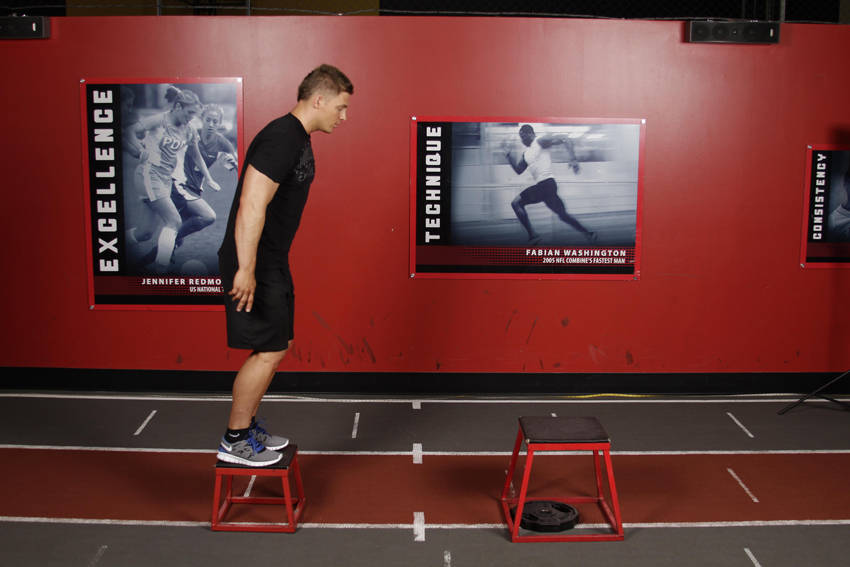
7. Depth Jump Leap
56.7% MatchHow to perform this exercise
- For this drill you will need two boxes or benches, one 12 to 16 inches high and the other 22 to 26 inches high.
- Stand on one of the two boxes with arms at the sides; feet should be together and slightly off the edge as in the depth jump. Place the other box approximately two or three feet in front of and facing the performer.
- Begin by dropping off the initial box, landing and simultaneously taking off with both feet.
- Rebound by driving upward and outward as intensely as possible, using the arms and full extension of the body to jump onto the higher box. Again, allow the legs to absorb the impact.
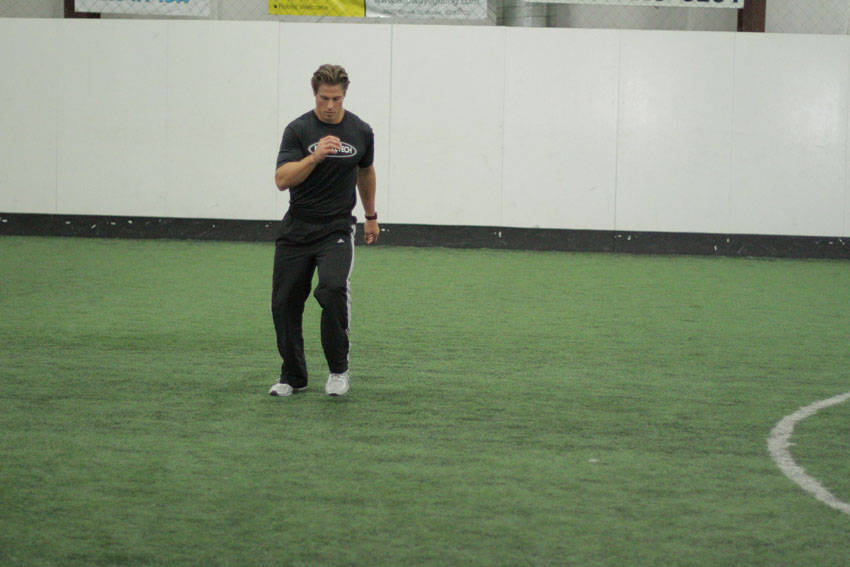
8. Carioca Quick Step
55% MatchHow to perform this exercise
- Begin with your feet a few inches apart and your left arm up in a relaxed, athletic position.
- With your right foot, quick step behind and pull the knee up.
- Fire your arms back up when you pull the right knee, being sure that your knee goes straight up and down. Avoid turning your feet as you move and continue to look forward as you move to the side.
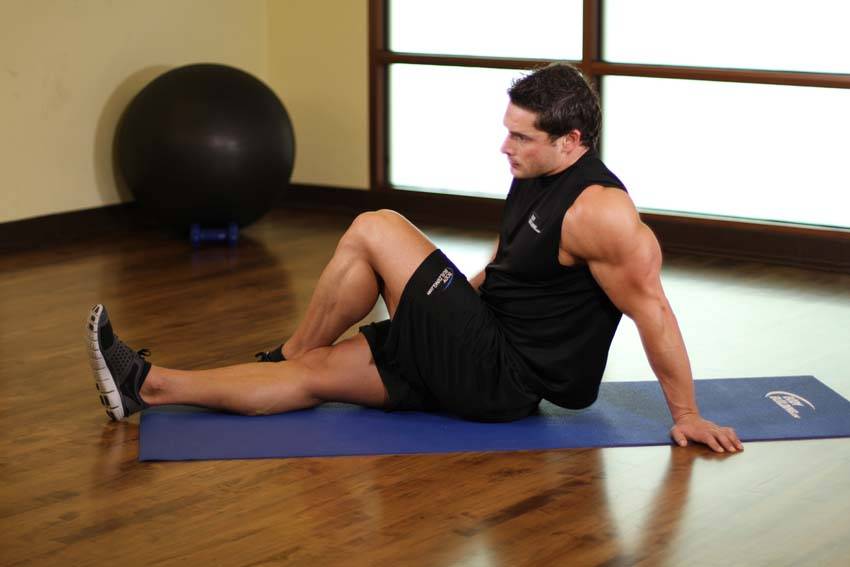
9. Dancer's Stretch
53% MatchHow to perform this exercise
- Sit up on the floor.
- Cross your right leg over your left, keeping the knee bent. Your left leg is straight and down on the floor.
- Place your left arm on your right leg and your right hand on the floor.
- Rotate your upper body to the right, and hold for 10-20 seconds. Switch sides.
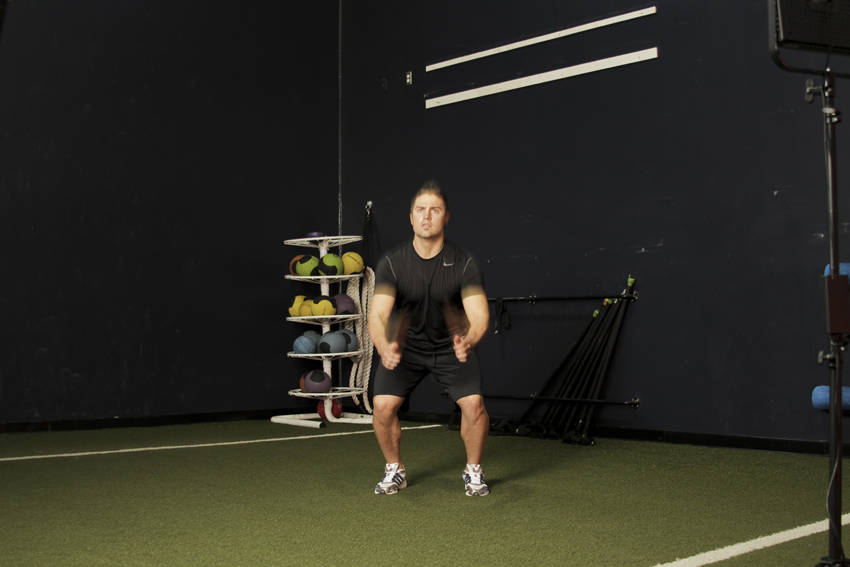
10. Double Leg Butt Kick
51.6% MatchHow to perform this exercise
- Begin standing with your knees slightly bent.
- Quickly squat a short distance, flexing the hips and knees, and immediately extend to jump for maximum vertical height.
- As you go up, tuck your heels by flexing the knees, attempting to touch the buttocks.
- Finish the motion by landing with the knees only partially bent, using your legs to absorb the impact.
Why You Might Need a Single-leg Stride Jump Alternative
You may need alternatives because single-leg stride jumps demand high impact tolerance, ankle stability, and plyometric training history. Post-injury, high ground reaction forces and rapid eccentric loading can overstress repaired tissue. Space or equipment limits also restrict safe plyos. Substitute movements let you maintain quadriceps loading and train the knee-extension torque that produces propulsion while lowering impact. For rehab, choose slow eccentrics (3–4 second descent) to manage tendon load. For limited equipment, use step-ups or Bulgarian split squats and cue an upright torso and knee tracking over toes to bias quad activation and reduce hip-dominant compensation.
How to Choose the Right Substitute
Match the substitute to your goal: choose plyometric single-leg box jumps for power and rate of force development, or Bulgarian split squats and sissy squats for quad hypertrophy and controlled knee-extension torque. Consider joint health—if knees are reactive, prefer low-impact loaded step-ups with a 2–3 second eccentric. Assess equipment and balance: use weighted variations if you need progressive overload, and pick bilateral alternatives only if single-leg stability is the limiting factor. Cue technique specifically: keep torso upright and drive through the mid-foot to maximize quadriceps activation and minimize hip-dominant recruitment.
Frequently Asked Questions
What muscles does Single-leg Stride Jump work?
The exercise primarily targets the quadriceps through knee extension and also recruits the glutes and calves for hip extension and ankle plantarflexion. During landing you use eccentric quad control to absorb force, loading the vastus lateralis and medialis for stabilizing the knee.
What is the best bodyweight alternative to Single-leg Stride Jump?
A controlled Bulgarian split squat is the best bodyweight alternative—perform with feet hip-width, descend until front knee hits ~90 degrees, then drive through the front foot. That upright position increases knee moment and isolates quad activation without high-impact loading.
Can I build muscle without doing Single-leg Stride Jump?
Yes. Prioritize progressive overload with alternatives like weighted step-ups, Bulgarian split squats, and sissy squats to create sufficient mechanical tension on the quads. Use slow eccentrics and 6–12 rep ranges, cueing full knee extension and deliberate muscle contraction to maximize hypertrophy.
More Exercise Alternatives
Find Alternatives for Any Exercise
Use our free tool to discover the best substitute exercises based on your available equipment and goals.
Try the Exercise Substitution Finder →