

10 Best Smith Leg Press Alternatives for Home and Gym
If you can't use the Smith Leg Press, pick exercises that reproduce hip and knee extension under load to target the glutes and upper legs. Barbell squats, hip thrusts, Bulgarian split squats, hack squats, or single-leg lunges work well. Drive through your heels and keep hips back to bias the glutes.
Original Exercise: Smith Leg Press
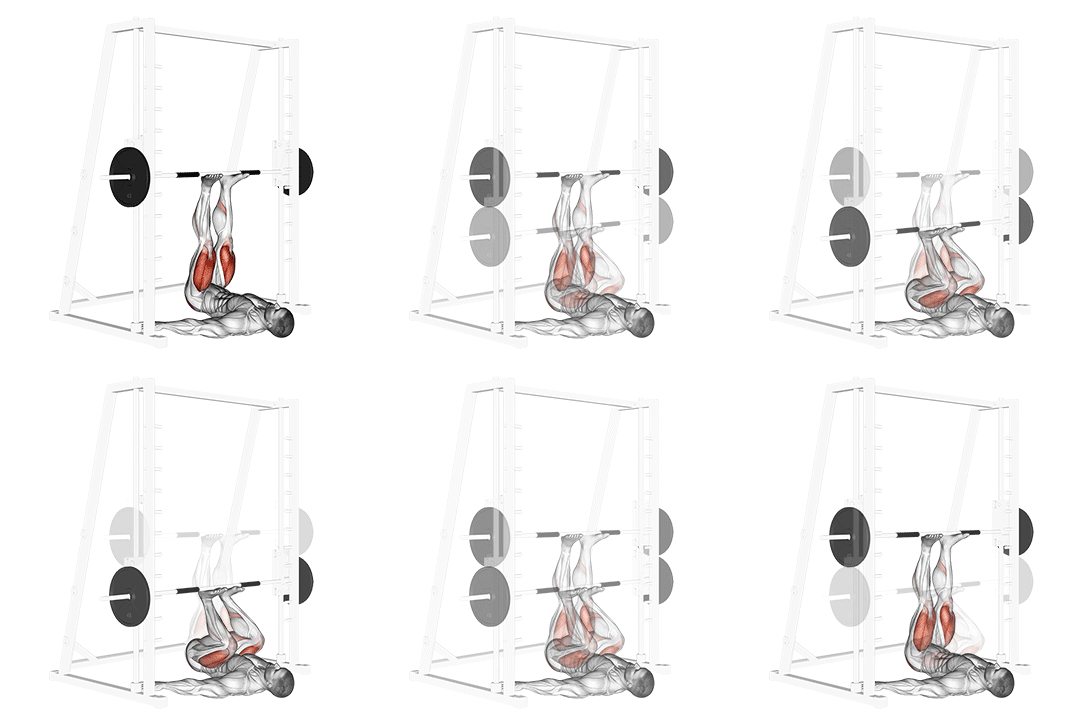
How to Perform Smith Leg Press
- Adjust the seat and footplate of the smith machine to a comfortable position.
- Sit on the machine with your back against the backrest and your feet shoulder-width apart on the footplate.
- Grasp the handles or sides of the machine for stability.
- Push the footplate away from you by extending your legs, keeping your back against the backrest.
- Pause for a moment at the fully extended position.
- Slowly bend your knees and lower the footplate back towards you, returning to the starting position.
- Repeat for the desired number of repetitions.
Best Smith Leg Press Alternatives
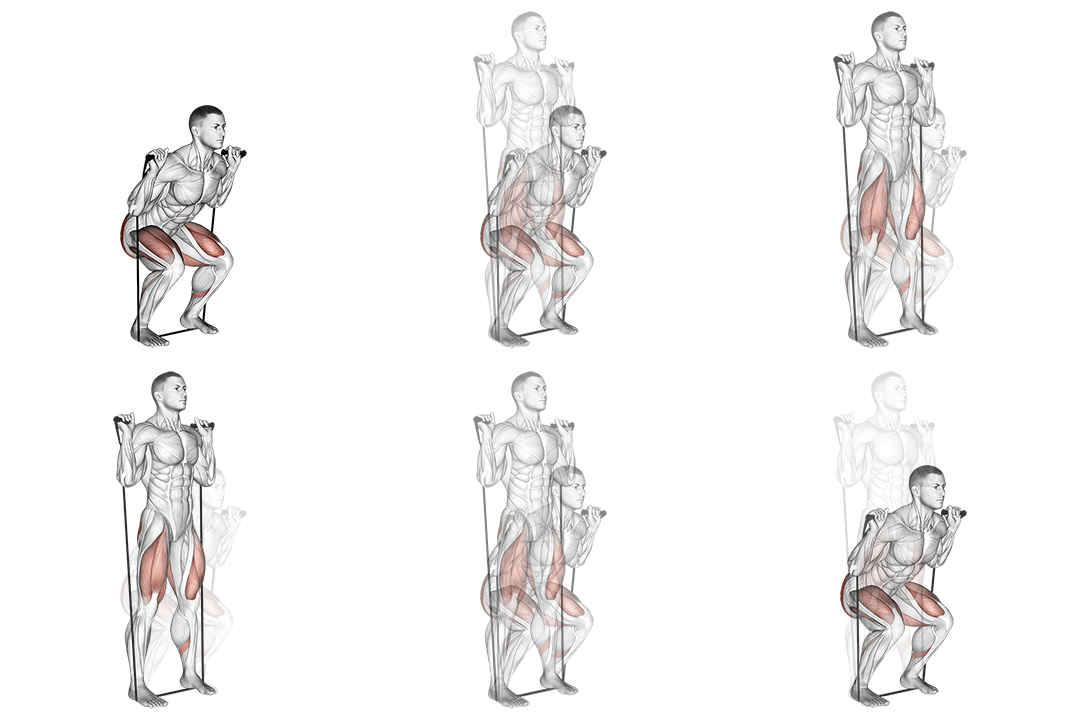
1. Band Squat
76.7% MatchHow to perform this exercise
- Stand with your feet shoulder-width apart, with the band placed just above your knees.
- Keeping your chest up and core engaged, push your hips back and bend your knees to lower into a squat position.
- Make sure your knees are tracking over your toes and your weight is in your heels.
- Pause for a moment at the bottom, then push through your heels to return to the starting position.
- Repeat for the desired number of repetitions.
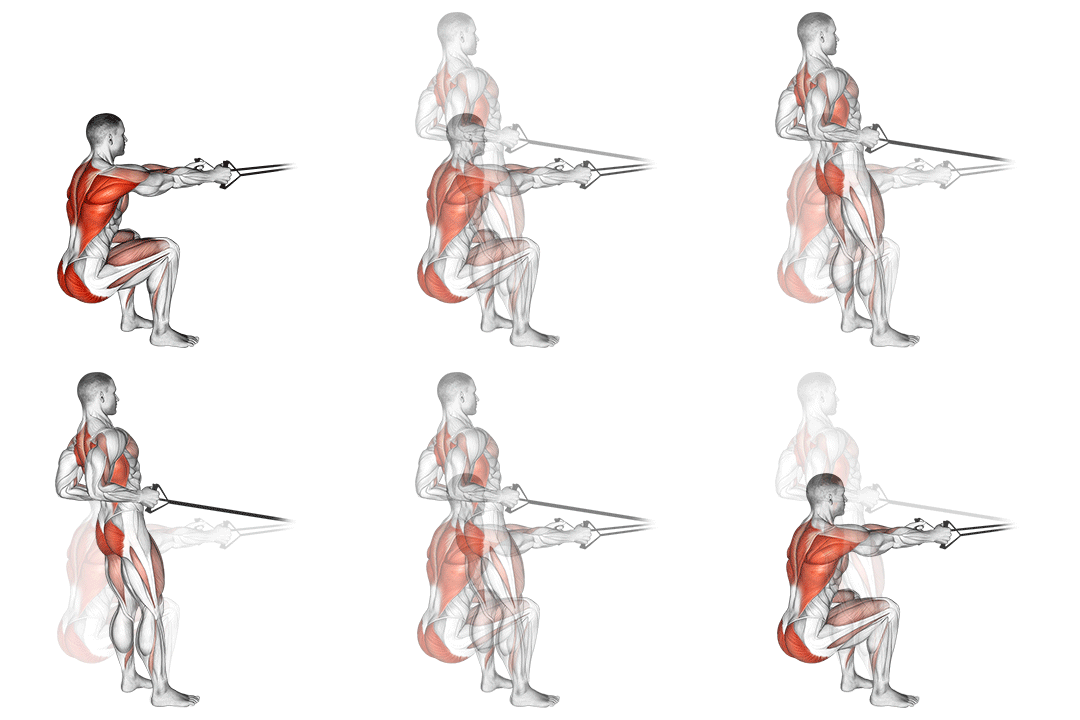
2. Band Squat Row
75.3% MatchHow to perform this exercise
- Attach the band to a sturdy anchor point at waist height.
- Stand facing the anchor point with your feet shoulder-width apart.
- Hold the band handles with your palms facing each other and your arms extended in front of you.
- Bend your knees and lower into a squat position, keeping your back straight and chest lifted.
- From the squat position, pull the band handles towards your body, squeezing your shoulder blades together.
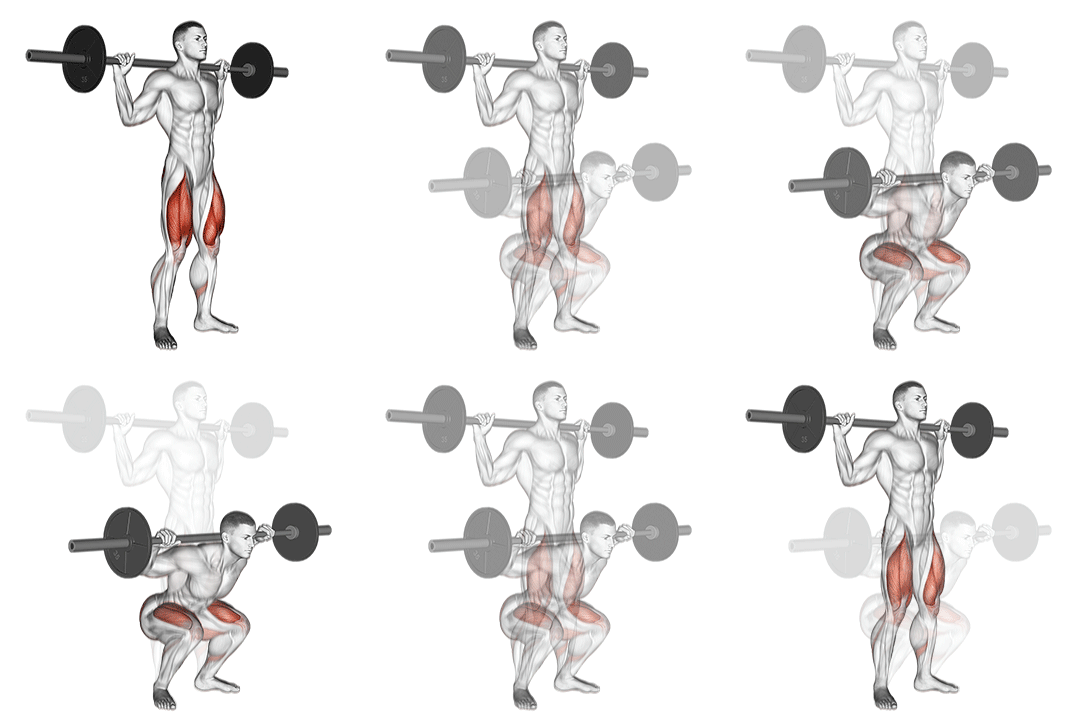
3. Barbell Speed Squat
72.7% MatchHow to perform this exercise
- Stand with your feet shoulder-width apart, toes slightly turned out.
- Hold the barbell across your upper back, resting it on your traps or rear delts.
- Engage your core and keep your chest up as you lower your hips back and down, as if sitting into a chair.
- Lower until your thighs are parallel to the ground, or as low as you can comfortably go.
- Drive through your heels to stand back up, squeezing your glutes at the top.
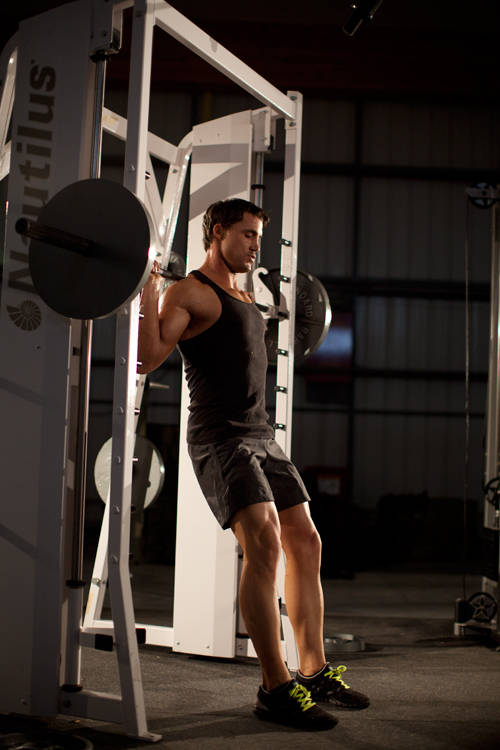
4. Chair Squat
72.2% MatchHow to perform this exercise
- To begin, first set the bar to a position that best matches your height. Once the bar is loaded, step under it and position it across the back of your shoulders.
- Take the bar with your hands facing forward, unlock it and lift it off the rack by extending your legs.
- Move your feet forward about 18 inches in front of the bar. Position your legs using a shoulder width stance with the toes slightly pointed out. Look forward at all times and maintain a neutral or slightly arched spine. This will be your starting position.
- Slowly lower the bar by bending the knees as you maintain a straight posture with the head up. Continue down until the angle between the upper and lower leg breaks 90 degrees.
- Begin to raise the bar as you exhale by pushing the floor with the heels of your feet, extending the knees and returning to the starting position.
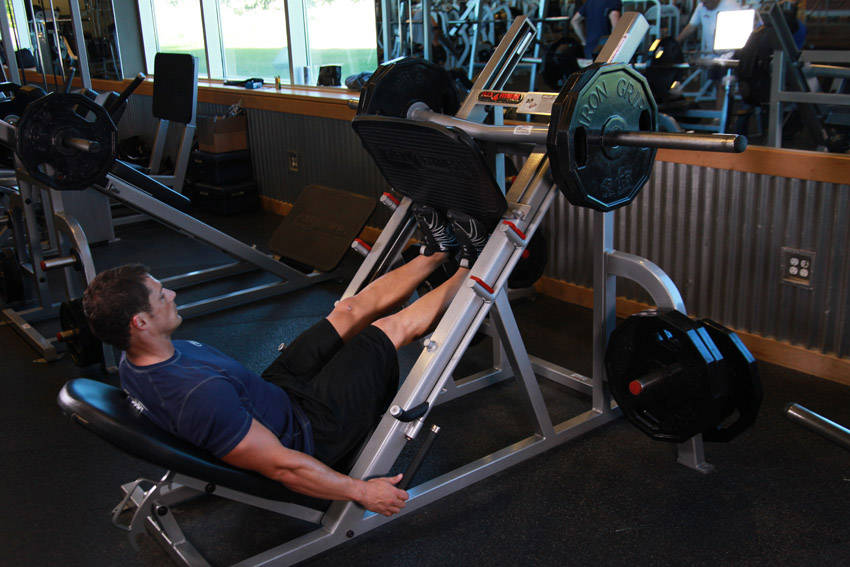
5. Calf Press On The Leg Press Machine
72% MatchHow to perform this exercise
- Using a leg press machine, sit down on the machine and place your legs on the platform directly in front of you at a medium (shoulder width) foot stance.
- Lower the safety bars holding the weighted platform in place and press the platform all the way up until your legs are fully extended in front of you without locking your knees. (Note: In some leg press units you can leave the safety bars on for increased safety. If your leg press unit allows for this, then this is the preferred method of performing the exercise.) Your torso and the legs should make perfect 90-degree angle. Now carefully place your toes and balls of your feet on the lower portion of the platform with the heels extending off. Toes should be facing forward, outwards or inwards as described at the beginning of the chapter. This will be your starting position.
- Press on the platform by raising your heels as you breathe out by extending your ankles as high as possible and flexing your calf. Ensure that the knee is kept stationary at all times. There should be no bending at any time. Hold the contracted position by a second before you start to go back down.
- Go back slowly to the starting position as you breathe in by lowering your heels as you bend the ankles until calves are stretched.
- Repeat for the recommended amount of repetitions.
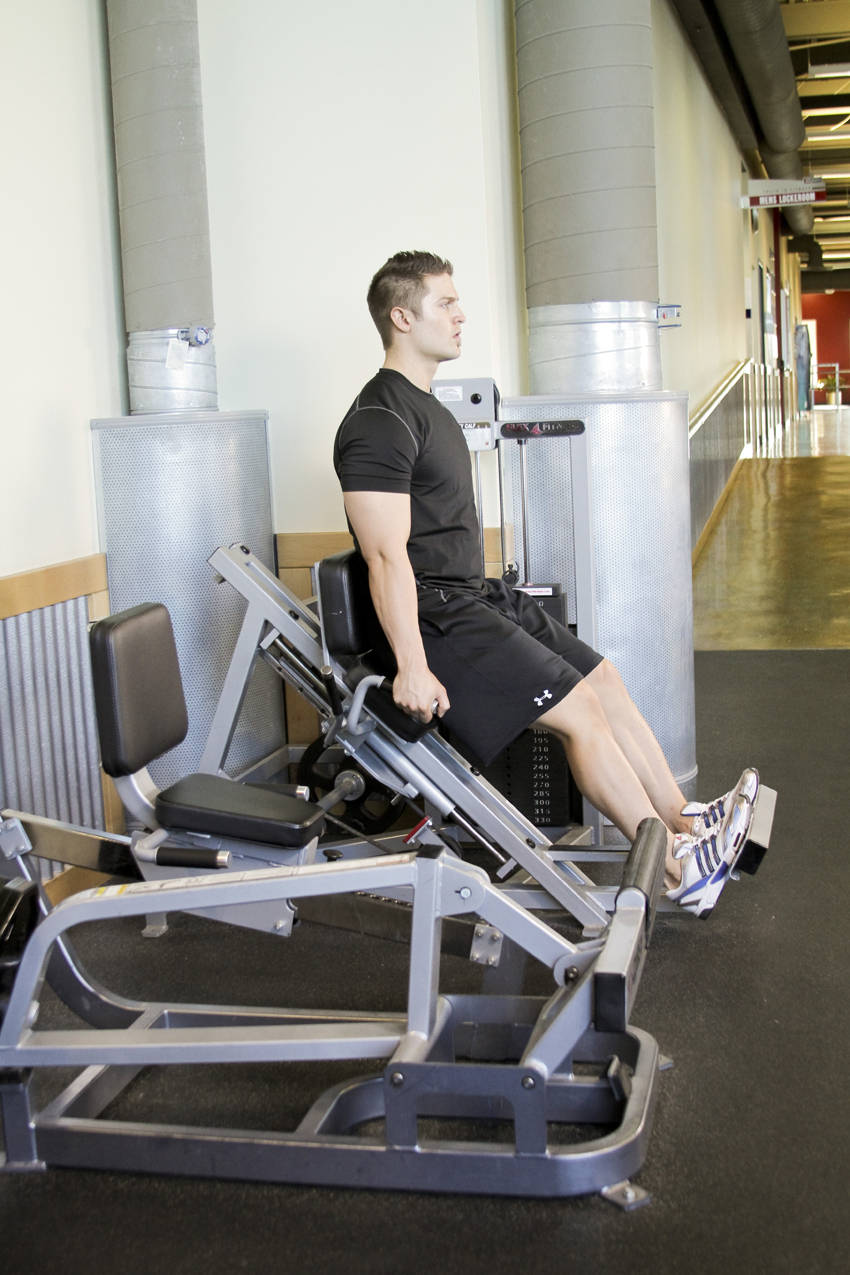
6. Calf Press
72% MatchHow to perform this exercise
- Adjust the seat so that your legs are only slightly bent in the start position. The balls of your feet should be firmly on the platform.
- Select an appropriate weight, and grasp the handles. This will be your starting position.
- Straighten the legs by extending the knees, just barely lifting the weight from the stack. Your ankle should be fully flexed, toes pointing up. Execute the movement by pressing downward through the balls of your feet as far as possible.
- After a brief pause, reverse the motion and repeat.
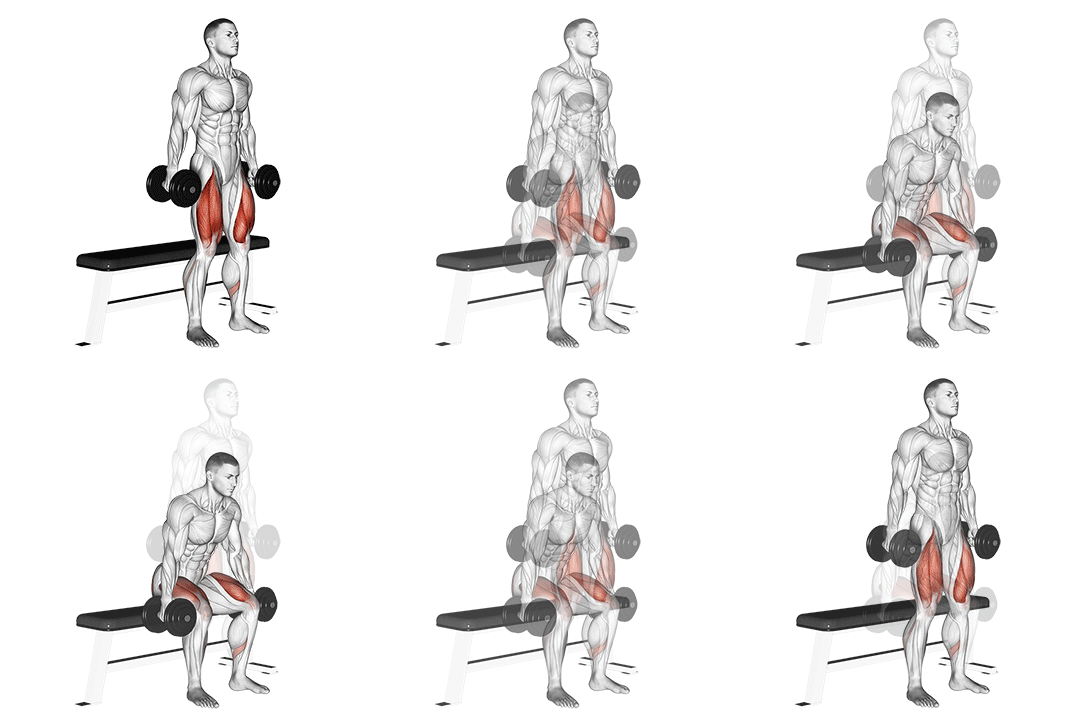
7. Dumbbell Bench Squat
71.7% MatchHow to perform this exercise
- Place a dumbbell on the ground in front of a bench.
- Stand facing away from the bench with your feet shoulder-width apart.
- Bend at the knees and hips to lower yourself down towards the bench, keeping your chest up and back straight.
- Once your glutes touch the bench, push through your heels to stand back up to the starting position.
- Repeat for the desired number of repetitions.
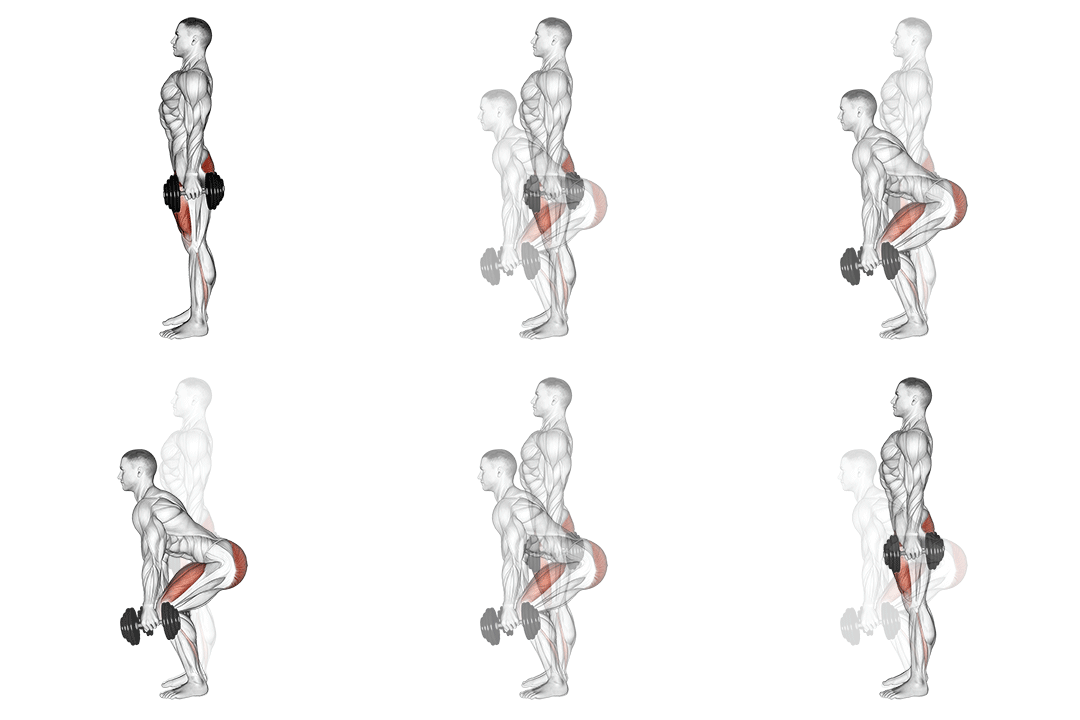
8. Dumbbell Squat
71.7% MatchHow to perform this exercise
- Stand with your feet shoulder-width apart, holding a dumbbell in each hand at your sides.
- Keeping your chest up and core engaged, lower your body down by bending at the knees and hips, as if sitting back into a chair.
- Continue lowering until your thighs are parallel to the ground, or as low as you can comfortably go.
- Pause for a moment at the bottom, then push through your heels to return to the starting position.
- Repeat for the desired number of repetitions.
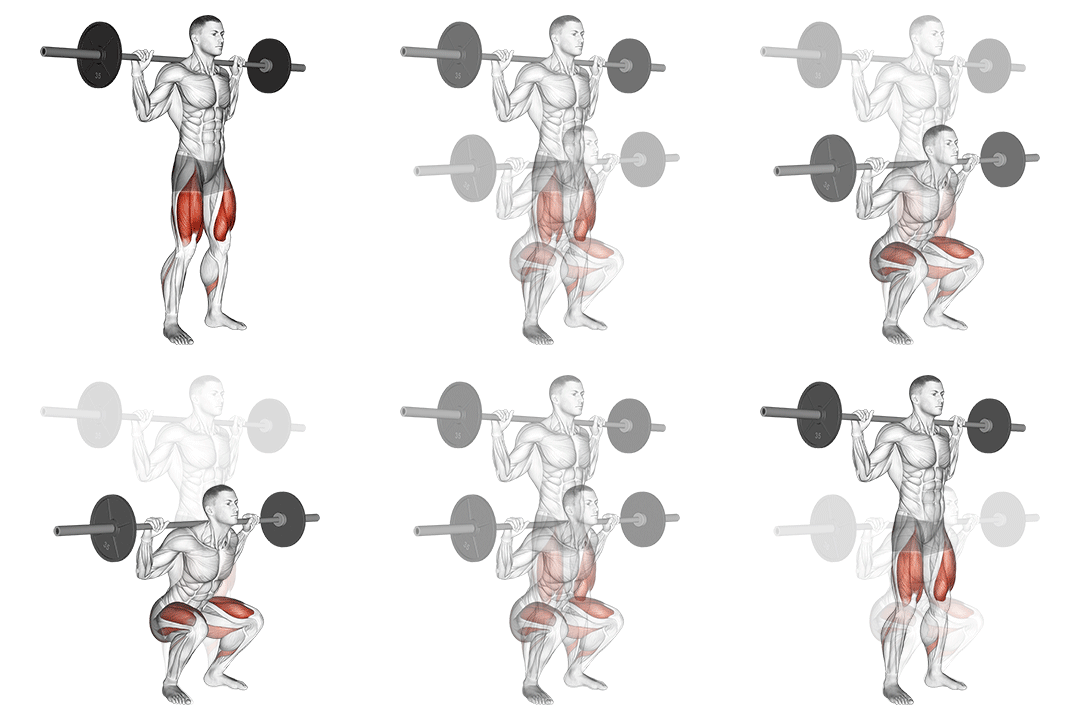
9. Barbell High Bar Squat
71.3% MatchHow to perform this exercise
- Stand with your feet shoulder-width apart, toes slightly turned out.
- Place the barbell on your upper back, resting it on your traps.
- Engage your core and keep your chest up as you begin to squat down, pushing your hips back and bending your knees.
- Lower yourself until your thighs are parallel to the ground, or as low as you can comfortably go.
- Drive through your heels to stand back up, extending your hips and knees.
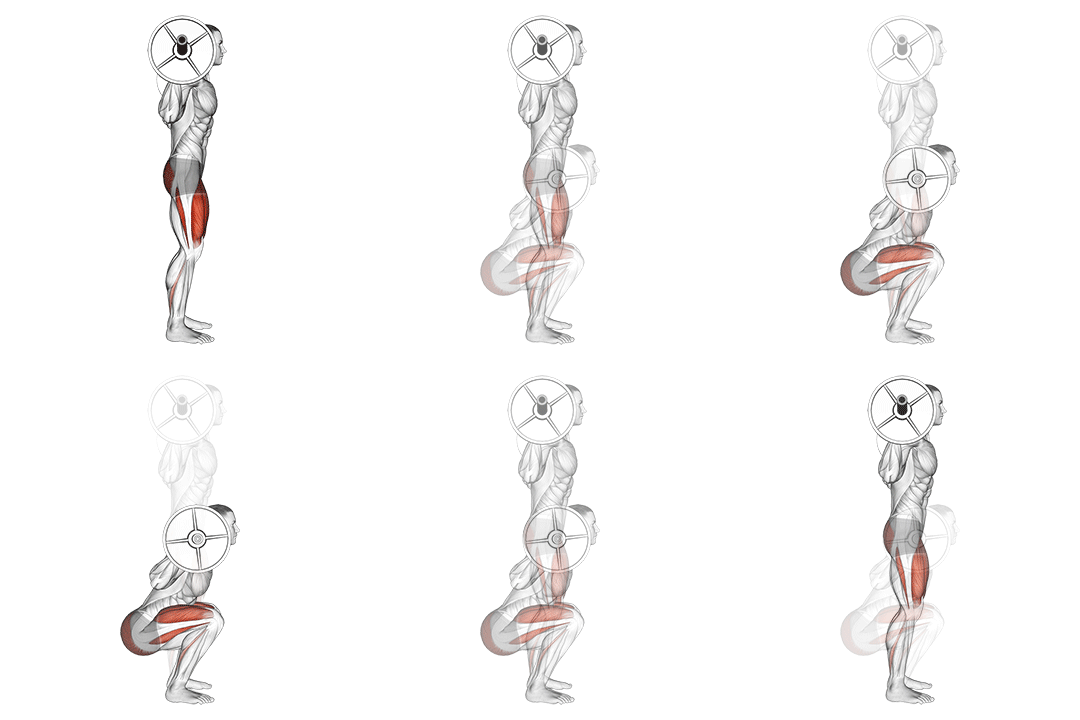
10. Barbell Full Squat (side Pov)
71.3% MatchHow to perform this exercise
- Stand with your feet shoulder-width apart, toes slightly turned out.
- Hold the barbell across your upper back, resting it on your traps or rear delts.
- Engage your core and keep your chest up as you begin to lower your body down.
- Bend at the knees and hips, pushing your hips back and down as if sitting into a chair.
- Lower your body until your thighs are parallel to the ground or slightly below.
Why You Might Need a Smith Leg Press Alternative
You may substitute the Smith Leg Press for several reasons: no access to a Smith machine, persistent knee or back pain, the need for unilateral work, or a desire for greater range of motion and hip activation. The Smith confines the bar path and can increase knee shear; switching to free-weight or single-leg variants changes joint angles and muscle recruitment. For example, hip thrusts shift torque to hip extensors and reduce knee loading—cue: squeeze the glutes at the top to maximize glute activation. If you need rehab-friendly options, choose variations that limit knee flexion and emphasize posterior-chain loading.
How to Choose the Right Substitute
Select a substitute by matching movement pattern, loading capacity, and equipment availability. If you want a quad-dominant, double-leg press feel, pick hack squats or heavy back squats and cue: keep knees tracking toes and push through the midfoot. For glute-focused, choose hip thrusts or Romanian deadlifts and cue: drive hips up and hold a strong posterior pelvic tilt to maximize glute contraction. Prioritize unilateral work (Bulgarian split squats or lunges) when correcting imbalances, and adjust set/rep schemes or tempo to replicate progressive overload if you lose heavy machine loading.
Frequently Asked Questions
What muscles does Smith Leg Press work?
The Smith Leg Press primarily loads the quadriceps and glutes through knee and hip extension, with hamstrings and adductors contributing as stabilizers. Because the machine fixes the bar path, muscle activation often shifts more to the quads unless you cue driving through the heels to bias the glutes.
What is the best bodyweight alternative to Smith Leg Press?
The Bulgarian split squat is the most effective bodyweight option for glute and upper-leg development; cue: lean slightly forward and press through the front heel to increase glute activation. It provides unilateral overload and forces hip extension and knee control similar to a leg press.
Can I build muscle without doing Smith Leg Press?
Yes — you can build equal or superior muscle using squats, hip thrusts, lunges, and Romanian deadlifts with progressive overload and volume. Focus on controlling eccentrics, adding reps or load, and cues like full hip extension and sustained muscle tension to drive hypertrophy.
More Exercise Alternatives
Find Alternatives for Any Exercise
Use our free tool to discover the best substitute exercises based on your available equipment and goals.
Try the Exercise Substitution Finder →