

4 Best Smith Seated Wrist Curl Alternatives for Forearm Strength
The Smith Seated Wrist Curl is done seated with a Smith machine. Ranked closest by our scoring: the Modified Push Up To Lower Arms.
Updated Ranked by our 12-factor similarity model How it works
Original Exercise: Smith Seated Wrist Curl
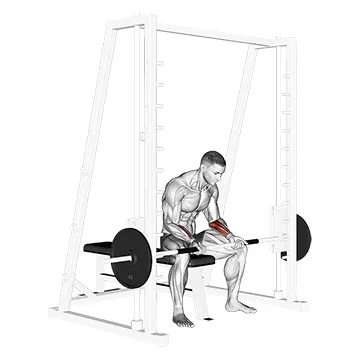
- Primary muscle
- Forearms
- Equipment
- Smith-machine
- Difficulty
- Beginner
- Type
- Isolation
Secondary muscles: Biceps, Brachialis
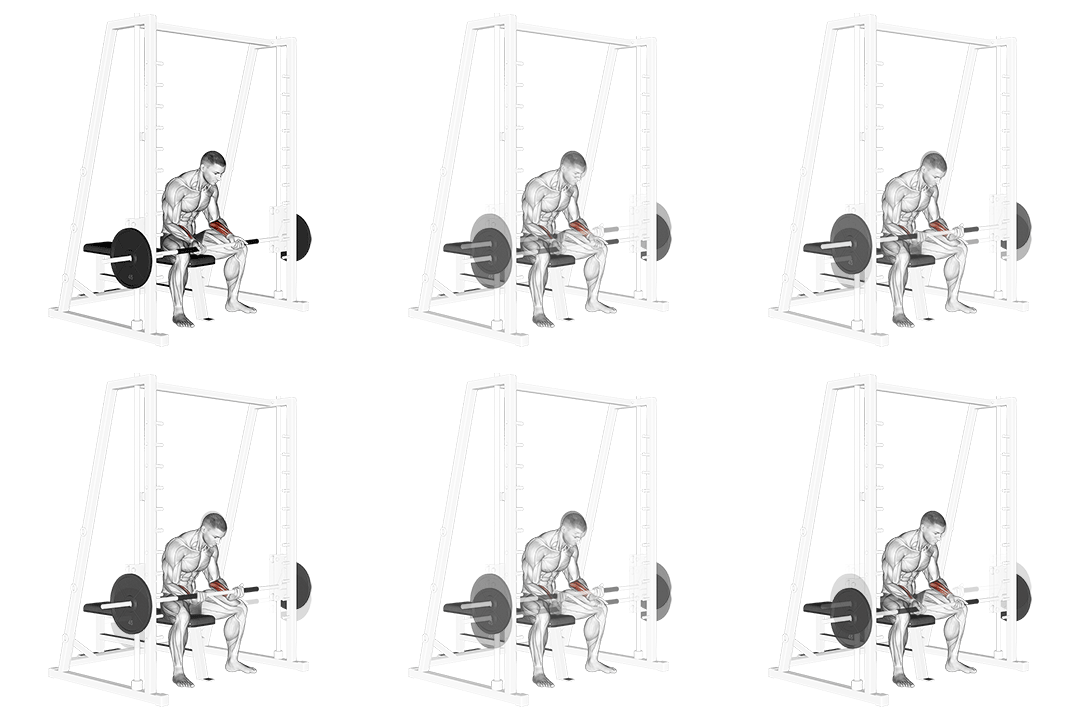
How to perform Smith Seated Wrist Curl
- Sit on a bench in front of a Smith machine with your feet flat on the ground.
- Grasp the barbell with an underhand grip, hands shoulder-width apart.
- Rest your forearms on your thighs, allowing your wrists to hang off.
- Slowly curl your wrists upward, bringing the barbell towards your forearms.
- Pause for a moment at the top, then slowly lower the barbell back down to the starting position.
- Repeat for the desired number of repetitions.
Ranked Smith Seated Wrist Curl Alternatives
4 substitutes, ranked by how closely each one matches the Smith Seated Wrist Curl on movement pattern, muscles worked, equipment and body position. The higher the score, the less you change. Open "How to perform this exercise" on a card for the steps; every card title links to that exercise's own alternatives page.
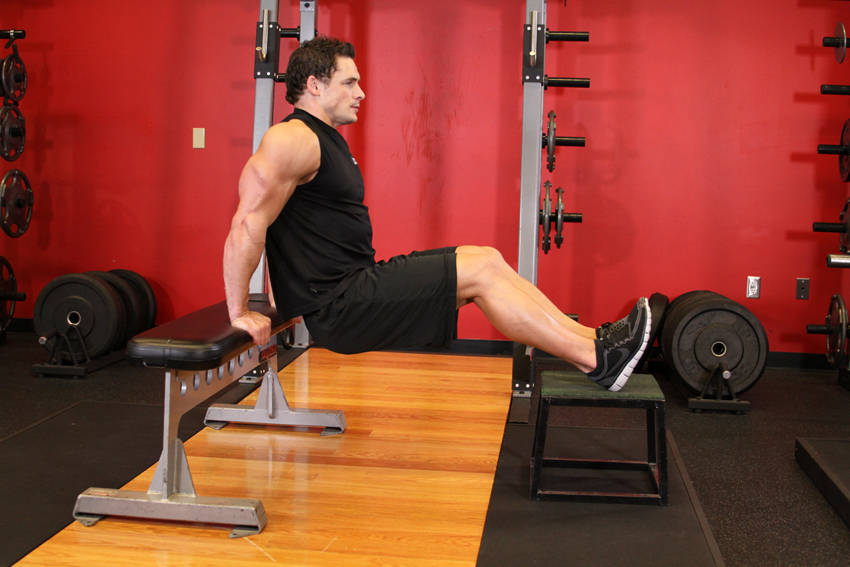
1. Bench Dips
35% match- Triceps
- Bodyweight
- Intermediate
- Compound
A looser match: it works the triceps rather than the forearms.
How to perform this exercise
- For this exercise you will need to place a bench behind your back. With the bench perpendicular to your body, and while looking away from it, hold on to the bench on its edge with the hands fully extended, separated at shoulder width. The legs will be extended forward, bent at the waist and perpendicular to your torso. This will be your starting position.
- Slowly lower your body as you inhale by bending at the elbows until you lower yourself far enough to where there is an angle slightly smaller than 90 degrees between the upper arm and the forearm. Tip: Keep the elbows as close as possible throughout the movement. Forearms should always be pointing down.
- Using your triceps to bring your torso up again, lift yourself back to the starting position.
- Repeat for the recommended amount of repetitions.
Sets and reps: 3 or 4 sets of 6 to 10 reps.
Why this matches
- Primary muscle: triceps, not forearms
- Equipment: bodyweight only, not a machine
- Body position: seated, the same as the Smith Seated Wrist Curl
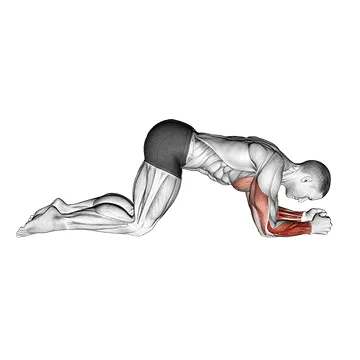
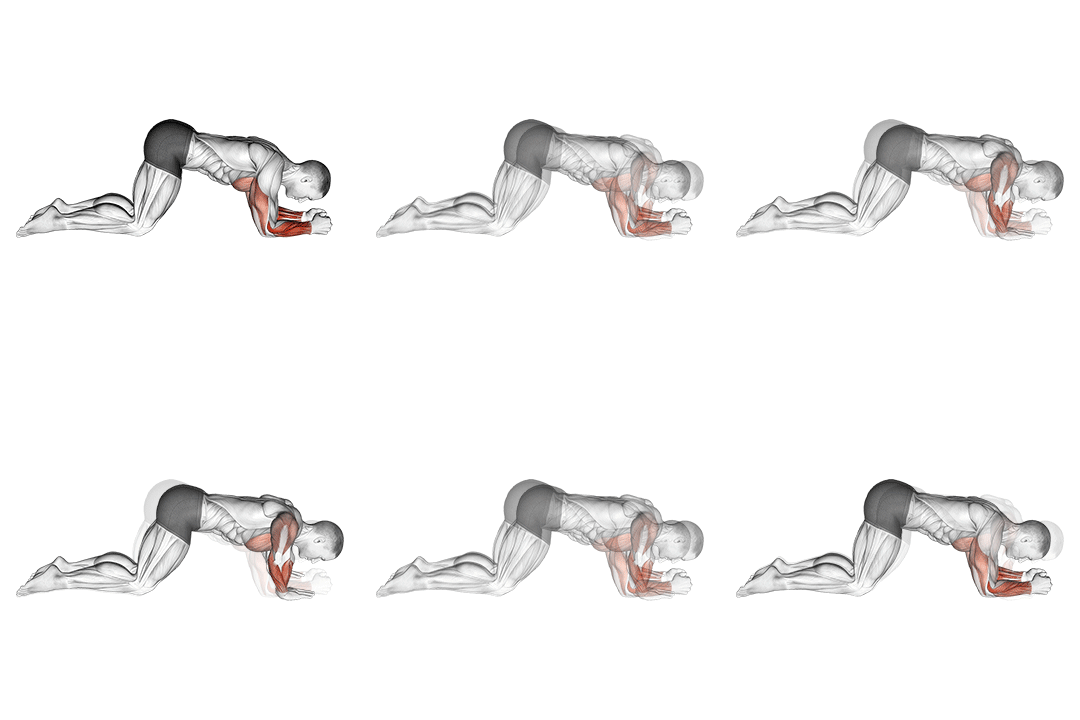
Best match 2. Modified Push Up To Lower Arms
35% match- Forearms
- Bodyweight
- Beginner
- Compound
Use this when you have nothing to train with, because it works the forearms with bodyweight alone.
How to perform this exercise
- Start in a push-up position with your hands directly under your shoulders and your body in a straight line.
- Lower your body down towards the ground by bending your elbows, keeping them close to your sides.
- Once your elbows are at a 90-degree angle, lower your forearms to the ground, keeping your elbows directly under your shoulders.
- Pause for a moment, then push through your palms to lift your forearms back up to the starting position.
- Repeat for the desired number of repetitions.
Sets and reps: 3 sets of 8 to 12 reps, and add reps before you add load.
Why this matches
- Primary muscle: forearms, the same as the Smith Seated Wrist Curl
- Equipment: bodyweight only, not a machine
- Body position: kneeling, not seated
- Balance: harder to stay steady on than the Smith Seated Wrist Curl
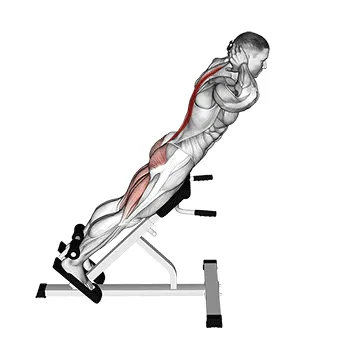
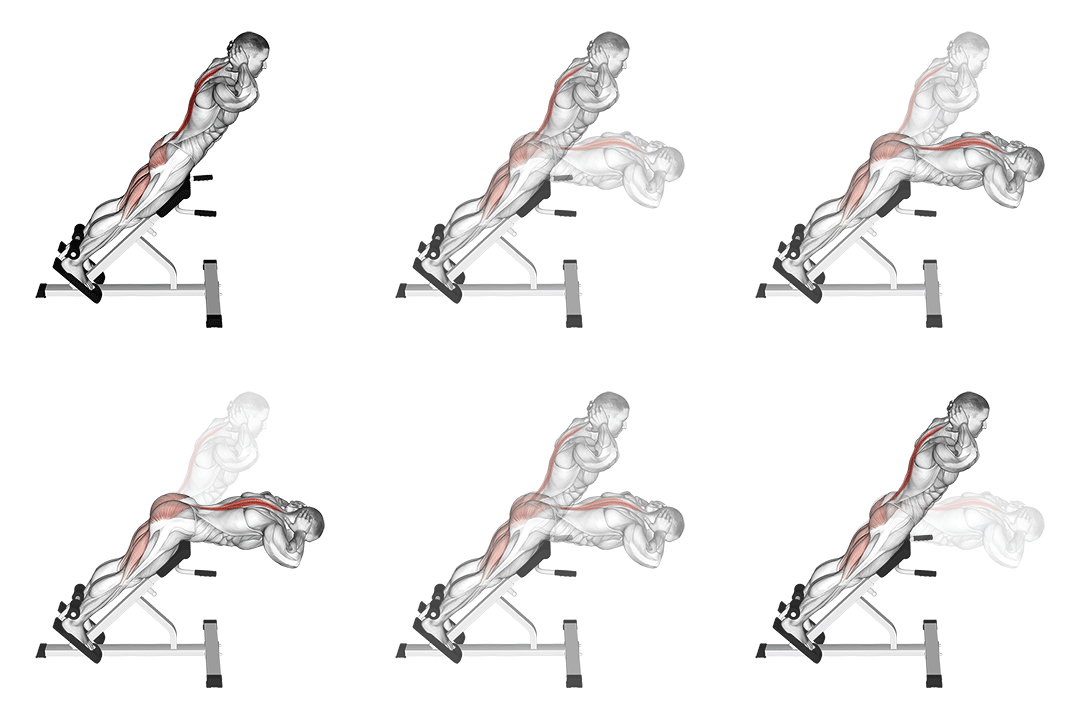
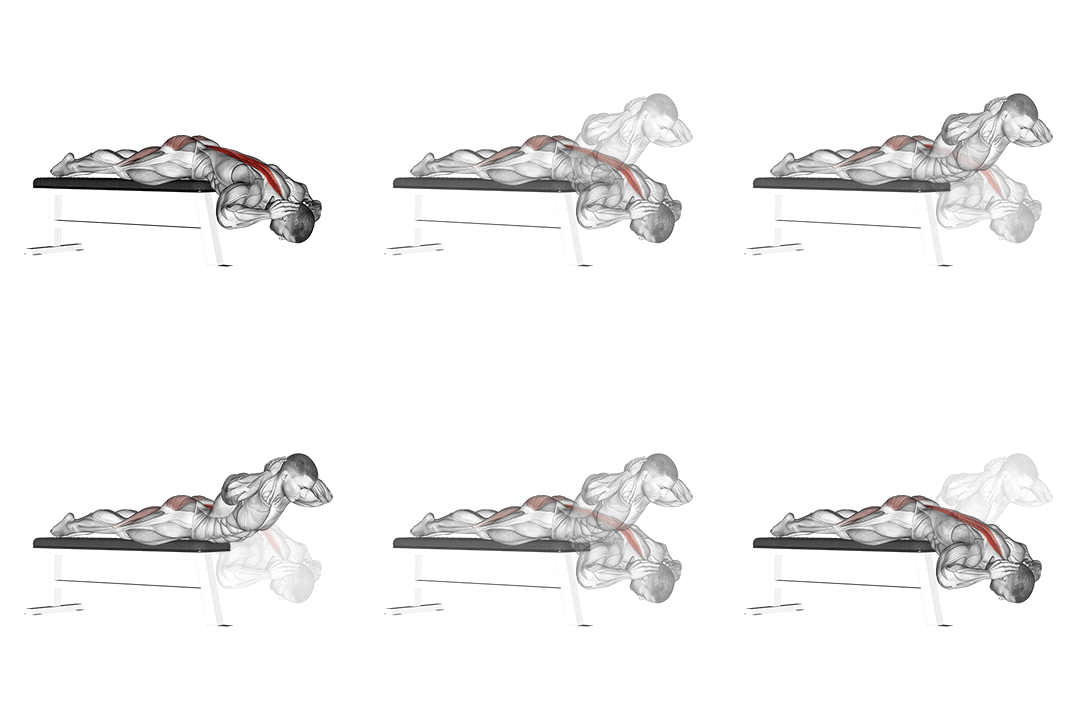
3. Hyperextension
32% match- Spine
- Bodyweight
- Intermediate
- Compound
A looser match: it works the spinal erectors rather than the forearms.
How to perform this exercise
- Adjust the hyperextension bench so that your upper thighs are resting on the pad and your feet are secured.
- Cross your arms over your chest or place your hands behind your head.
- Lower your upper body towards the ground while keeping your back straight.
- Pause for a moment at the bottom, then raise your upper body back up until it is in line with your legs.
- Repeat for the desired number of repetitions.
Sets and reps: 3 or 4 sets of 6 to 10 reps.
Why this matches
- Primary muscle: spine, not forearms
- Equipment: bodyweight only, not a machine
- Body position: lying face down, not seated
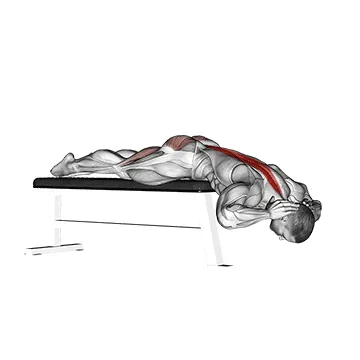
4. Hyperextension (On Bench)
32% match- Spine
- Bodyweight
- Intermediate
- Compound
How to perform this exercise
- Adjust the hyperextension bench so that your hips are resting comfortably on the pad and your feet are secured.
- Cross your arms over your chest or place your hands behind your head.
- Slowly lower your upper body towards the ground while keeping your back straight.
- Pause for a moment at the bottom, then raise your upper body back up until it is in line with your legs.
- Repeat for the desired number of repetitions.
Sets and reps: 3 or 4 sets of 6 to 10 reps.
Why this matches
- Primary muscle: spine, not forearms
- Equipment: bodyweight only, not a machine
- Body position: lying face down, not seated
Why You Might Need a Smith Seated Wrist Curl Alternative
You may substitute the Smith Seated Wrist Curl because you lack a Smith machine, have wrist pain, want greater range of motion, or prefer unilateral work. Free-weight wrist curls and reverse curls increase neutral-stabilizer activation by forcing shoulder and elbow micro-stabilizers to control the load. If you experience ulnar or radial deviation during Smith-machine moves, switch to a dumbbell so you can align the wrist through its natural plane of motion and reduce shear. For rehab, choose lighter loads with slow eccentrics to bias tendon loading of the flexor carpi radialis/ulnaris and avoid aggressive compression of the carpal tunnel.
How to Choose the Right Smith Seated Wrist Curl Substitute
Match the substitute to your equipment, pain profile, and training goal. If you want pure wrist flexor isolation, choose seated dumbbell wrist curls and cue a strict wrist-only hinge while bracing the forearm; that maximizes flexor carpi activation. For grip and functional carry strength, pick heavy farmer carries to recruit forearm flexors, extensors and the brachioradialis through sustained isometric contraction. If you need to address imbalances, use single-arm dumbbell or pronated reverse curls for unilateral loading and eccentric control. Prioritize exercises that let you control wrist alignment, allow progressive overload, and preserve full wrist flexion/extension range of motion.
Smith Seated Wrist Curl FAQ
What muscles does Smith Seated Wrist Curl work?
The Smith Seated Wrist Curl primarily targets the wrist flexors, flexor carpi radialis, flexor carpi ulnaris, and palmaris longus, plus some contribution from the finger flexors. Biomechanically it produces wrist flexion torque while the forearm is supported, isolating the flexors with minimal elbow movement.
Find Alternatives for Any Exercise
Search the exercise database and filter the ranked substitutes by the equipment you own.
Similarity scores compare exercise metadata such as movement pattern, muscles, equipment and body position. They are not a safety rating or a check that you own the equipment. Learn about our methodology