

10 Best Stalder Press Alternatives for Triceps Strength
If you can’t do the Stalder Press, use other bodyweight moves that emphasize elbow extension and shoulder stability. Try close‑grip push-ups, diamond push-ups, parallel‑bar dips, inverted triceps extensions, or decline pseudo‑planche push-ups. Cue: keep elbows tucked and squeeze the triceps at lockout to maximize activation.
Original Exercise: Stalder Press
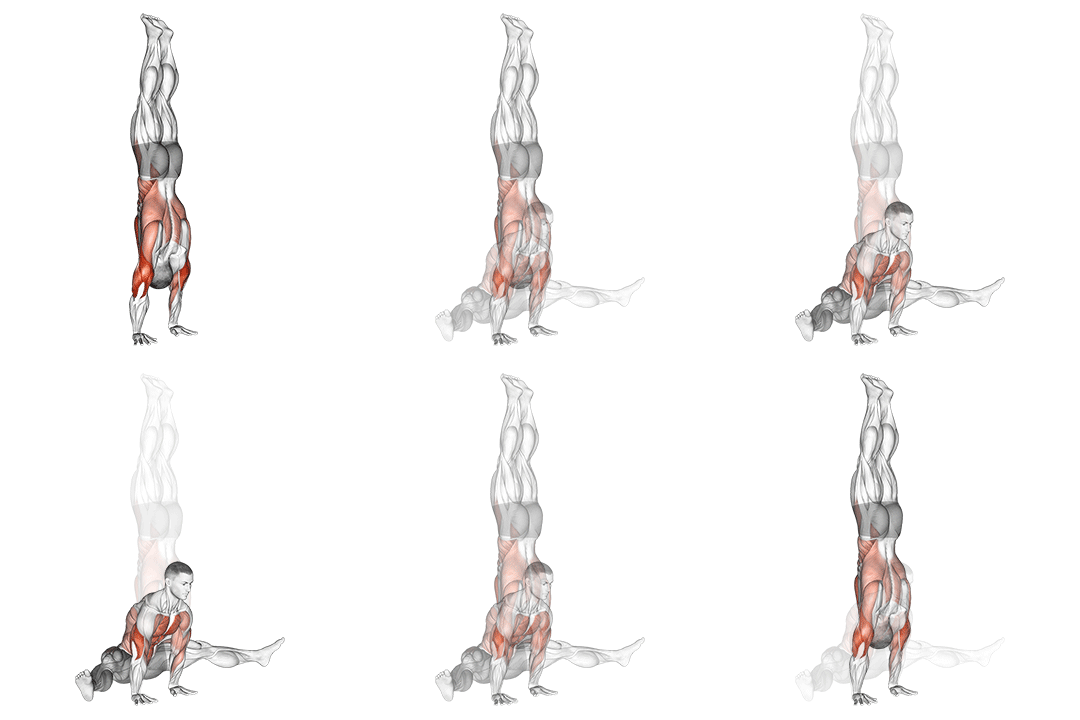
How to Perform Stalder Press
- Start by standing with your feet shoulder-width apart and your arms extended overhead.
- Bend your knees slightly and engage your core.
- Lower your body down into a squat position while keeping your arms extended overhead.
- As you squat down, press your arms down towards the ground, engaging your triceps.
- Pause for a moment at the bottom of the squat, then push through your heels to stand back up while simultaneously raising your arms back overhead.
- Repeat for the desired number of repetitions.
Best Stalder Press Alternatives
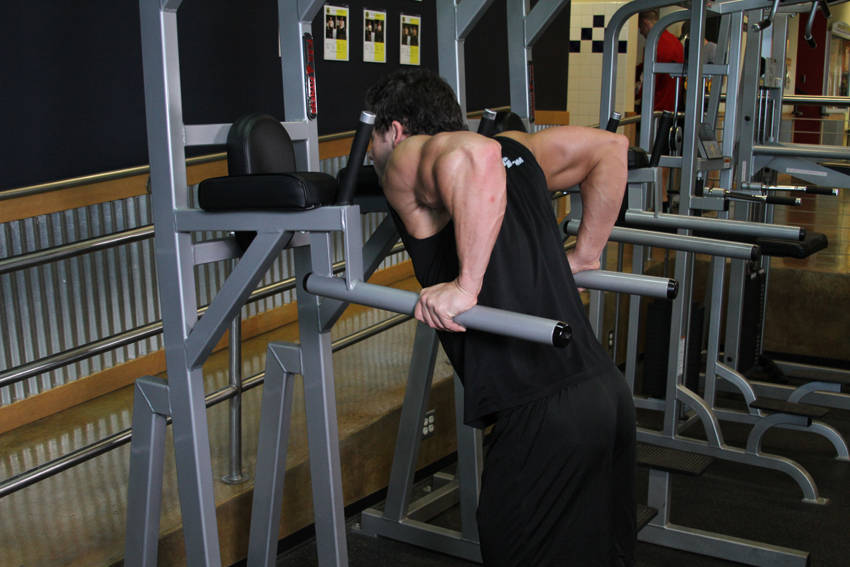
1. Dips - Triceps Version
83.4% MatchHow to perform this exercise
- To get into the starting position, hold your body at arm's length with your arms nearly locked above the bars.
- Now, inhale and slowly lower yourself downward. Your torso should remain upright and your elbows should stay close to your body. This helps to better focus on tricep involvement. Lower yourself until there is a 90 degree angle formed between the upper arm and forearm.
- Then, exhale and push your torso back up using your triceps to bring your body back to the starting position.
- Repeat the movement for the prescribed amount of repetitions.
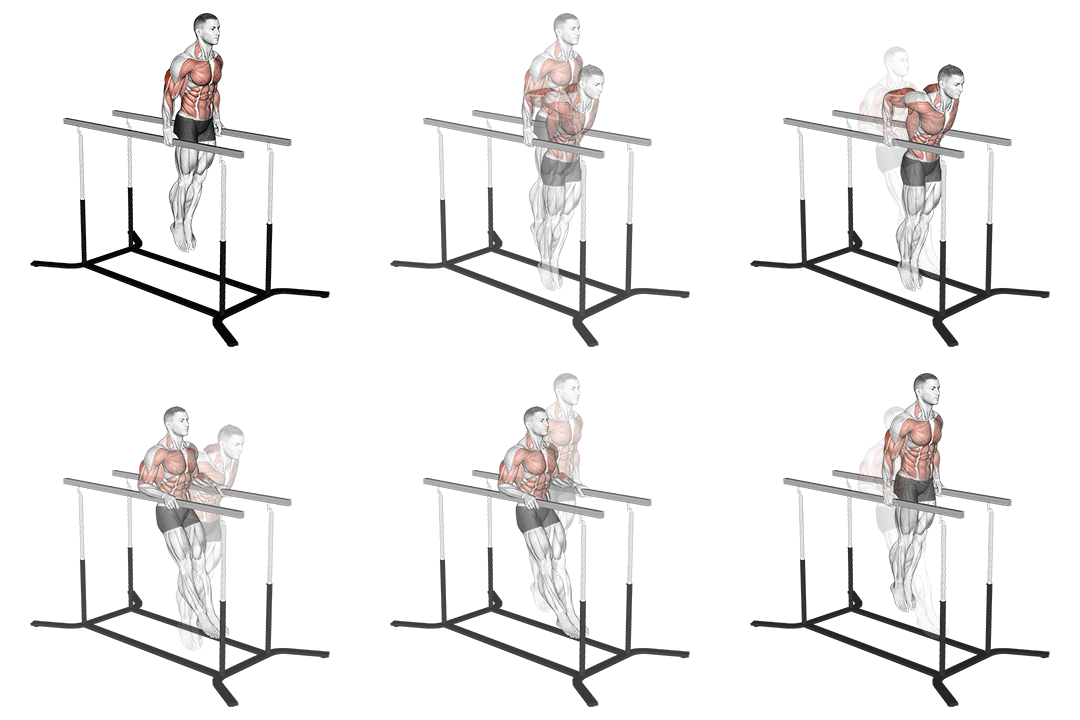
2. Elbow Dips
81.3% MatchHow to perform this exercise
- Sit on the edge of a bench or chair with your hands gripping the edge next to your hips.
- Slide your hips forward off the bench and straighten your legs, keeping your heels on the ground.
- Bend your elbows and lower your body towards the ground, keeping your back close to the bench.
- Pause for a moment at the bottom, then push through your hands to straighten your arms and lift your body back up to the starting position.
- Repeat for the desired number of repetitions.
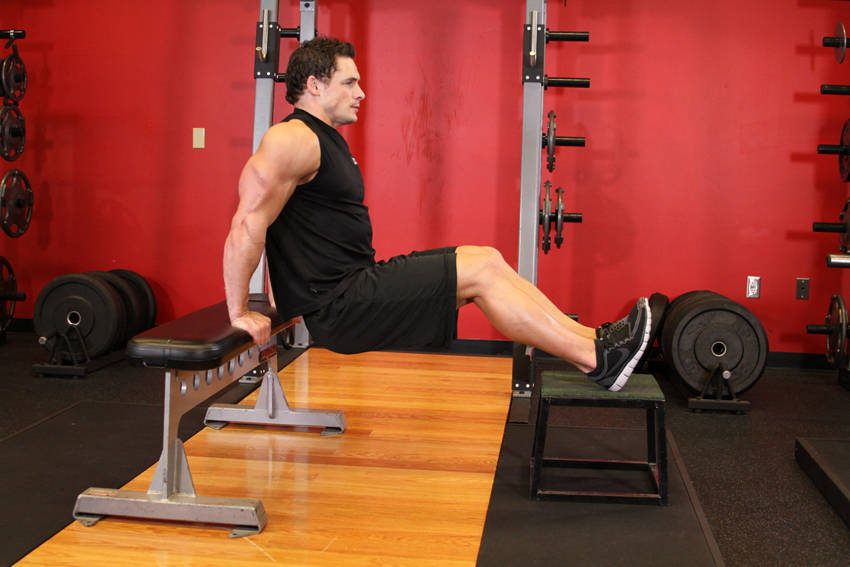
3. Bench Dips
68.7% MatchHow to perform this exercise
- For this exercise you will need to place a bench behind your back. With the bench perpendicular to your body, and while looking away from it, hold on to the bench on its edge with the hands fully extended, separated at shoulder width. The legs will be extended forward, bent at the waist and perpendicular to your torso. This will be your starting position.
- Slowly lower your body as you inhale by bending at the elbows until you lower yourself far enough to where there is an angle slightly smaller than 90 degrees between the upper arm and the forearm. Tip: Keep the elbows as close as possible throughout the movement. Forearms should always be pointing down.
- Using your triceps to bring your torso up again, lift yourself back to the starting position.
- Repeat for the recommended amount of repetitions.
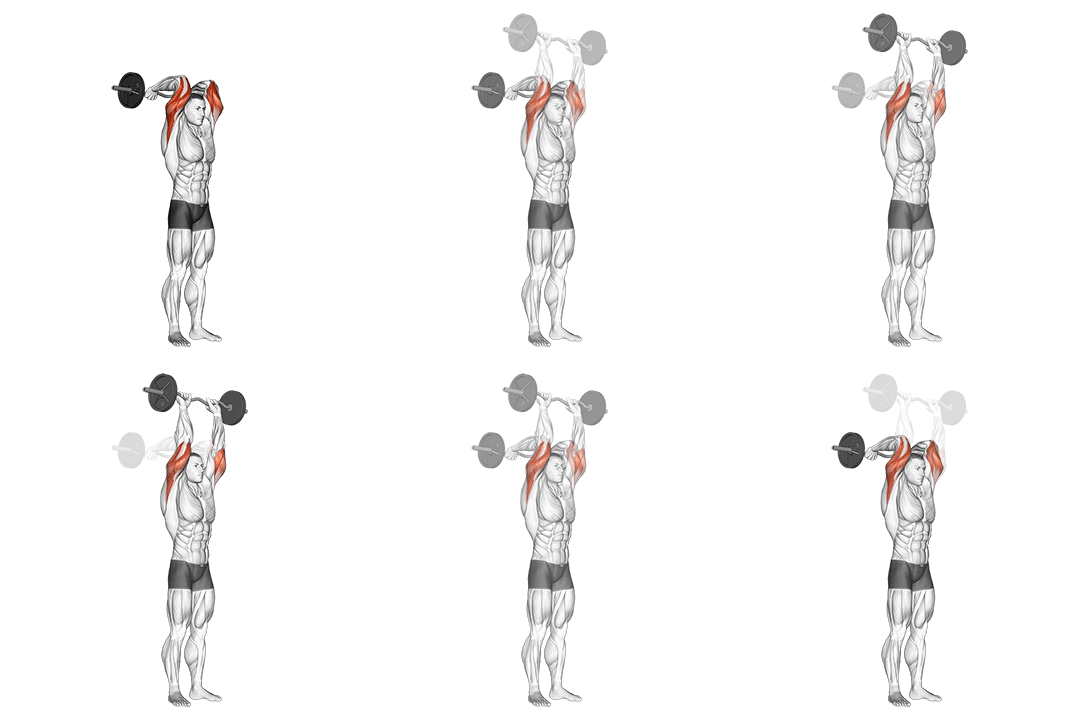
4. Ez Bar Standing French Press
67.1% MatchHow to perform this exercise
- Stand with your feet shoulder-width apart and hold the ez barbell with an overhand grip.
- Raise the barbell above your head, fully extending your arms.
- Keeping your upper arms close to your head, slowly lower the barbell behind your head by bending your elbows.
- Pause for a moment, then extend your arms back to the starting position.
- Repeat for the desired number of repetitions.
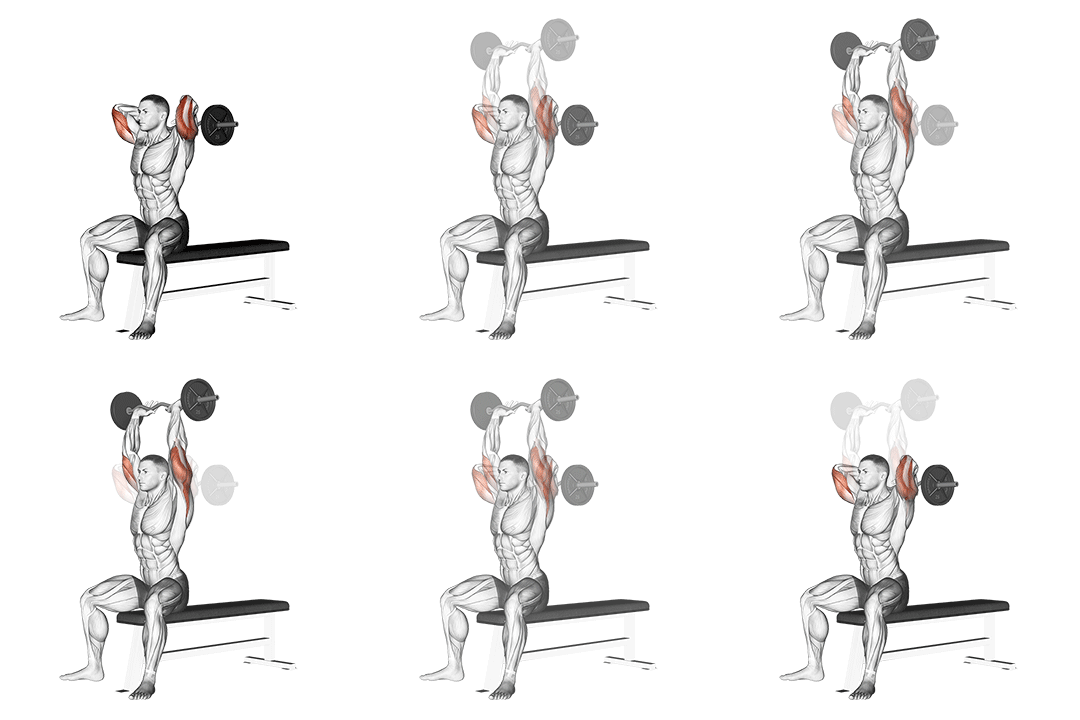
5. Ez Barbell Seated Triceps Extension
65% MatchHow to perform this exercise
- Sit on a bench with your back straight and feet flat on the ground.
- Hold the ez barbell with an overhand grip, hands shoulder-width apart.
- Raise the barbell overhead, fully extending your arms.
- Keeping your upper arms stationary, lower the barbell behind your head by bending your elbows.
- Pause for a moment, then raise the barbell back to the starting position by extending your arms.
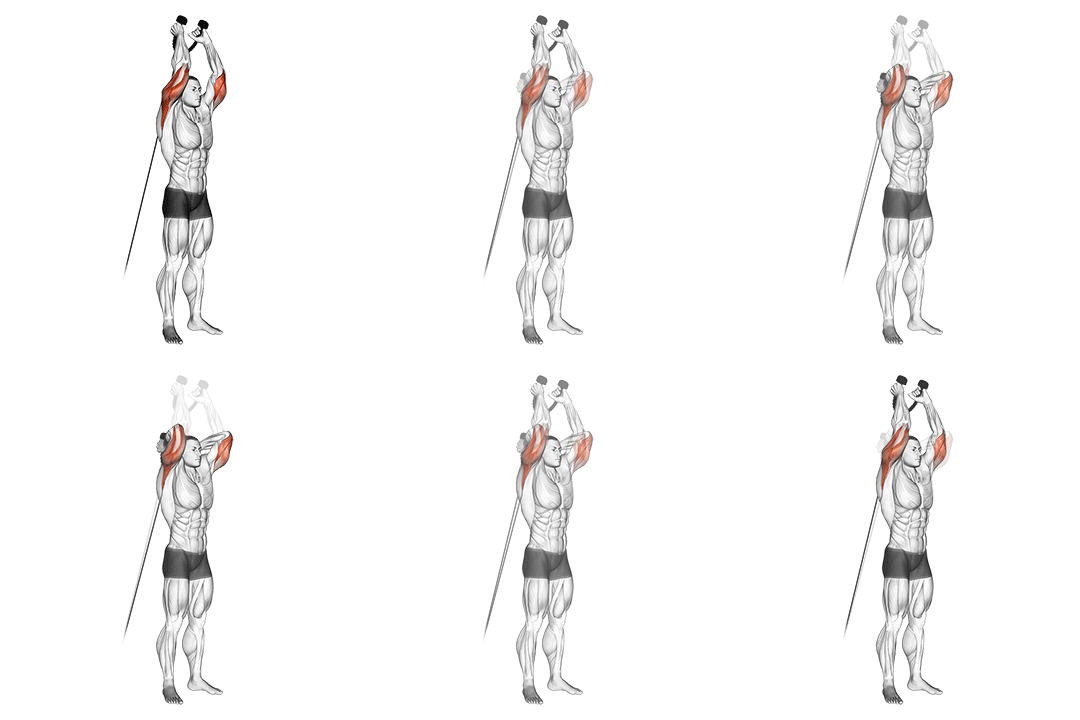
6. Cable Overhead Triceps Extension (rope Attachment)
64.7% MatchHow to perform this exercise
- Attach a rope to a cable machine at a high position.
- Stand facing away from the machine with your feet shoulder-width apart.
- Grasp the rope with both hands, palms facing each other, and bring your hands above your head.
- Keep your upper arms close to your head and your elbows pointing forward.
- Slowly lower the rope behind your head by bending your elbows.
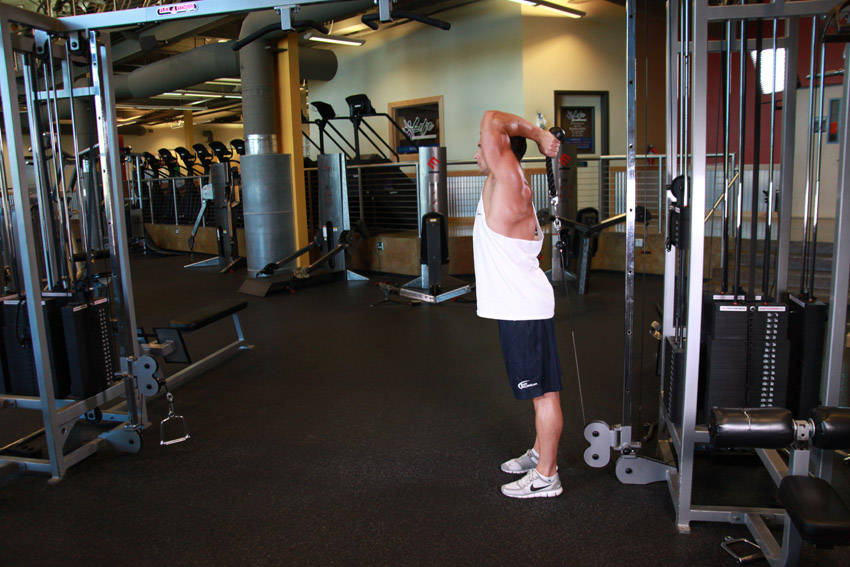
7. Cable Rope Overhead Triceps Extension
64.4% MatchHow to perform this exercise
- Attach a rope to the bottom pulley of the pulley machine.
- Grasping the rope with both hands, extend your arms with your hands directly above your head using a neutral grip (palms facing each other). Your elbows should be in close to your head and the arms should be perpendicular to the floor with the knuckles aimed at the ceiling. This will be your starting position.
- Slowly lower the rope behind your head as you hold the upper arms stationary. Inhale as you perform this movement and pause when your triceps are fully stretched.
- Return to the starting position by flexing your triceps as you breathe out.
- Repeat for the recommended amount of repetitions.
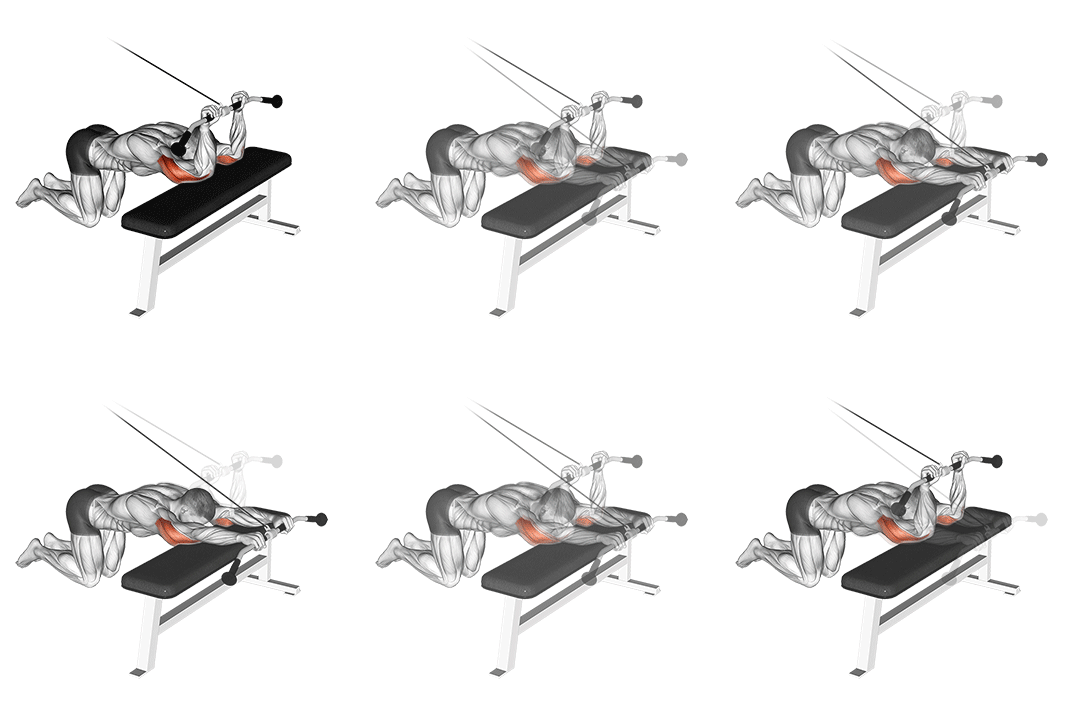
8. Cable Kneeling Triceps Extension
64.4% MatchHow to perform this exercise
- Attach a rope handle to a high pulley and kneel down facing the cable machine.
- Grasp the rope with a neutral grip (palms facing each other) and bring your hands to the sides of your head.
- Keep your elbows close to your head and your upper arms stationary throughout the exercise.
- Extend your forearms by contracting your triceps until your arms are fully extended.
- Pause for a moment, then slowly return to the starting position by bending your elbows.
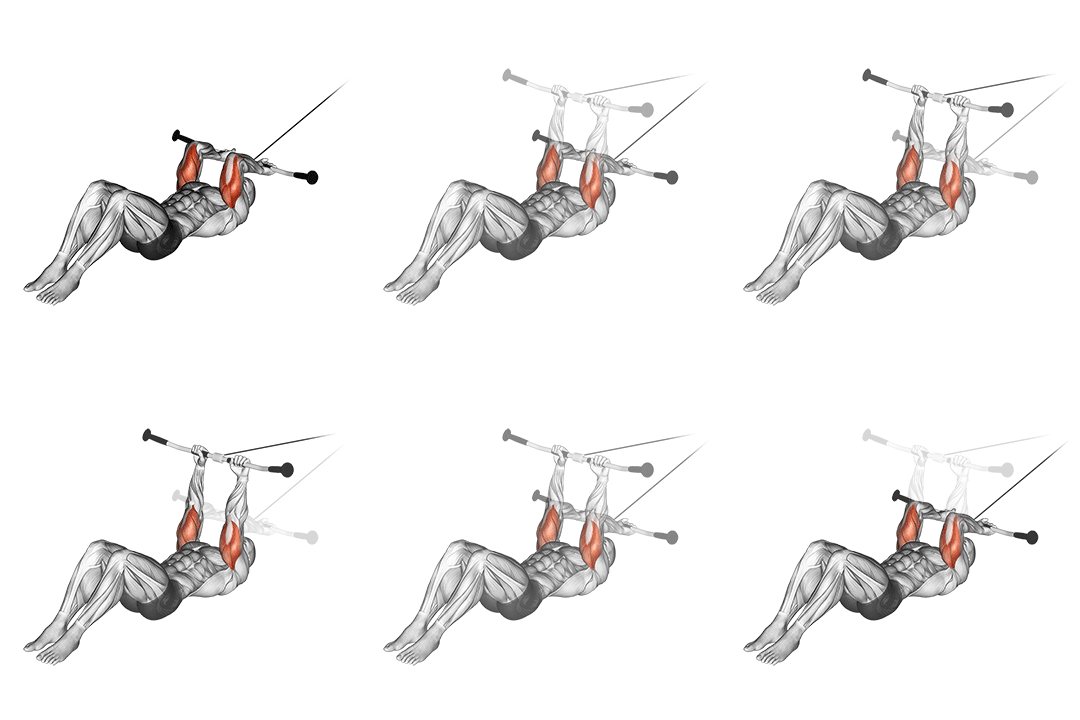
9. Cable Lying Triceps Extension V. 2
63.9% MatchHow to perform this exercise
- Attach a rope handle to a low pulley cable machine.
- Lie down on a flat bench facing up, with your head towards the cable machine.
- Grasp the rope handle with both hands, palms facing each other, and extend your arms straight up over your chest.
- Keeping your upper arms stationary, slowly lower the rope handle towards your forehead by bending your elbows.
- Pause for a moment at the bottom, then extend your arms back up to the starting position.
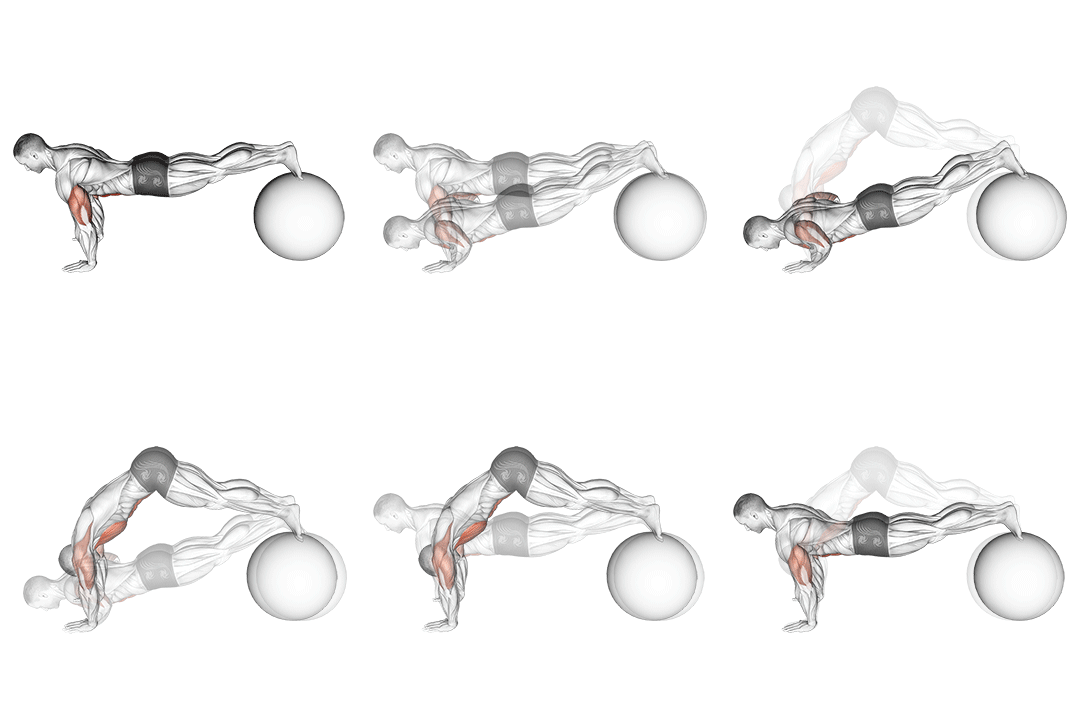
10. Exercise Ball Pike Push Up
62.8% MatchHow to perform this exercise
- Start in a push-up position with your hands on the floor and your shins resting on the stability ball.
- Engage your core and lift your hips up towards the ceiling, rolling the ball towards your hands.
- Keep your legs straight and your body in a pike position, forming an inverted V shape.
- Bend your elbows and lower your upper body towards the floor, keeping your head in line with your hands.
- Push through your hands and extend your arms to return to the starting position.
Why You Might Need a Stalder Press Alternative
You may substitute the Stalder Press for several reasons: wrist or shoulder discomfort under the unique shoulder rotation, lack of skill on the skill‑based movement, or limited access to rings or mobility to perform it safely. Alternatives let you target the triceps with safer joint positions and progressive overload. For example, close‑grip push‑ups increase elbow extension torque with a neutral wrist; inverted triceps extensions stress the long head via controlled shoulder flexion. Use scapular control cues—retract and depress the shoulders—to protect the glenohumeral joint while keeping triceps activation high.
How to Choose the Right Substitute
Select a substitute by matching movement pattern, loading capacity, and joint tolerance. Prioritize exercises that reproduce elbow extension torque (close‑grip push‑ups, dips) if your goal is triceps strength. If shoulder mobility is limited, pick inverted triceps extensions or bench dips with a neutral wrist to reduce shoulder extension. Use technique cues: keep elbows close to the ribcage, maintain a rigid torso to limit hip compensation, and control descent tempo to increase time under tension and triceps recruitment.
Frequently Asked Questions
What muscles does Stalder Press work?
The Stalder Press primarily targets the triceps via elbow extension while stressing anterior deltoids and pectoralis major for horizontal support. It also demands core anti‑extension and scapular stability; cue: maintain a hollow body and protracted scapula to transfer force through the arms.
What is the best bodyweight alternative to Stalder Press?
The close‑grip push‑up is the best single bodyweight alternative because it increases elbow extension load while keeping wrists neutral. Cue: place hands under the sternum, tuck elbows to ~45°, and drive through the palms to maximally recruit the triceps.
Can I build muscle without doing Stalder Press?
Yes. You can build triceps mass with progressive variations like weighted dips, diamond push‑ups, and slow inverted triceps extensions that increase time under tension. Focus on progressive overload, strict elbow‑tracking, and full lockout to maximize triceps hypertrophy.
More Exercise Alternatives
Find Alternatives for Any Exercise
Use our free tool to discover the best substitute exercises based on your available equipment and goals.
Try the Exercise Substitution Finder →