

10 Best Standing Long Jump Alternatives for Home & Rehab
The Standing Long Jump is done standing. Ranked closest by our scoring: the Depth Jump Leap, the Dumbbell Seated Box Jump and the Weighted Jump Squat.
Updated Ranked by our 12-factor similarity model How it works
Original Exercise: Standing Long Jump
- Primary muscle
- Quadriceps
- Equipment
- Bodyweight
- Difficulty
- Advanced
- Type
- Compound
Secondary muscles: Calves, Glutes, Hamstrings
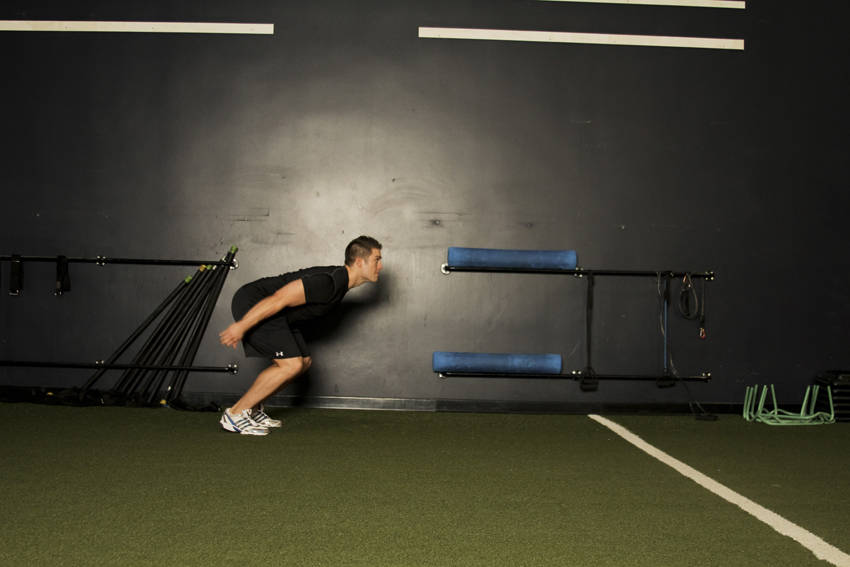
How to perform Standing Long Jump
- This drill is best done in sand or other soft landing surface. Ensure that you are able to measure distance. Stand in a partial squat stance with feet shoulder width apart.
- Utilizing a big arm swing and a countermovement of the legs, jump forward as far as you can.
- Attempt to land with your feet out in front you, reaching as far as possible with your legs.
- Measure the distance from your landing point to the starting point and track results.
Ranked Standing Long Jump Alternatives
10 substitutes, ranked by how closely each one matches the Standing Long Jump on movement pattern, muscles worked, equipment and body position. The higher the score, the less you change. Open "How to perform this exercise" on a card for the steps; every card title links to that exercise's own alternatives page.
Best match 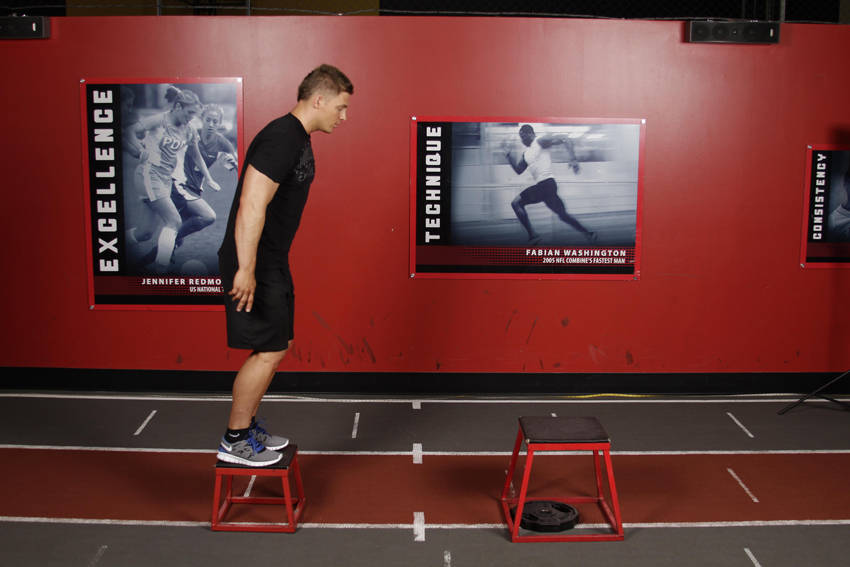
1. Depth Jump Leap
90% match- Quadriceps
- Other
- Advanced
- Compound
A straight swap when you want to keep working the quadriceps.
How to perform this exercise
- For this drill you will need two boxes or benches, one 12 to 16 inches high and the other 22 to 26 inches high.
- Stand on one of the two boxes with arms at the sides; feet should be together and slightly off the edge as in the depth jump. Place the other box approximately two or three feet in front of and facing the performer.
- Begin by dropping off the initial box, landing and simultaneously taking off with both feet.
- Rebound by driving upward and outward as intensely as possible, using the arms and full extension of the body to jump onto the higher box. Again, allow the legs to absorb the impact.
Sets and reps: 3 or 4 sets of 6 to 10 reps.
Why this matches
- Primary muscle: quadriceps, the same as the Standing Long Jump
- Equipment: bodyweight only, the same as the Standing Long Jump
- Body position: standing, the same as the Standing Long Jump
2. Dumbbell Seated Box Jump
85% match- Quadriceps
- Dumbbell
- Advanced
- Compound
A good swap when you have dumbbells to work with, and it still works the quadriceps.
How to perform this exercise
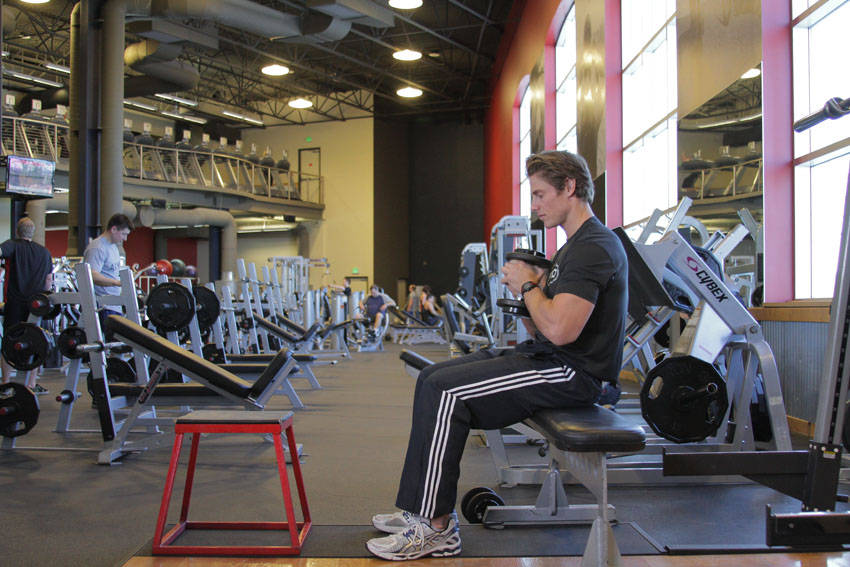
- Position a box a couple feet to the side of a bench. Hold a dumbbell to your chest with both hands and seat yourself on the bench facing the box. This will be your starting position.
- Plant your feet firmly on the ground as you lean forward, extending through the hips and knees to jump up and forward.
- Land on the box with both feet, absorbing the impact by allowing the hips and knees to bend.
- Step down and return to the starting position.
Sets and reps: 3 to 5 sets of 5 to 8 reps.
Why this matches
- Primary muscle: quadriceps, the same as the Standing Long Jump
- Equipment: free weights, not bodyweight only
- Body position: standing, the same as the Standing Long Jump
3. Weighted Jump Squat
80% match- Quadriceps
- Barbell
- Advanced
- Compound
A good swap when you have a barbell to work with, and it still works the quadriceps.
How to perform this exercise
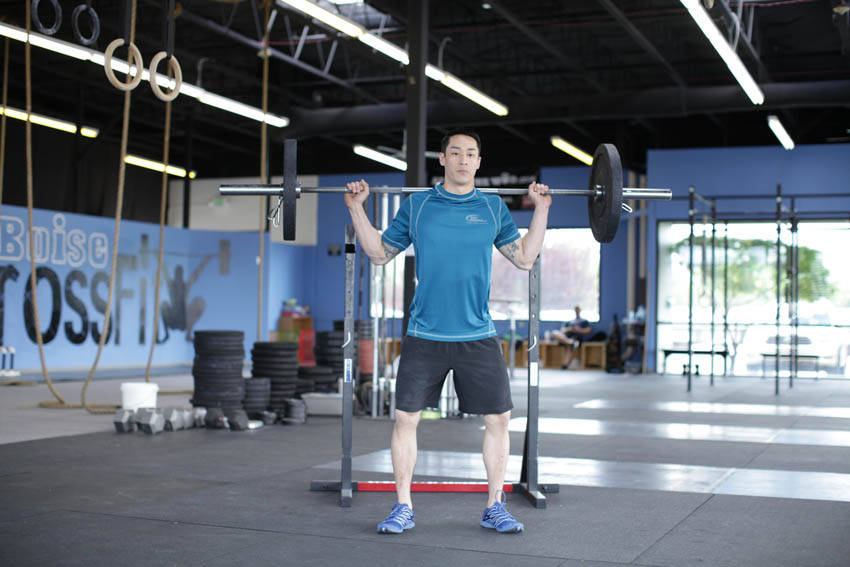
- Position a lightly loaded barbell across the back of your shoulders. You could also use a weighted vest, sandbag, or other type of resistance for this exercise.
- The weight should be light enough that it doesn't slow you down significantly. Your feet should be just outside of shoulder width with your head and chest up. This will be your starting position.
- Using a countermovement, squat partially down and immediately reverse your direction to explode off of the ground, extending through your hips, knees, and ankles. Maintain good posture throughout the jump.
- As you return to the ground, absorb the impact through your legs.
Sets and reps: 3 to 5 sets of 5 to 8 reps.
Why this matches
- Primary muscle: quadriceps, the same as the Standing Long Jump
- Equipment: free weights, not bodyweight only
- Body position: standing, the same as the Standing Long Jump
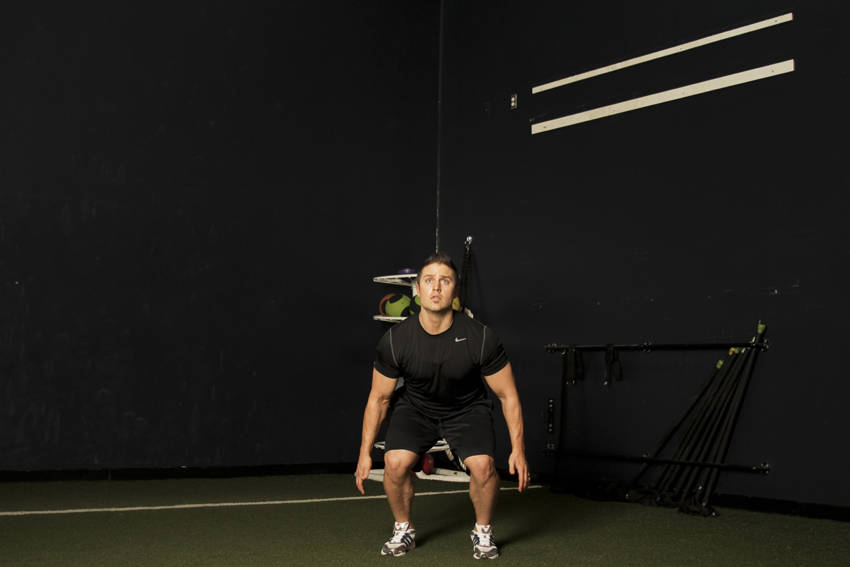
4. Rocket Jump
79% match- Quads
- Bodyweight
- Advanced
- Compound
A looser match: it uses the same equipment, but it works the quads rather than the quadriceps.
How to perform this exercise
- Begin in a relaxed stance with your feet shoulder width apart and hold your arms close to the body.
- To initiate the move, squat down halfway and explode back up as high as possible.
- Fully extend your entire body, reaching overhead as far as possible. As you land, absorb your impact through the legs.
Sets and reps: 3 or 4 sets of 6 to 10 reps.
Why this matches
- Primary muscle: quads, not quadriceps
- Equipment: bodyweight only, the same as the Standing Long Jump
- Body position: standing, the same as the Standing Long Jump
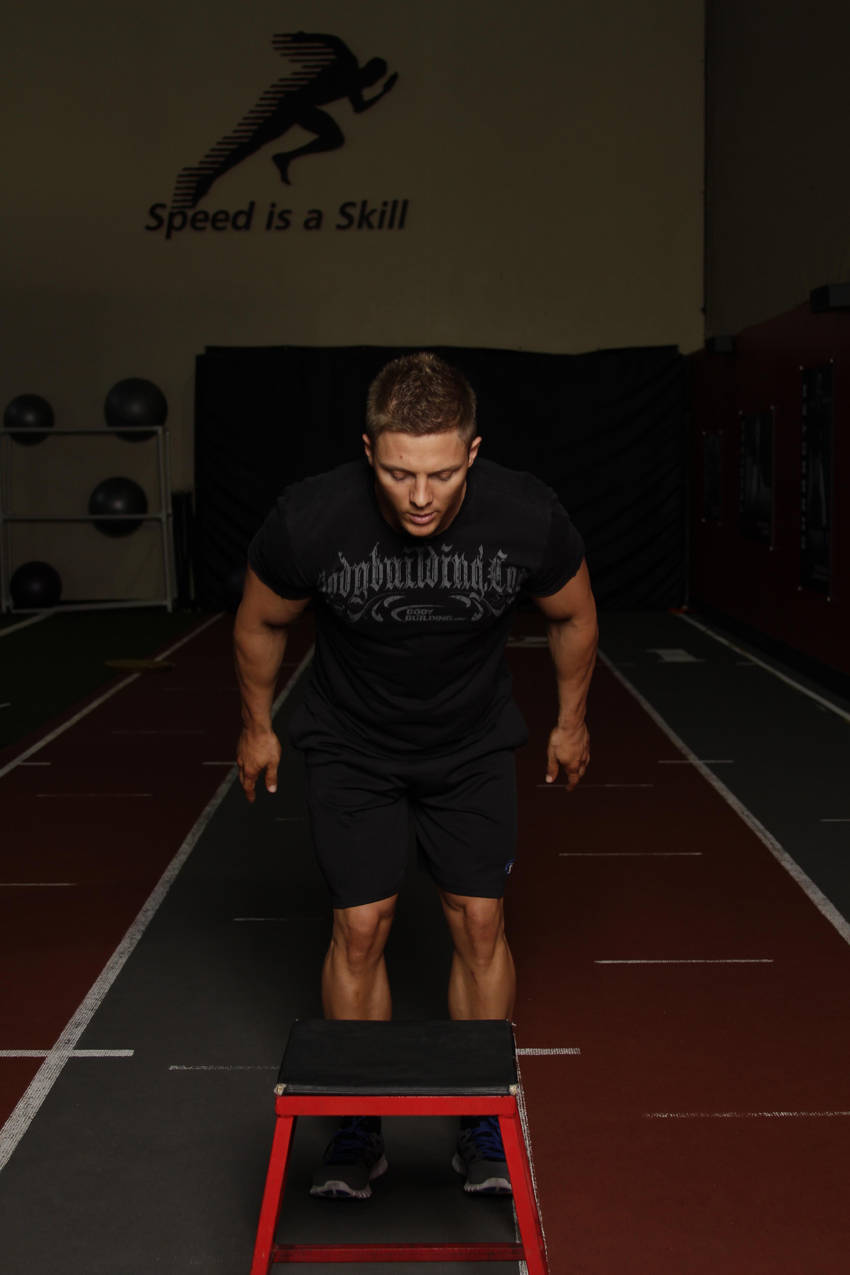
5. Box Jump (Multiple Response)
79% match- Glutes
- Other
- Intermediate
- Compound
A looser match: it works the glutes rather than the quadriceps.
How to perform this exercise
- Assume a relaxed stance facing the box or platform approximately an arm's length away. Arms should be down at the sides and legs slightly bent.
- Using the arms to aid in the initial burst, jump upward and forward, landing with feet simultaneously on top of the box or platform.
- Immediately drop or jump back down to the original starting place; then repeat the sequence.
Sets and reps: 3 or 4 sets of 6 to 10 reps.
Why this matches
- Primary muscle: glutes, not quadriceps
- Equipment: bodyweight only, the same as the Standing Long Jump
- Body position: standing, the same as the Standing Long Jump
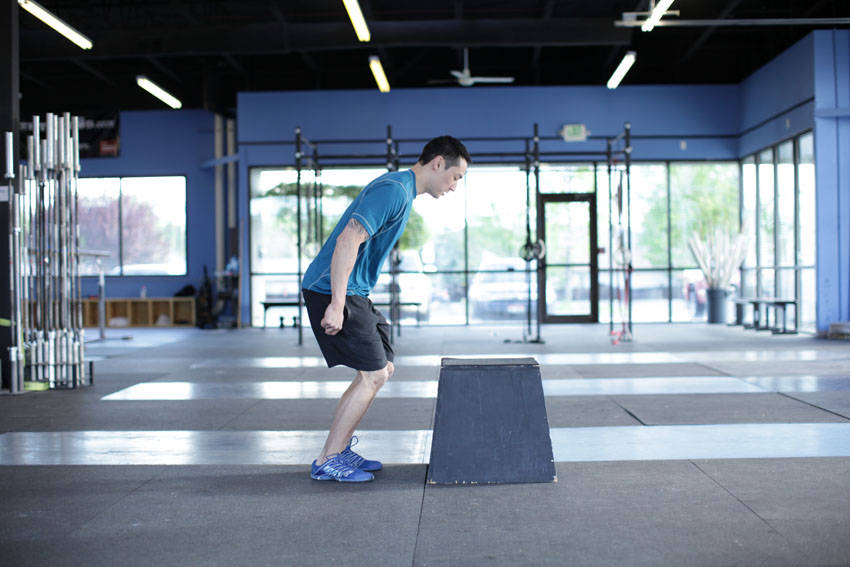
6. Front Box Jump
79% match- Hamstrings
- Other
- Intermediate
- Compound
A looser match: it works the hamstrings rather than the quadriceps.
How to perform this exercise
- Begin with a box of an appropriate height 1-2 feet in front of you. Stand with your feet should width apart. This will be your starting position.
- Perform a short squat in preparation for jumping, swinging your arms behind you.
- Rebound out of this position, extending through the hips, knees, and ankles to jump as high as possible. Swing your arms forward and up.
- Land on the box with the knees bent, absorbing the impact through the legs. You can jump from the box back to the ground, or preferably step down one leg at a time.
Sets and reps: 3 or 4 sets of 6 to 10 reps.
Why this matches
- Primary muscle: hamstrings, not quadriceps
- Equipment: bodyweight only, the same as the Standing Long Jump
- Body position: standing, the same as the Standing Long Jump
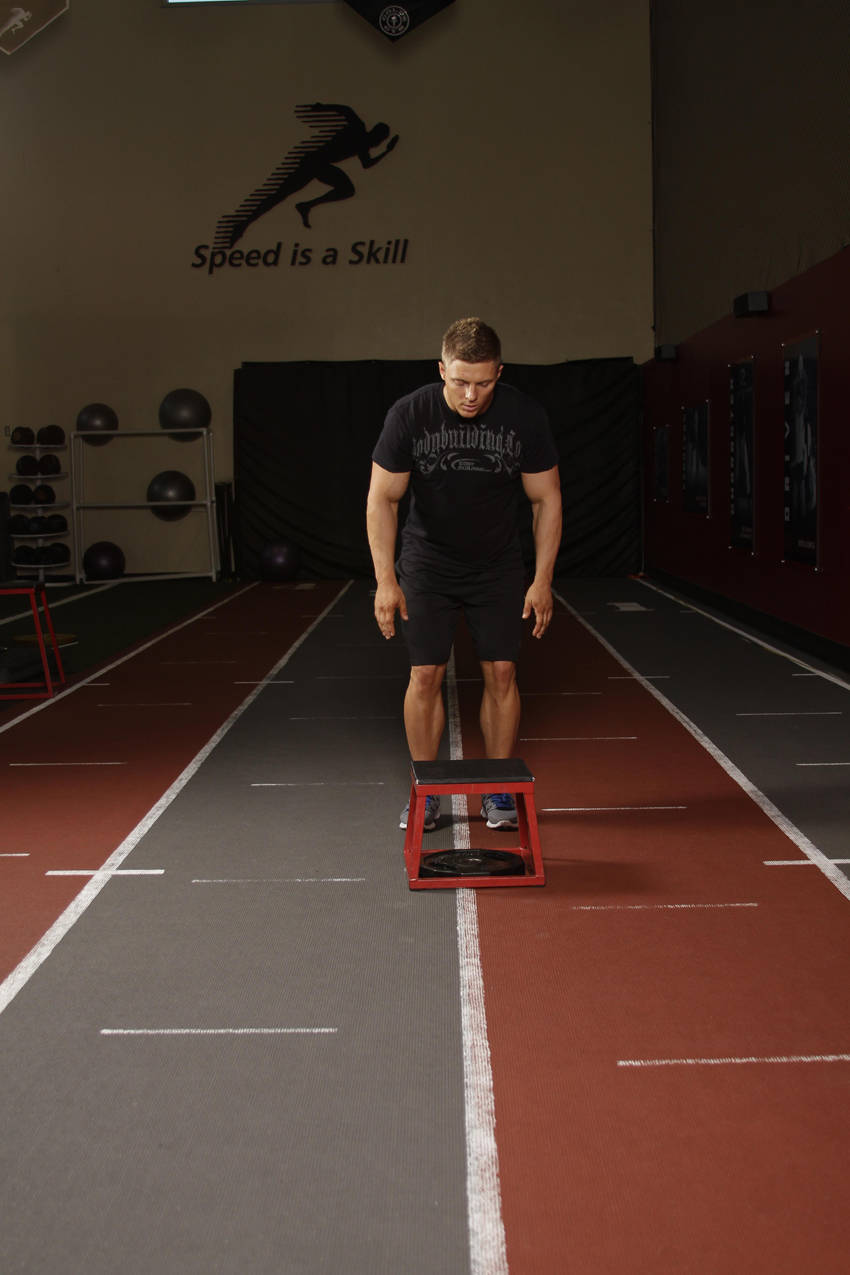
7. Quick Leap
79% match- Quads
- Other
- Intermediate
- Compound
A looser match: it works the quads rather than the quadriceps.
How to perform this exercise
- You will need a box for this exerise.
- Begin facing the box standing 1-2 feet from its edge.
- By utilizing your hips, hop onto the box, landing on both legs. Ensure that you land with your legs bent and your feet flat.
- Immediately upon landing, fully extend through the entire body and swing your arms overhead to explode off of the box. Use your legs to absorb the impact of landing.
Sets and reps: 3 or 4 sets of 6 to 10 reps.
Why this matches
- Primary muscle: quads, not quadriceps
- Equipment: bodyweight only, the same as the Standing Long Jump
- Body position: standing, the same as the Standing Long Jump
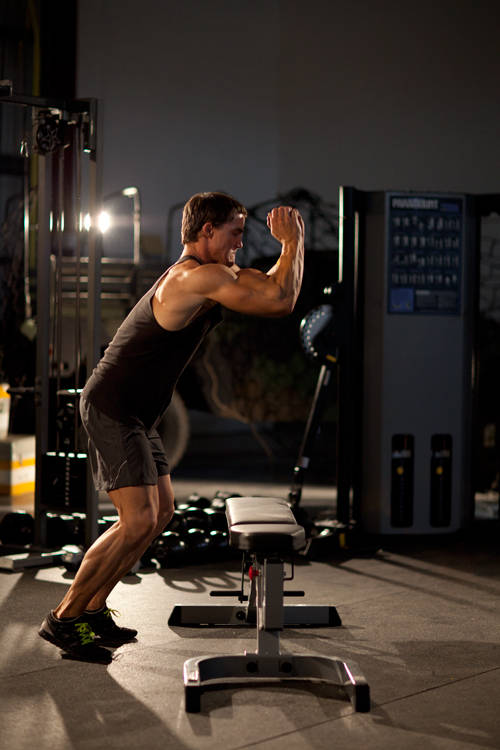
8. Bench Jump
79% match- Quads
- Bodyweight
- Intermediate
- Compound
How to perform this exercise
- Begin with a box or bench 1-2 feet in front of you. Stand with your feet shoulder width apart. This will be your starting position.
- Perform a short squat in preparation for the jump; swing your arms behind you.
- Rebound out of this position, extending through the hips, knees, and ankles to jump as high as possible. Swing your arms forward and up.
- Jump over the bench, landing with the knees bent, absorbing the impact through the legs.
- Turn around and face the opposite direction, then jump back over the bench.
Sets and reps: 3 or 4 sets of 6 to 10 reps.
Why this matches
- Primary muscle: quads, not quadriceps
- Equipment: bodyweight only, the same as the Standing Long Jump
- Body position: standing, the same as the Standing Long Jump
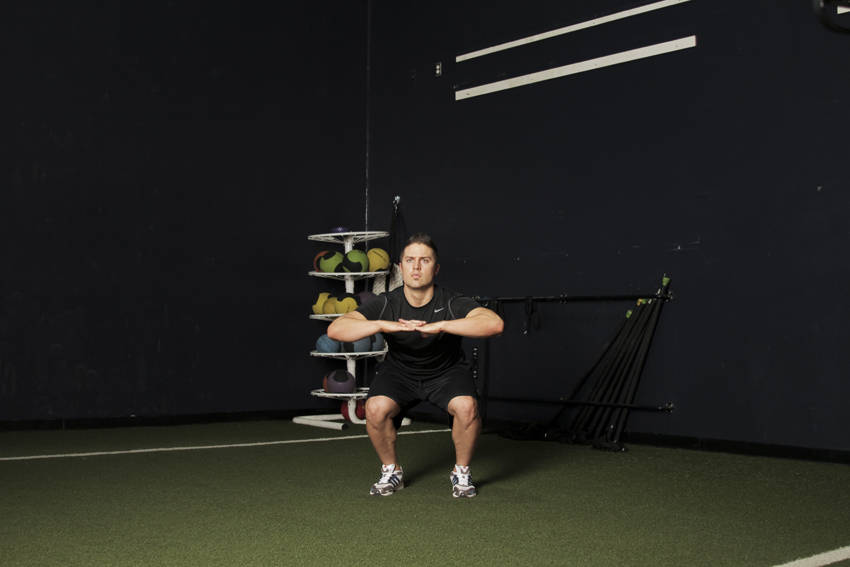
9. Jump Squat
79% match- Glutes
- Bodyweight
- Intermediate
- Compound
How to perform this exercise
- Stand with your feet shoulder-width apart.
- Lower your body into a squat position by bending your knees and pushing your hips back.
- Jump explosively off the ground, extending your hips, knees, and ankles.
- While in mid-air, quickly bring your arms forward for balance.
- Land softly on the balls of your feet and immediately go into the next repetition.
- Repeat for the desired number of repetitions.
Sets and reps: 3 or 4 sets of 6 to 10 reps.
Why this matches
- Primary muscle: glutes, not quadriceps
- Equipment: bodyweight only, the same as the Standing Long Jump
- Body position: standing, the same as the Standing Long Jump
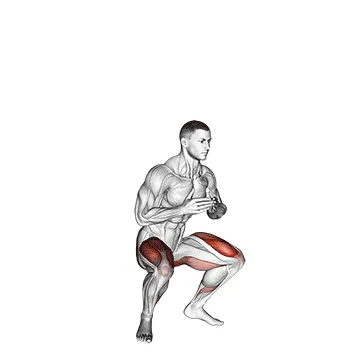
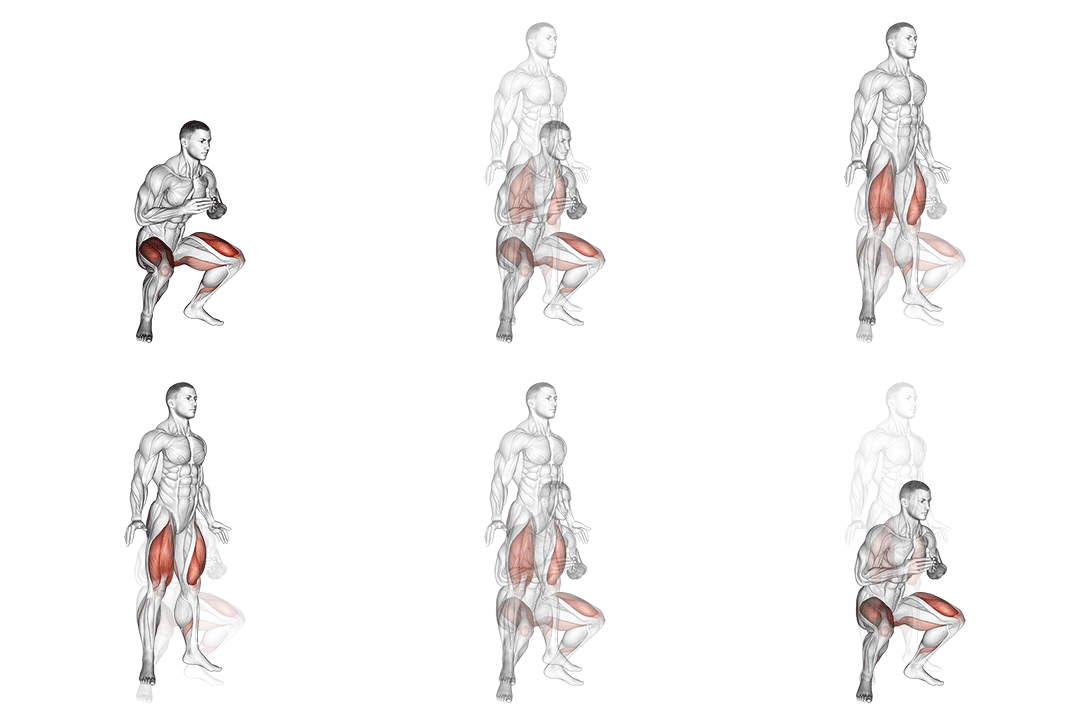
10. Knee Tuck Jump
79% match- Hamstrings
- Bodyweight
- Intermediate
- Compound
How to perform this exercise
- Begin in a comfortable standing position with your knees slightly bent. Hold your hands in front of you, palms down with your fingertips together at chest height. This will be your starting position.
- Rapidly dip down into a quarter squat and immediately explode upward. Drive the knees towards the chest, attempting to touch them to the palms of the hands.
- Jump as high as you can, raising your knees up, and then ensure a good land be re-extending your legs, absorbing impact through be allowing the knees to rebend.
Sets and reps: 3 or 4 sets of 6 to 10 reps.
Why this matches
- Primary muscle: hamstrings, not quadriceps
- Equipment: bodyweight only, the same as the Standing Long Jump
- Body position: standing, the same as the Standing Long Jump
Why You Might Need a Standing Long Jump Alternative
You may substitute the standing long jump for several practical reasons: acute knee pain, limited run-up space, lack of confidence with maximal horizontal jumps, or rehab restrictions. Choose alternatives that lower peak impact or isolate concentric power. For example, squat jumps reduce horizontal velocity but preserve rapid knee extension; cue a quick triple extension (ankle, knee, hip) while keeping hips back on landing to reduce shear on the knee. Forward bounds and split-squat jumps preserve single-leg demand and quad loading but allow you to control distance and ground reaction forces.
How to Choose the Right Standing Long Jump Substitute
Select a replacement by matching training goals, space, and tissue tolerance. If you want maximal horizontal power, use standing broad jumps or forward bounds and bias fast knee extension and arm swing. For knee or ankle sensitivity, pick squat jumps or tuck jumps with reduced depth and focus on concentric drive from the quadriceps. If you need unilateral strength and balance, choose split-squat jumps and cue driving the front knee over the toes while keeping the shin vertical to emphasize quad activation. Progress by increasing distance, speed, or reps rather than adding load.
Standing Long Jump FAQ
What muscles does Standing Long Jump work?
The standing long jump primarily targets the quadriceps through rapid knee extension and the glutes via hip extension. It also recruits hamstrings, calves, and the core to stabilize and transfer force during the triple-extension movement pattern.
What is the best bodyweight alternative to Standing Long Jump?
The standing broad jump is the closest bodyweight alternative because it preserves horizontal force production and rapid knee extension. Cue a deep countermovement, swing the arms, drive through the heels into full triple extension, and land softly to maintain quadriceps and glute activation.
Find Alternatives for Any Exercise
Search the exercise database and filter the ranked substitutes by the equipment you own.
Similarity scores compare exercise metadata such as movement pattern, muscles, equipment and body position. They are not a safety rating or a check that you own the equipment. Learn about our methodology