

10 Best Standing Rope Crunch Alternatives for Home & Gym
What can I do instead of Standing Rope Crunch? Use five close substitutes, cable kneeling crunch, hanging leg raise, Pallof press, stability ball crunch, or weighted decline sit-up, that still target the rectus abdominis. Brace your core, exhale while flexing the thoracic spine, and keep hips fixed to maximize abdominal activation.
Original Exercise: Standing Rope Crunch
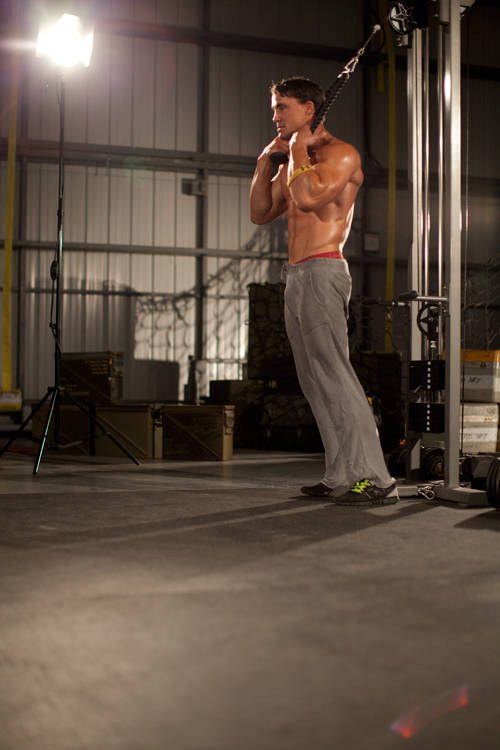
How to Perform Standing Rope Crunch
- Attach a rope to a high pulley and select an appropriate weight.
- Stand with your back to the cable tower. Take the rope with both hands over your shoulders, holding it to your upper chest. This will be your starting position.
- Perform the movement by flexing the spine, crunching the weight down as far as you can.
- Hold the peak contraction for a moment before returning to the starting position.
Pro Tips
- Category: Strength
- Force: Pull
- Movement type: Isolation
Ranked Standing Rope Crunch Alternatives
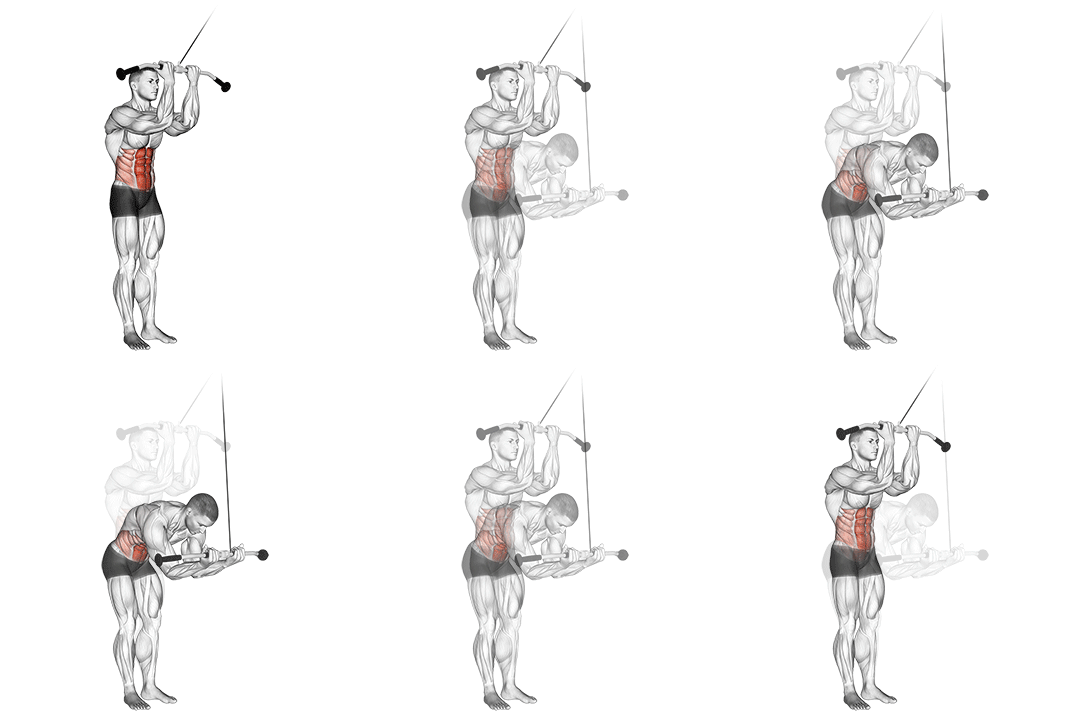
1. Cable Standing Crunch
85% MatchHow to perform this exercise
- Attach a cable handle to a high pulley and stand facing away from the machine.
- Hold the handle with both hands and place it behind your head, keeping your elbows bent.
- Stand with your feet shoulder-width apart and your knees slightly bent.
- Keeping your abs engaged, exhale and crunch your torso down towards your knees, bringing your elbows towards your thighs.
- Pause for a moment at the bottom of the movement, then slowly return to the starting position.
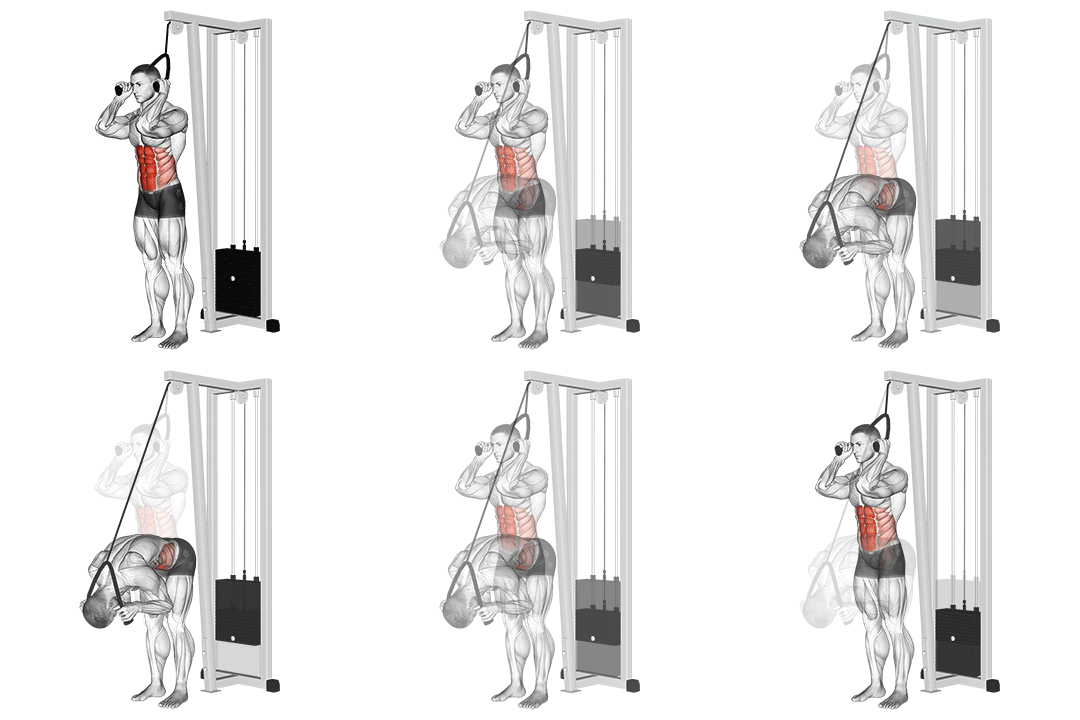
2. Cable Standing Crunch (with Rope Attachment)
85% MatchHow to perform this exercise
- Attach a rope to a cable machine at chest height.
- Stand facing away from the machine with your feet shoulder-width apart.
- Hold the rope with both hands and bring it behind your head, keeping your elbows bent.
- Engage your abs and slowly crunch your torso forward, bringing your elbows towards your knees.
- Pause for a moment at the top of the crunch, then slowly return to the starting position.
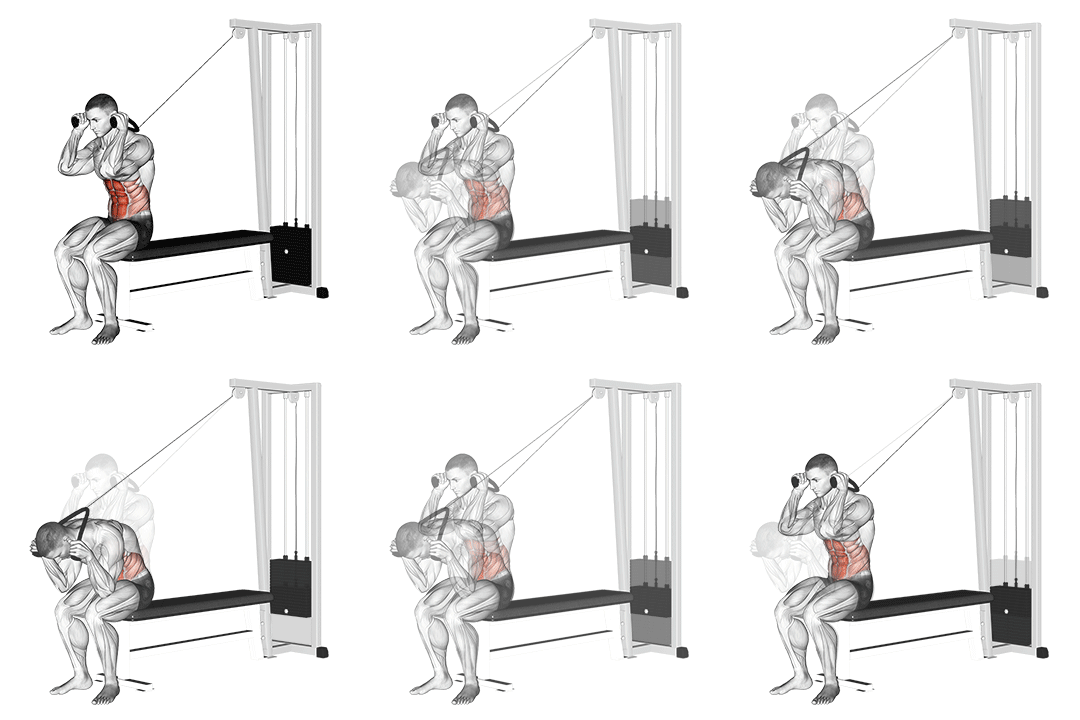
3. Cable Seated Crunch
75.7% MatchHow to perform this exercise
- Sit on a cable machine with your feet flat on the ground and your knees bent.
- Hold the cable handle with both hands and position it behind your head.
- Engage your abs and slowly curl your upper body forward, bringing your chest towards your knees.
- Pause for a moment at the top, then slowly return to the starting position.
- Repeat for the desired number of repetitions.
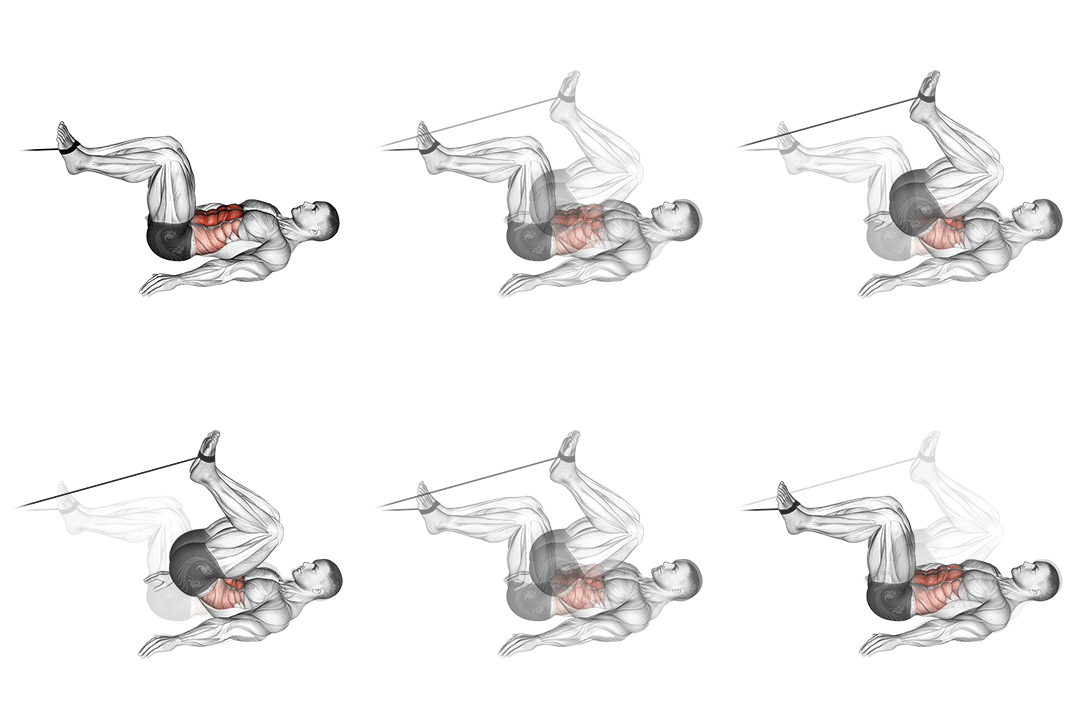
4. Cable Reverse Crunch
72% MatchHow to perform this exercise
- Attach a cable to a low pulley and lie down facing up on a mat.
- Hold the cable with both hands and extend your arms straight up towards the ceiling.
- Bend your knees and lift your legs up, bringing your thighs towards your chest.
- While keeping your upper body stable, curl your pelvis up towards your chest, lifting your hips off the mat.
- Pause for a moment at the top, then slowly lower your hips back down to the starting position.
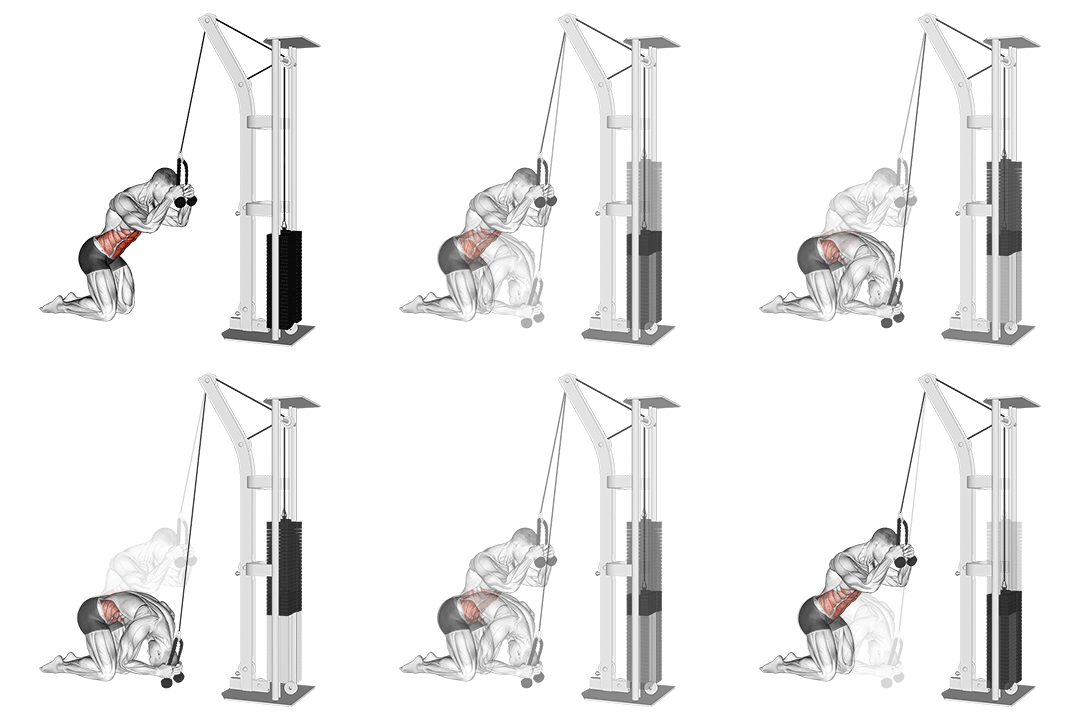
5. Cable Kneeling Crunch
71.4% MatchHow to perform this exercise
- Attach a rope handle to a high pulley and kneel down facing away from the machine.
- Hold the rope handle with both hands and place it behind your head, keeping your elbows out to the sides.
- Keeping your hips stationary, flex your waist and crunch your torso down towards your thighs.
- Pause for a moment at the bottom, then slowly return to the starting position.
- Repeat for the desired number of repetitions.
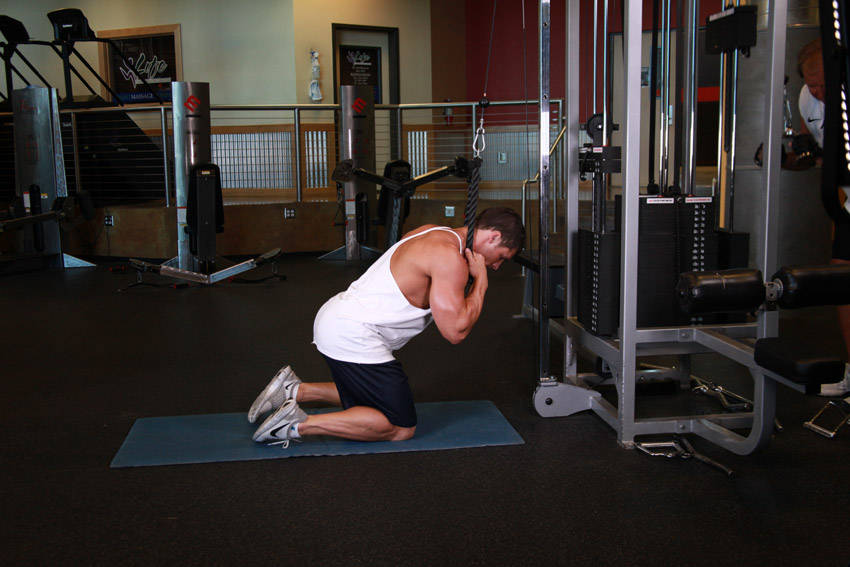
6. Cable Crunch
70.7% MatchHow to perform this exercise
- Kneel below a high pulley that contains a rope attachment.
- Grasp cable rope attachment and lower the rope until your hands are placed next to your face.
- Flex your hips slightly and allow the weight to hyperextend the lower back. This will be your starting position.
- With the hips stationary, flex the waist as you contract the abs so that the elbows travel towards the middle of the thighs. Exhale as you perform this portion of the movement and hold the contraction for a second.
- Slowly return to the starting position as you inhale. Tip: Make sure that you keep constant tension on the abs throughout the movement. Also, do not choose a weight so heavy that the lower back handles the brunt of the work.
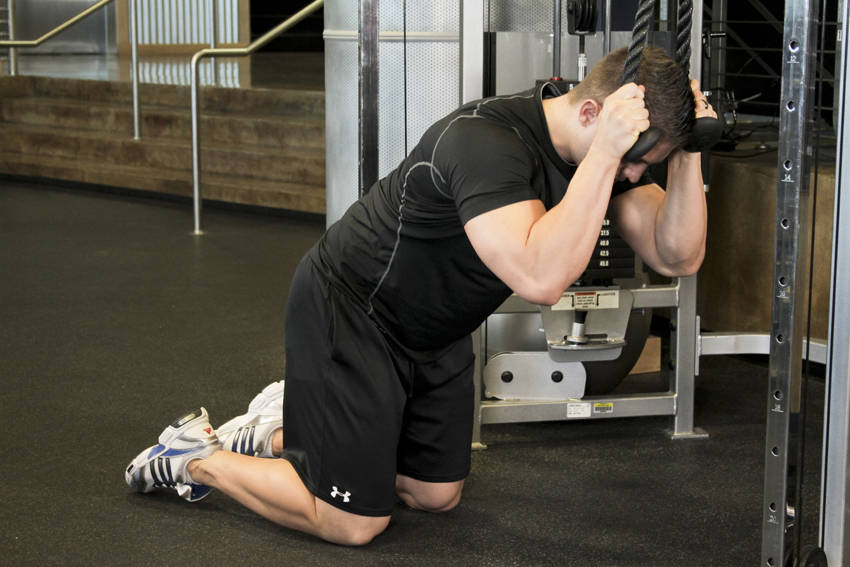
7. Rope Crunch
70.7% MatchHow to perform this exercise
- Kneel 1-2 feet in front of a cable system with a rope attached.
- After selecting an appropriate weight, grasp the rope with both hands reaching overhead. Your torso should be upright in the starting position.
- To begin, flex at the spine, attempting to bring your rib cage to your legs as you pull the cable down.
- Pause at the bottom of the motion, and then slowly return to the starting position.
- These can be done with twists or to the side to hit the obliques.
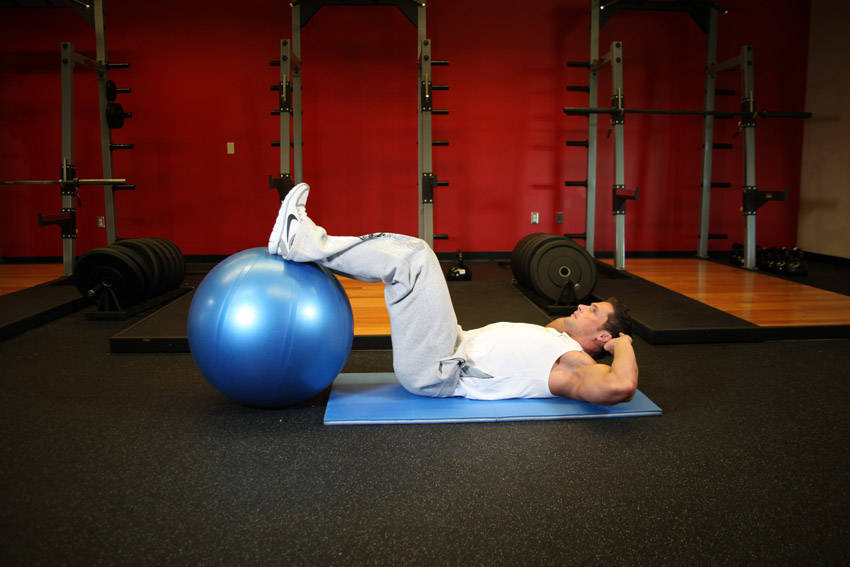
8. Crunch - Legs On Exercise Ball
68.4% MatchHow to perform this exercise
- Lie flat on your back with your feet resting on an exercise ball and your knees bent at a 90 degree angle.
- Place your feet three to four inches apart and point your toes inward so they touch.
- Place your hands lightly on either side of your head keeping your elbows in. Tip: Don't lock your fingers behind your head.
- Push the small of your back down in the floor in order to better isolate your abdominal muscles. This will be your starting position.
- Begin to roll your shoulders off the floor and continue to push down as hard as you can with your lower back. Your shoulders should come up off the floor only about four inches, and your lower back should remain on the floor. Breathe out as you execute this portion of the movement. Squeeze your abdominals hard at the top of the contraction and hold for a second. Tip: Focus on a slow, controlled movement. Refrain from using momentum at any time.
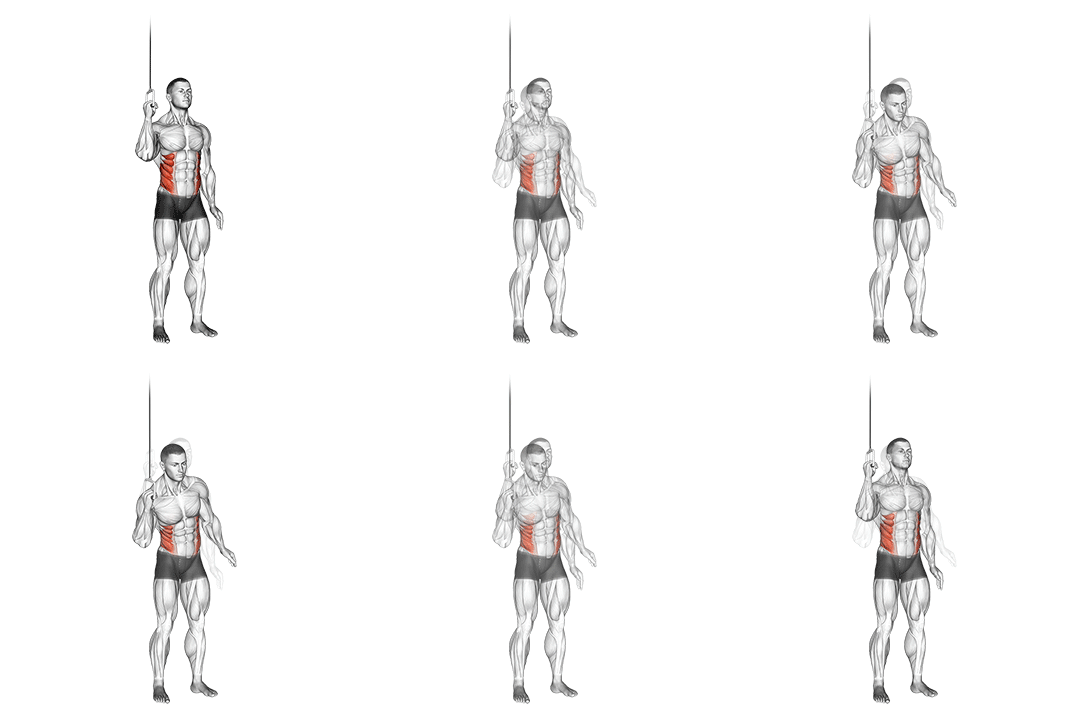
9. Cable Side Crunch
68.2% MatchHow to perform this exercise
- Attach a cable handle to a low pulley and stand sideways to the machine.
- Grasp the handle with the hand furthest from the machine and place your other hand on your hip.
- Keep your feet shoulder-width apart and your knees slightly bent.
- With your abs engaged, bend sideways at the waist, bringing your elbow down towards your hip.
- Pause for a moment at the bottom, then slowly return to the starting position.
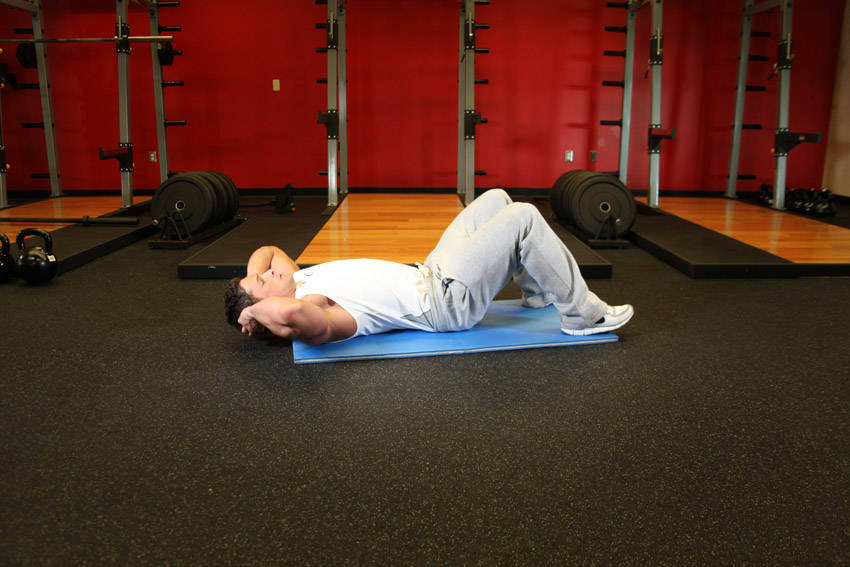
10. Crunches
66.3% MatchHow to perform this exercise
- Lie flat on your back with your feet flat on the ground, or resting on a bench with your knees bent at a 90 degree angle. If you are resting your feet on a bench, place them three to four inches apart and point your toes inward so they touch.
- Now place your hands lightly on either side of your head keeping your elbows in. Tip: Don't lock your fingers behind your head.
- While pushing the small of your back down in the floor to better isolate your abdominal muscles, begin to roll your shoulders off the floor.
- Continue to push down as hard as you can with your lower back as you contract your abdominals and exhale. Your shoulders should come up off the floor only about four inches, and your lower back should remain on the floor. At the top of the movement, contract your abdominals hard and keep the contraction for a second. Tip: Focus on slow, controlled movement - don't cheat yourself by using momentum.
- After the one second contraction, begin to come down slowly again to the starting position as you inhale.
Why You Might Need a Standing Rope Crunch Alternative
You might swap the Standing Rope Crunch because of limited cable access, shoulder or neck irritation from overhead force, or a desire to reduce lumbar shear. Substitutes change load distribution: hanging leg raises increase hip-flexor involvement, Pallof presses emphasize anti-rotation and transverse abdominis tension, and stability ball crunches reduce spinal compression. Cue each substitute precisely, for example, on a hanging leg raise initiate with a posterior pelvic tilt and controlled lumbar curl, to target the rectus abdominis without aggravating joints.
How to Choose the Right Substitute
Select a substitute by matching equipment, desired movement pattern, and spine tolerance. If you want pure sagittal flexion and you lack cables, choose decline sit-ups or hanging leg raises; hinge at the hips and flex from the thoracic spine while keeping the pelvis posteriorly tilted. If you need lower spinal stress, pick anti-rotation moves like the Pallof press, maintain a neutral spine and brace the core to recruit the transverse abdominis. Prioritize tempo and range: slow eccentrics and short range-of-motion enhance rectus abdominis isolation while minimizing hip-flexor dominance.
Frequently Asked Questions
What muscles does Standing Rope Crunch work?
Standing Rope Crunch primarily targets the rectus abdominis through spinal flexion, with secondary work from the external obliques and hip flexors. Cue a thoracic curl by driving the elbows toward the hips and exhaling on the concentric to maximize rectus activation while limiting hip-strike momentum.
What is the best bodyweight alternative to Standing Rope Crunch?
Hanging leg raises are the best bodyweight alternative because they load the abs under gravity and force strict core bracing. Initiate with a posterior pelvic tilt, lift with controlled lumbar flexion, and avoid swinging to emphasize rectus abdominis recruitment over hip-flexor dominance.
Can I build muscle without doing Standing Rope Crunch?
Yes, you can grow abdominal muscle using many alternatives that allow progressive overload, like weighted decline sit-ups or slow eccentric cable crunches. Increase load, slow the eccentric phase, and maintain braced core cues (ribs down, exhale on flexion) to raise time under tension and stimulate hypertrophy.
More Exercise Alternatives
Find Alternatives for Any Exercise
Use the exercise substitution finder to compare ranked alternatives for your available equipment and training preference.
Try the Exercise Substitution Finder →