

10 Best Stomach Vacuum Alternatives for Core Strength
If you can’t perform the Stomach Vacuum, use other bodyweight moves that target the transverse abdominis and waist. Good substitutes include hollow body holds, dead bugs, bird dogs, supine heel slides, and forearm planks with a draw-in. Cue: exhale fully and pull your navel toward the spine to engage the deep core.
Original Exercise: Stomach Vacuum
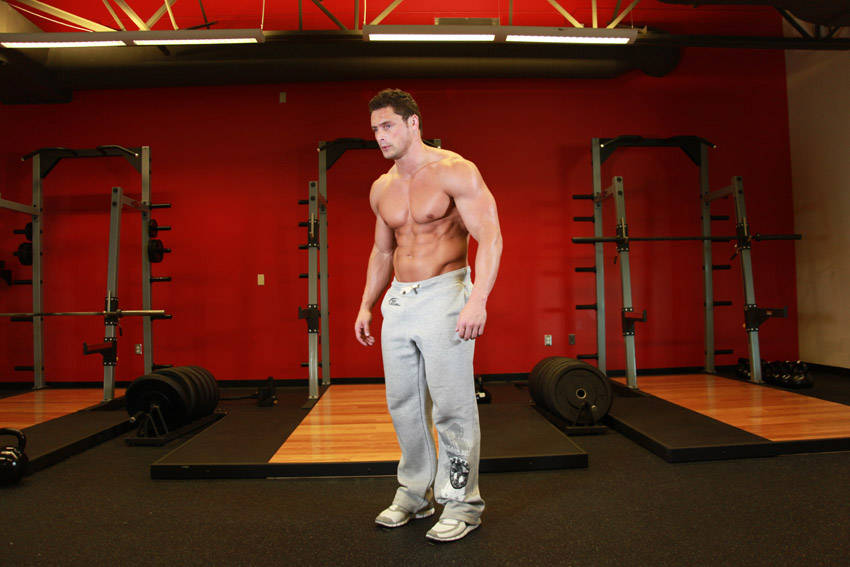
How to Perform Stomach Vacuum
- To begin, stand straight with your feet shoulder width apart from each other. Place your hands on your hips. This is the starting position.
- Now slowly inhale as much air as possible and then start to exhale as much as possible while bringing your stomach in as much as possible and hold this position. Try to visualize your navel touching your backbone.
- One isometric contraction is around 20 seconds. During the 20 second hold, try to breathe normally. Then inhale and bring your stomach back to the starting position.
- Once you have practiced this exercise, try to perform this exercise for longer than 20 seconds. Tip: You can work your way up to 40-60 seconds.
- Repeat for the recommended amount of sets.
Pro Tips
- Category: Stretching
- Force: Static
- Movement type: Isolation
Best Stomach Vacuum Alternatives
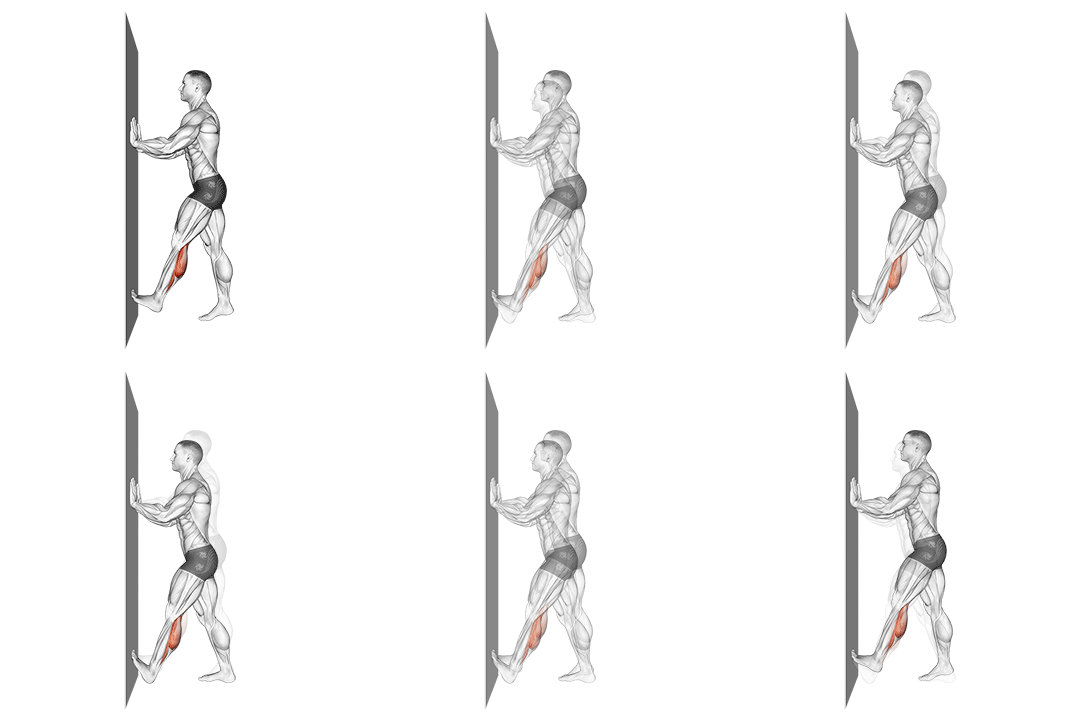
1. Calf Push Stretch With Hands Against Wall
84.4% MatchHow to perform this exercise
- Stand facing a wall with your feet hip-width apart.
- Place your hands against the wall at shoulder height.
- Step back with one foot, keeping your heel on the ground and your leg straight.
- Bend your front knee slightly and lean forward, feeling a stretch in your calf.
- Hold the stretch for 20-30 seconds.
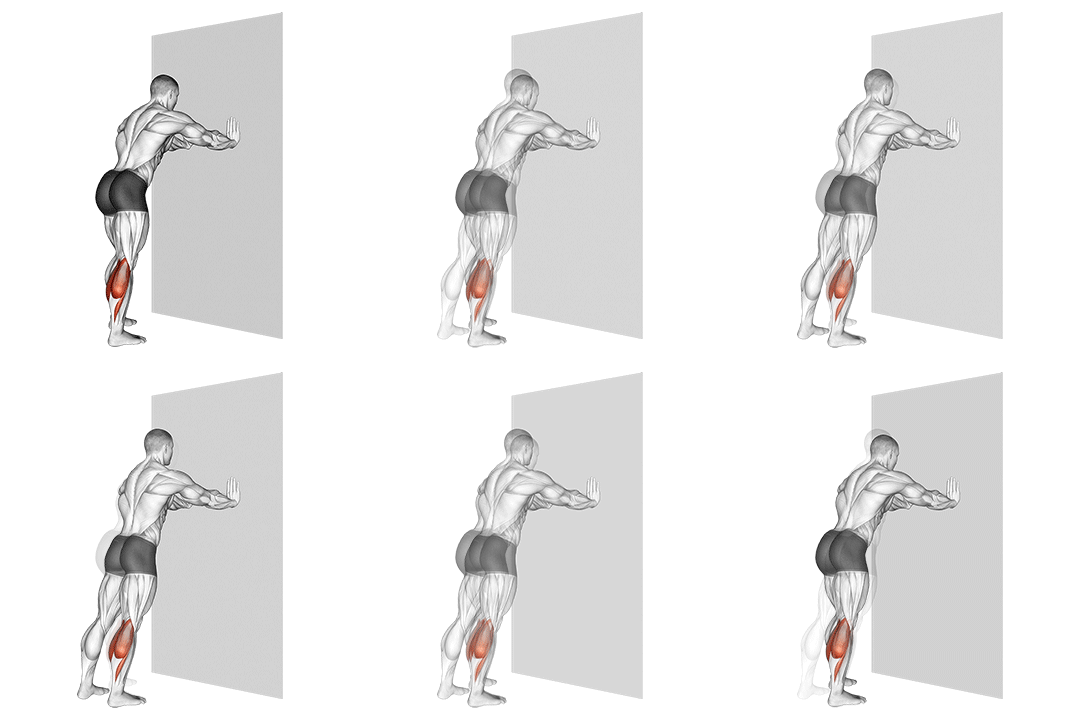
2. Calf Stretch With Hands Against Wall
79.7% MatchHow to perform this exercise
- Stand facing a wall with your feet hip-width apart.
- Place your hands against the wall at shoulder height.
- Step your right foot back, keeping your heel on the ground and your leg straight.
- Bend your left knee and lean forward, keeping your back leg straight and your heel on the ground.
- Hold the stretch for 20-30 seconds.
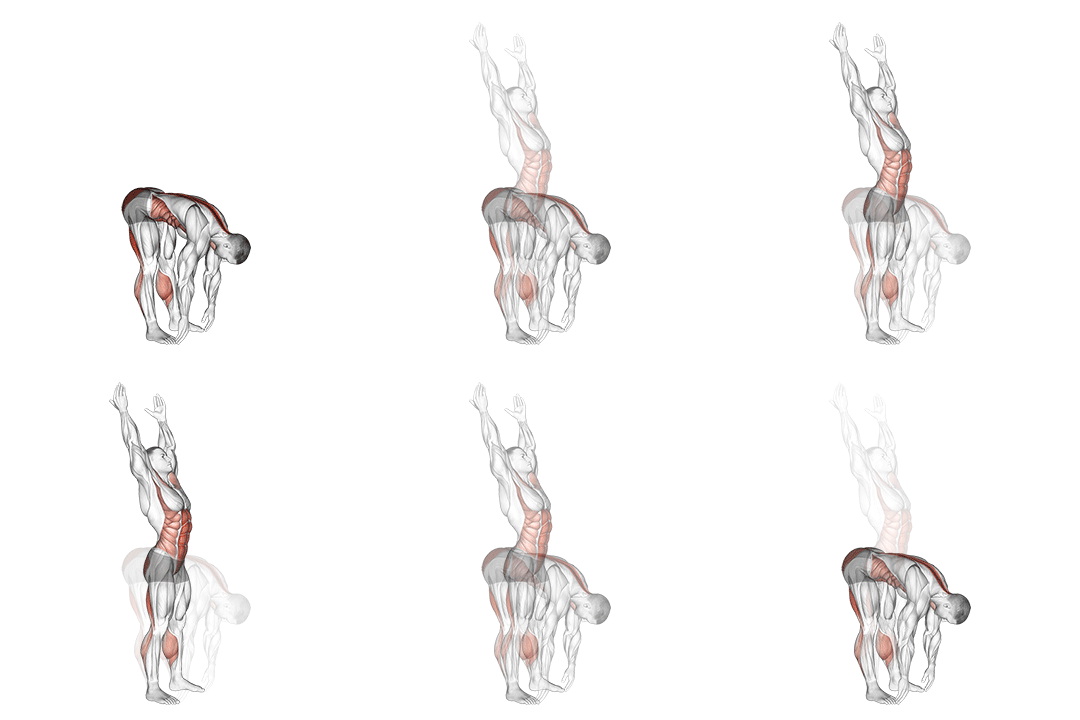
3. Basic Toe Touch (male)
79.7% MatchHow to perform this exercise
- Stand with your feet shoulder-width apart and your arms by your sides.
- Bend forward at the waist, keeping your back straight and your knees slightly bent.
- Reach down towards your toes with your hands, keeping your legs as straight as possible.
- Pause for a moment at the bottom, then slowly return to the starting position.
- Repeat for the desired number of repetitions.
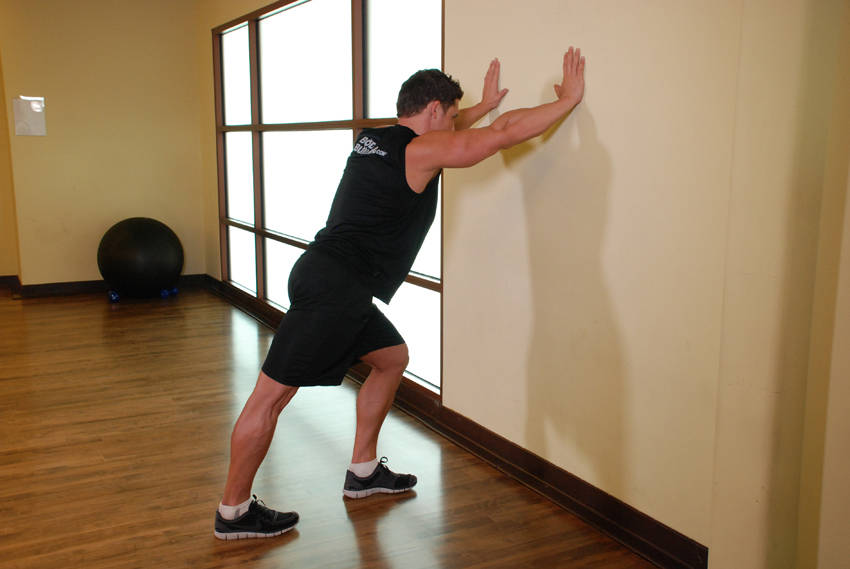
4. Calf Stretch Hands Against Wall
78.7% MatchHow to perform this exercise
- Stand facing a wall from several feet away. Stagger your stance, placing one foot forward.
- Lean forward and rest your hands on the wall, keeping your heel, hip and head in a straight line.
- Attempt to keep your heel on the ground. Hold for 10-20 seconds and then switch sides.
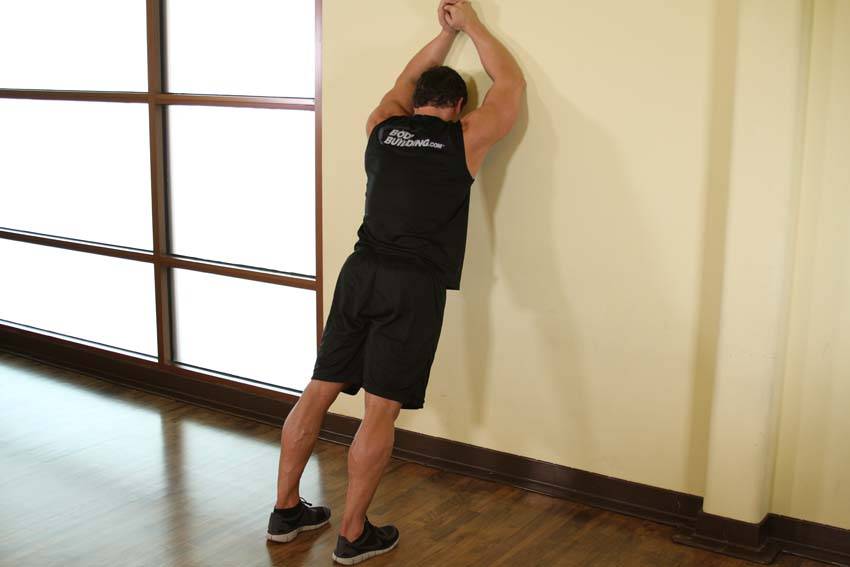
5. Calf Stretch Elbows Against Wall
78.7% MatchHow to perform this exercise
- Stand facing a wall from a couple feet away.
- Lean against the wall, placing your weight on your forearms.
- Attempt to keep your heels on the ground. Hold for 10-20 seconds. You may move further or closer the wall, making it more or less difficult, respectively.
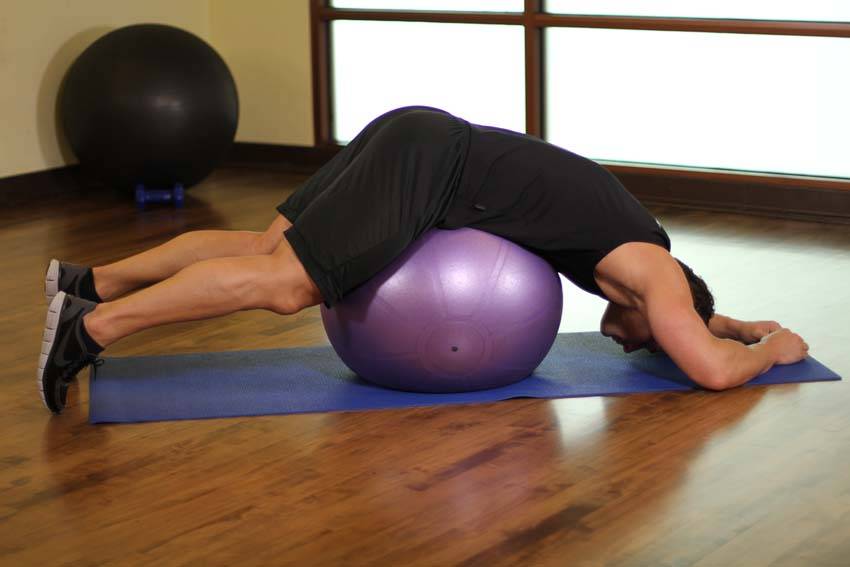
6. Downward Facing Balance
77.3% MatchHow to perform this exercise
- Lie facedown on top of an exercise ball.
- While resting on your stomach on the ball, walk your hands forward along the floor and lift your legs, extending your elbows and knees.
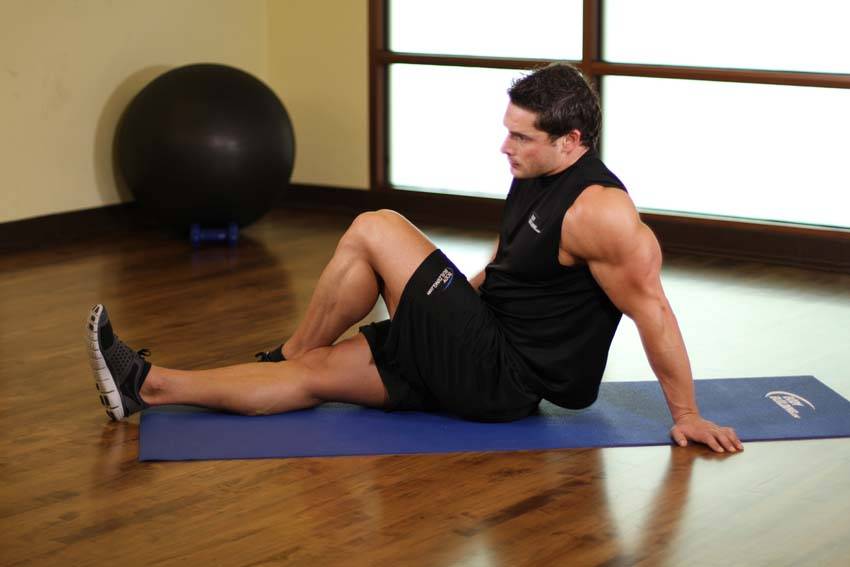
7. Dancer's Stretch
72.4% MatchHow to perform this exercise
- Sit up on the floor.
- Cross your right leg over your left, keeping the knee bent. Your left leg is straight and down on the floor.
- Place your left arm on your right leg and your right hand on the floor.
- Rotate your upper body to the right, and hold for 10-20 seconds. Switch sides.
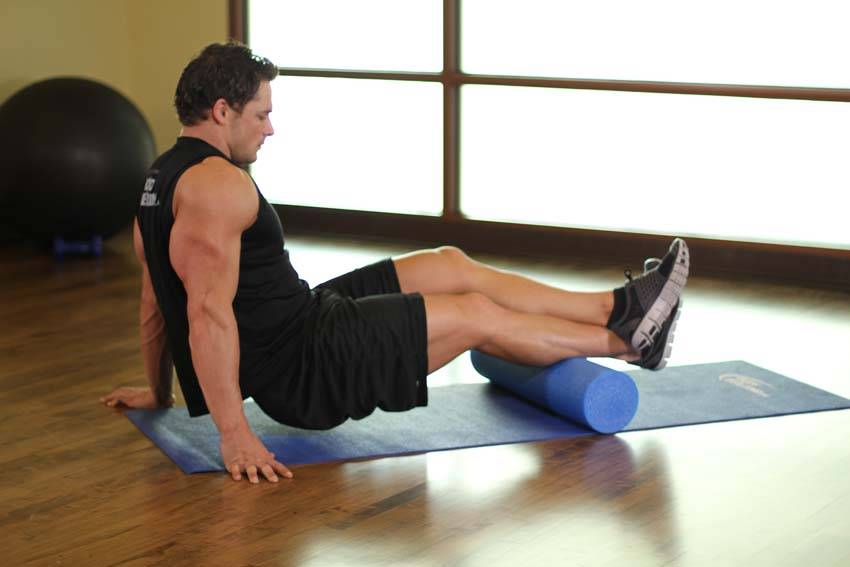
8. Calves-SMR
72.4% MatchHow to perform this exercise
- Begin seated on the floor. Place a foam roller underneath your lower leg. Your other leg can either be crossed over the opposite or be placed on the floor, supporting some of your weight. This will be your starting position.
- Place your hands to your side or just behind you, and press down to raise your hips off of the floor, placing much of your weight against your calf muscle. Roll from below the knee to above the ankle, pausing at points of tension for 10-30 seconds. Repeat for the other leg.
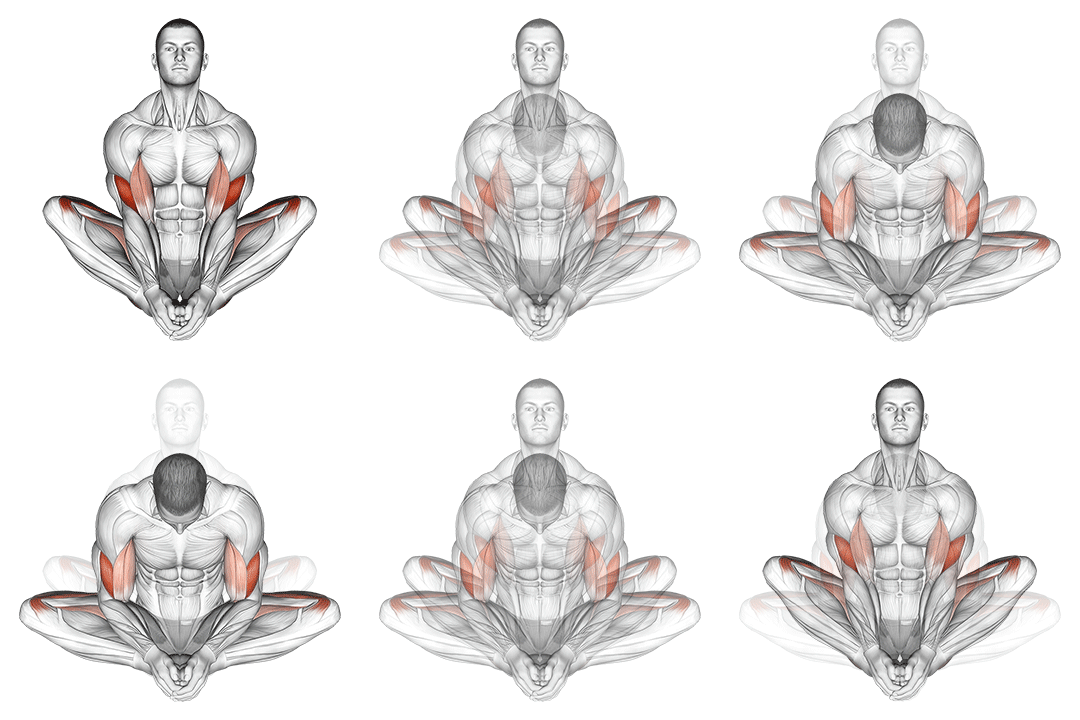
9. Butterfly Yoga Pose
72% MatchHow to perform this exercise
- Sit on the floor with your legs extended in front of you.
- Bend your knees and bring the soles of your feet together, allowing your knees to fall out to the sides.
- Hold onto your ankles or feet with your hands.
- Sit up tall and lengthen your spine.
- Gently press your knees down towards the floor, feeling a stretch in your inner thighs.
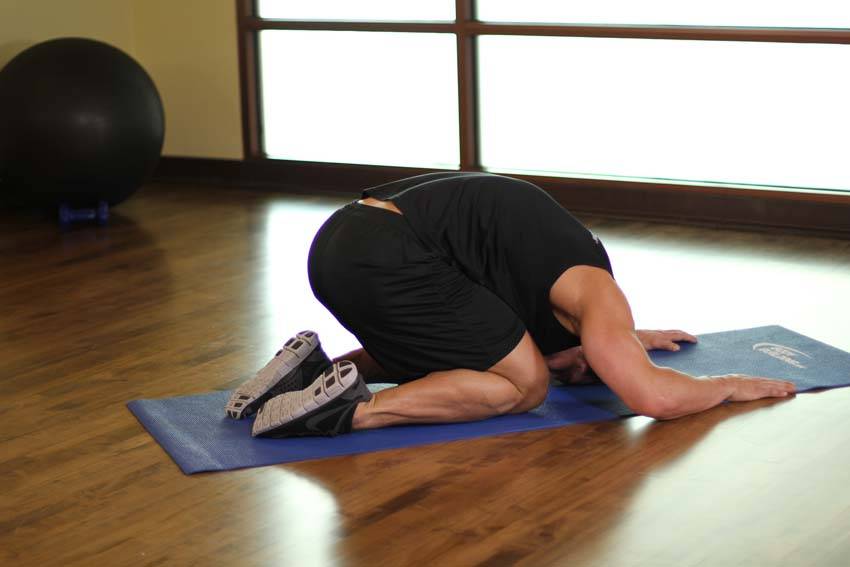
10. Child's Pose
71.7% MatchHow to perform this exercise
- Get on your hands and knees, walk your hands in front of you.
- Lower your buttocks down to sit on your heels. Let your arms drag along the floor as you sit back to stretch your entire spine.
- Once you settle onto your heels, bring your hands next to your feet and relax. "breathe" into your back. Rest your forehead on the floor. Avoid this position if you have knee problems.
Why You Might Need a Stomach Vacuum Alternative
You might substitute the Stomach Vacuum for pain, breathing constraints, poor technique, or diastasis recti concerns. Some lifters struggle to isolate the transverse abdominis standing or experience neck and rib discomfort while holding a vacuum. Alternatives let you train the same deep core system with safer positions or clearer feedback. For example, perform the dead bug while pressing your low back to the floor and drawing the navel up; that flattens the lumbar spine and increases TVA activation without breath-holding.
How to Choose the Right Substitute
Pick a substitute based on your goal—motor control, endurance, or anti-extension strength. For motor control and TVA isolation choose supine heel slides or dead bugs and cue a gentle draw-in with a neutral pelvis. For endurance and postural support pick hollow holds or forearm planks and keep ribs down while breathing. Progress by increasing hold time or range of motion while ensuring the low back stays neutral and the navel remains pulled toward the spine to maintain transverse activation.
Frequently Asked Questions
What muscles does Stomach Vacuum work?
The Stomach Vacuum primarily trains the transverse abdominis, the deep corset that stabilizes the lumbar spine and reduces waist circumference when activated. Cue the move by exhaling and drawing the navel inward to feel the TVA tighten under the ribcage.
What is the best bodyweight alternative to Stomach Vacuum?
The dead bug is an excellent bodyweight alternative because it trains TVA while keeping the spine neutral. Technique cue: lie on your back, press the low back to the floor, draw the navel to the spine, then lower opposite arm and leg slowly without arching the lumbar spine.
Can I build muscle without doing Stomach Vacuum?
Yes. You can develop core strength and hypertrophy with progressive bodyweight holds and loaded anti-extension and anti-rotation moves. Use planks, hollow holds, and controlled leg-lowering progressions while maintaining TVA engagement through a consistent navel-to-spine cue.
More Exercise Alternatives
Find Alternatives for Any Exercise
Use our free tool to discover the best substitute exercises based on your available equipment and goals.
Try the Exercise Substitution Finder →