

10 Best Straight-arm Dumbbell Pullover Alternatives for Chest
If you need a substitute for the straight-arm dumbbell pullover, use a straight-arm cable pullover, barbell pullover, incline dumbbell pullover, stability-ball pullover, or incline dumbbell press. For chest emphasis, pick the cable pullover and keep a slight elbow bend while pulling the weight down to emphasize pectoral stretch and serratus engagement.
Original Exercise: Straight-arm Dumbbell Pullover
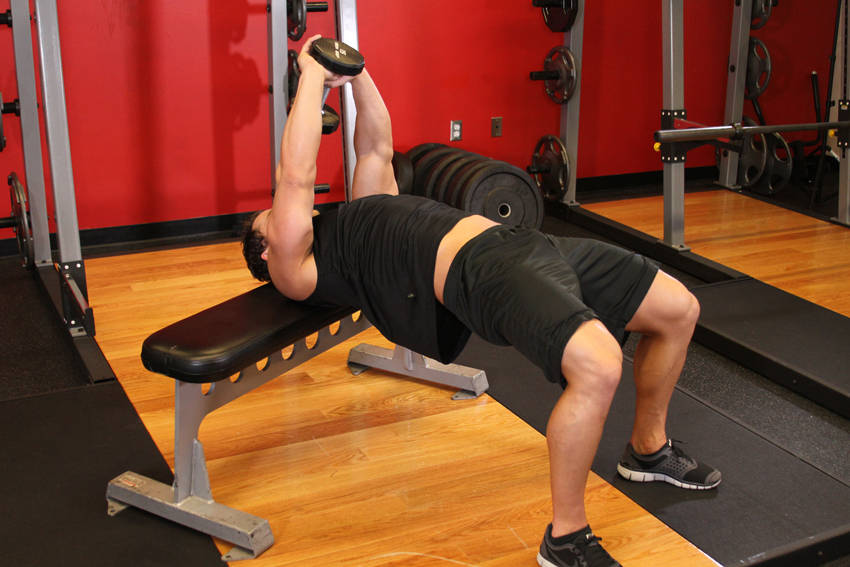
How to Perform Straight-arm Dumbbell Pullover
- Place a dumbbell standing up on a flat bench.
- Ensuring that the dumbbell stays securely placed at the top of the bench, lie perpendicular to the bench (torso across it as in forming a cross) with only your shoulders lying on the surface. Hips should be below the bench and legs bent with feet firmly on the floor. The head will be off the bench as well.
- Grasp the dumbbell with both hands and hold it straight over your chest at arms length. Both palms should be pressing against the underside one of the sides of the dumbbell. This will be your starting position. Caution: Always ensure that the dumbbell used for this exercise is secure. Using a dumbbell with loose plates can result in the dumbbell falling apart and falling on your face.
- While keeping your arms straight, lower the weight slowly in an arc behind your head while breathing in until you feel a stretch on the chest.
- At that point, bring the dumbbell back to the starting position using the arc through which the weight was lowered and exhale as you perform this movement.
- Hold the weight on the initial position for a second and repeat the motion for the prescribed number of repetitions.
Pro Tips
- Category: Strength
- Force: Pull
- Movement type: Compound
Best Straight-arm Dumbbell Pullover Alternatives
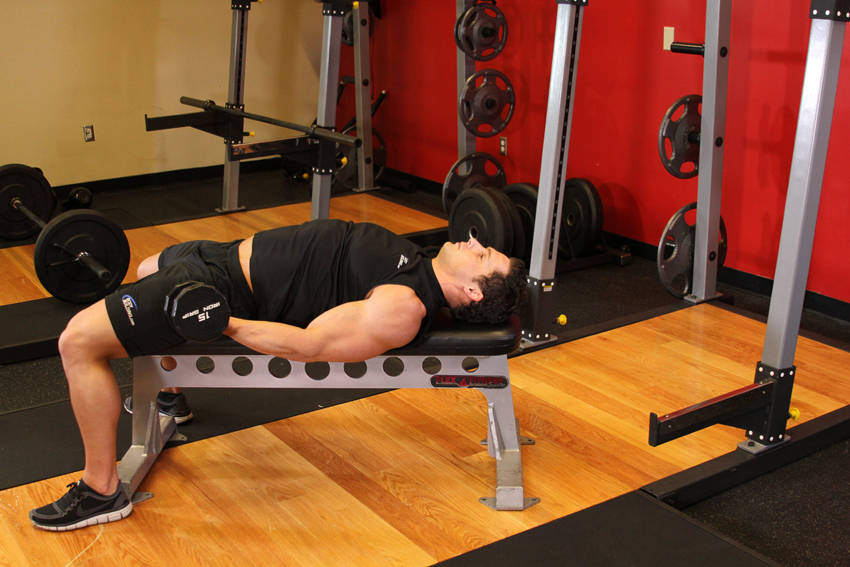
1. Around The Worlds
94.2% MatchHow to perform this exercise
- Lay down on a flat bench holding a dumbbell in each hand with the palms of the hands facing towards the ceiling. Tip: Your arms should be parallel to the floor and next to your thighs. To avoid injury, make sure that you keep your elbows slightly bent. This will be your starting position.
- Now move the dumbbells by creating a semi-circle as you displace them from the initial position to over the head. All of the movement should happen with the arms parallel to the floor at all times. Breathe in as you perform this portion of the movement.
- Reverse the movement to return the weight to the starting position as you exhale.
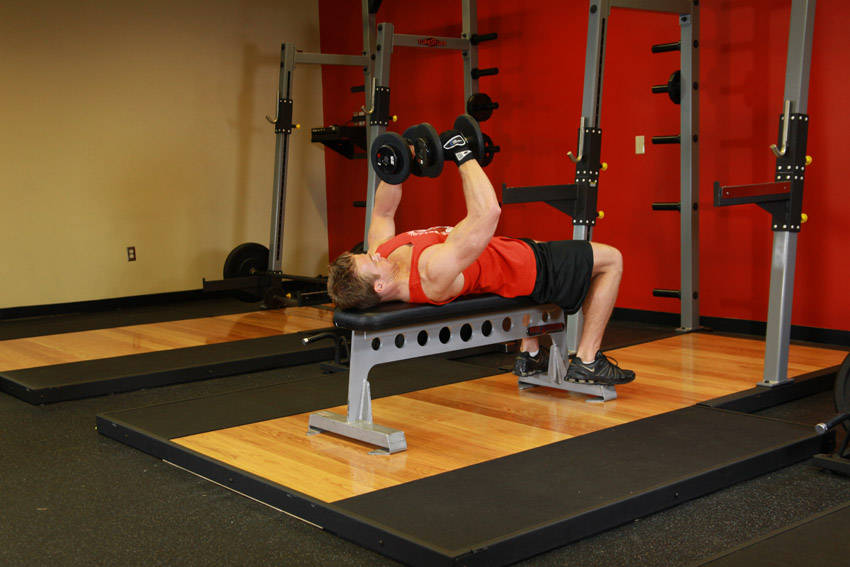
2. Dumbbell Flyes
93.4% MatchHow to perform this exercise
- Lie down on a flat bench with a dumbbell on each hand resting on top of your thighs. The palms of your hand will be facing each other.
- Then using your thighs to help raise the dumbbells, lift the dumbbells one at a time so you can hold them in front of you at shoulder width with the palms of your hands facing each other. Raise the dumbbells up like you're pressing them, but stop and hold just before you lock out. This will be your starting position.
- With a slight bend on your elbows in order to prevent stress at the biceps tendon, lower your arms out at both sides in a wide arc until you feel a stretch on your chest. Breathe in as you perform this portion of the movement. Tip: Keep in mind that throughout the movement, the arms should remain stationary; the movement should only occur at the shoulder joint.
- Return your arms back to the starting position as you squeeze your chest muscles and breathe out. Tip: Make sure to use the same arc of motion used to lower the weights.
- Hold for a second at the contracted position and repeat the movement for the prescribed amount of repetitions.
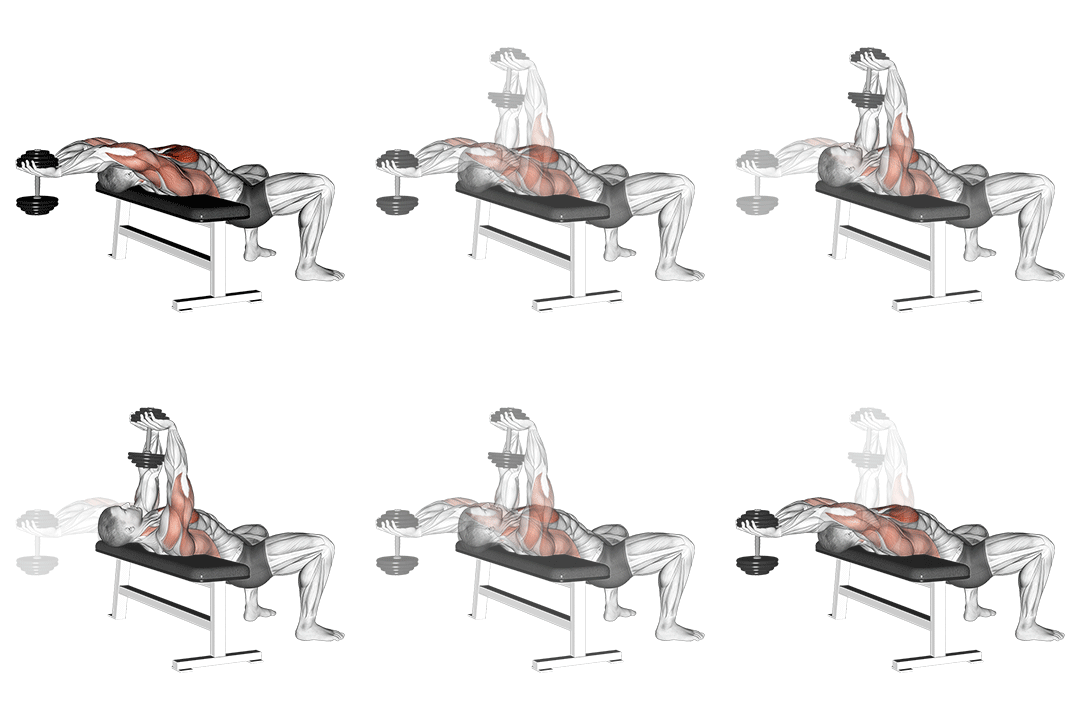
3. Dumbbell Straight Arm Pullover
79.4% MatchHow to perform this exercise
- Lie flat on a bench with your head at one end and your feet planted firmly on the ground.
- Hold a dumbbell with both hands and extend your arms straight above your chest.
- Keeping your arms straight, slowly lower the dumbbell behind your head in an arc-like motion.
- Pause for a moment, then raise the dumbbell back to the starting position.
- Repeat for the desired number of repetitions.
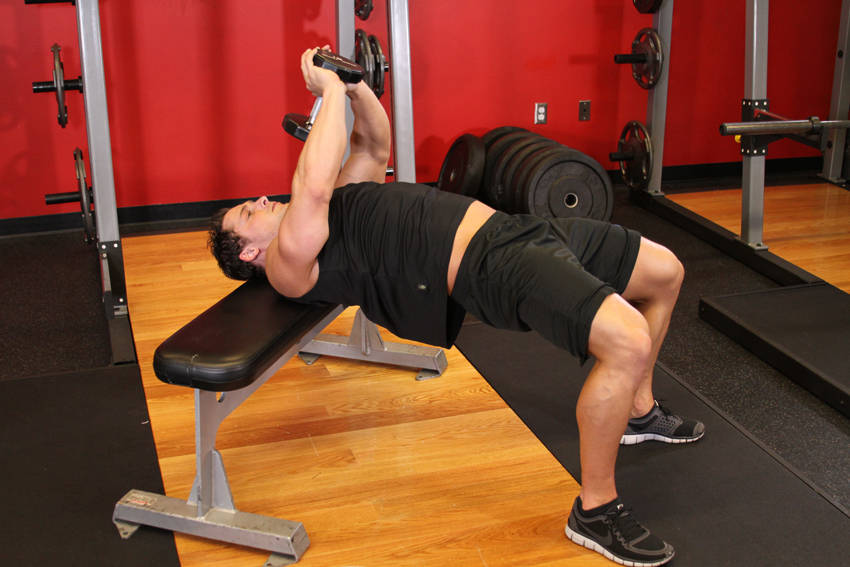
4. Bent-Arm Dumbbell Pullover
79.2% MatchHow to perform this exercise
- Place a dumbbell standing up on a flat bench.
- Ensuring that the dumbbell stays securely placed at the top of the bench, lie perpendicular to the bench (torso across it as in forming a cross) with only your shoulders lying on the surface. Hips should be below the bench and legs bent with feet firmly on the floor. The head will be off the bench as well.
- Grasp the dumbbell with both hands and hold it straight over your chest with a bend in your arms. Both palms should be pressing against the underside one of the sides of the dumbbell. This will be your starting position. Caution: Always ensure that the dumbbell used for this exercise is secure. Using a dumbbell with loose plates can result in the dumbbell falling apart and falling on your face.
- While keeping your arms locked in the bent arm position, lower the weight slowly in an arc behind your head while breathing in until you feel a stretch on the chest.
- At that point, bring the dumbbell back to the starting position using the arc through which the weight was lowered and exhale as you perform this movement.
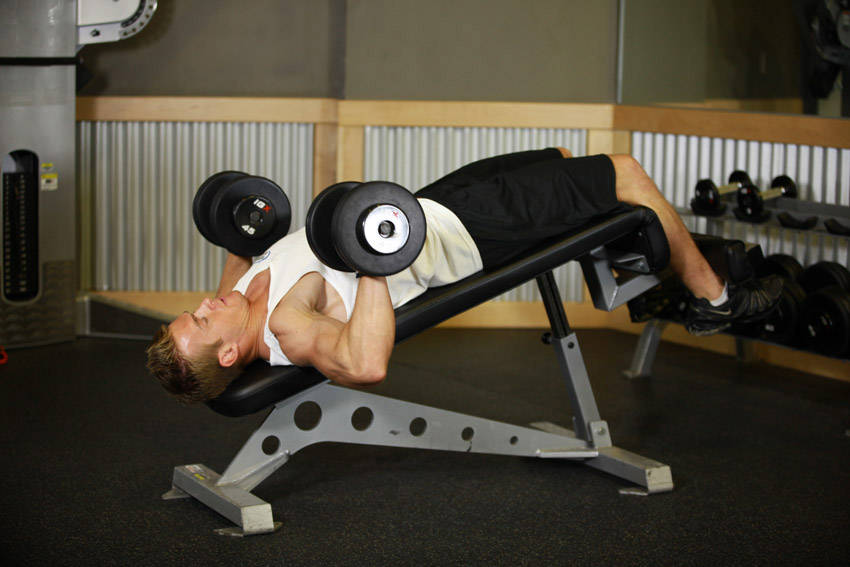
5. Decline Dumbbell Bench Press
78.7% MatchHow to perform this exercise
- Secure your legs at the end of the decline bench and lie down with a dumbbell on each hand on top of your thighs. The palms of your hand will be facing each other.
- Once you are laying down, move the dumbbells in front of you at shoulder width.
- Once at shoulder width, rotate your wrists forward so that the palms of your hands are facing away from you. This will be your starting position.
- Bring down the weights slowly to your side as you breathe out. Keep full control of the dumbbells at all times. Tip: Throughout the motion, the forearms should always be perpendicular to the floor.
- As you breathe out, push the dumbbells up using your pectoral muscles. Lock your arms in the contracted position, squeeze your chest, hold for a second and then start coming down slowly. Tip: It should take at least twice as long to go down than to come up..
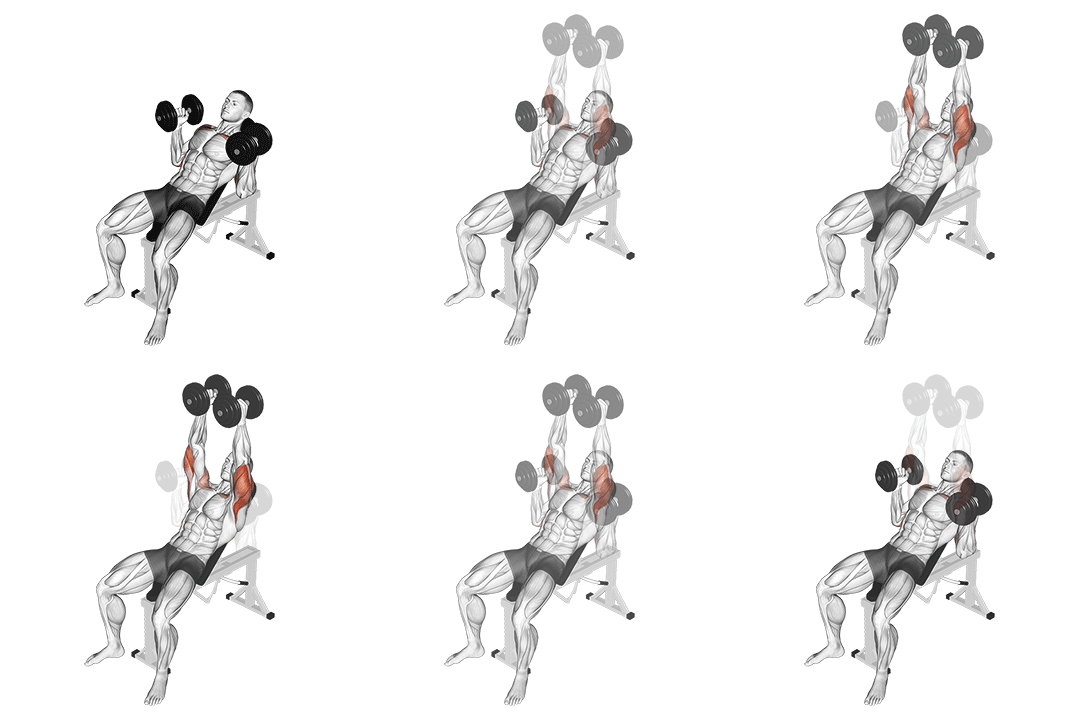
6. Dumbbell Palms In Incline Bench Press
78.7% MatchHow to perform this exercise
- Set up an incline bench at a 45-degree angle.
- Sit on the bench with your back against the backrest and feet flat on the ground.
- Hold a dumbbell in each hand with an overhand grip, palms facing inwards.
- Extend your arms straight up above your chest, keeping a slight bend in your elbows.
- Lower the dumbbells slowly towards your shoulders, keeping your elbows close to your body.
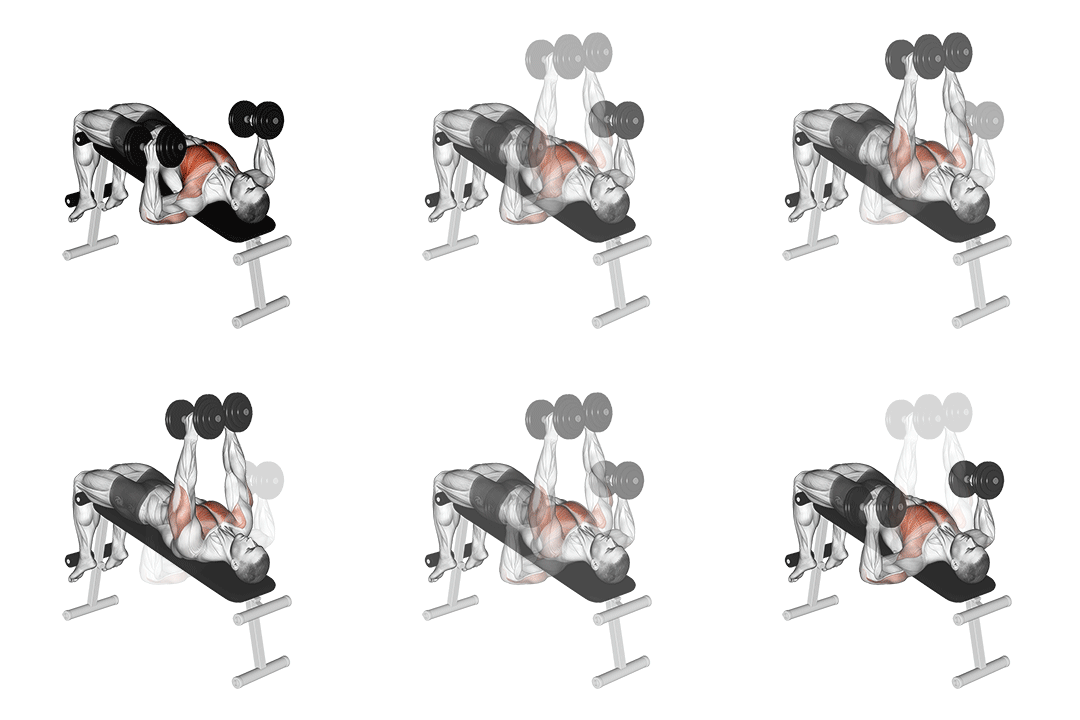
7. Dumbbell Decline Hammer Press
78.7% MatchHow to perform this exercise
- Lie on a decline bench with your feet secured and your head lower than your hips.
- Hold a dumbbell in each hand with your palms facing each other and your arms extended above your chest.
- Lower the dumbbells to the sides of your chest, keeping your elbows slightly bent.
- Press the dumbbells back up to the starting position, fully extending your arms.
- Repeat for the desired number of repetitions.
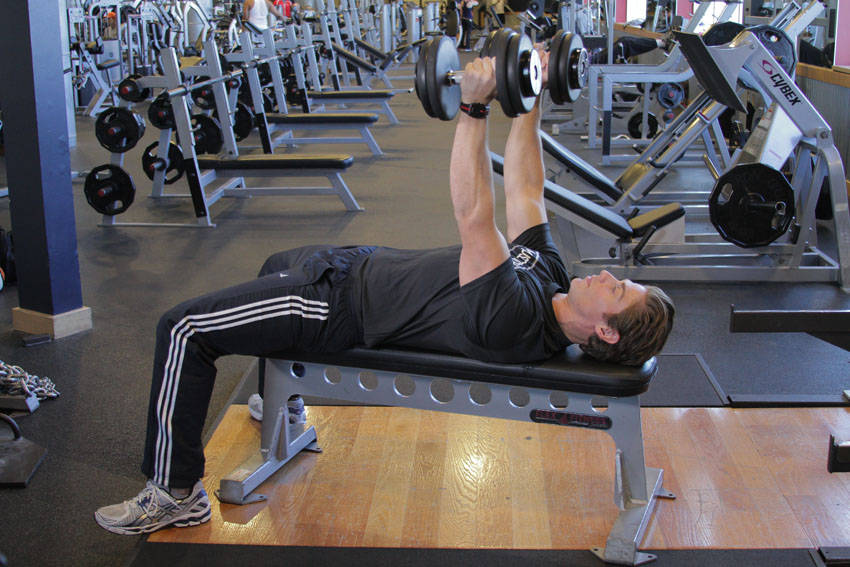
8. Dumbbell Bench Press With Neutral Grip
77.9% MatchHow to perform this exercise
- Take a dumbbell in each hand and lay back onto a flat bench. Your feet should be flat on the floor and your shoulder blades retracted.
- Maintaining a neutral grip, palms facing each other, begin with your arms extended directly above you, perpendicular to the floor. This will be your starting position.
- Begin the movement by flexing the elbow, lowering the upper arms to the side. Descend until the dumbbells are to your torso.
- Pause, then extend the elbow and return to the starting position.
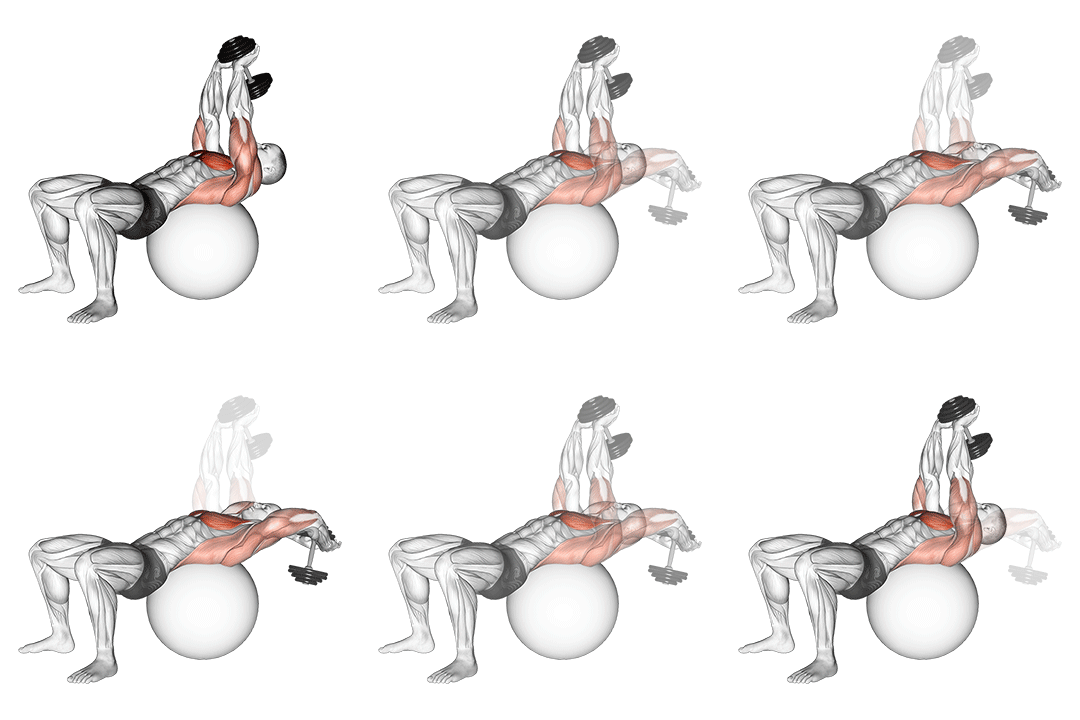
9. Dumbbell Pullover On Exercise Ball
76.6% MatchHow to perform this exercise
- Sit on an exercise ball and hold a dumbbell with both hands above your chest, arms extended.
- Slowly lower the dumbbell behind your head while keeping your arms straight.
- Pause for a moment, then raise the dumbbell back to the starting position.
- Repeat for the desired number of repetitions.
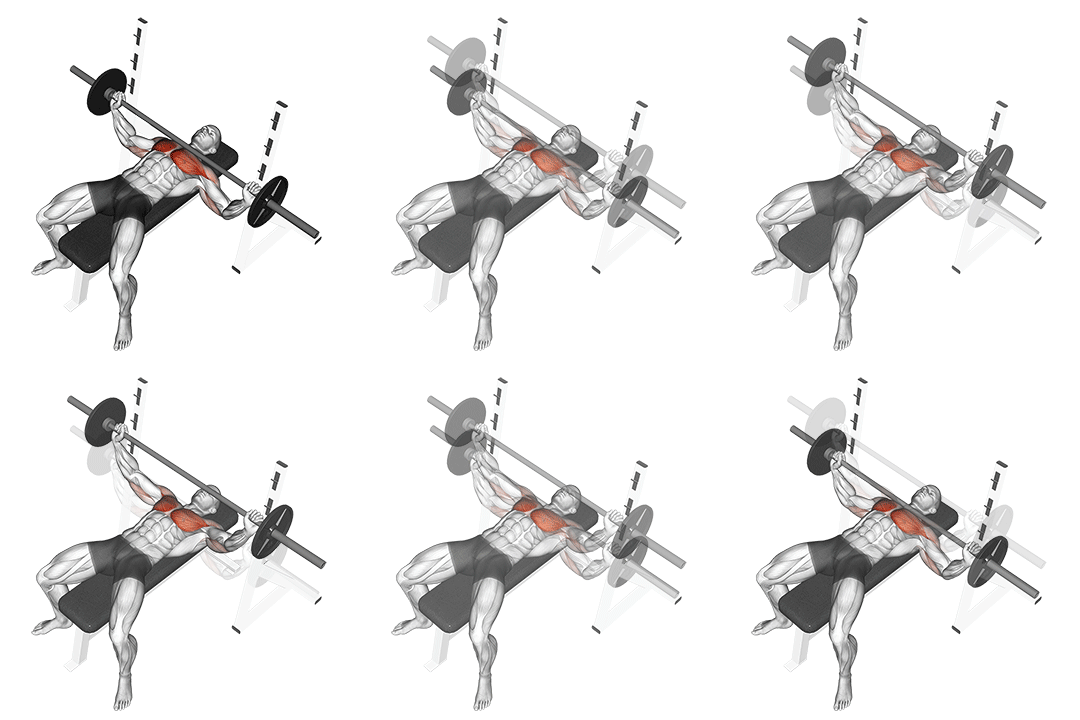
10. Barbell Wide Bench Press
75.4% MatchHow to perform this exercise
- Lie flat on a bench with your feet flat on the ground and your back pressed against the bench.
- Grasp the barbell with a wide grip, slightly wider than shoulder-width apart.
- Lift the barbell off the rack and hold it directly above your chest with your arms fully extended.
- Lower the barbell slowly towards your chest, keeping your elbows slightly flared out.
- Pause for a moment when the barbell touches your chest, then push it back up to the starting position.
Why You Might Need a Straight-arm Dumbbell Pullover Alternative
You may swap the straight-arm dumbbell pullover because of shoulder pain, lack of a stable bench, limited range of motion, or simply a training goal that favors constant tension. The straight-arm pullover demands strong scapular control and thoracic mobility; if you have glenohumeral irritation, the overhead-to-extension arc can provoke symptoms. Substitutes let you preserve the chest stretch and horizontal adduction while reducing shear on the shoulder. For example, the cable pullover keeps continuous tension with less translational load — cue: lock the scapula, keep shoulders down, and pull through the sternum to bias the pectorals.
How to Choose the Right Substitute
Match the substitute to the movement pattern and your limitations. If you want constant tension and easier load progression, choose the straight-arm cable pullover and cue a slow 2–3 second eccentric with a slight elbow bend. If you lack cables but want the same sagittal arc, choose a barbell pullover or a stability-ball variant to add core demand; keep the ribcage braced and avoid lumbar hyperextension. If shoulder health limits overhead extension, pick an incline dumbbell press to prioritize horizontal adduction while still loading the upper chest and serratus.
Frequently Asked Questions
What muscles does Straight-arm Dumbbell Pullover work?
The movement loads the pectoralis major (particularly the sternal fibers), latissimus dorsi, and serratus anterior via shoulder extension and scapular control. You also recruit the long head of the triceps and core stabilizers to maintain torso position; cue: maintain a neutral spine and pull from the chest, not the hands.
What is the best bodyweight alternative to Straight-arm Dumbbell Pullover?
A decline push-up with a slow eccentric and a long lever emphasizes upper chest and serratus activation without loading the shoulder through full extension. Cue: keep scapulae active on the descent and press through the sternum to simulate the pullover's horizontal adduction.
Can I build muscle without doing Straight-arm Dumbbell Pullover?
Yes. You can build chest mass with presses, flyes, and cable pullovers that target the same fibers and provide progressive overload. Focus on loading the horizontal adduction pattern and ensure progressive sets and reps; cue: increase time under tension with controlled eccentrics to stimulate hypertrophy.
More Exercise Alternatives
Find Alternatives for Any Exercise
Use our free tool to discover the best substitute exercises based on your available equipment and goals.
Try the Exercise Substitution Finder →