

10 Best Straight-arm Pulldown Alternatives for Lat Width
A busy cable stack is the top reason to swap out the Straight-arm Pulldown: the movement needs one pulley free and nothing else pulls the same way. The Rope Straight-arm Pulldown swaps in for the Straight-arm Pulldown on the next open station, so it is the simplest change to make. When every cable stack is taken, the Lever Pullover moves the same lat pull to a seated machine: back against the pad, arms slightly bent, handles pulled toward your chest instead of a bar pulled down to your thighs.
Original Exercise: Straight-arm Pulldown
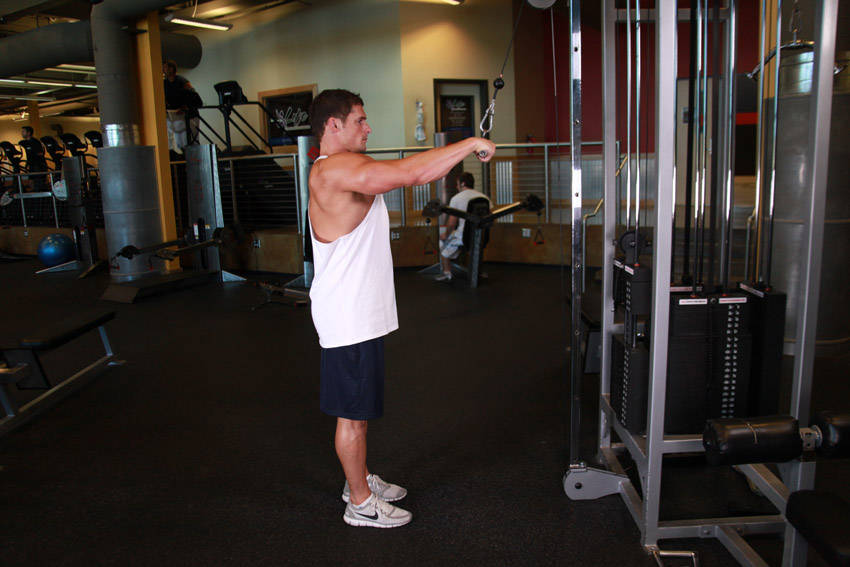
How to Perform Straight-arm Pulldown
- You will start by grabbing the wide bar from the top pulley of a pulldown machine and using a wider than shoulder-width pronated (palms down) grip. Step backwards two feet or so.
- Bend your torso forward at the waist by around 30-degrees with your arms fully extended in front of you and a slight bend at the elbows. If your arms are not fully extended then you need to step a bit more backwards until they are. Once your arms are fully extended and your torso is slightly bent at the waist, tighten the lats and then you are ready to begin.
- While keeping the arms straight, pull the bar down by contracting the lats until your hands are next to the side of the thighs. Breathe out as you perform this step.
- While keeping the arms straight, go back to the starting position while breathing in.
- Repeat for the recommended amount of repetitions.
Pro Tips
- Category: Strength
- Force: Pull
- Movement type: Isolation
Ranked Straight-arm Pulldown Alternatives
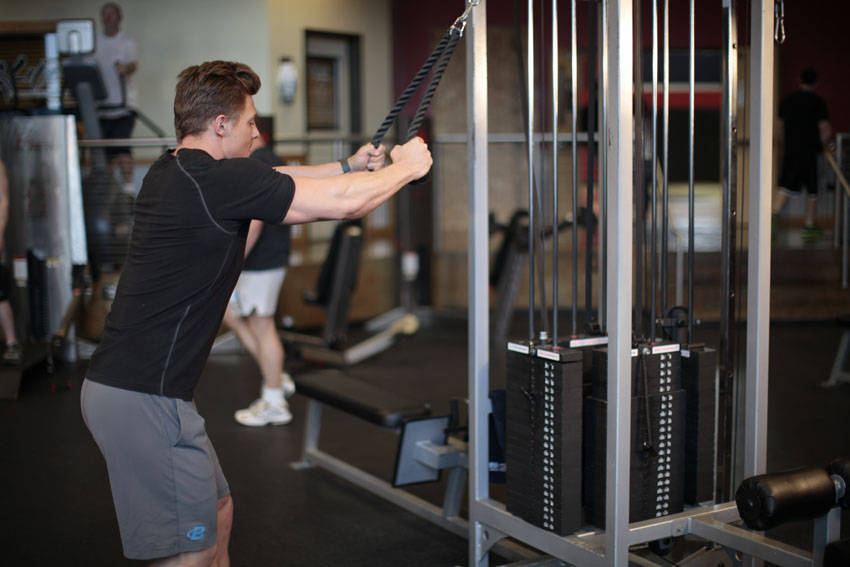
1. Rope Straight-Arm Pulldown
91% MatchHow to perform this exercise
- Attach a rope to a high pulley and make your weight selection. Stand a couple feet back from the pulley with your feet staggered and take the rope with both hands. Lean forward from the hip, keeping your back straight, with your arms extended up in front of you. This will be your starting position.
- Keeping your arms straight, extend the shoulder to pull the rope down to your thighs.
- Pause at the bottom of the motion, squeezing your lats.
- Return to the starting position without allowing the weight to fully rest on the stack.
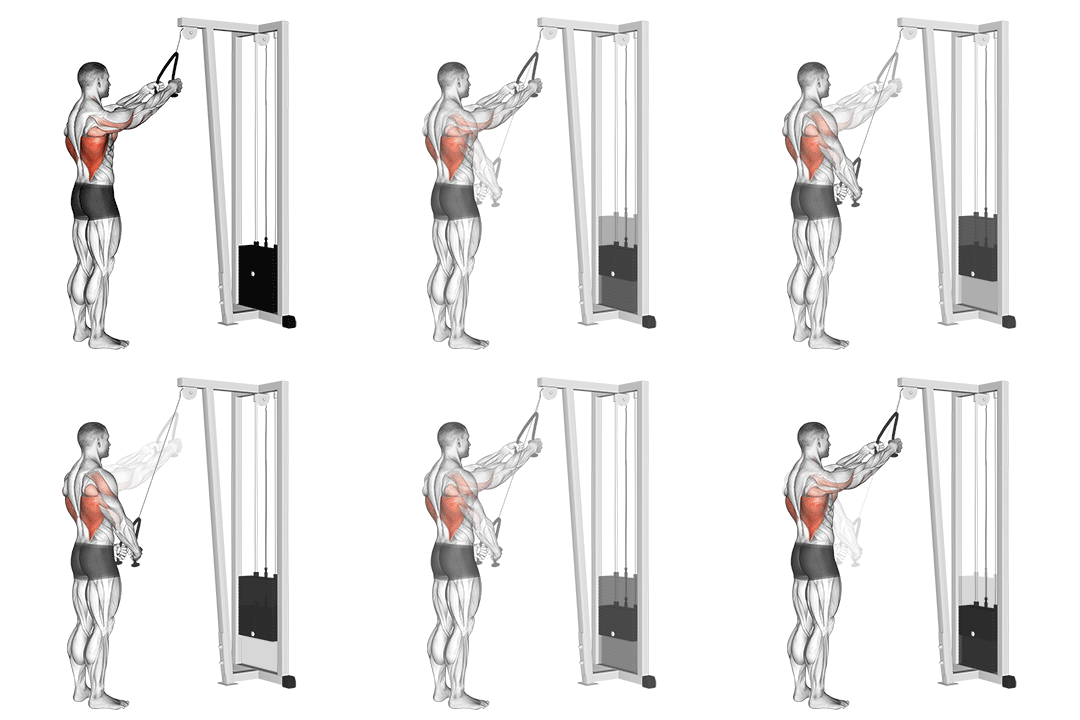
2. Cable Straight Arm Pulldown (with Rope)
85.2% MatchHow to perform this exercise
- Attach a rope to the cable machine at the highest setting.
- Stand facing the machine with your feet shoulder-width apart.
- Grasp the rope with both hands, palms facing down.
- Extend your arms fully in front of you, keeping your elbows slightly bent.
- Engage your lats and slowly pull the rope down towards your thighs, keeping your arms straight.
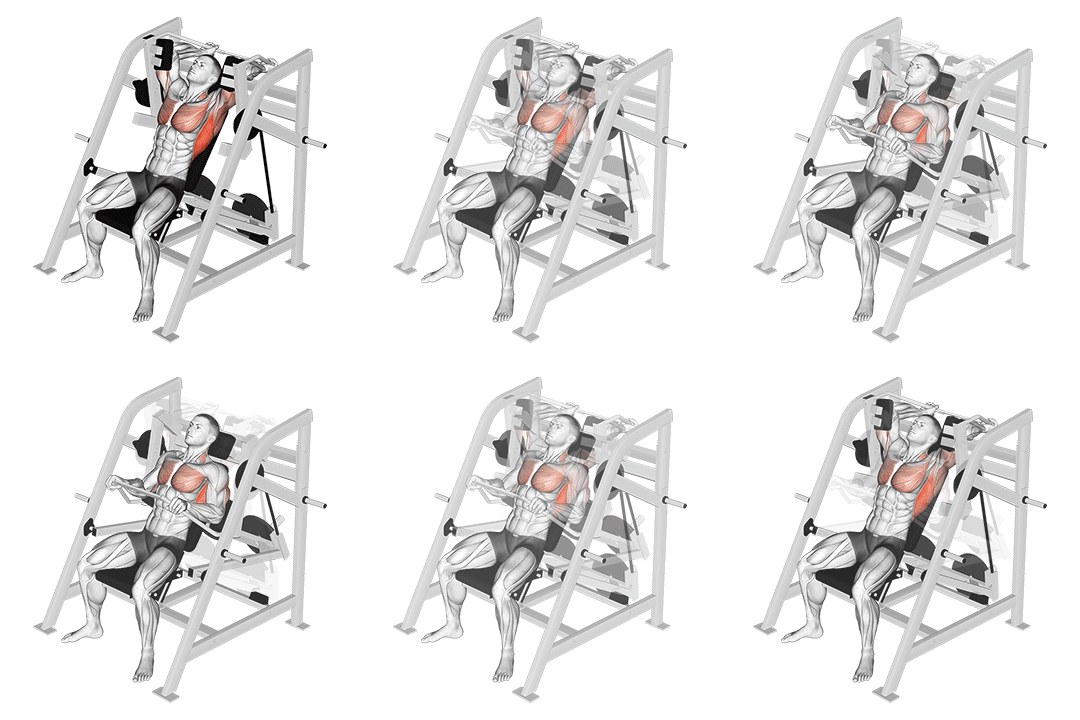
3. Lever Pullover
80.7% MatchHow to perform this exercise
- Adjust the seat and handles of the leverage machine to a comfortable position.
- Sit on the machine with your back against the pad and grasp the handles with an overhand grip.
- Keep your arms slightly bent and your core engaged.
- Slowly pull the handles towards your chest, squeezing your lats.
- Pause for a moment at the peak contraction, then slowly return to the starting position.
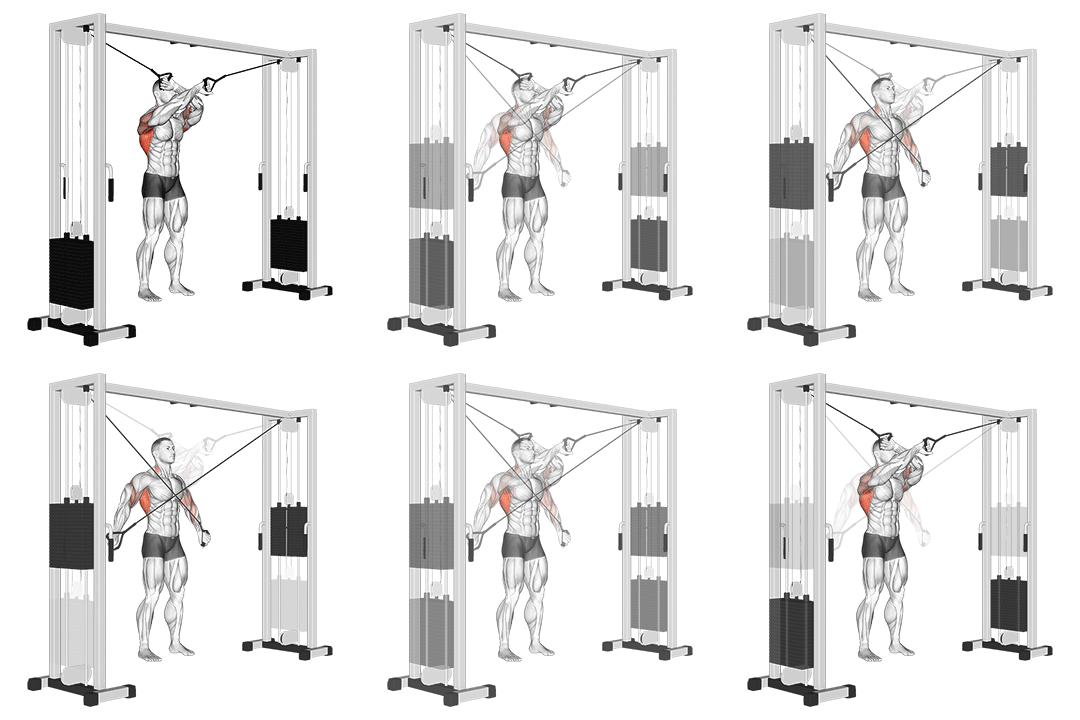
4. Cable Lat Pulldown Full Range Of Motion
80% MatchHow to perform this exercise
- Sit on the lat pulldown machine with your knees positioned under the pads.
- Grasp the cable bar with an overhand grip, slightly wider than shoulder-width apart.
- Lean back slightly and keep your chest up, maintaining a slight arch in your lower back.
- Pull the bar down towards your upper chest, squeezing your shoulder blades together.
- Pause for a moment at the bottom of the movement, then slowly release the bar back to the starting position.
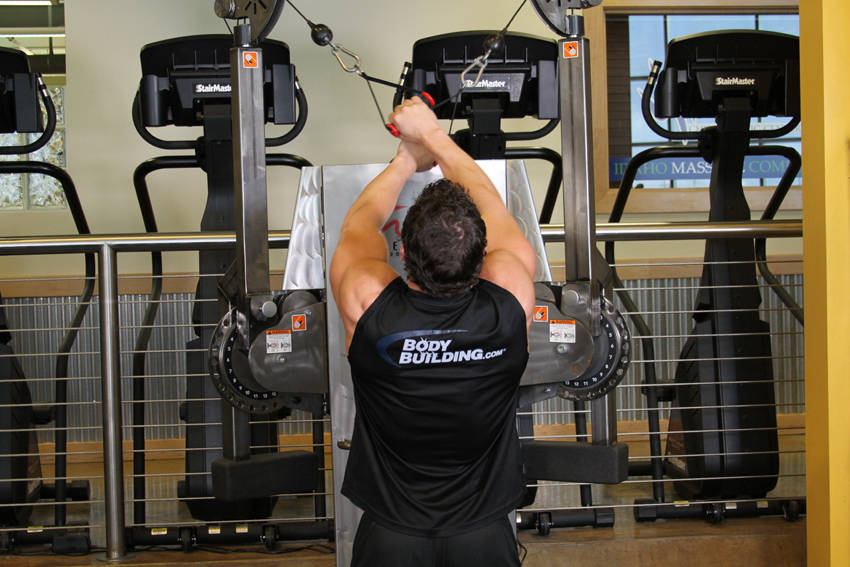
5. Full Range-Of-Motion Lat Pulldown
80% MatchHow to perform this exercise
- Either standing or seated on a high bench, grasp two stirrup cables that are attached to the high pulleys. Grab with the opposing hand so your arms are crisscrossed about you and your palms are facing forward.
- Keeping your chest up and maintaining a slight arch in your lower back, pull the handles down as if you were doing a regular pulldown. The range of motion will be more of an arc. During the movement, rotate your hands so that in the bottom position your palms face each other rather than forward. Return slowly to the starting position and repeat.
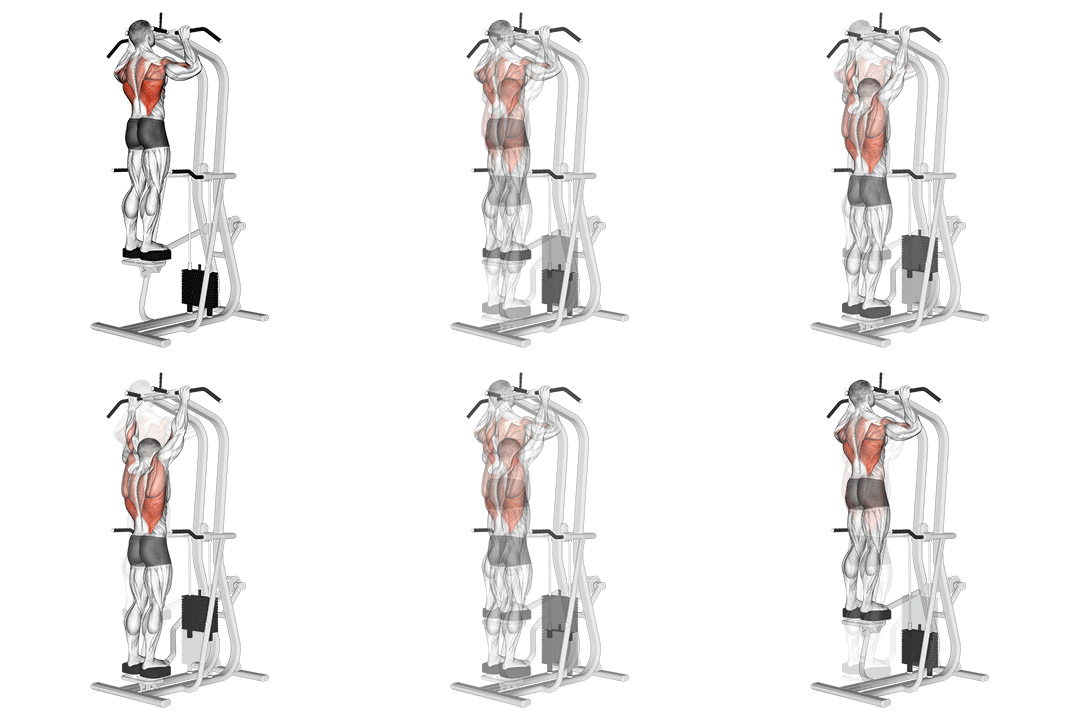
6. Assisted Standing Pull-up
80% MatchHow to perform this exercise
- Adjust the machine to your desired weight and height settings.
- Stand facing the machine with your feet shoulder-width apart.
- Grasp the handles with an overhand grip, slightly wider than shoulder-width apart.
- Engage your lats and biceps, and pull yourself up towards the handles.
- Pause for a moment at the top, squeezing your back muscles.
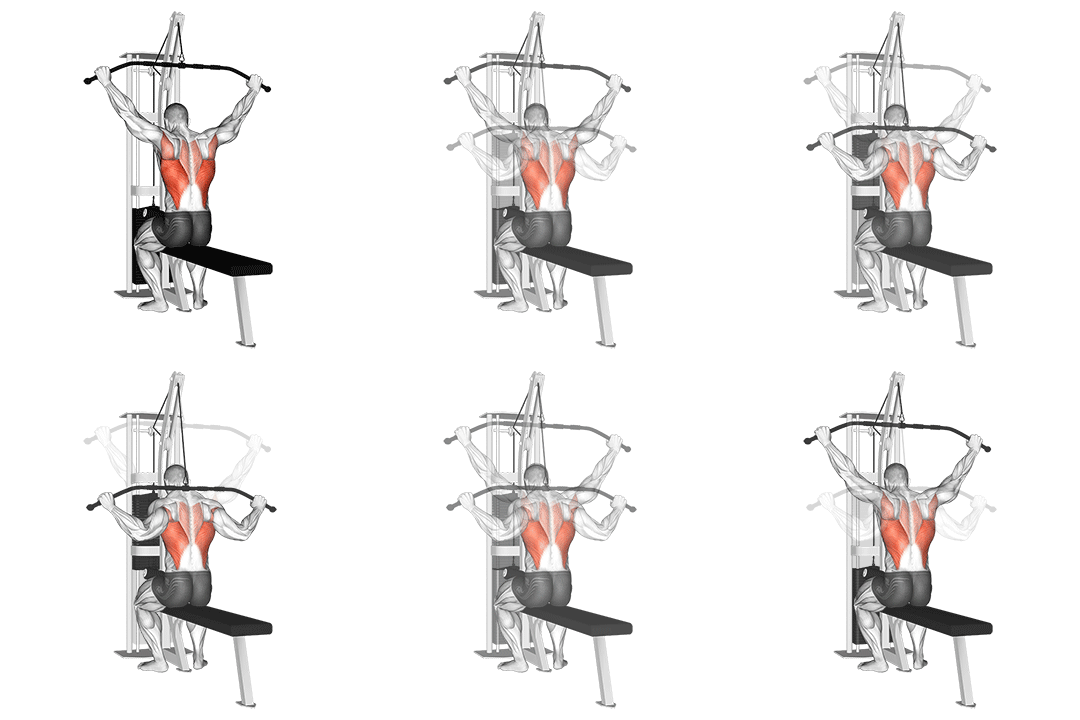
7. Cable Wide Grip Rear Pulldown Behind Neck
79.4% MatchHow to perform this exercise
- Adjust the cable machine so that the pulldown bar is at a height above your head.
- Sit down on the seat and grab the pulldown bar with a wide overhand grip.
- Keep your back straight and your chest up as you lean back slightly.
- Pull the bar down towards your upper chest, squeezing your shoulder blades together.
- Pause for a moment at the bottom of the movement, then slowly release the bar back up to the starting position.
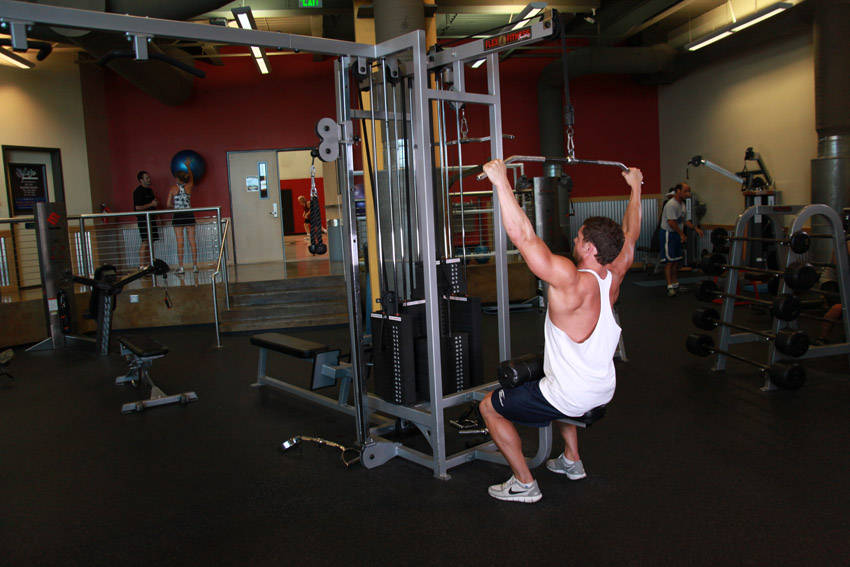
8. Wide-Grip Lat Pulldown
79.4% MatchHow to perform this exercise
- Sit down on a pull-down machine with a wide bar attached to the top pulley. Make sure that you adjust the knee pad of the machine to fit your height. These pads will prevent your body from being raised by the resistance attached to the bar.
- Grab the bar with the palms facing forward using the prescribed grip. Note on grips: For a wide grip, your hands need to be spaced out at a distance wider than shoulder width. For a medium grip, your hands need to be spaced out at a distance equal to your shoulder width and for a close grip at a distance smaller than your shoulder width.
- As you have both arms extended in front of you holding the bar at the chosen grip width, bring your torso back around 30 degrees or so while creating a curvature on your lower back and sticking your chest out. This is your starting position.
- As you breathe out, bring the bar down until it touches your upper chest by drawing the shoulders and the upper arms down and back. Tip: Concentrate on squeezing the back muscles once you reach the full contracted position. The upper torso should remain stationary and only the arms should move. The forearms should do no other work except for holding the bar; therefore do not try to pull down the bar using the forearms.
- After a second at the contracted position squeezing your shoulder blades together, slowly raise the bar back to the starting position when your arms are fully extended and the lats are fully stretched. Inhale during this portion of the movement.
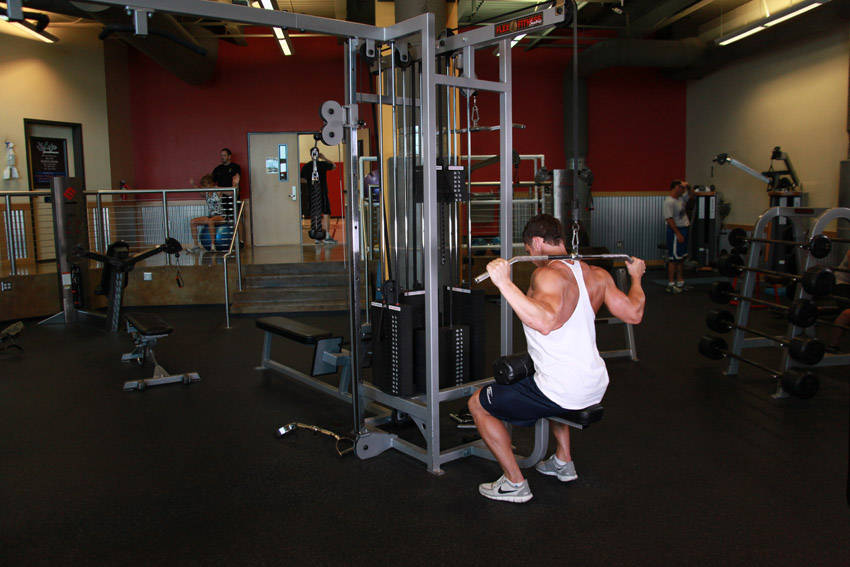
9. Wide-Grip Pulldown Behind The Neck
78.9% MatchHow to perform this exercise
- Sit down on a pull-down machine with a wide bar attached to the top pulley. Make sure that you adjust the knee pad of the machine to fit your height. These pads will prevent your body from being raised by the resistance attached to the bar.
- Grab the bar with the palms facing forward using the prescribed grip. Note on grips: For a wide grip, your hands need to be spaced out at a distance wider than your shoulder width. For a medium grip, your hands need to be spaced out at a distance equal to your shoulder width and for a close grip at a distance smaller than your shoulder width.
- As you have both arms extended in front of you holding the bar at the chosen grip width, bring your torso and head forward. Think of an imaginary line from the center of the bar down to the back of your neck. This is your starting position.
- As you breathe out, bring the bar down until it touches the back of your neck by drawing the shoulders and the upper arms down and back. Tip: Concentrate on squeezing the back muscles once you reach the full contracted position. The upper torso should remain stationary and only the arms should move. The forearms should do no other work except for holding the bar; therefore do not try to pull down the bar using the forearms.
- After a second on the contracted position squeezing your shoulder blades together, slowly raise the bar back to the starting position when your arms are fully extended and the lats are fully stretched. Inhale during this portion of the movement.
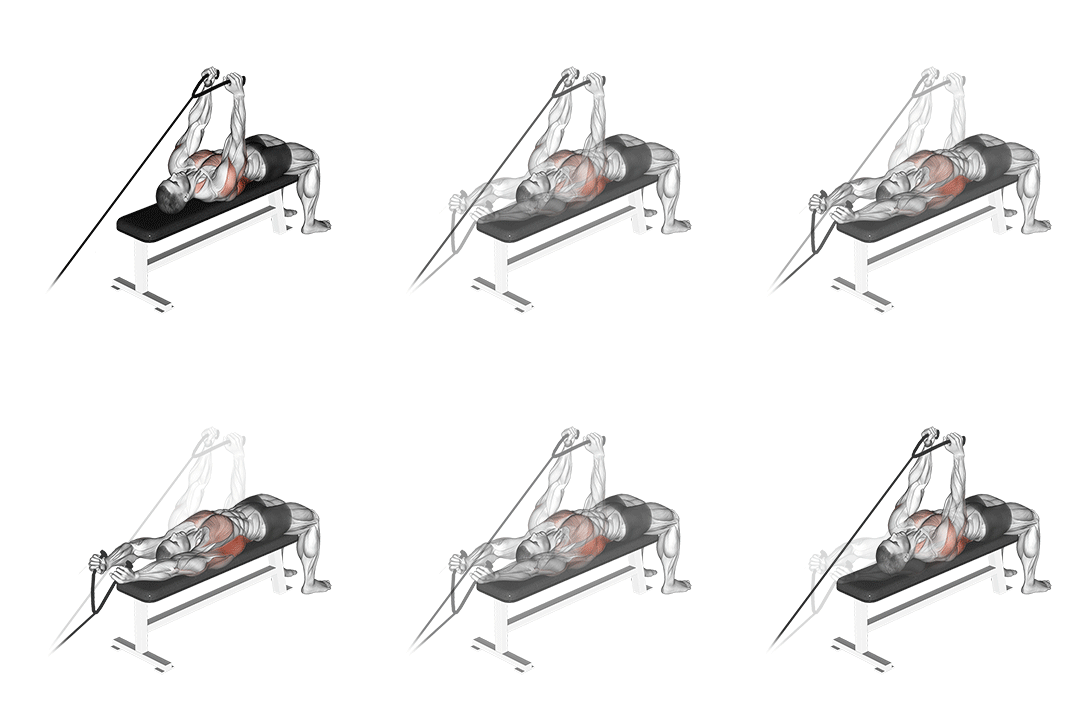
10. Cable Lying Extension Pullover (with Rope Attachment)
78% MatchHow to perform this exercise
- Attach a rope to a cable machine and set the pulley at the highest position.
- Lie down on a bench with your head towards the cable machine.
- Hold the rope with both hands and extend your arms straight up above your chest.
- Keeping your arms straight, slowly lower the rope behind your head while maintaining control.
- Pause for a moment at the bottom, then slowly raise the rope back to the starting position.
Why You Might Need a Straight-arm Pulldown Alternative
The Rope Straight-arm Pulldown is the closest match: same cable stack, same straight-arm pull, just a rope in place of the bar. Most gyms have only one cable station set up for this movement, so a queue is the usual reason to look elsewhere. Some gyms carry no cable tower at all but do have a lever machine, and the Lever Pullover moves that same lat pull to a seated machine instead, arms slightly bent, pulling the handles toward your chest rather than a bar down to your thighs. Grip is the only real change on the cable versions: a rope in your hands instead of a wide overhand bar, with the same lean from the hip, the same straight arms and the same pull down to the thighs.
How to Choose the Right Substitute
Take the Rope Straight-arm Pulldown first if any cable station is open: it keeps the same straight-arm pull, rope swapped in for the bar. The Cable Straight Arm Pulldown (With Rope) is the same rope pull done more upright, feet square rather than staggered, so either covers the swap. With every cable stack taken but a lever machine free, the Lever Pullover trades the standing pull for a seated one: sit against the pad, bend your elbows slightly, and pull the handles to your chest instead of your thighs. Once the straight-arm pull feels easy, the Cable Wide Grip Rear Pulldown Behind Neck seats you at the stack and lets the elbows bend so the bar comes to your upper chest, joining your arms and upper back, so treat it as a step up rather than a straight swap.
Frequently Asked Questions
What should I do if the cable stack is already taken?
Move to a lever machine and use the Lever Pullover. You sit against the pad with arms slightly bent and pull the handles toward your chest, rather than pulling a bar to your thighs, so your lats still lead. If no lever machine is free either, the Cable Wide Grip Rear Pulldown Behind Neck is a different stack: sit, take a wide overhand grip and pull the bar to your upper chest, squeezing your shoulder blades together.
Which Straight-arm Pulldown alternative suits a beginner?
The Assisted Standing Pull-up is built for someone newer to this kind of pull. A machine takes some of your bodyweight so you stand facing it, grip the handles overhand, and pull yourself up towards them instead of pulling a bar down, which builds the same pulling strength without the full load. Once that feels easy, the straight-arm cable versions ask more of your lats alone.
How do I make the pull harder once it feels easy?
Move to the Cable Wide Grip Rear Pulldown Behind Neck. It bends the elbow instead of keeping the arm straight, bringing a wide bar to your upper chest while you squeeze your shoulder blades together, so treat it as a step up rather than a like for like once the straight-arm pull stops feeling like a challenge.
How does the Rope Straight-arm Pulldown differ from the bar version?
It uses the same cable stack and the same straight-arm pull as the original, just with a rope attachment instead of a wide bar. The only other change is the stance: the rope version has you stagger your feet and lean forward from the hip, where the bar version has you step back from the stack and bend about 30 degrees at the waist. The straight arms and the pull to the thighs are the same.
More Exercise Alternatives
Find Alternatives for Any Exercise
Use the exercise substitution finder to compare ranked alternatives for your available equipment and training preference.
Try the Exercise Substitution Finder →