

10 Best Upper Back-leg Grab Alternatives for At-Home Training
If you can't perform the Upper Back-leg Grab, use single-leg Romanian deadlifts, Nordic hamstring curls, glute-bridge progressions, slider hamstring curls, or prone hamstring curls to target the same fibers. Focus on a hip hinge, keep a neutral spine, and lower with controlled eccentric tempo (3–4 seconds) to maximize hamstring activation.
Original Exercise: Upper Back-leg Grab
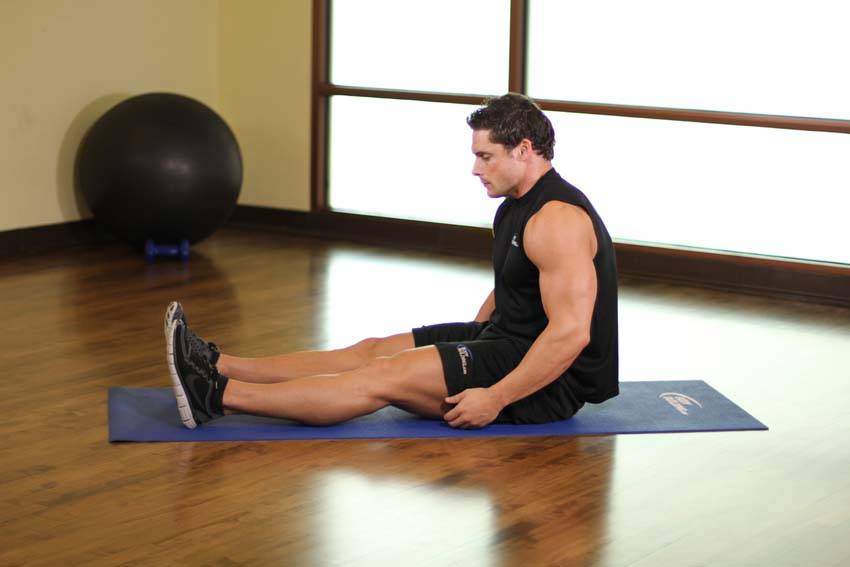
How to Perform Upper Back-leg Grab
- While seated, bend forward to hug your thighs from underneath with both arms.
- Keep your knees together and your legs extended out as you bring your chest down to your knees. You can also stretch your middle back by pulling your back away from your knees as your hugging them.
Pro Tips
- Category: Stretching
- Force: Static
Best Upper Back-leg Grab Alternatives
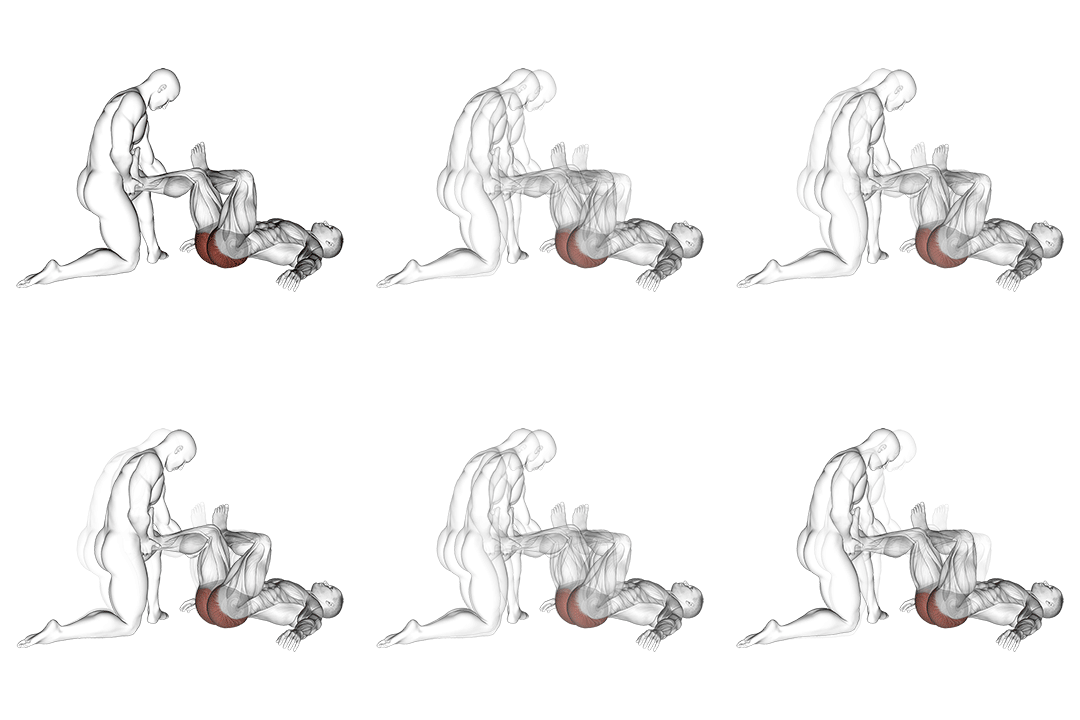
1. Assisted Lying Gluteus And Piriformis Stretch
84.2% MatchHow to perform this exercise
- Lie on your back with your legs extended.
- Bend your right knee and place your right ankle on your left thigh, just above the knee.
- Grasp your left thigh with both hands and gently pull it towards your chest.
- Hold the stretch for 20-30 seconds.
- Release the stretch and repeat on the other side.
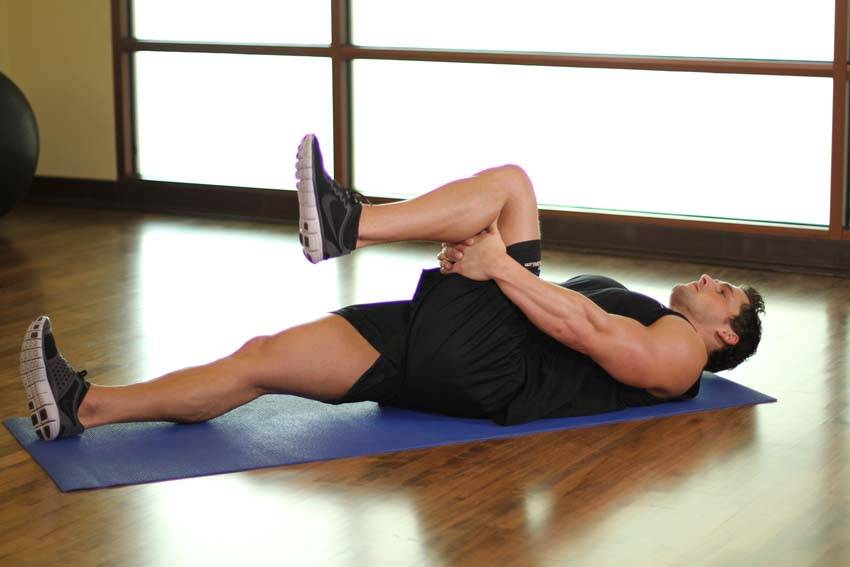
2. 90/90 Hamstring
81.7% MatchHow to perform this exercise
- Lie on your back, with one leg extended straight out.
- With the other leg, bend the hip and knee to 90 degrees. You may brace your leg with your hands if necessary. This will be your starting position.
- Extend your leg straight into the air, pausing briefly at the top. Return the leg to the starting position.
- Repeat for 10-20 repetitions, and then switch to the other leg.
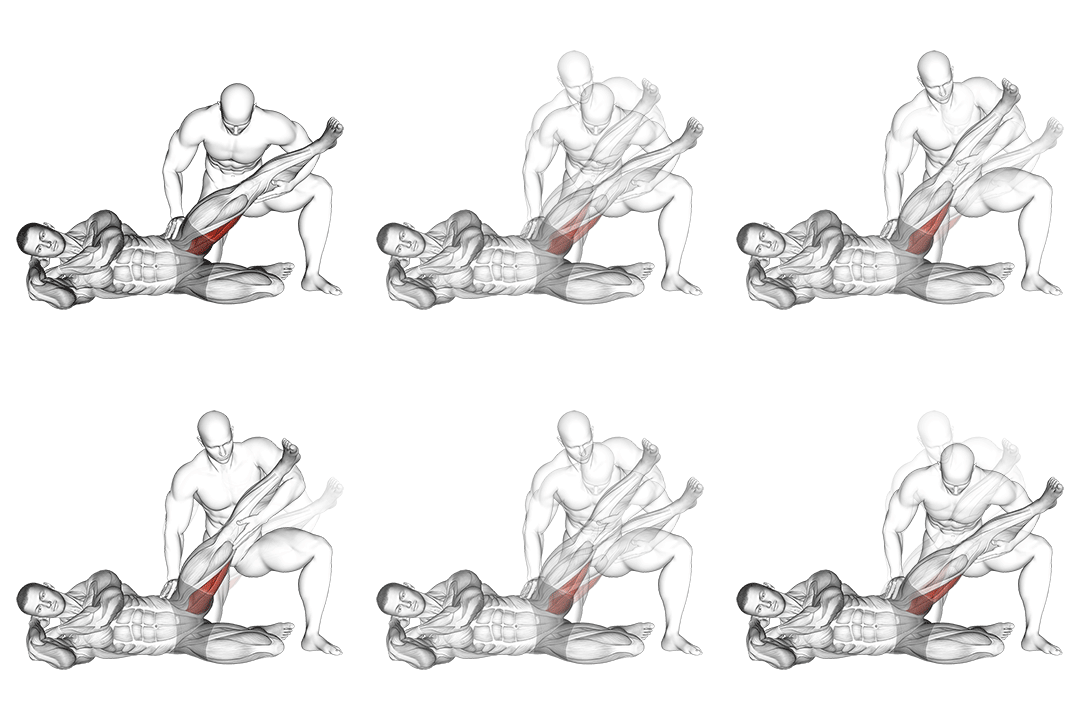
3. Assisted Side Lying Adductor Stretch
79.2% MatchHow to perform this exercise
- Lie on your side with your legs straight and stacked on top of each other.
- Bend your bottom leg slightly for stability.
- Place your top foot on a stable surface, such as a bench or step.
- Keeping your top leg straight, slowly lower it towards the ground, feeling a stretch in your inner thigh.
- Hold the stretch for 20-30 seconds.
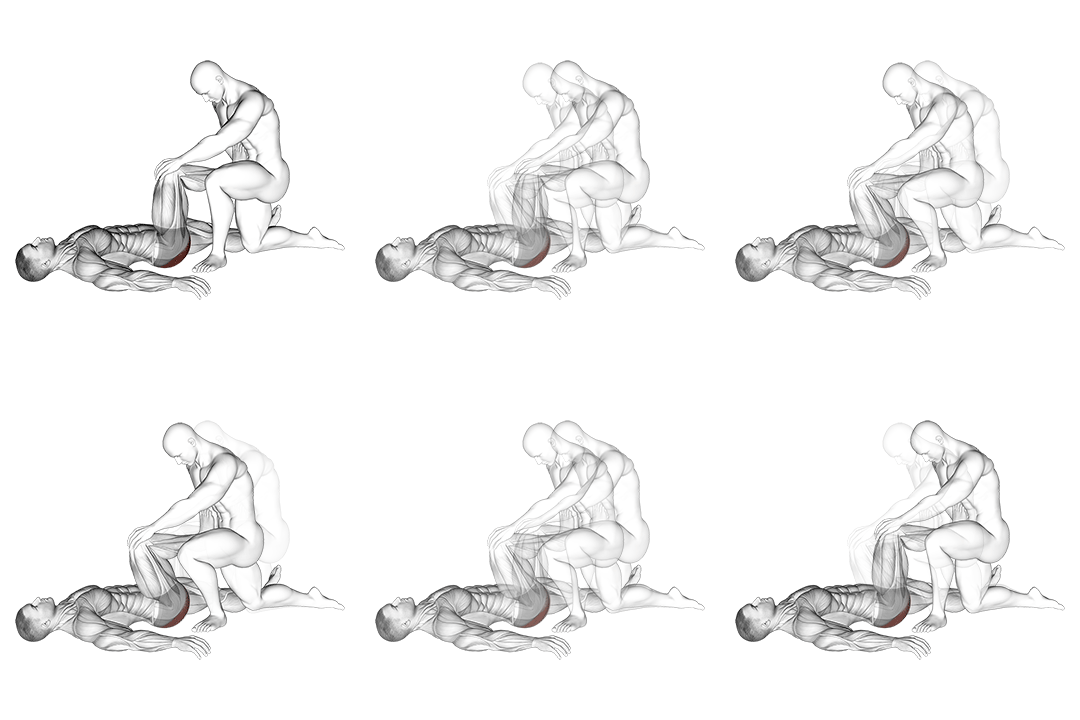
4. Assisted Lying Glutes Stretch
74.2% MatchHow to perform this exercise
- Lie on your back with your legs extended.
- Bend your right knee and place your right ankle on your left thigh, just above the knee.
- Grasp your left thigh with both hands and gently pull it towards your chest.
- Hold the stretch for 20-30 seconds.
- Release and repeat on the other side.
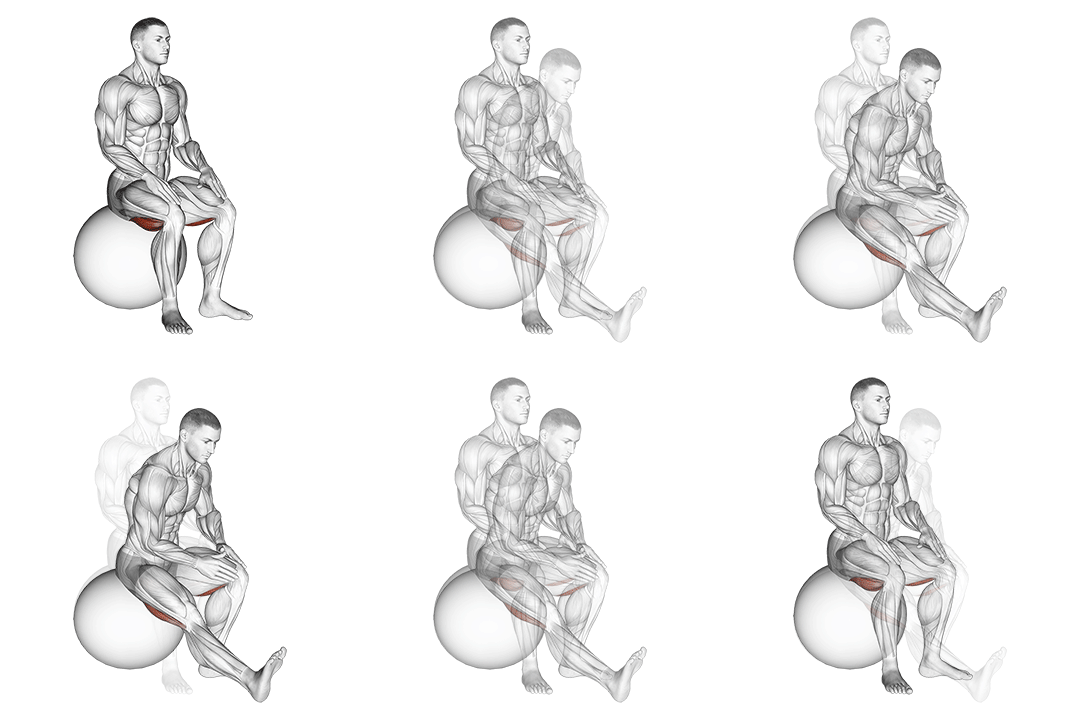
5. Exercise Ball Seated Hamstring Stretch
73.9% MatchHow to perform this exercise
- Sit on the stability ball with your feet flat on the ground and your knees bent at a 90-degree angle.
- Slowly roll the ball forward, walking your feet out until your upper back is resting on the ball and your legs are extended straight in front of you.
- Place your hands on your hips for support.
- Engage your core and slowly lower your upper body towards the ground, keeping your back straight and your chest lifted.
- Stop when you feel a stretch in your hamstrings, and hold the position for 20-30 seconds.
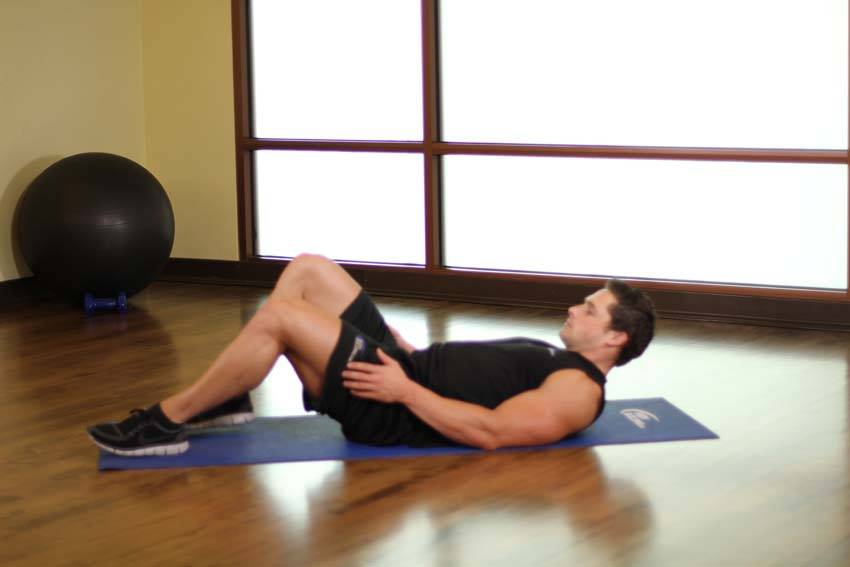
6. Ankle On The Knee
72.2% MatchHow to perform this exercise
- From a lying position, bend your knees and keep your feet on the floor.
- Place your ankle of one foot on your opposite knee.
- Grasp the thigh or knee of the bottom leg and pull both of your legs into the chest. Relax your neck and shoulders. Hold for 10-20 seconds and then switch sides.
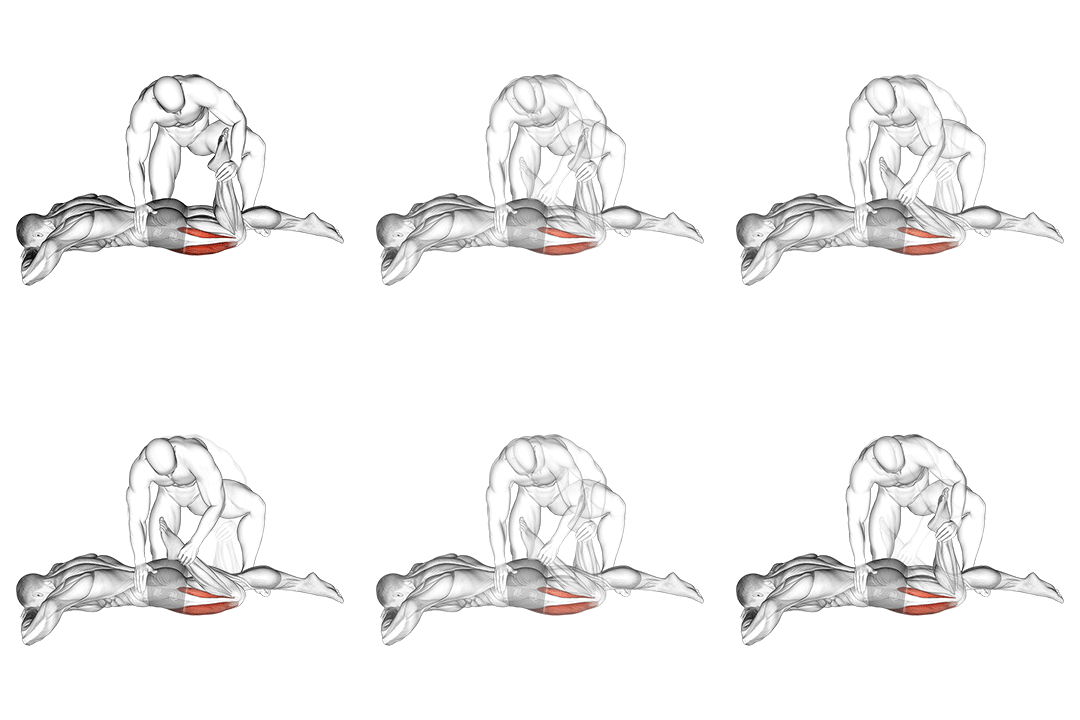
7. Assisted Prone Lying Quads Stretch
71.2% MatchHow to perform this exercise
- Lie face down on the ground with your legs extended.
- Bend your left knee and reach back with your left hand to grab your left foot or ankle.
- Gently pull your left foot towards your glutes, feeling a stretch in your left quad.
- Hold the stretch for 20-30 seconds, then release.
- Repeat with your right leg.
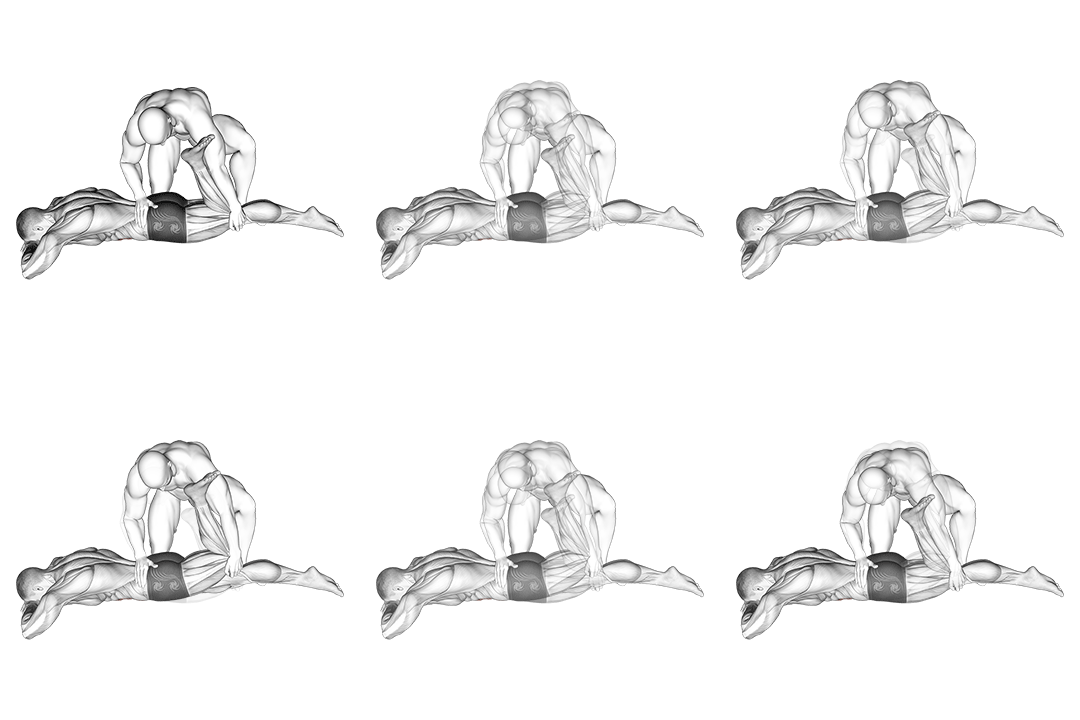
8. Assisted Prone Rectus Femoris Stretch
71.2% MatchHow to perform this exercise
- Lie face down on the ground with your legs straight.
- Bend your right knee and reach back with your right hand to grab your right foot or ankle.
- Gently pull your right foot or ankle towards your glutes, feeling a stretch in the front of your right thigh.
- Hold the stretch for 20-30 seconds.
- Release and repeat on the other side.
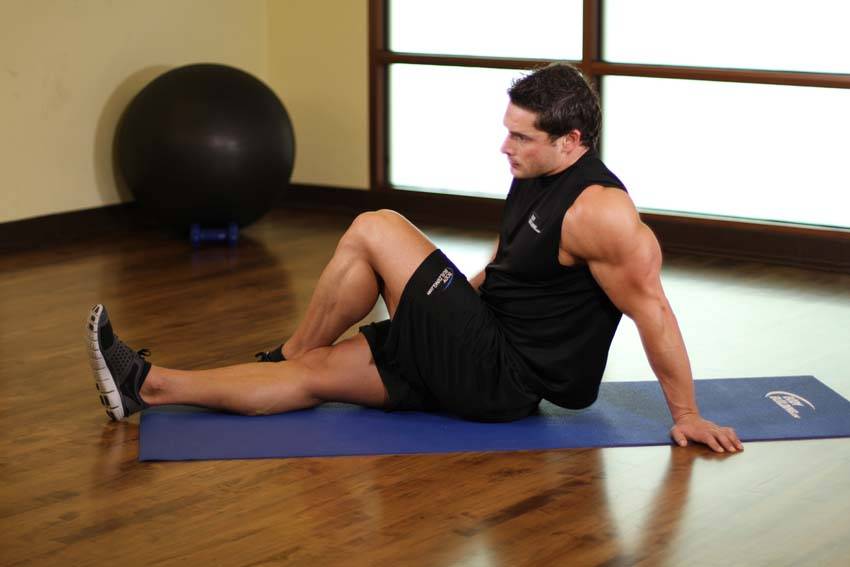
9. Dancer's Stretch
67.2% MatchHow to perform this exercise
- Sit up on the floor.
- Cross your right leg over your left, keeping the knee bent. Your left leg is straight and down on the floor.
- Place your left arm on your right leg and your right hand on the floor.
- Rotate your upper body to the right, and hold for 10-20 seconds. Switch sides.
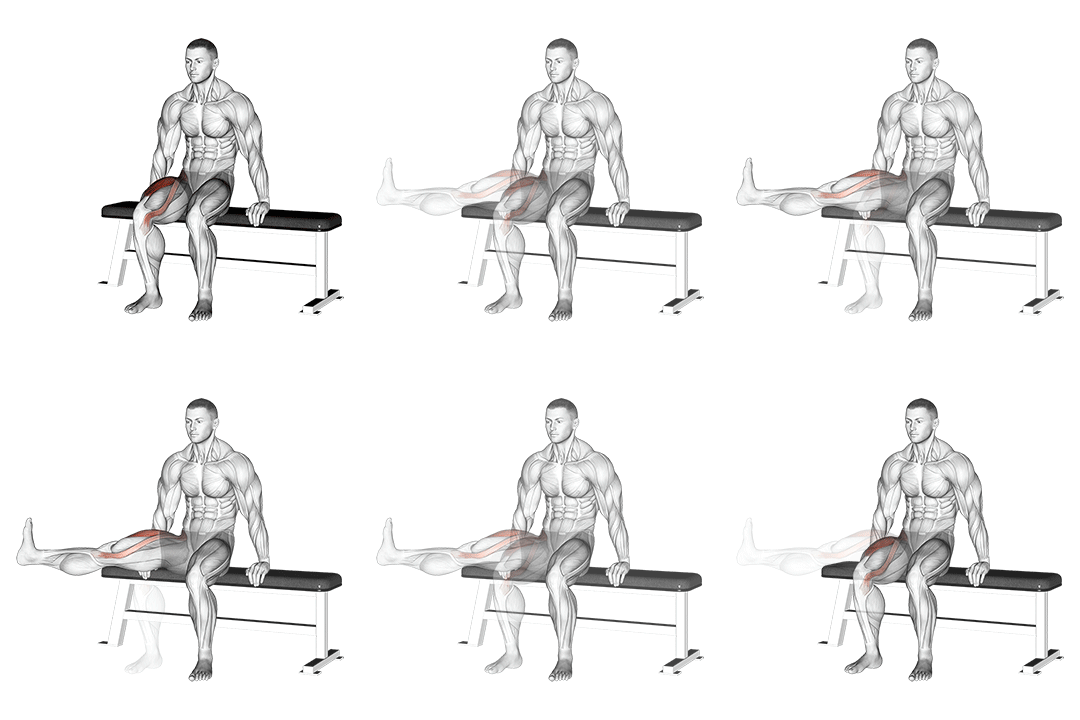
10. Chair Leg Extended Stretch
67.2% MatchHow to perform this exercise
- Sit on the edge of a chair with your back straight and feet flat on the ground.
- Extend one leg straight out in front of you, keeping your heel on the ground.
- Lean forward slightly, feeling a stretch in your quadriceps.
- Hold this position for 20-30 seconds.
- Switch legs and repeat the stretch.
Why You Might Need a Upper Back-leg Grab Alternative
You may substitute the Upper Back-leg Grab for several practical reasons: pain or knee sensitivity, limited mobility, lack of confidence with the movement, or no access to a specific setup. Some people need less knee-flexion emphasis and more hip-dominant loading; others require a progression for eccentric strength. Choose an alternative to protect injury sites, preserve hamstring tension via slow eccentrics, and maintain posterior-chain recruitment. For example, switching to single-leg RDLs shifts load to hip extension and improves unilateral balance; cue: hinge from the hips, keep the torso long, and load the hamstrings rather than the lower back.
How to Choose the Right Substitute
Match the substitute to the movement pattern you need: select hip-dominant options (RDLs, bridges) to prioritize hip extension, or knee-dominant choices (Nordic curls, slider curls) to stress eccentric knee flexion. Consider equipment, training goal, and progression potential. If you lack weight, pick Nordic curls for high eccentric demand and use a slow 3–5 second descent; if you need balance and unilateral strength, choose single-leg RDLs and keep the non-working leg passive behind you. Monitor hamstring soreness and technique—prioritize full hip extension and controlled eccentric loading to ensure safe muscle activation and progression.
Frequently Asked Questions
What muscles does Upper Back-leg Grab work?
The Upper Back-leg Grab primarily targets the hamstrings (biceps femoris, semitendinosus, semimembranosus) and secondarily the glutes and spinal erectors. It emphasizes eccentric hamstring control and hip extension; cue: hinge at the hips, keep a posterior pelvic tilt, and resist fast knee extension to maximize posterior-chain activation.
What is the best bodyweight alternative to Upper Back-leg Grab?
The Nordic hamstring curl is the best pure bodyweight alternative because it heavily loads the hamstrings eccentrically and trains knee flexion strength. Set your feet under a secure anchor, control a 3–5 second descent, and catch yourself with hands before pushing back up to prioritize hamstring recruitment.
Can I build muscle without doing Upper Back-leg Grab?
Yes. You can build hamstring size and strength using progressive alternatives like single-leg RDLs, Nordic curls, and loaded hip hinges. Increase time under tension, add reps or external load, and maintain slow eccentrics with full hip extension to produce consistent hypertrophy and neural adaptation.
More Exercise Alternatives
Find Alternatives for Any Exercise
Use our free tool to discover the best substitute exercises based on your available equipment and goals.
Try the Exercise Substitution Finder →