

10 Best Walking Lunge Alternatives for Glute Strength
The Walking Lunge is done standing. Ranked closest by our scoring: the Forward Lunge, the Kettlebell Lunge Pass Through and the Weighted Lunge With Swing. A harder version, the Lunge With Jump, is listed below as a progression rather than a swap.
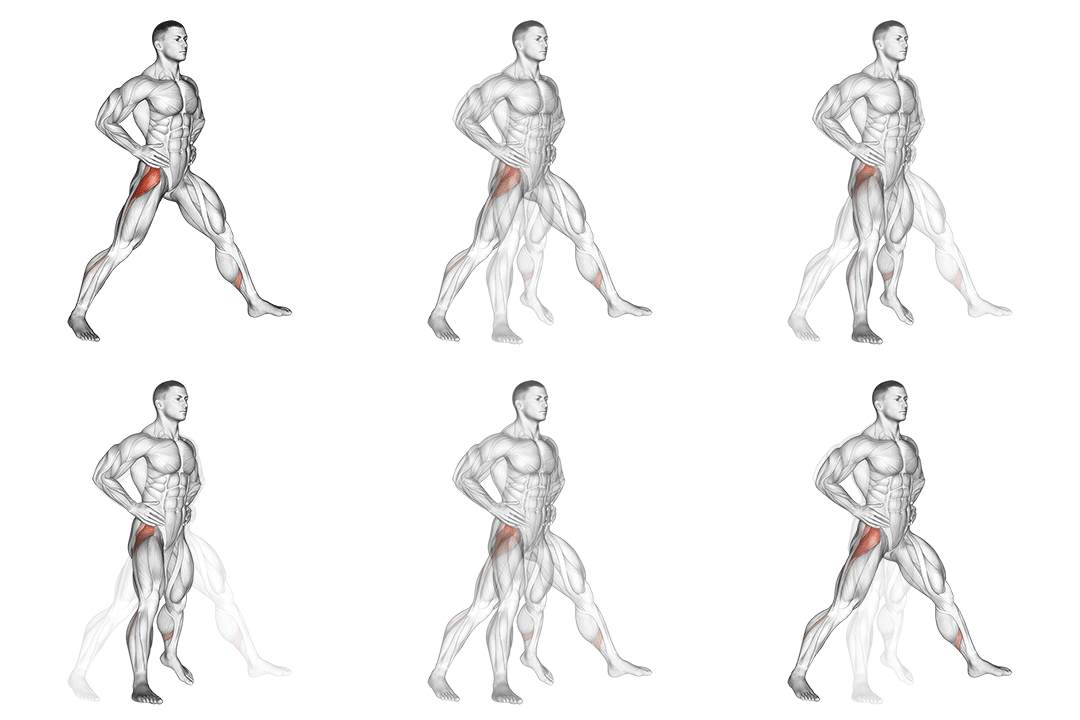
The Walking Lunge has you step forward on one leg after another and keep walking, so a swap needs to keep that continuous stepping rather than turn it into a squat. The Forward Lunge (male) is the closest swap because it keeps the same forward step and knee bend, just without traveling across the floor between reps. With a resistance band around your ankles, the Monster Walk keeps both legs stepping too, just sideways instead of forward.
Updated Ranked by our 12-factor similarity model How it works
Original Exercise: Walking Lunge
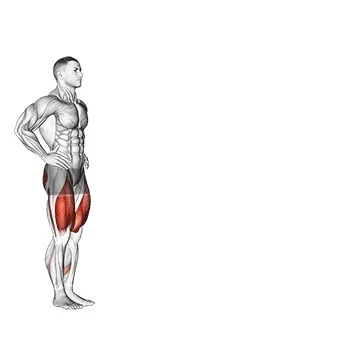
- Primary muscle
- Glutes
- Equipment
- Bodyweight
- Difficulty
- Intermediate
- Type
- Compound
Secondary muscles: Quadriceps, Hamstrings, Calves
How to perform Walking Lunge
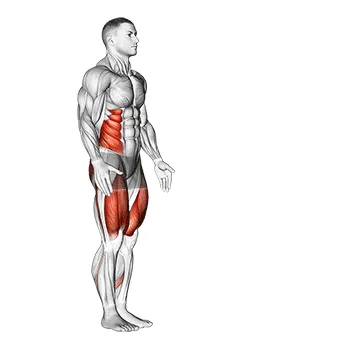
- Stand with your feet shoulder-width apart.
- Take a step forward with your right leg, lowering your body into a lunge position.
- Keep your torso upright and your front knee aligned with your ankle.
- Push off with your right foot and bring your left foot forward, stepping into a lunge position with your left leg.
- Continue alternating legs and walking forward, maintaining a controlled and steady pace.
- Repeat for the desired number of repetitions.
Ranked Walking Lunge Alternatives
10 substitutes, ranked by how closely each one matches the Walking Lunge on movement pattern, muscles worked, equipment and body position. The higher the score, the less you change. Open "How to perform this exercise" on a card for the steps; every card title links to that exercise's own alternatives page. Harder versions are tagged as progressions and kept out of the top spot even when they score higher.
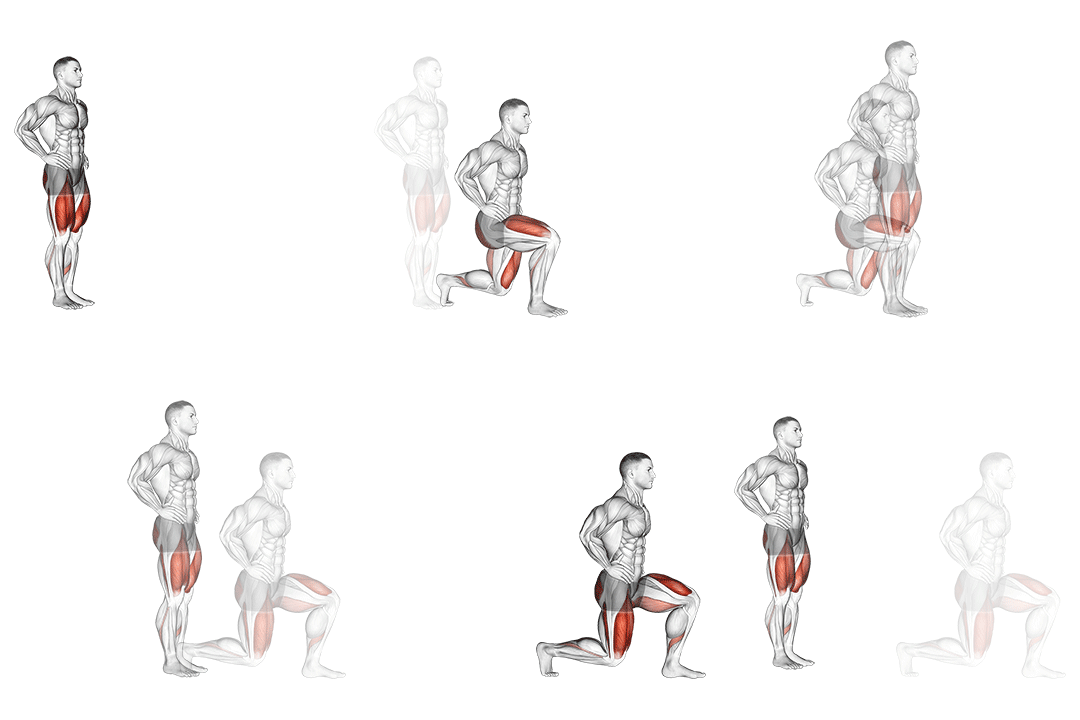
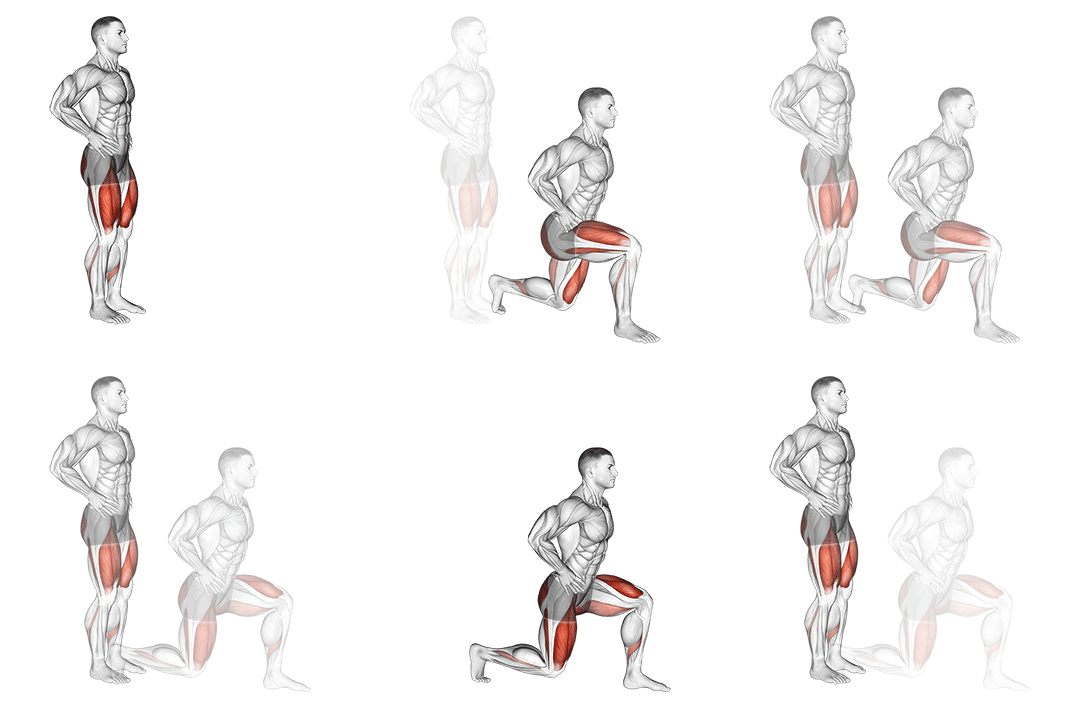
Best match 1. Forward Lunge
99% match- Glutes
- Bodyweight
- Beginner
- Compound
Pick this when you want an easier version that still works the glutes.
How to perform this exercise
- Stand with your feet hip-width apart and hands on your hips.
- Take a big step forward with your right foot, lowering your body into a lunge position.
- Bend your right knee to about 90 degrees, keeping your knee aligned with your ankle.
- Push off with your right foot and return to the starting position.
- Repeat with your left leg, alternating sides for the desired number of repetitions.
Sets and reps: 3 sets of 8 to 12 reps on each side, and add reps before you add load.
Why this matches
- Movement: forward lunge, the same as the Walking Lunge
- Primary muscle: glutes, the same as the Walking Lunge
- Equipment: bodyweight only, the same as the Walking Lunge
- Body position: standing, the same as the Walking Lunge
Progression
2. Lunge With Jump
95% match- Glutes
- Bodyweight
- Advanced
- Compound
Pick this when you want a harder version that still works the glutes.
How to perform this exercise
- Start by standing with your feet shoulder-width apart.
- Take a step forward with your right foot, lowering your body into a lunge position.
- Push off with your right foot and jump into the air, switching the position of your feet mid-air.
- Land softly with your left foot forward and immediately lower your body into a lunge position.
- Continue alternating between lunges and jumps for the desired number of repetitions.
Sets and reps: 3 or 4 sets of 6 to 10 reps on each side.
Why this matches
- Primary muscle: glutes, the same as the Walking Lunge
- Equipment: bodyweight only, the same as the Walking Lunge
- Body position: standing, the same as the Walking Lunge
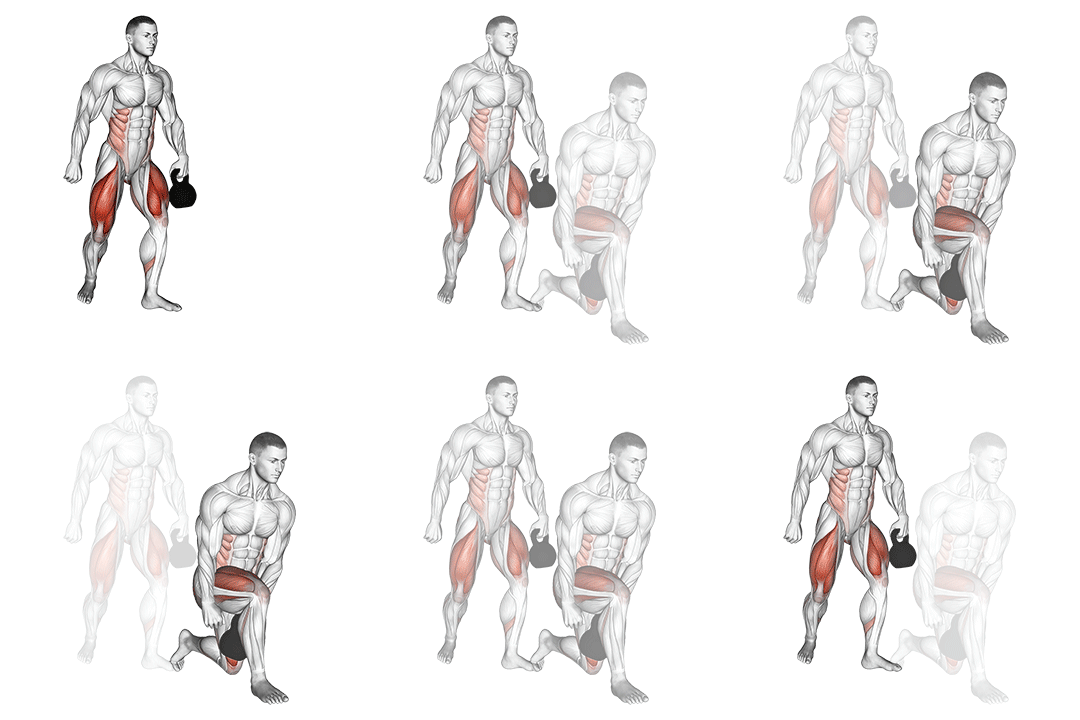
3. Kettlebell Lunge Pass Through
89% match- Glutes
- Kettlebell
- Intermediate
- Compound
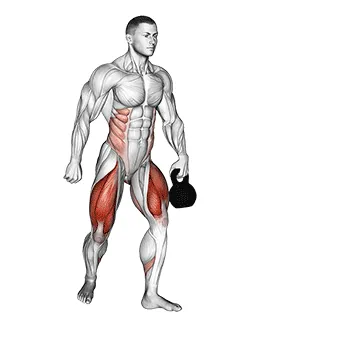
A good swap when you have a kettlebell to work with, and it still works the glutes.
How to perform this exercise
- Stand with your feet shoulder-width apart, holding a kettlebell in front of your chest with both hands.
- Take a step forward with your right foot, lowering your body into a lunge position.
- As you lunge forward, pass the kettlebell under your right thigh and transfer it to your left hand.
- Push off with your right foot to return to the starting position, while simultaneously passing the kettlebell back to your right hand.
- Repeat the lunge on the opposite side, passing the kettlebell under your left thigh.
- Continue alternating lunges and passing the kettlebell between hands for the desired number of repetitions.
Sets and reps: 3 or 4 sets of 6 to 10 reps on each side.
Why this matches
- Movement: forward lunge, the same as the Walking Lunge
- Primary muscle: glutes, the same as the Walking Lunge
- Equipment: free weights, not bodyweight only
- Body position: standing, the same as the Walking Lunge
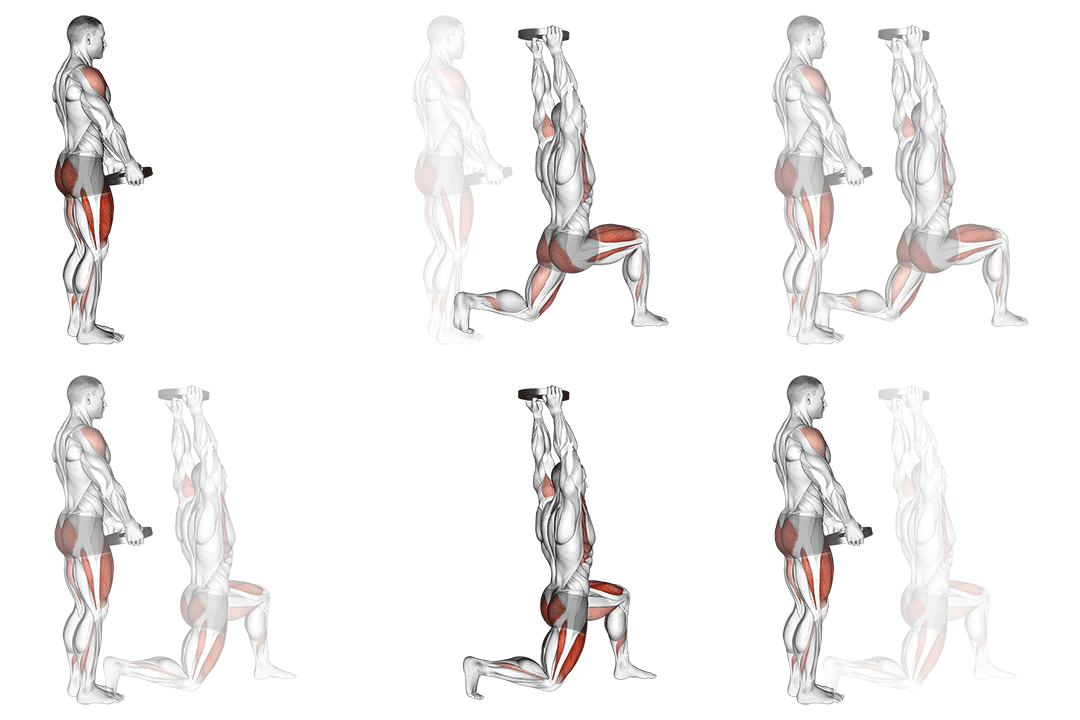
4. Weighted Lunge With Swing
85% match- Glutes
- Weighted
- Intermediate
- Compound
A straight swap when you want to keep working the glutes.
How to perform this exercise
- Stand with your feet shoulder-width apart, holding a weight in each hand.
- Take a step forward with your right foot, lowering your body into a lunge position.
- As you lunge forward, swing the weights forward and upward, keeping your arms straight.
- Push off with your right foot and return to the starting position, swinging the weights back down.
- Repeat with your left foot and continue alternating legs for the desired number of repetitions.
Sets and reps: 3 or 4 sets of 6 to 10 reps on each side.
Why this matches
- Movement: forward lunge, the same as the Walking Lunge
- Primary muscle: glutes, the same as the Walking Lunge
- Equipment: free weights, not bodyweight only
- Body position: standing, the same as the Walking Lunge
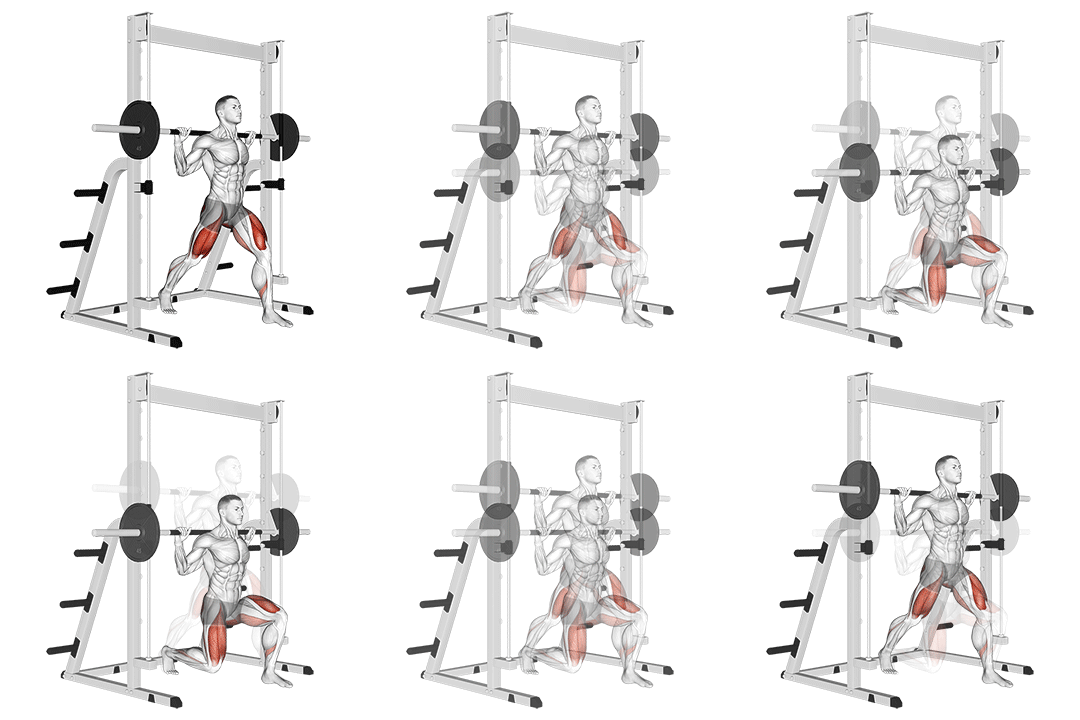
5. Smith Sprint Lunge
85% match- Glutes
- Smith-machine
- Advanced
- Compound
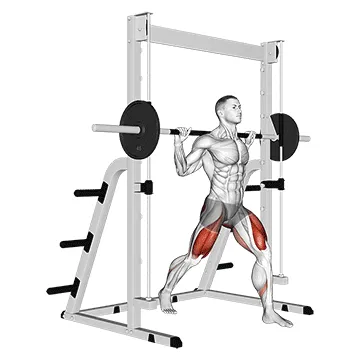
A good swap when you have a Smith machine to work with, and it still works the glutes.
How to perform this exercise
- Set up the smith machine with the barbell at hip height.
- Stand facing away from the machine with your feet shoulder-width apart.
- Step back with your right foot and place it on the barbell, resting the top of your foot on the bar.
- Bend your left knee and lower your body into a lunge position, keeping your back straight.
- Push through your left heel to return to the starting position.
- Repeat on the other side, stepping back with your left foot.
- Continue alternating sides for the desired number of repetitions.
Sets and reps: 3 to 5 sets of 5 to 8 reps on each side.
Why this matches
- Movement: forward lunge, the same as the Walking Lunge
- Primary muscle: glutes, the same as the Walking Lunge
- Equipment: a machine, not bodyweight only
- Body position: standing, the same as the Walking Lunge
6. Monster Walk
85% match- Glutes
- Bodyweight
- Intermediate
- Compound
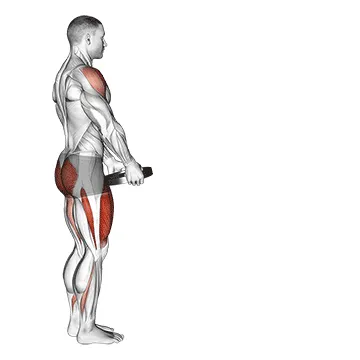
It uses the same equipment and still works the glutes.
How to perform this exercise
- Place a resistance band around your ankles.
- Stand with your feet shoulder-width apart and slightly bend your knees.
- Take a step to the side with your right foot, maintaining tension on the resistance band.
- Follow with your left foot, stepping to the side to return to the starting position.
- Repeat for the desired number of repetitions, then switch sides.
Sets and reps: 3 or 4 sets of 6 to 10 reps on each side.
Why this matches
- Primary muscle: glutes, the same as the Walking Lunge
- Equipment: bodyweight only, the same as the Walking Lunge
- Body position: standing, the same as the Walking Lunge
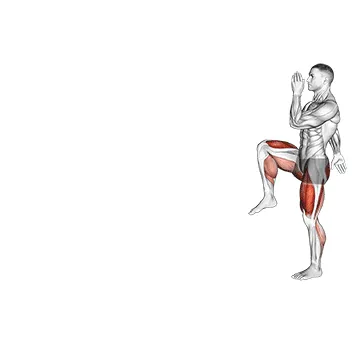
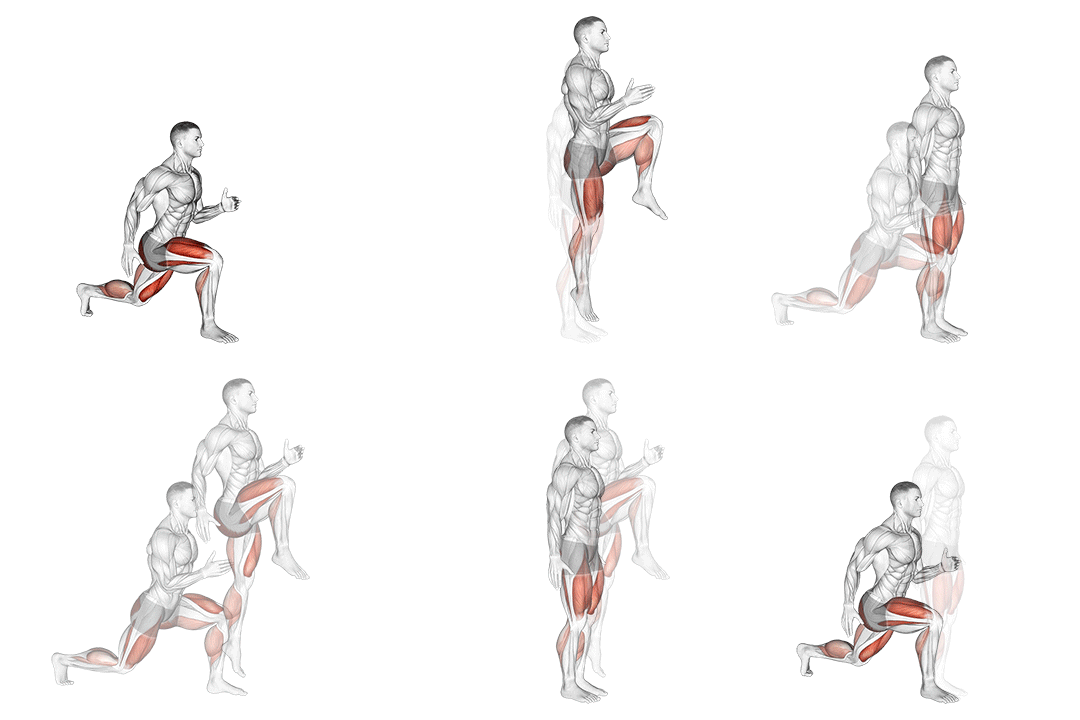
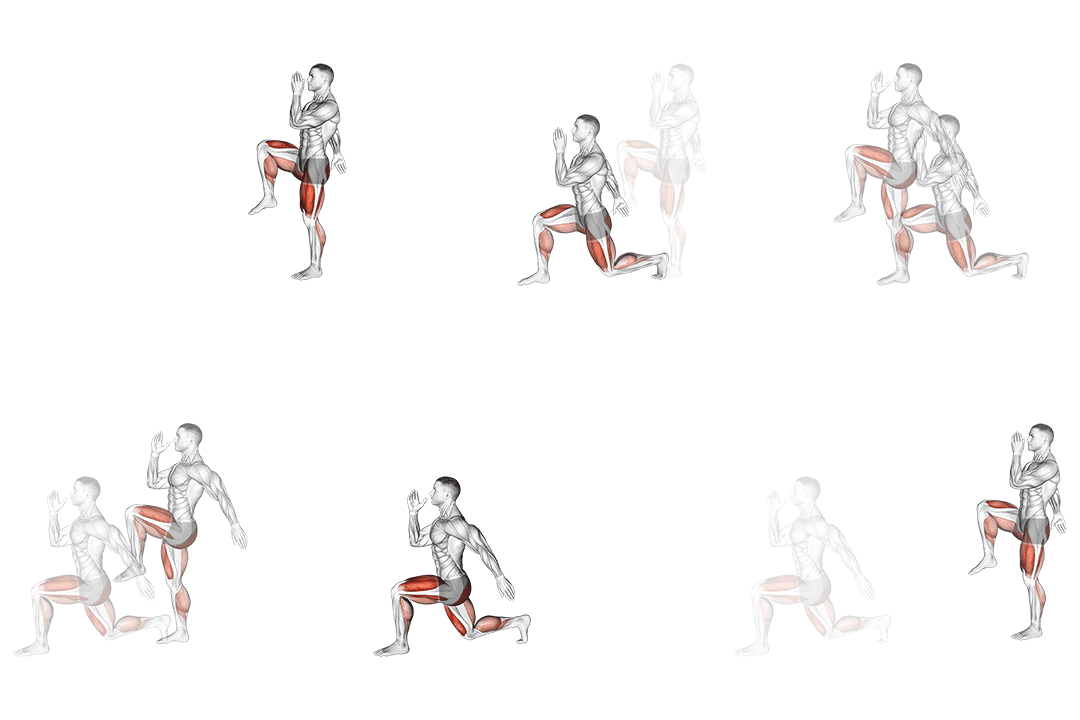
7. Walking High Knees Lunge
84% match- Cardio
- Bodyweight
- Beginner
- Compound
A looser match: it uses the same equipment, but it works the heart and lungs rather than the glutes.
How to perform this exercise
- Stand with your feet hip-width apart.
- Lift your right knee up towards your chest as high as you can while balancing on your left leg.
- Step forward with your right foot and lower your body into a lunge position, bending both knees to a 90-degree angle.
- Push off with your right foot and bring your left knee up towards your chest.
- Step forward with your left foot and lower your body into a lunge position.
- Continue alternating legs and lunging forward, keeping your core engaged and maintaining a steady pace.
- Repeat for the desired number of repetitions.
Sets and reps: 3 sets of 8 to 12 reps on each side, and add reps before you add load.
Why this matches
- Movement: forward lunge, the same as the Walking Lunge
- Primary muscle: your heart and lungs, not glutes
- Equipment: bodyweight only, the same as the Walking Lunge
- Body position: standing, the same as the Walking Lunge
8. Step-up With Knee Raise
84% match- Glutes
- Bodyweight
- Intermediate
- Compound
How to perform this exercise
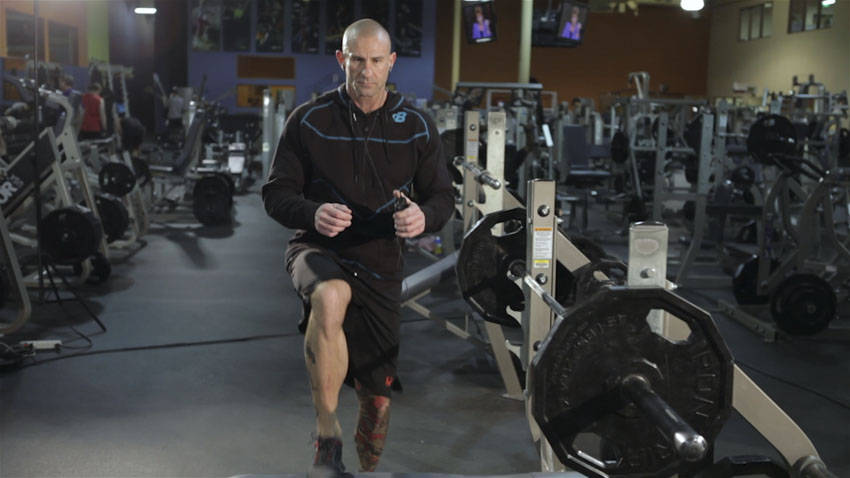
- Stand facing a box or bench of an appropriate height with your feet together. This will be your starting position.
- Begin the movement by stepping up, putting your left foot on the top of the bench. Extend through the hip and knee of your front leg to stand up on the box. As you stand on the box with your left leg, flex your right knee and hip, bringing your knee as high as you can.
- Reverse this motion to step down off the box, and then repeat the sequence on the opposite leg.
Sets and reps: 3 or 4 sets of 6 to 10 reps on each side.
Why this matches
- Primary muscle: glutes, the same as the Walking Lunge
- Equipment: bodyweight only, the same as the Walking Lunge
- Body position: standing, the same as the Walking Lunge
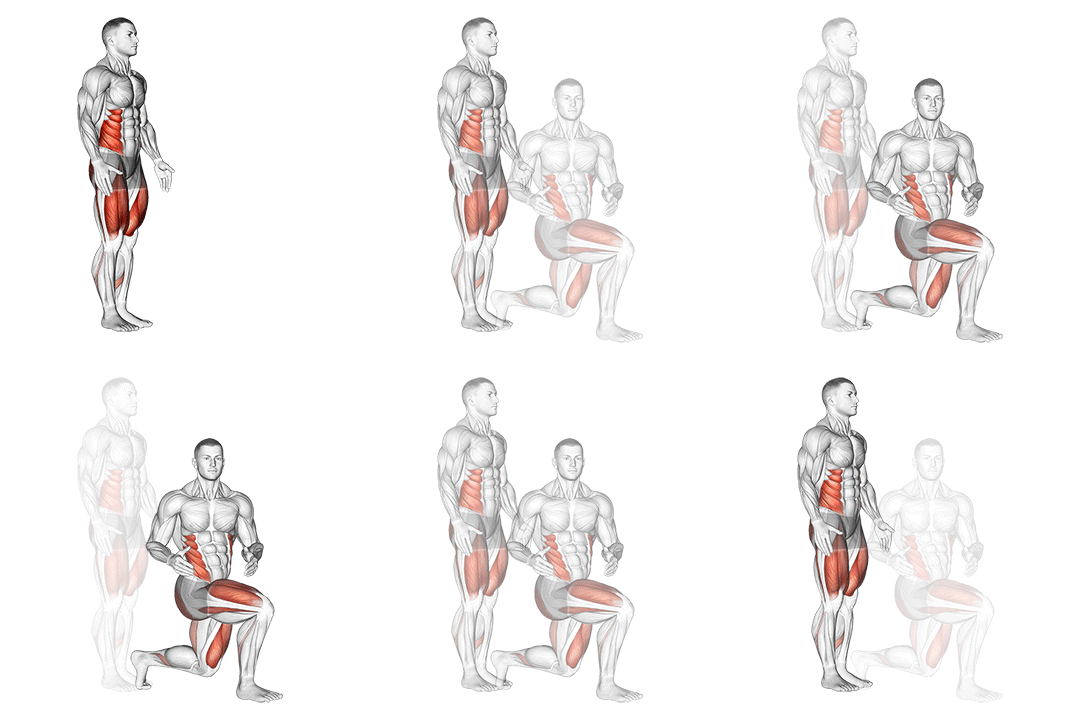
9. Lunge With Twist
84% match- Abs
- Bodyweight
- Intermediate
- Compound
How to perform this exercise
- Start by standing with your feet shoulder-width apart.
- Take a step forward with your right foot, lowering your body into a lunge position.
- As you lunge, twist your torso to the right, bringing your left elbow towards your right knee.
- Pause for a moment, then return to the starting position.
- Repeat on the other side, stepping forward with your left foot and twisting your torso to the left.
- Continue alternating sides for the desired number of repetitions.
Sets and reps: 3 or 4 sets of 6 to 10 reps on each side.
Why this matches
- Movement: forward lunge, the same as the Walking Lunge
- Primary muscle: abs, not glutes
- Equipment: bodyweight only, the same as the Walking Lunge
- Body position: standing, the same as the Walking Lunge
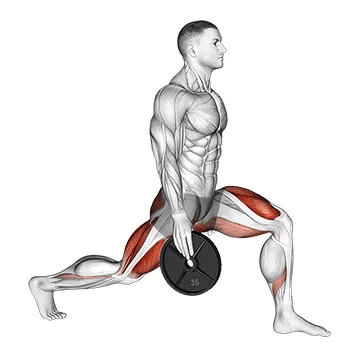
10. Weighted Stretch Lunge
82% match- Glutes
- Weighted
- Intermediate
- Compound
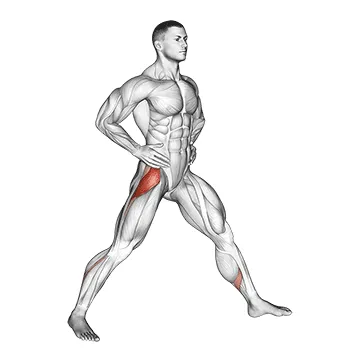
How to perform this exercise
- Stand with your feet shoulder-width apart.
- Take a step forward with your right foot, keeping your back straight.
- Lower your body by bending your knees until your right thigh is parallel to the ground.
- Push through your right heel to return to the starting position.
- Repeat with your left leg.
- Continue alternating legs for the desired number of repetitions.
Sets and reps: 3 or 4 sets of 6 to 10 reps on each side.
Why this matches
- Movement: forward lunge, the same as the Walking Lunge
- Primary muscle: glutes, the same as the Walking Lunge
- Equipment: free weights, not bodyweight only
- Body position: standing, the same as the Walking Lunge
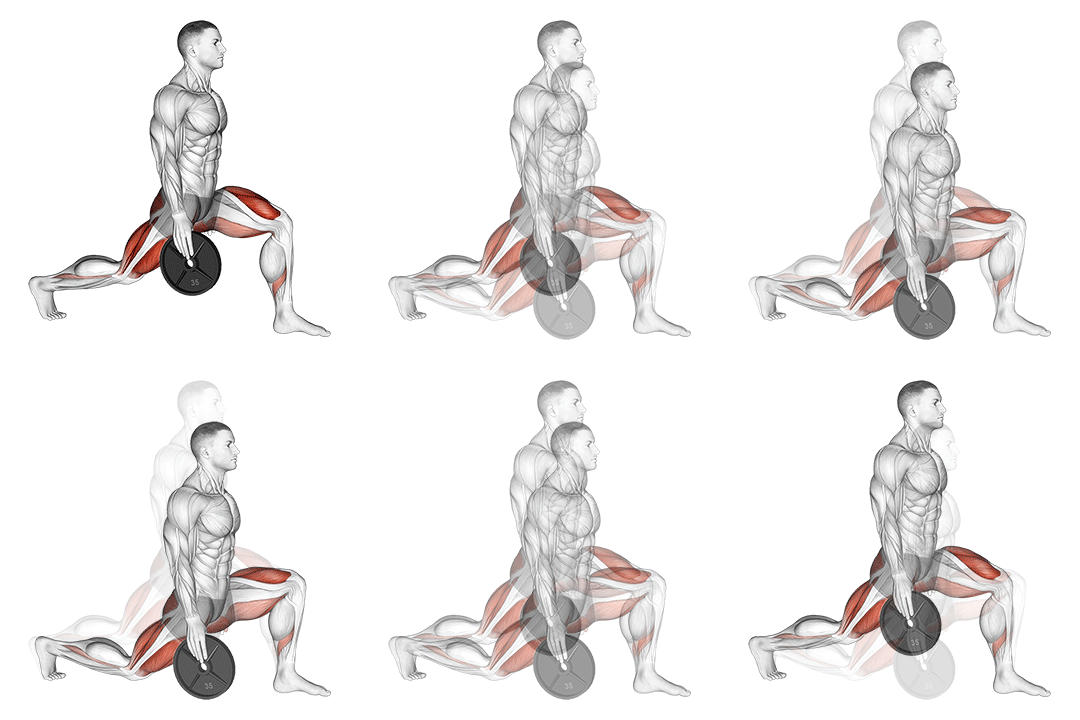
Why You Might Need a Walking Lunge Alternative
The Walking Lunge needs open floor to step through, and that is the first thing to disappear in a crowded gym or a small home room. The Forward Lunge keeps the same forward step and knee bend without needing room to travel, which makes it the first swap to reach for. The Monster Walk trades the forward travel for a resistance band around your ankles and short side steps, while the Step-up With Knee Raise trades it for a box or bench to climb instead. When you want the effort to feel heavier instead of easier, the Kettlebell Lunge Pass Through and the Weighted Lunge With Swing put a weight in your hands that the Walking Lunge does not, while the Smith Sprint Lunge rests your back foot on the bar so the front leg does all the work.
How to Choose the Right Walking Lunge Substitute
If you want an easier way to learn the step, the Forward Lunge holds the same knee bend without traveling. Once that feels easy, the Lunge With Jump adds a mid-air foot switch on the return step. With no floor space to spare, the Monster Walk moves side to side with a resistance band around your ankles. If you have a kettlebell, the Kettlebell Lunge Pass Through starts with the bell at your chest, then passes it under your front thigh from one hand to the other on every lunge before you push back to the start. On a Smith machine, the Smith Sprint Lunge sets the bar at hip height and rests the top of your back foot on it, so each rep is a single-leg lunge on the front leg with no walking at all.
Walking Lunge FAQ
Can I do the Walking Lunge at home?
Yes. The Forward Lunge trains the same step without needing any room to travel, so it fits in a small space on its own. The Monster Walk keeps the glutes working with short side steps against a resistance band around your ankles, so a couple of metres of width is all it needs. Between the two, you can keep the same stepping going at home without a gym.
Which swap suits someone new to lunges?
The Forward Lunge. It keeps the same forward step and knee bend as the Walking Lunge but drops the traveling part, so you can focus on your knee position first. Once that feels controlled, the Walking Lunge itself or the more explosive Lunge With Jump are the next step.
Which alternative adds load without a kettlebell?
The Weighted Lunge With Swing holds a weight in each hand and swings it forward and up as you step forward, then swings it back down as you push off to return to the start. That constant swing keeps the weight moving through the whole rep rather than just resting in your hands, so the added load stays part of the same lunge the Walking Lunge already trains.
Which alternative trains your heart and lungs more than your glutes?
The Walking High Knees Lunge. It is the Walking Lunge with a knee lift to your chest before each forward step, so your legs still do the same lunging work; the knee drive and the balance on one leg between steps are what raise the effort, so keep the reps continuous if you want it to feel like conditioning.
Find Alternatives for Any Exercise
Search the exercise database and filter the ranked substitutes by the equipment you own.
Similarity scores compare exercise metadata such as movement pattern, muscles, equipment and body position. They are not a safety rating or a check that you own the equipment. Learn about our methodology