

10 Best Wind Sprints Alternatives for Limited Space
You can replace Wind Sprints with short, high-intensity bodyweight drills that stress the same hip flexors and rectus abdominis. Try mountain climbers, high-knee runs in place, plank-to-sprinter, bear crawls, and bicycle crunches—drive the knee toward chest and brace your core to maintain pelvic stability and transfer force.
Original Exercise: Wind Sprints
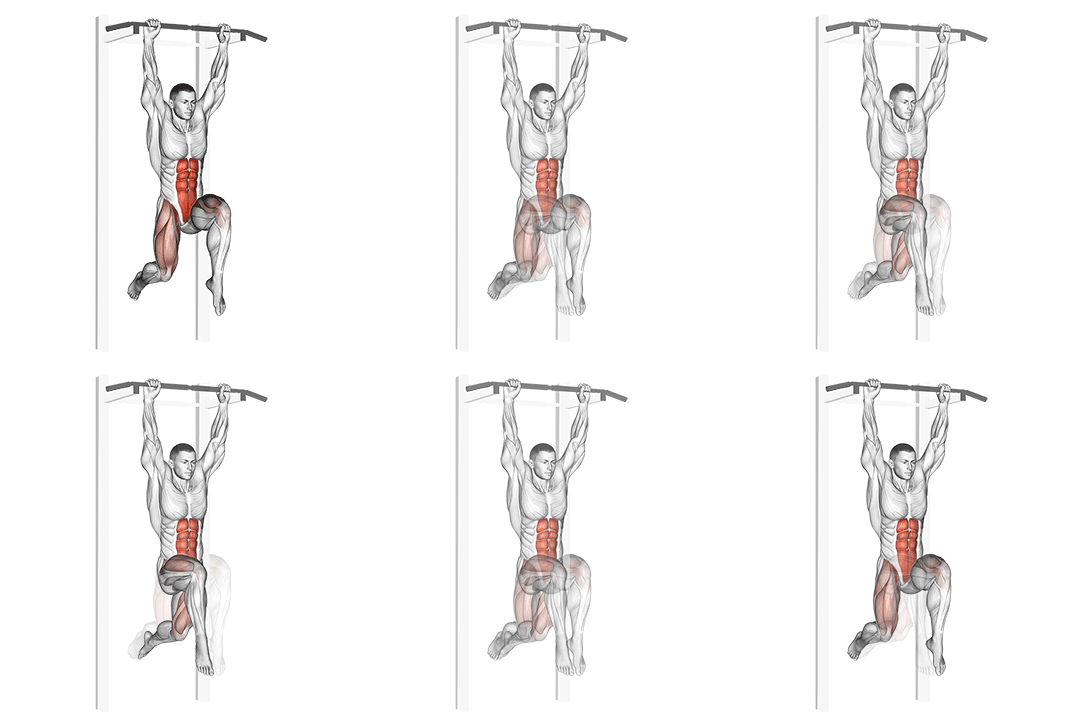
How to Perform Wind Sprints
- Find an open space or a track to perform the exercise.
- Start by standing with your feet shoulder-width apart.
- Begin running as fast as you can, pumping your arms and driving your knees up.
- Continue sprinting for a specific distance or time period.
- Rest and repeat for the desired number of repetitions.
Best Wind Sprints Alternatives
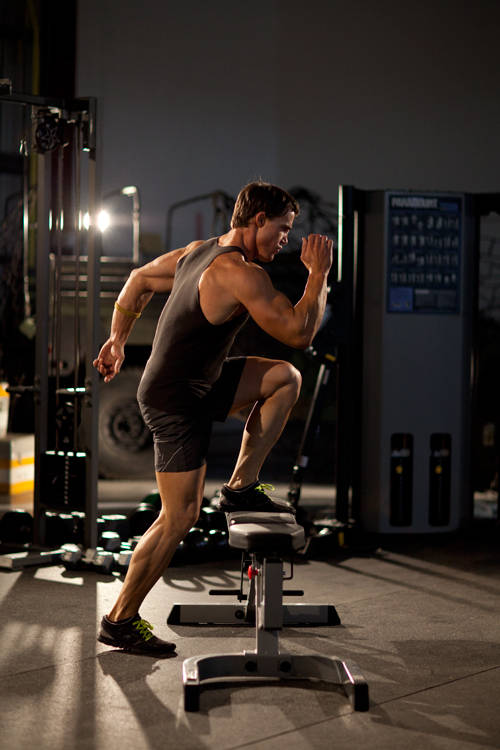
1. Bench Sprint
76.3% MatchHow to perform this exercise
- Stand on the ground with one foot resting on a bench or box with your heel close to the edge.
- Push off with your foot on top of the bench, extending through the hip and knee.
- Land with the opposite foot on top of the box, returning your other foot back to the start position.
- Continue alternating from one foot to another to complete the set.

2. Carioca Quick Step
72.6% MatchHow to perform this exercise
- Begin with your feet a few inches apart and your left arm up in a relaxed, athletic position.
- With your right foot, quick step behind and pull the knee up.
- Fire your arms back up when you pull the right knee, being sure that your knee goes straight up and down. Avoid turning your feet as you move and continue to look forward as you move to the side.
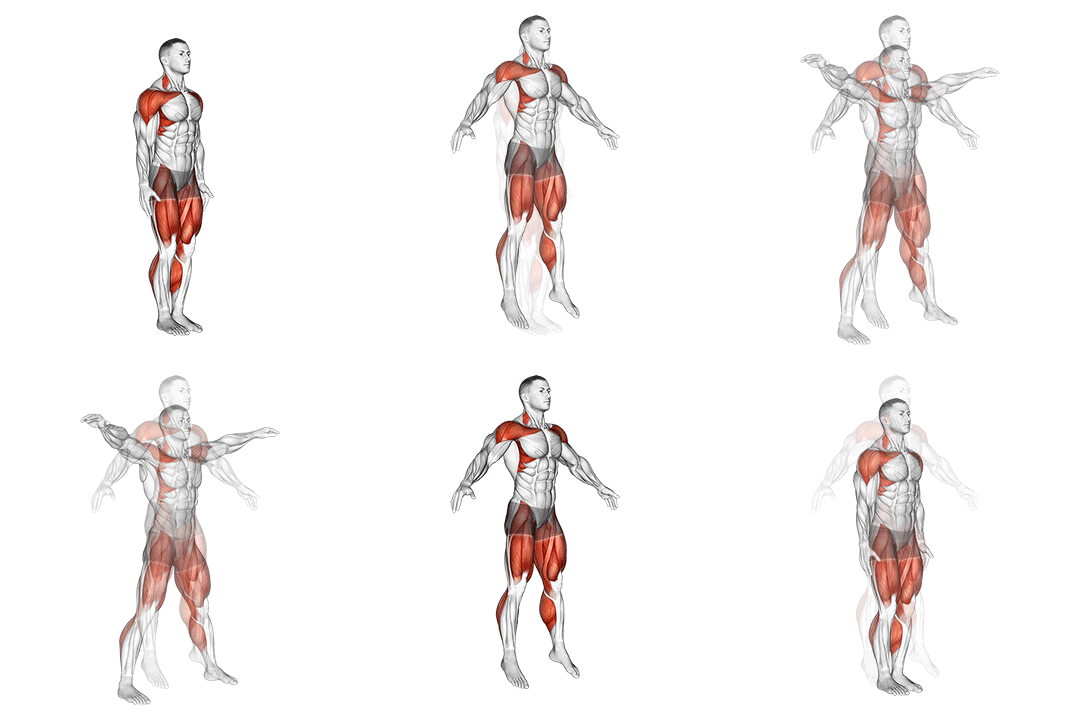
3. Astride Jumps (male)
70.2% MatchHow to perform this exercise
- Stand with your feet shoulder-width apart.
- Bend your knees and lower your body into a squat position.
- Jump explosively upwards, extending your legs and arms.
- While in the air, spread your legs apart and bring your arms out to the sides.
- Land softly with your feet shoulder-width apart, bending your knees to absorb the impact.
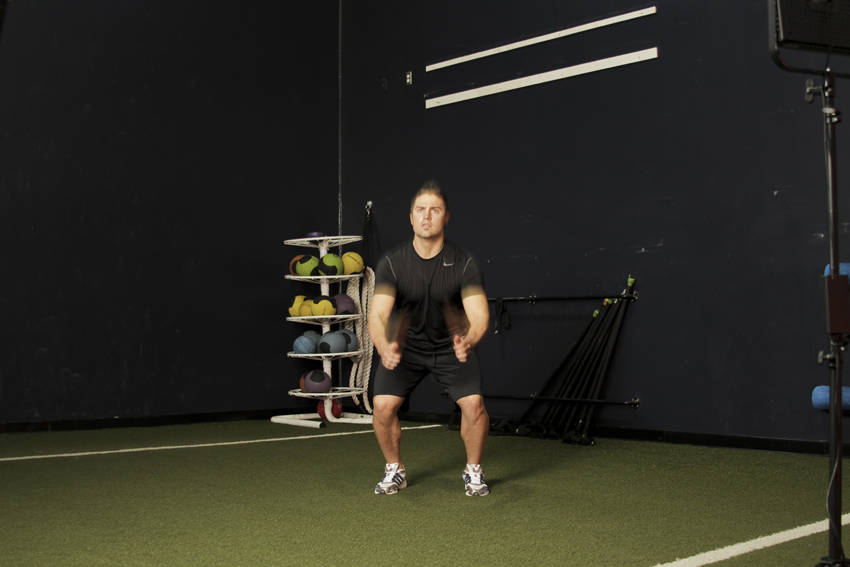
4. Double Leg Butt Kick
68.8% MatchHow to perform this exercise
- Begin standing with your knees slightly bent.
- Quickly squat a short distance, flexing the hips and knees, and immediately extend to jump for maximum vertical height.
- As you go up, tuck your heels by flexing the knees, attempting to touch the buttocks.
- Finish the motion by landing with the knees only partially bent, using your legs to absorb the impact.
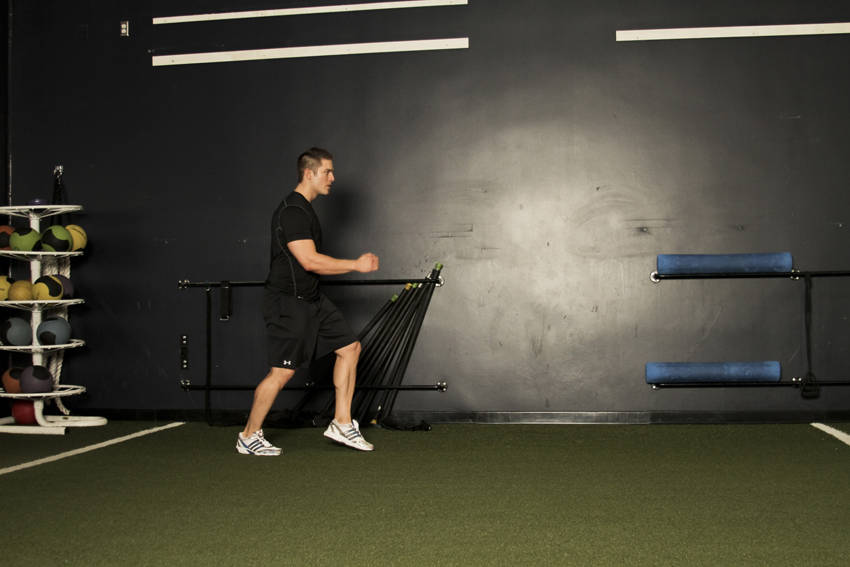
5. Fast Skipping
65.3% MatchHow to perform this exercise
- Start in a relaxed position with one leg slightly forward. This will be your starting position.
- Skip by executing a step-hop pattern of right-right-step to left-left-step, and so on, alternating back and forth.
- Perform fast skips by maintaining close contact with the ground and reduce air time, moving as quickly as possible.
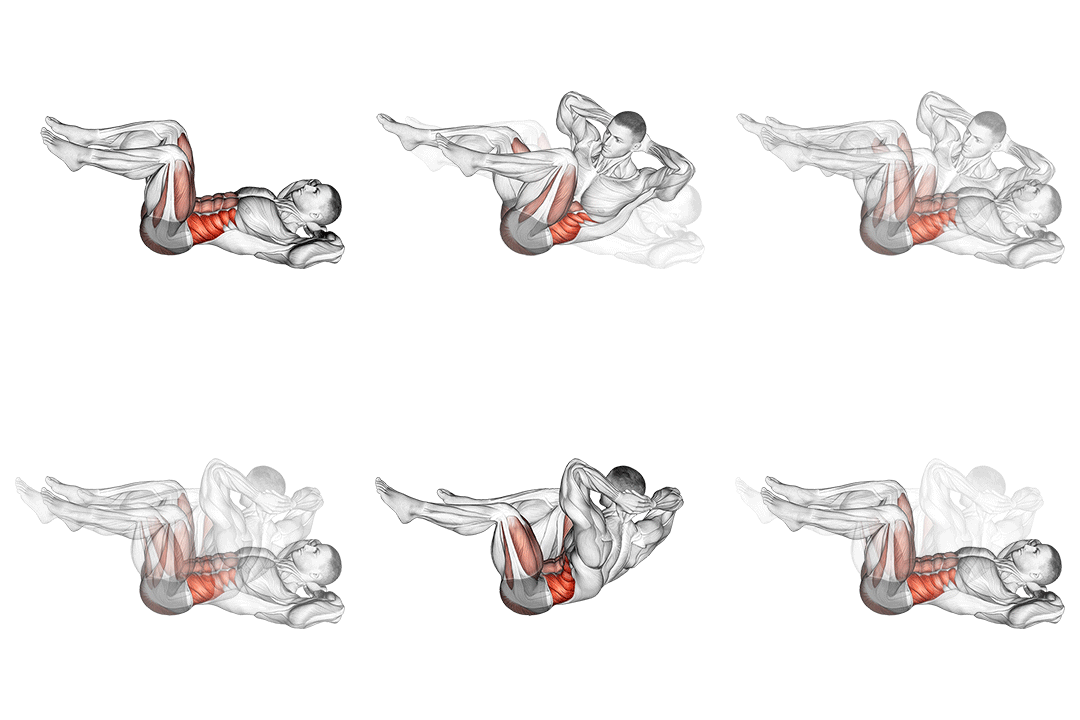
6. Air Bike
64% MatchHow to perform this exercise
- Lie flat on your back with your hands placed behind your head.
- Lift your legs off the ground and bend your knees at a 90-degree angle.
- Bring your right elbow towards your left knee while simultaneously straightening your right leg.
- Return to the starting position and repeat the movement on the opposite side, bringing your left elbow towards your right knee while straightening your left leg.
- Continue alternating sides in a pedaling motion for the desired number of repetitions.
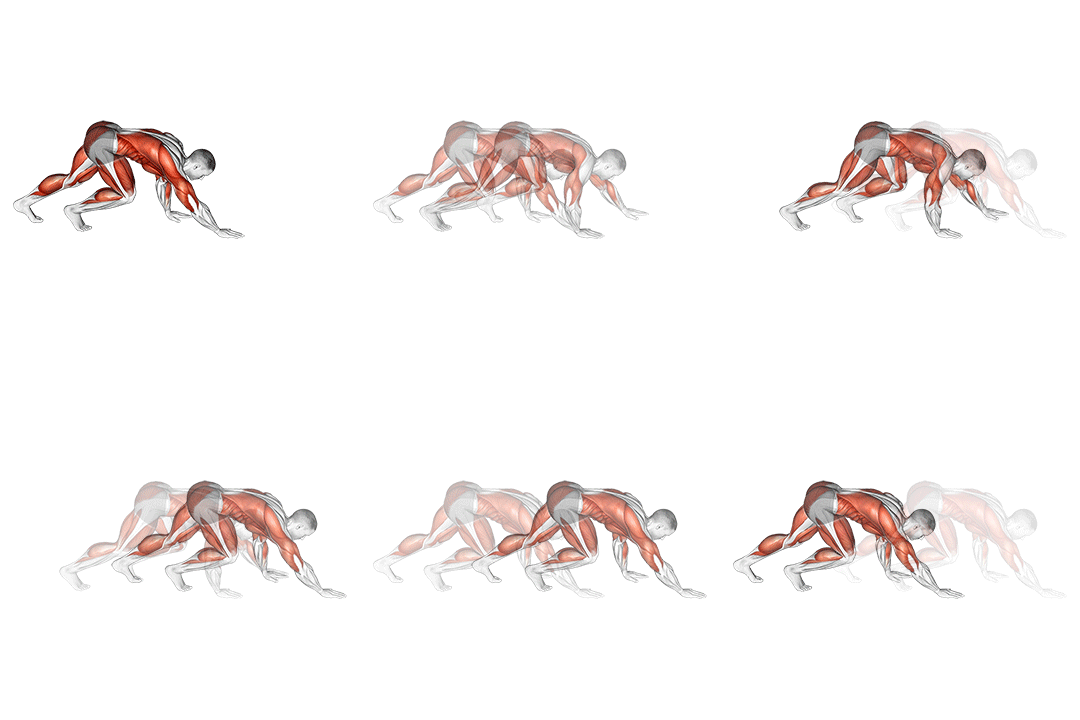
7. Bear Crawl
63.2% MatchHow to perform this exercise
- Start on all fours with your hands directly under your shoulders and your knees directly under your hips.
- Lift your knees slightly off the ground, keeping your back flat and your core engaged.
- Move your right hand and left foot forward simultaneously, followed by your left hand and right foot.
- Continue crawling forward, alternating your hand and foot movements.
- Maintain a steady pace and keep your core tight throughout the exercise.
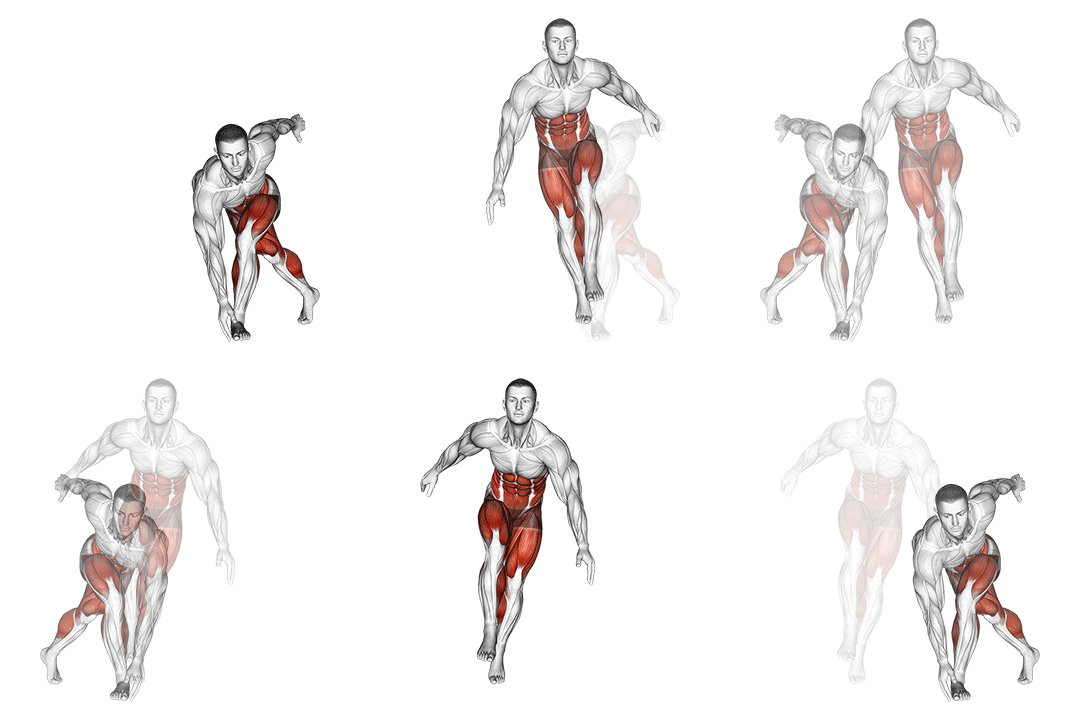
8. Back And Forth Step
62.2% MatchHow to perform this exercise
- Stand with your feet shoulder-width apart.
- Step forward with your right foot, bending your knee and lowering your body into a lunge position.
- Push off with your right foot and step back to the starting position.
- Repeat the movement with your left foot, alternating legs with each step.
- Continue stepping back and forth, maintaining a steady pace.
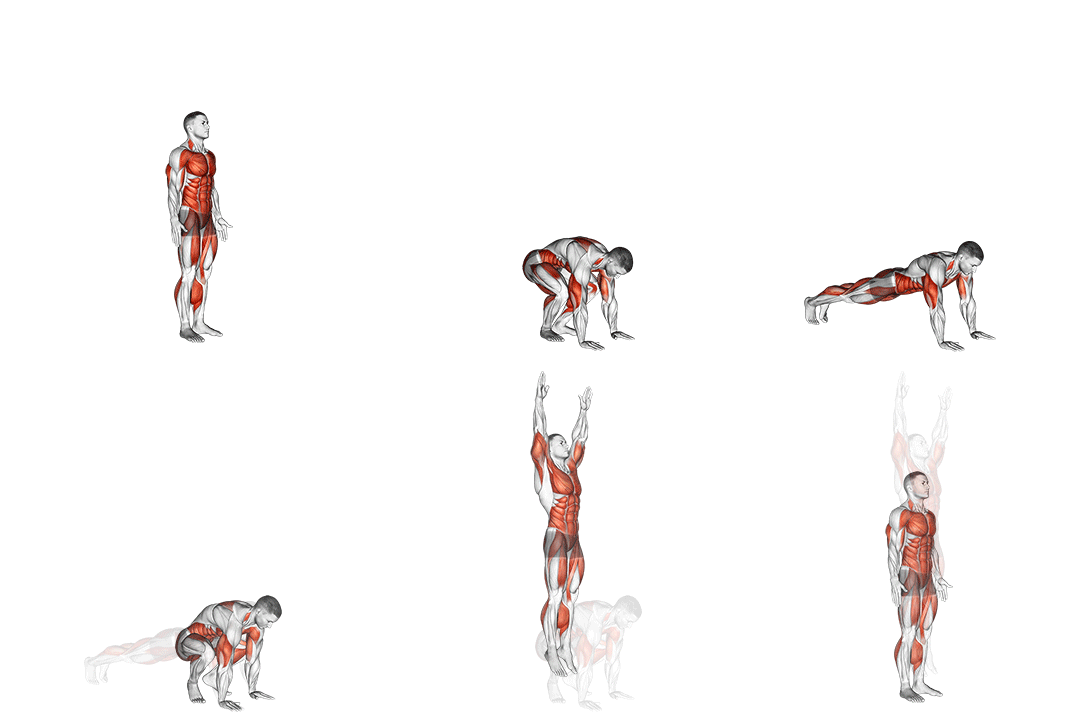
9. Burpee
60.3% MatchHow to perform this exercise
- Start in a standing position with your feet shoulder-width apart.
- Lower your body into a squat position by bending your knees and placing your hands on the floor in front of you.
- Kick your feet back into a push-up position.
- Perform a push-up, keeping your body in a straight line.
- Jump your feet back into the squat position.
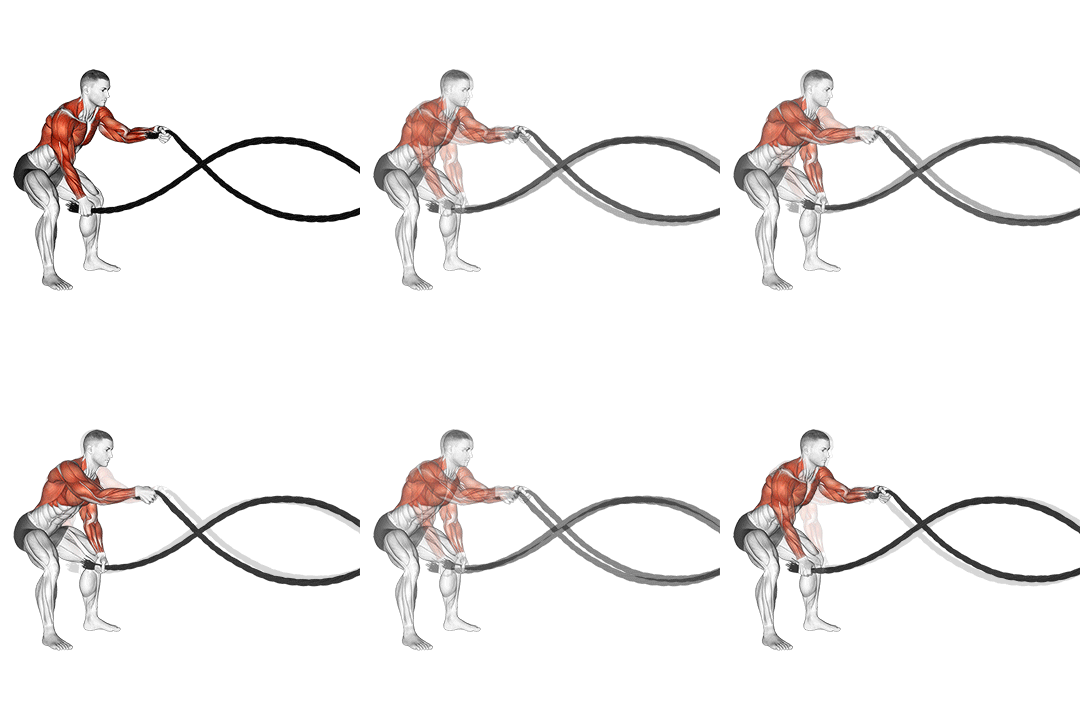
10. Battling Ropes
58% MatchHow to perform this exercise
- Stand with your feet shoulder-width apart and knees slightly bent.
- Hold one end of the rope in each hand, with your palms facing each other.
- Raise your arms to shoulder height, keeping your elbows slightly bent.
- Begin making alternating waves with the ropes by rapidly raising and lowering each arm.
- Continue for the desired duration or number of repetitions.
Why You Might Need a Wind Sprints Alternative
You may swap Wind Sprints due to joint pain, lack of space, poor weather, or sport-specific needs. Sprints load the lumbar spine and hips with high ground reaction forces; low-impact or stationary options reduce impact while preserving hip flexor and abdominal recruitment. Use exercises that maintain rapid hip flexion and anti-rotation demand (cue: keep hips level and brace abs). For injured athletes choose controlled progressions like slow mountain climbers, and for time-crunched trainees pick short intervals of high-knee runs to retain sprint-like neuromuscular stimulus.
How to Choose the Right Substitute
Pick a substitute based on impact tolerance, space, conditioning level, and movement specificity. If you lack space, choose high-knee runs or plank-to-sprinter and cue a quick but controlled knee drive while landing on the midfoot. For low-back concerns, prefer bear crawls with neutral spine and tension in the obliques to limit shear. Match the original’s work-to-rest ratio and emphasize hip flexor activation and anti-rotation demands to replicate sprint biomechanics. Progress by increasing cadence, range of motion, or adding short resisted sets.
Frequently Asked Questions
What muscles does Wind Sprints work?
Wind Sprints heavily recruit hip flexors, rectus abdominis, and obliques for trunk stabilization, plus glutes and quads for propulsion. The rapid hip flexion and forceful ground contact also demand coordinated core bracing to protect the lumbar spine.
What is the best bodyweight alternative to Wind Sprints?
Mountain climbers are the best bodyweight substitute because they combine rapid hip flexion with core stabilization; cue driving the knee toward the chest while keeping hips level. They replicate sprint-like neural firing and tax the rectus abdominis and obliques without high-impact loading.
Can I build muscle without doing Wind Sprints?
Yes. Use compound bodyweight moves like bear crawls and plank-to-sprinter to overload the same core and hip muscles. Focus on progressive intensity—higher cadence, longer sets, or added resistance—and maintain strict technique to maximize muscle activation.
More Exercise Alternatives
Find Alternatives for Any Exercise
Use our free tool to discover the best substitute exercises based on your available equipment and goals.
Try the Exercise Substitution Finder →