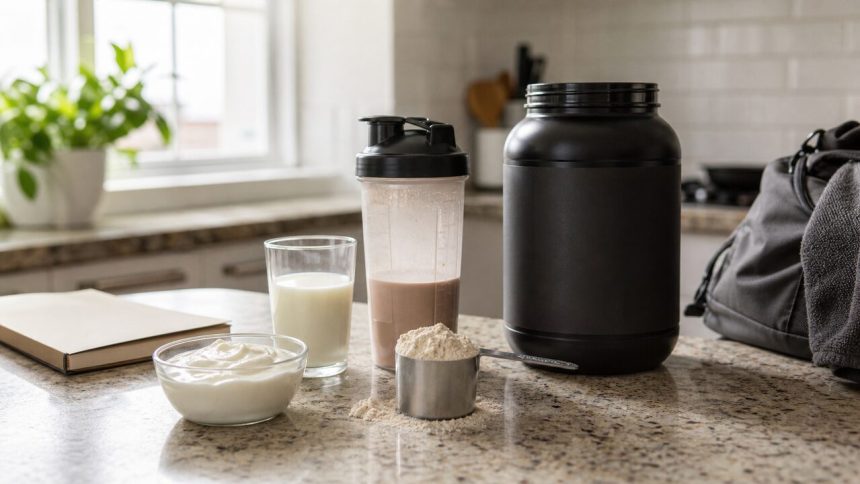
Whey protein is not magic muscle dust. It is a fast, dairy-derived protein that becomes useful when it solves a real problem: you are short on protein, short on time, or tired of forcing another chicken meal. The mistake is treating every tub the same. Concentrate, isolate, hydrolysate, and clear whey feel different in your stomach, your shaker, and your budget.
We rebuilt this guide for 2026 around the question lifters actually ask after staring at a supplement shelf: which whey should I buy, how much should I use, and when is food the better answer? We also cross-checked the current protein evidence, FitnessVolt’s own protein-powder review archive, and the most common SERP gaps: weak lactose guidance, no decision table, and too much “protein builds muscle” filler.
Whey protein powder is a convenient complete protein made from milk whey, the liquid left after cheese production. Use it when it helps you reach about 1.6 to 2.2 grams of protein per kilogram of body weight per day. Choose concentrate for value, isolate for lower lactose, and hydrolysate only if digestion speed or tolerance is worth the higher price.
What is whey protein powder?
Whey protein powder is made by filtering, drying, and processing whey, the protein-rich liquid left after milk is separated during cheese production. The useful part for lifters is its amino acid profile: whey is a complete protein, rich in essential amino acids and leucine, which helps trigger muscle protein synthesis after training.
That does not mean whey is superior to every food. It means whey is efficient. A scoop usually delivers about 20 to 30 grams of protein with little cooking, little chewing, and predictable calories. That is why it works so well for breakfast, post-workout shakes, travel, and high-protein diets where appetite is the bottleneck.
Skip whey if dairy proteins trigger allergy symptoms, if lactose causes persistent GI issues, or if you already hit your target with meals you enjoy. Whey is a tool. It is not a required supplement for gaining muscle.
How much protein do lifters actually need?
Most resistance-trained lifters should aim for roughly 1.6 to 2.2 grams of protein per kilogram of body weight per day, depending on calories, training volume, dieting phase, and body size. The International Society of Sports Nutrition recommends a similar range for active people, while Morton’s 2018 meta-analysis found gains tended to plateau around 1.6 grams per kilogram per day.
For a 180-pound lifter, that range is about 131 to 180 grams per day. Whey becomes useful when your normal meals leave a gap. If breakfast gives you 25 grams, lunch 45 grams, dinner 50 grams, and a snack 20 grams, one scoop can close the day without turning dinner into a chore.
If you need a food-first list before adding powder, use our high-protein foods guide. If you want a calculator-style target, our macro calculator can help set daily protein, carbs, and fats around your goal.
| Goal | Daily Protein Target | Where Whey Fits | Skip If |
|---|---|---|---|
| Muscle gain | 1.6-2.2 g/kg/day | 1 scoop when meals fall short | You already hit target with food |
| Fat loss | Closer to the high end if calories are low | Low-calorie shake, yogurt mix-in, or smoothie | Liquid calories make you hungrier |
| Busy schedule | Same total target, fewer cooking windows | Breakfast or travel protein anchor | Powder replaces too many whole meals |
| Sensitive stomach | Same target, tolerance first | Isolate or lactose-free option | Dairy protein causes allergy symptoms |
What is the difference between whey concentrate, isolate, and hydrolysate?
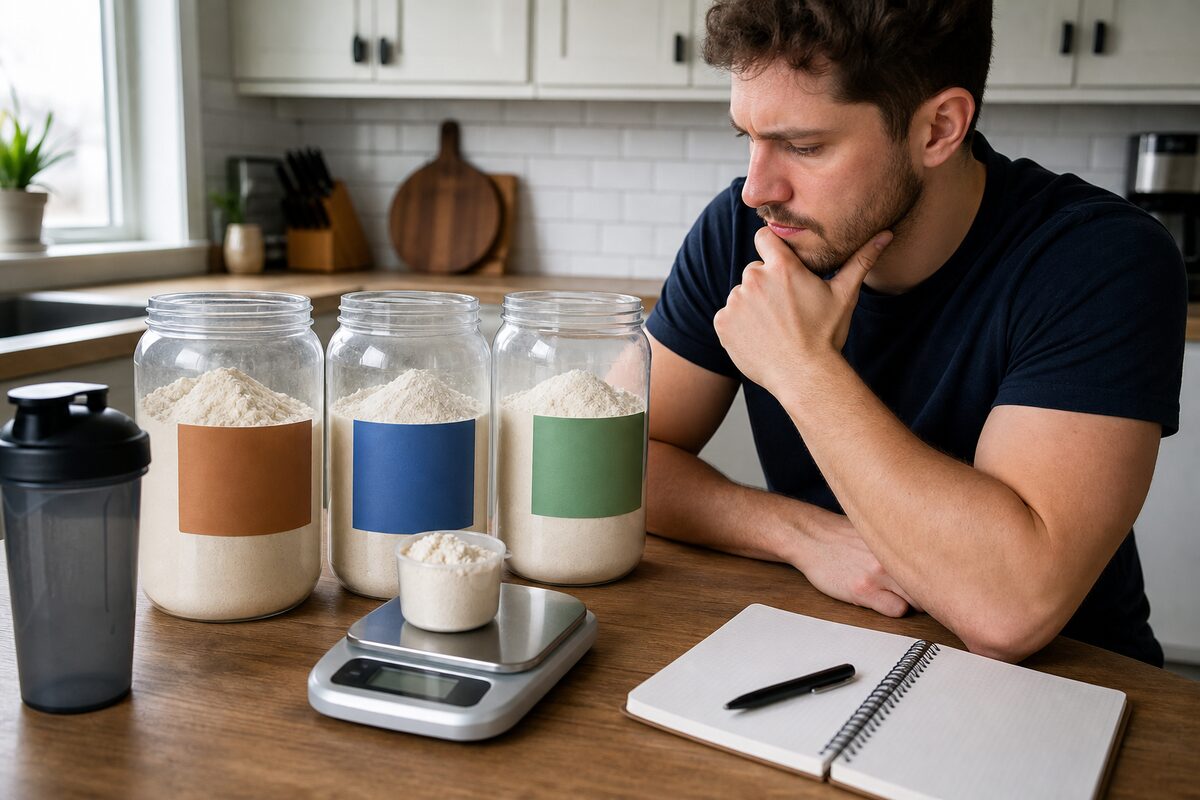
Whey concentrate is usually the value pick, whey isolate is the leaner and lower-lactose pick, and whey hydrolysate is pre-broken down for faster digestion but usually costs more. The right choice depends less on marketing and more on your stomach, budget, calories, and how often you use shakes.
Whey concentrate typically contains more lactose, fat, and carbs than isolate, but it is often cheaper and tastes creamier. It is a strong choice if you tolerate dairy and want a daily shake without paying isolate prices.
Whey isolate is filtered further, so it usually has more protein per calorie and less lactose. Choose isolate if you are cutting, lactose-sensitive, or want the cleanest macro profile. Many of our top picks in the protein powders for men guide fall into this practical lane.
Hydrolyzed whey is partially broken down before you drink it. That can help some people tolerate it, but the real-world advantage is often smaller than the price difference. Start with concentrate or isolate first unless you have a clear reason.
| Type | Best For | Main Advantage | Main Tradeoff | FitnessVolt Take |
|---|---|---|---|---|
| Concentrate | Most lifters on a budget | Good taste and value | More lactose and calories | Best first tub if dairy sits well |
| Isolate | Cutting, low lactose, lean macros | More protein per calorie | Higher price | Best daily option for sensitive stomachs |
| Hydrolysate | Niche digestion/tolerance needs | Pre-digested protein | Expensive, sometimes bitter | Try only after isolate fails |
| Clear whey | Readers tired of creamy shakes | Lighter drink texture | Still dairy-derived | Useful, but not dairy-free |
Is whey better than casein, soy, or food?
Whey is faster-digesting than casein and usually easier to drink than a full meal, but “better” depends on the job. Whey is excellent when you need quick protein. Casein can be useful before a long gap between meals. Soy and other complete plant proteins can work well when dairy is not an option.
Food still wins for fullness, micronutrients, chewing satisfaction, and diet quality. A salmon bowl, eggs with potatoes, Greek yogurt with fruit, or tofu stir-fry gives you nutrients a scoop cannot. Whey wins when convenience is the limiting factor.
If you want a product comparison rather than a nutrition primer, see our best whey protein powders ranking and our clear protein powder guide.
When should you take whey protein?
Take whey whenever it helps you hit your daily protein target. The post-workout window matters less than total daily protein and spreading protein across the day. A practical target is 3 to 5 protein feedings of roughly 25 to 45 grams each, depending on body size and appetite.
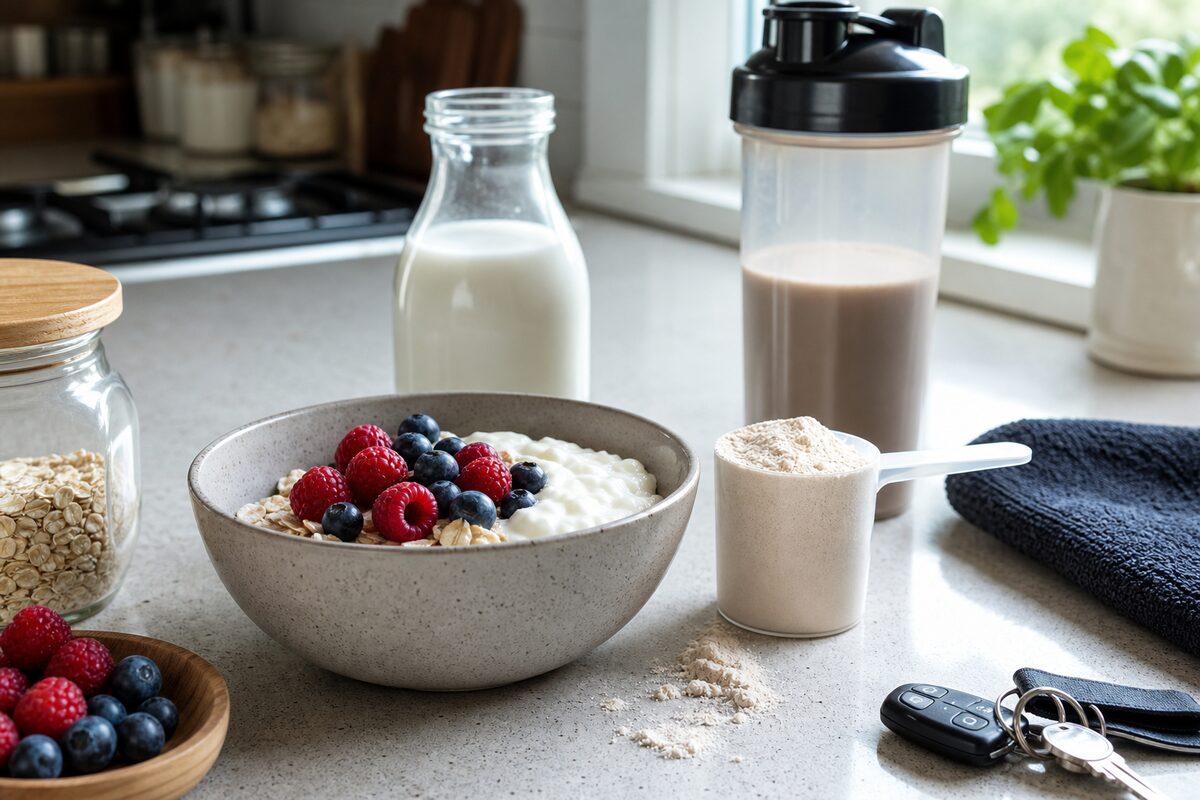
Post-workout is still convenient because training reminds you to drink the shake. Breakfast is often even more valuable because many lifters under-eat protein early, then try to fix the entire day at dinner. One scoop stirred into Greek yogurt or blended with milk and fruit can make the first meal useful.
How do you use whey without wrecking your stomach?
Start with half a scoop, mix it with water or lactose-free milk, and use it with a meal for the first few days. If that feels fine, move to a full scoop. GI issues often come from lactose, serving size, sugar alcohols, gums, or slamming a shake too fast after hard training.
If concentrate gives you bloating or urgency, try isolate before abandoning whey completely. If isolate still bothers you, switch protein type. Egg white, beef, soy, pea-rice blends, or whole-food protein may fit better. Readers with recurring GI issues can also compare our sensitive-stomach protein powders.
Who should skip whey protein?
Skip whey if you have a diagnosed milk-protein allergy, if dairy reliably triggers symptoms, or if a clinician has told you to manage protein intake for kidney disease or another condition. Lactose intolerance is different from milk allergy, but it still matters if whey concentrate causes repeat symptoms.
Also skip whey if it turns your diet into a liquid-calorie habit. A shake that helps you hit 150 grams of protein is useful. Three shakes that replace meals, vegetables, and fiber are not a smarter bodybuilding diet.
What should you look for on a whey label?
A good whey label makes the protein source, serving size, calories, protein grams, sweeteners, allergens, and third-party testing easy to check. For most lifters, the target is simple: around 20 to 30 grams of protein per serving, a flavor you will actually finish, and no ingredient that repeatedly bothers your stomach.
Do not buy based only on “premium,” “clean,” or “advanced.” Check the first ingredient. Check whether it is concentrate, isolate, blend, or clear whey. Check if one serving is one scoop or two. A cheaper tub can become expensive if the real serving is twice what you expected.
Label Checklist
- Protein per serving: usually 20-30 grams is practical.
- Protein type: concentrate, isolate, hydrolysate, blend, or clear whey.
- Calories: important during cutting phases.
- Carbs and lactose: useful for sensitive stomachs.
- Sweeteners and gums: common GI triggers for some readers.
- Testing: third-party testing is a plus for athletes and frequent users.
Common whey protein mistakes
Mistake 1: buying isolate when concentrate works. If concentrate digests well and fits your calories, isolate may not be worth the extra money.
Mistake 2: treating hydrolysate as mandatory. Hydrolyzed whey can be useful, but most lifters should not pay for it before trying isolate.
Mistake 3: forgetting fiber. A shake with water is not a meal. Add fruit, oats, chia, yogurt, or eat a real meal nearby.
Mistake 4: overusing liquid calories. If shakes make you less full, use whey in yogurt, oats, or smoothies instead of drinking it alone.
Mistake 5: ignoring the rest of the day. One perfect post-workout shake does not fix a 90-gram daily protein shortfall.
FAQ
Does whey protein build muscle by itself?
No. Whey supports muscle gain when it helps you reach a sufficient daily protein intake while you train progressively. Resistance training is the signal. Protein supplies the building material.
Is whey isolate better than whey concentrate?
Whey isolate is better if you want lower lactose, fewer calories, and more protein per scoop. Whey concentrate is often better for value and taste if you tolerate dairy.
Is clear whey the same as whey protein?
Clear whey is still whey protein, usually processed to mix like a lighter drink instead of a creamy shake. It is not dairy-free, so milk-protein allergy and dairy tolerance still matter.
Can I take whey every day?
Yes, if it fits your protein target and digestion. A daily scoop is normal for many lifters, but whole foods should still carry most of your diet.
How many scoops of whey should I take?
Use the smallest amount that closes your daily protein gap. Most lifters need 0 to 2 scoops per day, not a fixed number. Calculate your food protein first.
Bottom line
Whey protein powder is worth using when it makes your protein target easier, not when it replaces basic eating. Start with concentrate if you tolerate dairy and want value. Use isolate if you need lower lactose or cleaner macros. Treat hydrolysate as a niche fix, not the default upgrade.
If you only change one thing this week, set your daily protein target, count your normal meals for two days, and use whey only to close the actual gap. That is how a scoop becomes useful instead of just another tub on top of the fridge.
Sources
- Jäger, R., Kerksick, C. M., Campbell, B. I., et al. (2017). International Society of Sports Nutrition Position Stand: protein and exercise. Journal of the International Society of Sports Nutrition. DOI: 10.1186/s12970-017-0177-8.
- Morton, R. W., Murphy, K. T., McKellar, S. R., et al. (2018). A systematic review, meta-analysis and meta-regression of the effect of protein supplementation on resistance training-induced gains in muscle mass and strength. British Journal of Sports Medicine. DOI: 10.1136/bjsports-2017-097608.
- Tang, J. E., Moore, D. R., Kujbida, G. W., Tarnopolsky, M. A., & Phillips, S. M. (2009). Ingestion of whey hydrolysate, casein, or soy protein isolate: effects on mixed muscle protein synthesis at rest and following resistance exercise in young men. Journal of Applied Physiology. PMID: 19589961.
- Phillips, S. M., & Van Loon, L. J. C. (2011). Dietary protein for athletes: from requirements to optimum adaptation. Journal of Sports Sciences. PMID: 22150425.