


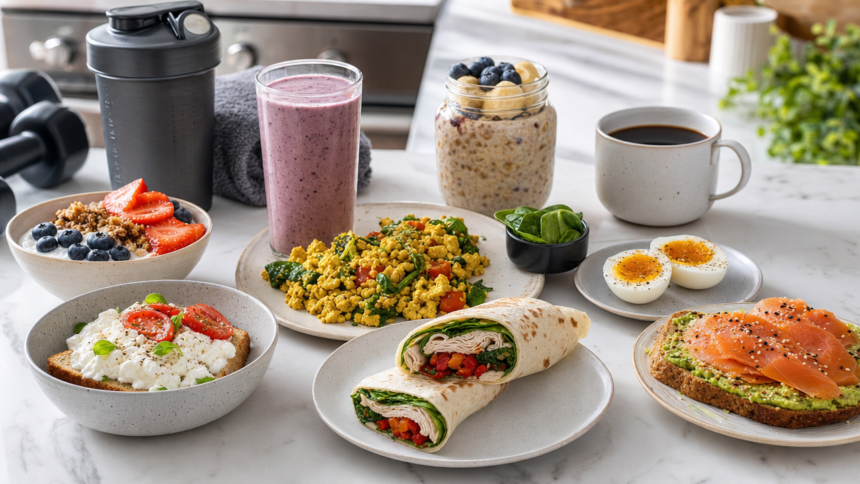
Short on time? The easiest wins are the Greek yogurt power bowl, cottage cheese toast with eggs, turkey-egg wrap, overnight oats with whey, and tofu scramble with soy milk. Pick one sweet breakfast and one savory breakfast, then repeat them until your morning protein target stops feeling like a second job.
Most high-protein breakfast advice sounds like it was written by someone who thinks joy is a macro violation. Egg whites. Plain oats. Another chalky shake. Technically useful, emotionally bleak.
This list is built for real mornings: the ones where you have 2 minutes, the ones where you trained early, the ones where appetite is low, and the ones where you need breakfast to hold you until lunch. Each idea lands around 30 grams of protein, includes actual ingredients, and gives you a reason to choose it beyond “protein is good.”
The 30-gram target is not magic. It is practical. It gives most lifters, dieters, and busy adults a real protein feeding early in the day, which makes the rest of the day easier. For your personal target, use our macronutrient calculator. For the grocery-store protein anchors behind these meals, see our high-protein foods ranking.
Why Does a 30-Gram Breakfast Work So Well?
A 30-gram breakfast works because it gives you a meaningful protein dose before lunch without requiring a giant plate. For many adults eating 120-180 grams of protein per day, breakfast becomes one of 3-5 protein feedings instead of the meal that gets skipped and “made up” at night.
The International Society of Sports Nutrition supports higher protein intakes for active people, and Mamerow and colleagues found that evenly distributed protein intake produced a stronger 24-hour muscle protein synthesis response than a skewed pattern that saved most protein for dinner. Leidy and colleagues also found that a higher-protein breakfast improved appetite and food-reward signals in breakfast-skipping adolescents.
So no, you do not need to eat within 30 minutes of waking. And yes, your body can use more than 30 grams in a meal. The point is simpler: hit a useful protein floor early, add fiber or carbs based on your goal, and stop forcing dinner to clean up the whole day.
Which 30-Gram Breakfast Should You Make?
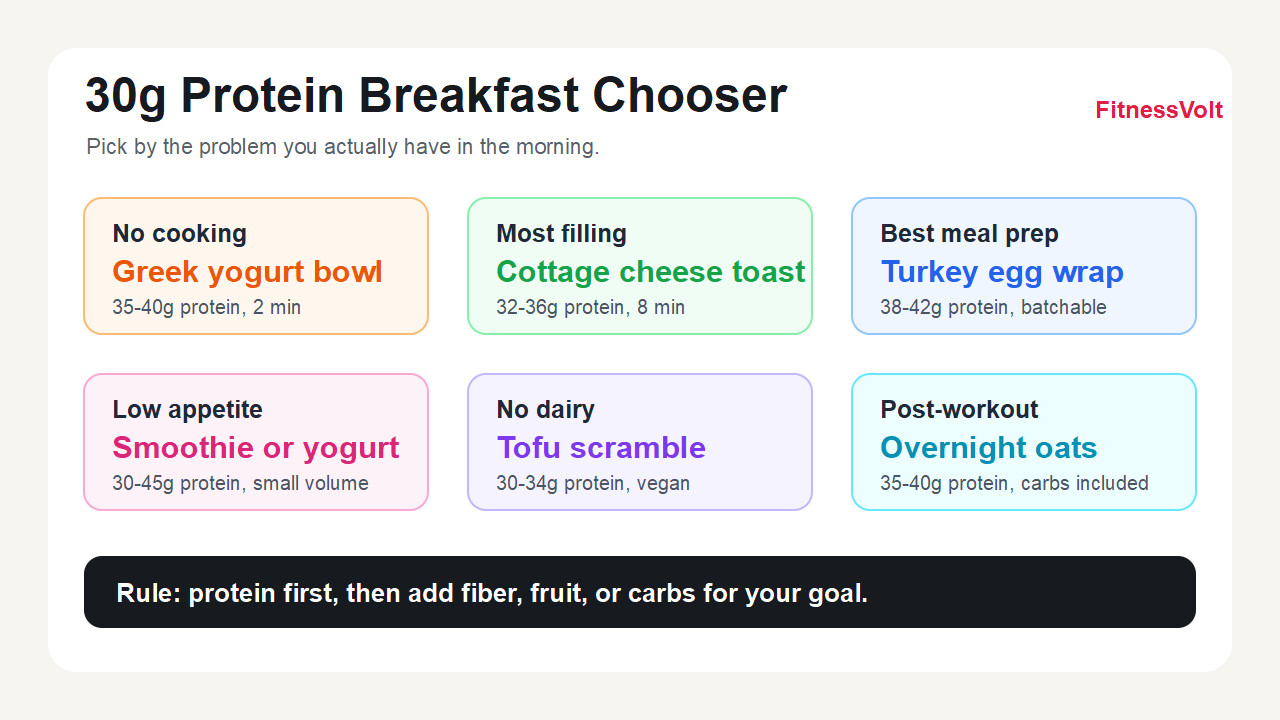
Pick the breakfast that solves your actual morning problem. If time is the problem, do not cook. If hunger is the problem, use eggs, cottage cheese, tofu, or a bowl. If appetite is low, use smaller-volume foods like yogurt, salmon, smoothies, or ready-to-drink shakes.
| Need | Best Pick | Protein | Time |
|---|---|---|---|
| No cooking | Greek yogurt power bowl | 35-40 g | 2 min |
| Most filling | Cottage cheese toast plus eggs | 32-36 g | 8 min |
| Best meal prep | Turkey-egg breakfast wrap | 38-42 g | 15 min batch |
| Low appetite | Smoothie, yogurt, or salmon toast | 30-45 g | 1-7 min |
| No dairy | Tofu scramble plus soy milk | 30-34 g | 12 min |
| Post-workout | Overnight oats with whey | 35-40 g | 5 min night before |
15 High-Protein Breakfasts That Make 30 Grams Shockingly Easy
Protein counts below are realistic estimates, not lab labels. Brands vary, portions vary, and your scoop may not match mine. Use these as buildable templates, then confirm the exact number with your food label if you track tightly.
1. Greek Yogurt Power Bowl
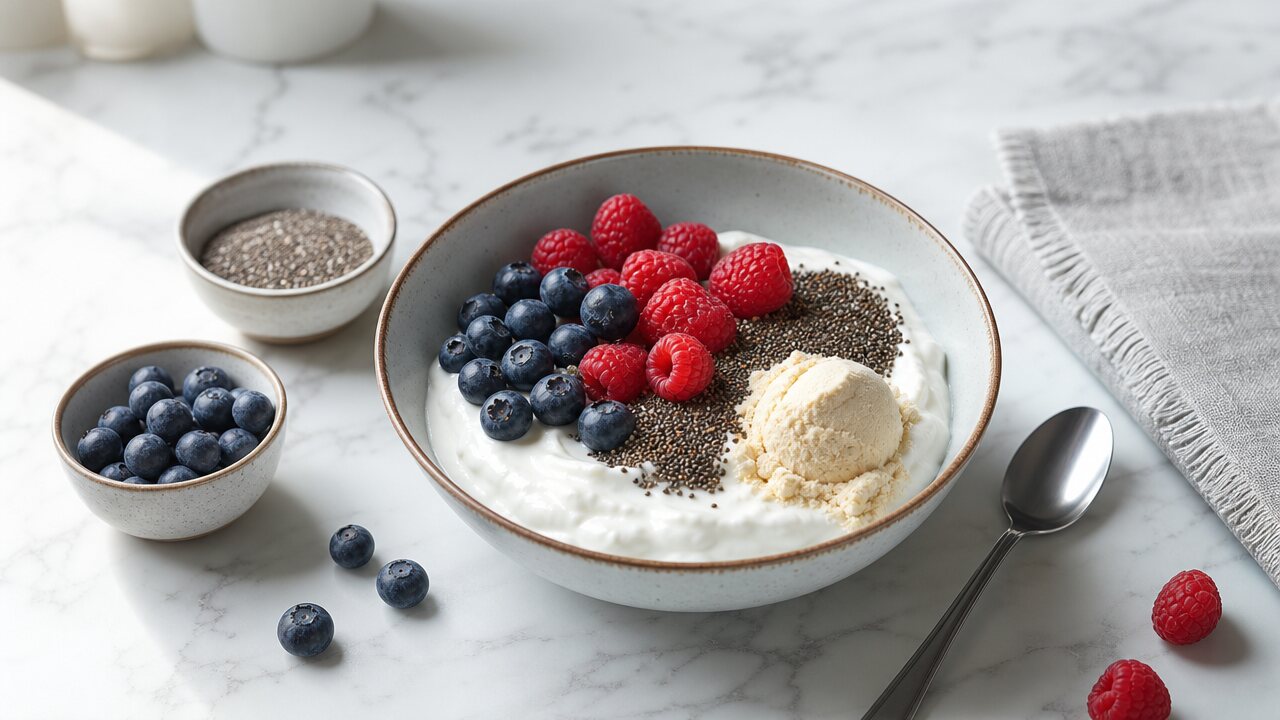
Protein/time: 35-40 g protein | 2 minutes | no cooking.
This is the breakfast for people who want the protein target handled before the toaster even warms up. Greek yogurt brings the base, whey pushes it over the line, and berries plus chia keep it from tasting like a punishment meal.
Ingredients:
- 1.5 cups plain Greek yogurt
- 1 scoop vanilla or unflavored whey protein
- 1/2 cup berries
- 1 tablespoon chia seeds
- Cinnamon or a small drizzle of honey
How to make it: Stir the protein powder into the yogurt first, then add berries, chia, and cinnamon. If the bowl gets too thick, loosen it with 1-2 tablespoons of milk.
Best for: busy mornings, sweet breakfast people, and post-workout meals. Skip if: dairy bothers your stomach or whey makes you bloated. Upgrade: Use frozen berries and let them sit for 10 minutes. The juice turns the yogurt into something closer to dessert.
2. Cottage Cheese Toast Plus Two Eggs
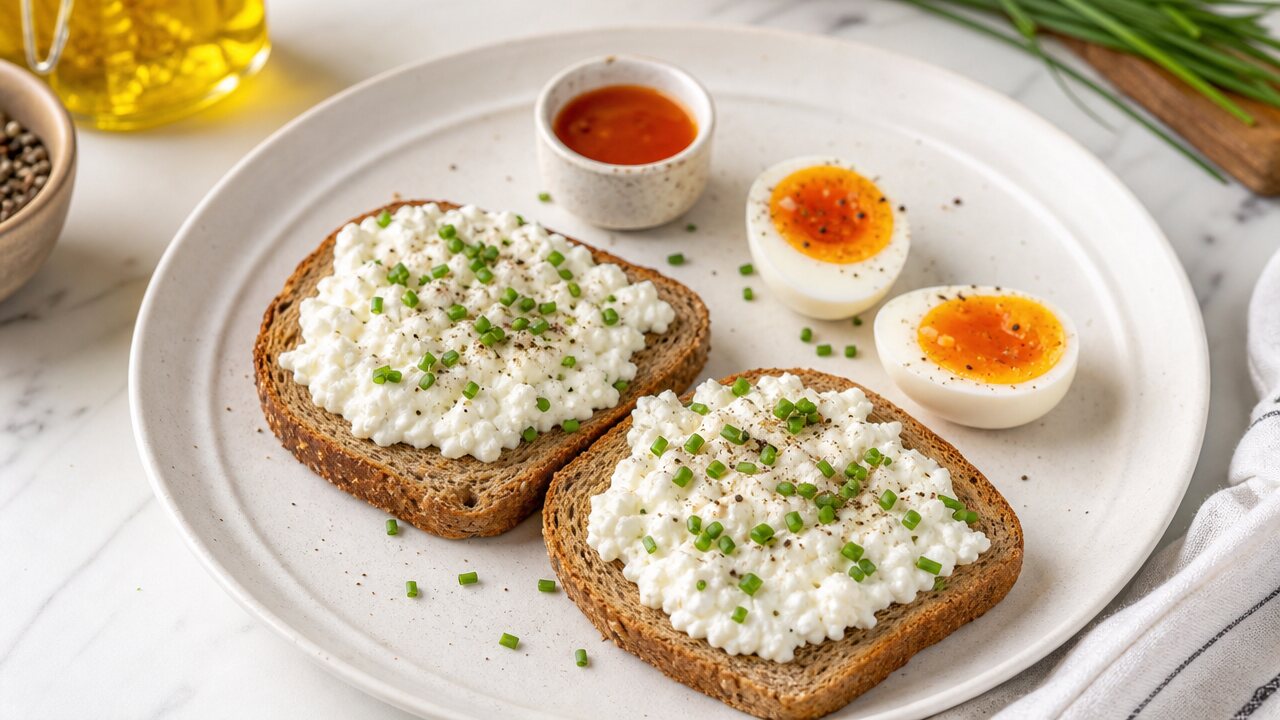
Protein/time: 32-36 g protein | 8 minutes | most filling.
Cottage cheese toast is the breakfast that looks too simple to work, then keeps you full until lunch. The cottage cheese covers the protein gap that two eggs alone cannot touch, while the toast gives you enough chew to feel like you ate a real meal.
Ingredients:
- 2 slices high-fiber or sourdough toast
- 3/4 cup cottage cheese
- 2 eggs
- Black pepper, chives, and hot sauce
- Optional: tomato slices or cucumber
How to make it: Toast the bread, spoon cottage cheese over the top, season hard, and serve with boiled, fried, or scrambled eggs.
Best for: fat-loss breakfasts, savory cravings, and people who need breakfast to last. Skip if: you hate cottage cheese texture even after trying small-curd. Upgrade: Blend the cottage cheese for 20 seconds if the curds are the problem. It turns into a high-protein spread.
3. Turkey-Egg Breakfast Wrap
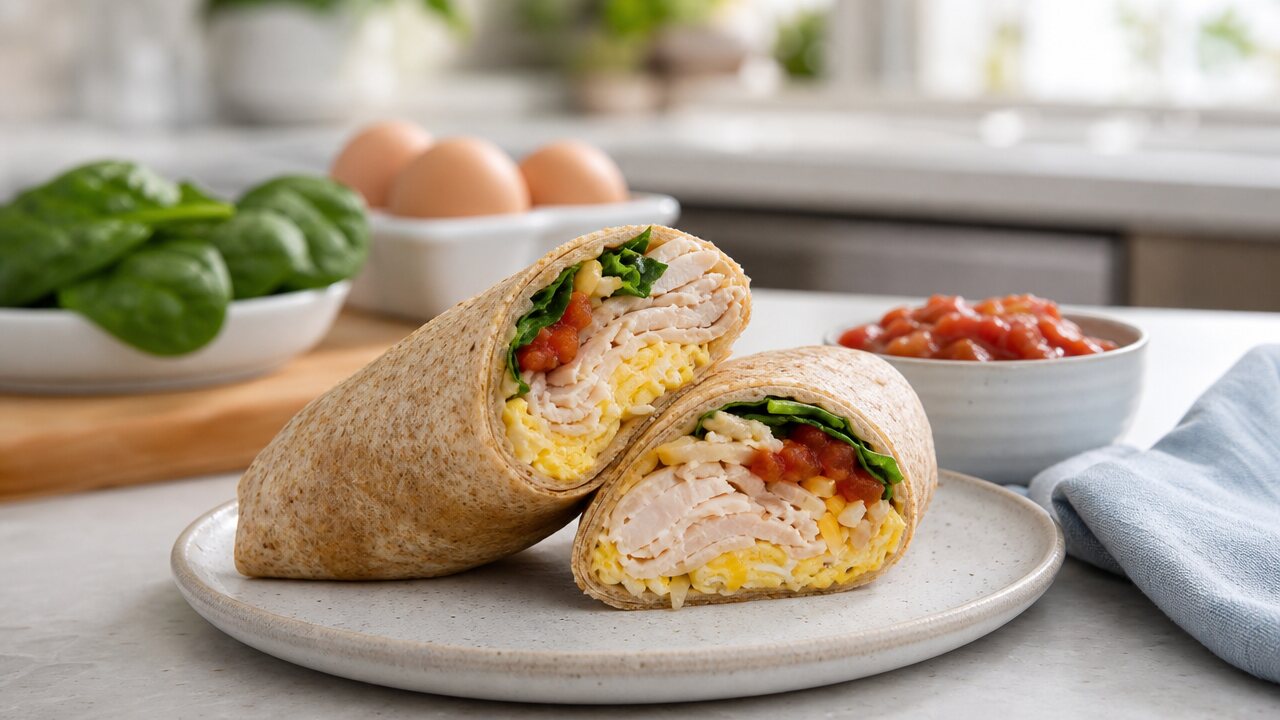
Protein/time: 38-42 g protein | 10 minutes fresh | best meal prep.
This is the one to make when you know tomorrow morning is already doomed. It reheats well, eats one-handed, and feels more like a proper breakfast sandwich than a diet hack.
Ingredients:
- 1 high-fiber tortilla
- 2 eggs
- 3 ounces cooked lean turkey
- 1 handful spinach
- 2 tablespoons salsa
- 1 ounce shredded cheese or feta
How to make it: Scramble the eggs with spinach, warm the turkey, add salsa and cheese, then wrap tightly. For freezer prep, leave salsa out until reheating.
Best for: commutes, meal prep, and lifters who want breakfast to feel substantial. Skip if: you need a very low-sodium morning. Upgrade: Make four at once, wrap in foil, and freeze. Reheat in the oven or air fryer so the tortilla does not turn rubbery.
4. Overnight Oats With Whey
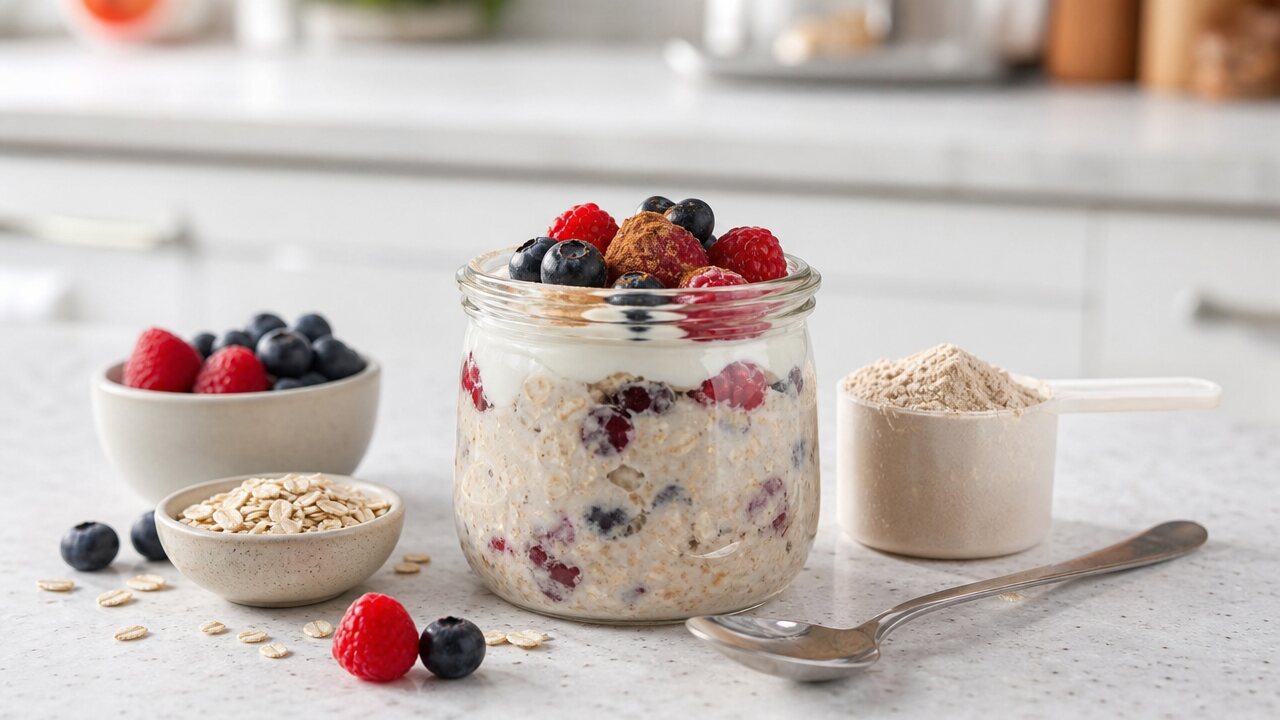
Protein/time: 35-40 g protein | 5 minutes the night before | post-workout carbs.
Overnight oats fix the biggest problem with high-protein breakfasts: they are ready when you are not. This one works because it uses both yogurt and whey, not just a sad scoop stirred into dry oats.
Ingredients:
- 1/2 cup oats
- 1 scoop whey protein
- 1/2 cup Greek yogurt
- 3/4 cup milk or soy milk
- 1/2 cup berries
- Cinnamon and pinch of salt
How to make it: Whisk whey into the milk first, then stir in oats, yogurt, berries, and cinnamon. Refrigerate overnight.
Best for: morning training days, office breakfasts, and people who hate eggs. Skip if: you need a very low-carb breakfast. Upgrade: Add 1 tablespoon chia seeds if you want more fiber, but add extra milk so it does not turn into cement.
5. Tofu Scramble With Soy Milk
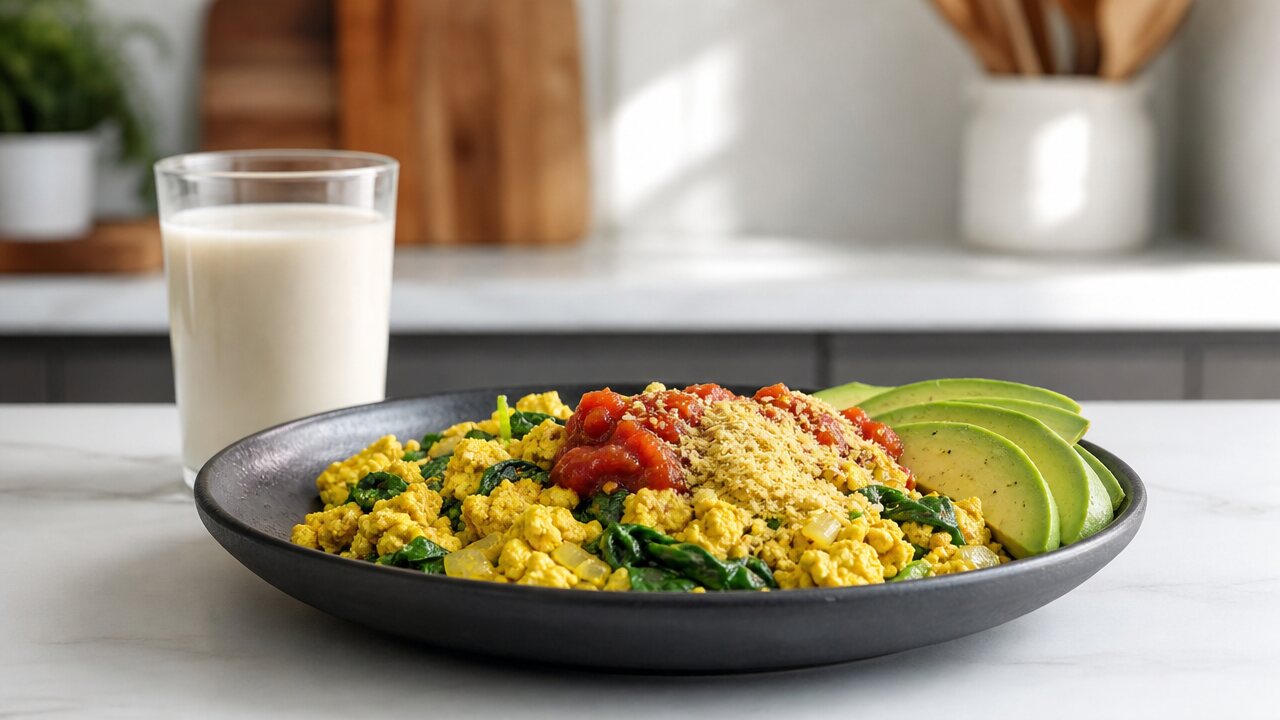
Protein/time: 30-34 g protein | 12 minutes | dairy-free and vegan.
The trick with vegan breakfast is using actual protein anchors, not hoping oats and almond milk get there. Extra-firm tofu plus soy milk does the job without needing a giant bowl of food.
Ingredients:
- 200 g extra-firm tofu
- 1 cup unsweetened soy milk
- 2 tablespoons nutritional yeast
- Spinach, salsa, and avocado
- Turmeric, garlic powder, salt, and pepper
How to make it: Crumble tofu into a hot pan, season it, cook until the water steams off, then fold in spinach and salsa. Drink soy milk on the side.
Best for: vegan mornings, dairy-free diets, and savory breakfast people. Skip if: you have a soy allergy. Upgrade: Press the tofu the night before. Dry tofu browns better and tastes less like a sponge.
6. Smoked Salmon Egg Toast
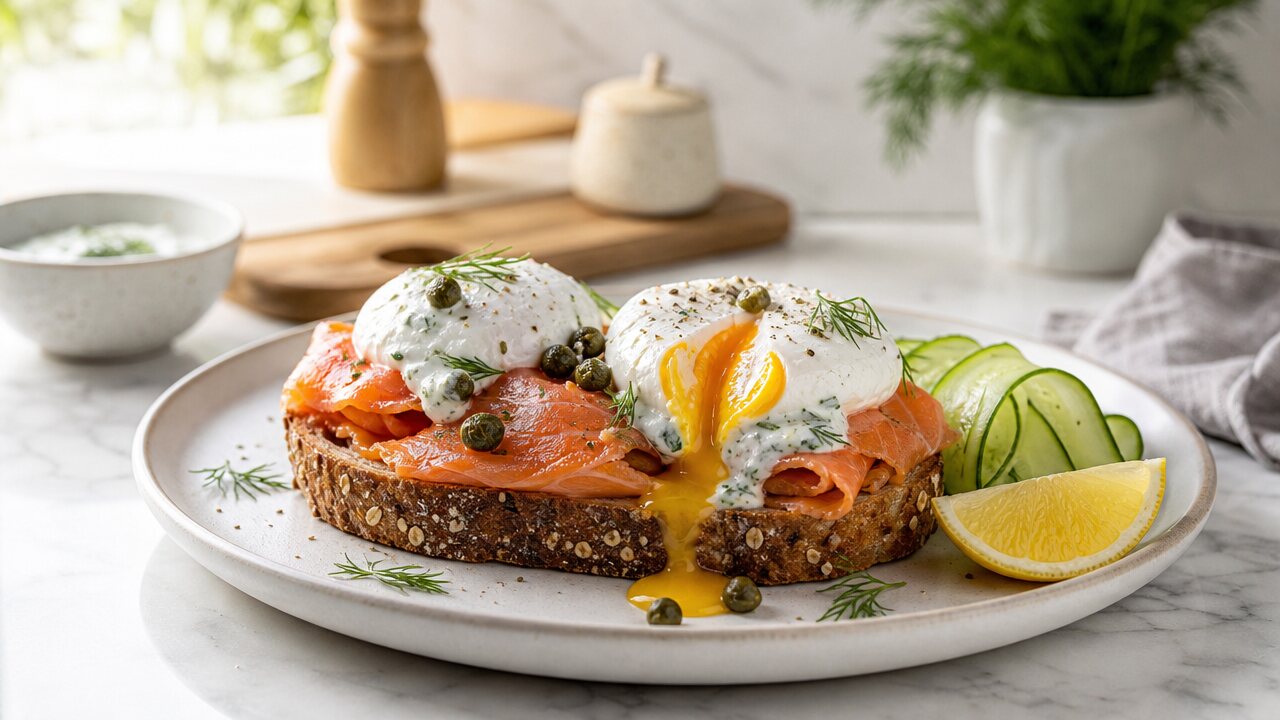
Protein/time: 30-34 g protein | 7 minutes | low appetite.
This breakfast is compact, salty, and easier to finish than a giant bowl. It is also the rare high-protein breakfast that feels a little fancy without needing restaurant money.
Ingredients:
- 1-2 slices toast
- 2 eggs
- 2 ounces smoked salmon
- Cucumber ribbons or tomato
- 2 tablespoons Greek yogurt mixed with dill and lemon
- Capers or black pepper
How to make it: Toast bread, add salmon, eggs, cucumber, and yogurt-dill sauce. Keep the sauce thick so the toast does not collapse.
Best for: low-appetite mornings, seafood fans, and post-sweat sodium replacement. Skip if: sodium is a medical concern or smoked fish is too expensive. Upgrade: Use canned salmon when price matters. Mix it with Greek yogurt, lemon, and pepper.
7. Protein Smoothie That Is Not Just Air
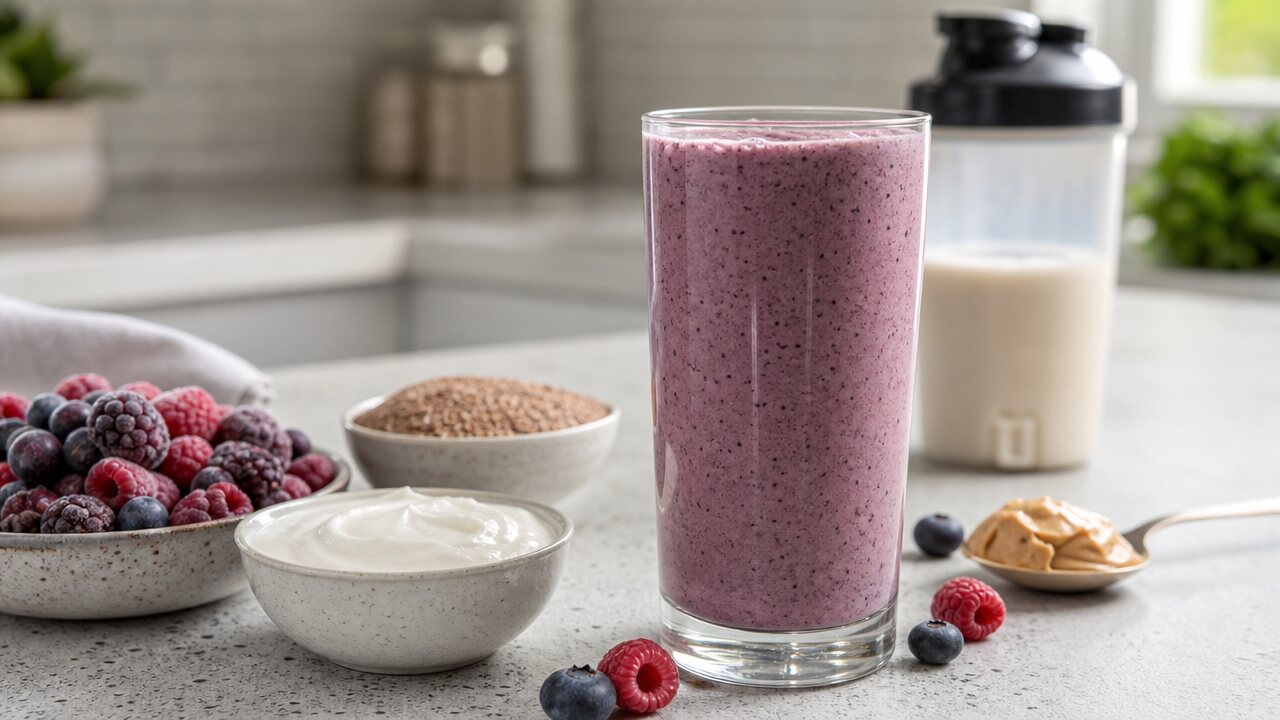
Protein/time: 35-45 g protein | 3 minutes | small volume.
Most smoothies fail because they are fruit juice wearing gym clothes. This one earns breakfast status with yogurt, milk, protein powder, and a little fat or fiber so it does not vanish from your stomach in 40 minutes.
Ingredients:
- 1 scoop whey protein
- 1 cup milk or soy milk
- 1/2 cup Greek yogurt
- 1 cup frozen berries
- 1 tablespoon peanut butter, flax, or chia
- Ice if needed
How to make it: Blend liquid, yogurt, and powder first, then add berries and the fiber/fat add-in. Keep it thick enough to sip slowly.
Best for: GLP-1 users, travel mornings, and anyone who cannot chew breakfast early. Skip if: liquid calories make you hungry again quickly. Upgrade: Use lower-sugar powders from our GLP-1 protein powder guide if appetite or digestion is the main issue.
8. Egg White, Feta, and Spinach Wrap
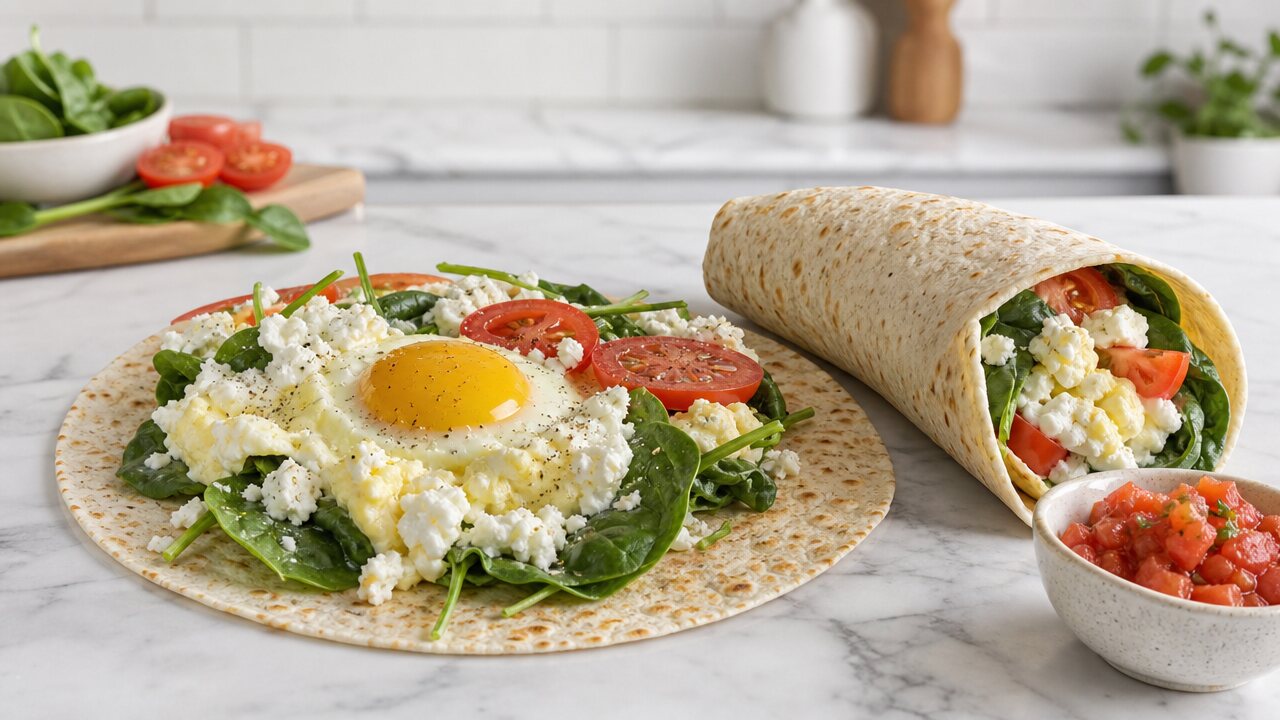
Protein/time: 31-35 g protein | 8 minutes | leanest savory wrap.
Egg whites are useful, but only if you stop treating them like punishment. A whole egg, feta, spinach, and salsa make the wrap taste like breakfast instead of a cutting-phase apology.
Ingredients:
- 1 cup egg whites
- 1 whole egg
- 1 high-fiber tortilla
- 1 ounce feta
- Spinach and tomato
- Salsa or hot sauce
How to make it: Scramble egg whites and the whole egg with spinach, add feta at the end, then wrap with tomato and salsa.
Best for: lower-calorie cuts and high-volume meals. Skip if: egg whites make you miserable no matter what you add. Upgrade: Add 2 ounces turkey or chicken if you need this closer to 45 grams.
9. Cottage Cheese Pancakes
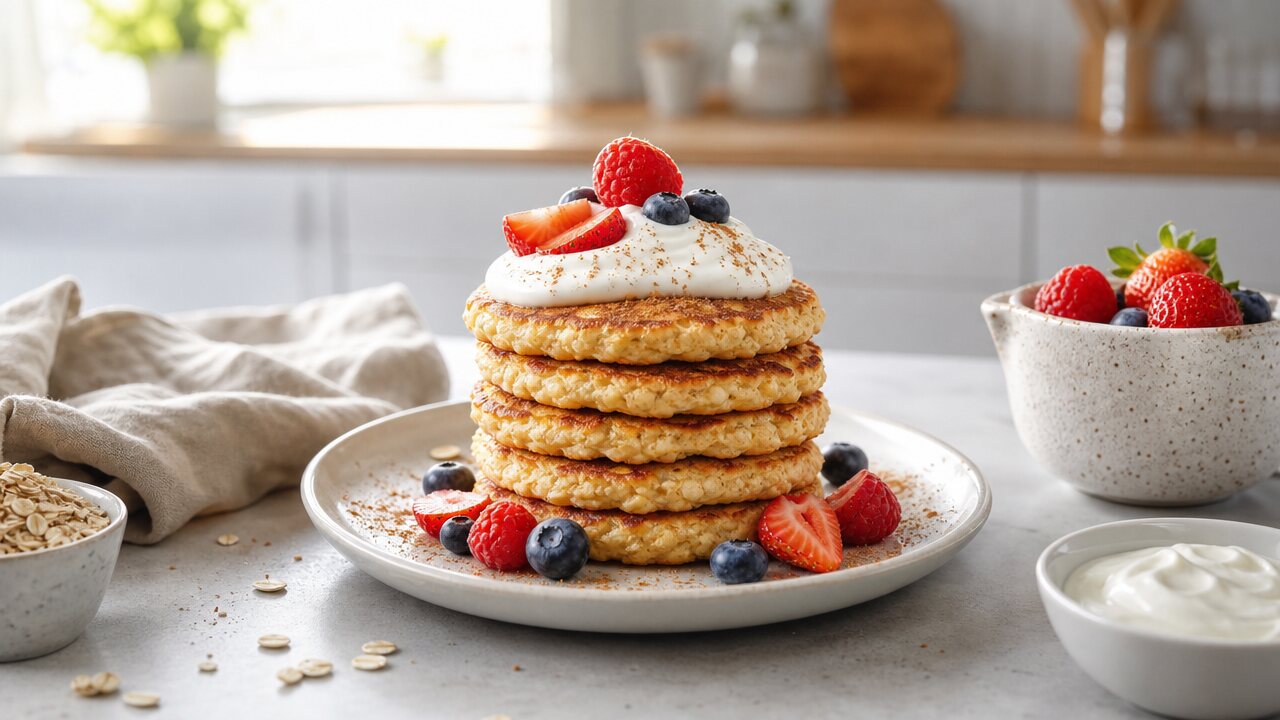
Protein/time: 32-38 g protein | 12 minutes | weekend feel.
This is the breakfast for people who want pancakes without spending the next three hours hungry. The cottage cheese and eggs carry the protein, while oats give the pancakes enough structure to behave in the pan.
Ingredients:
- 1/2 cup cottage cheese
- 2 eggs
- 1/3 cup oats
- 1/2 teaspoon baking powder
- Cinnamon and vanilla
- Greek yogurt and berries for topping
How to make it: Blend the batter until smooth, cook small pancakes on medium heat, and flip only after the edges set.
Best for: weekends, sweet cravings, and people bored of yogurt. Skip if: you need a two-minute breakfast. Upgrade: Make silver-dollar pancakes. Smaller pancakes flip better and feel like more food.
10. Leftover Chicken Breakfast Bowl
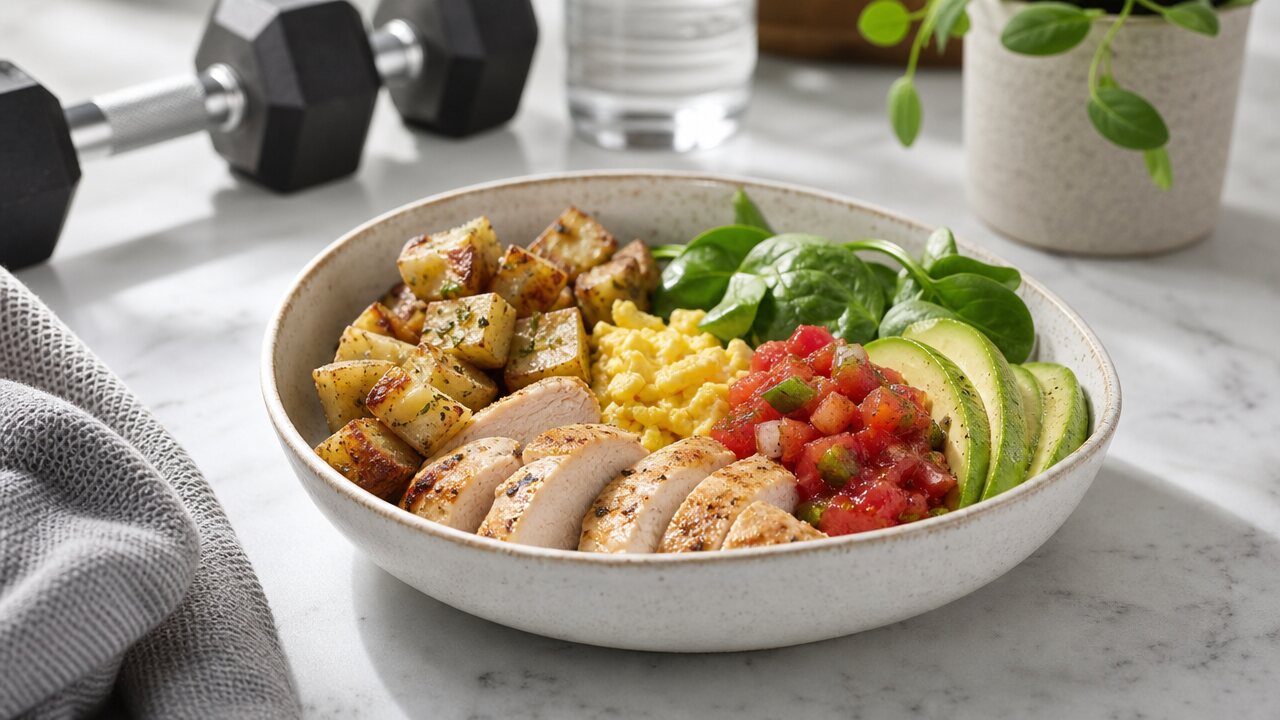
Protein/time: 40-45 g protein | 6 minutes with cooked chicken | lifter meal.
Breakfast does not need to look like breakfast. If you already cooked chicken, rice, potatoes, or vegetables, this bowl is faster than making eggs from scratch and usually more satisfying.
Ingredients:
- 5 ounces cooked chicken thighs or breast
- 1 cup roasted potatoes or rice
- 1 egg or 1/2 cup egg whites
- Salsa and greens
- Avocado or Greek-yogurt sauce
How to make it: Reheat chicken and carbs, scramble or fry the egg, then finish with salsa and greens.
Best for: early lifters, meal preppers, and anyone tired of sweet breakfasts. Skip if: savory leftovers in the morning are a hard no. Upgrade: Use ideas from our $50 muscle-building grocery list to make this cheap enough to repeat.
11. High-Protein Cereal Bowl That Does Not Fake It
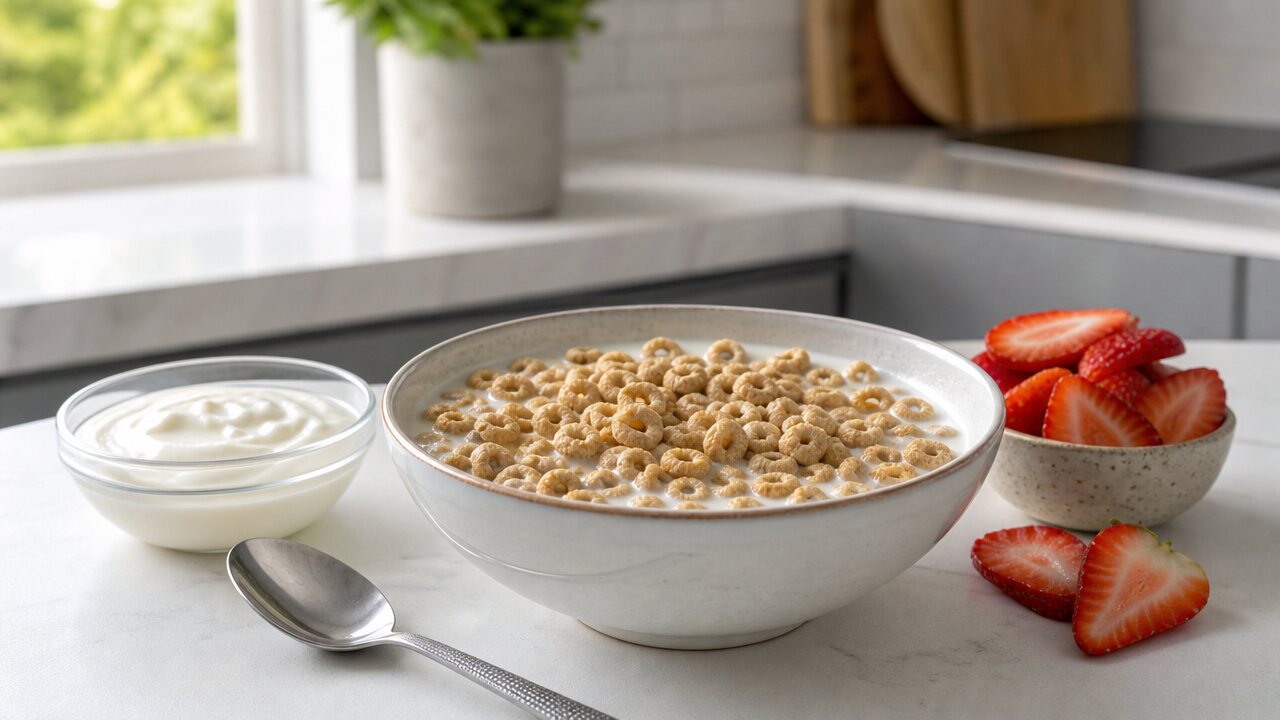
Protein/time: 30-35 g protein | 2 minutes | cereal loyalist pick.
Protein cereal can work, but only if the math is real. The cereal, milk, and side yogurt all need to contribute, or you are just eating expensive crunch with better marketing.
Ingredients:
- 1 serving high-protein cereal
- 1 cup filtered dairy milk or soy milk
- 1/2 cup Greek yogurt on the side
- Strawberries or banana
- Optional cinnamon
How to make it: Build the cereal bowl, then eat the yogurt as the protein backup. Check the cereal label before pretending it is doing all the work.
Best for: people who refuse to give up cereal. Skip if: cereal triggers all-day snacking. Upgrade: Use soy or filtered dairy milk. Almond milk usually brings almost no protein.
12. Salmon or Tuna Avocado Toast
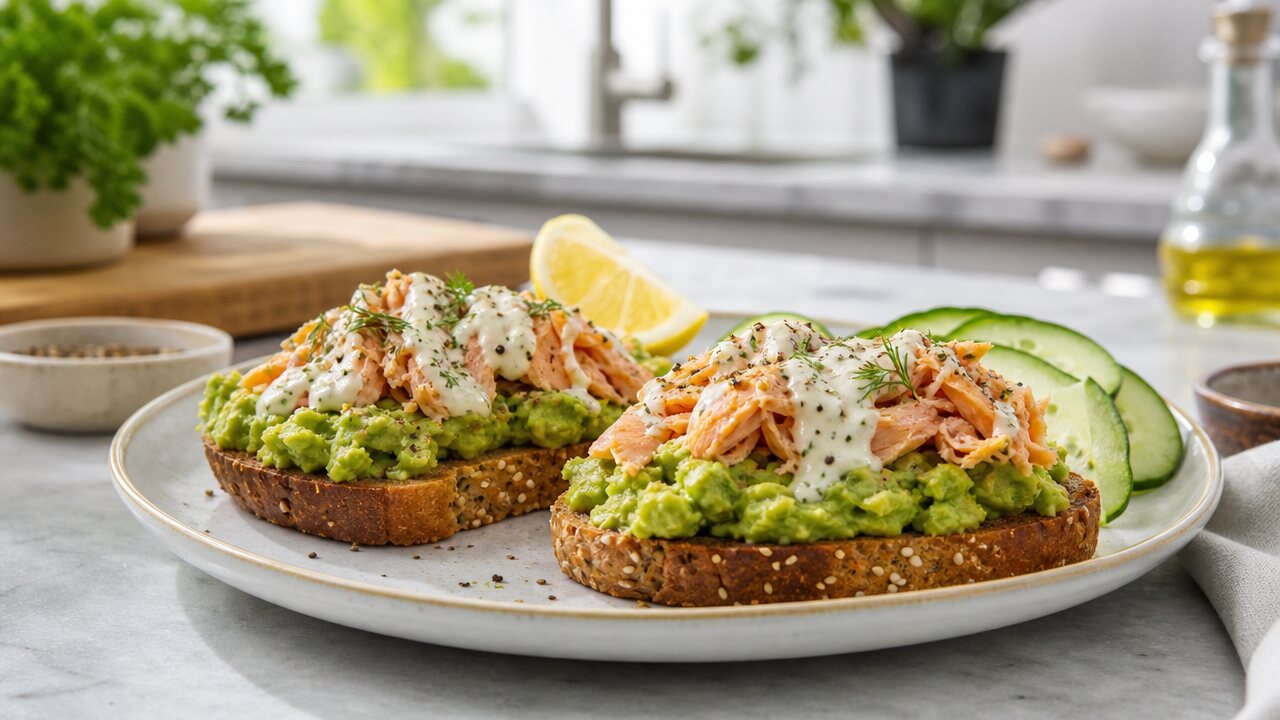
Protein/time: 30-38 g protein | 5 minutes | no-cook savory.
This is the breakfast that rescues canned fish from sad desk-lunch territory. Avocado gives it richness, Greek yogurt replaces mayo, and lemon keeps the whole thing bright.
Ingredients:
- 1 can salmon or tuna, drained
- 1-2 slices toast
- 1/2 avocado
- 2 tablespoons Greek yogurt
- Lemon, pepper, cucumber, and herbs
How to make it: Mix fish with Greek yogurt, lemon, and pepper. Spread avocado on toast, pile fish on top, and add cucumber or herbs.
Best for: no-cook mornings and seafood protein rotation. Skip if: fish at breakfast ruins your day. Upgrade: Rotate tuna with salmon and other proteins if mercury exposure is a concern.
13. Chia-Greek Yogurt Protein Pudding
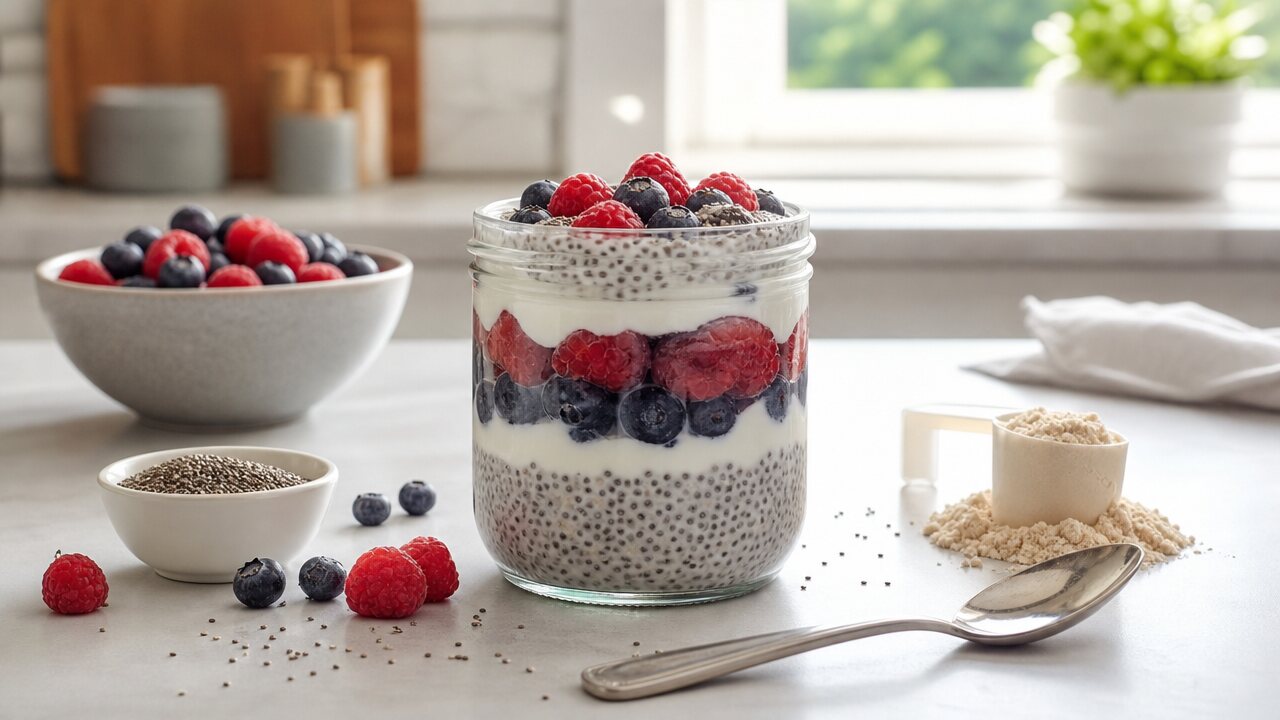
Protein/time: 30-36 g protein | 5 minutes the night before | high fiber.
This is the texture upgrade for anyone bored of plain yogurt. Chia turns the bowl into pudding, berries add volume, and the yogurt/protein combo keeps it from becoming a tiny dessert pretending to be breakfast.
Ingredients:
- 1 cup Greek yogurt
- 2 tablespoons chia seeds
- 1/2 scoop protein powder
- 1/3 cup milk
- Berries and cinnamon
How to make it: Mix everything except berries, refrigerate overnight, then top with berries in the morning.
Best for: meal prep jars, fiber goals, and sweet breakfasts. Skip if: chia texture bothers you. Upgrade: Use a wide jar. It thickens evenly and is easier to stir than a narrow bottle.
14. Breakfast Bento Box
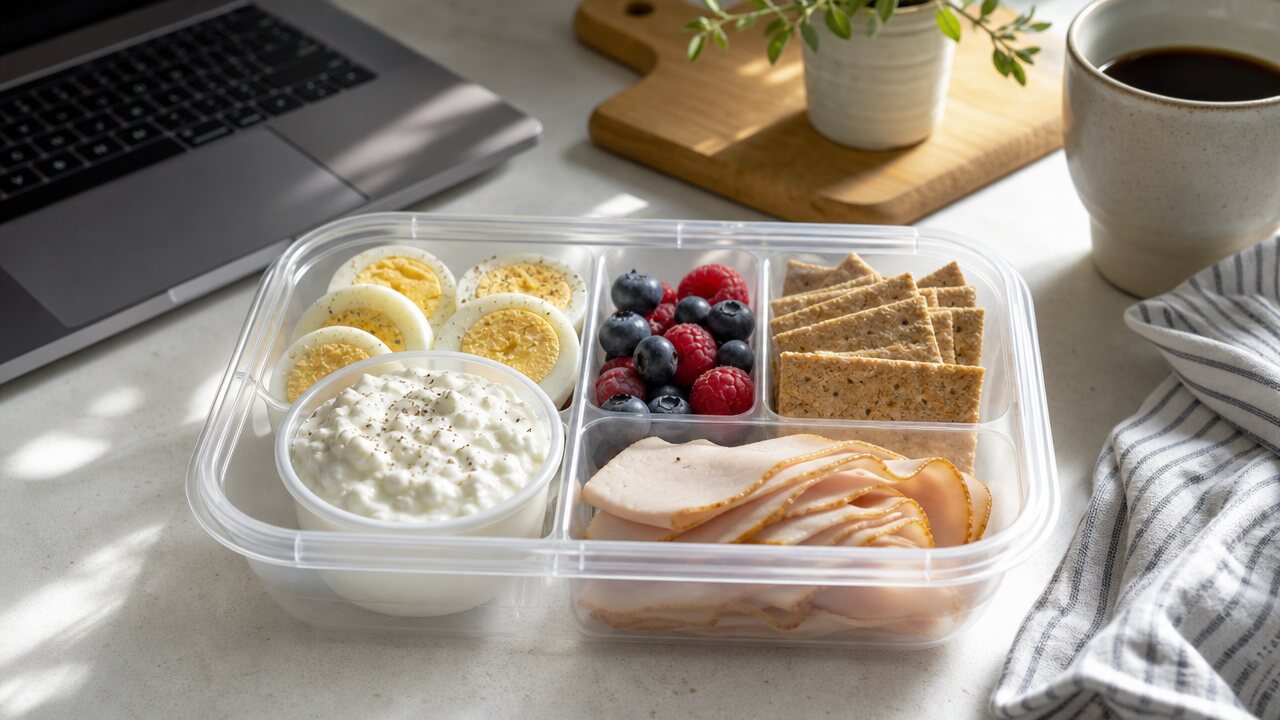
Protein/time: 30-35 g protein | 5 minutes if prepped | portable.
Not everyone wants a hot meal at 7 a.m. A bento box solves that by turning breakfast into pieces: eggs, dairy, turkey, fruit, and crackers. It is simple, but it works because each piece has a job.
Ingredients:
- 2 boiled eggs
- 3/4 cup cottage cheese or Greek yogurt
- 2-3 ounces turkey slices
- Berries or grapes
- Whole-grain crackers or toast
How to make it: Pack everything in a divided container the night before. Keep crackers separate if you hate soggy food.
Best for: desk breakfast, travel, low appetite, and snack-style eaters. Skip if: grazing makes you lose track of portions. Upgrade: Pre-portion the protein first. If the box starts with crackers and fruit, it stops being a protein breakfast.
15. Ready-to-Drink Shake Plus Real Food
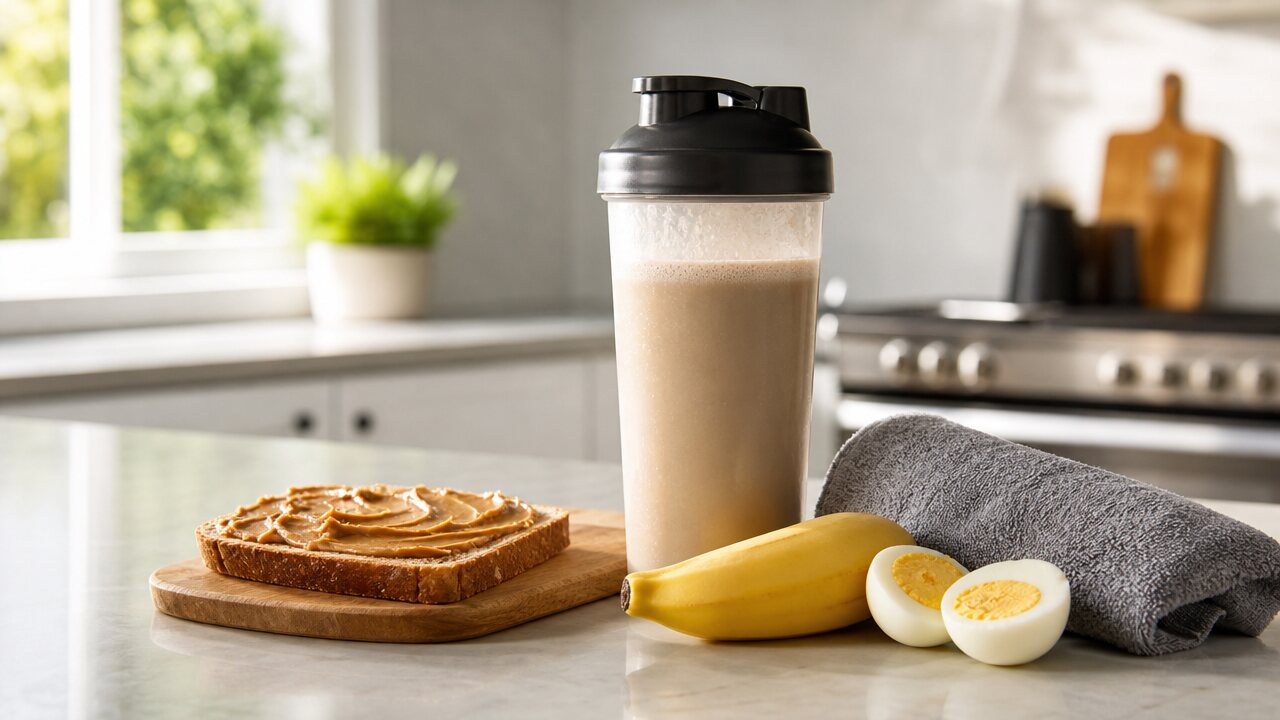
Protein/time: 30-45 g protein | 1 minute | emergency morning.
This is not the best breakfast on the list. It is the breakfast that saves the day when the alternative is coffee and chaos. The key is adding one real food item so the shake feels like a meal.
Ingredients:
- 1 ready-to-drink protein shake
- 1 banana, apple, or berries
- 1 boiled egg or peanut-butter toast
- Optional coffee
How to make it: Drink the shake slowly and eat the solid food with it. Do not chug the shake and wonder why you feel unfinished.
Best for: travel, emergencies, GLP-1 appetite, and mornings you did not plan for. Skip if: shakes make you hungrier than solid meals. Upgrade: Compare sugar, calories, and taste in our ready-to-drink protein shake rankings before making this a daily habit.
What Is the Best Breakfast for Muscle Gain?
The best muscle-gain breakfast gives you 30-45 grams of high-quality protein plus enough carbs and calories to support training. Overnight oats with whey, the turkey-egg wrap, the chicken breakfast bowl, and the Greek yogurt power bowl are the easiest muscle-building picks because they combine protein with useful training fuel.
If you train in the morning, do not fear carbs at breakfast. Oats, fruit, potatoes, rice, or toast can make the meal more useful than a protein-only plate. If you train later, use breakfast to start your protein rhythm: 30-40 grams at breakfast, 30-40 at lunch, 30-40 at dinner, and a snack if needed. Our protein pacing guide explains that structure.
What Is the Best Breakfast for Fat Loss?
The best fat-loss breakfast is the one that keeps you full for the fewest calories without triggering snack revenge later. Greek yogurt bowls, cottage cheese toast, tofu scramble, chia-yogurt pudding, and egg-white wraps are the easiest lower-calorie wins because they pair protein with volume or fiber.
Do not make breakfast so tiny that it backfires by 3 p.m. A 350-500 calorie breakfast with 30 grams of protein can be easier to control than a 150-calorie “light” breakfast followed by three snack laps. For a full-day structure, use our high-protein meal plan for weight loss.
What If You Cannot Eat Much in the Morning?
If morning appetite is low, choose small-volume protein first: Greek yogurt, cottage cheese, smoked salmon, protein powder, filtered milk, soy milk, or ready-to-drink shakes. You do not need a huge plate. You need a protein floor your stomach will accept.
This matters for GLP-1 users, early lifters, and anyone who gets nauseated from large breakfasts. Start with 20-25 grams if 30 feels impossible, then add a second small protein serving later. Progress beats the perfect breakfast you cannot finish.
Common 30-Gram Breakfast Mistakes
Most failed high-protein breakfasts miss the target because they count foods that barely contribute. A spoon of peanut butter, a splash of almond milk, or one egg does not turn toast or oats into a protein meal.
- Mistake: counting almond milk as protein. Fix: use dairy milk, filtered milk, or soy milk if the liquid needs to help.
- Mistake: eating one egg and calling it high-protein. Fix: add Greek yogurt, cottage cheese, turkey, tofu, egg whites, salmon, or a shake.
- Mistake: making every breakfast sweet. Fix: keep one savory option in rotation so yogurt bowls do not become a chore.
- Mistake: drinking a shake and staying hungry. Fix: add berries, oats, chia, toast, or a boiled egg so the meal has chew.
- Mistake: chasing 30 grams before setting your daily target. Fix: use the TDEE calculator and macro calculator, then divide protein across the day.
FAQ
Is 30 grams of protein at breakfast enough?
For many adults, yes. Thirty grams is enough to make breakfast a meaningful protein feeding and helps distribute protein across the day. Larger lifters or people eating 180-220 grams daily may prefer 40-50 grams at breakfast, while smaller or less active adults may do fine with 25-30 grams.
Do I need to eat 30 grams of protein within 30 minutes of waking?
No. The 30-minute timing rule is more internet rule than hard physiology. The useful part is getting a protein-rich breakfast early enough that the rest of the day is easier. If you wake at 6 a.m. and eat at 8 a.m., breakfast can still do its job.
Can I absorb more than 30 grams of protein in one meal?
Yes. Digestion and absorption do not stop at 30 grams. For muscle-building efficiency, many people still benefit from spreading protein across several meals, but a 45-gram breakfast is not wasted. The bigger issue is whether the meal fits your appetite, calories, and daily target.
What is the easiest 30-gram protein breakfast without eggs?
A Greek yogurt power bowl is the easiest no-egg option: 1.5 cups Greek yogurt plus berries and chia usually lands around 30 grams, and adding a scoop of protein powder pushes it closer to 40. For dairy-free, use tofu scramble with soy milk or a plant-protein smoothie.
What is the best 30-gram breakfast for GLP-1 users?
Lower-volume options usually work best: Greek yogurt, cottage cheese, protein smoothies, smoked salmon toast, or half a ready-to-drink shake plus a small solid food. If 30 grams feels too large, start with 20-25 grams and add a second small protein serving later.
Can a vegan breakfast hit 30 grams of protein?
Yes. A tofu scramble with soy milk can hit 30 grams, and a smoothie with soy milk plus pea or soy protein can go higher. Vegan breakfasts usually need intentional protein anchors because oats, almond milk, fruit, and nut butter alone rarely reach 30 grams without a lot of calories.
Bottom Line
If breakfast keeps wrecking your protein target, do not overhaul your whole diet. Pick two meals from this list: one sweet, one savory. Make them boringly repeatable for two weeks. A 30-gram breakfast will not magically build muscle by itself, but it makes the rest of the day easier, and that is usually what changes the result.
Sources
- U.S. Department of Agriculture, Agricultural Research Service. FoodData Central. USDA. n.d. Accessed May 3, 2026.
- Jager R, Kerksick CM, Campbell BI, et al. International Society of Sports Nutrition Position Stand: Protein and Exercise. Journal of the International Society of Sports Nutrition. 2017;14:20. doi:10.1186/s12970-017-0177-8.
- Mamerow MM, Mettler JA, English KL, et al. Dietary protein distribution positively influences 24-h muscle protein synthesis in healthy adults. The Journal of Nutrition. 2014;144(6):876-880. doi:10.3945/jn.113.185280.
- Leidy HJ, Ortinau LC, Douglas SM, Hoertel HA. Beneficial effects of a higher-protein breakfast on the appetitive, hormonal, and neural signals controlling energy intake regulation in overweight/obese, breakfast-skipping, late-adolescent girls. The American Journal of Clinical Nutrition. 2013;97(4):677-688. doi:10.3945/ajcn.112.053116.
- McCrory MA, Campbell WW. Effects of dietary protein and fiber at breakfast on appetite, ad libitum energy intake at lunch, and neural responses to visual food stimuli in overweight adults. Nutrients. 2016;8(1):21. doi:10.3390/nu8010021.
- Schoenfeld BJ, Aragon AA. How much protein can the body use in a single meal for muscle-building? Implications for daily protein distribution. Journal of the International Society of Sports Nutrition. 2018;15:10. doi:10.1186/s12970-018-0215-1.



I am a small woman. Every single one of these meals is about twice what I can eat. How can that 30 grams per meal apply to everyone, regardless of size???