
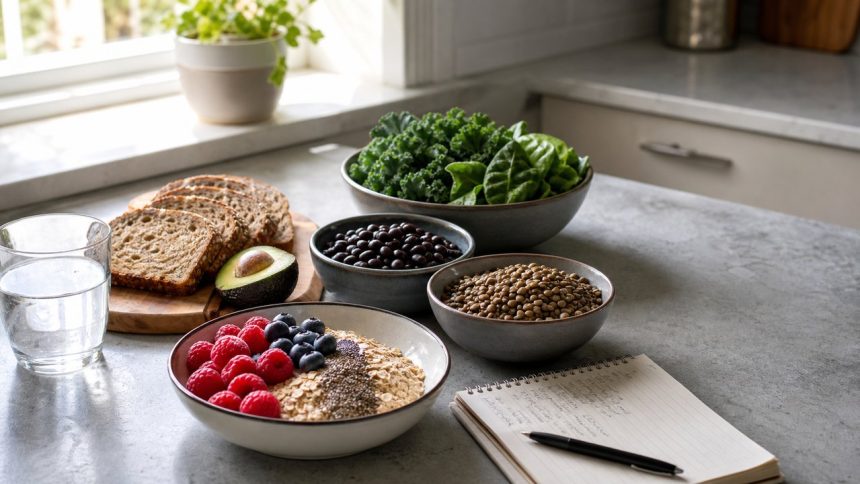
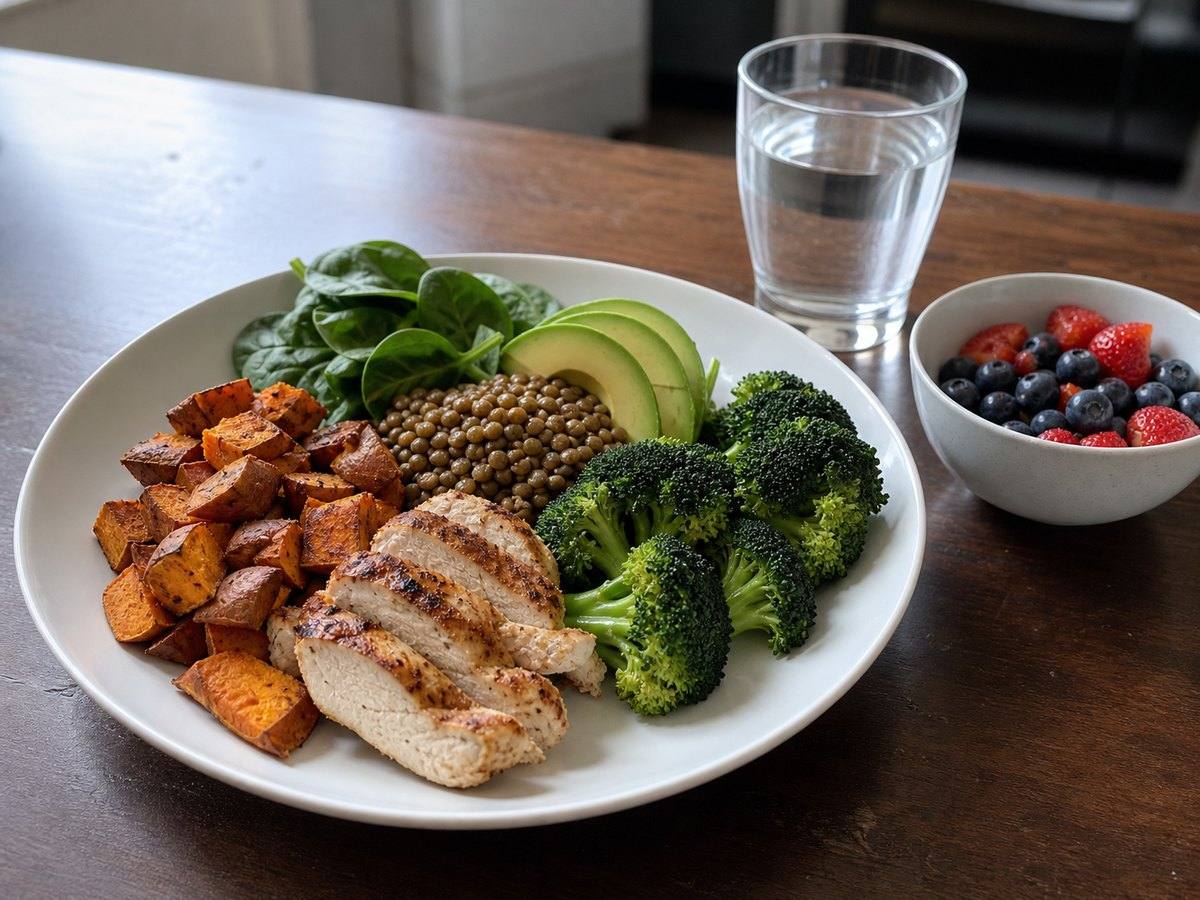
Last updated: July 2026. FitnessVolt rebuilt this guide with current fiber targets, practical cutting-diet examples, a new high-fiber meal image, updated internal links, and evidence-only sources.
Fiber helps fat loss because it makes a calorie deficit easier to live with, not because it burns fat on its own. A good target for most adults is at least 28 grams per day, or about 14 grams per 1,000 calories. Lifters should build toward that slowly, use mostly whole foods, and keep very high-fiber meals away from hard training if they cause bloating.
The original version of this article made the right broad point: fiber matters. It did not give lifters enough usable numbers. This update turns fiber into a plan you can run during a cut, a lean bulk, or a higher-protein diet without wrecking digestion.
Key Facts
- Daily target: The FDA Daily Value for dietary fiber is 28 grams, and the National Academies target is 14 grams per 1,000 calories.
- Average intake gap: U.S. adults average roughly 16 grams per day, well below the target most active adults should hit.
- Fat-loss role: Higher-fiber diets can improve satiety and modestly reduce body weight when they help you eat fewer calories.
- Training caveat: Beans, huge salads, bran, and psyllium are better 3-5 hours away from hard training if they upset your stomach.
- Best default: Build fiber from oats, berries, beans, lentils, potatoes with skin, vegetables, chia, flax, and whole grains before relying on supplements.
How much fiber should you eat per day?
Most adults should aim for at least 28 grams of fiber per day, with 25-38 grams covering many common calorie intakes. The more precise target is 14 grams per 1,000 calories, so a 2,400-calorie lifter would aim for about 34 grams.
Use that number as a target, not a dare. If you currently eat 10-15 grams, jumping to 35 grams tomorrow can cause gas, bloating, cramps, and bathroom panic. Add 5 grams per day for one week, hold there, then add another 5 grams if digestion feels normal.
| Daily Calories | Fiber Target | Simple Food Move |
|---|---|---|
| 1,800 | 25 g | Oats at breakfast, beans at lunch, berries after dinner. |
| 2,200 | 31 g | Add lentils or chickpeas to one main meal. |
| 2,600 | 36 g | Use two high-fiber carb choices instead of one. |
| 3,000 | 42 g | Split fiber across 4 meals so no meal becomes a gut bomb. |
If you want the exact number for your calorie target, use the FitnessVolt fiber calculator. If you are also resetting calories, start with the FitnessVolt TDEE calculator so your fiber goal matches your diet phase.
Does fiber help with weight loss?
Fiber can help weight loss when it improves fullness and lowers calorie intake. It does not cancel calories, block all carb absorption, or make a poor diet work. The win is practical: high-fiber foods take longer to eat, add food volume, slow digestion, and often replace calorie-dense snacks.
The strongest pattern in the research is not that one magic fiber burns fat. It is that higher-fiber diets are linked with better body-weight, cholesterol, blood-pressure, and metabolic outcomes. The 2019 Lancet systematic review found benefits across observational studies and randomized trials, with many benefits appearing around 25-29 grams per day or higher.
For lifters, fiber also solves a common cutting problem: high-protein diets can become low-volume and boring. Chicken and rice will hit macros, but chicken, potatoes with skin, lentils, berries, and vegetables usually keeps hunger under control for fewer calories.
What is the difference between soluble and insoluble fiber?
Soluble fiber dissolves in water and forms a gel-like texture in the gut. Insoluble fiber adds bulk and helps stool move through the digestive tract. You need both, and you get both when your diet includes fruits, vegetables, oats, beans, lentils, nuts, seeds, and whole grains.
| Fiber Type | Common Foods | Main Benefit | Training Note |
|---|---|---|---|
| Soluble | Oats, beans, lentils, apples, citrus, psyllium, chia | Satiety, cholesterol support, steadier glucose response | Useful with meals, but large doses can feel heavy pre-workout. |
| Insoluble | Wheat bran, vegetable skins, leafy greens, nuts, seeds | Stool bulk and regularity | Keep huge raw salads away from heavy leg days if bloating hits. |
Do not micromanage the split unless a clinician told you to. Most people need more total fiber first. The best food choices usually bring both types together.
Which high-fiber foods work best for lifters?
The best high-fiber foods for lifters also bring carbs, protein, micronutrients, or meal volume. Beans and lentils are the workhorses because they combine fiber and plant protein. Berries, potatoes with skin, oats, chia, flax, and vegetables make the diet easier without adding many calories.
| Food | Typical Fiber | Best Use | Skip or Limit If |
|---|---|---|---|
| Lentils, cooked, 1 cup | About 16 g | High-fiber carb and plant-protein base | You bloat easily before training. |
| Black beans, cooked, 1 cup | About 15 g | Burrito bowls, salads, chili, rice bowls | Large portions trigger gas. |
| Raspberries, 1 cup | About 8 g | Greek yogurt, oats, protein pudding | You need a lower-FODMAP fruit. |
| Oats, dry, 1/2 cup | About 4 g | Breakfast carbs before a normal training day | You train within 45 minutes and digest slowly. |
| Chia seeds, 2 tbsp | About 10 g | Yogurt bowls, overnight oats, smoothies | You are not drinking enough water. |
| Potato with skin, medium | About 4 g | Cutting-friendly carb with high satiety | You only eat fries and call it a potato plan. |
For a bigger food list, use our guide to high-fiber foods you should eat every day. This article is the strategy layer: when to use those foods and how to keep them from fighting your workouts.
When should you eat fiber around workouts?
Eat most of your fiber away from hard training if your stomach is sensitive. A normal mixed meal 2-4 hours before lifting is fine for many people. A huge bean bowl, bran cereal, or psyllium shake 30 minutes before squats is a bad experiment.
Use this timing rule:
- 3-5 hours before training: Beans, lentils, big salads, high-fiber wraps, bran, and chia are usually safer here.
- 1-2 hours before training: Use moderate-fiber carbs such as oats, potatoes, fruit, or rice with vegetables if you tolerate them.
- Under 60 minutes: Keep fiber low if the session is hard. Choose banana, toast, rice cakes, or a shake if needed.
- After training: Rebuild the fiber target with a normal meal once your stomach settles.
Training quality still matters. A perfect fiber target is not worth a ruined workout. If you need help placing meals around sessions, the FitnessVolt nutrient timing calculator can give you a starting framework.
Should you use fiber supplements?
Fiber supplements can help when food is not enough, but they should fill a specific gap. Psyllium can be useful for regularity and cholesterol support. It is not a license to eat a low-fiber diet built from bars, shakes, and refined carbs.
Start small. Many people do better with 3-5 grams of psyllium mixed with plenty of water once per day, then adjust based on tolerance. Do not dry-scoop fiber. Do not take fiber supplements close to medications unless your clinician or pharmacist clears the timing.
| Option | Best For | Main Tradeoff | FitnessVolt Take |
|---|---|---|---|
| Whole foods | Daily diet quality, satiety, micronutrients | More planning and cooking | Default choice for most meals. |
| Psyllium | Regularity, closing a small fiber gap | Can bloat if dose jumps too fast | Useful fallback, especially during travel. |
| Fiber gummies | Convenience | Low dose, often easy to overeat | Use only if they solve adherence. |
| High-fiber bars | Busy days | May cause gas from added fibers and sugar alcohols | Test at home before relying on them. |
If a supplement makes sense, compare labels in our fiber supplements review. Whole foods still need to carry most of the work.
How do you increase fiber without bloating?
Increase fiber in steps, drink more fluid, and spread fiber across the day. Most bloating problems come from adding too much too fast, stacking beans with bars and powders, or eating a very high-fiber meal right before training.
- Week 1: Add one fiber move, such as berries at breakfast or beans at lunch.
- Week 2: Add a second move, such as a potato with skin or a vegetable serving at dinner.
- Week 3: Add chia, flax, or oats if the first two changes feel fine.
- Week 4: Use a supplement only if food still leaves a consistent gap.
- Every week: Drink enough fluid so stool does not become hard or slow.
People with IBS, inflammatory bowel disease, recent GI surgery, swallowing problems, or medication timing concerns should get individualized guidance before adding concentrated fiber.
What does a high-fiber cutting day look like?
A good cutting day does not need 10 separate fiber hacks. It needs a few repeatable foods placed where they help hunger and training.
| Meal | Example | Fiber Estimate | Why It Works |
|---|---|---|---|
| Breakfast | Greek yogurt, oats, raspberries, chia | 12-18 g | High protein, high fiber, easy to prep. |
| Lunch | Chicken bowl with lentils, rice, greens, salsa | 12-16 g | Fiber plus protein without diet-food misery. |
| Pre-workout | Banana or toast if training is close | 2-4 g | Enough carbs without a heavy stomach. |
| Dinner | Fish or lean beef, potato with skin, vegetables | 8-12 g | Finishes the target and keeps evening hunger down. |
That day lands around 34-50 grams depending on portions. If that is too much for your gut, reduce beans, chia, or raw vegetables first. Keep the structure and lower the dose.
Common fiber mistakes
- Adding fiber without water: More fiber and low fluid is a constipation setup.
- Using bars as the main source: Added fibers and sugar alcohols can punish digestion.
- Eating a giant salad before legs: Put bulky meals farther from hard sessions.
- Ignoring calories: Nuts, seeds, avocado, and whole grains help, but portions still count.
- Thinking all carbs are equal: Beans, oats, berries, and potatoes with skin do more for fullness than refined snacks.
Frequently asked questions
Is soluble or insoluble fiber better for fat loss?
Neither type is the lone fat-loss winner. Soluble fiber often helps fullness, cholesterol, and glucose response, while insoluble fiber supports regularity. Most lifters should raise total fiber with mixed whole foods instead of chasing one type.
Can too much fiber hurt muscle gain?
Fiber can hurt muscle gain if it makes you too full to hit calories, protein, and carbs. During a lean bulk, keep fiber high enough for health but avoid turning every meal into a massive salad if appetite is already low.
Should I count net carbs or total carbs?
For general lifting diets, count total carbs for consistency. Net carbs can be useful for keto or diabetes-focused tracking, but many packaged foods use added fibers that do not behave like whole foods in your stomach.
Does fiber block protein absorption?
Normal high-fiber meals do not stop protein from working. The bigger issue is comfort and appetite. If a very high-fiber meal makes you too full to hit protein, split the meal or move fiber to another time.
What is the fastest way to add 10 grams of fiber?
Add 1 cup of raspberries, 2 tablespoons of chia seeds, or about 2/3 cup of cooked lentils. Pick the one your stomach tolerates best and add fluid with it.
How to put fiber to work
Fiber is one of the cheapest upgrades in a cutting diet. Start with 28 grams per day or 14 grams per 1,000 calories, add it slowly, and build meals around beans, lentils, oats, berries, vegetables, potatoes with skin, chia, flax, and whole grains.
The goal is not to max out fiber. The goal is to make your diet easier to repeat while training stays strong and digestion stays normal.
Sources
- U.S. Food and Drug Administration. Daily Value on the Nutrition and Supplement Facts Labels. 2024.
- Dahl WJ, Stewart ML. Position of the Academy of Nutrition and Dietetics: Health Implications of Dietary Fiber. Journal of the Academy of Nutrition and Dietetics. 2015. PMID: 26514720.
- Reynolds A, Mann J, Cummings J, et al. Carbohydrate quality and human health: systematic reviews and meta-analyses. The Lancet. 2019. PMID: 30638909.
- U.S. Food and Drug Administration. How to Understand and Use the Nutrition Facts Label. 2024.
- U.S. Department of Agriculture. Fiber intake of the U.S. population. Food Surveys Research Group Dietary Data Briefs. 2021.
- U.S. Department of Agriculture. FoodData Central.
- Reynolds AN, Akerman AP, Mann J. Dietary fibre and whole grains in diabetes management: systematic review and meta-analyses. PLOS Medicine. 2020.