Magnesium is not a shortcut to bigger lifts or perfect sleep. It is a mineral your muscles, nerves, bones, and energy systems already use every day. If your intake is low, fixing that gap can matter for training quality, sleep consistency, and soreness. If your intake is already adequate, adding more magnesium is unlikely to turn a flat program into a productive one.
This guide covers what magnesium does, how much adults need, which foods deliver it, which forms make sense, what the sleep and recovery studies show, and when to skip the supplement aisle.
What does magnesium do for muscle and recovery?
Quick answer: Magnesium helps normal muscle contraction, nerve signaling, protein synthesis, blood glucose control, and energy metabolism. The NIH Office of Dietary Supplements notes that magnesium is a cofactor in more than 300 enzyme systems, including systems tied to muscle and nerve function [1]. That makes it essential. It does not make it an anabolic drug.
For strength athletes, magnesium helps the body run the processes training depends on. Low intake can compromise those systems; normal intake plus a bigger dose rarely creates a bigger effect. Use our lean-bulk calorie and macro guide to set the base, then treat magnesium as an adequacy check.
How much magnesium do lifters need per day?
Quick answer: Adult men generally need 400 to 420 mg of magnesium per day, and adult women generally need 310 to 320 mg per day, depending on age. The FDA Daily Value used on food and supplement labels is 420 mg for adults and children age 4 and older [1,3]. The adult upper limit for magnesium from supplements and medicines is 350 mg per day [1,2].
| Reference point | Amount | What it means for lifters |
|---|---|---|
| Men 19-30 | 400 mg/day | Daily intake target from food, drinks, and supplements combined [1]. |
| Men 31+ | 420 mg/day | Matches the FDA Daily Value used for label math [1,3]. |
| Women 19-30 | 310 mg/day | Daily intake target before pregnancy/lactation adjustments [1]. |
| Women 31+ | 320 mg/day | A food-first plan can usually cover this with seeds, legumes, grains, and greens [1]. |
| Supplemental upper limit | 350 mg/day | This limit applies to magnesium from supplements and medicines, not naturally occurring food magnesium [1,2]. |
Do not confuse the RDA with the supplement dose. A label that says “magnesium 400 mg” may already exceed the adult supplemental upper limit, even though 400 to 420 mg is a normal daily intake target from all sources.
Which magnesium form is best for sleep, recovery, and lifting?
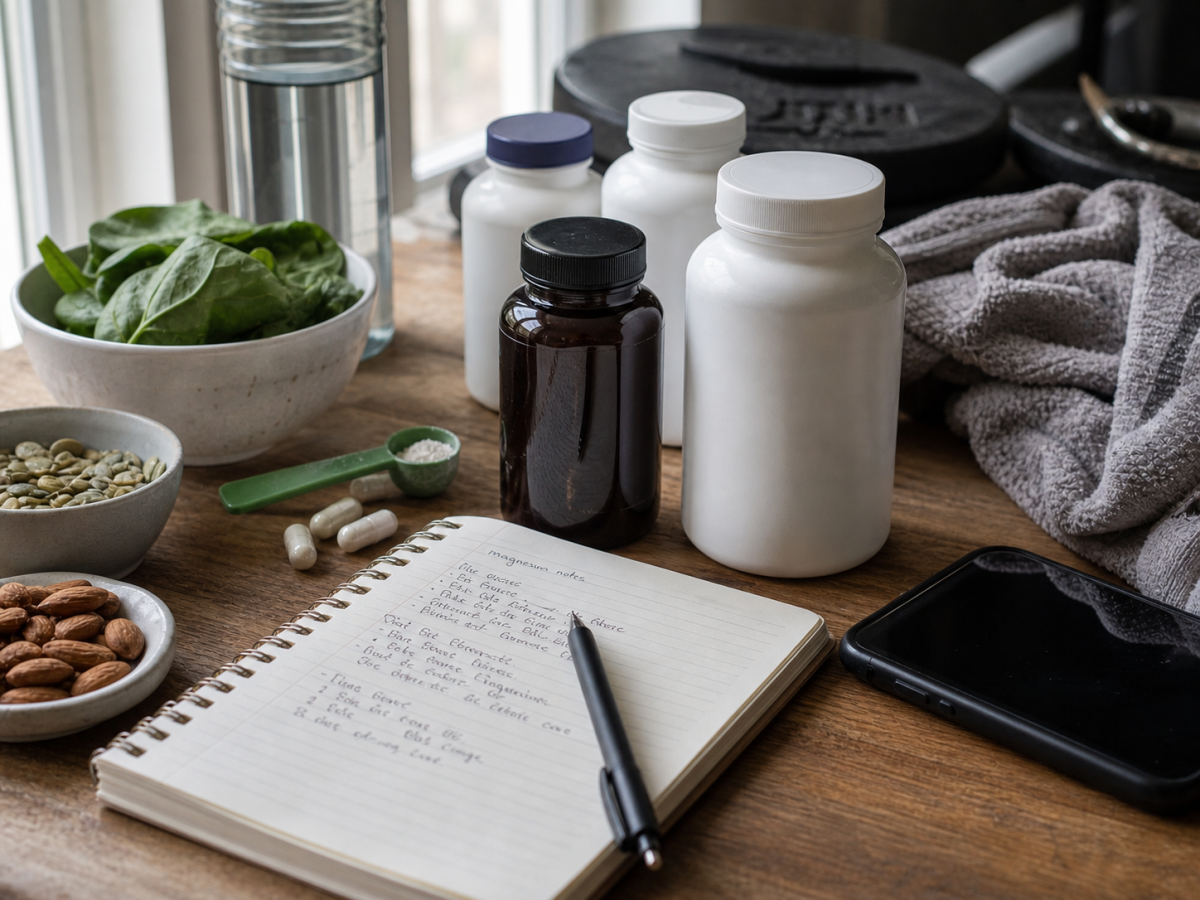
Quick answer: Citrate, chloride, lactate, and aspartate generally dissolve better and are absorbed more completely than magnesium oxide or sulfate, according to NIH ODS [1]. Glycinate is popular at night because it is typically gentle on the gut, but sleep-outcome evidence varies by form and study. Choose the form for the problem, then check elemental magnesium.
| Form | Best practical use | Evidence-aware note |
|---|---|---|
| Magnesium citrate | General supplementation when constipation is also an issue | Better absorbed than oxide in small studies, but can loosen stools [1]. |
| Magnesium glycinate/bisglycinate | Nighttime use when GI tolerance matters | Often chosen for sleep routines, but the claim should be “tolerable form,” not “proven sedative.” |
| Magnesium chloride/lactate/aspartate | General replacement when a clinician wants a better-absorbed form | NIH lists these among forms with higher bioavailability than oxide and sulfate [1]. |
| Magnesium oxide | Low-cost option, constipation-oriented products | Common, inexpensive, and more likely to cause GI effects; not the first pick for sleep claims [1]. |
| Magnesium L-threonate | Sleep/cognition products with a higher price tag | A 2024 RCT in 80 adults with self-reported sleep problems found improvements versus placebo over 21 days, but this is form-specific evidence and not proof every magnesium product works [9]. |
| ZMA | Combination zinc, magnesium, and B6 supplement | In a 2024 trial of 16 trained males after two nights of partial sleep restriction, ZMA did not improve sleep or next-morning submaximal lifting performance [10]. |
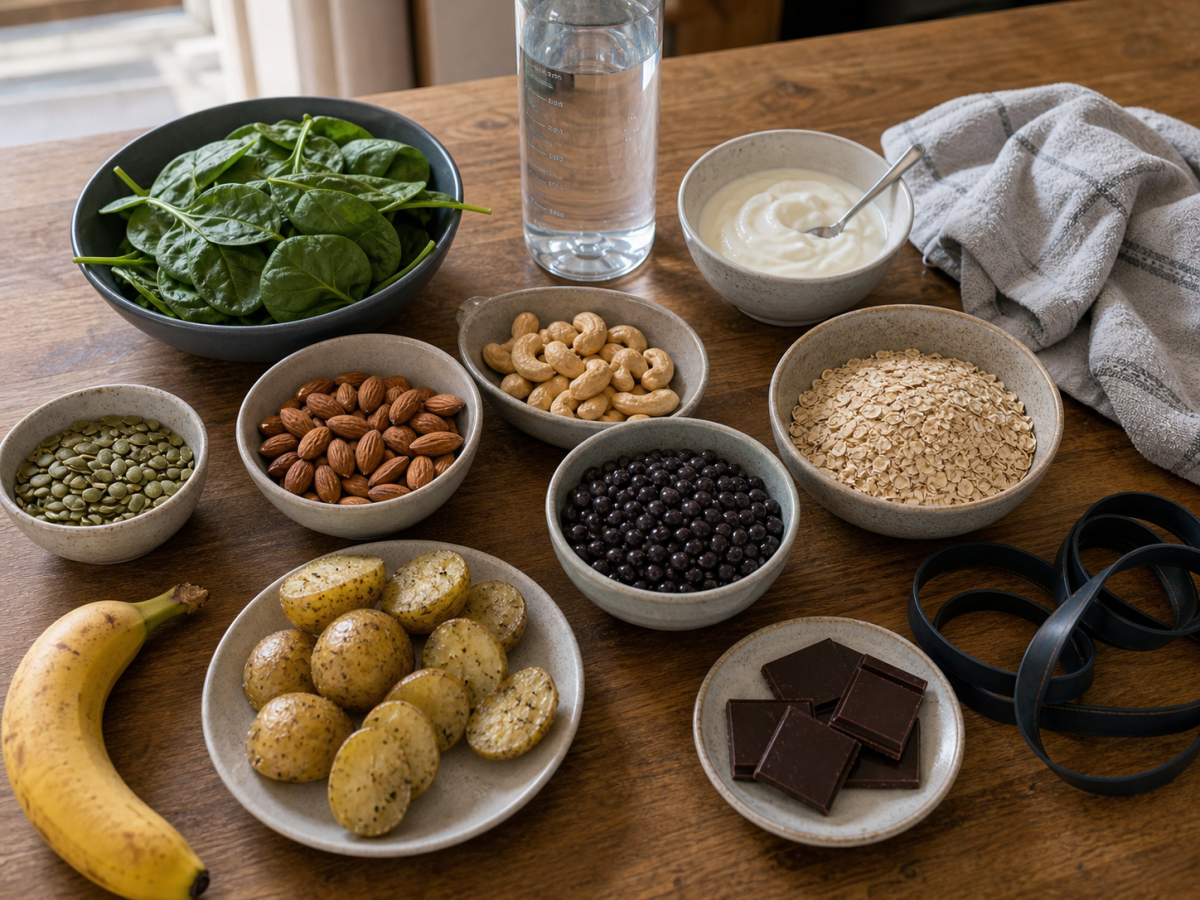
Best magnesium foods for lifters
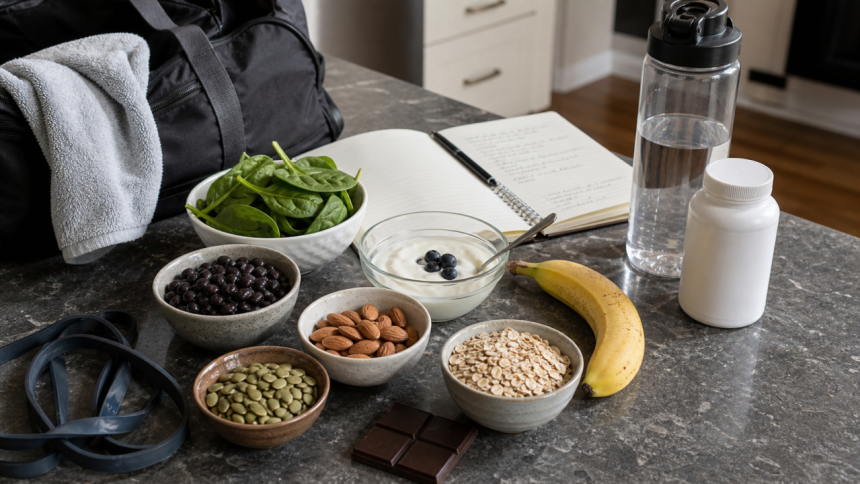
Quick answer: Pumpkin seeds, chia seeds, almonds, boiled spinach, cashews, black beans, edamame, brown rice, yogurt, and whole grains are useful magnesium foods. The FDA considers 20% DV or more per serving a high source, and the adult DV is 420 mg [3]. A food-first approach also brings carbs, fiber, protein, and minerals that a capsule cannot.
USDA FoodData Central and the NIH ODS food table make one thing obvious: lifters do not need exotic foods [1,4]. They need repeatable meals: oats with yogurt and chia, rice with beans and greens, or nuts and seeds.
| Food | Serving | Magnesium | Why it helps a training diet |
|---|---|---|---|
| Pumpkin seeds, roasted | 1 oz | 156 mg | High-magnesium snack with calories, fats, and crunch [1]. |
| Chia seeds | 1 oz | 111 mg | Easy add-in for oats, yogurt, or shakes [1]. |
| Almonds, dry roasted | 1 oz | 80 mg | Portable calories for athletes struggling to eat enough [1]. |
| Spinach, boiled | 1/2 cup | 78 mg | Low-calorie way to add magnesium and potassium [1]. |
| Black beans, cooked | 1/2 cup | 60 mg | Carbs, fiber, plant protein, and minerals in one food [1]. |
| Brown rice, cooked | 1/2 cup | 42 mg | Simple carb base for lifters who need repeatable meals [1]. |
If gaining muscle is the goal, pair these foods with enough protein. Our protein intake guide explains the bigger muscle-building target, while our healthy bulking foods list gives you meal anchors.
Does magnesium improve sleep?
Quick answer: Magnesium can help sleep when low intake or older-age insomnia is part of the problem, but the evidence is mixed and not strong enough to promise better sleep for everyone. A 2021 systematic review found only three randomized trials in 151 older adults; magnesium reduced sleep-onset latency by about 17 minutes, while total sleep time improved by about 16 minutes but was not statistically significant [5].
A 17-minute faster sleep onset can matter if you lie awake every night. It does not prove that a lifter with adequate intake, late caffeine, and a bright phone at midnight needs a capsule. If recovery is lagging because sleep is short, start with behavior. Our sleep supplement guide for athletes and lifters ranks products only after the basics are accounted for.
Does magnesium reduce soreness or speed recovery?
Quick answer: Small trials suggest magnesium supplementation can reduce soreness in some exercise settings, but performance improvements are inconsistent. In a 2019 downhill-running study, 500 mg/day for seven days reduced IL-6 response and muscle soreness after a 10 km downhill run, yet did not improve maximal muscle force [7]. In a 2022 eccentric bench-press study, 350 mg/day for 10 days was tested for soreness and performance [6].
Less soreness is not the same as more strength. The 2017 Nutrients review concluded magnesium is biologically relevant to exercise, while also showing that human performance evidence is mixed and often depends on magnesium status, dose, population, and test type [8].
If recovery is the concern, audit weekly volume, protein, carbs, calories, sleep, and rest days first. Our guides to rest between workouts and common recovery mistakes cover those bigger levers.
Who is most likely to benefit from a magnesium supplement?
Quick answer: The best candidate is not “anyone who lifts.” It is someone with low dietary intake, a restricted diet, persistent GI losses, older age, heavy sweat losses plus poor intake, or medication factors that affect magnesium status. NIH notes that many people in the United States consume less than recommended amounts, and NHANES 2013-2016 data found 48% of Americans consumed less magnesium than their Estimated Average Requirement from food and beverages [1].
- Most likely to benefit: low intake of legumes, seeds, nuts, whole grains, and greens; dieting phases with low food variety; older adults with sleep complaints; people using long-term proton pump inhibitors; and people told by a clinician they have low magnesium.
- Less likely to benefit: lifters already eating plenty of magnesium-rich foods, using a multivitamin with magnesium, and sleeping poorly because of caffeine, stress, inconsistent schedule, or under-recovery.
- Needs medical guidance first: kidney disease, heart rhythm issues, pregnancy, use of antibiotics affected by mineral binding, bisphosphonates, diuretics, or long-term acid-suppressing medication [1].
How to take magnesium without overdoing it
Quick answer: If you use a supplement, start below the 350 mg/day adult supplemental upper limit unless a clinician gives a different plan. Take it with food if it bothers your stomach, separate it from interacting medications, and judge it by a clear outcome: fewer cramps, easier sleep onset, better GI tolerance, or corrected intake. Do not keep increasing the dose just because recovery feels hard.
| Goal | Practical approach | Stop or adjust if… |
|---|---|---|
| Fill a diet gap | Track food for 3-7 days, then add 100-200 mg supplemental magnesium only if food falls short. | You can hit the RDA with seeds, beans, greens, grains, and yogurt. |
| Nighttime routine | Use a gentle form 1-2 hours before bed, alongside a fixed wake time and caffeine cutoff. | Sleep becomes more fragmented, vivid dreams worsen, or morning grogginess appears. |
| Soreness experiment | Test one form for 2-4 weeks while training volume stays stable. | GI effects appear or performance changes are really caused by altered training load. |
| Medication spacing | Follow clinician/pharmacist timing. NIH notes antibiotics may need to be taken 2 hours before or 4-6 hours after magnesium [1]. | You cannot confidently separate doses from interacting medication. |
Side effects and interactions lifters should not ignore
Quick answer: The common problem with too much supplemental magnesium is GI distress: diarrhea, nausea, and abdominal cramping. Very high intakes from laxatives or antacids can cause dangerous toxicity, especially when kidney function is impaired [1]. Magnesium can also reduce absorption of certain antibiotics and bisphosphonates, while diuretics and long-term proton pump inhibitors can alter magnesium status [1].
Do not stack a magnesium sleep product, multivitamin, electrolyte powder, and laxative without adding up elemental magnesium. The Supplement Facts panel lists elemental magnesium, not the total compound weight.
If you take doxycycline, ciprofloxacin, levofloxacin, alendronate, loop or thiazide diuretics, spironolactone, amiloride, or long-term PPIs, treat magnesium as a medication-timing question, not a wellness trend. Ask the person managing that prescription how to space it.
Magnesium myth vs. evidence
| Claim | Better reading | Evidence grade |
|---|---|---|
| “Magnesium builds muscle.” | Magnesium supports normal muscle function and protein synthesis pathways, but it is not a muscle-building drug [1]. | Strong for essential function; weak as a standalone hypertrophy claim. |
| “Magnesium fixes sleep.” | Some older-adult insomnia data show faster sleep onset, but trial quality and sample size are limited [5]. | Mixed, condition-dependent. |
| “All forms are the same.” | Absorption and GI tolerance differ; citrate/chloride/lactate/aspartate generally outperform oxide/sulfate for absorption [1]. | Moderate for absorption differences. |
| “More is better.” | The adult supplemental UL is 350 mg/day; excess supplemental magnesium commonly causes GI effects [1,2]. | Strong for safety boundary. |
FAQ
Should I take magnesium before or after a workout?
Timing is less important than total intake and tolerance. If magnesium bothers your stomach, do not take it pre-workout. If you use it for sleep, evening timing makes more sense. Keep timing consistent for a few weeks so you can judge the outcome.
Is magnesium glycinate better than citrate?
Not universally. Glycinate is often preferred for nighttime routines because it is usually gentler on digestion. Citrate absorbs better than oxide in small studies and can help constipation, but it may loosen stools. Pick based on goal and tolerance.
Can I get too much magnesium from food?
Healthy people are unlikely to get too much magnesium from foods because the kidneys remove excess amounts. The 350 mg/day adult upper limit applies to supplements and medicines, not naturally occurring food and beverage magnesium [1,2]. Kidney disease changes that risk calculation.
How long does magnesium take to work for sleep?
Do not judge it from one night. The older-adult sleep trials in the 2021 review ran from 20 days to 8 weeks [5]. Test it for 2-4 weeks while keeping caffeine, bedtime, wake time, and training volume steady.
Should lifters take ZMA?
ZMA is not automatically better than correcting magnesium and zinc intake separately. In a 2024 trial of trained males after partial sleep restriction, ZMA did not improve sleep or next-morning submaximal bench press and squat performance [10].
Bottom line
Magnesium is worth caring about because low intake is common, food sources are simple, and the mineral is central to normal muscle and nerve function. Build a magnesium-rich diet first, use labels correctly, stay under the adult supplemental upper limit unless supervised, and reserve supplements for a clear reason.
Sources
- National Institutes of Health Office of Dietary Supplements. Magnesium: Fact Sheet for Health Professionals. NIH ODS. Accessed May 31, 2026.
- Institute of Medicine. Dietary Reference Intakes for Calcium, Phosphorus, Magnesium, Vitamin D, and Fluoride. National Academies Press. 1997. doi:10.17226/5776.
- U.S. Food and Drug Administration. Daily Value on the Nutrition and Supplement Facts Labels. FDA. Content current as of March 5, 2024. Accessed May 31, 2026.
- U.S. Department of Agriculture, Agricultural Research Service. FoodData Central. USDA ARS. Accessed May 31, 2026.
- Mah J, Pitre T. Oral magnesium supplementation for insomnia in older adults: a Systematic Review & Meta-Analysis. BMC Complement Med Ther. 2021;21(1):125. doi:10.1186/s12906-021-03297-z. PMID:33865376.
- Reno AM, Green M, Killen LG, O’Neal EK, Pritchett K, Hanson Z. Effects of Magnesium Supplementation on Muscle Soreness and Performance. J Strength Cond Res. 2022;36(8):2198-2203. doi:10.1519/JSC.0000000000003827. PMID:33009349.
- Steward CJ, Zhou Y, Keane G, Cook MD, Liu Y, Cullen T. One week of magnesium supplementation lowers IL-6, muscle soreness and increases post-exercise blood glucose in response to downhill running. Eur J Appl Physiol. 2019;119(11-12):2617-2627. doi:10.1007/s00421-019-04238-y. PMID:31624951.
- Zhang Y, Xun P, Wang R, Mao L, He K. Can Magnesium Enhance Exercise Performance? Nutrients. 2017;9(9):946. doi:10.3390/nu9090946. PMID:28846654.
- Hausenblas HA, Lynch T, Hooper S, Shrestha A, Rosendale D, Gu J. Magnesium-L-threonate improves sleep quality and daytime functioning in adults with self-reported sleep problems: A randomized controlled trial. Sleep Med X. 2024;8:100121. doi:10.1016/j.sleepx.2024.100121. PMID:39252819.
- Gallagher C, Austin V, Dunlop KA, Dally J, Taylor K, Pullinger SA, Edwards BJ. Effects of Supplementing Zinc Magnesium Aspartate on Sleep Quality and Submaximal Weightlifting Performance, following Two Consecutive Nights of Partial Sleep Deprivation. Nutrients. 2024;16(2):251. doi:10.3390/nu16020251. PMID:38257144.