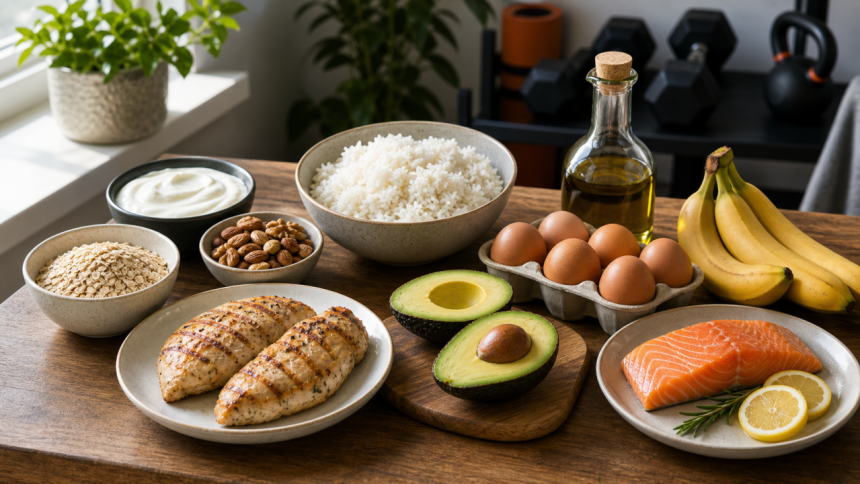
Bulking is not a permission slip to eat like recovery does not exist. The goal is to gain muscle with enough calories to train hard, not to bury your appetite under greasy food and hope the scale proves something. Good bulking foods solve three problems at once: they add calories, supply protein and carbs, and digest well enough that you can keep training.
The old version of this article listed a few solid foods, but it was too narrow. A modern lean bulk needs a full system: protein anchors, carb bases, calorie boosters, produce, and meals that can be repeated. Start with your numbers in the macronutrient calculator, then build the food list around the surplus you actually need.
What makes a food good for bulking?
A good bulking food helps you eat enough without wrecking digestion, blood work, or training quality. It should provide protein, useful carbs, healthy fats, micronutrients, or convenient calories. The best bulking diets combine calorie density with nutrient density instead of choosing one extreme.
If your surplus is too small, weight and strength stall. If it is too large, fat gain outruns muscle gain. Most lifters do better with a controlled surplus and consistent weigh-ins than with a huge “dirty bulk” that requires a long cut later.
Which protein foods should anchor a bulk?
Use chicken, turkey, lean beef, eggs, Greek yogurt, cottage cheese, salmon, tuna, tofu, tempeh, beans, lentils, and protein powder when needed. The ISSN protein position stand supports higher protein intakes for active people, and a bulk is not the time to let protein drift just because calories are easier to get.
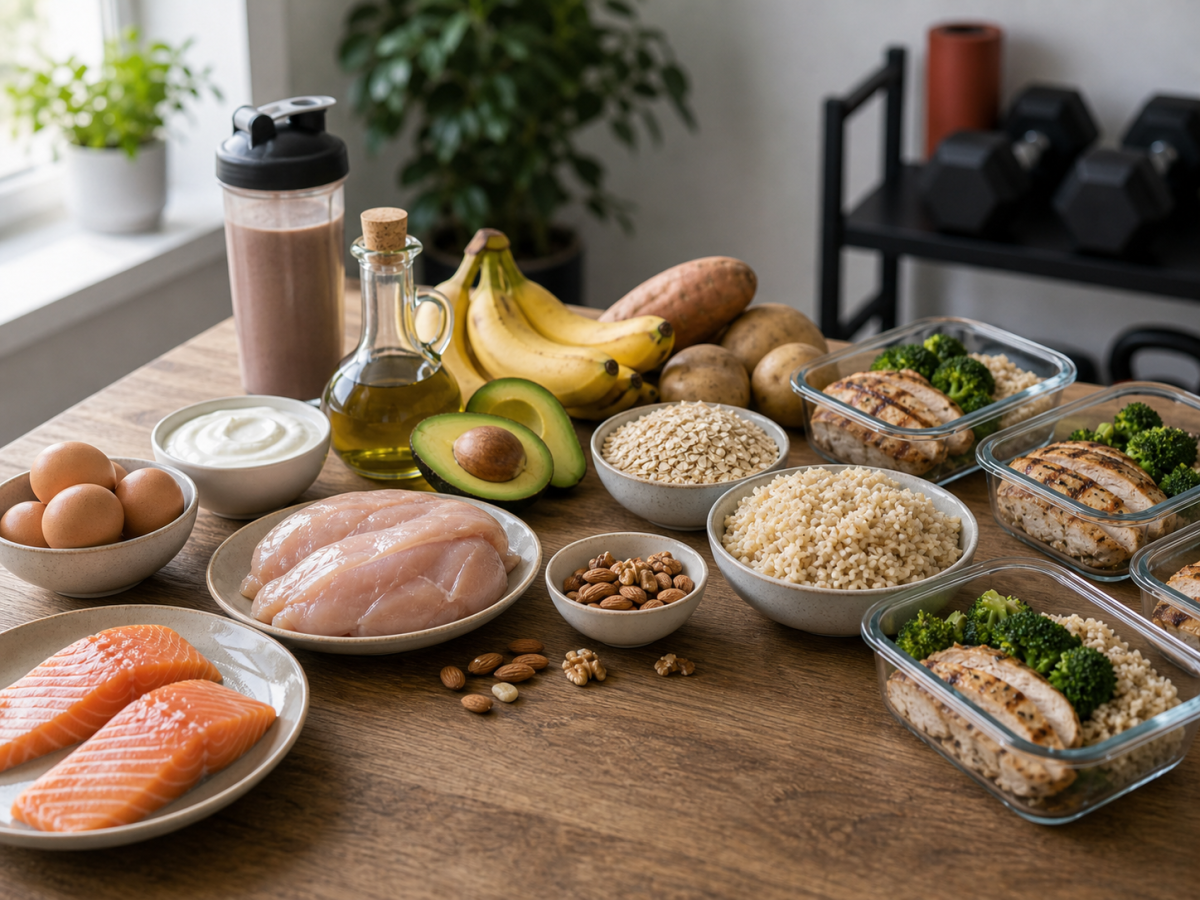
For easy planning, build two or three default protein meals. A yogurt-oats bowl, rice with chicken or tofu, eggs with potatoes, salmon with rice, and a shake with fruit can cover most days. For more options, use our high-protein foods list.
Which carbs are best for gaining muscle?
Carbs help you train harder and recover from volume. Rice, oats, potatoes, pasta, bread, cereal, fruit, beans, lentils, and sports drinks all have a place depending on the session and your appetite. Higher-fiber carbs are great most of the day; lower-fiber carbs can be useful close to training if digestion is an issue.
The ISSN nutrient timing stand supports practical timing when it helps performance. That does not mean you need a complicated protocol. Put carbs before and after hard sessions, then adjust based on workout quality. The nutrient timing calculator can give you a starting point.
Which calorie boosters help without turning the bulk sloppy?
Use olive oil, avocado, nuts, nut butter, trail mix, whole milk, dried fruit, granola, and smoothies. These foods are useful because they raise calories without adding huge food volume. The trick is to measure them until you know your portions. A tablespoon of oil is easy to add; three accidental tablespoons can change the whole day.
Liquid calories can help hardgainers, but keep them purposeful. A smoothie with milk, protein powder, banana, oats, and peanut butter is different from random sugary drinks. One supports the plan; the other just makes tracking messy.
How do you build a lean-bulk day?
Start with four meals if appetite allows. Each meal should include protein. Add carbs around training. Add fats where calories are short. Keep fruit and vegetables in the plan so the bulk does not become a fiber-free endurance event for your digestive system.
A lean bulk should feel like eating slightly more than maintenance, not like force-feeding every hour. If performance, body weight, and digestion are all improving, the plan is probably close.
Budget matters too. Rice, oats, potatoes, eggs, beans, tuna, ground meat, frozen vegetables, milk, and peanut butter can do serious work. Our guide to building muscle on 50 dollars a week is a useful companion if grocery cost is the limiter.
What bulking foods should you limit?
You do not need to ban pizza, burgers, desserts, or cereal. You do need to notice when they replace protein, fiber, and planned meals. The food that makes you overshoot calories by 1,000 every night is not a bulking hack. It is a future cutting problem.
Sources
- Jager, R., et al. (2017). International Society of Sports Nutrition Position Stand: protein and exercise. Journal of the International Society of Sports Nutrition. doi:10.1186/s12970-017-0177-8.
- Kerksick, C. M., et al. (2017). International society of sports nutrition position stand: nutrient timing. Journal of the International Society of Sports Nutrition. doi:10.1186/s12970-017-0189-4.
- U.S. Department of Agriculture. (n.d.). FoodData Central. Accessed May 22, 2026.
- U.S. Department of Agriculture and U.S. Department of Health and Human Services. (2020). Dietary Guidelines for Americans, 2020-2025. Accessed May 22, 2026.