
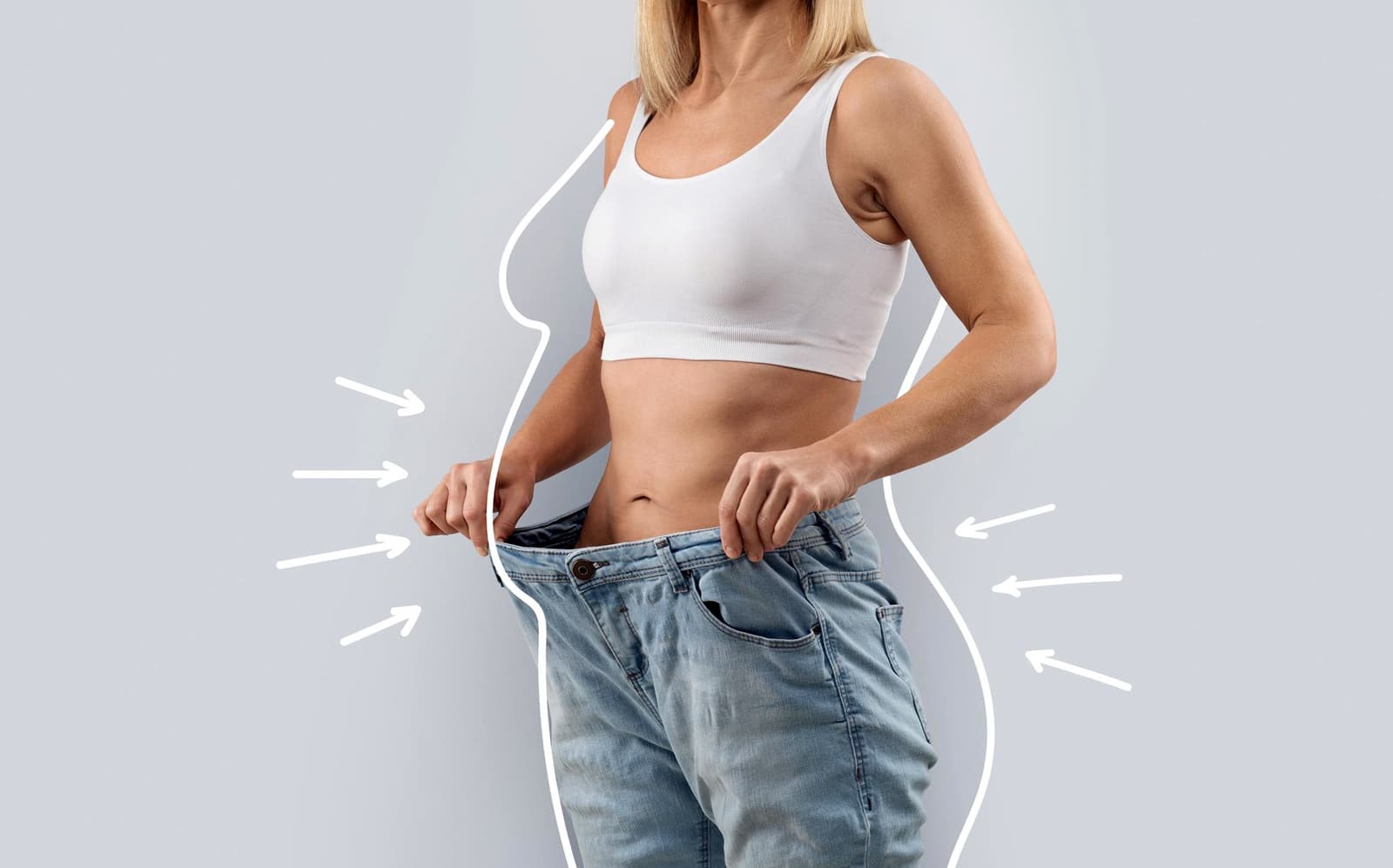
American men stand 5’9″ tall (69.1 inches) on average, weighing 198 pounds. Women are slightly shorter at 5’4″ (63.7 inches) and weigh 171 pounds on average. Notably, both figures fall within the “overweight” BMI category. (1)
Sixteen years in the trenches of the gym, and one truth remains undying: every physique tells a story. In my line of work, you see them all – sculpted torsos honed through years of discipline, dad bods, and everything in between.
But here’s the curious thing: when it comes to the American physique, we tend to get fixated on a single narrative — the cold, hard numbers of averages.
In this article, I want to crack that narrative open to delve into the factors that have shaped the way we look and how those stories continue to unfold every day. We’ll delve deeper into the data and explore the intricate links between body size, health, and well-being.
Trends and History — Average American Man and Woman’s Weight and Height

Let’s rewind to the era of bobby socks and milkshakes – the 1950s. Back then, the average American man tipped the scales at 166 pounds, women a svelte 140. Sure, it’s a far cry from today’s figures, but it paints a picture of a time when processed food and screen time hadn’t quite woven their magic spell.
Fast-forward to the 1970s, and we see a subtle shift — averages are inching up to 174 pounds for men and 149 for women. The rise of fast food and the shift towards desk jobs start whispering their influence, hinting at the complex interplay between environment and physique.
Then came the 80s, and with it, the dawn of the Big Gulp® and the fitness craze. Supersized portions became the norm, while gyms morphed into social scenes. And guess what? Averages took a nosedive upwards — 198 pounds for men and 171 for women.
It’s a stark reminder that what we choose to eat and how we choose to move have a profound impact on our collective shape.
Impact of Demographics on Average American Man and Woman’s Weight and Height
But here’s the catch: “average” is a funny word.
Beneath the national figures lies a vibrant tapestry of diversity woven from threads of ethnicity, socioeconomic status, and even geography.
Hispanic and African American populations, for instance, tend to have lower average heights and weights than their Caucasian counterparts. And let’s not forget the regional variations — folks down South sporting slightly higher averages than their West Coast cousins.
And then there’s the individual — the outlier, the exception that proves the rule. Genetics, lifestyle choices, and even pure chance can throw a curveball into the equation, making every physique a unique story waiting to be unraveled.
To focus solely on the national average is to miss the breathtaking complexity of individual experiences and the diverse paths to health and well-being.
Average American Men’s Weight & Height
Here is a breakdown of the average American male’s height:
Average American’s Height
Below is the current average American male height and weight:
| Age | Height (in ft.) | Weight (in pounds) |
| 20–29 | 5.7 | 188.6 |
| 30–39 | 5.8 | 208.1 |
| 40–49 | 5.8 | 206.9 |
| 50–59 | 5.7 | 202.5 |
| 60–69 | 5.7 | 201.2 |
| 70–79 | 5.6 | 193.4 |
| 80+ | 5.5 | 177.5 |
For generations, American men have been locked in a vertical arms race. From the 5’7″ of the Civil War soldier to the 5’10” of today’s average dude, the story of male height in America is one of steady, almost inexorable, ascent.
The data tells a fascinating tale. Over the past century, the average American man has sprouted an impressive 3 inches.
Factors Behind Increasing Height

Here are the four factors that contribute to an individual’s increasing height:
Improved Nutrition
Gone are the days of meager rations and limited food variety. The plates of an average American today brim with fruits, vegetables, and protein, providing the crucial building blocks for growing bones and sturdy frames.
Healthcare
Healthcare plays its part, too. Advancements in prenatal care, childhood vaccinations, and better disease management ensure fewer developmental stumbles and smoother journeys toward maximum height potential.
Environment
Safer living conditions, cleaner air, and reduced exposure to toxins create a stage where genetic blueprints can fully express themselves, pushing those vertical limits a little further. (2)
Physical Activity
As the living conditions improved, people have been paying more attention to their overall health and well-being.
The popularity of basketball could have possibly played a role in the boom in the heights of the average American. A study published in the Journal of Sports Sciences collected biometric data from American athletes and found significant increases in mass, height, and BMI among athletes from sports like basketball. (3)
Basketball’s surge in popularity in America can be traced back to the 1960s and 1970s. It was also around that time that the sport of bodybuilding grew in popularity, and people started taking their health more seriously.
Average American Male’s Weight
But let’s not get lost in the clouds of height triumph. While the height numbers have gone up, so have the numbers on the scale. Average American men now tip the scales at a hefty 198 pounds, a far cry from the 166 pounds of our 1950s counterparts.
This isn’t just a random statistical blip; it’s a reflection of America’s love affair with high-calorie, processed foods, increasingly sedentary lifestyles, and the insidious creep of sugary drinks that have turned soda fountains into fountains of extra pounds.
And here’s the harsh reality: this extra baggage comes with a hefty price tag in the form of increased risk for heart disease, diabetes, and numerous other chronic conditions. (4)
Remember, weight isn’t just a number; it’s a story written in cholesterol levels, blood pressure readings, and a predisposition to a whole host of health woes.
Average Body Composition
But hold on, before we descend into the abyss of doom and gloom, let’s shift the spotlight to a crucial element often overlooked — body composition.
Because the truth is, a man’s health isn’t measured solely by his weight on the scale. It’s the interplay of muscle mass, fat distribution, and overall fitness that paints the true picture of health and well-being.
Imagine two guys, both tipping the scales at 198 pounds. One, a lanky fellow with minimal muscle; the other, a sculpted machine with a six-pack that could grate cheese. Their health risks, performance capabilities, and overall well-being are worlds apart.
So, after all this data-diving and story-slinging, where do we land?
Well, I’ll tell you this: as a trainer who’s seen his fair share of transformations, both vertical and horizontal, I celebrate the gains in male height. It’s a testament to the strides we’ve made in nutrition, healthcare, and overall living conditions.
But let’s be honest, folks, a taller average doesn’t erase the extra pounds we’ve collectively packed on. I see it every day in the gym — dudes sporting the latest sneakers and workout gear yet carrying around a weight that hinders their performance and health.
This isn’t a call to shame or blame; it’s a call to awareness. The number on the scale isn’t just a statistic; it’s a story waiting to be rewritten. And that story needs more than just inches; it needs muscle, it needs function, it needs a healthy foundation to carry us through life’s adventures.
Average American Women’s Weight & Height
Here is the table of the current average women’s height and weight:
| Age | Height (in ft.) | Weight (in pounds) |
| 20–29 | 5.4 | 165.0 |
| 30–39 | 5.4 | 174.9 |
| 40–49 | 5.3 | 178.1 |
| 50–59 | 5.3 | 173.5 |
| 60–69 | 5.3 | 172.4 |
| 70–79 | 5.2 | 164.6 |
| 80+ | 5.1 | 149.7 |
Just like our male counterparts, the average American woman has grown taller, clocking in at around 5’4″ these days.
Regional variations paint a fascinating picture, with Southern women tending to be slightly shorter than their East Coast sisters.
And that age-old question, “Do women stop growing as tall as men?” The answer? Not quite. While men experience a bigger growth spurt during puberty, women tend to keep growing, albeit at a slower pace, well into their early twenties.
Average American Women Weight
Now, let’s tackle the elephant in the room — weight. Average numbers show American women carrying around 171 pounds, a significant increase over previous decades.
Unpacking this complexity requires acknowledging the interplay of biology, hormones, and lifestyle choices. Women’s bodies naturally carry more fat than men’s, a biological advantage for pregnancy and childbirth. Hormonal fluctuations throughout the menstrual cycle and life stages, like menopause, can also impact weight distribution and metabolism.
It’s a tangled web, this weight gain issue. Processed foods, desk jobs, and the allure of convenience meals all play a role. But let’s not forget the elephant’s trunk – societal pressures and the constant bombardment of unrealistic beauty standards that can push women towards unhealthy body image ideals.
Here’s the thing, though — weight isn’t a monolith. It’s not a one-size-fits-all health indicator. A woman carrying 171 pounds could be a picture of health with a fit, muscular physique, or she could be struggling with weight-related health issues.
Understanding the Numbers: Weight Trends and Health Implications
Body Mass Index (BMI) is often used as a measure of weight-related health risks, but it’s a blunt instrument at best. Muscle mass, bone density, and individual body composition all play a role, and relying solely on a number can be misleading.
A woman who carries her weight differently or who builds muscle through exercise might be categorized as “overweight” despite being perfectly healthy.
This is why understanding individual circumstances and focusing on overall health markers like cholesterol, blood pressure, and exercise habits is far more valuable than chasing an arbitrary number on the scale.
But if you still want to calculate your body mass index, use our BMI calculator to estimate your body fat.
Here are the five BMI categories to assess your fat mass:
- Underweight: <18.5
- Normal weight: 18.5 – 24.9
- Overweight: 25 – 29.9
- Obesity: 30 – 34.9
- Extreme Obesity: BMI of 35 or greater
Beyond the Binary
This is where the “beyond the scale” movement comes in, shining a light on the importance of body diversity and individual well-being.
Forget the dress size numbers, ditch the outdated BMI charts, and embrace the incredible spectrum of female bodies. Celebrate the strength of a powerlifter, the grace of a ballerina, and the resilience of a marathon runner. Remember, health comes in all shapes and sizes. It’s about nourishing your body from the inside out, honoring its needs, and moving it in ways that make you feel strong, confident, and empowered.
Beyond the Numbers: A Holistic Perspective
Forget generic stats; let’s get personal. We’re about to explore the remarkable tapestry of your health — the beautiful chaos that makes you, you.
Forget those sterile averages, the cold, hard numbers staring you down from bathroom scales and doctor’s charts. They’re just a part of the story, not the whole epic. Your health, let me tell you, is a combination of multiple factors, each one vital to your well-being.
So, sure, we talked about averages — averages can be helpful benchmarks, like mile markers on a road trip. But here’s the thing: you’re not just another mile marker; you’re the whole journey.
Redefining Healthy
Your body is a meticulously crafted instrument, and to truly understand its health, we must look beyond the surface, the weight on the scale, the inches on the tape measure.
Think of it like this: imagine measuring the health of a forest just by counting the trees. Sure, that gives you a number, but what about the soil quality, the sunlight’s reach, the buzzing insects and microbes? It’s all intricately connected, right?
Your health is the same — it’s not just a number on a chart; it’s the story of your metabolism, your body composition, functional fitness, sleep patterns, stress levels, genetic code, family history, and a whole lot more.
Your Personal Healthy Weight Range
Here’s the catch — those “healthy weight ranges” you see thrown around? They’re not one-size-fits-all blueprints.
A stocky, muscular powerhouse might thrive at a weight that would send a slender sprinter soaring into the “overweight” zone. Your body type, your genetics, even your past health struggles — they all play a role in your unique healthy weight range.
But listen up, this isn’t an excuse to throw in the towel and say, “Well, I’m built like a brick house, guess I’m doomed to forever wear stripes.” Nonsense!
Taking control of your health is the ultimate act of rebellion against averages and limitations. It’s about building a healthy lifestyle that resonates with your body’s unique tune.
How To Improve Your Health

Let’s talk about the power trio of well-being: a balanced diet, fasting, regular exercise, and adequate sleep.
- Balanced Diet: Eat real, whole foods that nourish your body and mind, not processed junk that clogs your system like a rusted filter.
- Exercise: Move your body — not just because “exercise is good for you,” but because it’s a celebration of your strength, flexibility, and ability to dance with gravity.
- Recovery: Prioritize sleep. It’s the time your body recharges, repairs, and refines itself, the magic potion that keeps you firing on all cylinders.
Remember, peak health isn’t about chasing some arbitrary number on a scale; it’s about building a vibrant, sustainable foundation for well-being.
It’s about understanding your body, respecting its individuality, and making choices that empower you to thrive.
I highly recommend working with a certified personal trainer and a registered nutritionist to devise a personalized workout and recovery plan. Following a customized program can help you attain your physique goals faster.
Although hiring a pro might cost a little money upfront, it will save you a lot of wasted time, effort, and potential injuries.
Conclusion
American men tower over women at 5’9″, while women average a graceful 5’4″. Weight follows suit, with men tipping the scales at 198 pounds compared to women’s 171 pounds.
Remember, the numbers provided in this article are for reference only. Don’t look at them as ‘ideal’ weight and heights. Each person is unique and has different requirements and goals.
So ditch the averages and let your unique health story unfold, one delicious bite, one exhilarating workout, one peaceful slumber at a time. Now, go out there and rewrite the definition of health, one glorious, messy, magnificent you at a time!
If you have any questions about the average weight and height, drop them in the comments below, and I’ll be happy to help!
References
Fitness Volt is committed to providing our readers with science-based information. We use only credible and peer-reviewed sources to support the information we share in our articles.
- Centers for Disease Control and Prevention. Anthropometric Reference Data for Children and Adults: United States, 2015-2018. National Center for Health Statistics. Hyattsville, MD. 2021. Accessed 15 Jan 2024. https://www.cdc.gov/nchs/data/series/sr_03/sr03-046-508.pdf.
- Jelenkovic, A., Sund, R., Hur, Y. M., Yokoyama, Y., Hjelmborg, J. V., Möller, S., Honda, C., Magnusson, P. K., Pedersen, N. L., Ooki, S., Aaltonen, S., Stazi, M. A., Fagnani, C., D’Ippolito, C., Freitas, D. L., Maia, J. A., Ji, F., Ning, F., Pang, Z., Rebato, E., … Silventoinen, K. (2016). Genetic and environmental influences on height from infancy to early adulthood: An individual-based pooled analysis of 45 twin cohorts. Scientific reports, 6, 28496. https://doi.org/10.1038/srep28496
- Sedeaud, A., Marc, A., Schipman, J., Schaal, K., Danial, M., Guillaume, M., Berthelot, G., & Toussaint, J. F. (2014). Secular trend: morphology and performance. Journal of Sports Sciences, 32(12), 1146–1154. https://doi.org/10.1080/02640414.2014.889841
- Field, A. E., Coakley, E. H., Must, A., Spadano, J. L., Laird, N., Dietz, W. H., Rimm, E., & Colditz, G. A. (2001). Impact of overweight on the risk of developing common chronic diseases during a 10-year period. Archives of internal medicine, 161(13), 1581–1586. https://doi.org/10.1001/archinte.161.13.1581