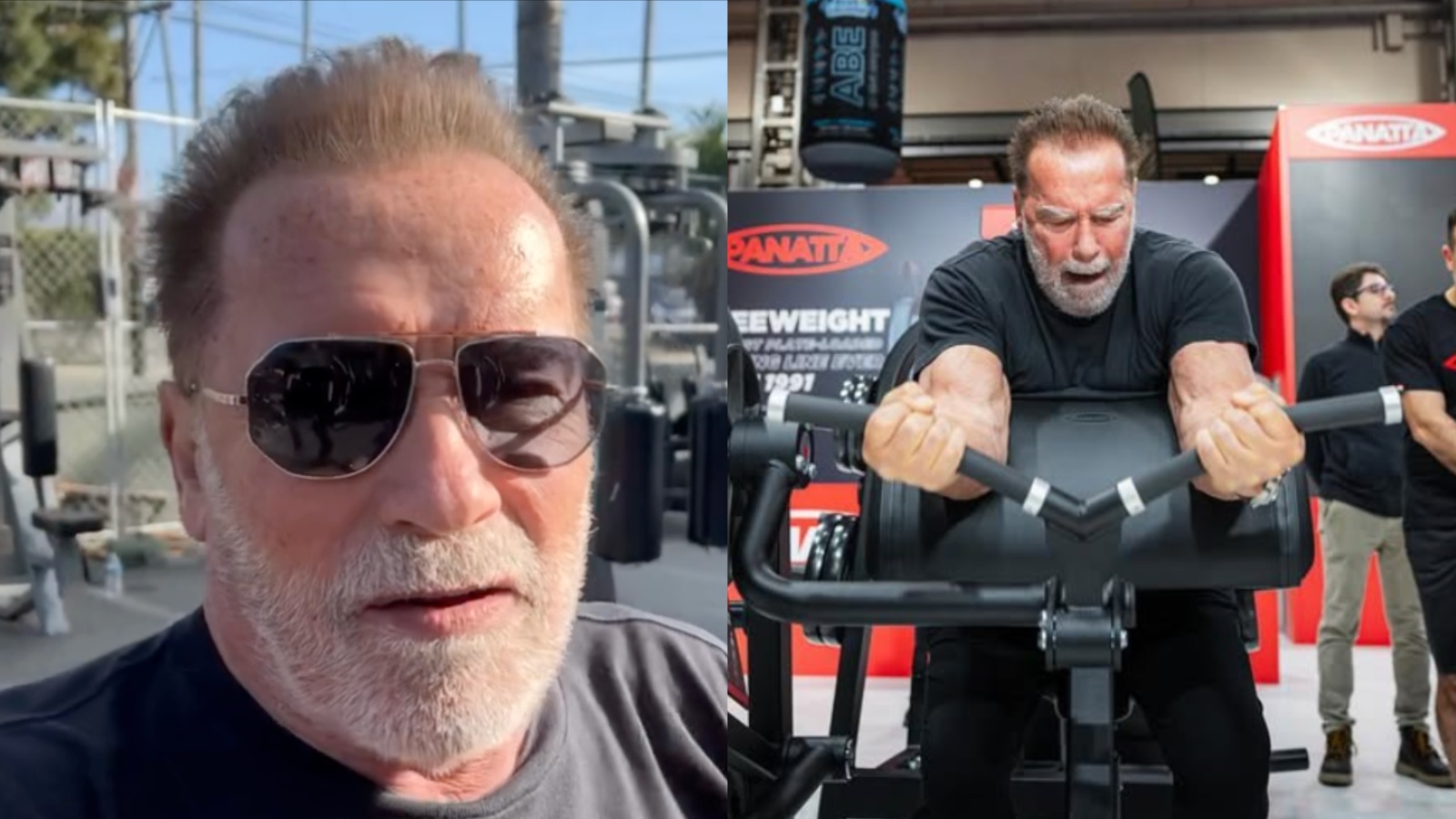
Conquering post-workout soreness remains atop Arnold Schwarzenegger‘s to-do list in retirement. On August 11, 2025, in his Arnold’s Pump Club newsletter, he analyzed the recovery and muscle repair benefits of magnesium supplementation.
Having secured the Mr. Olympia title seven times, Schwarzenegger mastered the art of bodybuilding, pouring his efforts into crafting a timeless golden era physique. Beyond the stage, Schwarzenegger’s contributions to fitness are immense: he uses his platform to offer workout, supplement, and diet advice to anyone on the path to better living.
We often hear about supplements like creatine and vitamin D, but Schwarzenegger has found other options for improving his training. Magnesium has received positive attention for its calming effects that help promote sleep, but it might be the secret to recovering from training as well.
Arnold Schwarzenegger Analyzes Magnesium, Says It Improves Workout Performance, Recovery, and Supports Better Sleep
In the newsletter, Schwarzenegger first pointed to the recovery benefits of magnesium, particularly in regard to post-workout delayed onset soreness.
“Does This Mineral Hold the Key to Faster Recovery?
If you’ve ever hobbled down the stairs two days after leg day, wondering if there’s anything that can ease the pain, you’re not alone.
That delayed-onset muscle soreness (DOMS) is a universal experience for anyone who’s ever pushed their body. But what if one simple supplement could help you bounce back faster?”
Researchers conducted studies, tracking how participants felt days following their workouts while taking magnesium.
“Taking magnesium supplements two hours before intense exercise may reduce muscle soreness and speed up recovery.”
“Researchers conducted a systematic review analyzing magnesium supplementation and muscle recovery in physically active people. They specifically looked at studies where magnesium was taken alone—not mixed with other supplements—to isolate its true effects. The studies examined various forms of exercise, from resistance training to endurance activities, tracking how participants felt in the days following their workouts.”
The results across all studies concluded that those who took magnesium experienced less muscle soreness than those who didn’t. It also boosted exercise performance, recovery time, and protected against muscle damage.
“The results were consistently positive across all studies. People who took magnesium supplements experienced less muscle soreness compared to those who didn’t.
But the benefits didn’t stop there—participants also showed improved exercise performance, faster recovery times, and what researchers called a “protective effect” against muscle damage.”
Shockingly, researchers also found that active individuals required 10 to 20 percent more magnesium compared to sedentary individuals.
“Magnesium is involved in over 300 biochemical reactions in your body, including energy production, muscle contraction, and the inflammatory response that contributes to soreness. When you exercise intensely, your magnesium needs increase significantly. The researchers found that active individuals require 10 to 20 percent more magnesium than sedentary people.”
He adds that some forms, such as magnesium L-Threonate, reach the brain, helping support better sleep and rest.
“There are many different types of magnesium, and this is our go-to supplement. Magnesium L-Threonate is sourced through a meticulous manufacturing process that combines magnesium with threonic acid to create a highly bioavailable form that is easier on your stomach (compared to magnesium citrate) and can effectively reach the brain, which means it also helps support better sleep and rest.”
Schwarzenegger said that if you’re training hard, consider taking magnesium two hours before your workout.
“If you’re training hard, consider taking magnesium about 2 hours before your workout. Other studies have found that about 250 to 400 mg of magnesium per day—ideally taken with food for better absorption and reduced risk of stomach issues — can be effective.
Start with that range, and then consider adding that extra 10 to 20 percent if you’re training hard and not seeing a difference.”
Supplements and spices are like secret weapons — and Schwarzenegger’s got a few. He’s also gotten behind the powerful effects of turmeric, a kitchen spice, packed with curcumin, which can help individuals with inflammation, enabling them to recover more effectively from demanding workouts.
At 78 years old, Schwarzenegger looks for any weapon at his disposal to live a longer, stronger life. He believes magnesium supplements aren’t just great for sleep hygiene, but a useful tool for bouncing back from strenuous sessions.