
Sauna has become recovery content gold. It is relaxing, photogenic, and easy to sell as a secret weapon. The truth is more useful: sauna can be a good tool for some lifters, but it is not a magic repair chamber. Heat is stress. Used well, it can complement training. Used carelessly, it can make dehydration, dizziness, and fatigue worse.
The best post-workout sauna plan starts with the workout you just did. A short easy lift and a hydrated body are different from a brutal leg day in summer heat. The body does not care that a recovery trend is popular. It cares about total stress.
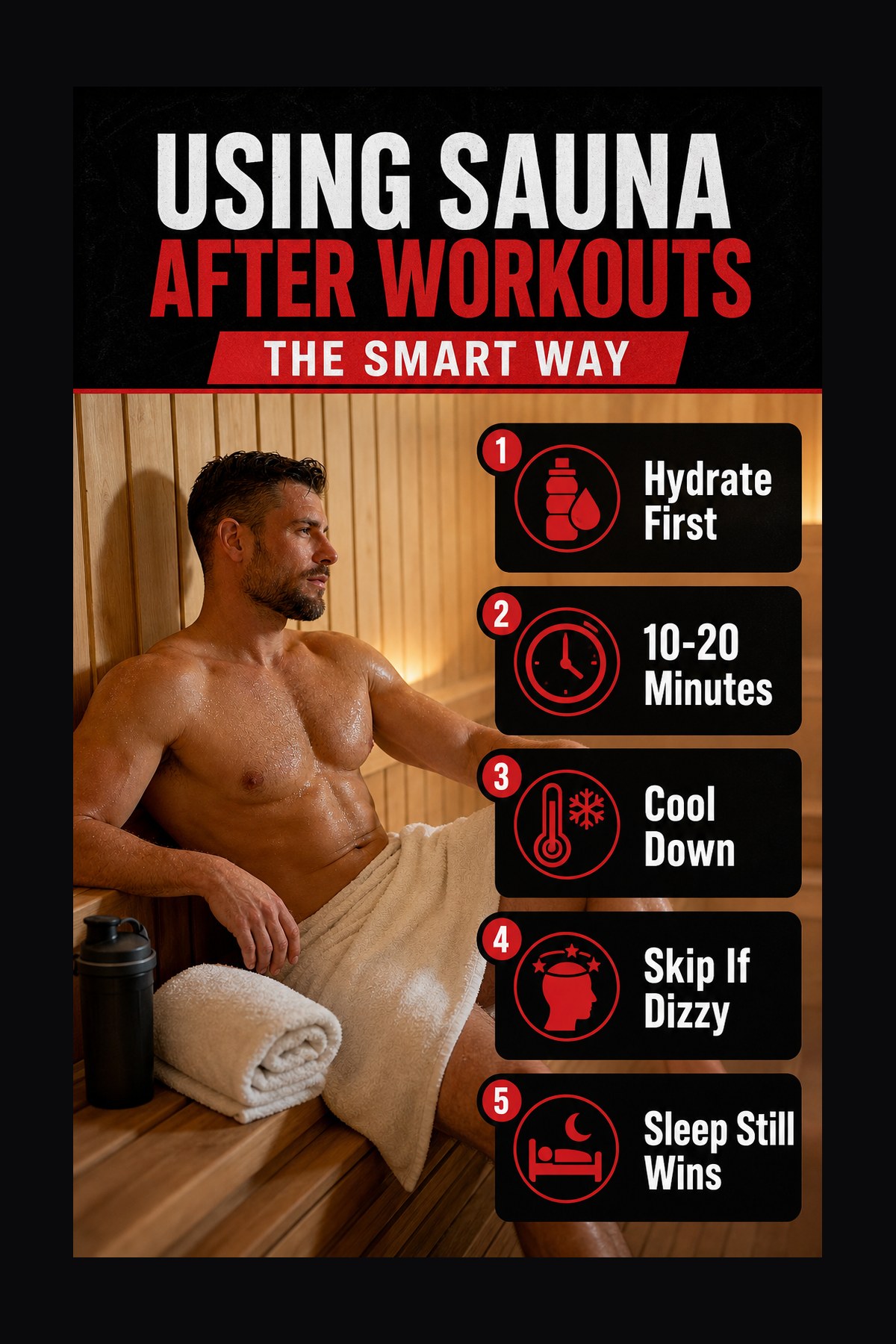
Use sauna as a controlled add-on: short bouts, hydration, clear stop signals, and no belief that more heat automatically means more recovery.
The Better Move
Use the trend as a doorway, then build a system you can repeat. The win is not novelty. The win is a rule that survives real training weeks, busy mornings, missed meals, stress, and imperfect equipment. That is why this article focuses on decisions, not hacks.
Treat Heat As Training Stress
Sauna raises cardiovascular and thermal stress. That can be part of why it is interesting, but it is also why dosage matters. After hard training, the body is already managing heat, fluid loss, and fatigue. Adding sauna immediately can be too much for some people, especially if they are dehydrated or underfed.
- Cool down first.
- Drink fluids and replace sodium if sweat loss was high.
- If electrolytes are part of your routine, compare with FitnessVolt’s fasting electrolyte calculator.
Use Short Bouts First
If you are new to sauna, start with short exposure. Five to ten minutes is enough to learn how your body responds. Leave before dizziness, headache, nausea, or unusual weakness. The goal is to build a habit you can repeat, not win a heat tolerance contest.
- Start with 5-10 minutes.
- Rest and cool down afterward.
- Do not stack sauna with alcohol or dehydration.
Do Not Confuse Relaxation With Muscle Repair
A sauna can help you relax, downshift, and create a recovery ritual. That does not mean it directly fixes muscle damage from training. Sleep, calories, protein, hydration, and appropriate programming still do the main work. Sauna belongs after those basics, not ahead of them.
- If soreness keeps climbing, review training load with deload week guide.
- If cold exposure is your recovery interest, compare tradeoffs with cold plunge tub guide.
- If appetite is low after heat, plan a recovery meal before or after.
Know Who Should Be Cautious
People with cardiovascular conditions, blood-pressure issues, pregnancy, heat illness risk, fainting history, or medications that affect heat tolerance should get medical guidance before sauna use. That caveat is not fearmongering. It is the difference between a wellness habit and an unsafe stressor.
- Avoid sauna when sick or dehydrated.
- Leave immediately if dizzy or nauseated.
- Use lower heat and shorter exposure if tolerance is unknown.
Sauna Decision Grid
| Situation | Sauna call | Reason |
|---|---|---|
| Easy lift, hydrated | Short sauna is reasonable | Lower total stress |
| Hard leg day, soaked shirt | Cool down and rehydrate first | Heat stress already high |
| Dizzy or headache | Skip | Stop signal |
| Sleep routine | Early evening may help relaxation | Avoid making bedtime too hot |
Use It This Week
If you want to test sauna, use it twice this week after easier sessions. Keep exposure short and write down how you feel later that day and the next morning. Recovery tools should improve readiness, not create a second workout.
Hydration is not optional. If the workout was hot, long, or sweaty, replace fluids first. Sauna after dehydration is not advanced recovery. It is poor risk management.
Do not combine sauna experimentation with a new stimulant, a hard cut, and extra cardio. Heat tolerance depends on the total stress picture.
Adjust It By Goal
| Goal | Best adjustment | Why |
|---|---|---|
| Relaxation | Short sauna after cooldown | Downshifts the session |
| Heat adaptation interest | Gradual exposure | Tolerance takes time |
| Hard training block | Use cautiously or skip | Total stress is already high |
| Poor sleep | Avoid overheating near bedtime | Cooling down matters |
When To Change The Plan
Do not judge the plan from one perfect day or one bad day. Most useful fitness and nutrition changes need a short runway. Give the system one to two weeks unless pain, dizziness, digestive distress, sleep disruption, or a clear medical concern shows up sooner. Early feedback is useful, but it needs context.
The right adjustment is usually smaller than the emotional reaction. If the plan feels too hard, reduce the dose before abandoning the idea. If it feels too easy, repeat it until the habit is stable before adding complexity. Most people fail these trends by escalating too quickly, not by starting too conservatively.
- Change one variable at a time so the result is readable.
- Keep the part that improves training, hunger, recovery, or consistency.
- Remove the part that adds friction without a clear payoff.
- Treat pain, dizziness, unusual fatigue, or persistent digestive symptoms as stop signs, not discipline tests.
The Smarter Starting Dose
Start smaller than your motivation wants. A conservative first dose protects the rest of the week and gives you cleaner feedback. Once the behavior is repeatable, progression is easy. When the starting point is too aggressive, the plan often fails for reasons that have nothing to do with the idea itself.
That is especially important for lifters because everything competes with recovery. A new food habit can change digestion. A new cardio session can change leg fatigue. A new recovery tool can change sleep timing. The first job is to make the change fit the training week. The second job is to make it stronger.
Mistakes To Avoid
- Using sauna to compensate for poor sleep.
- Entering dehydrated after hard conditioning.
- Staying in longer to prove toughness.
- Ignoring medications or medical history.
How To Know It Is Working
The right version should make the next decision easier. Training should feel more predictable, meals should require less negotiation, and recovery should become easier to read. If the plan adds stress, confusion, pain, or obsessive tracking, simplify it before adding another layer.
Use one clear metric for two weeks. For nutrition articles, that could be hunger, protein consistency, calories, or training energy. For training articles, use performance, soreness, joint comfort, and repeatability. If the metric improves without creating a new problem, keep the system.
Where This Fits On FitnessVolt
This piece is meant to connect with the rest of your training and nutrition system, not replace it. Use the linked FitnessVolt guides where they match your next decision, especially when you need a calculator, a workout progression, or a more detailed nutrition framework.
Reader Scenarios
Easy training day
A short sauna session after cooling down may fit well. Keep it short enough that you leave feeling normal.
Brutal leg day
Rehydrate, eat, and cool down before heat exposure. If you are already depleted, sauna can add stress instead of recovery.
Sleep-focused user
Avoid overheating right before bed. Sauna may feel relaxing, but you still need time to cool down before sleep.
What To Track For Two Weeks
Use a short tracking window before judging the plan. Two weeks is long enough to reveal whether the idea fits real life, but short enough that you are not locked into a strategy that clearly does not work. Write down the one outcome the article is meant to improve, then watch that outcome instead of chasing every possible metric.
For food articles, track hunger, meal repeatability, digestion, training energy, and whether the habit prevents a worse decision later. For training and recovery articles, track performance, soreness, joint comfort, sleep, and whether the session is easy enough to repeat. If the plan improves one clear outcome without creating a new problem, keep it. If it only adds work, simplify it.
Use Sauna as Recovery Stress, Not a Badge
The sauna still counts as stress. That is why the smartest lifters use it like a small recovery dose instead of a toughness contest. Keep the first sessions conservative, drink before you enter, and leave before lightheadedness becomes a problem. If sleep worsens, resting heart rate jumps, or the next workout feels flat, reduce the sauna time or move it away from the hardest training days.
FAQ
Is sauna good after a workout?
It can be useful for relaxation and heat exposure habits, but it should be short, hydrated, and matched to the workout stress.
How long should I sauna after training?
Beginners can start with 5-10 minutes. More experienced users may tolerate longer, but more is not automatically better.
Should I sauna before or after lifting?
Most lifters should avoid long sauna sessions before lifting because heat can reduce readiness. After training is usually more practical.
Who should avoid sauna?
Anyone with dizziness, dehydration, illness, certain cardiovascular or blood-pressure concerns, pregnancy, or heat-risk medications should be cautious and seek medical guidance.
Sources
- Laukkanen T, et al. 2015. Sauna bathing is inversely associated with cardiovascular disease. JAMA Internal Medicine. Accessed June 4, 2026.
- Sawka MN, et al. 2007. American College of Sports Medicine position stand: Exercise and fluid replacement. Medicine & Science in Sports & Exercise. Accessed June 4, 2026.
- Centers for Disease Control and Prevention. n.d. Heat and Health Tracker / Heat safety resources. Accessed June 4, 2026.