


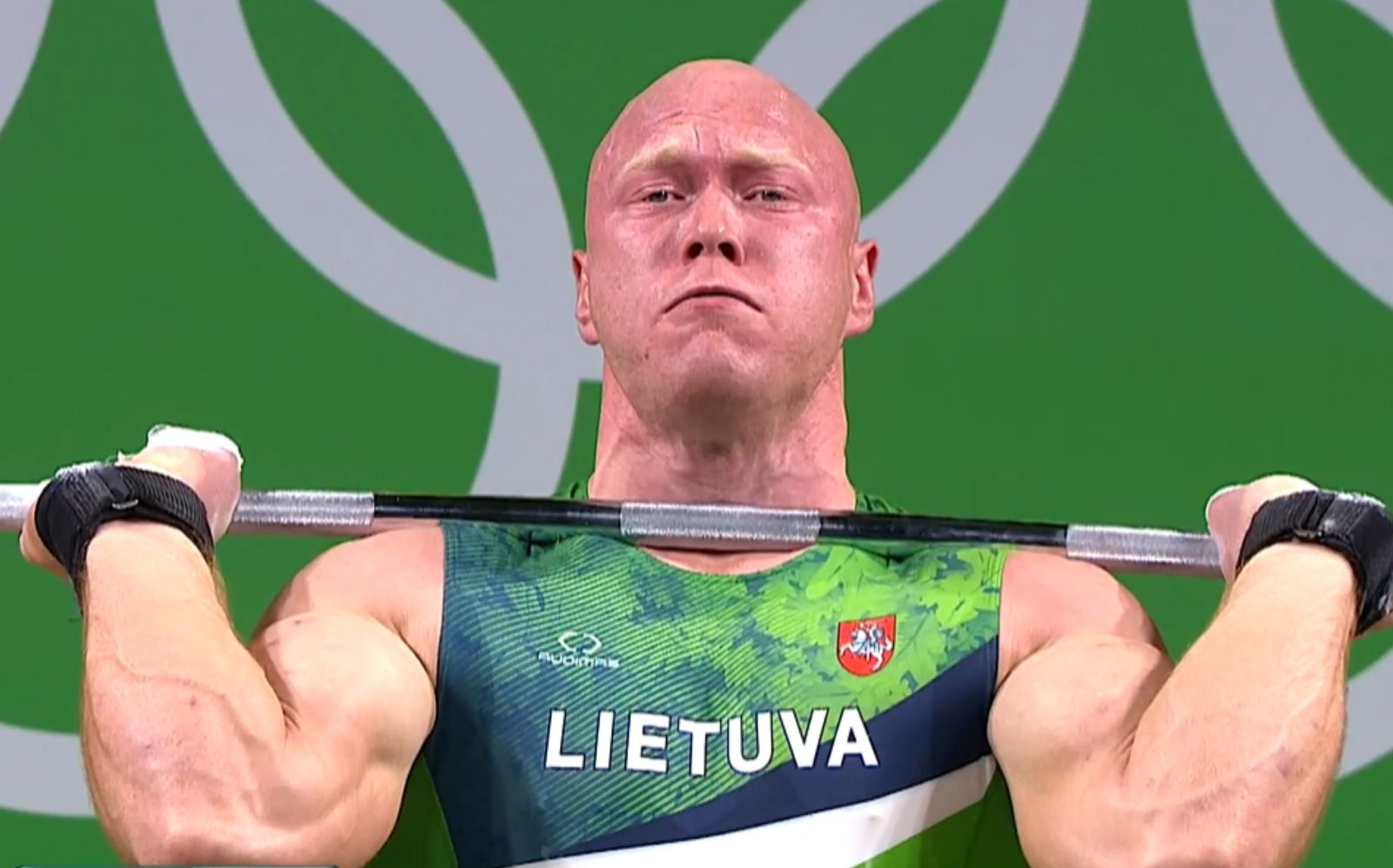
The 2016 Olympic Games took place in Rio de Janeiro and gathered thousands of the world’s greatest athletes across a diverse range of sports. However, they had to pass doping testing in order to be allowed to compete. Nearly ten years have passed since the 2016 Olympics and the samples that have been stored were subjected to re-analysis with the use of new techniques and technology. As a result, four weightlifters found themselves in the spotlight, as their results came back positive, indicating the presence of banned substances.
The most notable out of the four weightlifters is Aurimas Didzbalis, a Lithuanian representative who grabbed a bronze medal in the men’s 94-kilogram weight class. His test showed the presence of methandienone (danabol) metabolite. So, depending on how the situation unfolds, Aurimas is facing potential disqualification and even loss of his medal. This isn’t his first clash with the anti-doping rules, as he failed a test before the 2012 Olympic Games and found himself in an identical situation at the 2017 IWF World Championships. If Aurimas is stripped of his bronze medal, it would likely be awarded to the man who placed fourth, Sarat Sumpradit.
Ivan Efremov also failed the doping test after the re-analysis of the 2016 Olympic Games samples. Interestingly, his results showed the presence of the same substance as Aurimas’ — methandienone (danabol) metabolite. The Uzbek weightlifter competed in the men’s 105KG weight class, where he placed fifth.
Ahmed Saad from Egypt is another weightlifter who faces accusations, as the sample he provided in 2016 now shows the presence of danabol as well. Similar to Efremov, Ahmed also placed fifth, but he competed in the men’s 62KG weight class.
Esraa Elsayed Rashed Elsayed Ahmed is the only woman among all weightlifters involved in this controversial case, but her experience is still very similar to the others. The re-analysis showed traces of the same banned substance as in other cases, which indicates that she could have gained an unfair advantage. Esraa finished in 7th place in the women’s 63KG weight class.
Check out one of Aurimas Didzbalis’ lifts at the 2016 Olympic Games:
Related: Olympic Weightlifting Champion Oleksiy Torokhtiy Stripped, Banned For Doping Violation
Specifics of the 2016 Olympic Games Sample Re-Analysis
The re-analysis of the samples that were provided at the 2016 Olympic Games was done by the WADA-accredited laboratories of Lausanne, Switzerland, and Cologne, Germany. The results were then revealed by the ITA (International Testing Agency). It is important to note that in addition to the testing that is done at the Olympics, the organizers retain the right to preserve samples for further testing at a later point if a more reliable or effective testing method becomes available.
As per the ITA, the compounds that were found in the re-analysis of the samples were prohibited under the 2016 World Anti-Doping Agency (WADA) Prohibited List and are still banned to this day. While the substance was not allowed in 2016, the testing methods at the time were not yet sensitive enough to detect its metabolites.
“The samples were first analysed during the Olympic Games Rio 2016 and were reported as negative with the detection methods applied by the WADA-accredited laboratory available at the time. The majority of these positive re-analysis results are mainly due to technical advances, including the development of new detection methods and improvements in analytical sensitivity for the detection of new steroid metabolites, which were not available at the time of the initial analysis.” wrote ITA
Some might wonder what happens next? Well, the results are not definitive yet, as the athletes in question can still request the testing of their ‘B-Sample’. If they do decide to take that step, and if the presence of the same substance is found, they will be subjected to the repercussions. On the other hand, if they decide not to object to the findings in the given deadline, the results of the testing done on the ‘A-Sample’ will be conclusive and confirmed as a violation of the anti-doping rule. Alternatively, the weightlifters can also explain what the cause of the positive result was, as some anti-doping infringements are not a result of premeditated action.
“The athletes will also be provisionally suspended by their respective international federation pending the results management proceedings of their cases in accordance with the respective anti-doping regulations.
The matter will thereafter be referred by the ITA to the Anti-Doping Division of the Court of Arbitration for Sport (CAS ADD) for adjudication under the IOC Anti-Doping Rules.” wrote ITA.
Related: Russian World Champion Weightlifter Tatiana Kashirina Suspended After Second Doping Offense
The action taken by the ITA serves as a clear reminder to everyone that violating the anti-doping regulations and taking banned substances to gain an unfair advantage does not pay off. Although an athlete can pass their initial testing, there is always a possibility of uncovering doping at a later point thanks to the advancements in technology and methodology of the testing processes. So, despite the fact that nearly ten years have passed since the Olympics, the banned substances were still detected in the samples provided by four weightlifters.





You mean “dianabol”, not “danabol”. Metandienone is a metabolite of dianabol (D-bol).
https://en.wikipedia.org/wiki/Metandienone
Thank you for the feedback. We’ve chosen to use the ‘Danabol’ spelling to maintain consistency with the official records from the International Testing Agency (ITA). While ‘Dianabol’ is the more common name, ‘Danabol’ is the specific trade name cited in the ITA’s testing documentation.