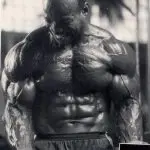
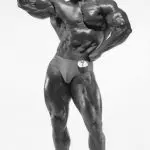
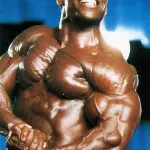
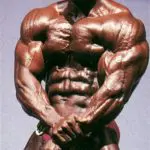
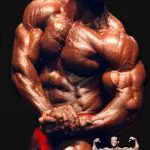
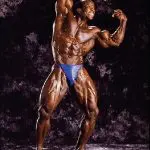
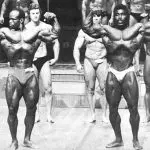
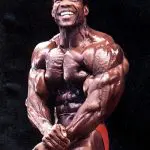
Albert Beckles was a British bodybuilder who competed professionally for nearly 30 years and won several bodybuilding shows during a legendary career while placing high in several others. He died on May 16, 2026, at age 95. This article explores his biography, competition history, workout routine, diet, and statistics.
Albert Beckles
Born: July 14, 1930
Died: May 16, 2026
Birthplace: Bridgetown, BARBADOS
Residence: North Hollywood, California, USA
Nickname: Al Peak Beckle’s
Height: 5′ 6″ (170 cm)
Weight: 218 lbs (99 kg)
Neck: 16,5″ (42 cm)
Waist: 31″ (79 cm)
Thigh: 25″ (64 cm)
Calf: 16,5″ (42 cm)
Arms: 19″ (48 cm)
Chest: 48,5″ (123 cm)
Albert Beckles Biography
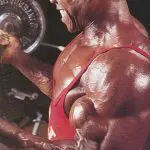
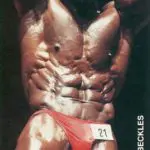
Born in Barbados, he emigrated to London, where in the mid-’60s he began winning regional British titles, before taking the 1969 and 1970 NABBA Mr. Britain titles (which were awarded in 1970 and ’71). Later in ’71, he joined the IFBB, earning the overall at that year’s IFBB Mr. Universe. His high-peaked biceps and crisp overall appearance were his trademark throughout his career.
Al was one of the most active participants ever to suit up and pose down, competing in more than 100 different contests. In 1982, he took the Big Apple’s big enchilada, winning the Night of Champions. Beckles’ record-setting 13 forays into the IFBB Mr. Olympia (Shawn Ray is nearest with 12) yielded six placings among the top five, including coming second in 1985 to Lee Haney at twice Haney’s age.
Beckles’ last win came at the 1991 Niagara Falls Pro Invitational, where he sent the other competitors tumbling to the rocks below. His retirement following the Chicago Pro Invitational on May 9, 1992, ended a competitive career spanning five decades. Never known as one who bickers, Beckles was forever the British gentleman.
First mistakenly introduced to British readers of Health & Strength in January 1957 as “Al Bickers”, it was later his age that caused a little confusion: Al asserted he was born in 1930, but some early reports suggested 1938 as his birth year. Whatever his age, Albert Beckles stayed in phenomenal shape for five decades.
Life after retirement, and his death in 2026
Bodybuilding was Albert Beckles’ passion and he continued to train hard for decades after retiring from competition. Beckles was still active in the gym in his 90s, hitting the weights regularly and carrying a great deal of muscle mass well into his 10th decade. His youthful enthusiasm and fitness level earned him the nickname “The Ageless One.”
His incredible longevity and healthy lifestyle set a positive example for bodybuilders to follow. In a sport now closely associated with steroid abuse and an unhealthy obsession with size, Beckles proved it could be pursued without inflicting long-term physical damage on the body.
Beckles died on May 16, 2026, at the age of 95. His passing was announced by RxMuscle, and tributes poured in from across the bodybuilding world for a man who was still training decades after his rivals had retired. Read our full report on Albert Beckles’ death and his legacy in bodybuilding.
Competition History
Albert Beckles Workout
Albert Beckles’ workout routine and bodybuilding lifestyle best represented the knowledge available to the bodybuilding community at the time. All in all, there was no place for weakness and the veteran bodybuilder believed that the harder you train and force the body to get stronger, the more the chances of you getting the physique you desired.
Beckles was closely associated with legendary bodybuilder Bertil Fox. It was Fox who guided him initially through planning his training routine and helped him come up with his style of training. But apart from Fox, Lou Ferrigno and Lee Haney also contributed significantly to Beckles’ training journey.
There was no fluctuation in intensity based on the stage of training. Beckles trained twice a day, seven days a week during the off-season. The same pattern followed to the competition date.
Beckles increased the training intensity with common yet effective methods like drop sets and supersets. He made most of his gains using effective compound movements that helped build muscle and functional strength. But there was room for isolation exercises to target specific muscles to bring them to par with the more developed muscles and also to get more definition and detail.
While most bodybuilders of his era trained with heavy weights, Beckles used lighter weights and focused more on contracting and stretching the muscles with proper techniques. He was a big believer in performing slow reps to keep the muscles under tension for a longer duration and the results could be seen in the physique he was able to build.
But Beckles compensated with volume what he sacrificed in terms of weight. The high volume increased the training intensity and helped him build endurance and muscle mass.
Cardio was an important component of Beckles’ training program and he relied on high-intensity cardio exercises to burn fat, improve cardiovascular function, and add variety to the workout regimen.
Albert Beckles employed different rep ranges, weights, and intensity-building criteria for different muscle groups. For instance, he relied on heavy weights and high training volume to build the lower body muscles. On the contrary, he used moderate weights but high volume for smaller muscles like arms to get the pump.
For the chest and back, the veteran bodybuilder mostly used primary compound movements like bench presses and barbell rows. These muscles work several muscles and joints in conjunction with each other and help build not just muscle mass but also functional strength.
A typical training week in Albert Beckles’ routine looked like this:
Day 1 – Chest and Legs
Morning – Chest
- Incline Dumbbell Press – 4 to 5 sets of 12 to 15 reps
- Parallel Bar Dips – 4 to 5 sets of 12 to 15 reps
- Barbell Bench Press – 4 to 5 sets of 12 to 15 reps
- Incline Dumbbell Flyes – 4 to 5 sets of 12 to 15 reps
- Close Grip Barbell Bench Press – 4 to 5 sets of 12 to 15 reps
- Pec Deck Flyes – 4 to 5 sets of 12 to 15 reps
Evening – Legs
- Barbell Squats – 4 to 5 sets of 12 to 15 reps
- Hack Squats – 4 to 5 sets of 12 to 15 reps
- Leg Extensions – 4 to 5 sets of 12 to 15 reps
- Standing Heel Raises – 4 to 5 sets of 12 to 15 reps or more
- Seated Calf Raises – 4 to 5 sets of 12 to 15 reps or more
Day 2 – Shoulders and Legs
Morning – Shoulders
- Seated Barbell Shoulder Press – 4 to 5 sets of 12 to 15 reps
- Superset – Dumbbell Lateral Raises and Seated Smith Machine Overhead Press – 4 to 5 sets of 12 to 15 reps
- Barbell Upright Rows – 4 to 5 sets of 12 to 15 reps
- Cable Lateral Raises – 4 to 5 sets of 12 to 15 reps
- Barbell Shrugs – 4 to 5 sets of 12 to 15 reps
Evening – Legs
- Barbell Squats – 4 to 5 sets of 12 to 15 reps
- Leg Curls – 4 to 5 sets of 12 to 15 reps
- Leg Extensions – 4 to 5 sets of 12 to 15 reps
- Standing Heel Raises – 4 to 5 sets of 12 to 15 reps
- Seated Calf Raises – 4 to 5 sets of 12 to 15 reps or more
- Donkey Calf Raises – 4 to 5 sets of 12 to 15 reps or more
https://www.instagram.com/p/CzsL6cjIcRZ/
Day 3 – Back and Legs
Morning – Back
- Wide Grip Pull-Ups – 4 to 5 sets of 12 to 15 reps
- Seated Wide Grip Cable Rows – 4 to 5 sets of 12 to 15 reps
- Close Grip Cable Pulldown – 4 to 5 sets of 12 to 15 reps
- T-Bar Rows – 4 to 5 sets of 12 to 15 reps
- Barbell Rows – 4 to 5 sets of 12 to 15 reps
- Barbell Pullovers – 4 to 5 sets of 12 to 15 reps
Evening – Legs
- Barbell Squats – 4 to 5 sets of 12 to 15 reps
- Hack Squats – 4 to 5 sets of 12 to 15 reps
- Leg Extensions – 4 to 5 sets of 12 to 15 reps
- Standing Heel Raises – 4 to 5 sets of 12 to 15 reps
- Seated Calf Raises – 4 to 5 sets of 12 to 15 reps
Days 4, 5 and 6
- Same as the first three days
Day 7
- Start over
Albert Beckles Diet
Like training, Albert Beckles had a disciplined approach to dieting which made sure that his physique could stay in peak condition well past his physical prime. He followed a high-protein diet and got most of his protein through high-quality sources like chicken, tuna, other fish, and, of course, eggs.
Beckles was a huge believer in the benefits of eggs for bodybuilding as well as overall health. But besides eggs and animal-based protein sources, he ate healthy portions of lentils, legumes, and leafy green vegetables to get fiber and micronutrients. Milk and other dairy products were not out of bounds for the veteran bodybuilder either. However, he is known to have consumed red meats in relatively low quantities.
Besides this whole food diet, Beckles used supplements to meet the nutritional requirements of his massive and sculpted physique.
To Conclude…
Albert Beckles personified long-term health and performance longevity in a sport that is inherently taxing on the body. The original intent of bodybuilding was to reward the individuals who represent the best in terms of health, performance, and aesthetics. However, many people feel that the sport of bodybuilding has diverted from the original objectives and started rewarding massive physiques above all else. Albert Beckles remains a perfect example of what a bodybuilder needs to represent.
Albert Beckles’ Gallery