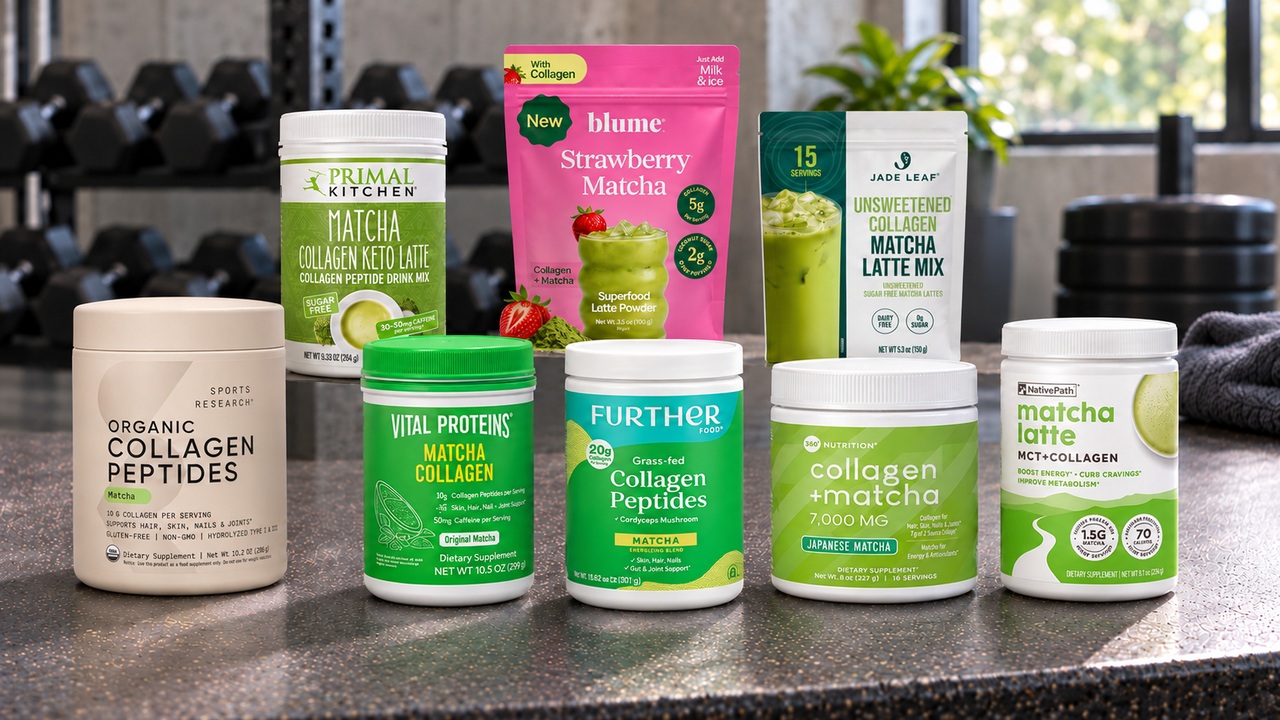
Collagen matcha mixes range from plain tea-and-collagen powders to sweetened coconut lattes. The difference matters: one serving in this guide contains anywhere from 2.5g to 20g collagen, before you add milk. Some include MCT powder or mushrooms; others have two ingredients. Choose the recipe and portion you want rather than buying by the biggest wellness claim.
Written by Tom Miller, CSCS. Updated: November 2026.
Short on time? Start with Sports Research Organic Collagen Peptides with Matcha for a two-ingredient blend with 10g collagen and 2g matcha per scoop. Further Food has the largest collagen portion at 20g. Choose Jade Leaf for an unsweetened pouch, Primal Kitchen for coconut milk powder, or Blume for a strawberry latte.
How We Chose
We compared eight distinct matcha-and-collagen recipes by declared collagen dose, animal source, protein, caffeine information, sweeteners and preparation. We favored clear quantities and a useful reason to choose each mix. Our ratings reflect those buying considerations, not a prediction of skin or joint results. We excluded plain tea, collagen powders that require you to add matcha, and blends that hide the collagen amount inside a larger protein total. Different flavors or package sizes do not earn extra places.
Collagen is an incomplete protein because it lacks tryptophan, an essential amino acid. It can contribute to your diet, but you should not replace a complete protein source gram for gram with collagen. For a whey, milk or plant-protein drink, compare our separate protein matcha guide.
Our Verdict
Sports Research Organic Collagen Peptides with Matcha
A two-ingredient blend with 10g collagen, 2g matcha and 24 servings makes Sports Research our starting pick for an unsweetened collagen matcha.
Best for: Adults who want a plain matcha-and-bovine-collagen powder without a latte sweetener
Check Price on AmazonOur Top Picks
Best Overall: Sports Research Organic Collagen Peptides with Matcha

Sports Research Organic Collagen Peptides with Matcha 10.2 Ounces
Best OverallA two-ingredient powder with 10g organic bovine collagen and 2g Japanese matcha per scoop, without a sweetener or coconut creamer.
Pros
- 10g bovine collagen per scoop
- Two ingredients without sweetener
- 24 servings in tub
Cons
- Animal-derived; not vegan
- Contains naturally occurring caffeine
Sports Research keeps the recipe short: organic hydrolyzed bovine collagen peptides and organic matcha green tea leaf powder. A 12g scoop contains 10g collagen, 9g protein and 40 calories. The 10.2-ounce tub has 24 servings, compared with about 15 in Jade Leaf’s smaller pouch.
We prefer this as a starting point because you can choose your own liquid and sweetener. Mix one scoop into your beverage or meal once daily and mix thoroughly. The brand lists 60mg naturally occurring caffeine per serving. Count that alongside coffee or pre-workout; organic ingredients do not change caffeine sensitivity.
Skip this if you need a finished coconut latte mix or avoid bovine ingredients. Primal Kitchen includes coconut milk powder, while Blume adds strawberry and sweeteners. With Sports Research, you choose those additions and account for their cost and nutrition alongside the powder.
Best Classic Matcha Mix: Vital Proteins Matcha Collagen

Vital Proteins Matcha Collagen Original 10.5 Ounces
Best Classic Matcha MixAn Original matcha blend with 10g bovine collagen, 9g protein and 50mg caffeine per serving, plus coconut water powder and no added sweetener.
Pros
- 10g bovine collagen
- 50mg caffeine stated
- Hot or cold liquid directions
Cons
- Contains coconut water powder
- 9g protein is not complete protein
Vital Proteins lists 10g collagen, 9g protein and 50mg caffeine in a 14g portion. The 10.5-ounce container holds about 21 servings. The powder adds matcha and coconut water powder to bovine collagen; it has 50 calories and 2g total sugar per serving.
Use two level tablespoons with 8 fluid ounces of beverage and mix thoroughly. You can use hot or cold liquid. Keep any milk’s protein and sugar separate from those dry-powder figures. Compared with Sports Research, Vital Proteins has the same collagen dose but adds coconut water powder and lists 10 more calories.
Skip this if you avoid coconut ingredients or want a two-ingredient recipe. Jade Leaf Unsweetened and Sports Research leave out coconut. The ingredient list contains no whey, but the maker discloses manufacturing in a facility that processes milk and fish. Match an allergy plan to the full label rather than treating a dairy-ingredient exclusion as a cross-contact guarantee.
Best Higher Collagen Portion: Further Food Matcha Collagen Peptides
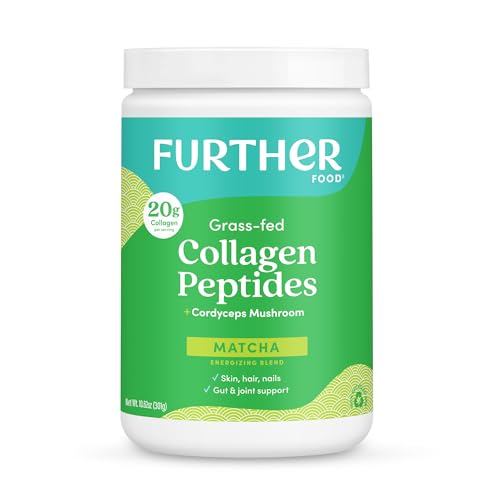
Further Food Matcha Collagen Peptides with Cordyceps 10.62 Ounces
Best Higher Collagen PortionA three-ingredient matcha powder with 20g bovine collagen, 18g protein and 80 calories per scoop, plus cordyceps mushroom and no sweetener.
Pros
- 20g collagen per scoop
- Three-ingredient recipe
- No sugar or sweetener
Cons
- About 14 servings per tub
- Cordyceps quantity not stated
Further Food has the largest collagen portion here: 20g in a 22g scoop. Its panel lists 18g protein, 80 calories and no sugar. The three ingredients are hydrolyzed bovine collagen peptides, organic matcha green tea leaf powder and organic cordyceps sinensis powder.
Add one scoop to a drink or recipe and stir thoroughly. The 10.62-ounce tub has about 14 servings, so compare costs by full serving rather than container size. Sports Research has half the collagen per portion and ten more servings in its tub. Neither comparison establishes a better health outcome.
Skip this if you want collagen and matcha without an added mushroom, or you need a confirmed caffeine amount before ordering. The panel does not quantify the cordyceps portion. Ask the brand about caffeine in this formula rather than using the amount for its separate Superfood Matcha.
Best Unsweetened Pouch: Jade Leaf Collagen Matcha Latte Mix

Jade Leaf Unsweetened Collagen Matcha Latte Mix 5.3 Ounces
Best Unsweetened PouchAn unsweetened two-ingredient pouch with 8.5g bovine collagen and 8g protein per serving, made with Japanese matcha and no coconut creamer.
Pros
- 8.5g bovine collagen
- No sweetener
- Two ingredients in resealable pouch
Cons
- About 15 servings
- Preparation volume wording varies; use serving weight
Jade Leaf’s Unsweetened formula contains bovine collagen peptides and matcha green tea. One 10g portion lists 8g protein and 35 calories; the maker states 8.5g collagen. The pouch holds about 15 servings. Choose this exact Unsweetened version if you want to add your own sweetener or leave it out.
Use the package’s 10g serving weight. Its spoon-volume wording varies across directions, so a teaspoon from another recipe can change the portion. Mix the powder with warm water before adding your preferred milk. The maker gives a caffeine range of 20mg to 40mg per serving. Added milk changes the finished latte’s nutrition.
Skip this if you need a vegan drink or a larger serving count. The collagen comes from cattle. The label also carries a California Proposition 65 lead warning. Read that warning before buying; an organic-matcha ingredient claim does not mean a product contains no contaminants.
Best Coconut Latte Mix: Primal Kitchen Matcha Collagen Keto Latte
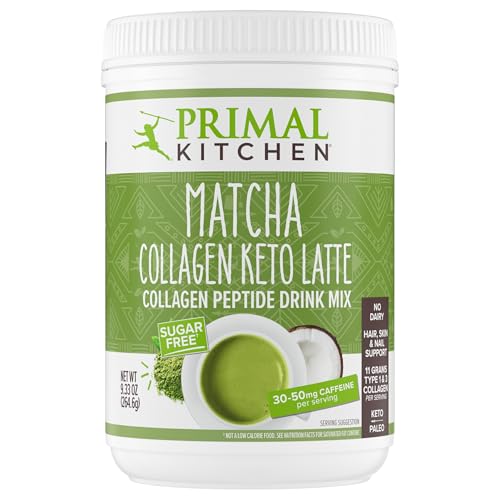
Primal Kitchen Matcha Collagen Keto Latte 9.33 Ounces
Best Coconut Latte MixA coconut-milk matcha latte powder with 11g bovine collagen, 10g protein and 80 calories per serving, sweetened with monk fruit extract.
Pros
- 11g collagen per serving
- Coconut milk powder included
- No sugar; monk fruit sweetener
Cons
- 2.5g saturated fat per serving
- Contains inulin and coconut ingredients
Primal Kitchen includes coconut milk powder, inulin and monk fruit alongside bovine collagen and matcha. The 18.9g serving lists 10g protein, 80 calories and 2.5g saturated fat. Its front label states 11g collagen. Keep those two amounts distinct: collagen grams and Nutrition Facts protein need not match.
The bottle’s directions use two scoops with 12 ounces of hot or iced water or milk. Start by whisking a small amount of the liquid into the powder, then blend in the rest. The container holds about 14 servings and gives a caffeine range of 30mg to 50mg per portion.
Skip this if you avoid coconut, inulin or monk fruit, or want the simplest ingredient list. Sports Research omits the creamer and sweetener. Primal Kitchen makes more sense when you want those ingredients together, but the keto label does not turn the 80-calorie portion into a calorie-free drink.
Best Strawberry Latte: Blume Iced Strawberry Matcha with Collagen

Blume Iced Strawberry Matcha Latte with Collagen 100 Grams
Best Strawberry LatteA strawberry matcha latte powder with 5g bovine collagen and 2g added sugar per serving, combining coconut sugar, strawberry juice powder and stevia.
Pros
- 5g bovine collagen
- Strawberry juice powder
- Ten-serving pouch
Cons
- 2g added sugar plus stevia
- 68mg caffeine per serving
Blume has a different recipe from the plain powders: bovine collagen, matcha, coconut sugar, natural flavor, strawberry juice powder and stevia. A 10g portion has 5g collagen, 5g protein and 2g added sugar. The Nutrition Facts panel lists 25 calories before milk. Add your milk’s calories to that figure.
Measure a 10g portion rather than estimating with a heaping spoon. Mix with a splash of hot water, then add ice and one cup of your chosen milk. The maker states 68mg caffeine per serving. The 100g pouch contains ten servings and carries limited-edition branding.
Skip this if you avoid added sugar or stevia, need less caffeine, or want a larger collagen portion. Vital Proteins has twice the collagen and a stated 50mg caffeine per serving. Blume suits a strawberry-latte preference, but added milk and syrups belong in your final sugar and calorie calculation.
Best Mixed-Source Option: 360 Nutrition Collagen + Matcha

360 Nutrition Collagen + Matcha Eight Ounces
Best Mixed-Source OptionA matcha drink mix with 7g collagen from bovine and porcine sources, plus stevia, modified tapioca starch and sixteen servings per tub.
Pros
- 7g declared collagen
- 16 servings
- Maker states 10mg caffeine per serving
Cons
- Contains porcine collagen
- Includes modified tapioca starch and stevia
360 Nutrition labels its collagen source as bovine and porcine. That is a material difference from the cattle-only recipes above. Two tablespoons, or 14g, contain 7g collagen, 7g protein and 50 calories. The panel also quantifies Japanese matcha leaf at 1,570mg per serving.
The other ingredients include modified tapioca starch, natural flavor and stevia leaf extract. Mix the 14g portion into your preferred beverage. The eight-ounce tub holds 16 servings, and the maker states 10mg caffeine per serving. Keep the serving weight consistent rather than increasing the powder until the tea looks darker.
Skip this if you avoid pork-derived ingredients or want an unsweetened two-ingredient blend. Jade Leaf leaves out stevia and starch. The front label’s 7,000mg equals 7g collagen, which puts the dose below Jade Leaf’s 8.5g. Compare those amounts before choosing by tub size.
Best Smaller Collagen Latte: NativePath Matcha Latte

NativePath Matcha Latte MCT + Collagen 8.1 Ounces
Best Smaller Collagen LatteAn MCT-based matcha latte with 2.5g bovine collagen, 2g protein and 50mg caffeine per scoop, using coconut-derived powder and monk fruit sweetener.
Pros
- 2.5g collagen clearly stated
- 50mg caffeine per scoop
- Hot or cold liquid preparation
Cons
- Only 2g protein per serving
- 5g saturated fat; coconut ingredients
NativePath centers this latte on MCT powder: a serving has 7.25g MCT powder, 2.5g bovine collagen and 1.5g matcha. The 11.5g scoop lists 70 calories, 2g protein and 5g saturated fat. Its 2.5g collagen portion is one-quarter of Sports Research’s 10g.
Stir one scoop into 8 fluid ounces of hot or cold liquid. The 8.1-ounce jar has 20 servings, and the maker states 50mg caffeine per scoop. Natural flavors and monk fruit finish the recipe. The label names coconut ingredients and shared equipment with other major allergens.
Skip this if your priority is a larger collagen dose or you avoid coconut and MCT powder. Further Food has 20g collagen in one labeled portion. Do not multiply NativePath scoops to chase that amount; you would multiply caffeine, saturated fat and calories too. Choose it for its stated latte recipe rather than weight-loss or metabolism promises.
Collagen Matcha Comparison
| Product | Key Spec | Best For | Price |
|---|---|---|---|
| Sports Research Organic Collagen Peptides with Matcha 10.2 Ounces | 10g bovine collagen; 9g protein; 2g matcha; 40 calories; 24 servings; two ingredients | Best Overall | Check Price |
| Vital Proteins Matcha Collagen Original 10.5 Ounces | 10g bovine collagen; 9g protein; 50mg caffeine; 50 calories; about 21 servings | Best Classic Matcha Mix | Check Price |
| Further Food Matcha Collagen Peptides with Cordyceps 10.62 Ounces | 20g bovine collagen; 18g protein; 80 calories; about 14 servings; added cordyceps | Best Higher Collagen Portion | Check Price |
| Jade Leaf Unsweetened Collagen Matcha Latte Mix 5.3 Ounces | 8.5g bovine collagen; 8g protein; 35 calories; about 15 servings; no sweetener | Best Unsweetened Pouch | Check Price |
| Primal Kitchen Matcha Collagen Keto Latte 9.33 Ounces | 11g bovine collagen; 10g protein; 80 calories; about 14 servings; coconut milk powder | Best Coconut Latte Mix | Check Price |
| Blume Iced Strawberry Matcha Latte with Collagen 100 Grams | 5g bovine collagen; 5g protein; 68mg caffeine; 2g added sugar; 10 servings | Best Strawberry Latte | Check Price |
| 360 Nutrition Collagen + Matcha Eight Ounces | 7g bovine and porcine collagen; 7g protein; 50 calories; 16 servings; stevia | Best Mixed-Source Option | Check Price |
| NativePath Matcha Latte MCT + Collagen 8.1 Ounces | 2.5g bovine collagen; 2g protein; 50mg caffeine; 70 calories; 20 servings; MCT powder | Best Smaller Collagen Latte | Check Price |
Choosing a Collagen Matcha Powder
Compare Collagen and Protein as Separate Numbers
Read the declared collagen amount, the protein line and the serving weight. Sports Research lists 10g collagen and 9g protein; Primal Kitchen lists 11g collagen and 10g protein. Do not add those amounts together. Use the collagen figure to compare collagen portions and the protein line for your food log.
These mixes suit different portions. NativePath’s 2.5g and Further Food’s 20g are eightfold apart. A larger dose does not prove a better result for you, and a matcha premix is not a treatment for pain, hair loss or a skin condition. Ask a qualified clinician about a specific health concern instead of choosing by a package promise.
Count Caffeine Across Your Day
Matcha contains caffeine. A small spoonful or a green label does not establish a low dose, and missing caffeine information does not mean zero. Compare the amount for your exact formula and serving. Blume’s stated 68mg and NativePath’s 50mg can matter if you also drink coffee or use a caffeinated pre-workout.
The FDA cites 400mg daily as an amount not generally associated with negative effects for most adults. That is not a target or an individual safety guarantee. Pregnancy, breastfeeding, medications and certain conditions can change suitable limits; ask your clinician. Reduce or avoid caffeine if it disrupts sleep or causes palpitations or anxiety.
Choose Ingredients Before Buying a Bigger Tub
All eight recipes contain animal-derived collagen. None suits a vegan diet, and 360 includes a porcine source. Coconut ingredients appear in several latte mixes. Check shared-equipment warnings if you have an allergy, even when the ingredient list leaves out milk or soy. A short recipe and a gluten-free claim cannot establish safety for your particular allergy.
For value, divide the current package price by its labeled servings, then compare the collagen portion. Do not compare a 24-serving tub with a ten-serving pouch by checkout price alone. Include milk or other additions in both your cost and nutrition totals. Follow the preparation directions for your powder and avoid sealing hot liquid in a shaker.
Alternatives Worth Considering
You can combine plain collagen with a separately measured matcha portion if none of these premixes suits your ingredients or preferred dose. Follow both labels and account for the tea’s caffeine. Buying the ingredients separately also lets you leave out a creamer or sweetener. Do not assume a household spoon measures every powder the same way.
Collagen and complete protein serve different nutritional purposes. Compare our protein matcha picks if you want a larger whey or plant-protein serving. For a different drink category, see our collagen coffee guide or protein coffee roundup. Keep added milk separate when comparing their protein totals.
Frequently Asked Questions
Is Collagen Matcha a Complete Protein?
Collagen lacks tryptophan, so a collagen-only protein portion is incomplete. Matcha and a splash of low-protein milk alternative do not establish the equivalent of a full whey or plant-protein serving. Eat a varied diet with suitable complete protein sources; use the collagen grams and protein grams on these labels as different facts.
Can I Drink It Before a Workout?
Consider the exact caffeine amount, other ingredients and your tolerance. A collagen latte is not an equivalent substitute for a meal or a full post-training protein shake. MCT powder, inulin or sweeteners may also affect which drink you want before exercise. Follow the labeled serving rather than adding scoops for a stronger caffeine effect.
Does Adding Milk Change the Collagen Dose?
Milk adds its own protein, calories and other nutrients, but it does not add collagen unless you use a separate collagen-containing product. The powder’s measured portion determines its collagen amount. For example, adding milk to NativePath’s 2.5g serving does not turn it into the 10g collagen portion in Sports Research.
Is Unsweetened Collagen Matcha Vegan?
No. Unsweetened describes the recipe’s sweetening, not its animal source. Jade Leaf and Sports Research use bovine collagen even though they leave out sweeteners. A plant-based milk does not change that source. Choose a plant-protein matcha blend or plain matcha if you avoid animal-derived ingredients.
Can It Treat Joint Pain or Improve Skin?
Do not treat a branded latte as a proven remedy. Research on specific collagen peptides, doses and study populations does not establish the same outcome for each premix. Talk to a clinician about persistent symptoms and about supplements alongside medications. Your preferred flavor or a larger collagen number cannot substitute for that advice.
Bottom Line
Sports Research is our starting pick for its two-ingredient recipe, 10g collagen portion and 24 servings. Further Food suits a larger collagen portion; Jade Leaf fits an unsweetened-pouch preference. Primal Kitchen and Blume make more sense if you want their coconut or strawberry latte recipes. Compare the animal source, caffeine and full serving before adding a tub to your routine.
Sources
- Collagen amino acid composition and protein quality
- FDA: Caffeine amounts and individual sensitivity
- FDA: Dietary supplement labels and consumer advice
- Sports Research: Collagen Peptides Matcha product information
- Vital Proteins: Matcha Collagen
- Further Food: Matcha Collagen Peptides
- Jade Leaf: Unsweetened Collagen Matcha
- Primal Kitchen: Matcha Collagen Latte
- Blume: Strawberry Matcha ingredients and caffeine
- 360 Nutrition: Collagen + Matcha
- NativePath: Matcha Latte doses and preparation