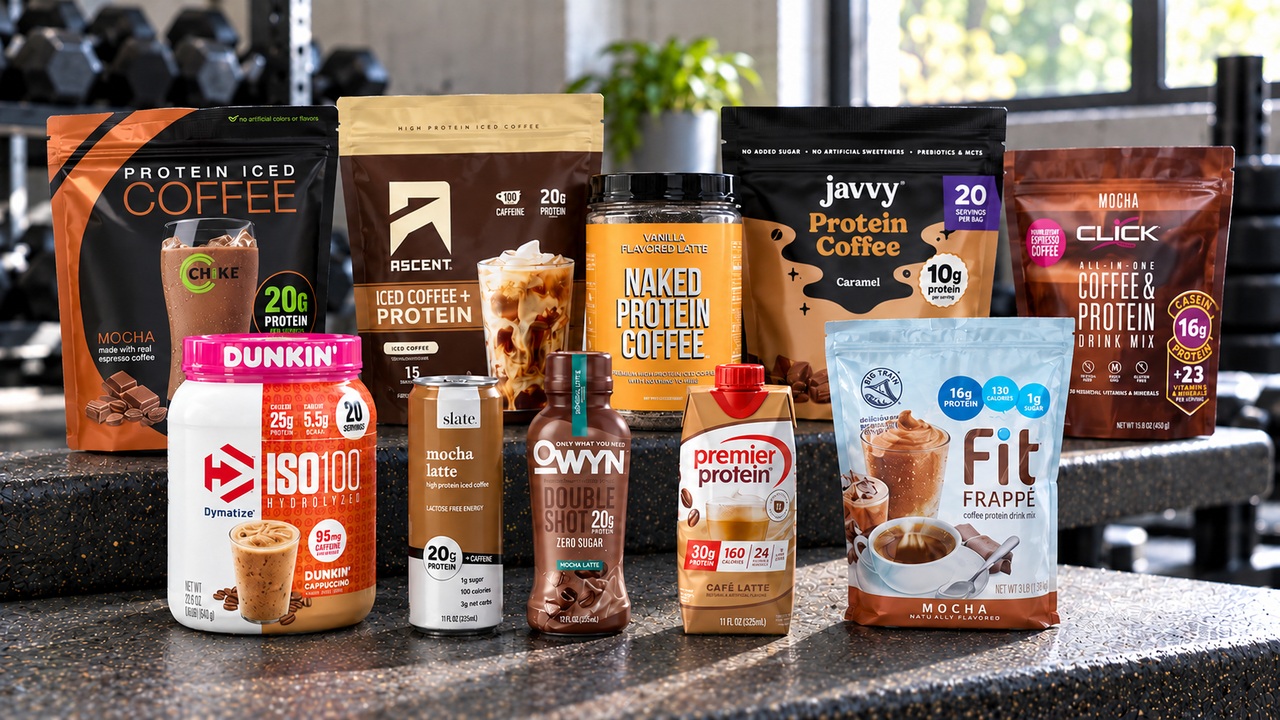
Protein coffee can replace two separate drinks, but the serving matters. One powder here supplies 10g of protein; another supplies 25g. The ready-to-drink choices also differ in caffeine, dairy ingredients and sweeteners. Choose the combination you need before deciding between a shaker bottle and a can.
Written by Tom Miller, CSCS. Updated: November 2026.
Short on time? Chike Mocha High Protein Iced Coffee remains our overall choice for a defined 20g whey-protein portion and 150mg caffeine. Ascent lowers caffeine to 100mg with the same protein amount. Choose OWYN for a dairy-free bottled option, or Premier Protein when 30g protein without mixing matters more than a quantified caffeine amount.
How We Chose
We compared exact flavors by protein source, caffeine, portion size, sugars, allergens and preparation directions. Each selection contains coffee or coffee extract as well as protein. We excluded plain coffee creamers and collagen-only blends from this comparison. Scores favor a useful protein portion, clear caffeine information and a practical format. They do not reward a claim about fat burning, a promised energy response or a larger number of added vitamins. Milk added during preparation changes the nutrition; it is not part of the dry powder’s protein total.
Our Verdict
Chike Mocha High Protein Iced Coffee
A two-scoop portion supplies 20g whey protein and 150mg caffeine, with fourteen portions per bag and straightforward cold-water directions.
Best for: Adults who want a measured whey-and-coffee powder for cold preparation
Check Price on AmazonOur Top Picks
Best Overall: Chike Mocha High Protein Iced Coffee

Chike Mocha High Protein Iced Coffee, Fourteen Servings
Best OverallA Mocha powder supplying 20g whey protein and 150mg caffeine per two-scoop portion, with fourteen portions and cold-water preparation directions.
Pros
- 20g whey protein
- 150mg caffeine per full portion
- Fourteen two-scoop portions
Cons
- Contains milk and soy
- Sucralose and added caffeine
Chike combines whey isolate and concentrate with coffee, cocoa, sucralose and added caffeine. The current Mocha nutrition panel lists two scoops, 31g, as a portion: 20g protein, 110 calories and 1g total sugar. The bag contains fourteen portions.
Use the full two-scoop amount when comparing it with Ascent’s single scoop. Chike directs two scoops into 10 ounces of cold water. Skip this if you avoid milk, soy or sucralose, or want less caffeine. Ascent keeps protein at 20g while reducing caffeine by 50mg. Chike’s espresso description does not make it equivalent to whichever coffee you usually order.
Best One-Scoop Powder: Ascent Iced Coffee + Protein

Ascent Original Iced Coffee + Protein, Fifteen Servings
Best One-Scoop PowderA one-scoop iced-coffee powder with 20g whey protein, 100mg caffeine and 100 calories, using Colombian coffee, coffee-fruit extract and stevia.
Pros
- 20g protein in one scoop
- 100mg caffeine
- No added sugar
Cons
- Contains milk and soy
- Only fifteen portions per bag
Ascent lists one 27g scoop for 20g protein, 100mg caffeine and 100 calories. Its ingredients include whey isolate, whey concentrate, Colombian coffee, stevia leaf extract and coffee-fruit extract. The selected bag contains fifteen portions, not thirty.
This is the simpler portion to measure if Chike’s two-scoop serving would confuse your routine. Mix it with 10 ounces of water according to the package. Skip this if you avoid stevia, milk or soy, or want a large supply in one bag. Naked has a similar 95mg caffeine amount but adds coconut sugar. Increasing Ascent’s powder to get more caffeine also increases protein and uses the bag faster.
Best Coconut-Sugar Option: Naked Vanilla Latte Protein Coffee

Naked Vanilla Latte Protein Coffee, Seventeen Servings
Best Coconut-Sugar OptionA Vanilla Latte powder combining 20g whey protein and 95mg caffeine with coconut sugar, at 140 calories per two-scoop portion.
Pros
- 20g whey protein
- 95mg caffeine
- Seventeen full portions
Cons
- Includes 3g added sugar
- Contains milk and coconut ingredients
Naked’s 35g portion, about two scoops, supplies 20g protein, 95mg caffeine and 140 calories. It contains 5g total sugar, including 3g added sugar. The ingredients include whey concentrate, Colombian coffee, coconut sugar, MCT powder and fermented Reb-M sweetener.
The seventeen-portion tub is a different purchase from Ascent’s fifteen-portion bag. Naked directs two rounded scoops into 10 to 12 ounces of water or milk. Skip this if you want no added sugar or avoid milk or coconut ingredients. Coconut sugar still counts as added sugar. Ascent supplies the same protein with fewer listed calories; Naked suits buyers who prefer this particular sweetener combination rather than sucralose.
Best Smaller Protein Portion: Javvy Caramel Protein Coffee

Javvy Caramel Protein Coffee, Twenty Servings
Best Smaller Protein PortionA Caramel protein-coffee powder with 10g protein, 80mg caffeine and 70 calories per scoop, rather than a bottled liquid concentrate.
Pros
- 10g protein per scoop
- 80mg caffeine
- Twenty one-scoop portions
Cons
- Less protein than most picks
- Contains milk and added functional ingredients
Javvy is a powder. The selected Caramel portion is one 17.1g scoop, with 10g protein, 80mg caffeine and 70 calories. Its protein blend includes milk-protein concentrate and whey concentrate. The formula also contains coffee, L-arabinose and MCT ingredients.
Ten grams can supplement breakfast, but it is half Chike’s protein amount. Two scoops would supply 20g protein, 160mg caffeine and 140 calories, leaving ten double portions in the bag. Skip this if you expect twenty full 20g-protein servings or want a short ingredient list. Start with its directed eight ounces of water; add milk only when you intend to add its nutrition as well.
Best Casein-Based Powder: CLICK Mocha

CLICK Mocha Protein Coffee, Fourteen Servings
Best Casein-Based PowderA casein-based Mocha coffee mix with 16g protein and 150mg caffeine per two-scoop portion, formulated for hot, iced or blended preparation.
Pros
- 16g casein-based protein
- 150mg caffeine
- Hot, iced or blended preparation
Cons
- Contains dairy protein
- 5g added sugar per portion
CLICK supplies 16g casein-based protein and 150mg caffeine per full portion. The selected nutrition panel lists two scoops, 32g, with 110 calories and 6g total sugar, including 5g added sugar. Fourteen portions fit this package.
Compared with Chike, you get 4g less protein at the same stated caffeine amount. CLICK’s hot, iced and blended options are useful if you will follow the package directions for each. Skip this if you avoid dairy or added sugar, or want 20g protein without adding milk. Casein’s slower digestion does not prove this drink will keep you full longer than another breakfast. Added vitamins also do not make it a complete meal.
Best Higher-Protein Powder: Dymatize ISO100 Dunkin’ Cappuccino

Dymatize ISO100 Dunkin' Cappuccino, Twenty Servings
Best Higher-Protein PowderA caffeinated Cappuccino whey-isolate powder containing spray-dried coffee, with 25g protein, 95mg caffeine and 120 calories in one scoop.
Pros
- 25g whey-isolate protein
- 95mg caffeine
- Twenty one-scoop portions
Cons
- Contains milk and soy
- Sucralose and stevia sweeteners
Dymatize’s Cappuccino contains spray-dried coffee as well as hydrolyzed whey isolate and whey isolate. One 31g scoop supplies 25g protein, 95mg caffeine and 120 calories. This is the caffeinated Cappuccino flavor, not the brand’s Glazed Donut powder.
You get 5g more protein than Ascent with a similar caffeine amount, and twenty portions in the selected tub. Skip this if you avoid milk, soy, sucralose or stevia. Whey isolate is not permission to ignore a milk allergy. Its 5.5g BCAA claim describes amino acids within the protein portion; do not add that number to the 25g as though it were extra protein.
Best Canned Option: Slate Mocha Latte

Slate Mocha Latte High Protein Iced Coffee, Twelve Cans
Best Canned OptionAn eleven-ounce canned coffee made with ultra-filtered milk, delivering 20g protein, 175mg caffeine, 100 calories and 1g sugar per can.
Pros
- 20g protein per can
- 175mg caffeine
- Lactose-free milk formulation
Cons
- Still contains milk protein
- Higher caffeine than the lower-dose powders
Slate starts with brewed coffee and ultra-filtered milk. The selected 11-ounce can supplies 20g protein, 175mg caffeine, 100 calories and 1g sugar. Its recipe includes monk fruit, stevia and lactase; the lactose-free claim does not remove milk protein.
Compared with Chike’s full serving, Slate adds 25mg caffeine and removes the mixing step. The twelve-can pack also takes more storage space than a powder bag. Skip this if you have a milk allergy, want a resealable container or prefer less caffeine. OWYN is the dairy-free bottled comparison. Ascent is the lower-caffeine powder choice when you do not mind preparing a drink.
Best Dairy-Free Bottle: OWYN Mocha Latte Doubleshot

OWYN Mocha Latte Doubleshot Protein Coffee Shake, Twelve Bottles
Best Dairy-Free BottleA twelve-ounce plant-based coffee shake with 20g protein, 180mg caffeine and zero sugar, using pea and pumpkin-seed proteins rather than dairy.
Pros
- 20g plant protein
- No dairy ingredients
- 0g total sugar
Cons
- 180mg caffeine per bottle
- Contains soluble fiber and gums
OWYN combines pea and pumpkin-seed proteins with cold-brew coffee extract and caffeine from green coffee beans. The 12-ounce bottle supplies 20g protein, 180mg caffeine and 160 calories. It lists 3g fiber and 0g total sugar, with monk fruit for sweetness.
This is the dairy-free choice, while Slate’s lactose-free can still contains milk. Skip this if 180mg caffeine is too much, or pea ingredients, soluble fiber or gums do not agree with you. The brand’s allergen program does not mean an individual cannot react to another ingredient. Avoid treating the separate lower-caffeine Cold Brew flavor as nutritionally interchangeable with this Doubleshot Mocha.
Best Thirty-Gram Ready-to-Drink Option: Premier Protein Cafe Latte

Premier Protein Cafe Latte, Twelve Eleven-Ounce Cartons
Best Thirty-Gram RTD OptionAn eleven-ounce ready-to-drink milk-protein shake containing coffee extract and added caffeine, with 30g protein, 160 calories and 1g sugar.
Pros
- 30g milk protein
- 160 calories per carton
- No powder preparation
Cons
- Caffeine amount not quantified on the panel
- Contains milk, soy and artificial sweeteners
Premier’s selected 11-ounce carton supplies 30g protein, 160 calories and 1g sugar. Its ingredients include milk-protein concentrate, calcium caseinate, coffee extract and added caffeine. Sucralose and acesulfame potassium supply sweetness.
The manufacturer compares its caffeine with a cup of coffee but does not quantify milligrams on this panel. Do not borrow the 95mg figure from Premier’s separate powder. Skip this if you need a precise caffeine budget or avoid milk, soy or these sweeteners. Dymatize supplies 25g protein with a disclosed 95mg caffeine amount, while Slate gives you a quantified caffeine dose in a can.
Best Bulk Hot-or-Iced Mix: Big Train Fit Frappe Mocha

Big Train Fit Frappe Mocha Protein Mix, Three-Pound Bag
Best Bulk Hot-or-Iced MixA three-pound Mocha coffee mix with casein-based protein, supplying 16g protein and 130 calories per 42g portion, with caffeine not quantified.
Pros
- Three-pound bag
- 16g protein per 42g portion
- Hot, iced or blended directions
Cons
- Caffeine milligrams not quantified
- Contains milk, soy, erythritol and added fibers
A 42g portion supplies 16g protein, 130 calories and 1g sugar. The ingredients include calcium caseinate, instant coffee, erythritol, inulin, polydextrose and sucralose. It contains milk and soy.
A three-pound bag holds about thirty-two 42g portions. Compare by powder weight, since smaller drink recipes can produce a larger advertised serving count. Skip this if you need quantified caffeine or avoid sugar alcohols and added fibers. CLICK gives you the same 16g protein with a stated 150mg caffeine amount. Follow the directions on the delivered bag rather than treating a cafe-size blended recipe as one small serving.
Compare the Protein Coffees
| Product | Full Portion and Key Specs | Best For | Price |
|---|---|---|---|
| Chike Mocha High Protein Iced Coffee, Fourteen Servings | 2 scoops (31g); 20g whey protein; 150mg caffeine; 110 calories; 14 portions | Best Overall | Check Price |
| Ascent Original Iced Coffee + Protein, Fifteen Servings | 1 scoop (27g); 20g whey protein; 100mg caffeine; 100 calories; 15 portions | Best One-Scoop Powder | Check Price |
| Naked Vanilla Latte Protein Coffee, Seventeen Servings | About 2 scoops (35g); 20g whey protein; 95mg caffeine; 140 calories; 17 portions | Best Coconut-Sugar Option | Check Price |
| Javvy Caramel Protein Coffee, Twenty Servings | 1 scoop (17.1g); 10g milk/whey protein; 80mg caffeine; 70 calories; 20 portions | Best Smaller Protein Portion | Check Price |
| CLICK Mocha Protein Coffee, Fourteen Servings | 2 scoops (32g); 16g casein-based protein; 150mg caffeine; 110 calories; 14 portions | Best Casein-Based Powder | Check Price |
| Dymatize ISO100 Dunkin' Cappuccino, Twenty Servings | 1 scoop (31g); 25g whey-isolate protein; 95mg caffeine; 120 calories; 20 portions | Best Higher-Protein Powder | Check Price |
| Slate Mocha Latte High Protein Iced Coffee, Twelve Cans | 11 fl oz can; 20g milk protein; 175mg caffeine; 100 calories; 12 cans | Best Canned Option | Check Price |
| OWYN Mocha Latte Doubleshot Protein Coffee Shake, Twelve Bottles | 12 fl oz bottle; 20g plant protein; 180mg caffeine; 160 calories; 12 bottles | Best Dairy-Free Bottle | Check Price |
| Premier Protein Cafe Latte, Twelve Eleven-Ounce Cartons | 11 fl oz carton; 30g milk protein; caffeine not quantified; 160 calories; 12 cartons | Best Thirty-Gram RTD Option | Check Price |
| Big Train Fit Frappe Mocha Protein Mix, Three-Pound Bag | 42g portion; 16g casein-based protein; caffeine not quantified; 130 calories; 3 lb bag | Best Bulk Hot-or-Iced Mix | Check Price |
Count Protein and Caffeine Separately
Protein coffee is a convenience purchase. The ISSN position stand describes 1.4 to 2.0g protein per kilogram of body weight daily as sufficient for most exercising adults, with general per-meal guidance of 20 to 40g high-quality protein. Your needs depend on your diet, training and health; a small coffee portion does not have to supply a whole meal’s protein.
Increasing powder to reach a protein target also increases caffeine. Two Javvy scoops reach 20g protein and 160mg caffeine. Two Chike servings would reach 40g protein and 300mg caffeine. Add food or an uncaffeinated protein source instead of doubling coffee by habit. Our protein powder guide for women and ready-to-drink protein shake guide cover broader choices.
The FDA cites 400mg caffeine daily as an amount not generally associated with negative effects for most adults. That is not a goal or a guarantee of tolerance. Count coffee, tea, energy drinks and pre-workouts together. Caffeine-sensitive adults may need much less, and later intake can interfere with sleep.
These caffeinated products are not intended for children. During pregnancy or breastfeeding, or with a medical condition or medication that affects caffeine use, ask your clinician before choosing one. Stop and seek advice if caffeine causes concerning symptoms.
Choose the Protein Source and Sweeteners
Lactose-free and dairy-free answer different questions. Slate contains milk protein even though the formula is lactose-free. OWYN uses plant proteins instead. Whey isolate also remains a milk ingredient; filtering lactose does not make it suitable for a milk allergy. Read the complete ingredient and allergen statements for the exact flavor, including soy or coconut ingredients where relevant. Do not assume that a brand’s other flavors share the same recipe.
Compare total sugar with added sugar rather than reading only a front-of-pack claim. Naked lists 5g total sugar and 3g added sugar. CLICK’s selected Mocha portion lists 6g total and 5g added. Ascent has 1g total sugar without added sugar. Those differences can matter to your diet, but a low number does not tell you whether you will like the sweetener. Sucralose, stevia, monk fruit and Reb-M appear in different recipes here.
Big Train also contains erythritol and added fibers, while OWYN lists soluble fiber and gums. Choose around your own ingredient tolerances instead of assuming that zero sugar means a simple formula. Keep the first serving to the labeled portion rather than combining several new caffeinated products at once. If an ingredient causes symptoms, stop using the product and seek appropriate advice; adding more water changes dilution but leaves the ingredient amount unchanged.
Coffee extract and added caffeine can appear together. Premier and OWYN list both, while Slate combines brewed coffee with a stated total caffeine amount. The source does not make caffeine unlimited. Use the total milligrams when available, and choose a quantified alternative if an unlisted amount makes your daily budget difficult to manage.
Prepare the Product You Bought
Use the stated scoop count and powder weight. A heaped scoop can change protein and caffeine together. Water keeps the drink close to the powder’s listed nutrition; milk adds its own protein, calories and allergens. Ice changes dilution, not the amount of caffeine you already added.
Follow the package’s hot or cold directions. A powder marketed for iced preparation should not automatically go into boiling coffee. Never shake hot liquid in a sealed shaker. Adding brewed coffee also adds caffeine, so it is a different drink from the water-based serving used in this comparison.
For ready-to-drink products, follow the container’s shaking, refrigeration and after-opening instructions. Powder portability and bottled convenience solve different problems. A bag needs measuring and a clean mixing vessel; cans and cartons need space and create more packaging per serving.
Frequently Asked Questions
Is protein coffee a complete breakfast?
Not by default. Several picks contain little fiber, and a protein number does not establish a balanced meal. Pair your drink with food that fits your needs. Our protein oatmeal guide covers one option for adding a food-based breakfast rather than relying on vitamins in a shake.
Can I make my own instead?
Yes. Our protein coffee recipe covers the homemade route. Keeping the coffee and protein separate lets you adjust each amount independently. Compare the final drink’s caffeine and nutrition rather than assuming a homemade version matches a commercial scoop.
Does protein coffee burn more fat?
None of these products guarantees fat loss. A coffee-protein combination can fit a calorie-controlled diet, but total intake, food choices and activity still matter. Do not confuse added MCT ingredients, a keto claim or a stimulating feeling with evidence that the finished drink changes your body composition.
Should I use it as a pre-workout?
Only if the protein portion, caffeine and timing suit you. The ISSN caffeine position stand reports varied individual responses and sleep or anxiety effects. It does not establish that one of these finished drinks will improve your training. Choose an uncaffeinated protein option when you already get enough caffeine elsewhere.
How should I compare prices?
Divide the price by full portions, then compare protein and caffeine within those portions. Javvy’s twenty one-scoop portions become ten double portions if you use two scoops. Add shipping for a bulk bag and remember that milk costs extra. A larger package is not automatically better value.
Bottom Line
Chike Mocha remains a useful starting point for 20g whey protein and 150mg caffeine. Ascent is the lower-caffeine one-scoop alternative, Dymatize raises protein to 25g, and OWYN removes dairy. Choose a precise portion that fits your breakfast and caffeine budget, not a claim about fat burning or guaranteed energy.
Sources
- FDA: How Much Caffeine Is Too Much?
- ISSN position stand: Protein and Exercise
- ISSN position stand: Caffeine and Exercise Performance
- Chike: Mocha ingredients, nutrition panel and preparation
- Ascent: Original Iced Coffee + Protein
- Naked Nutrition: Vanilla Latte Protein Coffee
- Javvy: Protein Coffee
- Slate: Mocha Latte
- OWYN: Doubleshot Mocha Latte
- Premier Protein: Cafe Latte Shake ingredients and nutrition
- Kerry Foodservice: Big Train Mocha Protein Frappe specification