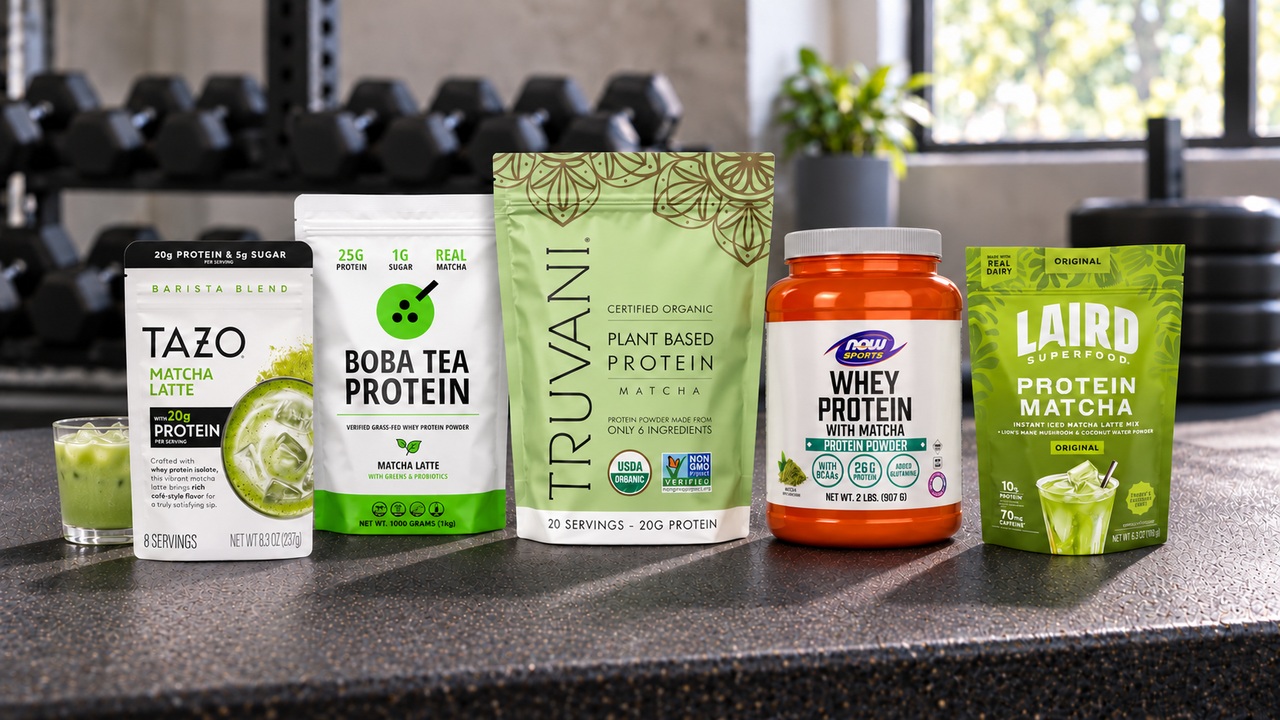
A protein matcha powder should contain protein before you add milk. These five mixes have 10g to 26g per serving from milk, whey or a plant blend. They also differ in caffeine, added sugar and preparation. A small matcha latte with some protein serves a different purpose from a full-size post-training shake.
Written by Tom Miller, CSCS. Updated: November 2026.
Short on time? Choose TAZO Protein Matcha Latte for a 20g whey portion with hot-or-cold milk preparation. Truvani is the plant-based pick, NOW Sports has the largest protein portion at 26g, and Laird Original makes a smaller 10g milk-protein latte. Milk added at home contributes extra protein and calories; it is not part of the powder totals below.
How We Chose
We compared the named formulas by protein source, protein per serving, sweeteners, caffeine information, allergens, serving count and preparation. These are five distinct protein-and-matcha mixes, not five package sizes or flavors of the same formula. We left out plain matcha, collagen-only blends, general greens powders and meal replacements. Our ratings favor a useful protein portion and a clear buying purpose. We distinguish current recipe information from older packaging when a brand changes its formula. Caffeine that is not quantified does not count as zero, and a milk-based recipe does not become dairy-free when you mix it with water.
Our Verdict
TAZO Protein Matcha Latte
A 20g whey-isolate portion, eight-serving pouch and clear hot-or-cold milk directions make TAZO a practical starting point for a protein matcha latte.
Best for: Adults who want a milk-prepared matcha latte with 20g protein from the powder itself
Check Price on AmazonOur Top Picks
Best Overall Latte Mix: TAZO Protein Matcha Latte

TAZO Protein Matcha Latte Eight-Serving Pouch
Best Overall Latte MixAn eight-serving matcha latte mix with 20g whey-isolate protein, 110 calories and 5g added sugar per powder serving, prepared with hot or cold milk.
Pros
- 20g whey protein from powder
- Hot or cold milk preparation
- Eight servings in selected pouch
Cons
- 5g added sugar per serving
- Contains milk; extra milk changes nutrition
TAZO supplies 20g protein in two scoops, or 29g of powder. That portion lists 110 calories and 5g sugar, all of it added sugar. Whey protein isolate appears first in the ingredient list, followed by sugar, matcha, steviol glycosides and monk fruit extract. The pouch contains eight servings.
The preparation is specific: add two supplied scoops to 10 fluid ounces of hot or cold milk, then stir or froth. TAZO’s higher prepared-latte protein claim includes milk; the powder contributes 20g. Choose the milk you drink, then add its nutrition to the powder figures. The packaging gives a caffeine range of 16mg to 30mg for a prepared 10-fluid-ounce drink.
This is our starting pick for a latte routine rather than the largest possible protein serving. NOW supplies 6g more protein per scoop and works with cold water. Skip this if you avoid dairy or want no added sugar. Truvani leaves out dairy ingredients, while NOW has no added sugar but includes xylitol.
Best 25g Whey Portion: Boba Tea Protein Matcha Latte

Boba Tea Protein Matcha Latte 25 Servings
Best 25g Whey PortionA twenty-five-serving matcha drink powder with 25g whey protein per serving; recipe revisions make checking the bag's caffeine and ingredients important before use.
Pros
- 25g whey protein per serving
- 25-serving selected bag
- Drink mix without required tapioca pearls
Cons
- Recipe and caffeine have changed
- Contains milk and coconut ingredients
Boba Tea Protein has 25g protein per serving, 5g more than TAZO, in this 25-serving bag. You buy the drink powder, not a ready-to-drink bottle, and tapioca pearls are not included. Its milk-derived protein makes it a dairy product even when you prepare it without additional milk.
The brand has revised this recipe. Its current formula description lists whey isolate and concentrate, coconut oil, lactase, monk fruit and Reb M. The maker says it lowered caffeine to about 43mg per scoop and removed probiotics. Packaging with the older greens-and-probiotics wording also remains in marketplace photographs. Do not assume the updated caffeine figure applies to an older bag; check the ingredients, caffeine and preparation instructions on the package you receive.
The 25g protein portion makes this a useful comparison with NOW’s 26g, but formula identification matters more than that 1g difference. Skip this if you need a confirmed caffeine amount before ordering, avoid coconut ingredients or have a milk allergy. Lactase and low-lactose marketing do not remove milk proteins. TAZO and NOW state caffeine amounts for their named formulas.
Best Plant-Based Option: Truvani Matcha

Truvani Organic Plant Based Protein Matcha 20 Servings
Best Plant-Based OptionA twenty-serving organic matcha protein powder with 20g plant protein, 130 calories and six ingredients, using pea, pumpkin seed and chia seed protein sources.
Pros
- 20g plant protein
- Six organic ingredients
- No added sugar or stevia
Cons
- Caffeine amount not verified
- Shared facility processes major allergens
Truvani combines pea, pumpkin seed and chia seed protein sources with matcha, vanilla powder and monk fruit extract. One 31.2g scoop lists 20g protein, 130 calories, 4g fiber and 1g total sugar, with no added sugar. Its six-ingredient recipe leaves out milk and stevia.
The illustrated directions use one scoop with 16 ounces of water. Added milk, yogurt or fruit belongs in a separate nutrition calculation if you turn it into a smoothie. Truvani supplies the same labeled protein amount as TAZO without relying on whey, but its panel also lists 340mg sodium. The bag contains about 20 servings.
Choose it for the plant-based recipe rather than assuming every green protein drink is vegan. Laird, for example, uses milk protein. Skip this if you need a verified caffeine number or your allergy plan requires a dedicated facility. Truvani’s panel discloses shared manufacturing with major allergens, including milk, nuts, wheat and soy. An ingredient exclusion does not establish zero cross-contact.
Best Higher-Protein Serving: NOW Sports Whey with Matcha

NOW Sports Whey Protein with Matcha Two-Pound Tub
Best Higher-Protein ServingA two-pound tub providing 26g whey protein, 160 calories and about 32mg caffeine per scoop, with 4g xylitol and cold-liquid preparation directions.
Pros
- 26g whey protein
- About 32mg caffeine per serving
- About 21 servings in two-pound tub
Cons
- 4g xylitol per serving
- Contains milk and whey concentrate
NOW has the largest protein serving here: 26g in a level 43g scoop. Its matcha formula lists 160 calories, 2g total sugar, no added sugar and 4g xylitol. The whey comes from concentrate and isolate; this is not an isolate-only product. The maker gives an approximate caffeine amount of 32mg per scoop.
Mix one level scoop with 8 ounces of cold water, milk or another beverage, then stir or blend. The two-pound tub contains about 21 servings. That serving count is close to Truvani’s 20, although the scoop weights and protein sources differ. A smaller scoop from another tub will not reproduce the 43g portion.
Choose NOW when you want a full-size whey serving and the sweetener suits you. Skip this if you avoid milk, whey concentrate or sugar alcohols. Xylitol can cause digestive symptoms in some people, and NOW warns that it is harmful to pets. Keep the powder and any spills away from them. TAZO uses added sugar instead; neither sweetening approach suits everyone.
Best Smaller Milk-Protein Latte: Laird Original

Laird Superfood Original Protein Matcha 6.3 Ounces
Best Smaller Milk-Protein LatteAn Original matcha latte mix with 10g milk protein, 90 calories and 70mg caffeine per serving, plus coconut water powder and lion's mane extract.
Pros
- 10g milk protein
- 70mg caffeine disclosed
- No added sugar; about seven servings
Cons
- Half TAZO's protein per serving
- Contains milk and coconut ingredients
Laird Original supplies 10g milk protein, 90 calories and 70mg caffeine in a 25g portion. Its recipe includes milk protein concentrate, coconut water, matcha, sea salt, lion’s mane mushroom extract and monk fruit. Despite the Superfood branding and green pouch, it is not a plant-based protein.
The directions call for one-third cup, or 25g, in 8 to 12 ounces of cold water or milk, followed by shaking or frothing. The bag contains about seven servings. Use the Original figures: other flavors have different serving counts, and the brand lists more caffeine for Strawberry. The additional mushroom ingredient does not establish a focus or workout benefit for this particular drink.
This is a smaller protein addition to a latte routine, not an equal substitute for NOW’s 26g serving. Skip this if you want at least 20g protein from one serving, avoid milk or need less caffeine. Doubling it would also double caffeine and change the cost per drink. TAZO reaches 20g protein from one labeled powder portion.
Protein Matcha Comparison
| Product | Key Spec | Best For | Price |
|---|---|---|---|
| TAZO Protein Matcha Latte Eight-Serving Pouch | 20g whey protein; 110 calories; 5g added sugar; eight servings; milk added separately | Best Overall Latte Mix | Check Price |
| Boba Tea Protein Matcha Latte 25 Servings | 25g whey protein; 25 servings; caffeine amount not established for this formula version; check bag | Best 25g Whey Portion | Check Price |
| Truvani Organic Plant Based Protein Matcha 20 Servings | 20g plant protein; 130 calories; six organic ingredients; 20 servings; caffeine amount not verified | Best Plant-Based Option | Check Price |
| NOW Sports Whey Protein with Matcha Two-Pound Tub | 26g whey protein; 160 calories; 43g scoop; about 32mg caffeine; 4g xylitol; about 21 servings | Best Higher-Protein Serving | Check Price |
| Laird Superfood Original Protein Matcha 6.3 Ounces | 10g milk protein; 90 calories; 70mg caffeine; about seven servings; Original flavor | Best Smaller Milk-Protein Latte | Check Price |
Choosing a Protein Matcha Powder
Count Powder Protein Before Added Milk
Start with the Nutrition Facts serving for the dry product. TAZO’s 20g belongs to two scoops; NOW’s 26g belongs to a level 43g scoop. A latte made with dairy milk or soy milk may supply more protein, but that extra amount comes from your chosen liquid. Oat and almond drinks can have different protein totals, so read their labels rather than assigning the same amount to every latte.
For context, the ISSN position statement gives a daily range of 1.4g to 2.0g protein per kilogram of body weight for most healthy exercising adults. Its general per-meal guidance includes 20g to 40g, with individual needs varying. A 10g latte can contribute to a meal; it does not need to serve as your entire protein portion.
Choose the Protein Source You Need
Whey and milk protein contain all essential amino acids. Truvani uses a plant blend instead. Match the source to your diet, allergies and total daily intake rather than choosing by the word matcha alone. Collagen-only matcha mixes have a different amino acid profile and are not interchangeable with these protein options.
For more dairy-free choices, compare our vegan protein powder guide. If lactose is the issue, see our lactose-free protein picks, but distinguish lactose intolerance from a milk allergy. A low-lactose whey product still contains milk protein.
Keep a Separate Caffeine Total
Matcha contains caffeine even when no caffeine amount appears in the nutrition panel. TAZO lists a range, NOW gives an approximate figure and Laird Original states 70mg. Truvani’s amount is not verified here, while Boba Tea Protein’s recipe change requires checking the bag’s version. None should enter your caffeine calculation as zero by default.
The FDA cites 400mg daily as an amount not generally associated with negative effects for most adults, not a target or an individual guarantee. Count coffee, tea, energy drinks and pre-workout alongside protein matcha. Ask your clinician about limits if you are pregnant, breastfeeding, take relevant medication or have a condition affected by caffeine. Reduce or avoid caffeine if it causes palpitations, anxiety or sleep disruption.
Compare Full Servings and Preparation
An eight-serving pouch and a 21-serving tub can have similar checkout prices but different costs per drink. Divide the current package price by the labeled serving count first. Then compare protein per serving. Laird’s 10g and NOW’s 26g are different food portions, not simply two prices for the same thing.
Follow the named formula’s directions. TAZO specifies milk and allows hot or cold preparation; NOW and Laird specify cold liquid. Truvani’s illustrated water serving differs again. Do not transfer instructions between brands, and do not seal hot liquid in a shaker. Include any milk, sweetener or tapioca pearls in your calorie and ingredient totals.
Alternatives Worth Considering
If none of these recipes suits your diet, combine a plain protein powder with a separately measured portion of matcha. This lets you choose the protein source and avoid a sweetener you dislike without buying a premix. Follow both products’ directions and check the matcha’s caffeine information. A teaspoon is not a universal caffeine dose across different teas.
Keep the nutrition calculation simple: count the protein powder first, then any milk separately. Plain matcha does not turn a low-protein drink into a 20g shake. Collagen-only matcha mixes are another category; collagen lacks the essential amino acid tryptophan and should not replace a complete protein source gram for gram. Choose a whey, milk or suitable plant-protein option when that is your goal.
Frequently Asked Questions
Is Protein Matcha Better Than Protein Coffee?
Choose between them by the flavor category you enjoy, protein source and actual caffeine amount. Neither category guarantees more strength or muscle growth. Compare the options in our protein coffee guide if you prefer coffee. A matcha label does not automatically mean a lower caffeine intake, especially when you change serving sizes or add another caffeinated drink.
Can I Use Water Instead of Milk?
NOW, Truvani and Laird list water-based preparation directions. TAZO’s stated latte method uses milk. The protein already present in a measured powder portion remains the powder’s contribution; adding water does not add protein. Milk changes the final drink’s nutrition, allergens and serving volume, so calculate it separately from the figures in this comparison.
Is Any of This Caffeine-Free?
These formulas contain matcha, and none is a verified caffeine-free option. A missing caffeine number is an information gap, not a zero. Choose a noncaffeinated protein powder if you need to avoid caffeine rather than guessing from pouch color, serving weight or the drink’s preparation temperature.
Does No Added Sugar Mean No Sweeteners?
No. Truvani and Laird use monk fruit, while NOW includes stevia and 4g xylitol per serving. TAZO includes added sugar as well as stevia and monk fruit. Read the full recipe if you avoid a particular sweetener. Sugar alcohols can cause gas, bloating or diarrhea in some people; no added sugar is a labeling distinction, not a promise of digestive comfort.
Can Protein Matcha Replace Breakfast?
A serving can contribute protein to breakfast, but protein grams alone do not establish a complete meal. Check total food energy, fiber and the rest of what you eat. Laird’s 90-calorie portion and NOW’s 160-calorie scoop differ, and neither automatically covers your morning food needs. These are drink mixes, not a personalized meal plan.
Bottom Line
TAZO is our overall latte pick for its 20g whey portion and clear milk-preparation directions. Choose Truvani for a plant-based recipe, NOW for 26g whey with a disclosed caffeine estimate, or Laird for a smaller milk-protein latte. Boba Tea Protein has 25g, but check the formula version before assigning its caffeine amount. Compare the powder serving first, then add the nutrition from your chosen liquid.
Sources
- FDA: Caffeine amounts and individual sensitivity
- ISSN: Protein and exercise position statement
- Collagen amino acid composition and protein quality
- FDA: Sugar alcohols and digestive effects
- TAZO: Protein Matcha Latte and preparation
- Boba Tea Protein: Matcha Latte recipe update
- Truvani: Matcha plant-based protein
- NOW Sports: Matcha whey nutrition, caffeine and directions
- Laird: Original Protein Matcha