Fish is the protein source lifters say they should eat more often, then avoid because chicken is easier and tuna gets boring fast. That is a mistake. The right fish rotation can give you lean protein, omega-3 fats, vitamin D, iodine, selenium, and a break from the same dry meal prep you have been forcing down all week.
The catch is that “eat more fish” is incomplete advice. Salmon, cod, sardines, tuna, tilapia, trout, and mackerel do not solve the same problem. Some are lean. Some are higher-calorie but richer in omega-3s. Some are cheap. Some need mercury limits. This guide ranks fish by how useful they are for lifters, not by vague health halo.
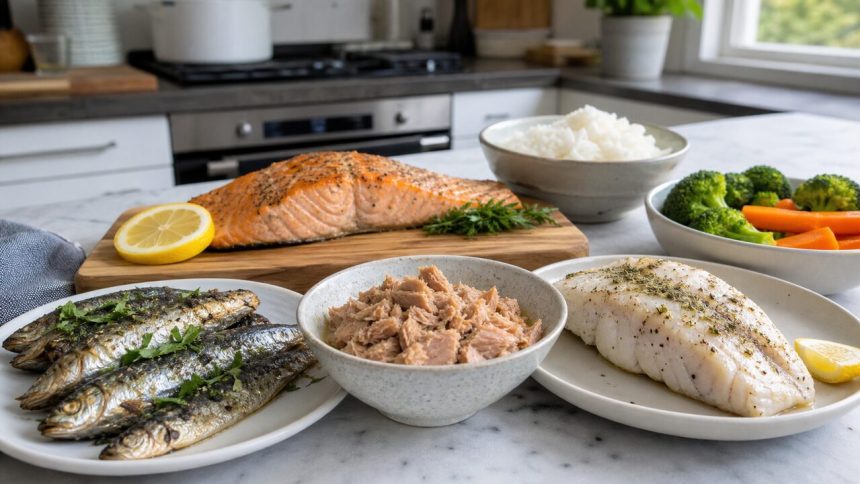
The best fish for lifters are salmon, sardines, tuna, cod, trout, tilapia, and mackerel, used for different jobs. Pick lean fish like cod or tuna when calories are tight, fatty fish like salmon or sardines when you want omega-3s, and rotate choices to manage mercury, budget, and taste fatigue.
Why should lifters eat fish?
Fish gives lifters a high-quality protein source with nutrients that are harder to get from chicken breast alone. Most fish deliver complete protein, while fatty fish add EPA and DHA omega-3 fats that support heart health. Depending on the species, fish can also contribute vitamin D, selenium, iodine, potassium, and B vitamins.
That does not mean fish is automatically better than meat, eggs, dairy, or plant protein. It means fish fills a different lane. A lean cod bowl can keep calories low during a cut. Salmon can raise calories and omega-3 intake during a muscle-gain phase. Sardines can solve protein, budget, and pantry reliability in one can.
For a broader grocery list, use our high-protein foods guide. If you want omega-3 capsules because you do not eat seafood often, compare our fish oil supplement ranking.
How much fish should you eat per week?
Most adults can start with 2 seafood meals per week, which matches American Heart Association guidance and is easy to build into a lifting diet. Pregnant people, children, and anyone managing mercury exposure should follow FDA fish-choice guidance more carefully, especially around high-mercury species.
For lifters, the practical version is simple: use fish 2 to 4 times per week if you enjoy it, and rotate species. Eat salmon or sardines when you want omega-3s. Eat cod, tilapia, or canned light tuna when you want lean protein. Avoid building the whole plan around high-mercury fish.
What are the best fish for protein?
The best fish for protein depends on your calorie target and prep style. Lean white fish gives the most protein for fewer calories, while fatty fish gives more calories and omega-3s. Canned fish wins for convenience, but sodium and mercury choices matter more when you eat it often.
| Fish | Best Use | Typical Protein Angle | Main Tradeoff | FitnessVolt Take |
|---|---|---|---|---|
| Salmon | Muscle gain, omega-3 intake | High protein plus healthy fats | Higher calories and price | Best all-around fish for lifters |
| Sardines | Budget omega-3s, pantry protein | Protein, calcium if bones are included | Strong taste | Most underrated canned option |
| Cod | Cutting and lean meal prep | Very lean protein | Easy to overcook | Best low-calorie fish bowl |
| Light tuna | Fast lunches | Convenient lean protein | Mercury limits matter | Useful, but rotate it |
| Trout | Flavor plus omega-3s | Protein with moderate fat | Less universal availability | Best salmon alternative |
| Tilapia | Cheap lean protein | Lean, mild, easy prep | Lower omega-3s | Fine if you treat it as lean protein |
| Mackerel | Higher-fat meals | Protein plus omega-3s | Choose lower-mercury types | Great, but species selection matters |
Is salmon the best fish for building muscle?
Salmon is the best all-around fish for many lifters because it combines high-quality protein with omega-3 fats and enough calories to support harder training blocks. It is not the leanest fish, but that is exactly why it works well during maintenance or muscle-gain phases.
Use salmon when your diet has room for fat and you want a meal that feels complete with rice, potatoes, vegetables, or salad. Skip it when calories are very tight or when the price makes consistency impossible. Cod, tuna, or tilapia will be easier to fit during an aggressive cut.
Are sardines good for bodybuilding?
Sardines are excellent for bodybuilding if you can handle the taste. They are shelf-stable, usually affordable, rich in protein, and naturally high in omega-3 fats. If you choose bone-in canned sardines, they can also add calcium, which most protein sources do not provide.
The practical move is to pair sardines with toast, rice, potatoes, lemon, mustard, hot sauce, or a big salad. Skip them if the flavor makes you dread the meal. A food you hate will not survive a 12-week plan.
Is tuna safe to eat every day?
Tuna is useful, but daily tuna is usually not the best plan because mercury exposure depends on species, serving size, and frequency. FDA guidance classifies canned light tuna differently from albacore and lists higher-mercury fish that should be avoided by sensitive groups.
For lifters, the safest habit is rotation. Use canned light tuna for quick lunches, but mix in salmon, sardines, cod, trout, tilapia, eggs, Greek yogurt, chicken, beans, tofu, and lean beef across the week. Protein consistency should not depend on one fish.
What is the leanest fish for cutting?
Cod, tilapia, haddock, pollock, and similar white fish are the easiest fish to use during a cut because they are high in protein and low in fat. They let you spend calories on carbs, sauces, vegetables, or olive oil without blowing up the meal.
The downside is flavor and texture. Lean fish dries out quickly. Cook it gently, use a thermometer, and add flavor from salsa, lemon, Greek-yogurt sauce, herbs, or broth instead of drowning it in high-calorie breading.
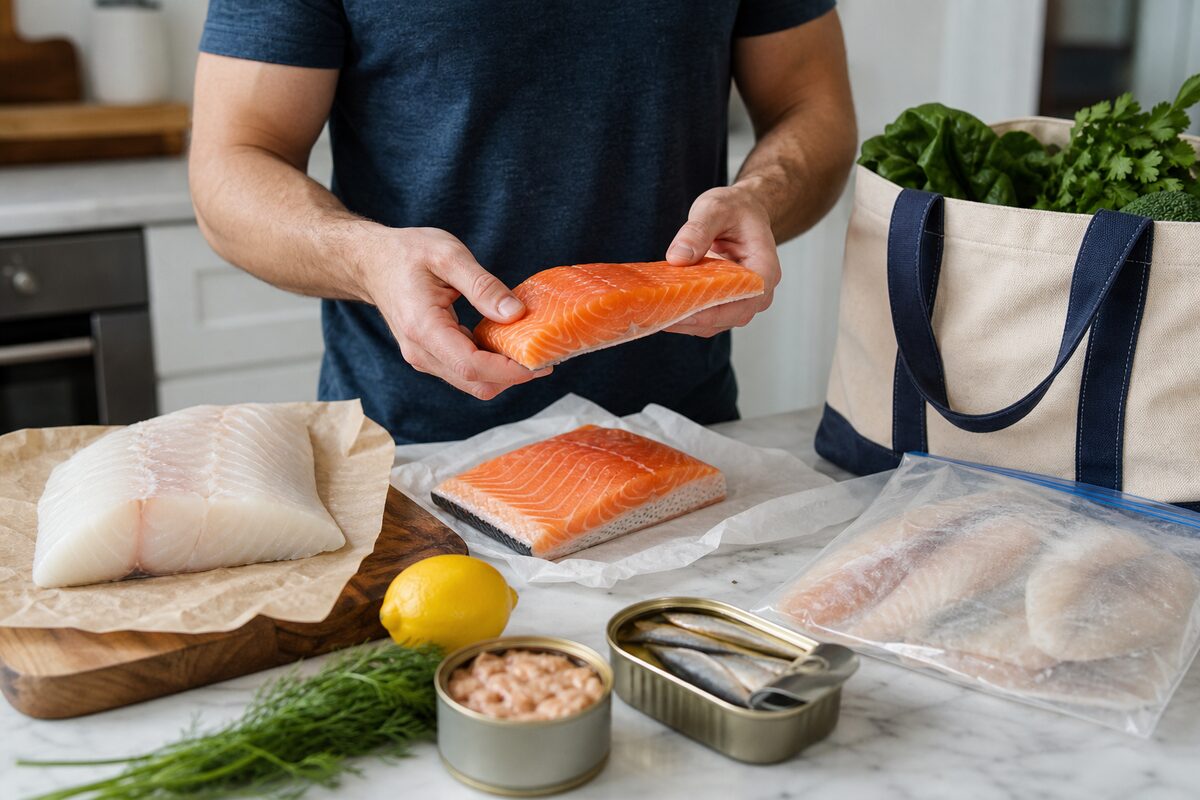
How should lifters choose fish at the grocery store?
Choose fish based on the meal job: lean protein, omega-3 meal, cheap pantry backup, or fast lunch. This keeps seafood from becoming another vague “healthy food” you buy once and forget.
For lean protein: buy cod, tilapia, pollock, haddock, or canned light tuna. Add carbs and vegetables around them.
For omega-3s: buy salmon, sardines, trout, or lower-mercury mackerel. Use these meals when you have more calories available.
For budget: compare frozen fillets and canned fish. Frozen fish is often more reliable than fresh fish that sits too long in the fridge.
For prep speed: canned sardines, pouches of light tuna, frozen cod, and pre-portioned salmon are the easiest options.
What should you eat with fish for muscle gain?
Fish becomes a muscle-building meal when you pair it with enough total calories and training fuel. Add rice, potatoes, pasta, tortillas, oats, beans, fruit, or olive oil depending on the fish and your calorie target.
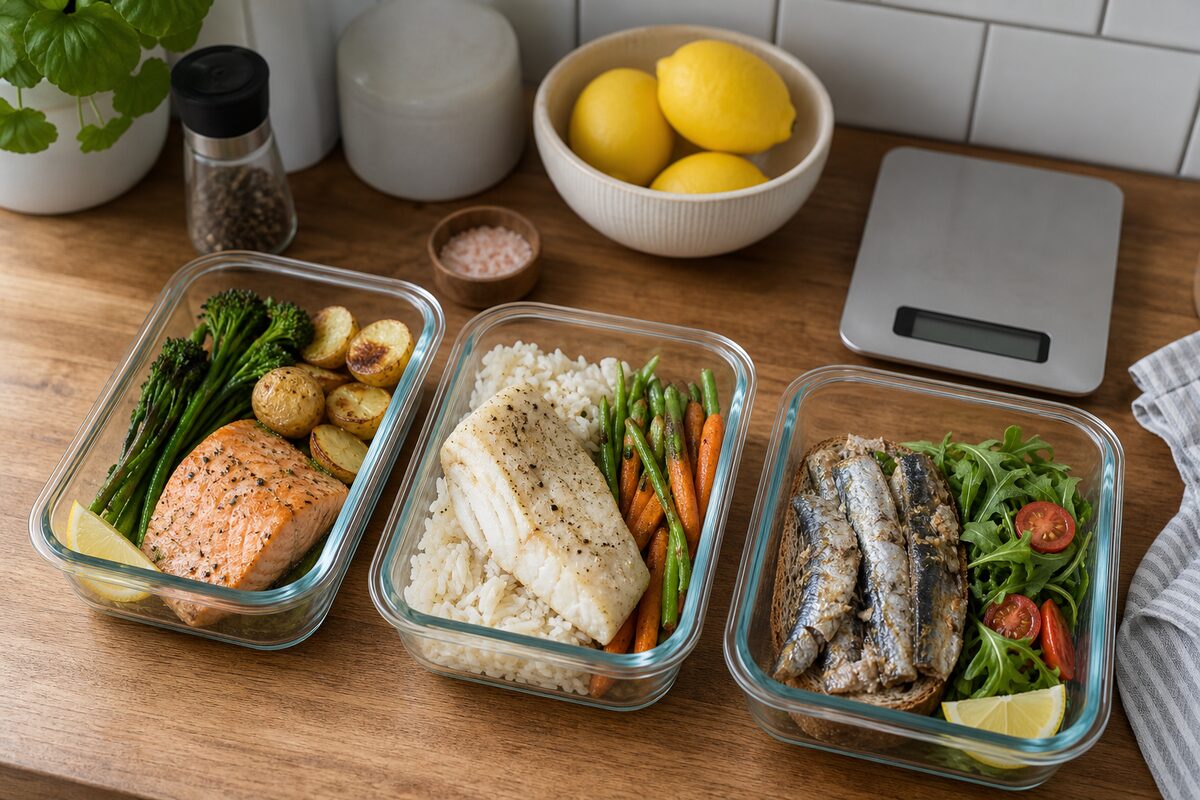
A salmon bowl with rice and vegetables works well during a gain phase. A cod taco bowl with salsa, rice, beans, and Greek yogurt works during a cut. Sardines on toast with salad makes a cheap lunch. Tuna with potatoes and olive oil is faster than another dry chicken meal.
If you need to set the whole day around protein and calories, use the FitnessVolt macro calculator before obsessing over one fish choice.
Sample Fish Rotation for Lifters
- Monday: salmon bowl with rice and vegetables after lower-body training.
- Wednesday: cod tacos with beans, salsa, cabbage, and Greek-yogurt sauce.
- Friday: sardines on toast with salad and fruit for a fast lunch.
- Sunday: trout or tilapia with potatoes and vegetables for easy meal prep.
Common fish protein mistakes
Mistake 1: using only tuna. Tuna is convenient, but rotation helps with mercury, taste fatigue, and nutrient variety.
Mistake 2: avoiding fatty fish during muscle gain. Salmon, sardines, trout, and mackerel can make calorie targets easier while adding omega-3s.
Mistake 3: overcooking lean fish. Dry cod makes people quit seafood. Cook gently and add sauce.
Mistake 4: ignoring sodium in canned fish. Canned fish is useful, but daily high-sodium products can add up.
Mistake 5: treating fish oil as a full replacement. Capsules can help omega-3 intake, but they do not provide the protein, minerals, or meal structure of fish.
FAQ
What fish has the most protein?
Lean fish like cod, tuna, haddock, pollock, and tilapia are strong protein-per-calorie choices. Fatty fish like salmon and sardines still provide plenty of protein, but they add more calories from fat.
Is fish better than chicken for bodybuilding?
Fish is not automatically better than chicken. It is a different tool. Chicken is cheap and lean. Fish adds omega-3 fats and more meal variety. A strong diet can use both.
Can I eat fish after workouts?
Yes. Fish after training works well if the full meal includes enough protein and calories. Pair lean fish with carbs, or use salmon when you want more calories and fat.
Is frozen fish healthy?
Frozen fish can be a smart choice because it is convenient, often cheaper, and less likely to spoil before you cook it. Check added sauces, sodium, and breading.
Should lifters take fish oil?
Fish oil can help if you rarely eat fatty fish, but it does not replace seafood as a protein source. Compare supplement options only after you know how often fish appears in your real diet.
Bottom line
Fish deserves a real place in a lifting diet, but it should not be random. Use salmon, sardines, trout, and lower-mercury mackerel when you want omega-3s and a richer meal. Use cod, tilapia, pollock, haddock, and light tuna when you want lean protein. Rotate choices so protein, mercury, budget, and appetite all stay manageable.
If you only add one habit this week, make one seafood meal repeatable: salmon and rice, cod tacos, sardines on toast, or tuna with potatoes. One reliable meal beats another unused health rule.
Sources
- U.S. Food and Drug Administration. (n.d.). Advice About Eating Fish. Accessed June 19, 2026.
- American Heart Association. (n.d.). Fish and Omega-3 Fatty Acids. Accessed June 19, 2026.
- U.S. Department of Agriculture. (n.d.). FoodData Central. Accessed June 19, 2026.
- Jäger, R., Kerksick, C. M., Campbell, B. I., et al. (2017). International Society of Sports Nutrition Position Stand: protein and exercise. Journal of the International Society of Sports Nutrition. DOI: 10.1186/s12970-017-0177-8.