Phosphatidylserine sits in an awkward corner of the supplement aisle. Human studies use doses from 100 mg to 800 mg per day, yet the evidence for memory, stress, and exercise outcomes remains mixed. A large randomized trial found no significant cognitive benefit at 300 or 600 mg per day, while smaller studies reported narrower signals in selected groups or outcomes. That makes a clear label more useful than a sweeping brain-health promise.
Tom Miller tested all eight products for bottle handling, capsule or softgel size, coating, odor, serving convenience, and label readability. We also compared the phosphatidylserine source, dose, capsule shell, availability, value, and the number of capsules required to supply 300 mg per day as of July 10, 2026.
The ranking favors products that state actual phosphatidylserine per capsule, distinguish soy from sunflower, and avoid hiding a modest per-capsule amount behind a large serving headline. Life Extension PS Caps leads because its 100 mg vegetarian capsule is easy to understand and adjust. NOW Soy-Free 150 mg is the cleaner option for buyers who want 300 mg in two vegan capsules. No pick should be treated as a therapy for cognitive decline, anxiety, ADHD, sleep problems, or athletic recovery.
Quick take: Life Extension PS Caps is the most balanced pick for clear 100 mg step dosing and a vegetarian sunflower-based format. NOW Soy-Free 150 mg cuts a 300 mg day to two capsules. Nutricost had a lower bottle price than several rivals on July 10, 2026, though its 400 mg serving requires four capsules. Compare actual PS per unit, source, shell, and current potency documentation before relying on the largest number on the front label.
Use this guide to compare the broader category: Performance Lab Mind review.
Best Picks at a Glance
| Category | Product | Key Label Check | Best For | |
|---|---|---|---|---|
| Best Overall | Life Extension PS Caps, 100 Capsules | 100 mg PS per vegetarian capsule from sunflower lecithin; 100 capsules; $36.00 and in stock on July 10, 2026. | Buyers who want simple 100 mg dose steps, a vegetarian capsule, and sunflower sourcing. | Amazon |
| Best 150 mg Vegan Option | NOW Foods Soy-Free Phosphatidyl Serine 150 mg, 60 Veg Capsules | 150 mg sunflower-derived Sharp-PS GREEN per vegan capsule; 60 capsules; $27.08 and in stock on July 10, 2026. | Soy-free vegan buyers who want to reach 300 mg with two capsules. | Amazon |
| Best 100 mg Vegan Bottle | Bestvite Phosphatidylserine 100 mg, 120 Vegetarian Capsules | 100 mg per vegetarian capsule; 120 capsules; soy-free Sharp-PS Green formula; $32.99 with limited stock on July 10, 2026. | Vegan buyers who want 100 mg increments and a larger 120-capsule bottle. | Amazon |
| Best Branded-Material Formula | Doctor's Best Phosphatidylserine 100 mg, 120 Veg Caps | 100 mg SerinAid PS per vegetable capsule; 120 capsules; $29.99 and in stock on July 10, 2026. | Buyers who want a 100 mg vegetable capsule built around a named PS material. | Amazon |
| Best Lower Capsule Burden | Double Wood Phosphatidylserine 300 mg per Serving, 120 Capsules | 300 mg per two-capsule serving, or 150 mg per capsule; 120 capsules; $20.95 and in stock on July 10, 2026. | Buyers who want 300 mg in two capsules and are willing to inspect the latest COA before purchase. | Amazon |
| Best Budget Bulk Capsules | Nutricost Phosphatidylserine 400 mg, 120 Capsules | 400 mg per four-capsule serving, or 100 mg per capsule; 120 plant-based capsules; $23.95 and in stock on July 10, 2026. | Price-focused buyers who accept four capsules for the labeled 400 mg serving. | Amazon |
| Best Simple Sunflower Softgel | Swanson Sunflower Phosphatidylserine 100 mg, 90 Softgels | 100 mg sunflower PS per softgel; 90 softgels; soy-free formula; $38.59 and in stock on July 10, 2026. | Buyers who prefer a softgel and want a clearly named sunflower source. | Amazon |
| Best Soy-Free 90-Count Bottle | Intelligent Labs Phosphatidylserine 100 mg, 90 Vegan Capsules | 100 mg PS per vegan capsule from sunflower lecithin; 90 capsules; soy-free formula; $28.99 and in stock on July 10, 2026. | Buyers who want a verified 100 mg soy-free vegan capsule in a 90-count bottle. | Amazon |
How We Ranked These Products
Tested by Tom Miller: July 10, 2026.
Tom opened and handled each bottle, then compared the capsules and softgels side by side for size, shape, coating, odor, serving burden, packaging, and label readability. The research portion checked current product specifications, availability, prices, actual phosphatidylserine per unit, source, shell type, and quality documentation.
For each product, we checked the exact formula and bottle size before comparing dose, format, and cost. Price and availability can change, and neither tells us whether a finished bottle meets its potency claim.
We compared actual PS per capsule or softgel, labeled serving size, units needed for 300 mg, source, allergen implications, shell type, bottle count, and any named raw material.
Ratings give equal weight to actual PS dose clarity, capsule burden at 300 mg, source and shell transparency, finished-product quality evidence, and normalized value using the July 10 price. The scores compare buyer fit within this group; they do not predict clinical results. Ties are ordered by the practical fit and tradeoffs explained in each section.
We normalized available prices to cost per 100 mg and cost at 300 mg per day when the current label information supported the math. We withheld dose-cost math when formula mass and actual PS were not clearly reconciled.
We treated generic cGMP language, ingredient trademarks, purity slogans, and brand-funded testing claims as weaker evidence than a current lot-matched finished-product report with method, date, result, and laboratory identity.
We calculated dose, capsule burden, and price on a common basis so the products are easy to compare.
- Actual phosphatidylserine per capsule or softgel, plus the labeled serving amount
- Units required for 100 mg, 200 mg, 300 mg, 400 mg, 600 mg, and 800 mg
- PS source and allergen status, including soy, sunflower, or unclear sourcing
- Capsule shell and diet fit, separating vegetarian or vegan capsules from gelatin softgels
- Price per 100 mg and estimated cost at 300 mg per day using prices recorded July 10, 2026
- Quality evidence type, including label claims, branded material, generic manufacturing claims, and current lot-matched testing
For a second view of formula and use-case tradeoffs, read: Best nootropic supplements for workout focus.
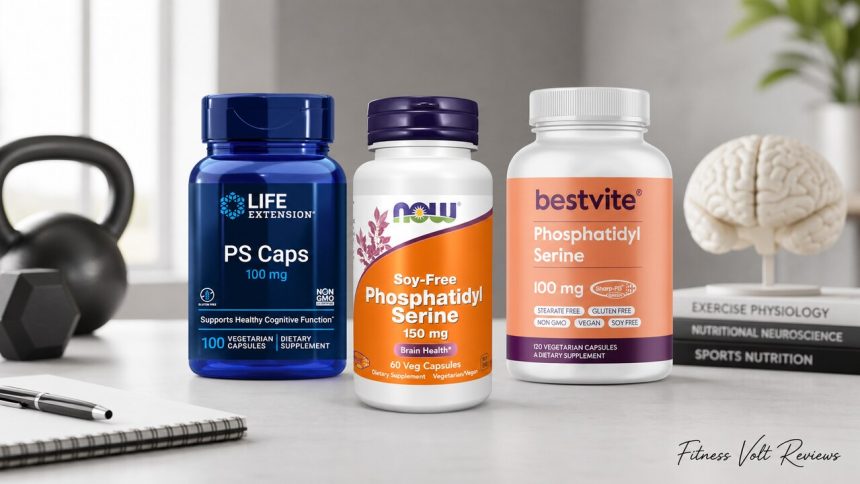
1. Life Extension PS Caps, 100 Capsules: Best Overall

Life Extension PS Caps, 100 Capsules
Best OverallPros
- States 100 mg per capsule, so buyers can adjust in clear increments
- Sunflower lecithin and vegetarian format suit buyers avoiding soy-derived PS
- The 100-count bottle supports flexible dosing without a multi-capsule serving claim
Cons
- A 300 mg daily amount requires three capsules
- The available research does not establish that this finished product improves memory or performance
Why it made the list: The label structure makes dose math straightforward, and the 100-count bottle avoids an inflated serving headline. It ranks first for balance, not because the evidence proves a clinical benefit.
Best fit: Buyers who want simple 100 mg dose steps, a vegetarian capsule, and sunflower sourcing.
Label and format check: 100 mg PS per vegetarian capsule from sunflower lecithin; 100 capsules; $36.00 and in stock on July 10, 2026. Vegetarian capsule with 100 mg per capsule. Three capsules supply 300 mg.
Life Extension avoids the most common dose-reading problem in this category: the capsule itself supplies the stated 100 mg of PS. You need one capsule for 100 mg and three for 300 mg, with no conversion from a phospholipid-complex headline.
The official specification identifies sunflower lecithin and a vegetarian capsule. That is useful for shoppers avoiding soy-derived PS, but sunflower sourcing alone does not prove potency, absorption, or clinical superiority.
The 100-capsule bottle cost $36.00 on July 10, 2026. That equals about $0.36 per 100 mg before tax or discounts and roughly $1.08 for a 300 mg day. Prices can change, and a posted price says nothing about the potency of the bottle you receive.
Main tradeoff: Skip it if you want 300 mg in one or two units or need a current public lot-matched potency report.
2. NOW Foods Soy-Free Phosphatidyl Serine 150 mg, 60 Veg Capsules: Best 150 mg Vegan Option

NOW Foods Soy-Free Phosphatidyl Serine 150 mg, 60 Veg Capsules
Best 150 mg Vegan OptionPros
- Reaches 300 mg with two capsules
- Separately identifies the soy-free sunflower model and vegan shell
- A 60-capsule bottle lasts 30 days at 300 mg per day
Cons
- The 150 mg increment is less flexible for buyers targeting 100 mg or 200 mg
- A raw-material trademark does not replace finished-product potency testing
Why it made the list: A true 150 mg per-capsule dose creates a useful middle ground between 100 mg capsules and high-headline formulas. The source and shell are stated clearly.
Best fit: Soy-free vegan buyers who want to reach 300 mg with two capsules.
Label and format check: 150 mg sunflower-derived Sharp-PS GREEN per vegan capsule; 60 capsules; $27.08 and in stock on July 10, 2026. Vegan capsule with 150 mg per capsule. Two capsules supply 300 mg.
NOW also sells a separate 100 mg soy-derived formula, so check the bottle name and dose before buying. This soy-free version supplies 150 mg per capsule and 300 mg in two capsules.
The label identifies sunflower phospholipids, Sharp-PS GREEN, and a vegan capsule. Those facts answer source and diet questions. They do not show that the finished bottle matches label potency or works better than unbranded PS.
The 60-capsule bottle cost $27.08 on July 10, 2026. The rough cost is $0.30 per 100 mg and $0.90 at 300 mg per day. NOW's 2024 voluntary recall covered specified lots of a different 300 mg product. Check the product name and lot number on your bottle instead of treating the recall as applying to this 150 mg formula.
Main tradeoff: Skip it if a 100 mg increment fits your plan better or you want lot-specific assay evidence before buying.
3. Bestvite Phosphatidylserine 100 mg, 120 Vegetarian Capsules: Best 100 mg Vegan Bottle

Bestvite Phosphatidylserine 100 mg, 120 Vegetarian Capsules
Best 100 mg Vegan BottlePros
- Clear 100 mg per-capsule dose
- Soy-free vegan format with 120 capsules
- The 120-capsule bottle provides 40 days at 300 mg per day
Cons
- Only 17 units were shown in stock on July 10, 2026
- Patented and clinically tested wording describes an ingredient claim, not proof for this finished lot
Why it made the list: The 100 mg per-capsule statement, 120-count format, and soy-free vegan positioning create a clear buyer fit without relying on a multi-capsule serving headline.
Best fit: Vegan buyers who want 100 mg increments and a larger 120-capsule bottle.
Label and format check: 100 mg per vegetarian capsule; 120 capsules; soy-free Sharp-PS Green formula; $32.99 with limited stock on July 10, 2026. Vegetarian capsule with 100 mg per capsule. Three capsules supply 300 mg.
Bestvite states 100 mg per capsule and 120 vegetarian capsules per bottle. That supports clean comparisons: 120 doses at 100 mg, 60 days at 200 mg, or 40 days at 300 mg.
The label identifies Sharp-PS Green and describes the capsules as soy-free, vegan, non-GMO, and gluten-free. Those details help with diet and allergen screening. The branded ingredient does not establish the potency of the finished bottle.
The price was $32.99 with only 17 units shown in stock on July 10, 2026. At that price, the product costs about $0.27 per 100 mg and $0.82 for 300 mg. Limited availability keeps it below the first two picks.
Main tradeoff: Skip it if limited inventory persists or if you require a current lot-specific finished-product COA.
4. Doctor's Best Phosphatidylserine 100 mg, 120 Veg Caps: Best Branded-Material Formula

Doctor's Best Phosphatidylserine 100 mg, 120 Veg Caps
Best Branded-Material FormulaPros
- Straightforward 100 mg per-capsule amount
- Large 120-capsule count
- A 120-capsule bottle lasts 40 days at 300 mg per day
Cons
- Buyers should confirm the source and allergen panel on the current bottle
- SerinAid branding does not verify the potency of the finished lot
Why it made the list: The bottle combines a clear 100 mg unit dose with a 120-count format. We kept it below the sunflower picks because the current source and allergen wording still deserves a label check.
Best fit: Buyers who want a 100 mg vegetable capsule built around a named PS material.
Label and format check: 100 mg SerinAid PS per vegetable capsule; 120 capsules; $29.99 and in stock on July 10, 2026. Vegetable capsule with 100 mg per capsule. Three capsules supply 300 mg.
Each vegetable capsule supplies 100 mg, and the bottle contains 120 capsules. A 300 mg amount takes three capsules, which makes the bottle last 40 days at that level.
SerinAid gives buyers a traceable ingredient name, but trademark recognition has a narrow role. It does not show a current assay result, remove the need to check allergens, or prove better clinical outcomes than another PS source.
The price was $29.99 on July 10, 2026, or about $0.25 per 100 mg and $0.75 for a 300 mg day. That was competitive among these eight products, though price and seller conditions can change.
Main tradeoff: Skip it if the current allergen and source panel is unavailable to you or you interpret a branded ingredient as proof of finished-product potency.
This related FitnessVolt guide adds useful context: Best Alpha-GPC supplements.
5. Double Wood Phosphatidylserine 300 mg per Serving, 120 Capsules: Best Lower Capsule Burden

Double Wood Phosphatidylserine 300 mg per Serving, 120 Capsules
Best Lower Capsule BurdenPros
- Reaches 300 mg with two capsules
- Lowest calculated cost per 300 mg serving among these eight products
- Brand describes specific analytical methods and laboratory standards
Cons
- Testing claims need a current lot-matched COA to carry real weight
- Soy-derived material will not suit buyers avoiding soy sources
Why it made the list: Two capsules reach 300 mg at the lowest calculated dose cost in this group. We kept the ranking conservative because the available testing claims lack a current, lot-matched report for the finished product.
Best fit: Buyers who want 300 mg in two capsules and are willing to inspect the latest COA before purchase.
Label and format check: 300 mg per two-capsule serving, or 150 mg per capsule; 120 capsules; $20.95 and in stock on July 10, 2026. Capsule formula with 150 mg per capsule and 300 mg per two-capsule serving.
Double Wood's 300 mg headline refers to a two-capsule serving. Each capsule therefore contributes 150 mg, a useful detail for dose comparisons and a lighter burden than three 100 mg capsules.
The brand discusses HPLC, phosphorus-31 NMR, and ISO 17025 laboratory testing. Those are specific claims, but buyers still need the actual report, matching lot, test date, measured PS result, method, and lab identity. A testing page without those links cannot verify the bottle in hand.
The 120-capsule bottle cost $20.95 on July 10, 2026. That works out to about $0.12 per 100 mg and $0.35 for a 300 mg serving, the lowest calculated dose cost among these eight. A current lot-matched report could support a higher ranking; the general testing claims alone cannot.
Main tradeoff: Skip it if you cannot obtain a current lot-matched report with PS result, method, date, and laboratory identity.
6. Nutricost Phosphatidylserine 400 mg, 120 Capsules: Best Budget Bulk Capsules

Nutricost Phosphatidylserine 400 mg, 120 Capsules
Best Budget Bulk CapsulesPros
- Low July 10 price for a 120-capsule bottle
- Soy-free vegetarian positioning
- 100 mg per capsule still permits dose adjustment
Cons
- The 400 mg serving requires four capsules
- Generic manufacturing claims do not confirm finished-product PS potency
Why it made the list: The bottle offers inexpensive 100 mg units, but the 400 mg front-label number can distract from a four-capsule serving. We rank the usable dose, not the headline.
Best fit: Price-focused buyers who accept four capsules for the labeled 400 mg serving.
Label and format check: 400 mg per four-capsule serving, or 100 mg per capsule; 120 plant-based capsules; $23.95 and in stock on July 10, 2026. Plant-based capsule with 100 mg per capsule. Four capsules supply the labeled 400 mg serving.
Nutricost prints 400 mg prominently, but the serving contains four capsules. The useful comparison number is 100 mg per capsule. A 300 mg day takes three capsules, and the full labeled serving takes four.
The label describes the product as soy-free, vegetarian-friendly, non-GMO, and gluten-free. Those points help with source and diet screening, but they do not show whether an independent laboratory measured the current lot at its claimed PS amount.
The bottle cost $23.95 on July 10, 2026. That is about $0.20 per 100 mg and $0.60 at 300 mg per day. The normalized price is low, though the capsule burden keeps it behind the two-capsule option.
Main tradeoff: Skip it if capsule count matters more than bottle price or you want stronger independent finished-product potency evidence.
7. Swanson Sunflower Phosphatidylserine 100 mg, 90 Softgels: Best Simple Sunflower Softgel

Swanson Sunflower Phosphatidylserine 100 mg, 90 Softgels
Best Simple Sunflower SoftgelPros
- Clear 100 mg per-softgel amount
- Sunflower and soy-free positioning is easy to identify
- A 90-softgel bottle lasts 30 days at 300 mg per day
Cons
- The softgel format may contain gelatin and should not be treated as vegan
- Highest calculated cost per 100 mg among the eight picks
Why it made the list: The label states the source, amount, and count without a complicated serving calculation. Its higher price and softgel format narrow the audience.
Best fit: Buyers who prefer a softgel and want a clearly named sunflower source.
Label and format check: 100 mg sunflower PS per softgel; 90 softgels; soy-free formula; $38.59 and in stock on July 10, 2026. Softgel with 100 mg per unit. Three softgels supply 300 mg; do not assume a sunflower fill means a vegan shell.
Swanson uses a plain 100 mg per-softgel label and a 90-count bottle. Three softgels reach 300 mg, so the bottle supplies 30 days at that amount.
The sunflower and soy-free wording helps buyers screen the PS source. The shell remains a separate check because a sunflower-derived fill can still sit inside gelatin. Buyers following a vegan diet should verify the current other-ingredients panel.
The price was $38.59 on July 10, 2026. That equals about $0.43 per 100 mg and $1.29 at 300 mg per day, the highest normalized cost in this group. The label is easy to read, but the price limits its value.
Main tradeoff: Skip it if you need a vegan shell, lower dose cost, or current lot-level potency documentation.
8. Intelligent Labs Phosphatidylserine 100 mg, 90 Vegan Capsules: Best Soy-Free 90-Count Bottle

Intelligent Labs Phosphatidylserine 100 mg, 90 Vegan Capsules
Best Soy-Free 90-Count BottlePros
- States 100 mg of phosphatidylserine per capsule
- Uses soy-free sunflower lecithin and a vegan cellulose shell
- The 90-count bottle supplies 30 days at 300 mg per day
Cons
- A 300 mg daily amount requires three capsules
- Available testing documents still need a lot match to verify the bottle received
Why it made the list: The current Supplement Facts panel states one capsule per serving and 100 mg of phosphatidylserine. That clear unit dose makes this a defensible replacement for an ambiguous formula headline.
Best fit: Buyers who want a verified 100 mg soy-free vegan capsule in a 90-count bottle.
Label and format check: 100 mg PS per vegan capsule from sunflower lecithin; 90 capsules; soy-free formula; $28.99 and in stock on July 10, 2026. Vegan cellulose capsule with 100 mg per capsule. Three capsules supply 300 mg.
Intelligent Labs lists one capsule as a serving and 100 mg of phosphatidylserine from sunflower lecithin. The label also identifies a cellulose capsule, so the dose, source, and shell do not require inference.
The soy-free vegan format gives this pick a clear buyer fit. The brand publishes testing documents, but buyers should match the product and lot before treating any report as proof for the bottle they receive.
The 90-capsule bottle cost $28.99 on July 10, 2026. That equals about $0.32 per 100 mg and $0.97 for a 300 mg day. Three capsules reach that comparison amount, so buyers who prioritize a lower capsule burden have better options above.
Main tradeoff: Skip it if you want 300 mg in fewer than three capsules or need a report matched to the lot you receive.
Product Comparison
| Product | Role | Key Check | Score | Watch Out For | |
|---|---|---|---|---|---|
| Life Extension PS Caps, 100 Capsules | Best Overall | 100 mg PS per vegetarian capsule from sunflower lecithin; 100 capsules; $36.00 and in stock on July 10, 2026. | 9.5/10 | Skip it if you want 300 mg in one or two units or need a current public lot-matched potency report. | Amazon |
| NOW Foods Soy-Free Phosphatidyl Serine 150 mg, 60 Veg Capsules | Best 150 mg Vegan Option | 150 mg sunflower-derived Sharp-PS GREEN per vegan capsule; 60 capsules; $27.08 and in stock on July 10, 2026. | 9.0/10 | Skip it if a 100 mg increment fits your plan better or you want lot-specific assay evidence before buying. | Amazon |
| Bestvite Phosphatidylserine 100 mg, 120 Vegetarian Capsules | Best 100 mg Vegan Bottle | 100 mg per vegetarian capsule; 120 capsules; soy-free Sharp-PS Green formula; $32.99 with limited stock on July 10, 2026. | 9.0/10 | Skip it if limited inventory persists or if you require a current lot-specific finished-product COA. | Amazon |
| Doctor's Best Phosphatidylserine 100 mg, 120 Veg Caps | Best Branded-Material Formula | 100 mg SerinAid PS per vegetable capsule; 120 capsules; $29.99 and in stock on July 10, 2026. | 9.0/10 | Skip it if the current allergen and source panel is unavailable to you or you interpret a branded ingredient as proof of finished-product potency. | Amazon |
| Double Wood Phosphatidylserine 300 mg per Serving, 120 Capsules | Best Lower Capsule Burden | 300 mg per two-capsule serving, or 150 mg per capsule; 120 capsules; $20.95 and in stock on July 10, 2026. | 9.0/10 | Skip it if you cannot obtain a current lot-matched report with PS result, method, date, and laboratory identity. | Amazon |
| Nutricost Phosphatidylserine 400 mg, 120 Capsules | Best Budget Bulk Capsules | 400 mg per four-capsule serving, or 100 mg per capsule; 120 plant-based capsules; $23.95 and in stock on July 10, 2026. | 8.5/10 | Skip it if capsule count matters more than bottle price or you want stronger independent finished-product potency evidence. | Amazon |
| Swanson Sunflower Phosphatidylserine 100 mg, 90 Softgels | Best Simple Sunflower Softgel | 100 mg sunflower PS per softgel; 90 softgels; soy-free formula; $38.59 and in stock on July 10, 2026. | 8.5/10 | Skip it if you need a vegan shell, lower dose cost, or current lot-level potency documentation. | Amazon |
| Intelligent Labs Phosphatidylserine 100 mg, 90 Vegan Capsules | Best Soy-Free 90-Count Bottle | 100 mg PS per vegan capsule from sunflower lecithin; 90 capsules; soy-free formula; $28.99 and in stock on July 10, 2026. | 8.0/10 | Skip it if you want 300 mg in fewer than three capsules or need a report matched to the lot you receive. | Amazon |
How to Choose
Read the actual PS amount, not the largest number
A bottle can feature 300 mg or 400 mg while requiring two or four capsules to reach that serving. Some labels state the mass of a phospholipid complex without clearly separating the amount of active phosphatidylserine. Find the line that states actual PS per serving, note the serving size, and divide by the number of capsules only when the label provides both figures.
Compare every product on the same basis. Cost per 100 mg shows what you pay for the stated dose, and units needed for 300 mg show the capsule burden. Several human studies evaluated 300 mg, so we use it as a comparison point. Research has not established it as the ideal dose for every buyer.
Separate source, allergen, and capsule shell
Modern PS usually comes from soy or sunflower phospholipids. Buyers avoiding soy should look for an explicit soy-free statement and check the full allergen panel. A product name or front image cannot settle the question.
Sunflower-derived does not mean vegan. Many sunflower products use gelatin softgels. Check both the source of the PS and the capsule shell, since those answer different buying questions.
Demand useful testing evidence
A facility cGMP statement describes manufacturing controls, while a raw-material trademark identifies an ingredient supply chain. To judge finished-product potency, you still need evidence tied to the bottle and lot being sold.
The strongest practical document is a current lot-matched report that names the product and lot, test date, measured PS result, method, contaminant panel, and laboratory. A logo, purity superlative, or testing page without those details deserves limited ranking credit.
Match the format to a realistic plan
A 100 mg capsule offers flexible steps but takes three units to reach 300 mg. A 150 mg capsule reaches the same comparison dose in two. Higher serving headlines can reduce burden, though only after you confirm how much actual PS sits in each capsule.
Start with the label and your clinician's guidance rather than copying doses from exercise or memory studies. Research populations, source materials, study lengths, and outcomes differ, and higher-dose studies do not establish a better consumer result.
Before buying, compare this adjacent topic: Best fish oil supplements.
Before buying, compare this adjacent topic: Basic supplements for lifters.
Safety and Who Should Skip These Products
Phosphatidylserine is not an established treatment for dementia, ADHD, anxiety, insomnia, depression, high cortisol, or athletic recovery. New or worsening memory problems warrant clinical evaluation rather than self-treatment with a supplement.
Short-term trials suggest that 300 to 600 mg per day can be tolerated in studied older adults, but they do not establish long-term safety, an ideal dose, pregnancy or breastfeeding safety, pediatric use, or compatibility with complex neurological and psychiatric medication regimens. Reported concerns include gastrointestinal upset and sleep disturbance, especially at higher intakes.
The cited trials do not establish safety during pregnancy or breastfeeding, in children, or alongside complex prescription regimens. Ask a qualified clinician or pharmacist before use if any of those conditions apply. Check source and allergen statements on the bottle you receive, and do not assume a sunflower source makes a gelatin softgel vegan.
What the Evidence Actually Shows
The cognition evidence does not support a blanket memory claim. In a randomized trial of 120 older adults with age-associated memory impairment, 300 or 600 mg per day of soy-derived PS for 12 weeks produced no significant cognitive benefit. A smaller six-month randomized trial reported some findings at 100 or 300 mg per day, but the effects were not broad or universal.
Regulatory reviews remain cautious. FDA qualified-claim language describes the evidence for reducing dementia or cognitive-dysfunction risk as very limited or preliminary, and EFSA did not establish a cause-and-effect relationship for the reviewed cognition and stress claims. Neither position amounts to product approval or proof that one retail formula works.
Exercise studies often use 600 to 800 mg per day for short periods and measure cortisol, ACTH, or perceived stress. Those surrogate outcomes do not prove greater strength, muscle growth, recovery, or competition performance. Studies combining PS with phosphatidic acid also cannot validate a standalone PS capsule.
Bottom Line
Life Extension PS Caps is the strongest all-around choice for buyers who want transparent 100 mg increments, sunflower sourcing, and a vegetarian capsule. NOW Soy-Free 150 mg is more convenient at a 300 mg comparison dose, while Bestvite offers the largest clear 100 mg vegan bottle among the top picks. Double Wood had the lowest normalized cost on July 10, 2026 and supplies 300 mg in two capsules, but a current lot-matched report would be needed to support a higher ranking.
The larger decision is whether PS belongs in your budget at all. Evidence for cognition is mixed, athlete claims lean on surrogate outcomes, and no retail label can promise a result. Check actual PS per unit, source, shell, capsule burden, and lot evidence. Discuss persistent cognitive symptoms or medication questions with a qualified clinician.
Sources
- U.S. Food and Drug Administration. (2024). Qualified Health Claims: Letters of Enforcement Discretion. FDA. Accessed July 11, 2026.
- EFSA Panel on Dietetic Products, Nutrition and Allergies. (2010). Scientific Opinion on the substantiation of health claims related to phosphatidyl serine (ID 552, 711, 734, 1632, 1927) pursuant to Article 13(1) of Regulation (EC) No 1924/2006. EFSA Journal, 8(10), 1749. DOI: 10.2903/j.efsa.2010.1749. Accessed July 11, 2026.
- Jorissen, B. L., et al. (2001). The influence of soy-derived phosphatidylserine on cognition in age-associated memory impairment. Nutrition and Neuroscience, 4(2), 121-134. DOI: 10.1080/1028415X.2001.11747356. Accessed July 11, 2026.
- Jorissen, B. L., et al. (2002). Safety of soy-derived phosphatidylserine in elderly people. Nutrition and Neuroscience, 5(5), 337-343. DOI: 10.1080/1028415021000033802. Accessed July 11, 2026.
- Kato-Kataoka, A., et al. (2010). Soybean-derived phosphatidylserine improves memory function of the elderly Japanese subjects with memory complaints. Journal of Clinical Biochemistry and Nutrition, 47(3), 246-255. DOI: 10.3164/jcbn.10-62. Accessed July 11, 2026.
- Richter, Y., et al. (2013). The effect of soybean-derived phosphatidylserine on cognitive performance in elderly with subjective memory complaints: A pilot study. Clinical Interventions in Aging, 8, 557-563. DOI: 10.2147/CIA.S40348. Accessed July 11, 2026.
- Starks, M. A., et al. (2008). The effects of phosphatidylserine on endocrine response to moderate intensity exercise. Journal of the International Society of Sports Nutrition, 5, 11. DOI: 10.1186/1550-2783-5-11. Accessed July 11, 2026.
- NOW Health Group. (2024). NOW Health Group Issues Voluntary Recall on Phosphatidyl Serine Not Meeting Label Claim. NOW Foods. Accessed July 11, 2026.