

All Fours Squad Stretch vs Bench Jump: Complete Comparison Guide
All Fours Squad Stretch vs Bench Jump — you want clear choices for quad work, so here’s a direct comparison. I’ll show how each movement loads the quads, which secondary muscles light up, the equipment and skill required, and practical rep ranges. You’ll get technique cues (joint angles, muscle emphasis), injury-risk notes, and scenarios that pick a winner for hypertrophy, strength, beginners, and home training. Read this and decide which to use in your program based on your goals and available gear.
Exercise Comparison
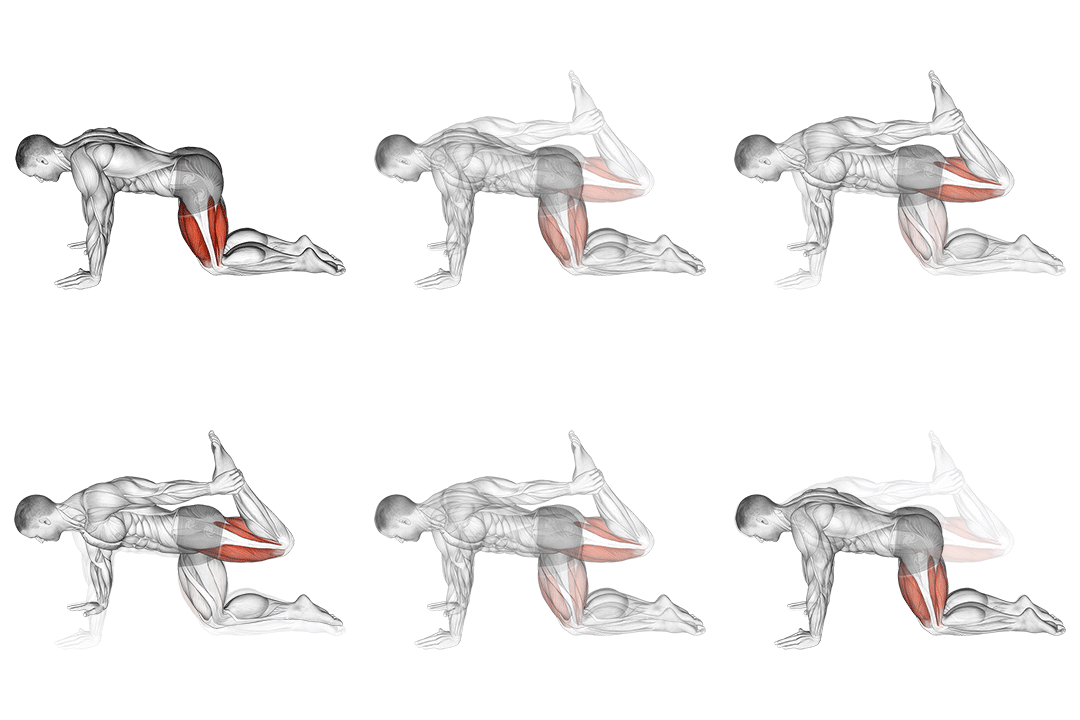
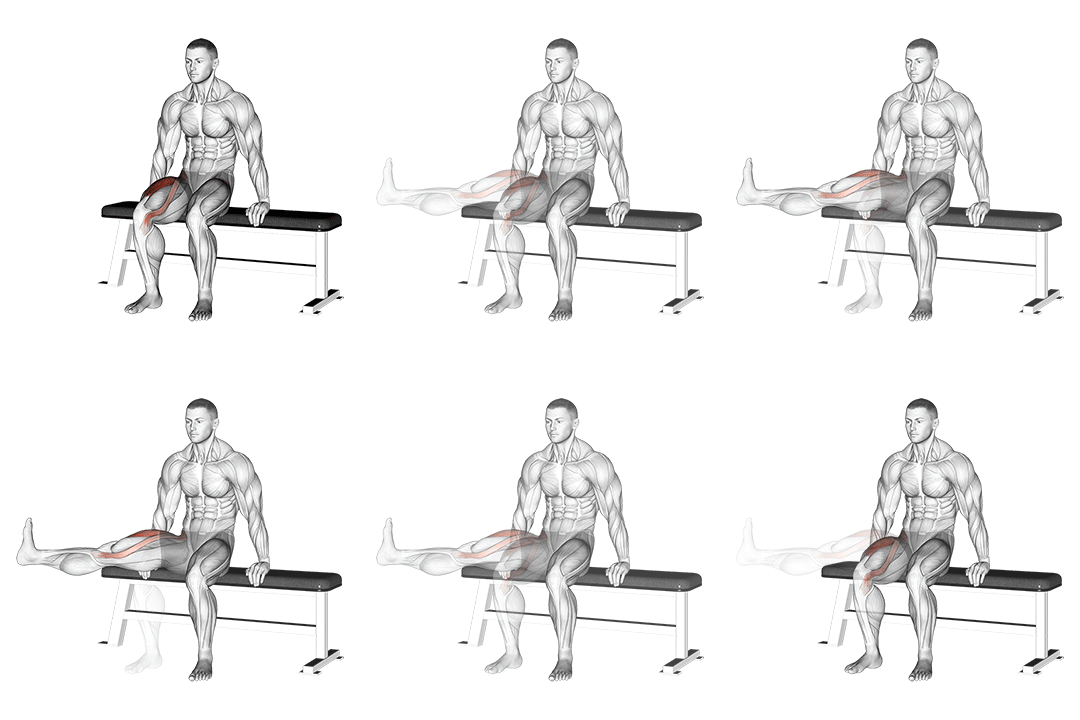
All Fours Squad Stretch
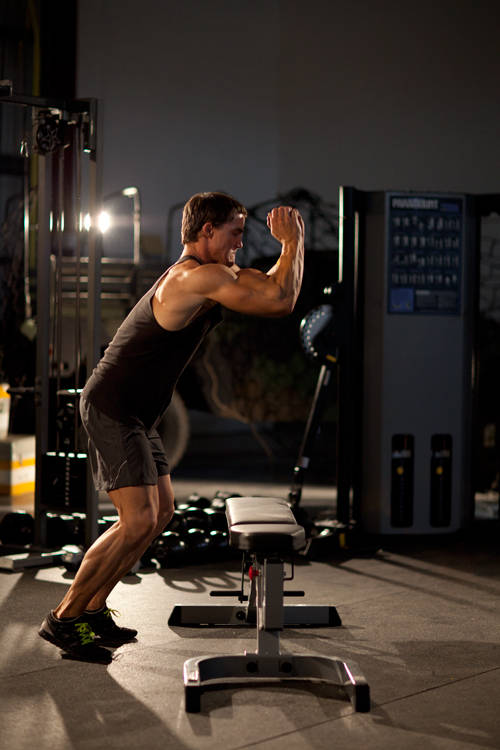
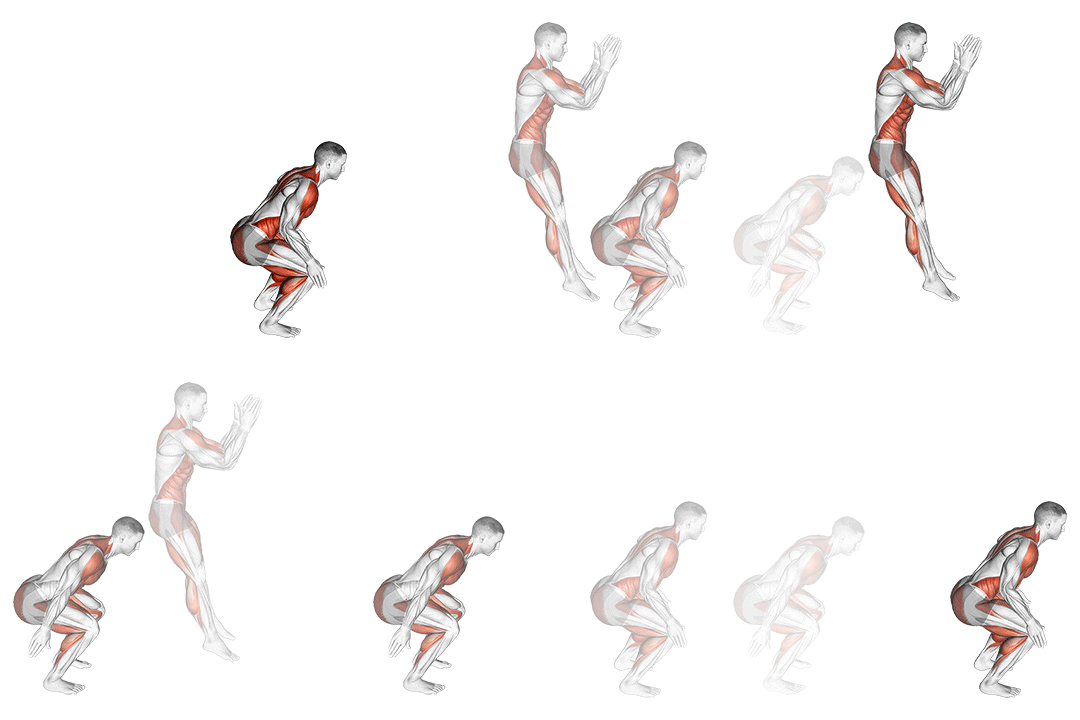
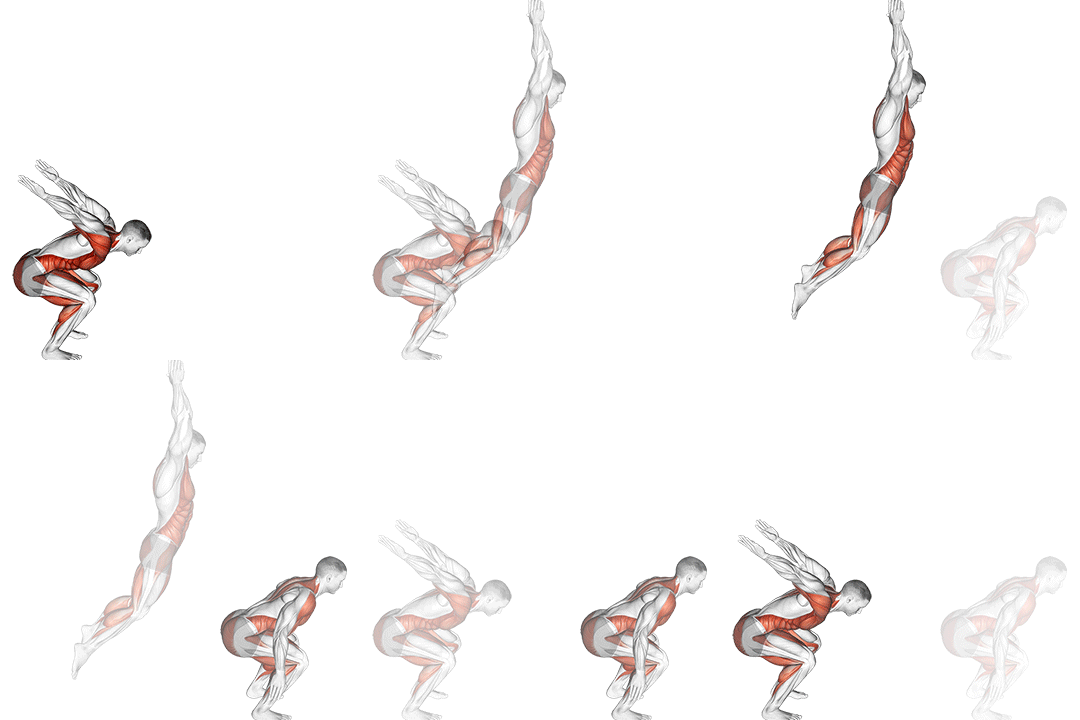
Bench Jump
Head-to-Head Comparison
| Attribute | All Fours Squad Stretch | Bench Jump |
|---|---|---|
| Target Muscle |
Quads
|
Quads
|
| Body Part |
Upper-legs
|
Upper-legs
|
| Equipment |
Body-weight
|
Body-weight
|
| Difficulty |
Beginner
|
Intermediate
|
| Movement Type |
Isolation
|
Compound
|
| Secondary Muscles |
2
|
3
|
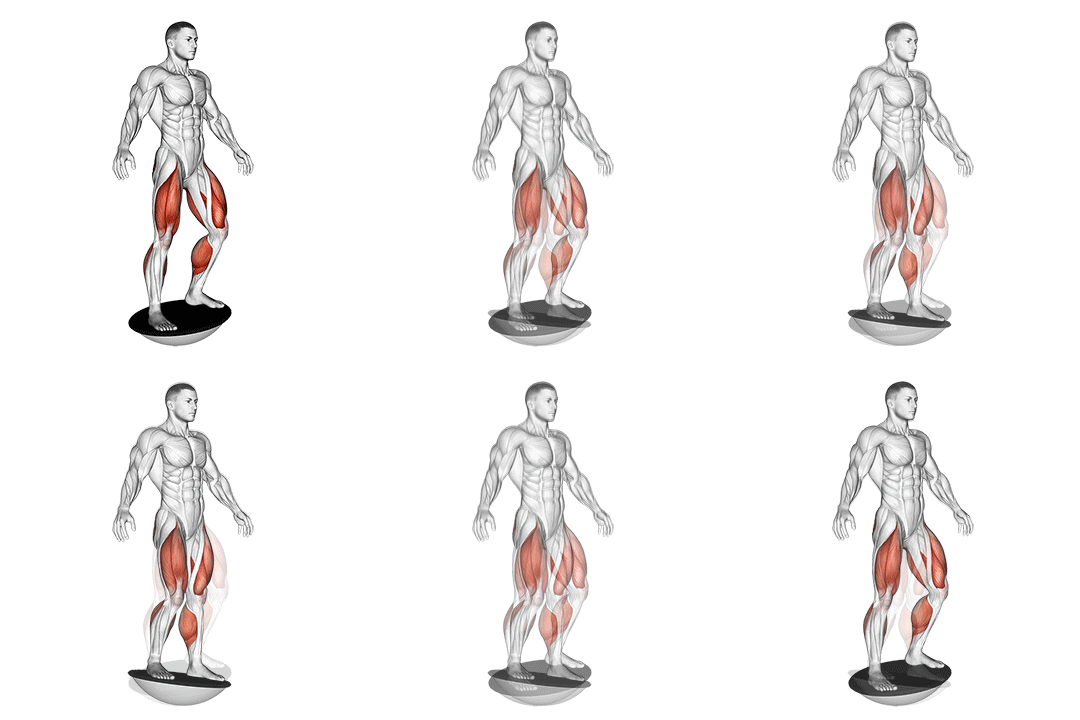
Secondary Muscles Activated
All Fours Squad Stretch
Bench Jump
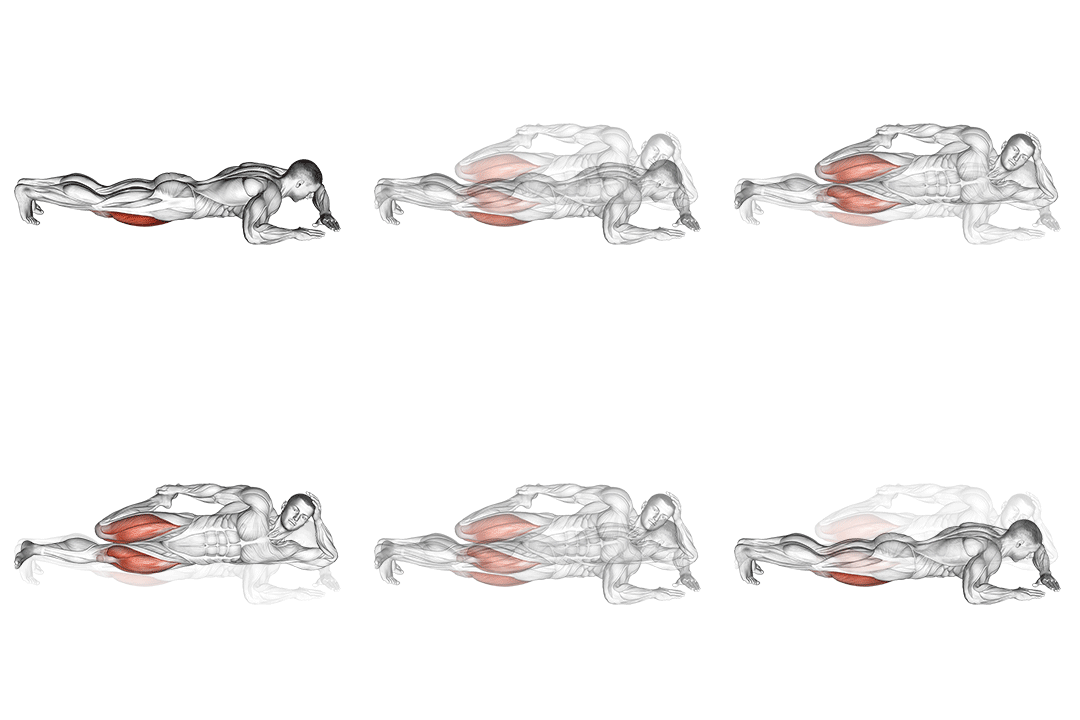
Visual Comparison
Overview
All Fours Squad Stretch vs Bench Jump — you want clear choices for quad work, so here’s a direct comparison. I’ll show how each movement loads the quads, which secondary muscles light up, the equipment and skill required, and practical rep ranges. You’ll get technique cues (joint angles, muscle emphasis), injury-risk notes, and scenarios that pick a winner for hypertrophy, strength, beginners, and home training. Read this and decide which to use in your program based on your goals and available gear.
Key Differences
- All Fours Squad Stretch is an isolation exercise, while Bench Jump is a compound movement.
- Difficulty levels differ: All Fours Squad Stretch is beginner, while Bench Jump is intermediate.
- Both exercises target the Quads using Body-weight. The main differences are in their movement patterns and muscle activation angles.
Pros & Cons
All Fours Squad Stretch
+ Pros
- Requires no equipment and works in small spaces
- Low-impact, beginner-friendly movement with easy technique cues
- High time-under-tension for quad isolation and muscle-length emphasis
- Useful for rehab or as a prehab quad mobility and strength drill
− Cons
- Limited ability to build high peak force or power
- Less recruitment of posterior chain (glutes/hamstrings) for athletic transfer
- May compress the anterior knee if performed with poor alignment or excessive knee torque
Bench Jump
+ Pros
- Develops power, peak force, and rate-of-force-development
- Strong posterior chain engagement (glutes, hamstrings) plus calves
- Easy to scale intensity via box height or plyometric sets
- Transfers well to athletic movements like sprinting and jumping
− Cons
- Higher injury risk from mislandings and impact forces
- Requires space and a secure elevated surface
- Technique demands are greater; poor form reduces benefit and raises injury chance
When Each Exercise Wins
The All Fours Squad Stretch keeps the quads at longer lengths with higher time-under-tension, which favors sarcomere stress and hypertrophic signaling. Use 8–15 controlled reps or 20–40 second holds with slow tempo to maximize mechanical tension on the quadriceps.
Bench Jumps develop peak force and improve rate-of-force-development that transfer to strength expression under dynamic loads. Program heavy plyometric sets (3–6 reps, 3–5 sets) or combine with heavy squats for contrast training to drive strength adaptations.
Beginners benefit from the lower impact and simpler motor pattern of the All Fours movement, where you can focus on alignment and quad activation without high landing forces. It’s easier to cue (neutral spine, knee tracking over toes) and scale safely.
No equipment and minimal space make the All Fours movement ideal at home. If you have a sturdy bench or box and a safe landing area, Bench Jumps are an option, but All Fours is broadly usable without setup.
Frequently Asked Questions
Can I do both All Fours Squad Stretch and Bench Jump in the same workout?
Yes. Pair them intentionally: use All Fours as an activation or hypertrophy phase (8–15 reps or 20–30s holds), then perform Bench Jumps for power (3–6 reps). Sequence slow-to-fast or low-impact-to-high-impact to manage fatigue and reduce injury risk.
Which exercise is better for beginners?
All Fours Squad Stretch is better for beginners because it’s low-velocity and easier to cue for proper knee alignment and quad activation. Start with body-weight control and progress tempo before moving to plyometrics like Bench Jumps.
How do the muscle activation patterns differ?
All Fours produces sustained quad activation at longer muscle lengths with low hip extension demand, favoring concentric and isometric control. Bench Jump uses an eccentric–concentric stretch-shortening cycle with higher glute, hamstring, and calf activation and greater rate-of-force-development.
Can Bench Jump replace All Fours Squad Stretch?
Not entirely. Bench Jumps can replace All Fours when your goal is power and multi-joint development, but they won’t match the sustained quad tension needed for targeted hypertrophy or low-impact rehab. Use Bench Jumps for explosive development and All Fours for isolation and control.
Expert Verdict
Choose the All Fours Squad Stretch when your goal is focused quad hypertrophy, rehab, or a low-impact session where you need controlled knee loading and high time-under-tension. Use holds of 20–40 seconds or 8–15 slow reps and prioritize knee tracking and neutral spine. Pick the Bench Jump when you want power, RFD, and athletic carryover — program 3–6 explosive reps, 3–5 sets, and progress box height from 30 to 60 cm while emphasizing soft, hip-led landings. Both have value: prefer the All Fours variation for isolated quad work and beginners, and Bench Jumps when you need explosive strength and multi-joint recruitment.
Also Compare
More comparisons with All Fours Squad Stretch
Compare More Exercises
Use our free comparison tool to analyze any two exercises head-to-head.
Compare Exercises