

Archer Push Up vs Resistance Band Seated Chest Press: Complete Comparison Guide
Archer Push Up vs Resistance Band Seated Chest Press — two chest-dominant compound moves with very different demands. If you want clear direction on which to use for strength, muscle growth, or at-home training, this guide has your back. You’ll get side-by-side analysis of primary and secondary muscle activation, equipment and setup, difficulty and progression strategies, plus specific technique cues (hand width, elbow angle ~45°, anchor height). By the end you’ll know which exercise to program for 3–6 rep strength blocks or 6–12 rep hypertrophy work and how to reduce injury risk.
Exercise Comparison
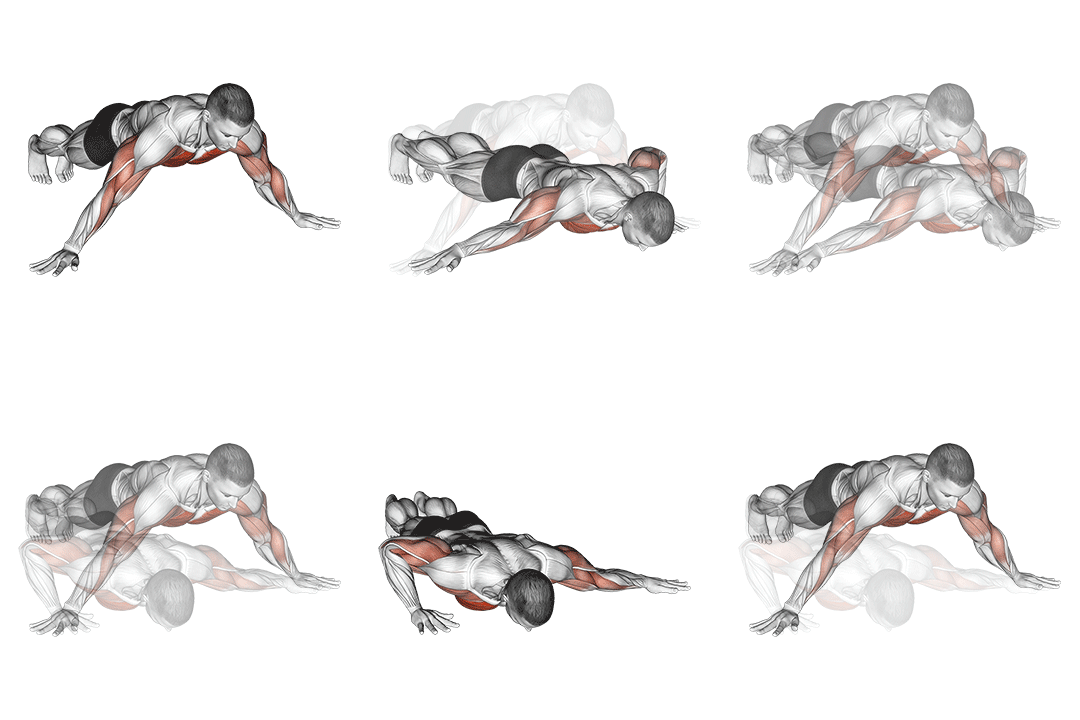
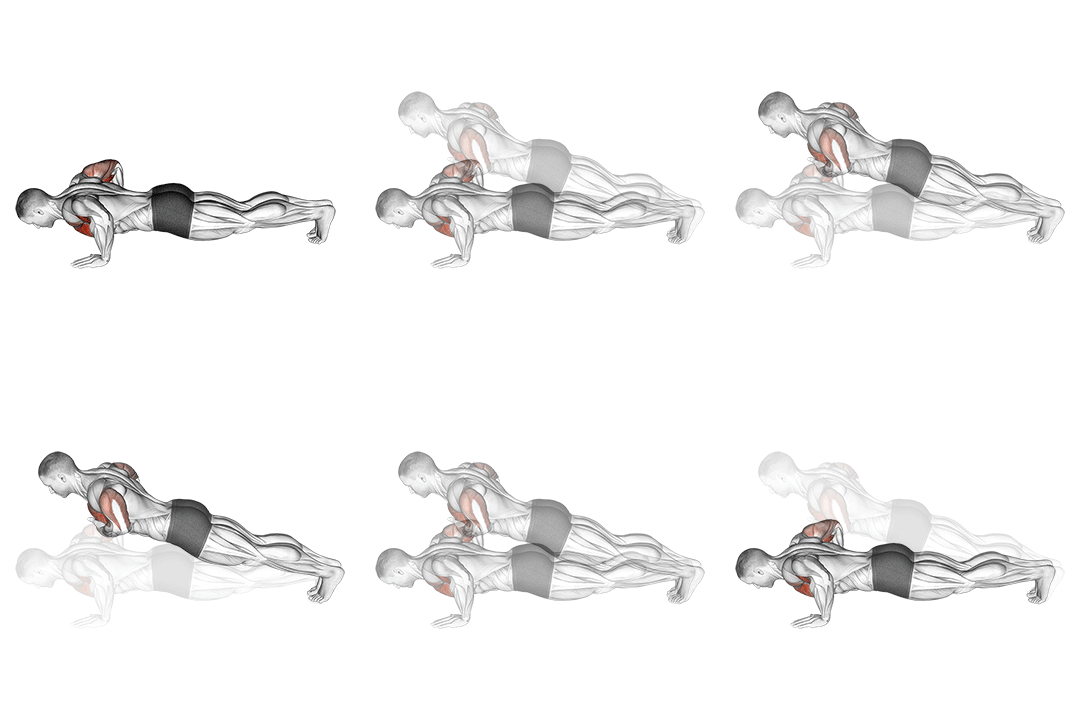
Archer Push Up
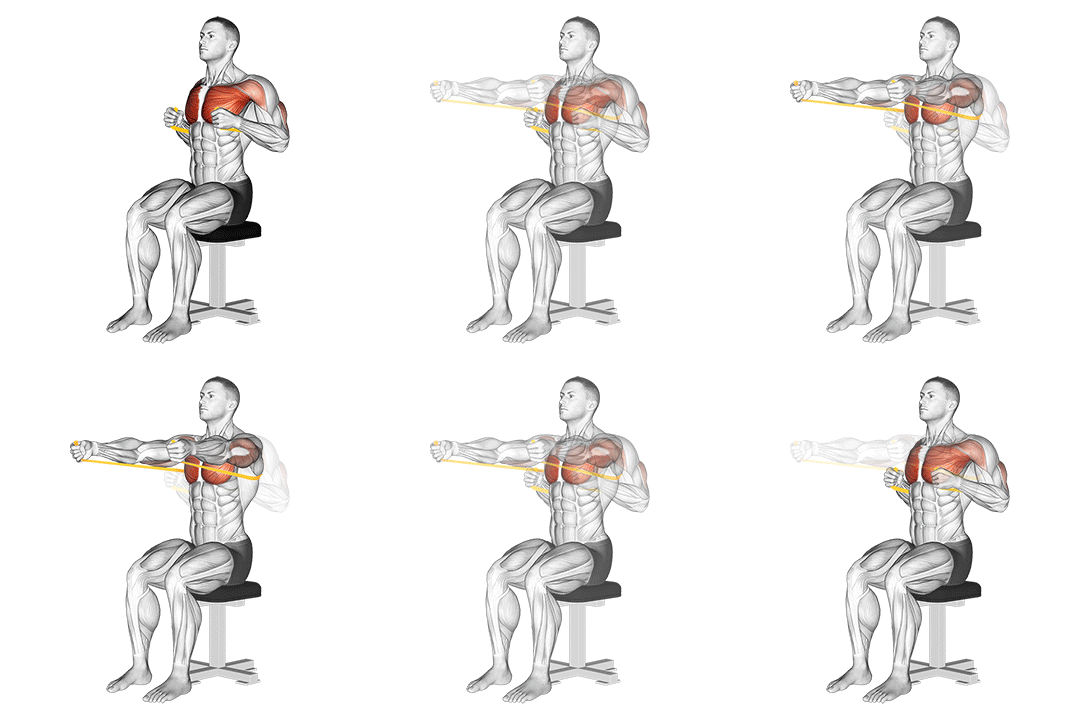
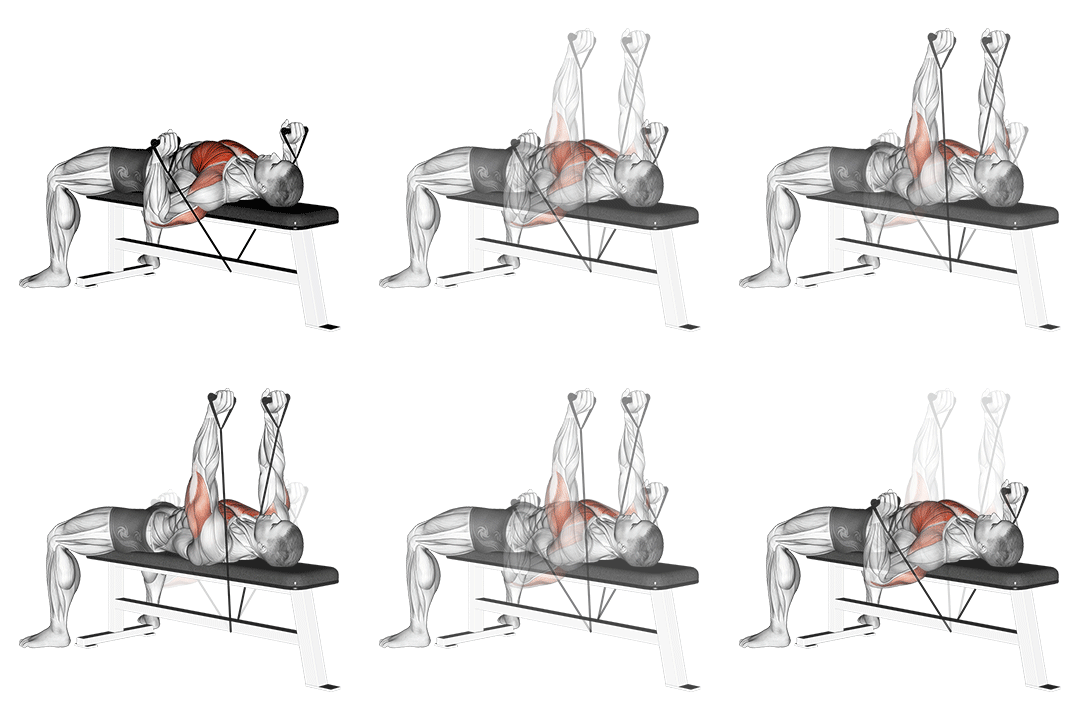
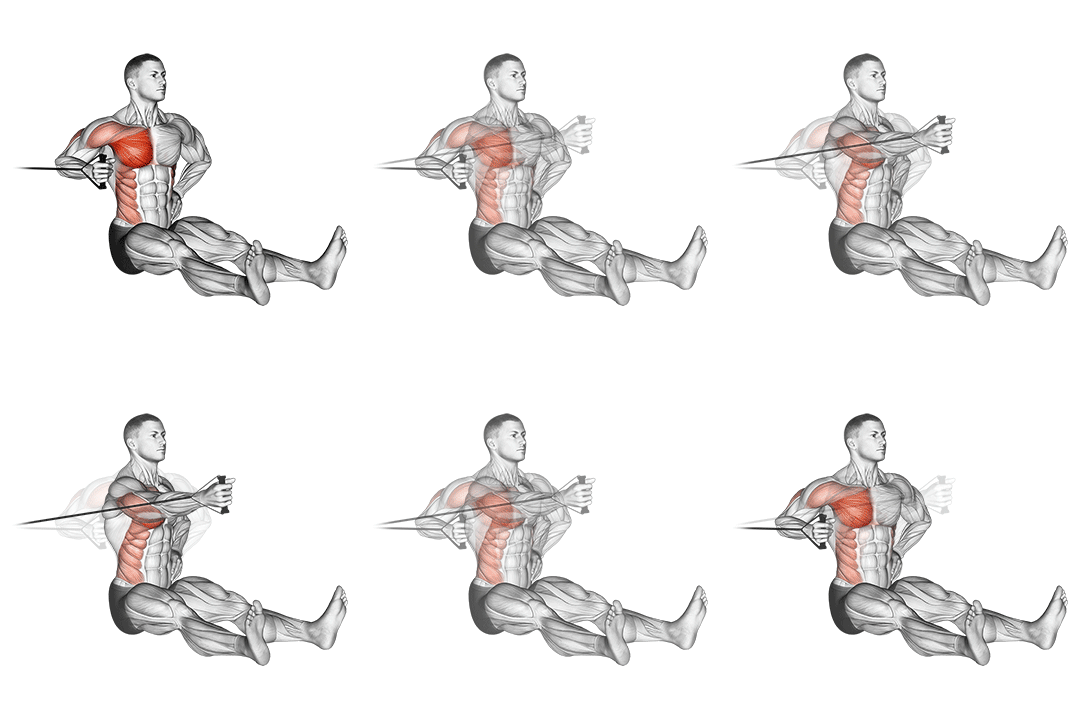
Resistance Band Seated Chest Press
Head-to-Head Comparison
| Attribute | Archer Push Up | Resistance Band Seated Chest Press |
|---|---|---|
| Target Muscle |
Pectorals
|
Pectorals
|
| Body Part |
Chest
|
Chest
|
| Equipment |
Body-weight
|
Band
|
| Difficulty |
Advanced
|
Intermediate
|
| Movement Type |
Compound
|
Compound
|
| Secondary Muscles |
3
|
2
|
Secondary Muscles Activated
Archer Push Up
Resistance Band Seated Chest Press
Visual Comparison
Overview
Archer Push Up vs Resistance Band Seated Chest Press — two chest-dominant compound moves with very different demands. If you want clear direction on which to use for strength, muscle growth, or at-home training, this guide has your back. You’ll get side-by-side analysis of primary and secondary muscle activation, equipment and setup, difficulty and progression strategies, plus specific technique cues (hand width, elbow angle ~45°, anchor height). By the end you’ll know which exercise to program for 3–6 rep strength blocks or 6–12 rep hypertrophy work and how to reduce injury risk.
Key Differences
- Equipment differs: Archer Push Up uses Body-weight, while Resistance Band Seated Chest Press requires Band.
- Difficulty levels differ: Archer Push Up is advanced, while Resistance Band Seated Chest Press is intermediate.
Pros & Cons
Archer Push Up
+ Pros
- High unilateral mechanical tension for strength and muscle growth
- Improves anti-rotation core stability and scapular control
- Requires no equipment — usable anywhere
- Direct transfer to advanced bodyweight skills like one-arm push-ups
− Cons
- Advanced skill level; steep learning curve
- Hard to incrementally load for progressive overload
- Higher shoulder stress if done with poor scapular control
Resistance Band Seated Chest Press
+ Pros
- Easily scalable by swapping band tension or anchor position
- Constant tension through range aids hypertrophy and tempo work
- Safer joint loading for beginners and rehab settings
- Minimal equipment and low setup time
− Cons
- Band resistance increases at end-range, altering natural strength curve
- Requires a sturdy anchor to be effective
- Less carryover to advanced single-arm pushing skills
When Each Exercise Wins
The band press lets you easily control volume and tension across sets (6–12 reps), maintain consistent tempo, and adjust load precisely. Constant tension and simple progressive overload make it easier to accumulate time under tension for muscle growth.
Archer push ups place large unilateral mechanical loads on the working pec and shoulder, creating the high-stress stimulus needed for maximal strength adaptations and progression toward one-arm push-ups when performed for low reps (3–6).
Bands allow gradual loading, simpler technique, and reduced demand on scapular stabilization. A beginner can safely train 8–15 reps and build base strength before attempting more technical bodyweight variants.
While archer push ups need no gear, bands provide more consistent, scalable resistance at home and work well in small spaces — one band covers a wide range of loads for different rep ranges and goals.
Frequently Asked Questions
Can I do both Archer Push Up and Resistance Band Seated Chest Press in the same workout?
Yes. Pair them intelligently: use archer push ups early for strength or skill work (3–6 heavy reps or controlled eccentrics), then follow with band presses for volume (8–12 reps) to accumulate hypertrophy without excessive joint stress.
Which exercise is better for beginners?
Resistance Band Seated Chest Press is better for beginners because you can precisely control load and focus on tempo and scapular stability. Start with light bands and progressive sets of 8–15 reps before attempting unilateral bodyweight progressions.
How do the muscle activation patterns differ?
Archer push ups create asymmetric, high mechanical tension on the working pectoralis with increased triceps and anterior deltoid drive and heavy anti-rotation core demand. The seated band press produces more symmetrical bilateral chest activation with near-constant tension and less rotational torque on the trunk.
Can Resistance Band Seated Chest Press replace Archer Push Up?
For hypertrophy and scalable strength work, the band press can effectively replace archer push ups in many programs. However, it won’t train the same unilateral stability and anti-rotation strength needed for advanced bodyweight pushing skills.
Expert Verdict
Choose the Archer Push Up when your priority is unilateral strength, core anti-rotation control, and progressing toward one-arm pushing skills. Program it for low-rep strength work (3–6 reps) or slow eccentrics to overload the working pec and train shoulder stability; maintain elbows ~45° and avoid excessive scapular retraction. Choose the Resistance Band Seated Chest Press when you need scalable, repeatable load for hypertrophy (6–12 reps) or accessible home training. Anchor the band at chest height, sit tall, and control both concentric and eccentric phases. If your goal is steady muscle growth and volume, favor the band press; if you want raw upper-body pushing strength and unilateral control, favor the archer.
Also Compare
More comparisons with Archer Push Up
More comparisons with Resistance Band Seated Chest Press

Compare More Exercises
Use our free comparison tool to analyze any two exercises head-to-head.
Compare Exercises