

Band Bench Press vs Resistance Band Seated Chest Press
Compare target muscles, equipment, difficulty, movement type, and secondary muscles for Band Bench Press and Resistance Band Seated Chest Press.
Get comparison link
Select the link and use your device's Copy command.
Comparison overview
AI-generatedExercise Comparison
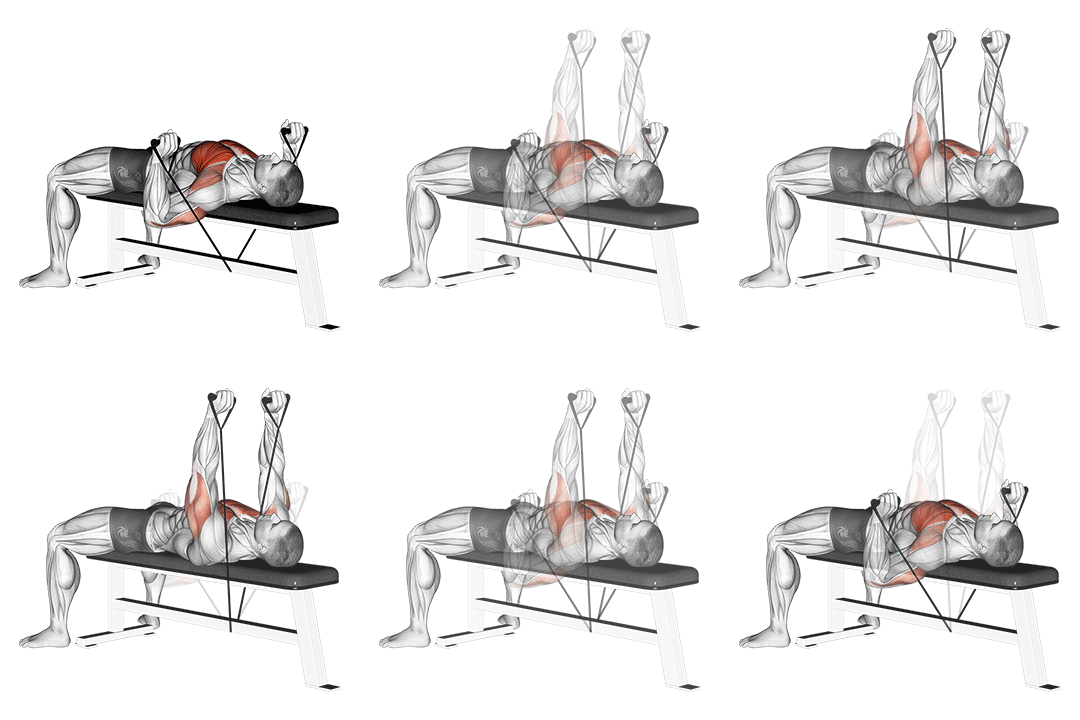
Band Bench Press
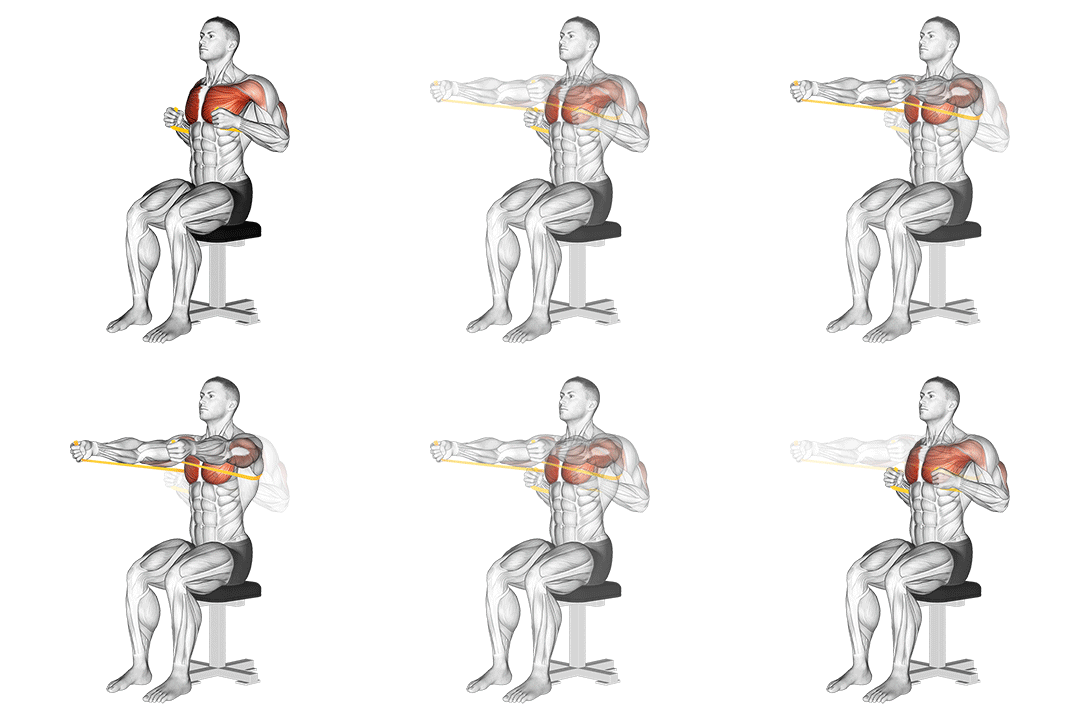
Resistance Band Seated Chest Press
Head-to-Head Comparison
Different values are marked. These are catalogue attributes, not performance scores.
Muscles used
Listed target and secondary muscles, shown on the body. Locations, not activation or strength scores.
- Target
- Secondary
- Not highlighted
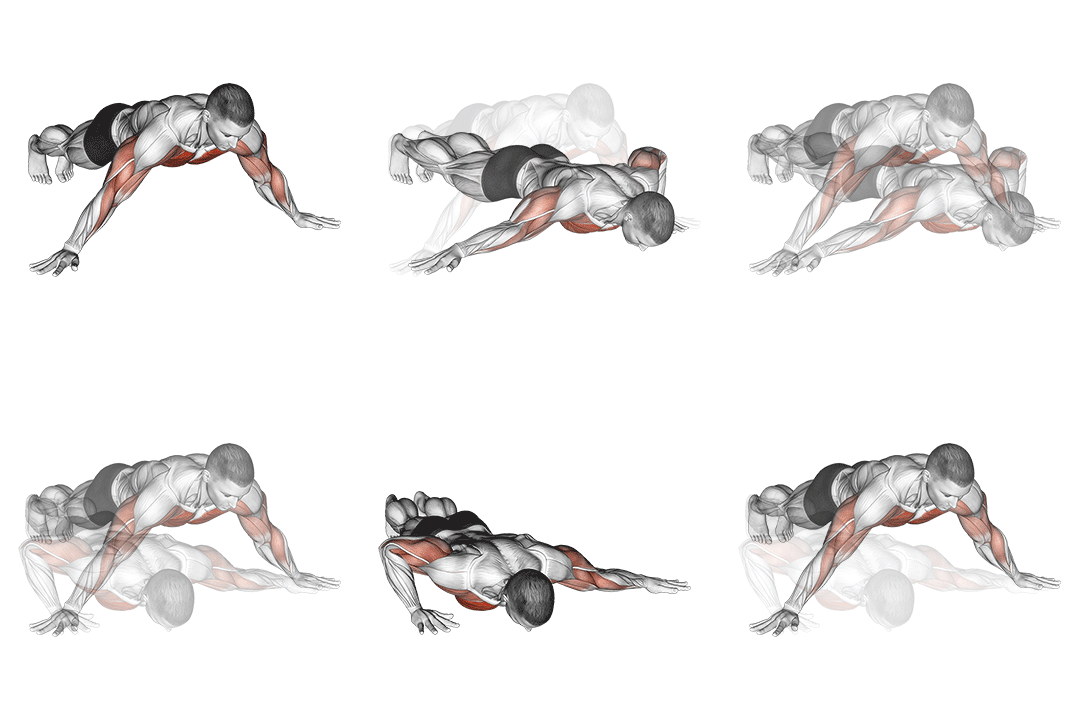
Band Bench Press
- Target
- Pectorals
- Secondary
- Triceps, Shoulders
Not shown on diagram: Shoulders. These labels do not identify a precise region on this map.
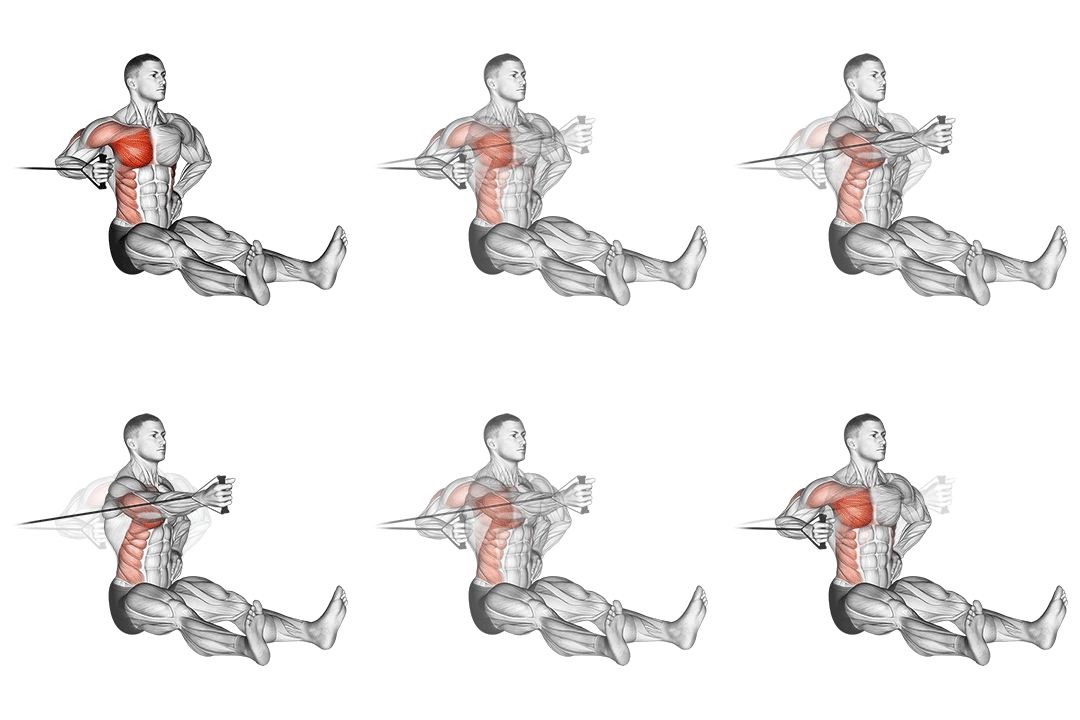
Resistance Band Seated Chest Press
- Target
- Pectorals
- Secondary
- Shoulders, Triceps
Not shown on diagram: Shoulders. These labels do not identify a precise region on this map.
Grey does not mean a muscle is unused. The diagrams show only the mapped catalogue labels.
| Attribute | Band Bench Press | Resistance Band Seated Chest Press |
|---|---|---|
| Target Muscle | Pectorals |
Pectorals |
| Body Part | Chest |
Chest |
| Equipment | Band |
Band |
| Difficulty | Intermediate |
Intermediate |
| Movement Type | Compound |
Compound |
| Secondary Muscles | Triceps, Shoulders |
Shoulders, Triceps |
Visual Comparison
An illustrative 1–10 profile derived from catalog difficulty, equipment, and listed-muscle fields—not measured performance or muscle activation.
Key Differences
- Both exercises target the Pectorals using Band. The catalogue does not establish which exercise is better for an individual goal.
Muscle comparison
Shared target muscles
Secondary muscle differences
Muscle involvement analysis
Equipment and setup
Band Bench Press: setup
Resistance Band Seated Chest Press: setup
Access and practicality
Learning and progression
Learning the movements
Progression considerations
Limitations and precautions
Pros & Cons
Band Bench Press
+ Pros
- Greater bottom-range stretch for sternal pectoral fibers, enhancing length-tension stimulus
- Ascending resistance curve improves lockout strength and triceps carryover
- Easier to implement hypertrophy techniques like pauses and negatives on a bench
- Better transfer to flat-bar pressing patterns because of similar body position
− Cons
- Requires a bench or sturdy elevated surface and secure band anchoring
- Higher shoulder stress with poor technique or excessive band tension
- More setup complexity and slightly higher learning curve
Resistance Band Seated Chest Press
+ Pros
- Highly accessible — can be done with a chair and door anchor or pole
- More stable upright position reduces spinal loading and is beginner-friendly
- Consistent mid-range tension makes it easy to target steady pectoral activation
- Portable and quick to set up for home or travel workouts
− Cons
- Less bottom-range stretch, which can reduce stretch-mediated hypertrophy stimulus
- Can place more emphasis on anterior deltoids if anchor is too high
- Lower ceiling for absolute horizontal pressing force compared to a bench setup
When Each Exercise Wins
The flat bench position allows a greater stretch at the bottom of the press, increasing length-tension stimulus in the sternal fibers. Use 6–12 reps with controlled 2–3s eccentrics and a band load that reaches near-failure on set 8–12 for best hypertrophy.
Variable resistance matches the natural strength curve and trains lockout power, which helps transfer to heavier horizontal pressing. Perform heavier sets of 3–6 reps with stronger bands and focus on explosive concentric intent.
The seated position reduces spinal and scapular complexity, making scapular retraction and elbow path easier to control. Start with 8–15 reps, light to moderate band tension, and focus on form before increasing resistance.
Requires minimal gear (chair and door anchor) and is quick to set up, making it ideal for small spaces and travel. It lets you maintain consistent volume without needing a bench or heavy anchoring system.
Frequently Asked Questions
Can I do both Band Bench Press and Resistance Band Seated Chest Press in the same workout?
Which exercise is better for beginners?
How do the muscle activation patterns differ?
Can Resistance Band Seated Chest Press replace Band Bench Press?
Comparison Summary
Exercise instructions
Steps from the exercise catalogue. Read the full sequence before starting.
Band Bench Press
- Lie flat on a bench with your feet flat on the ground and your back pressed against the bench.
- Grasp the band handles with an overhand grip, slightly wider than shoulder-width apart.
- Extend your arms fully, pushing the bands away from your chest.
Read remaining steps for Band Bench Press
- Slowly lower the bands back down to your chest, keeping your elbows at a 90-degree angle.
- Repeat for the desired number of repetitions.
Resistance Band Seated Chest Press
- Sit on a chair or bench with your back straight and feet flat on the ground.
- Hold the resistance band handles in each hand, with your palms facing down and elbows bent at a 90-degree angle.
- Extend your arms forward, pushing the resistance band away from your chest.
Read remaining steps for Resistance Band Seated Chest Press
- Pause for a moment at the end of the movement, then slowly return to the starting position.
- Repeat for the desired number of repetitions.
Also Compare
More comparisons with Band Bench Press

More comparisons with Resistance Band Seated Chest Press
Compare another pair
Choose two exercises to see their differences side by side.