Archer Push Up vs Resistance Band Seated Chest Press

Compare target muscles, equipment, difficulty, movement type, and secondary muscles for Archer Push Up and Resistance Band Seated Chest Press.

Change comparison Share

Get comparison link

Select the link and use your device's Copy command.

Comparison overview

AI-generated
Archer Push Up vs Resistance Band Seated Chest Press — two chest-dominant compound moves with very different demands. If you want clear direction on which to use for strength, muscle growth, or at-home training, this guide has your back. You’ll get side-by-side analysis of primary and secondary muscle activation, equipment and setup, difficulty and progression strategies, plus specific technique cues (hand width, elbow angle ~45°, anchor height). By the end you’ll know which exercise to program for 3–6 rep strength blocks or 6–12 rep hypertrophy work and how to reduce injury risk.

Exercise Comparison

Exercise A
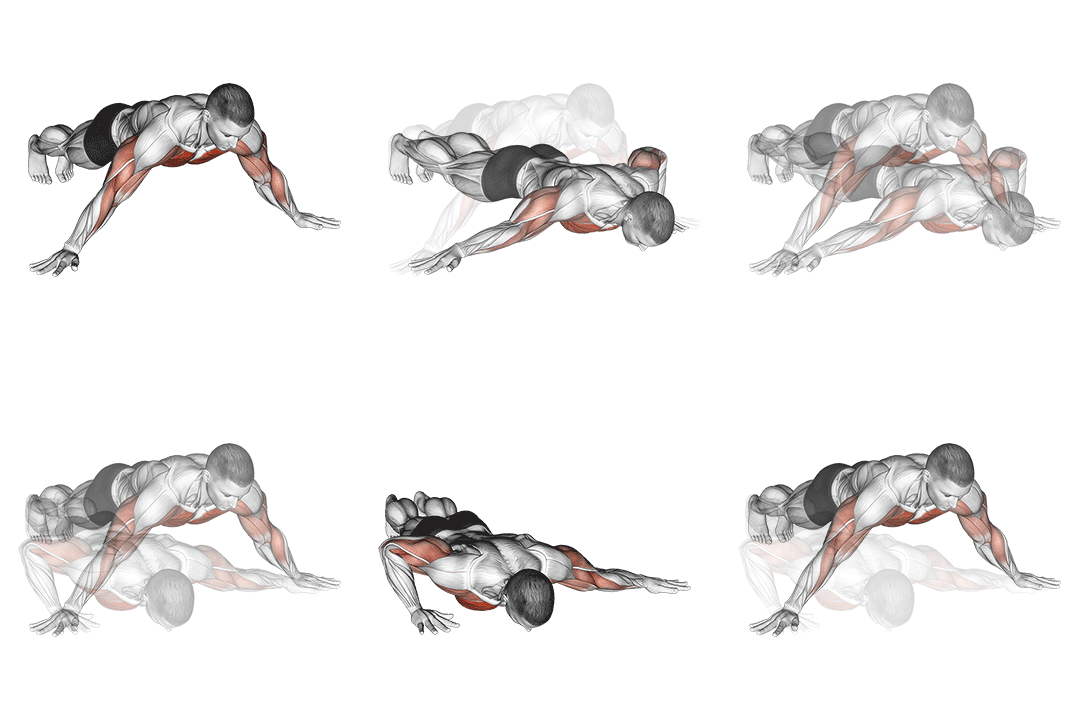
Archer Push Up demonstration

Archer Push Up

Target Pectorals
Equipment Body-weight
Body Part Chest
Difficulty Advanced
Movement Compound
Secondary Muscles
Triceps Shoulders Core
VS
Exercise B
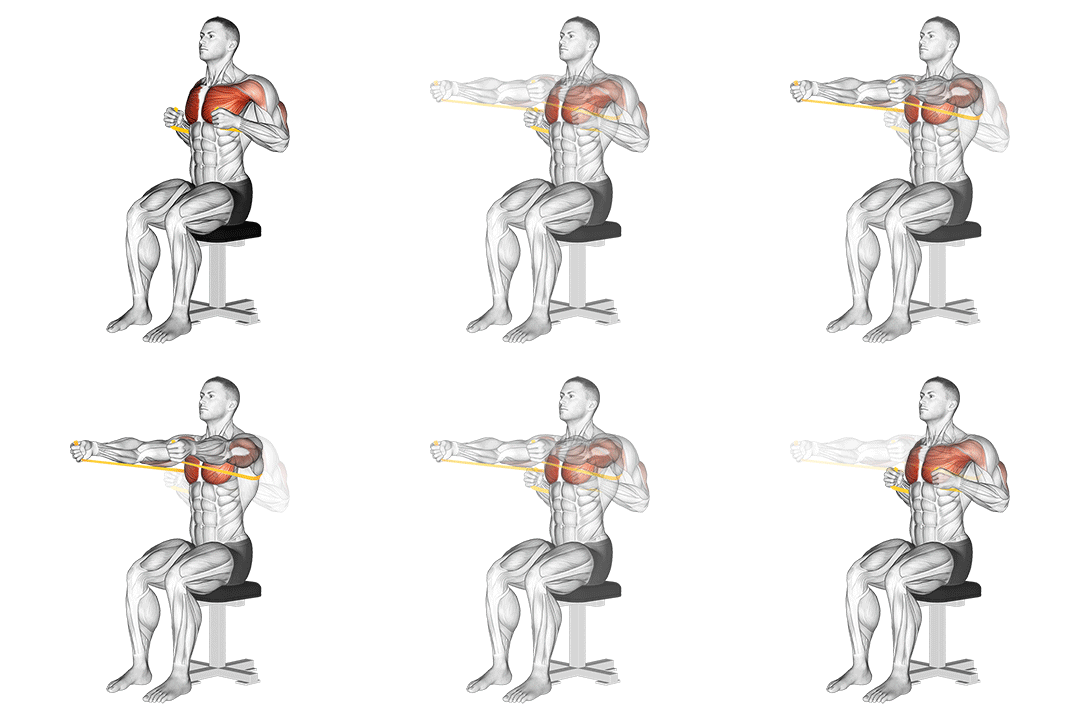
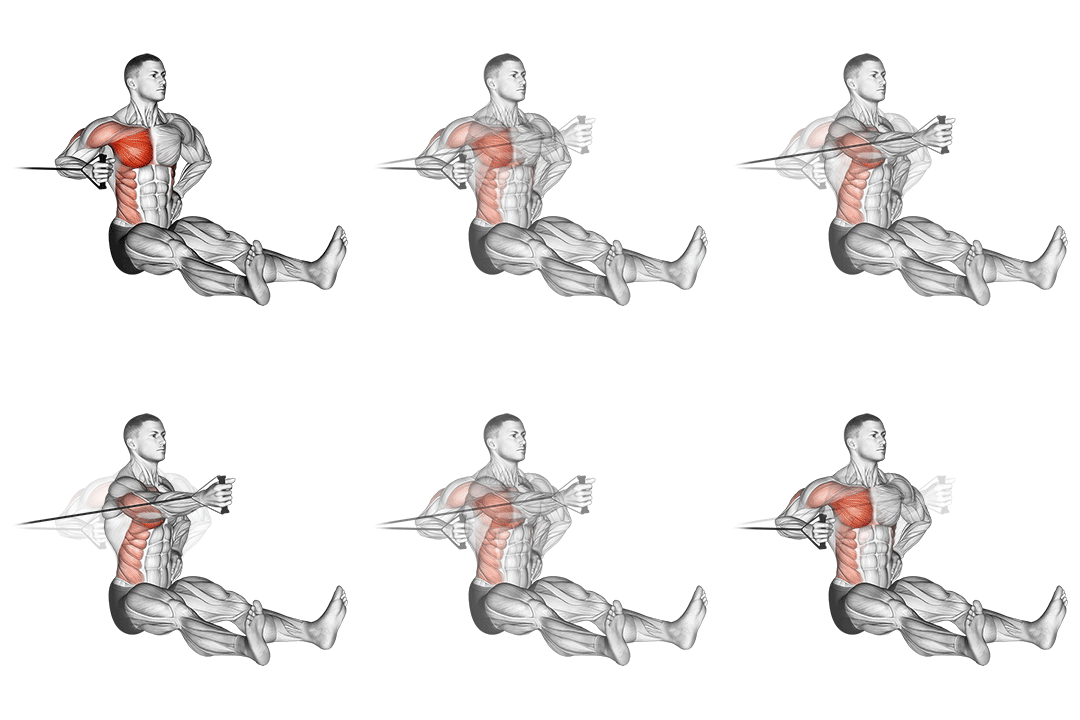
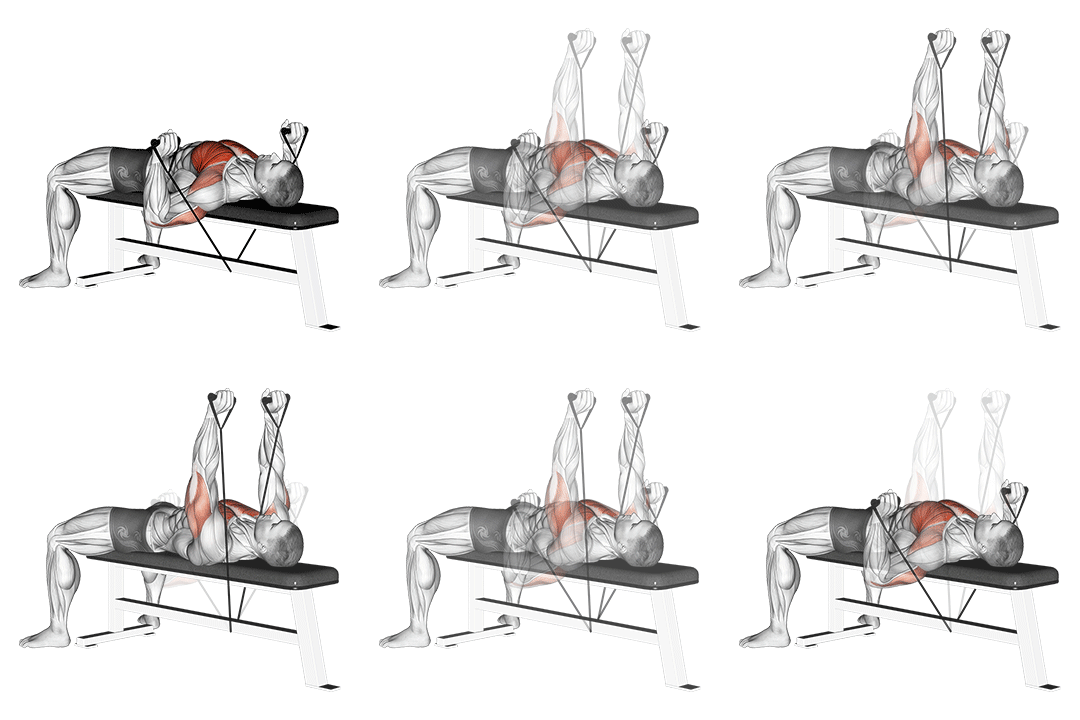
Resistance Band Seated Chest Press demonstration

Resistance Band Seated Chest Press

Target Pectorals
Equipment Band
Body Part Chest
Difficulty Intermediate
Movement Compound
Secondary Muscles
Shoulders Triceps

Head-to-Head Comparison

Different values are marked. These are catalogue attributes, not performance scores.

Muscles used

Listed target and secondary muscles, shown on the body. Locations, not activation or strength scores.

  • Target
  • Secondary
  • Not highlighted

Archer Push Up

Front
Archer Push Up: front muscle locationsSolid: listed target. Striped: listed secondary. Grey: not highlighted. Locations, not activation or strength scores. See the muscle names below.
Back
Archer Push Up: back muscle locationsSolid: listed target. Striped: listed secondary. Grey: not highlighted. Locations, not activation or strength scores. See the muscle names below.
Target
Pectorals
Secondary
Triceps, Shoulders, Core

Not shown on diagram: Shoulders, Core. These labels do not identify a precise region on this map.

Resistance Band Seated Chest Press

Front
Resistance Band Seated Chest Press: front muscle locationsSolid: listed target. Striped: listed secondary. Grey: not highlighted. Locations, not activation or strength scores. See the muscle names below.
Back
Resistance Band Seated Chest Press: back muscle locationsSolid: listed target. Striped: listed secondary. Grey: not highlighted. Locations, not activation or strength scores. See the muscle names below.
Target
Pectorals
Secondary
Shoulders, Triceps

Not shown on diagram: Shoulders. These labels do not identify a precise region on this map.

Grey does not mean a muscle is unused. The diagrams show only the mapped catalogue labels.

Attribute Archer Push Up Resistance Band Seated Chest Press
Target Muscle
Pectorals
Pectorals
Body Part
Chest
Chest
Equipment Different
Body-weight
Band
Difficulty Different
Advanced
Intermediate
Movement Type
Compound
Compound
Secondary Muscles Different
Triceps, Shoulders, Core
Shoulders, Triceps

Visual Comparison

An illustrative 1–10 profile derived from catalog difficulty, equipment, and listed-muscle fields—not measured performance or muscle activation.

Key Differences

  • Equipment differs: Archer Push Up uses Body-weight, while Resistance Band Seated Chest Press requires Band.
  • Difficulty levels differ: Archer Push Up is advanced, while Resistance Band Seated Chest Press is intermediate.

Muscle comparison

Shared target muscles

Both exercises load the pectoralis major through horizontal adduction and shoulder flexion, so they target the chest similarly in principle. The archer push up produces a stronger unilateral load on the working pec because your body weight shifts laterally; that increases mechanical tension on one side during the concentric and eccentric phases. The seated band press provides more symmetrical bilateral loading, easier to maintain consistent tempo and volume for hypertrophy (6–12 reps).

Secondary muscle differences

Archer push ups demand heavy triceps and anterior deltoid involvement on the working side plus significant anti-rotation engagement from the obliques and transverse abdominis. The seated band chest press still recruits shoulders and triceps, but to a lesser degree for core stabilization — the band emphasizes concentric chest drive and scapular stability rather than whole-body torque.

Muscle involvement analysis

During an archer push up the force vector is horizontal and medial, creating greater eccentric lengthening of the loaded pec and a larger moment arm at the shoulder; expect peak tension at roughly 30–60° of shoulder horizontal adduction. The seated band press generates near-constant tension across the range; peak force often occurs at end-range concentric lockout where band stretch increases linearly. Cue: keep elbows ~45° from torso to shift load to pecs and protect the cuff.

Equipment and setup

Archer Push Up: setup

Body-weight only, flat surface, optional markers for hand placement. You can regress with elevated hands or assistive bands and progress with deficit surfaces or weighted vests.

Resistance Band Seated Chest Press: setup

A resistance band with handles or loop, a sturdy anchor at roughly chest height (around nipple line), and a bench or chair to sit on. Multiple band tensions let you fine-tune load from light to heavy.

Access and practicality

Resistance Band Seated Chest Press — it’s easier to scale by swapping band tension, safer for beginners, and requires minimal baseline strength. The archer push up is equipment-free but demands high unilateral strength and shoulder control, limiting accessibility for many.

Learning and progression

Learning the movements

Archer Push Up has a steep learning curve: you need scapular control, unilateral strength, and shoulder stability. Master standard push-ups, then staggered or eccentrics before attempting full archer reps. The band seated press is straightforward: set anchor, sit tall, press with controlled tempo.

Progression considerations

Resistance bands offer precise incremental progression (add bands, change anchors, adjust handles) and are excellent for accumulating hypertrophy volume. Archer push ups progress toward one-arm push-ups and provide high mechanical tension for strength but offer fewer small, incremental load steps.

Limitations and precautions

Archer Push Up carries higher shoulder and pec strain risk if you lack scapular control or use excessive ROM; poor technique can overload the anterior shoulder. Band presses reduce compressive joint load but can stress the pec if you overstretch the shoulder at end-range; always control eccentric and avoid sudden band snap.

Pros & Cons

Archer Push Up

+ Pros

  • High unilateral mechanical tension for strength and muscle growth
  • Improves anti-rotation core stability and scapular control
  • Requires no equipment — usable anywhere
  • Direct transfer to advanced bodyweight skills like one-arm push-ups

Cons

  • Advanced skill level; steep learning curve
  • Hard to incrementally load for progressive overload
  • Higher shoulder stress if done with poor scapular control

Resistance Band Seated Chest Press

+ Pros

  • Easily scalable by swapping band tension or anchor position
  • Constant tension through range aids hypertrophy and tempo work
  • Safer joint loading for beginners and rehab settings
  • Minimal equipment and low setup time

Cons

  • Band resistance increases at end-range, altering natural strength curve
  • Requires a sturdy anchor to be effective
  • Less carryover to advanced single-arm pushing skills

When Each Exercise Wins

1
For muscle hypertrophy: Resistance Band Seated Chest Press

The band press lets you easily control volume and tension across sets (6–12 reps), maintain consistent tempo, and adjust load precisely. Constant tension and simple progressive overload make it easier to accumulate time under tension for muscle growth.

2
For strength gains: Archer Push Up

Archer push ups place large unilateral mechanical loads on the working pec and shoulder, creating the high-stress stimulus needed for maximal strength adaptations and progression toward one-arm push-ups when performed for low reps (3–6).

3
For beginners: Resistance Band Seated Chest Press

Bands allow gradual loading, simpler technique, and reduced demand on scapular stabilization. A beginner can safely train 8–15 reps and build base strength before attempting more technical bodyweight variants.

4
For home workouts: Resistance Band Seated Chest Press

While archer push ups need no gear, bands provide more consistent, scalable resistance at home and work well in small spaces — one band covers a wide range of loads for different rep ranges and goals.

Frequently Asked Questions

Can I do both Archer Push Up and Resistance Band Seated Chest Press in the same workout?

Yes. Pair them intelligently: use archer push ups early for strength or skill work (3–6 heavy reps or controlled eccentrics), then follow with band presses for volume (8–12 reps) to accumulate hypertrophy without excessive joint stress.

Which exercise is better for beginners?

Resistance Band Seated Chest Press is better for beginners because you can precisely control load and focus on tempo and scapular stability. Start with light bands and progressive sets of 8–15 reps before attempting unilateral bodyweight progressions.

How do the muscle activation patterns differ?

Archer push ups create asymmetric, high mechanical tension on the working pectoralis with increased triceps and anterior deltoid drive and heavy anti-rotation core demand. The seated band press produces more symmetrical bilateral chest activation with near-constant tension and less rotational torque on the trunk.

Can Resistance Band Seated Chest Press replace Archer Push Up?

For hypertrophy and scalable strength work, the band press can effectively replace archer push ups in many programs. However, it won’t train the same unilateral stability and anti-rotation strength needed for advanced bodyweight pushing skills.

Comparison Summary

Choose the Archer Push Up when your priority is unilateral strength, core anti-rotation control, and progressing toward one-arm pushing skills. Program it for low-rep strength work (3–6 reps) or slow eccentrics to overload the working pec and train shoulder stability; maintain elbows ~45° and avoid excessive scapular retraction. Choose the Resistance Band Seated Chest Press when you need scalable, repeatable load for hypertrophy (6–12 reps) or accessible home training. Anchor the band at chest height, sit tall, and control both concentric and eccentric phases. If your goal is steady muscle growth and volume, favor the band press; if you want raw upper-body pushing strength and unilateral control, favor the archer.

Exercise instructions

Steps from the exercise catalogue. Read the full sequence before starting.

Archer Push Up

  1. Start in a push-up position with your hands slightly wider than shoulder-width apart.
  2. Extend one arm straight out to the side, parallel to the ground.
  3. Lower your body by bending your elbows, keeping your back straight and core engaged.
Read remaining steps for Archer Push Up
  1. Push back up to the starting position.
  2. Repeat on the other side, extending the opposite arm out to the side.
  3. Continue alternating sides for the desired number of repetitions.

Resistance Band Seated Chest Press

  1. Sit on a chair or bench with your back straight and feet flat on the ground.
  2. Hold the resistance band handles in each hand, with your palms facing down and elbows bent at a 90-degree angle.
  3. Extend your arms forward, pushing the resistance band away from your chest.
Read remaining steps for Resistance Band Seated Chest Press
  1. Pause for a moment at the end of the movement, then slowly return to the starting position.
  2. Repeat for the desired number of repetitions.

Also Compare

Compare another pair

Choose two exercises to see their differences side by side.

Compare Exercises