

Elbow Circles vs Left Hook. Boxing: Complete Comparison Guide
Elbow Circles vs Left Hook. Boxing — if you want stronger, more resilient shoulders you need to know how these two moves differ. I’ll walk you through which muscles each hits, how the movement patterns change force direction and joint loading, what gear you need, and when to program each drill for mobility, power, or hypertrophy. You’ll get clear technique cues, specific rep ranges (e.g., 20–40 reps or 3–5 sets of punches), and biomechanical reasons for choosing one over the other so you can pick the right movement for your goal.
Exercise Comparison
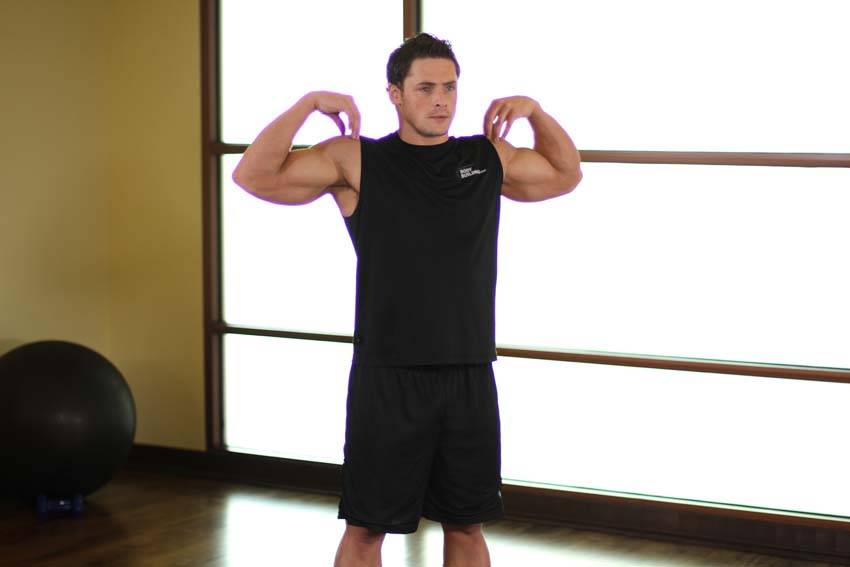
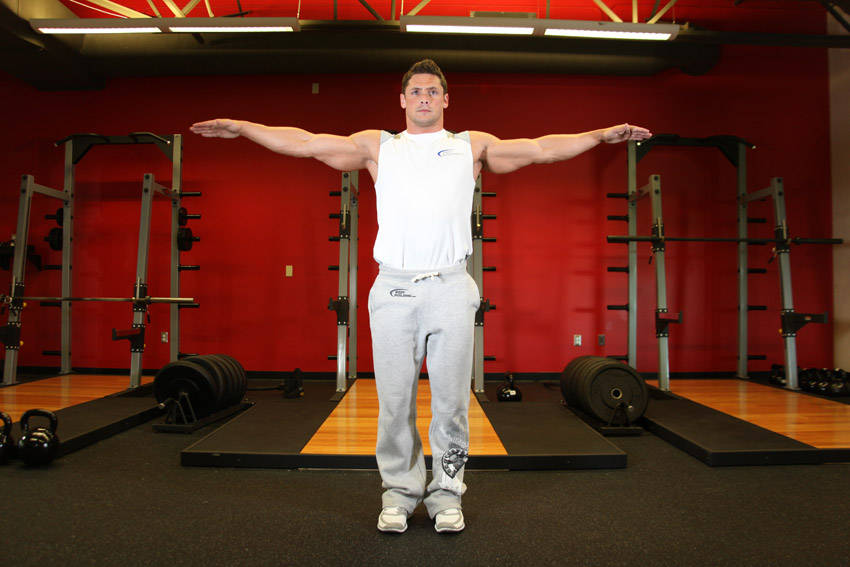
Elbow Circles
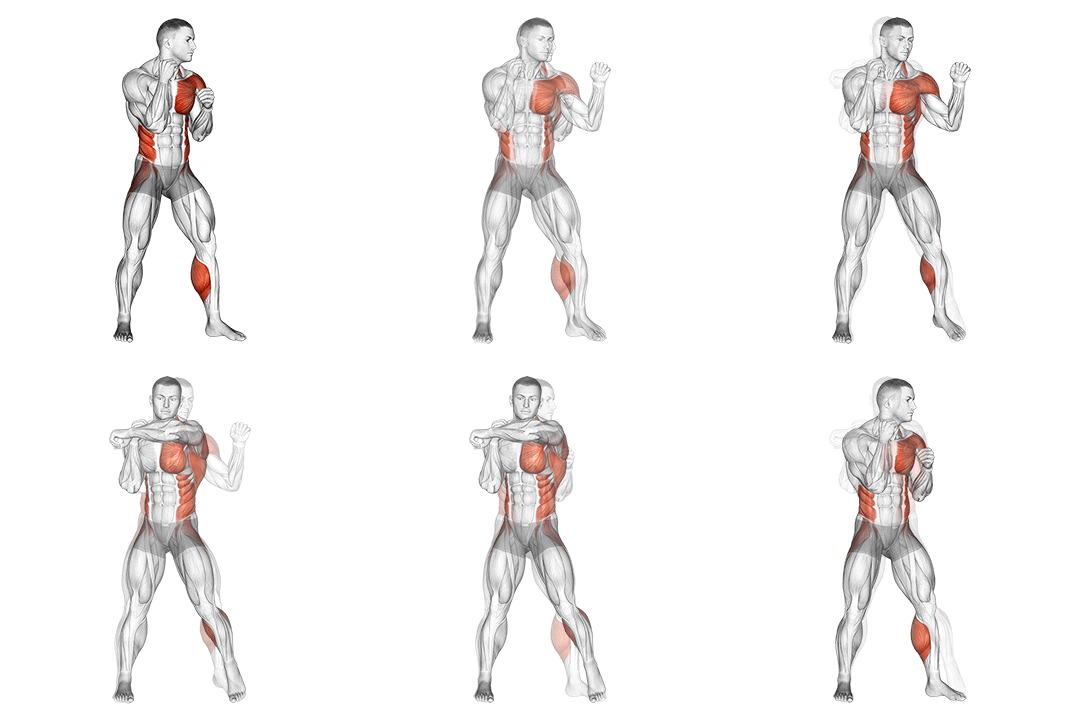
Left Hook. Boxing
Head-to-Head Comparison
| Attribute | Elbow Circles | Left Hook. Boxing |
|---|---|---|
| Target Muscle |
Delts
|
Delts
|
| Body Part |
Shoulders
|
Shoulders
|
| Equipment |
Body-weight
|
Body-weight
|
| Difficulty |
Beginner
|
Intermediate
|
| Movement Type |
Isolation
|
Compound
|
| Secondary Muscles |
1
|
3
|
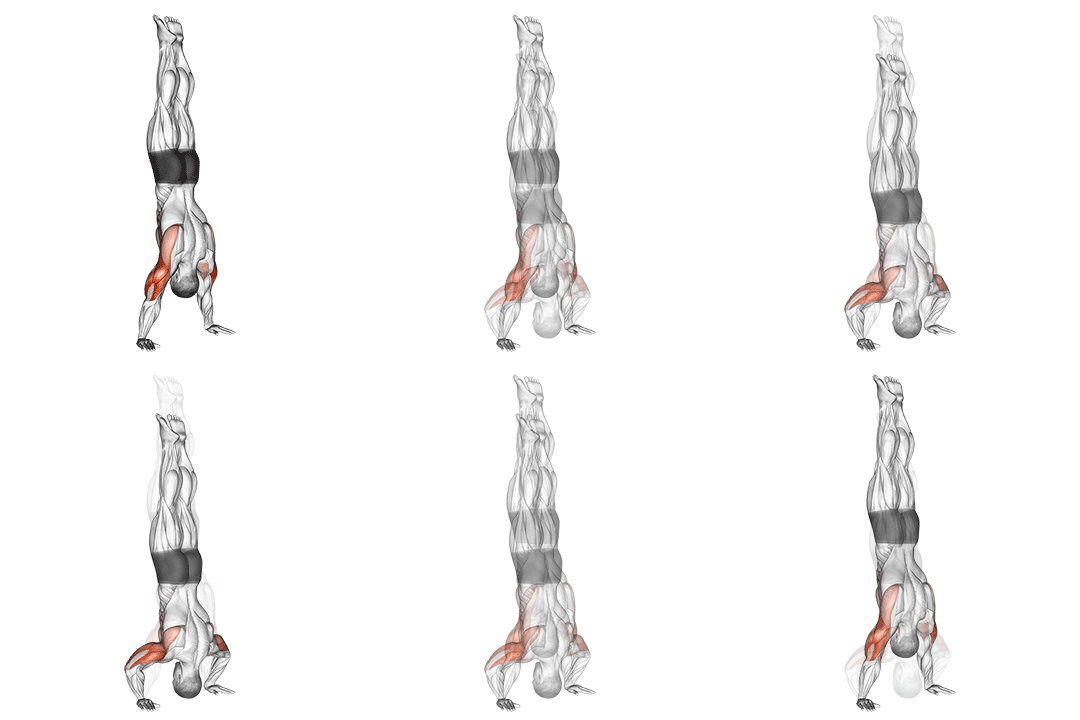
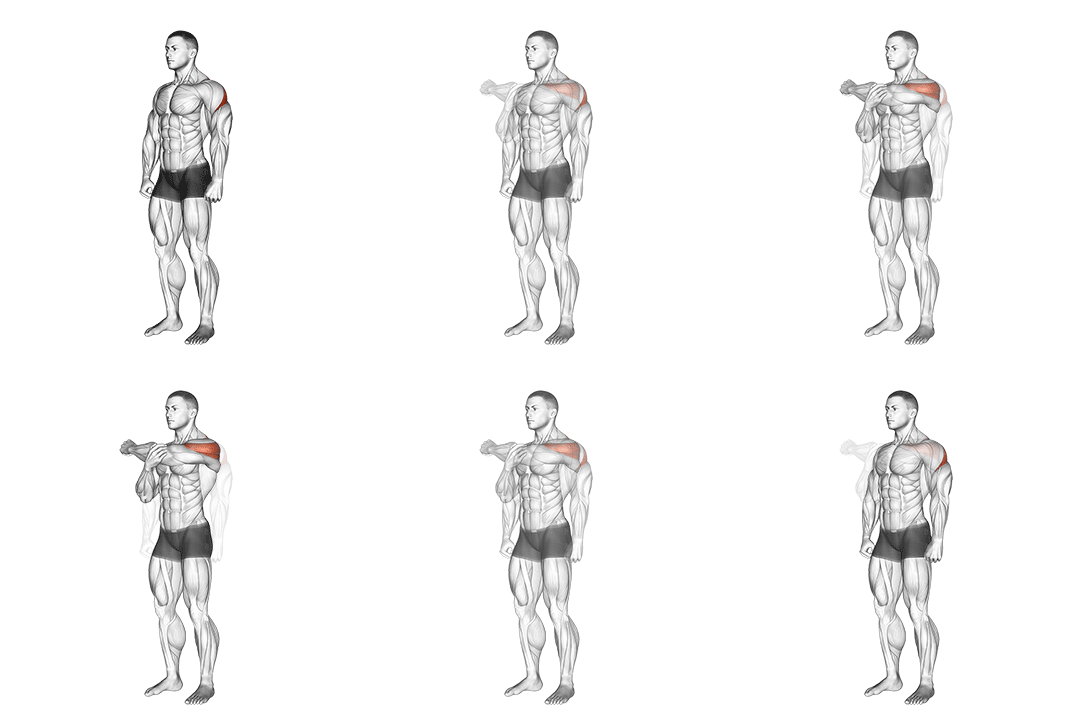
Secondary Muscles Activated
Elbow Circles
Left Hook. Boxing
Visual Comparison
Overview
Elbow Circles vs Left Hook. Boxing — if you want stronger, more resilient shoulders you need to know how these two moves differ. I’ll walk you through which muscles each hits, how the movement patterns change force direction and joint loading, what gear you need, and when to program each drill for mobility, power, or hypertrophy. You’ll get clear technique cues, specific rep ranges (e.g., 20–40 reps or 3–5 sets of punches), and biomechanical reasons for choosing one over the other so you can pick the right movement for your goal.
Key Differences
- Elbow Circles is an isolation exercise, while Left Hook. Boxing is a compound movement.
- Difficulty levels differ: Elbow Circles is beginner, while Left Hook. Boxing is intermediate.
- Both exercises target the Delts using Body-weight. The main differences are in their movement patterns and muscle activation angles.
Pros & Cons
Elbow Circles
+ Pros
- No equipment; easy to do anywhere
- Excellent for shoulder warm-up and mobility
- Low joint stress when performed with scapular control
- Isolates delts and upper traps for focused prep work
− Cons
- Limited progressive overload for muscle growth
- Minimal carryover to power or functional tasks
- Can reinforce poor motor patterns if scapular motion is neglected
Left Hook. Boxing
+ Pros
- Builds rotational power and functional shoulder strength
- Recruits multiple muscle groups (delts, biceps, triceps, forearms, core)
- Easily scaled with heavy bag, bands, or speed work
- Improves force transfer and rate of force development
− Cons
- Higher technical demand and learning curve
- Greater injury risk with poor hip-shoulder sequencing
- Requires space and ideally equipment for safe progression
When Each Exercise Wins
Left Hook. Boxing produces higher peak deltoid activation and can be loaded progressively with bags or bands, allowing targeted hypertrophy work using 6–12 quality reps per set or controlled high-rep rounds for metabolic stress.
The punch pattern trains force production and rate of force development through hip drive and shoulder snap, and can be overloaded (heavy bag, resisted punches) to build real-world shoulder strength and power.
Elbow Circles have a shallow learning curve, low injury risk, and teach shoulder joint control and scapular stability — ideal for foundational mobility and prehab before introducing complex punches.
You can do Elbow Circles anywhere without equipment or space, making them perfect for quick shoulder activation, mobility circuits, or rehab-focused home sessions.
Frequently Asked Questions
Can I do both Elbow Circles and Left Hook. Boxing in the same workout?
Yes. Start with Elbow Circles as a 5-minute shoulder activation and mobility warm-up, then add Left Hook. Boxing drills to train power or conditioning. This sequence reduces injury risk and primes the delts for higher-velocity punches.
Which exercise is better for beginners?
Elbow Circles are better for beginners because they teach joint control and scapular stability with minimal load. Master the mobility and basic sequencing first, then introduce Left Hook. Boxing once hip rotation and trunk stability are reliable.
How do the muscle activation patterns differ?
Elbow Circles produce steady, low-velocity deltoid activation with emphasis on time-under-tension and scapular stabilization. Left Hook. Boxing uses a rapid stretch-shortening cycle and higher peak deltoid activation, combined with elbow flexors/extensors and core torque for force transfer.
Can Left Hook. Boxing replace Elbow Circles?
Not completely. Left Hook. Boxing can develop power and hypertrophy, but it doesn’t offer the same controlled mobility and scapular activation that Elbow Circles provide. Keep circles as a warm-up or corrective drill even if you train hooks heavily.
Expert Verdict
Use Elbow Circles as your go-to warm-up, mobility drill, or rehab exercise: 2–3 sets of 20–40 reps per direction, or 30–60 seconds, focusing on smooth scapular motion and a 30–60° arc. Choose Left Hook. Boxing when you want to develop power, higher peak deltoid activation, and functional shoulder strength — program 3–5 sets of 6–12 resisted punches for strength or 3–5 rounds of 30–60 seconds for conditioning. Be decisive: pick Elbow Circles for control and accessibility, and Left Hook. Boxing for loaded, rotational work — but only after you’ve nailed hip-shoulder sequencing.
Also Compare
More comparisons with Elbow Circles
Compare More Exercises
Use our free comparison tool to analyze any two exercises head-to-head.
Compare Exercises