

Assisted Lying Gluteus And Piriformis Stretch vs Tire Flip: Complete Comparison Guide
Assisted Lying Gluteus And Piriformis Stretch vs Tire Flip — you might think these two moves have nothing in common, but both affect your glutes and upper legs in very different ways. I’ll walk you through how each targets the gluteus, hamstrings, and surrounding tissues, break down equipment needs, compare difficulty and injury risk, and give clear, goal-based recommendations. Read on and you’ll get technique cues, biomechanics explanations (length-tension and force vectors), and rep ranges so you can pick the right option for mobility, recovery, or strength work.
Exercise Comparison
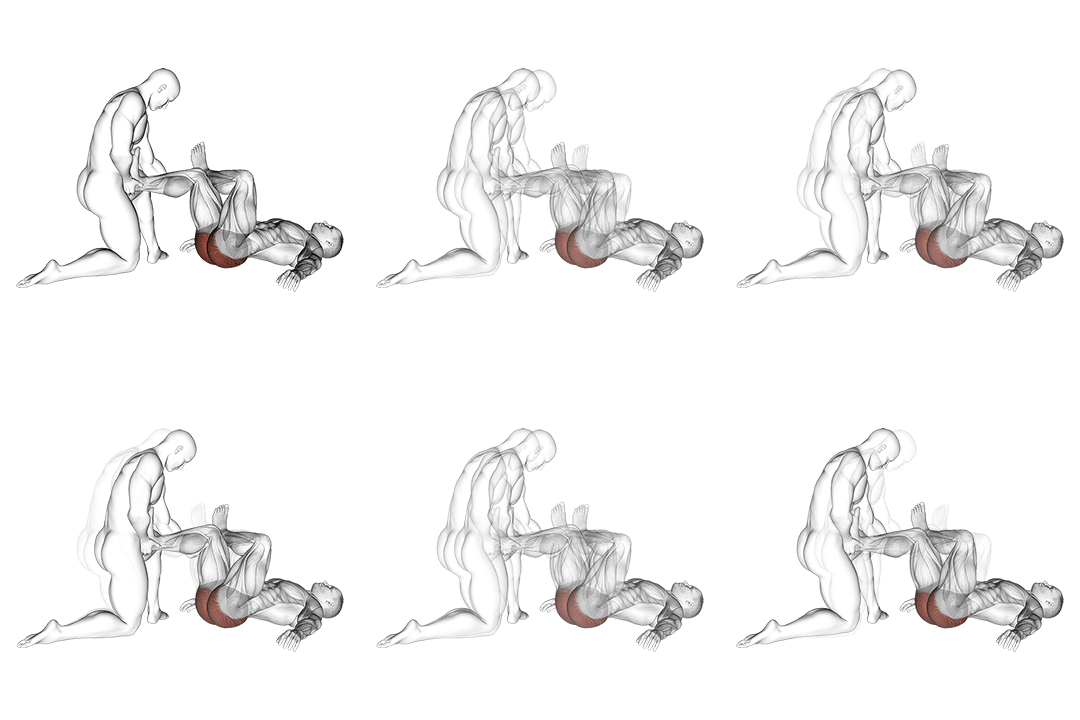
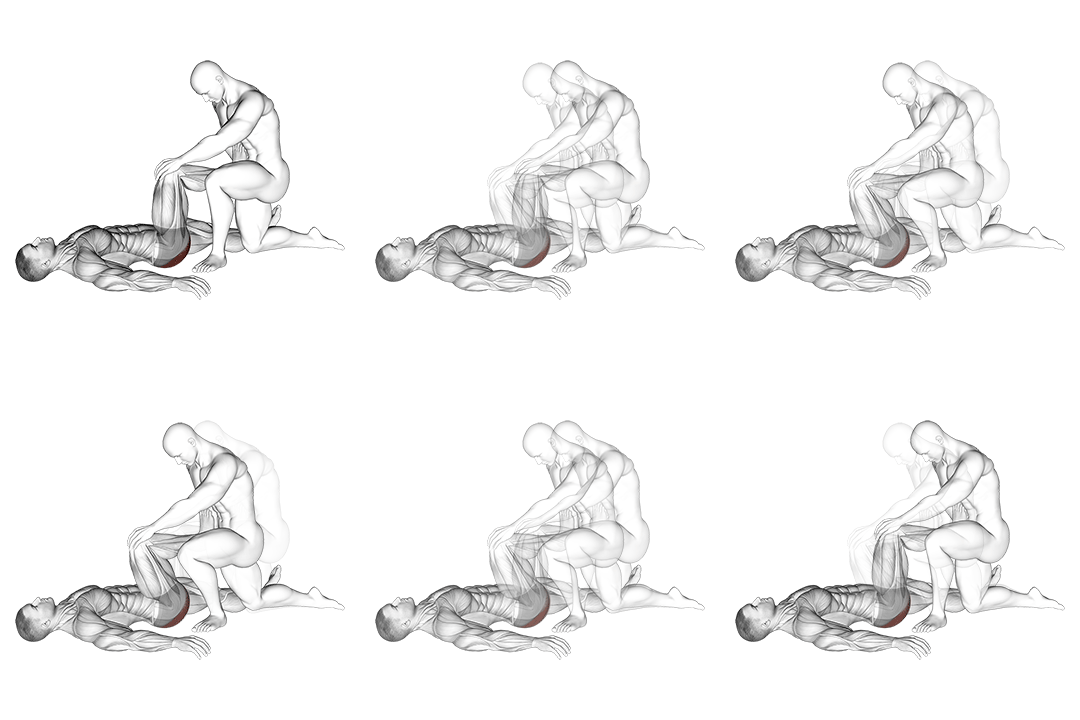
Assisted Lying Gluteus And Piriformis Stretch
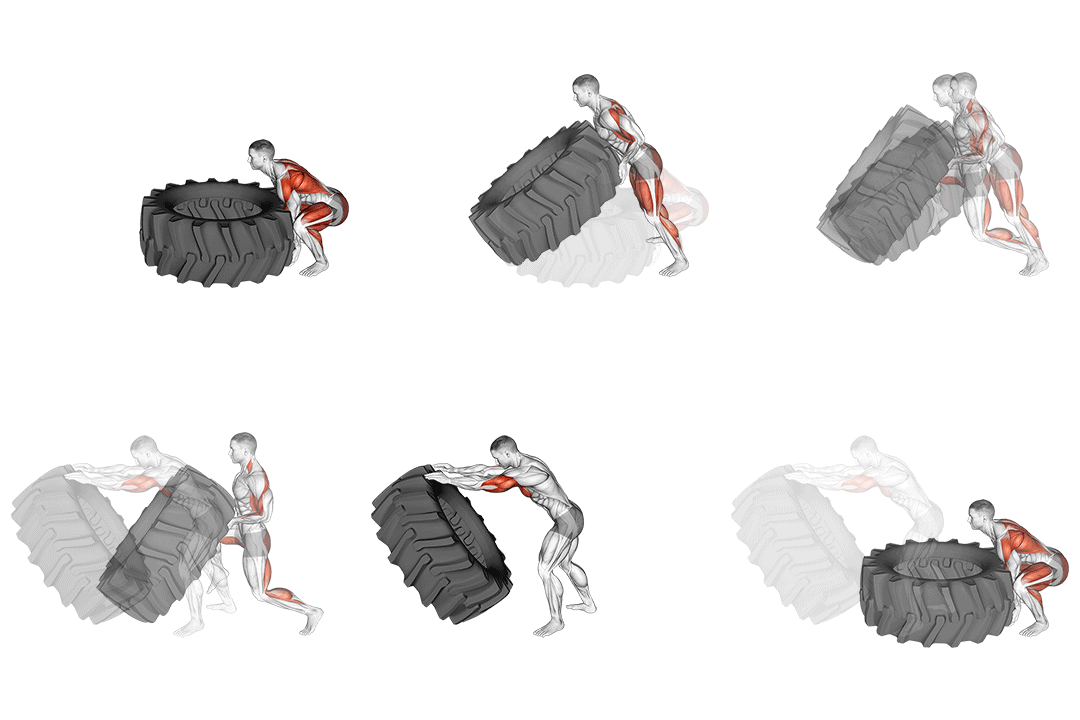
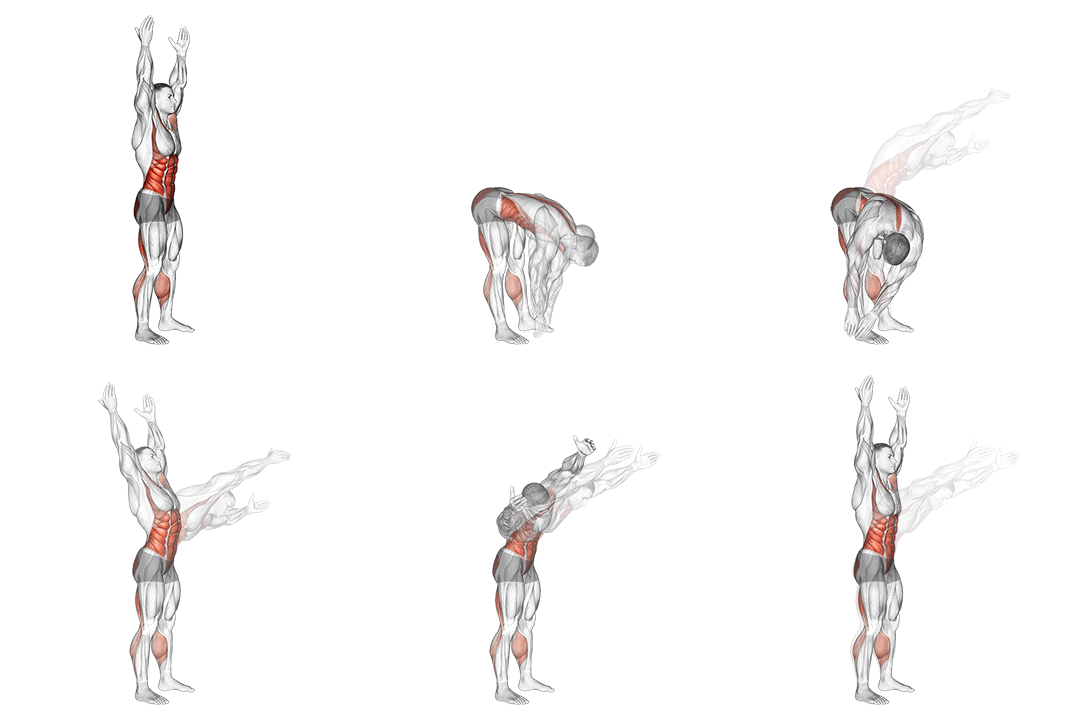
Tire Flip
Head-to-Head Comparison
| Attribute | Assisted Lying Gluteus And Piriformis Stretch | Tire Flip |
|---|---|---|
| Target Muscle |
Glutes
|
Glutes
|
| Body Part |
Upper-legs
|
Upper-legs
|
| Equipment |
Other
|
Other
|
| Difficulty |
Beginner
|
Advanced
|
| Movement Type |
Isolation
|
Compound
|
| Secondary Muscles |
1
|
3
|
Secondary Muscles Activated
Assisted Lying Gluteus And Piriformis Stretch
Tire Flip
Visual Comparison
Overview
Assisted Lying Gluteus And Piriformis Stretch vs Tire Flip — you might think these two moves have nothing in common, but both affect your glutes and upper legs in very different ways. I’ll walk you through how each targets the gluteus, hamstrings, and surrounding tissues, break down equipment needs, compare difficulty and injury risk, and give clear, goal-based recommendations. Read on and you’ll get technique cues, biomechanics explanations (length-tension and force vectors), and rep ranges so you can pick the right option for mobility, recovery, or strength work.
Key Differences
- Assisted Lying Gluteus And Piriformis Stretch is an isolation exercise, while Tire Flip is a compound movement.
- Difficulty levels differ: Assisted Lying Gluteus And Piriformis Stretch is beginner, while Tire Flip is advanced.
- Both exercises target the Glutes using Other. The main differences are in their movement patterns and muscle activation angles.
Pros & Cons
Assisted Lying Gluteus And Piriformis Stretch
+ Pros
- Requires minimal equipment (mat and optional strap)
- Targets piriformis and glute length-tension for mobility and pain relief
- Low injury risk with proper technique; good for recovery days
- Easy to learn and integrate into warm-ups or cooldowns
− Cons
- Limited ability to drive strength or hypertrophy due to low external load
- Benefits are mobility- and neuromuscular-focused, not build-focused
- May not sufficiently activate deep glute fibers under load for long-term strength progress
Tire Flip
+ Pros
- Produces high peak glute activation and force output
- Develops explosive hip extension, power, and functional strength
- Engages quads, hamstrings, and core for compound transfer to sport
- Scalable by tire weight and rep schemes for progressive overload
− Cons
- Requires specialized heavy equipment and space
- Higher technical demand and injury risk if form breaks down
- Can be fatiguing and impractical for daily recovery or mobility work
When Each Exercise Wins
The Tire Flip creates high external load and repeated concentric hip extension, driving greater mechanical tension and metabolic stress on the glutes and hamstrings. Use heavier tires and sets of 4–8 reps for hypertrophy-focused sessions.
Tire Flips allow progressive overload and train force production through a full-body, hip-dominant pattern—ideal for improving maximal strength and power when performed with heavy tires and low reps (1–5).
The assisted stretch teaches hip positioning, improves range of motion, and carries minimal risk. It helps novices develop glute activation awareness before advancing to loaded compound lifts.
You can perform the assisted stretch with no heavy equipment and very little space, making it the practical choice for home routines focused on mobility, pain reduction, or activation work.
Frequently Asked Questions
Can I do both Assisted Lying Gluteus And Piriformis Stretch and Tire Flip in the same workout?
Yes. Use the assisted stretch as a mobility and activation drill before heavy Tire Flip work to improve hip range and neuromuscular readiness. After flips, use the stretch again for cooldown and to reduce tissue tightness.
Which exercise is better for beginners?
The assisted stretch is better for beginners because it teaches hip positioning and improves mobility with minimal risk. Beginners should master activation and hip-hinge mechanics before attempting heavy Tire Flips.
How do the muscle activation patterns differ?
The assisted stretch produces low-level, sustained tension at a lengthened muscle position with emphasis on piriformis and gluteal relaxation. The Tire Flip produces short, high-amplitude activation during concentric hip extension and triple-extension phases, engaging quads, hamstrings, glutes, and core dynamically.
Can Tire Flip replace Assisted Lying Gluteus And Piriformis Stretch?
No—Tire Flips cannot replace the mobility and targeted neuromuscular benefits of the assisted stretch. If your goal is mobility or piriformis tension relief, keep the assisted stretch; use Tire Flips to complement strength and power goals.
Expert Verdict
Use the Assisted Lying Gluteus and Piriformis Stretch when your goal is improved hip mobility, targeted neural release, or to build activation before heavy lifts. It’s low-risk and easy to program: 2–4 sets of 20–30 second holds per side as part of warm-ups or recovery. Choose the Tire Flip when you want heavy, compound loading for strength, power, and functional transfer—use heavier tires, 1–6 reps per set, and prioritize coaching on hip hinge, foot placement, and spine position. Both have roles: stretch for mobility and prep, tire flip for serious strength and power work.
Also Compare
More comparisons with Assisted Lying Gluteus And Piriformis Stretch
Compare More Exercises
Use our free comparison tool to analyze any two exercises head-to-head.
Compare Exercises