

Back Pec Stretch vs L-pull-up: Complete Comparison Guide
Back Pec Stretch vs L-pull-up — you’re comparing two ways to load and lengthen the lats, but they serve different purposes. I’ll walk you through how each exercise recruits the latissimus dorsi, what secondary muscles pick up the work, equipment needs, and how to progress safely. You’ll get clear recommendations for muscle growth, strength, mobility, and at-home training. Read on and you’ll know when to use the static, isolation-based Back Pec Stretch and when the compound, loaded L-pull-up is the right choice for your goals.
Exercise Comparison
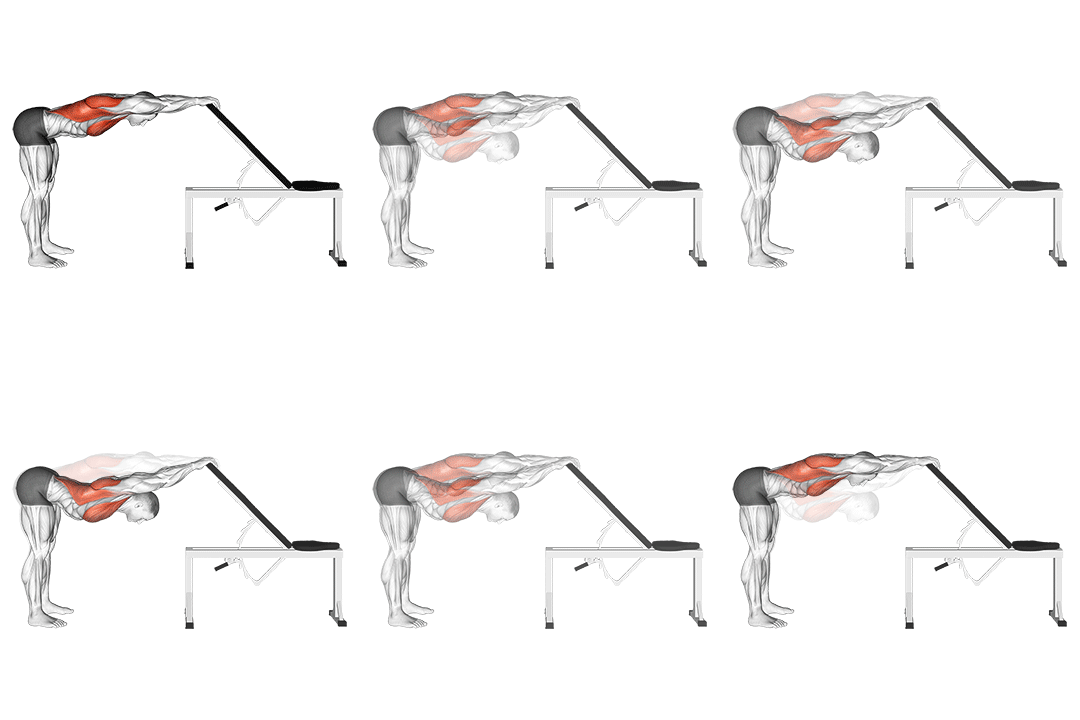
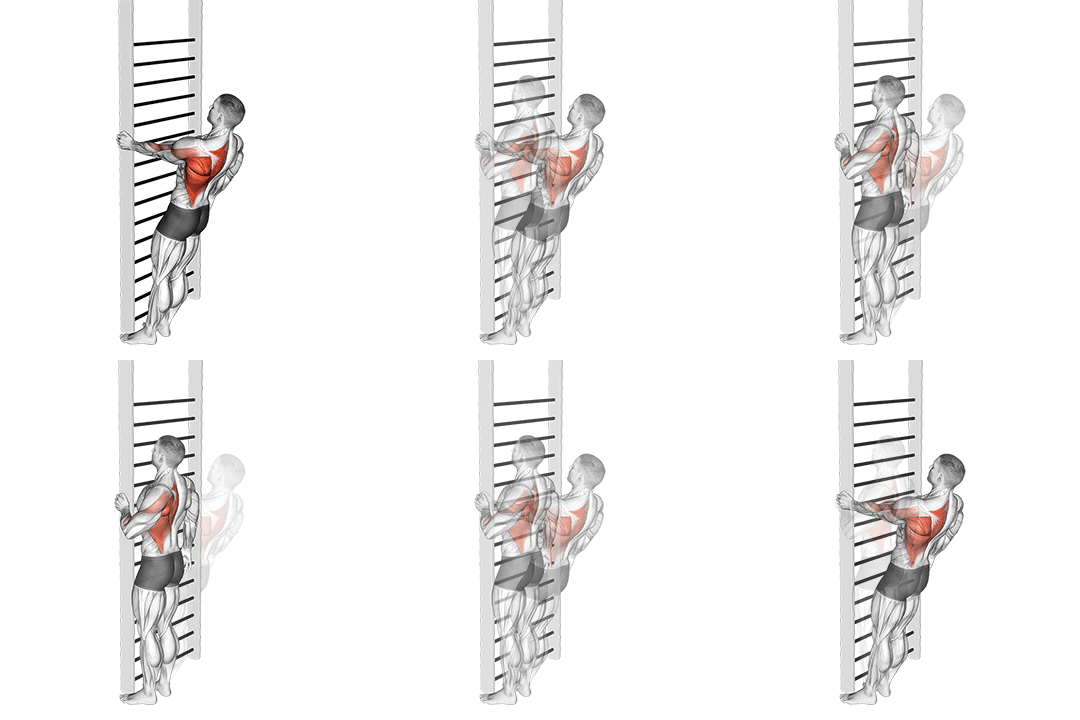
Back Pec Stretch
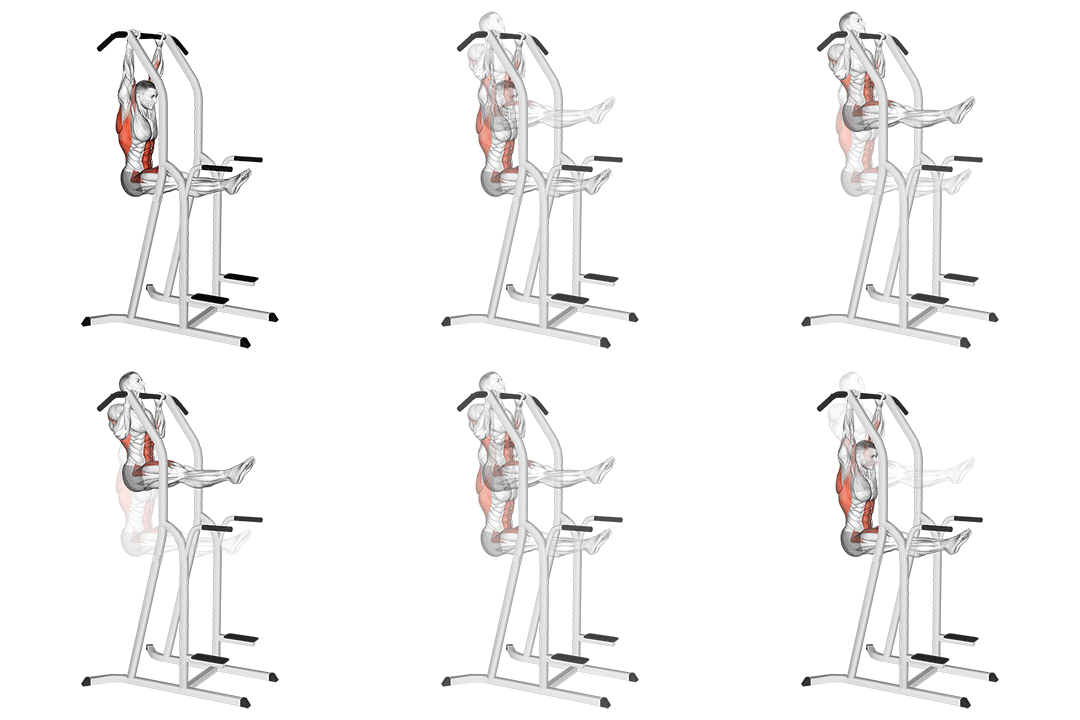
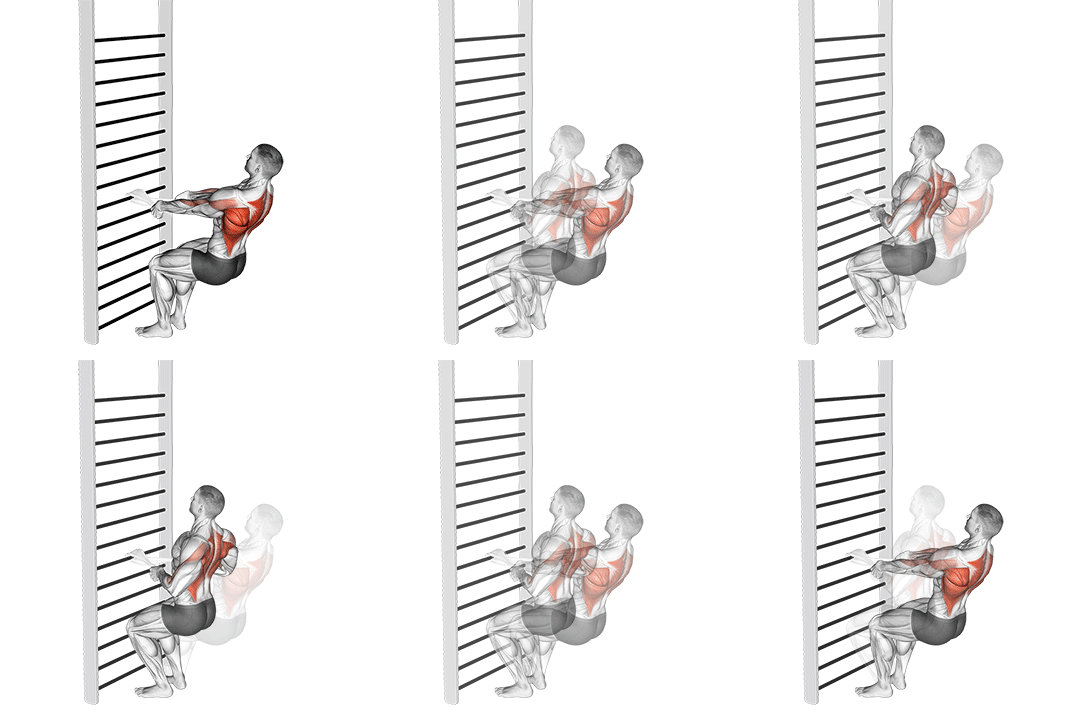
L-pull-up
Head-to-Head Comparison
| Attribute | Back Pec Stretch | L-pull-up |
|---|---|---|
| Target Muscle |
Lats
|
Lats
|
| Body Part |
Back
|
Back
|
| Equipment |
Body-weight
|
Body-weight
|
| Difficulty |
Beginner
|
Intermediate
|
| Movement Type |
Isolation
|
Compound
|
| Secondary Muscles |
2
|
2
|
Secondary Muscles Activated
Back Pec Stretch
L-pull-up
Visual Comparison
Overview
Back Pec Stretch vs L-pull-up — you’re comparing two ways to load and lengthen the lats, but they serve different purposes. I’ll walk you through how each exercise recruits the latissimus dorsi, what secondary muscles pick up the work, equipment needs, and how to progress safely. You’ll get clear recommendations for muscle growth, strength, mobility, and at-home training. Read on and you’ll know when to use the static, isolation-based Back Pec Stretch and when the compound, loaded L-pull-up is the right choice for your goals.
Key Differences
- Back Pec Stretch is an isolation exercise, while L-pull-up is a compound movement.
- Difficulty levels differ: Back Pec Stretch is beginner, while L-pull-up is intermediate.
- Both exercises target the Lats using Body-weight. The main differences are in their movement patterns and muscle activation angles.
Pros & Cons
Back Pec Stretch
+ Pros
- Easy to perform anywhere with no equipment
- Places the lat under long-length tension for mobility and fascicle length benefits
- Low systemic fatigue, good for warm-ups and recovery sessions
- Helps correct anterior shoulder tightness and improves shoulder extension range
− Cons
- Limited capacity for overload and progressive strength gains
- Lower active lat EMG compared with loaded pulls, so less stimulus for hypertrophy
- Can be misused as passive stretching without addressing scapular control
L-pull-up
+ Pros
- High active lat recruitment across a functional range of motion
- Excellent for progressive strength and hypertrophy through added weight or volume
- Builds grip strength and elbow flexor capacity alongside back muscles
- Translates well to athletic pulling patterns and functional movement
− Cons
- Requires a bar and sufficient pulling strength, limiting accessibility
- Higher technical demand; poor form strains shoulders and elbows
- Can cause excessive fatigue if programmed without adequate recovery
When Each Exercise Wins
L-pull-ups provide greater active tension and mechanical overload across concentric and eccentric phases, making them superior for hypertrophy. Use 6–12 reps for size, or 3–5 sets of weighted L-pull-ups, and emphasize slow eccentrics (3–4 seconds) to increase time under tension.
The compound nature of L-pull-ups allows progressive loading (weighted sets, negatives, tempo work) to increase maximal pulling strength. Aim for lower rep ranges (3–6 reps) with added weight or work on assisted-to-unassisted progressions to build absolute strength.
Beginners can perform the Back Pec Stretch immediately to improve shoulder mobility and gently load the lat without needing pull strength. Use it to build awareness of scapular position and lengthen tissues before advancing to loaded pulls.
Most home setups lack a secure overhead bar, so the Back Pec Stretch wins for accessibility and utility. It lets you maintain lat mobility and low-level tension with only a doorway or wall; if you have a pull-up bar, then L-pull-ups become a strong option.
Frequently Asked Questions
Can I do both Back Pec Stretch and L-pull-up in the same workout?
Yes. Use the Back Pec Stretch as a dynamic or static warm-up to lengthen the lats and prime scapular mobility, then perform L-pull-ups as the primary loaded exercise. Finish with another short stretch set to aid recovery and maintain range of motion.
Which exercise is better for beginners?
Back Pec Stretch is better for absolute beginners because it requires no pulling strength and teaches shoulder positioning and lat length. Beginners should pair it with progressive assisted pulls or banded rows before attempting full L-pull-ups.
How do the muscle activation patterns differ?
L-pull-ups create phasic, high-amplitude activation during concentric/eccentric phases with peak lat force when the shoulder approaches neutral from flexion. The Back Pec Stretch increases passive tension at long muscle lengths and produces lower phasic EMG but improves length-tension relationships and end-range mobility.
Can L-pull-up replace Back Pec Stretch?
Not entirely. L-pull-ups can build strength and hypertrophy but won’t consistently restore end-range shoulder mobility or passive lat length like targeted stretches. Use L-pull-ups for loading and add Back Pec Stretch for mobility, prehab, or recovery when needed.
Expert Verdict
Use the L-pull-up when your goal is progressive strength and muscle growth: it produces high active tension, recruits biceps and forearms, and accepts added load for continued progress. Program L-pull-ups for sets of 3–12 reps depending on strength or hypertrophy emphasis and prioritize scapular control and slow eccentrics. Use the Back Pec Stretch when your focus is mobility, prehab, or when you lack equipment; hold 30–60 seconds for 2–4 sets to improve lat length and shoulder extension. For best results, pair both: use the stretch for warm-up and recovery and L-pull-ups as your primary loading exercise.
Also Compare
More comparisons with Back Pec Stretch
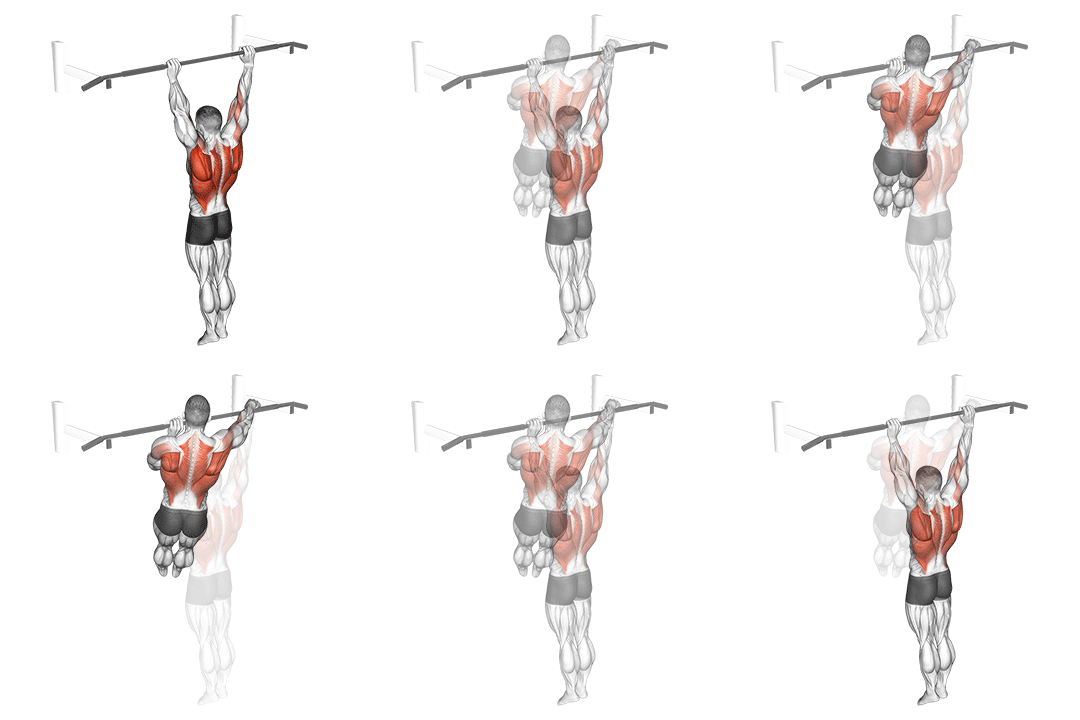
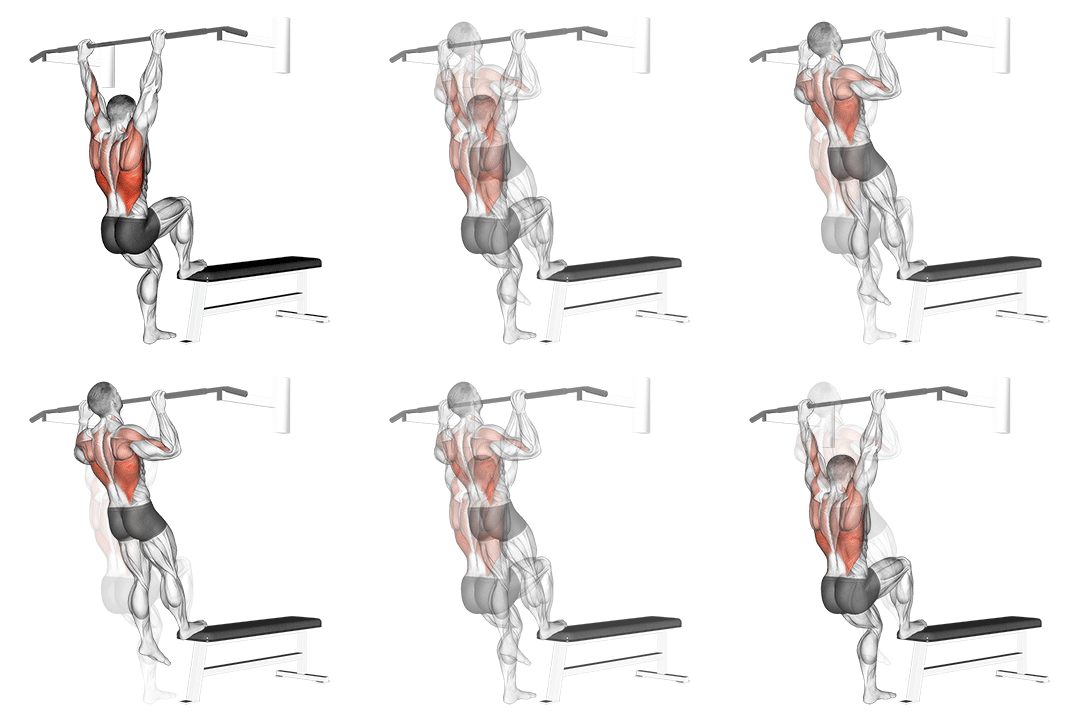

Compare More Exercises
Use our free comparison tool to analyze any two exercises head-to-head.
Compare Exercises