

Bodyweight Squatting Row vs L-pull-up: Complete Comparison Guide
Bodyweight Squatting Row vs L-pull-up is the matchup many trainees ask about when building back strength and size. You’ll get a side-by-side look at primary muscle activation, secondary recruitment, equipment needs, difficulty, progression routes, and clear technique cues so you can pick the better tool for your goal. I’ll show how force vectors and lever arms change the stimulus, give rep ranges (8–15 for rows, 4–10 for L-pull-ups), and offer practical progressions you can apply today.
Exercise Comparison
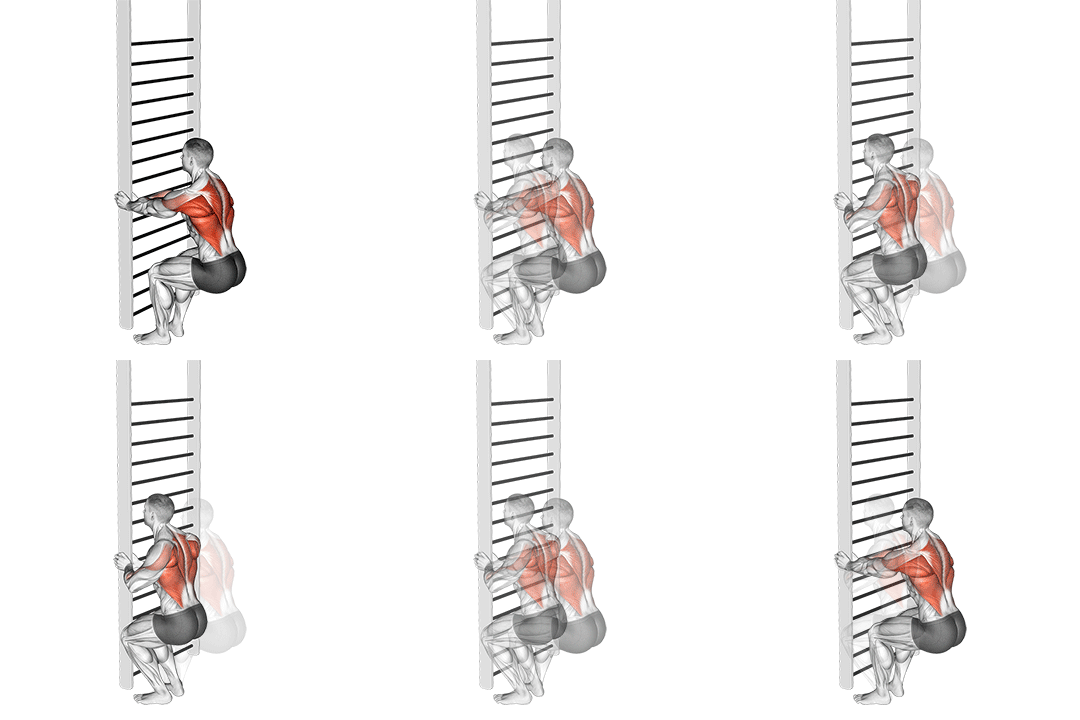
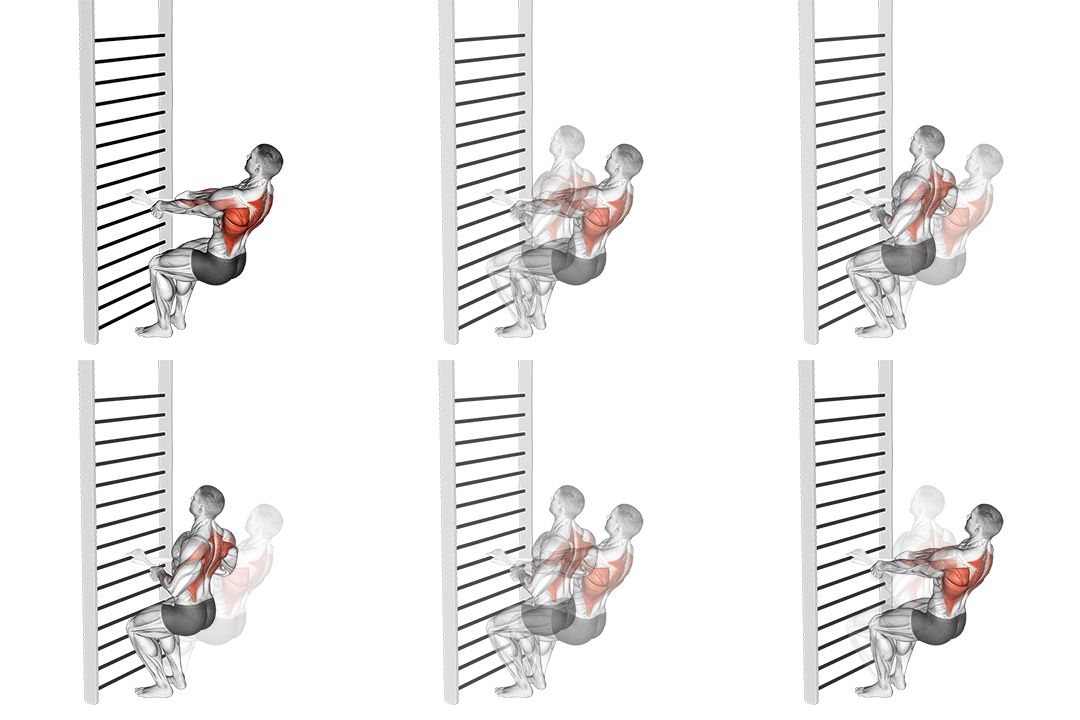
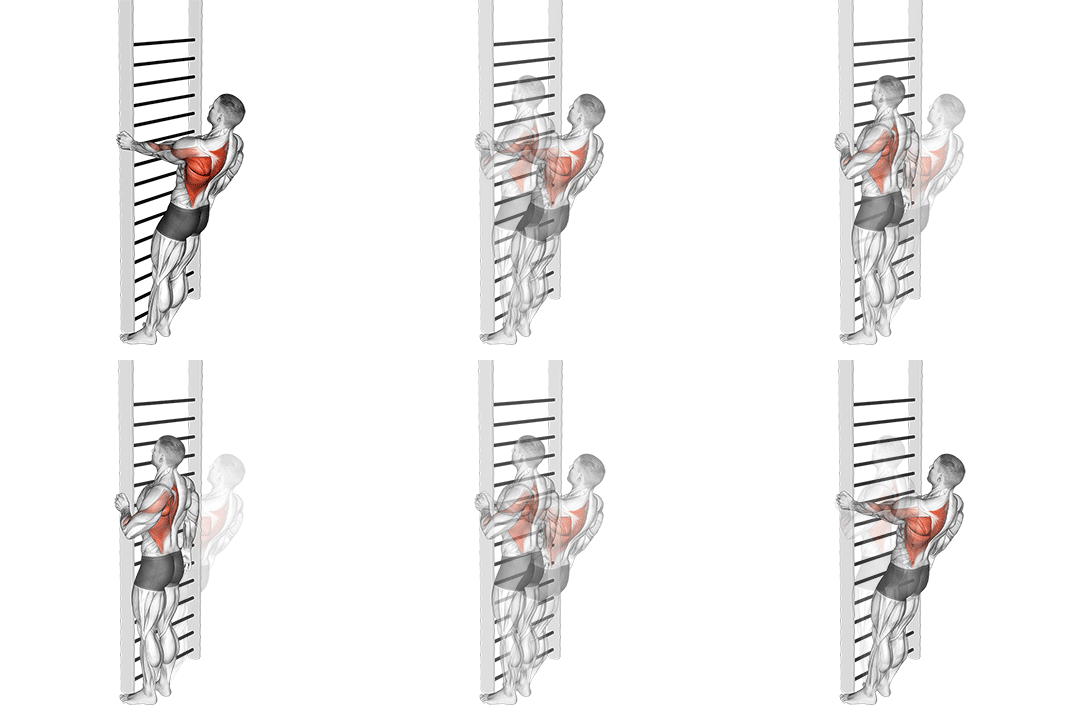
Bodyweight Squatting Row
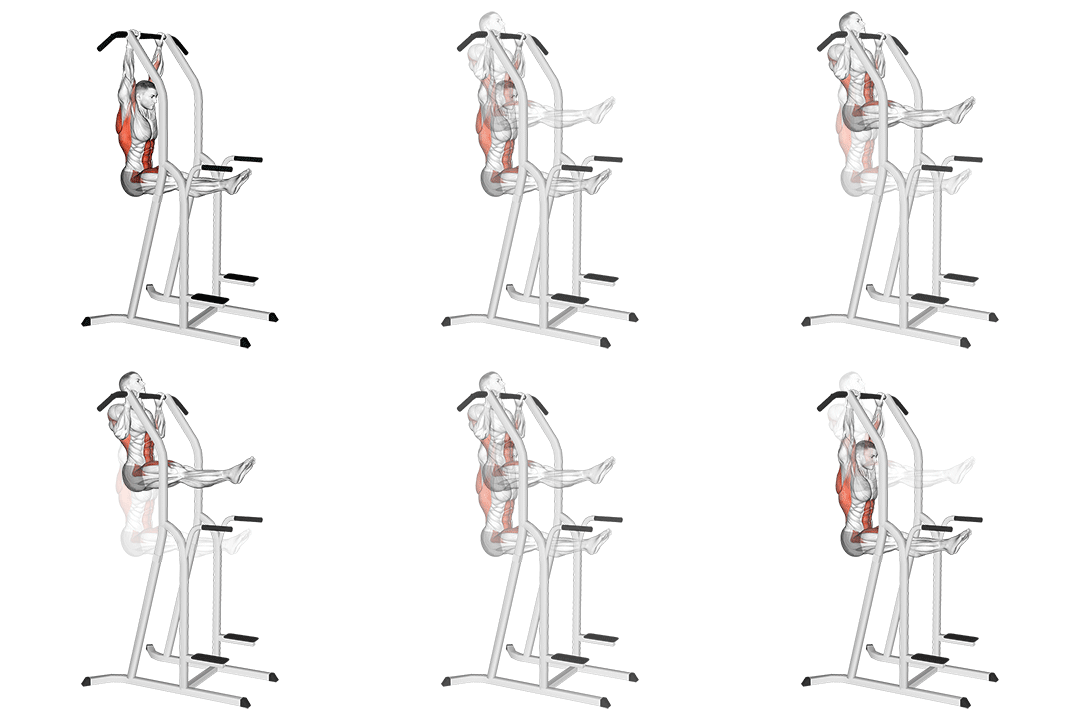
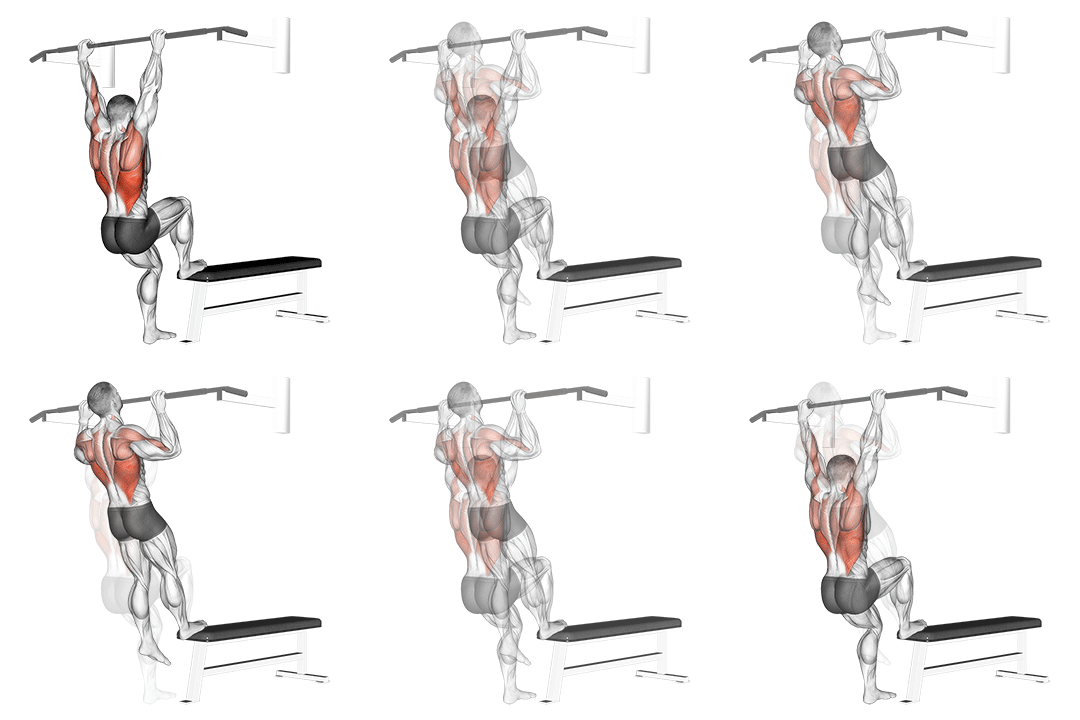
L-pull-up
Head-to-Head Comparison
| Attribute | Bodyweight Squatting Row | L-pull-up |
|---|---|---|
| Target Muscle |
Lats
|
Lats
|
| Body Part |
Back
|
Back
|
| Equipment |
Body-weight
|
Body-weight
|
| Difficulty |
Beginner
|
Intermediate
|
| Movement Type |
Compound
|
Compound
|
| Secondary Muscles |
2
|
2
|
Secondary Muscles Activated
Bodyweight Squatting Row
L-pull-up
Visual Comparison
Overview
Bodyweight Squatting Row vs L-pull-up is the matchup many trainees ask about when building back strength and size. You’ll get a side-by-side look at primary muscle activation, secondary recruitment, equipment needs, difficulty, progression routes, and clear technique cues so you can pick the better tool for your goal. I’ll show how force vectors and lever arms change the stimulus, give rep ranges (8–15 for rows, 4–10 for L-pull-ups), and offer practical progressions you can apply today.
Key Differences
- Difficulty levels differ: Bodyweight Squatting Row is beginner, while L-pull-up is intermediate.
- Both exercises target the Lats using Body-weight. The main differences are in their movement patterns and muscle activation angles.
Pros & Cons
Bodyweight Squatting Row
+ Pros
- Highly scalable by adjusting body angle — easier to regress or progress
- Lower overhead equipment needs — ideal for home setups
- Gentler on shoulders due to horizontal pull vector and reduced shoulder extension torque
- Good beginner tool to build scapular retraction and biceps strength
− Cons
- Less effective at developing vertical pulling strength needed for pull-ups
- Can underload forearms compared to vertical pulls
- Limited ceiling for maximal relative strength without added weight
L-pull-up
+ Pros
- Stronger carryover to vertical pulling movements and real-world lifts
- Higher forearm and grip demand improves wrist and hand strength
- Easier to overload with added weight for continued progression
- Challenges core isometrically when performed as an L-sit pull-up
− Cons
- Harder to learn — requires both pulling strength and hip flexor/core control
- Higher shoulder torque increases risk for those with mobility issues
- Needs a stable overhead anchor and more space
When Each Exercise Wins
The Squatting Row lets you accumulate volume (8–15 reps, 3–5 sets) with controlled horizontal tension and long time under tension. Its mid-range lat loading and easy tempo control (2–3s eccentrics) make it ideal for targeted muscle growth.
L-pull-up places greater vertical load on the lats and allows straightforward progressive overload (added weight, lower reps 3–6). Its longer lever arm and core demand translate to higher maximal pulling force and better transfer to weighted pull-ups.
Rows have a gentler technical demand and immediate regressions by changing angle; you can learn scapular retraction and elbow control safely in a few sessions before moving to vertical pulls.
You only need a low anchor or suspension trainer and small space to perform rows. L-pull-ups require a sturdy overhead bar and more shoulder mobility, making them less practical in many home setups.
Frequently Asked Questions
Can I do both Bodyweight Squatting Row and L-pull-up in the same workout?
Yes. Pair them as a horizontal–vertical pull superset or use rows as a warm-up and L-pull-ups as the main strength movement. Keep rows higher rep (8–15) for volume and L-pull-ups lower rep (4–8) for heavy sets to avoid premature fatigue.
Which exercise is better for beginners?
Bodyweight Squatting Row is better for beginners because it teaches scapular retraction and elbow control with a lower technical barrier. You can regress by reducing body angle and build the strength needed for vertical pulls.
How do the muscle activation patterns differ?
Rows bias the lats in a mid-range, horizontal pull with continuous scapular retraction, while L-pull-ups bias end-range shoulder extension and require more forearm and core isometric torque. These vector differences change length-tension and peak activation timing.
Can L-pull-up replace Bodyweight Squatting Row?
L-pull-ups can replace rows for vertical strength goals, but they won’t fully substitute the horizontal pulling pattern that builds mid-range lat tension and low-tech volume. Use both for balanced back development when possible.
Expert Verdict
Choose the Bodyweight Squatting Row when your goal is systematic muscle growth, technical practice, or limited equipment — it gives reliable lat loading with low shoulder torque and easy scaling by angle. Pick the L-pull-up when your priority is vertical pulling strength, grip development, and progressive overload through added weight; expect a steeper technical demand because the L position increases lever length and core requirement. For structured training: start most trainees with rows (8–15 reps), then phase in L-pull-up progressions (4–10 reps) once you master scapular control and maintain a neutral spine under load.
Also Compare
More comparisons with Bodyweight Squatting Row
Compare More Exercises
Use our free comparison tool to analyze any two exercises head-to-head.
Compare Exercises