Barbell Clean-grip Front Squat vs Barbell Romanian Deadlift

Compare target muscles, equipment, difficulty, movement type, and secondary muscles for Barbell Clean-grip Front Squat and Barbell Romanian Deadlift.

Change comparison Share

Get comparison link

Select the link and use your device's Copy command.

Comparison overview

AI-generated
Barbell Clean-grip Front Squat vs Barbell Romanian Deadlift — you’re comparing two heavy-hitting barbell moves that both target the glutes and upper legs but use very different mechanics. I’ll walk you through primary and secondary muscle activation, exact technique cues (elbow position, hip angle, bar path), programming ranges, equipment needs, injury risk, and when to use each lift in your weekly plan. Read this to decide which lift to prioritize for hypertrophy, strength, or simply easier practice at home.

Exercise Comparison

Exercise A
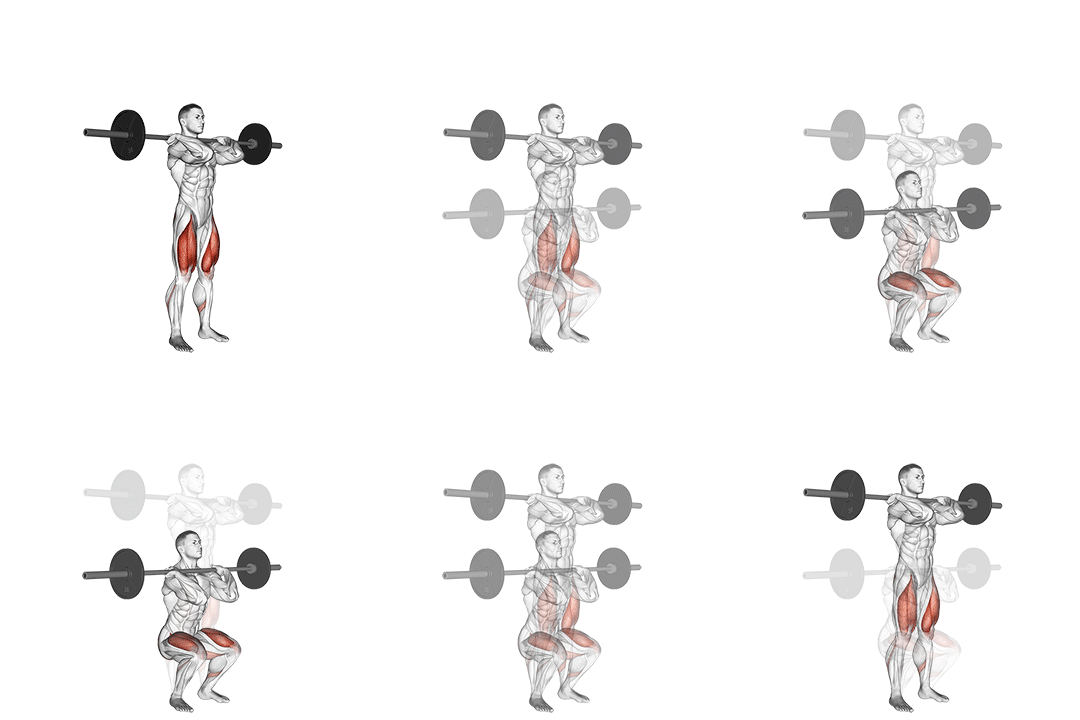
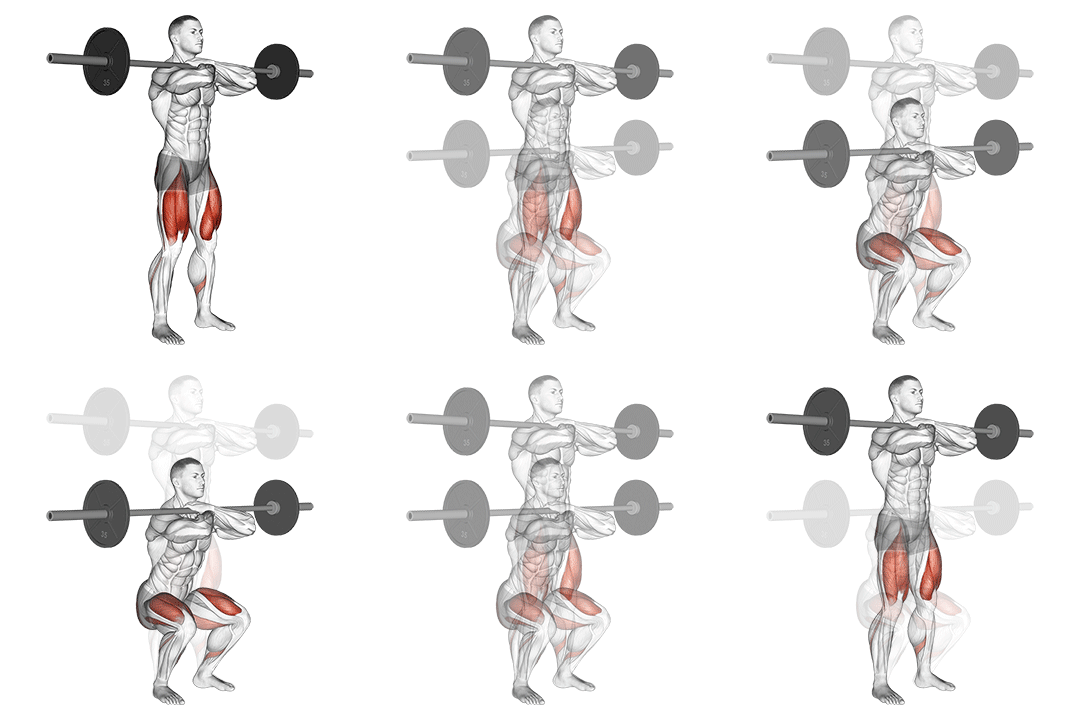
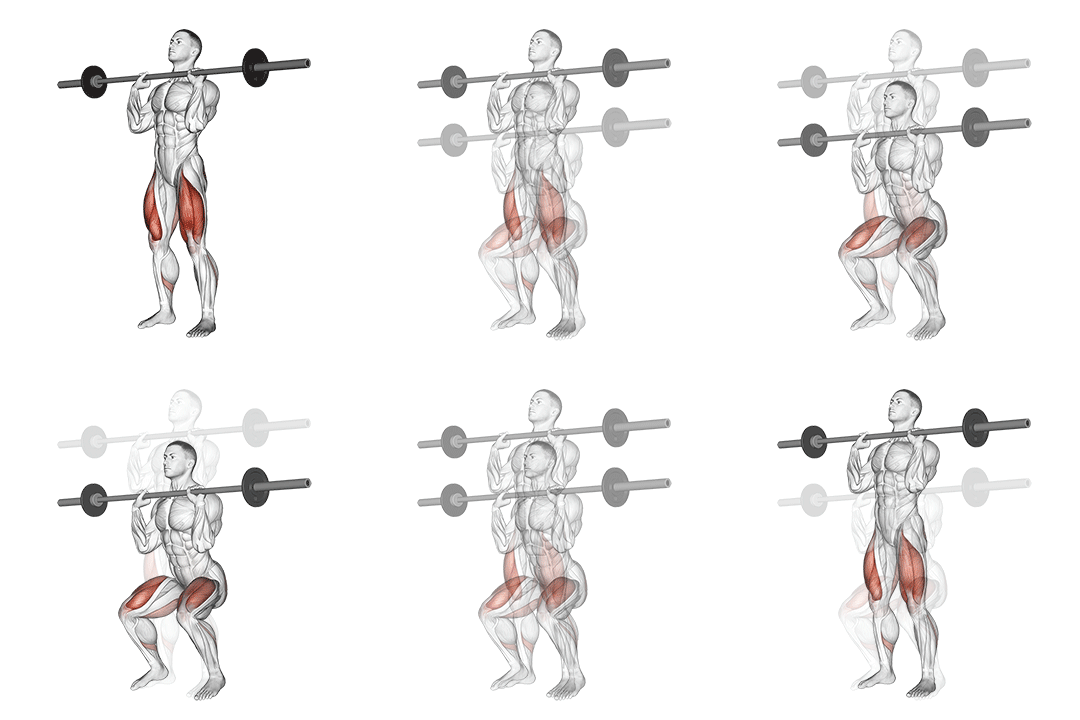
Barbell Clean-grip Front Squat demonstration

Barbell Clean-grip Front Squat

Target Glutes
Equipment Barbell
Body Part Upper-legs
Difficulty Advanced
Movement Compound
Secondary Muscles
Quadriceps Hamstrings Calves Core
VS
Exercise B
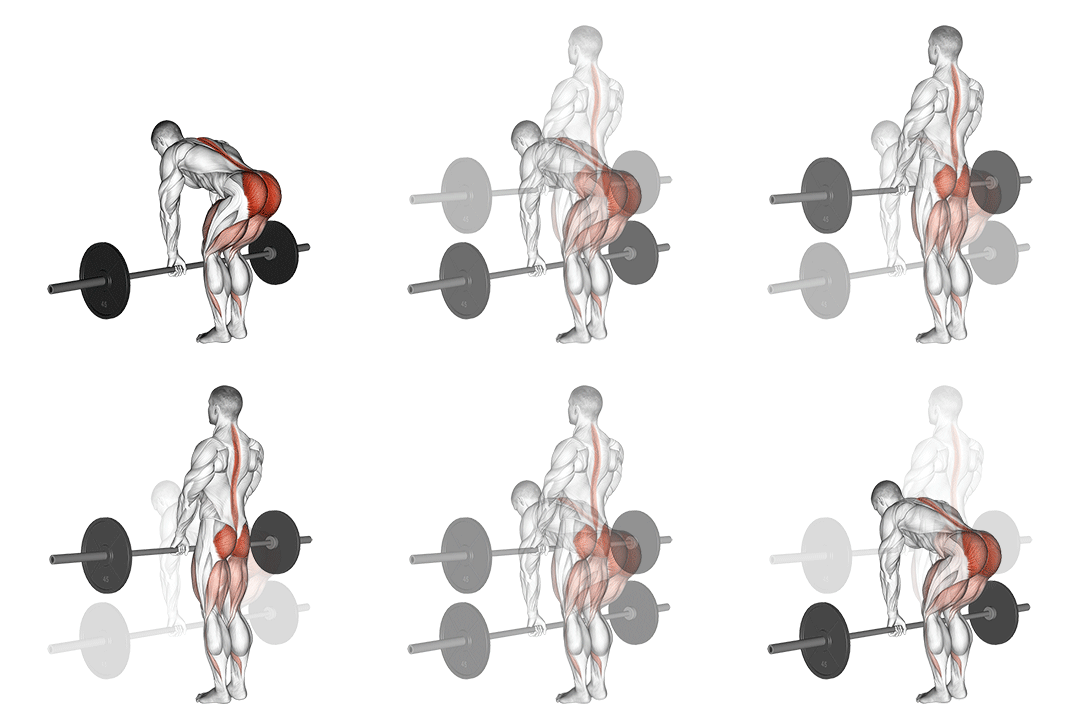
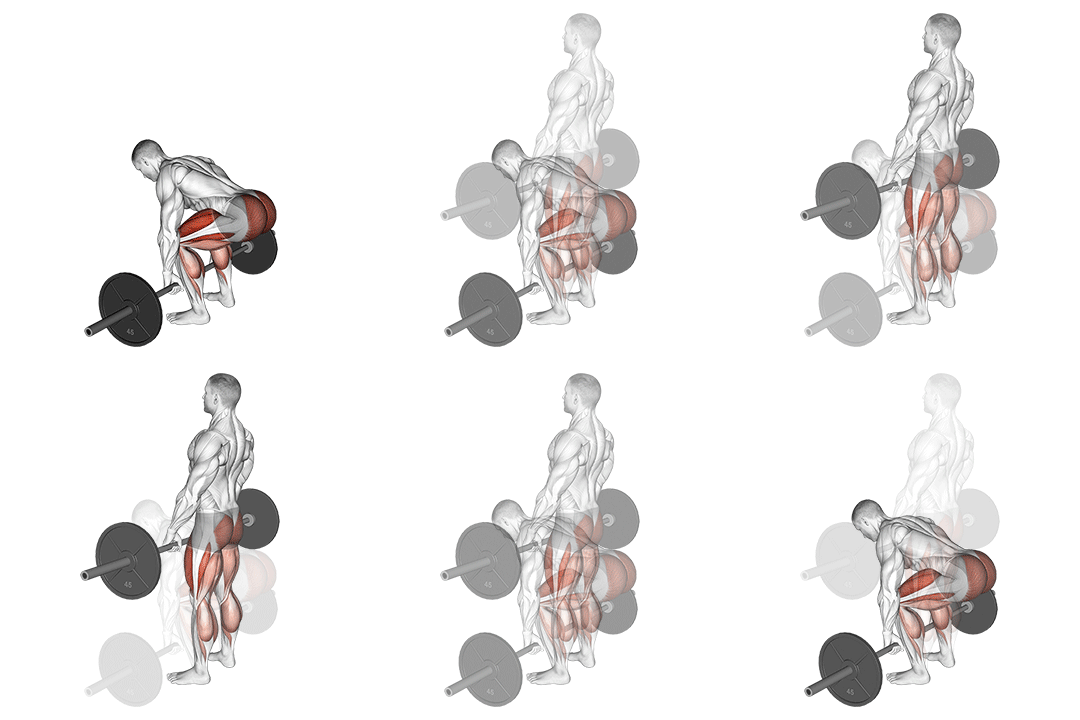
Barbell Romanian Deadlift demonstration

Barbell Romanian Deadlift

Target Glutes
Equipment Barbell
Body Part Upper-legs
Difficulty Intermediate
Movement Compound
Secondary Muscles
Hamstrings Lower Back

Head-to-Head Comparison

Different values are marked. These are catalogue attributes, not performance scores.

Muscles used

Listed target and secondary muscles, shown on the body. Locations, not activation or strength scores.

  • Target
  • Secondary
  • Not highlighted

Barbell Clean-grip Front Squat

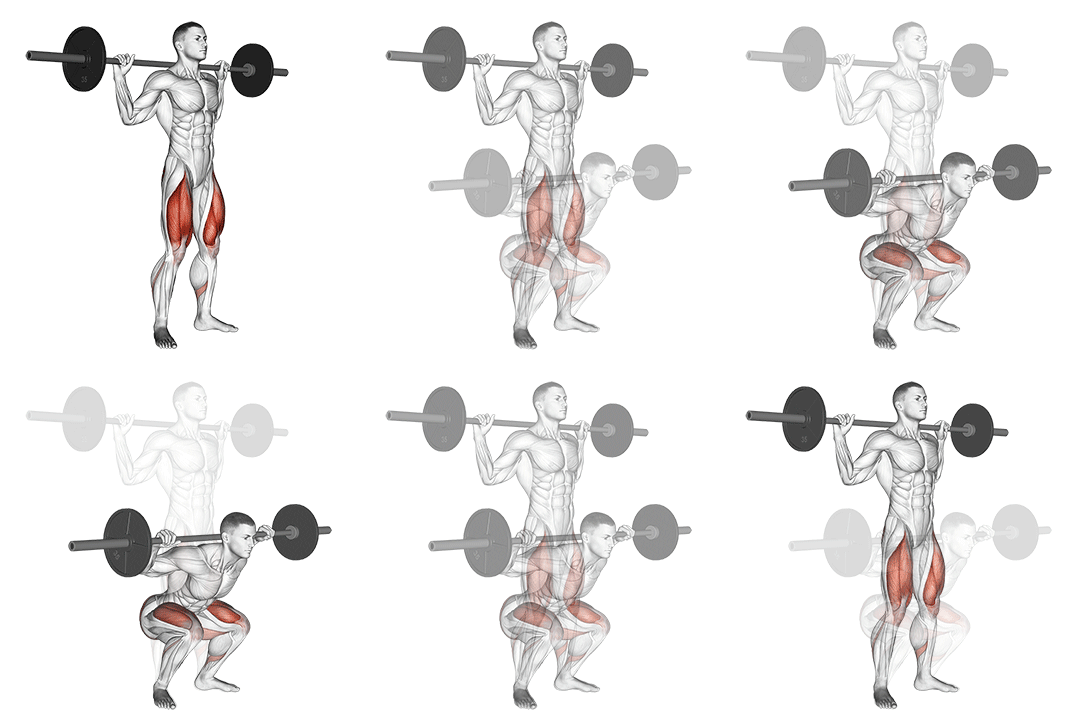
Front
Barbell Clean-grip Front Squat: front muscle locationsSolid: listed target. Striped: listed secondary. Grey: not highlighted. Locations, not activation or strength scores. See the muscle names below.
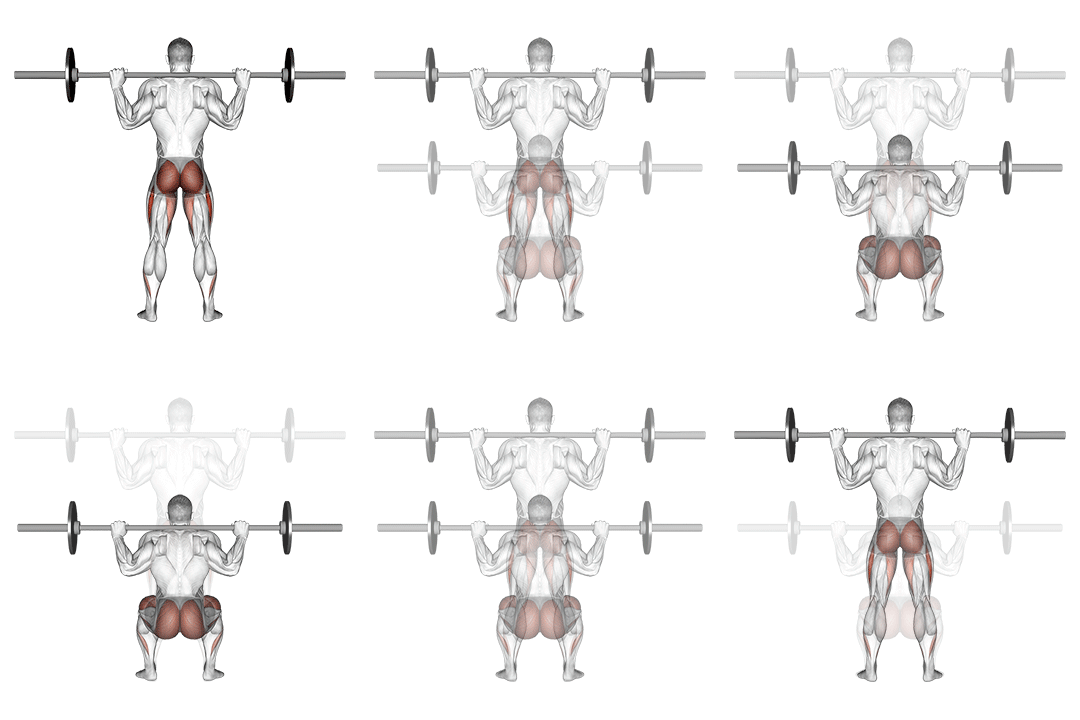
Back
Barbell Clean-grip Front Squat: back muscle locationsSolid: listed target. Striped: listed secondary. Grey: not highlighted. Locations, not activation or strength scores. See the muscle names below.
Target
Glutes
Secondary
Quadriceps, Hamstrings, Calves, Core

Not shown on diagram: Core. These labels do not identify a precise region on this map.

Barbell Romanian Deadlift

Front
Barbell Romanian Deadlift: front muscle locationsSolid: listed target. Striped: listed secondary. Grey: not highlighted. Locations, not activation or strength scores. See the muscle names below.
Back
Barbell Romanian Deadlift: back muscle locationsSolid: listed target. Striped: listed secondary. Grey: not highlighted. Locations, not activation or strength scores. See the muscle names below.
Target
Glutes
Secondary
Hamstrings, Lower Back

Grey does not mean a muscle is unused. The diagrams show only the mapped catalogue labels.

Attribute Barbell Clean-grip Front Squat Barbell Romanian Deadlift
Target Muscle
Glutes
Glutes
Body Part
Upper-legs
Upper-legs
Equipment
Barbell
Barbell
Difficulty Different
Advanced
Intermediate
Movement Type
Compound
Compound
Secondary Muscles Different
Quadriceps, Hamstrings, Calves, Core
Hamstrings, Lower Back

Visual Comparison

An illustrative 1–10 profile derived from catalog difficulty, equipment, and listed-muscle fields—not measured performance or muscle activation.

Key Differences

  • Difficulty levels differ: Barbell Clean-grip Front Squat is advanced, while Barbell Romanian Deadlift is intermediate.
  • Both exercises target the Glutes using Barbell. The catalogue does not establish which exercise is better for an individual goal.

Muscle comparison

Shared target muscles

Both exercises load the glutes strongly, but they do so via different joint moments. The clean-grip front squat produces a large knee-extension moment and a moderate hip-extension moment with a more upright torso, shifting significant work to the quadriceps in addition to the glutes. The Romanian deadlift produces a large hip-extension moment with minimal knee-extension demand, placing greater emphasis on the glute-ham chain. Expect the front squat to bias quads + glutes; the RDL to bias glutes + hamstrings.

Secondary muscle differences

Secondary recruitment differs: front squat recruits quads and core (anti-flexion) heavily to maintain an upright torso and high elbow position, and it challenges ankle dorsiflexion and calf stiffness near 90–120° knee flexion. RDL secondary muscles are the hamstrings and erector spinae (lower back) because the hip hinge requires eccentric control of hip flexion and spinal stabilization around ~30–60° of hip flexion.

Muscle involvement analysis

During the front squat the knee extensors contribute most during the concentric drive — peak quadriceps torque near 60–90° knee flexion — while glutes activate late in the concentric as hip extension completes. In the RDL the hamstrings and glutes are under long-length eccentric tension during the descent (hip flexion), then drive hip extension concentrically; the lower back acts isometrically to resist spinal flexion.

Equipment and setup

Barbell Clean-grip Front Squat: setup

Barbell Clean-grip Front Squat requires a barbell, squat rack with safety pins for unracking/racking, and decent wrist/shoulder mobility for the clean grip or the option to cross-arm. A lifting platform and collars are recommended.

Barbell Romanian Deadlift: setup

Barbell Romanian Deadlift needs a barbell and collars; a rack is optional since you can pick from the floor or blocks. Chalk, straps, or a platform help but aren’t mandatory.

Access and practicality

Barbell Romanian Deadlift is more accessible because it needs less gear and less specific mobility. You can do RDLs without a rack and with minimal setup; the front squat requires a rack and more shoulder/wrist mobility for a clean grip.

Learning and progression

Learning the movements

The clean-grip front squat is more difficult to learn because it combines a front-rack position, tall torso mechanics, and precise bracing — you must control bar position and maintain elbows high. The RDL is intermediate: the hip-hinge pattern is simpler to teach and scale with lighter loads and tempo work.

Progression considerations

Both scale well: front squats respond to load and density for strength (3–6 reps) and hypertrophy (6–12 reps), while RDLs offer progression via load, tempo (3–5 second eccentrics), and increased range of motion for hamstring length-tension. For posterior chain strength, RDLs allow consistent overload with fewer technical breakdowns.

Limitations and precautions

Relative risk: front squats pose higher risk to wrists, shoulders, and knees if mobility or technique fails, especially under heavy load. RDLs carry more risk to the lower back if you lose a neutral spine during heavy eccentric loading; however, with proper hinge mechanics RDLs are generally safer for most lifters.

Pros & Cons

Barbell Clean-grip Front Squat

+ Pros

  • Massive quad and glute stimulus due to combined knee and hip extension
  • Builds upright torso strength and core anti-flexion (good carryover to Olympic lifts)
  • Allows heavy progressive overload in low-rep strength ranges (3–6 reps)
  • Front rack improves posture and requires less lumbar shear than low-bar squats

− Cons

  • Requires good wrist/shoulder mobility for the clean grip
  • Needs a rack and safe unloading options
  • Technical demand is high; poor form can stress knees and wrists

Barbell Romanian Deadlift

+ Pros

  • Strong posterior chain emphasis—excellent for hamstrings and glute-ham connection
  • Minimal equipment and easier setup for home or busy gym sessions
  • Eccentric control builds muscle length-tension and tendon resilience
  • Simpler tech progression with tempo and range of motion adjustments

− Cons

  • Less direct quad stimulus than a front squat
  • Requires strict spinal neutrality; lumbar stress if form breaks down
  • Limited carryover to vertical force production compared to squatting

When Each Exercise Wins

1
For muscle hypertrophy: Barbell Clean-grip Front Squat

The front squat places a larger knee-extension moment and loads both quads and glutes simultaneously, making it better for upper-leg hypertrophy when programmed at 6–12 reps with controlled tempo.

2
For strength gains: Barbell Clean-grip Front Squat

For developing vertical force production and maximal leg strength, heavy front squats (3–6 reps) provide superior transfer to squat strength and standing power, assuming you can maintain a consistent front rack position.

3
For beginners: Barbell Romanian Deadlift

The RDL teaches the hip-hinge with fewer mobility demands and a simpler setup; you can safely progress RDLs with light loads and tempo before adding heavy loads.

4
For home workouts: Barbell Romanian Deadlift

RDLs require only a barbell and open space, no rack or specific mobility, so they’re easier to program at home and to pair with limited equipment routines.

Frequently Asked Questions

Can I do both Barbell Clean-grip Front Squat and Barbell Romanian Deadlift in the same workout?

Yes. Pair them intelligently: do the heavier, more technical lift first (typically front squats for low-rep strength) and follow with RDLs as a posterior-chain accessory. Keep total volume in check—limit to 3–5 working sets per exercise and watch recovery.

Which exercise is better for beginners?

RDLs are generally better for beginners because the hinge pattern is easier to learn and requires less shoulder/wrist mobility. Start with light RDLs to teach hip hinge mechanics before introducing the front rack position.

How do the muscle activation patterns differ?

Front squats produce higher quadriceps activation due to a larger knee-extension moment and an upright torso, with glutes contributing late in the concentric. RDLs put hamstrings and glutes under long-length eccentric tension during hip flexion, with the erector spinae stabilizing isometrically.

Can Barbell Romanian Deadlift replace Barbell Clean-grip Front Squat?

Not if your aim is quad-dominant hypertrophy or improving vertical-force squatting strength; RDLs cannot fully replace the knee-extension stimulus of front squats. However, for posterior-chain development, lower equipment needs, or when shoulder mobility limits front rack use, RDLs are a valid alternative.

Comparison Summary

Use the Barbell Clean-grip Front Squat when your goal is dense upper-leg hypertrophy and increased vertical-force strength — program it for 3–6 reps for strength blocks and 6–12 for hypertrophy, maintain an upright torso, high elbows, and tight core. Choose the Barbell Romanian Deadlift when you need targeted posterior-chain development, better hamstring length-tension, or a more accessible lift for home or beginners; load for 6–10 reps with a 2–4 second eccentric to maximize muscle tension. Ideally, rotate both across phases: emphasize front squats in quad/glute-dominant blocks and RDLs in posterior-chain or accessory phases.

Exercise instructions

Steps from the exercise catalogue. Read the full sequence before starting.

Barbell Clean-grip Front Squat

  1. Start by standing with your feet shoulder-width apart and the barbell resting on your upper chest, with your elbows pointing forward.
  2. Lower your body by bending your knees and pushing your hips back, as if you are sitting back into a chair.
  3. Keep your chest up and your back straight as you lower down, making sure your knees do not go past your toes.
Read remaining steps for Barbell Clean-grip Front Squat
  1. Continue lowering until your thighs are parallel to the ground, or as low as you can comfortably go.
  2. Pause for a moment at the bottom, then push through your heels to stand back up, extending your hips and knees.
  3. Repeat for the desired number of repetitions.

Barbell Romanian Deadlift

  1. Stand with your feet shoulder-width apart and your toes pointing forward.
  2. Hold the barbell with an overhand grip, hands slightly wider than shoulder-width apart.
  3. Bend at the hips, keeping your back straight and your knees slightly bent.
Read remaining steps for Barbell Romanian Deadlift
  1. Lower the barbell towards the ground, keeping it close to your body.
  2. Feel the stretch in your hamstrings as you lower the barbell.
  3. Once you feel a stretch in your hamstrings, push your hips forward and stand up straight.
  4. Squeeze your glutes at the top of the movement.
  5. Lower the barbell back down to the starting position and repeat for the desired number of repetitions.

Also Compare

Compare another pair

Choose two exercises to see their differences side by side.

Compare Exercises