

Barbell Close-grip Bench Press vs Barbell Decline Close Grip To Skull Press: Complete Comparison Gui
Barbell Close-grip Bench Press vs Barbell Decline Close Grip To Skull Press. You’re choosing between two triceps-focused barbell lifts that both use a close grip but change force vectors and chest involvement. I’ll compare muscle activation, technique cues (grip width, elbow tuck, scapular control), equipment needs, and injury risk so you can pick the right move for hypertrophy, strength, or limited-equipment sessions. Expect concrete cues—hand spacing at roughly shoulder-width, elbows tracking about 45° from the torso, and a decline bench set between 15–30°—plus rep ranges (6–12 for size, 3–6 for strength) and programming tips.
Exercise Comparison
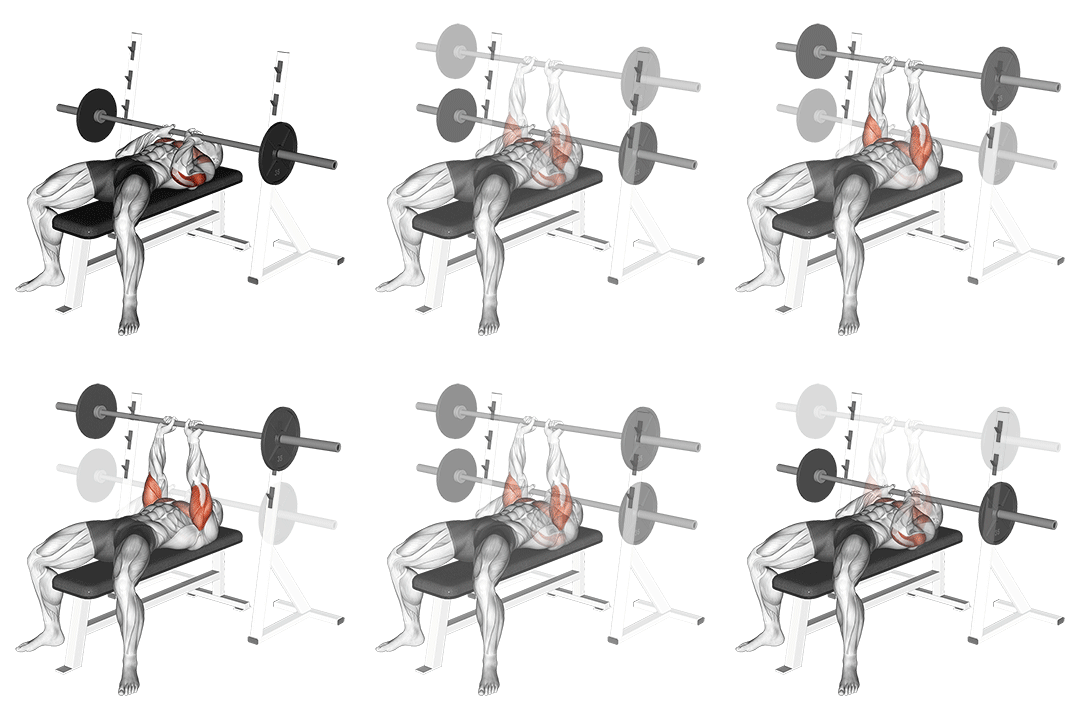
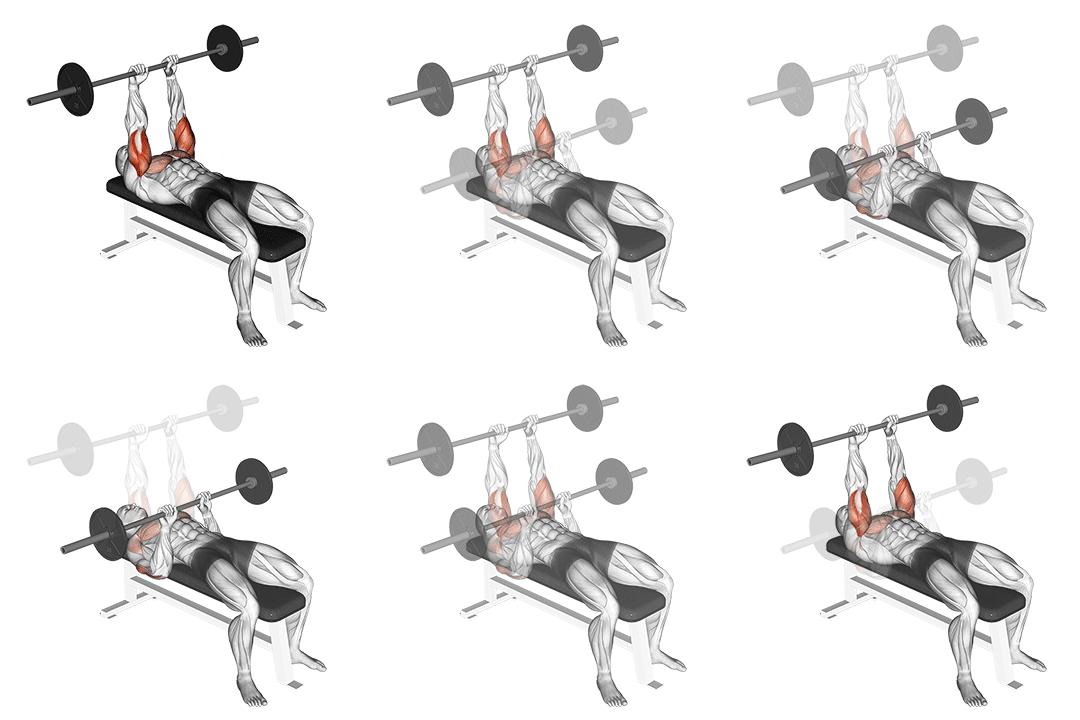
Barbell Close-grip Bench Press
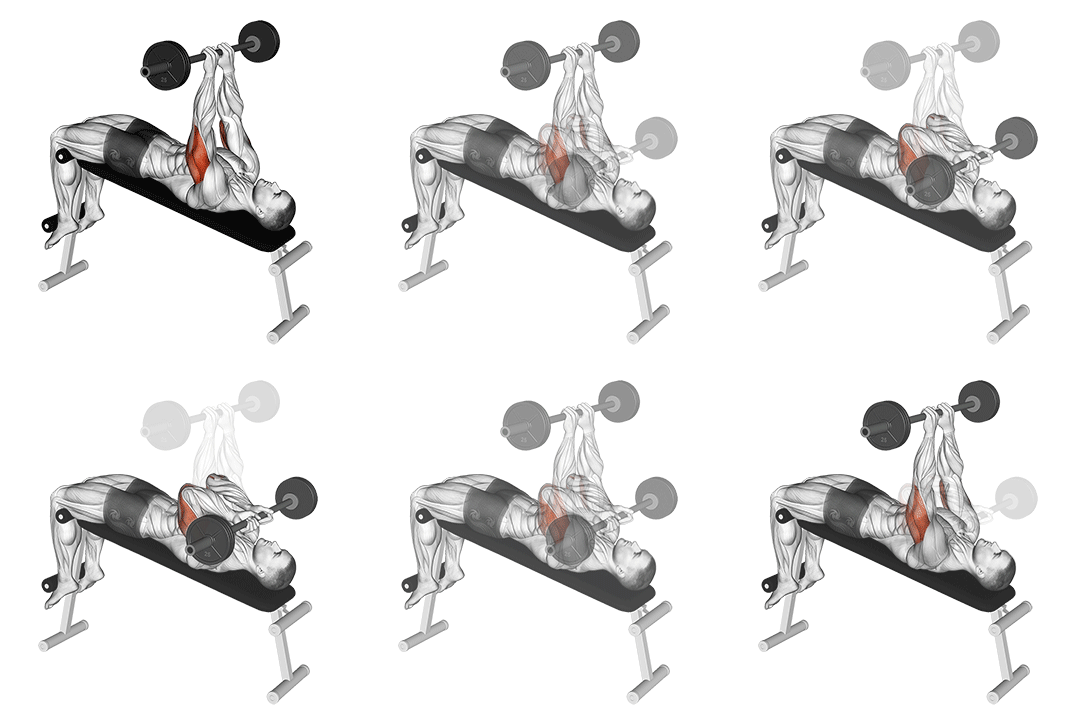
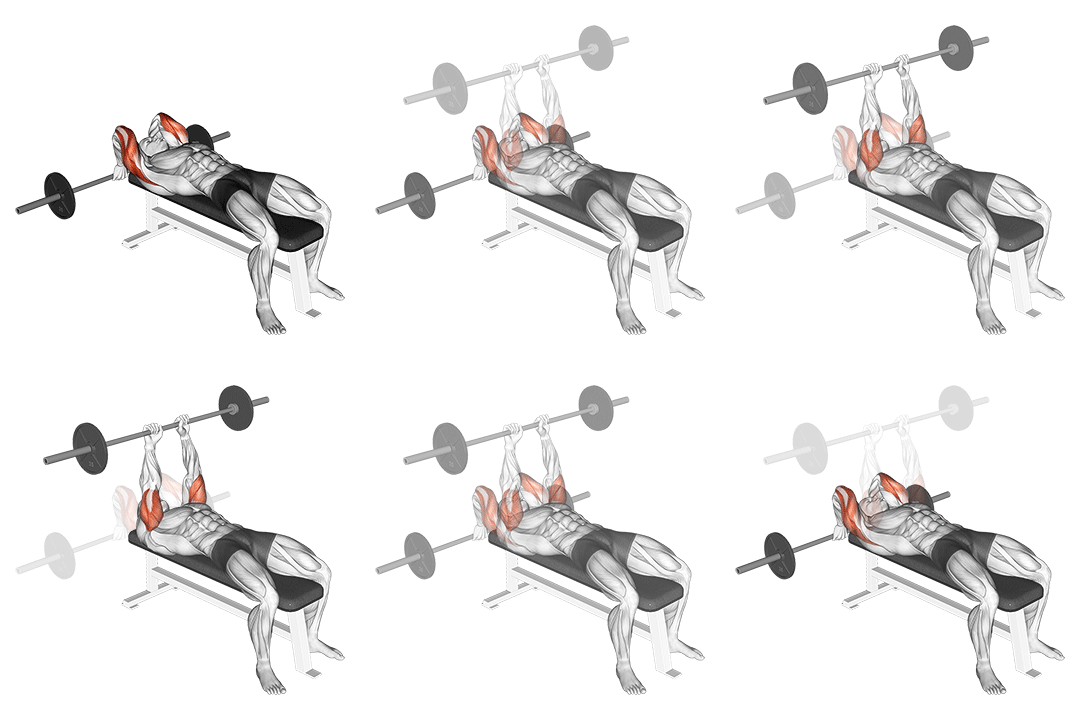
Barbell Decline Close Grip To Skull Press
Head-to-Head Comparison
| Attribute | Barbell Close-grip Bench Press | Barbell Decline Close Grip To Skull Press |
|---|---|---|
| Target Muscle |
Triceps
|
Triceps
|
| Body Part |
Upper-arms
|
Upper-arms
|
| Equipment |
Barbell
|
Barbell
|
| Difficulty |
Intermediate
|
Intermediate
|
| Movement Type |
Compound
|
Compound
|
| Secondary Muscles |
2
|
2
|
Secondary Muscles Activated
Barbell Close-grip Bench Press
Barbell Decline Close Grip To Skull Press
Visual Comparison
Overview
Barbell Close-grip Bench Press vs Barbell Decline Close Grip To Skull Press. You’re choosing between two triceps-focused barbell lifts that both use a close grip but change force vectors and chest involvement. I’ll compare muscle activation, technique cues (grip width, elbow tuck, scapular control), equipment needs, and injury risk so you can pick the right move for hypertrophy, strength, or limited-equipment sessions. Expect concrete cues—hand spacing at roughly shoulder-width, elbows tracking about 45° from the torso, and a decline bench set between 15–30°—plus rep ranges (6–12 for size, 3–6 for strength) and programming tips.
Key Differences
- Both exercises target the Triceps using Barbell. The main differences are in their movement patterns and muscle activation angles.
Pros & Cons
Barbell Close-grip Bench Press
+ Pros
- Allows heavier loads for progressive overload and strength (use 3–6 reps for strength, 6–12 for hypertrophy).
- Strong compound pattern recruits triceps, chest, and shoulders—good transfer to pressing strength.
- Requires common equipment (flat bench and rack).
- Safer bar path — easier to spot and rack under fatigue.
− Cons
- Less isolated triceps stimulus compared with skull-style extensions.
- Chest and shoulder involvement can limit pure triceps overload.
- Narrow grips can increase elbow stress if form breaks down.
Barbell Decline Close Grip To Skull Press
+ Pros
- Greater triceps isolation and emphasis on the long head due to increased elbow moment arm.
- Improved time under tension for targeted muscle growth (6–12 rep ranges recommended).
- Decline angle can reduce anterior deltoid contribution, sharpening triceps focus.
- Useful for finishers or dedicated triceps days when isolation is desired.
− Cons
- Requires a decline bench and a spotter for safety.
- Higher technical demand — bar path near forehead increases risk if control is lost.
- Limited absolute loading compared with compound press, which can cap strength progress.
When Each Exercise Wins
If your priority is targeted triceps hypertrophy, the decline skull-press isolates the elbow extensors and increases long-head time under tension. Use 6–12 reps, 3–4 sets, controlled 2–3 second eccentrics to exploit length-tension and metabolic stimulus.
Close-grip bench allows heavier absolute loads and better transfer to compound pressing strength; program 3–6 reps, multiple heavy sets, and progressive overload to build maximal force production. The multi-joint pattern optimizes neural adaptation and intermuscular coordination.
The close-grip bench is easier to learn and safer to spot, with a familiar bar path and simpler set-up. Beginners can develop pressing mechanics and gradually narrow grip width while managing elbow stress.
Most home gyms have a flat bench and rack but not a decline bench; close-grip bench delivers solid triceps stimulus with minimal extra equipment. It also scales well with adjustable loading and simpler spotting options.
Frequently Asked Questions
Can I do both Barbell Close-grip Bench Press and Barbell Decline Close Grip To Skull Press in the same workout?
Yes — structure them so the close-grip bench is first as the heavy compound, followed by decline skull presses as a triceps finisher. Keep compound sets heavier and lower rep (3–6), then use 2–4 sets of 6–12 for the skull presses with slower eccentrics.
Which exercise is better for beginners?
Barbell Close-grip Bench Press is better for beginners due to its simpler bar path and easier spotting. It builds pressing mechanics and allows progressive loading before introducing the more technical decline skull-press.
How do the muscle activation patterns differ?
The close-grip bench produces a larger horizontal force vector that shares load with chest and anterior deltoid, while the decline skull-press increases the triceps moment arm and long-head tension. That creates higher relative triceps isolation in the skull-press, and higher integrated chest/shoulder activation in the close-grip bench.
Can Barbell Decline Close Grip To Skull Press replace Barbell Close-grip Bench Press?
Not entirely — the decline skull-press can replace close-grip bench for triceps isolation days, but it won’t match the close-grip bench for maximal load and pressing transfer. For balanced development, keep the compound close-grip bench for strength and use the decline skull-press for targeted hypertrophy.
Expert Verdict
Use the Barbell Close-grip Bench Press as your primary triceps strength-builder and heavy compound press—it’s easier to load, safer to spot, and transfers to other pressing patterns. Program heavy 3–6 rep blocks for strength and 6–12 reps for size, focusing on shoulder blades retracted and elbows tracking ~45°. Add the Barbell Decline Close Grip To Skull Press when you want targeted long-head emphasis or to finish a triceps session; perform it at lighter absolute loads with controlled tempo (2–3s eccentric) to maximize time under tension. Pair both across a training week—compound heavy days with close-grip bench, isolation-focused days with decline skull presses—for balanced muscle growth and strength progression.
Also Compare
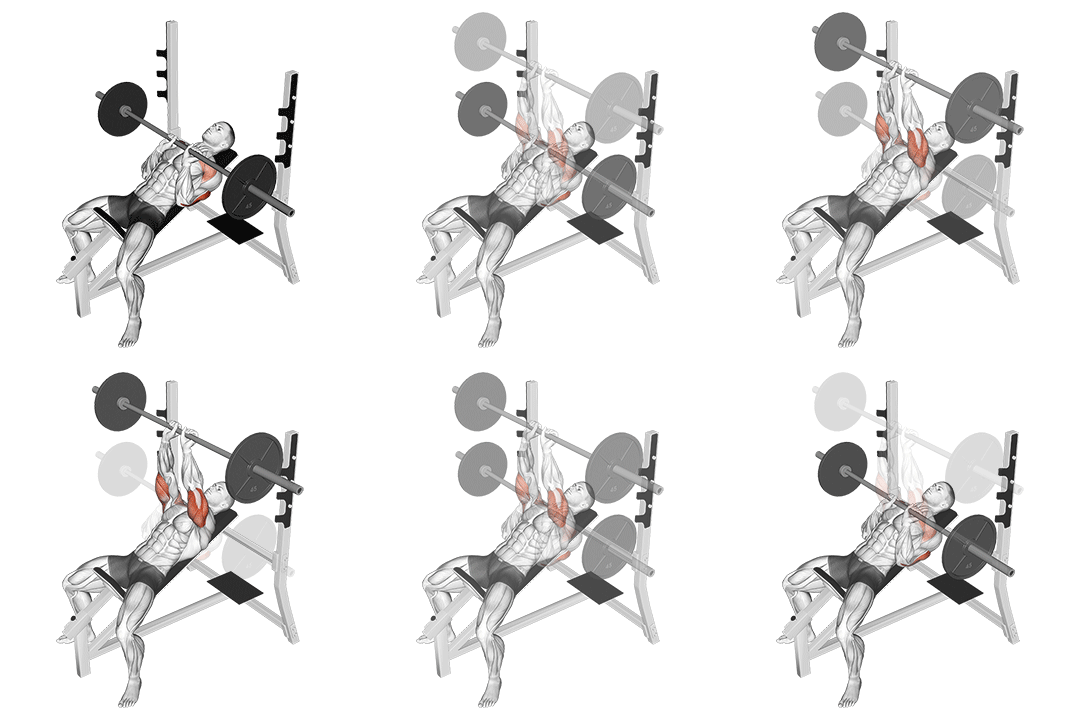
More comparisons with Barbell Close-grip Bench Press
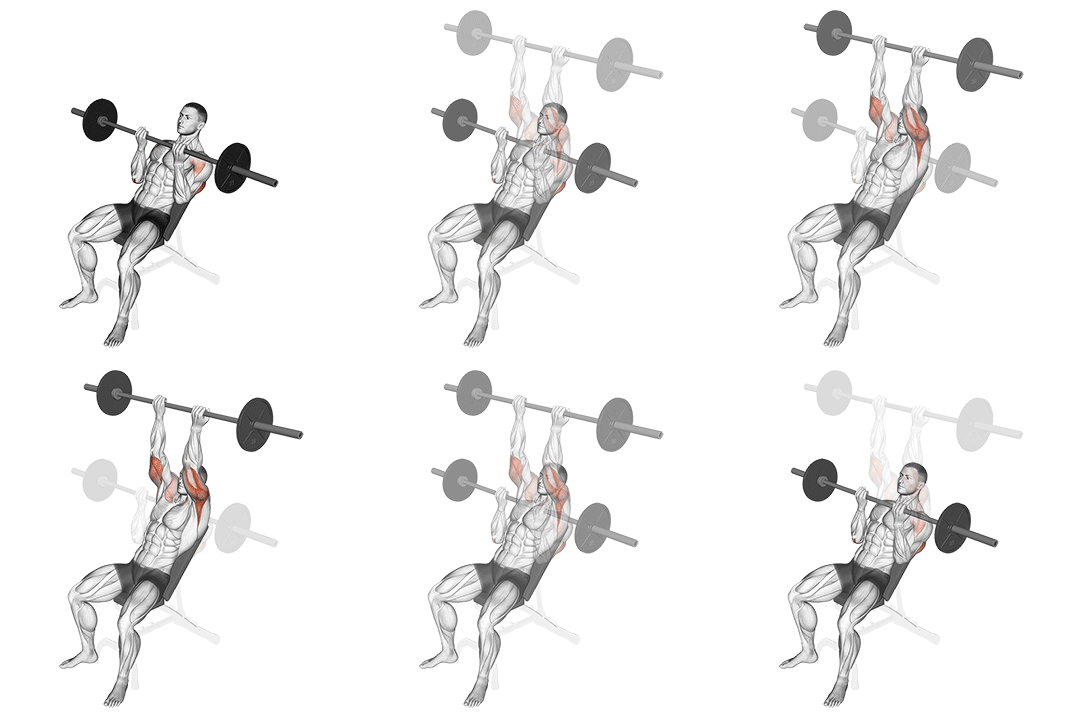
More comparisons with Barbell Decline Close Grip To Skull Press
Compare More Exercises
Use our free comparison tool to analyze any two exercises head-to-head.
Compare Exercises